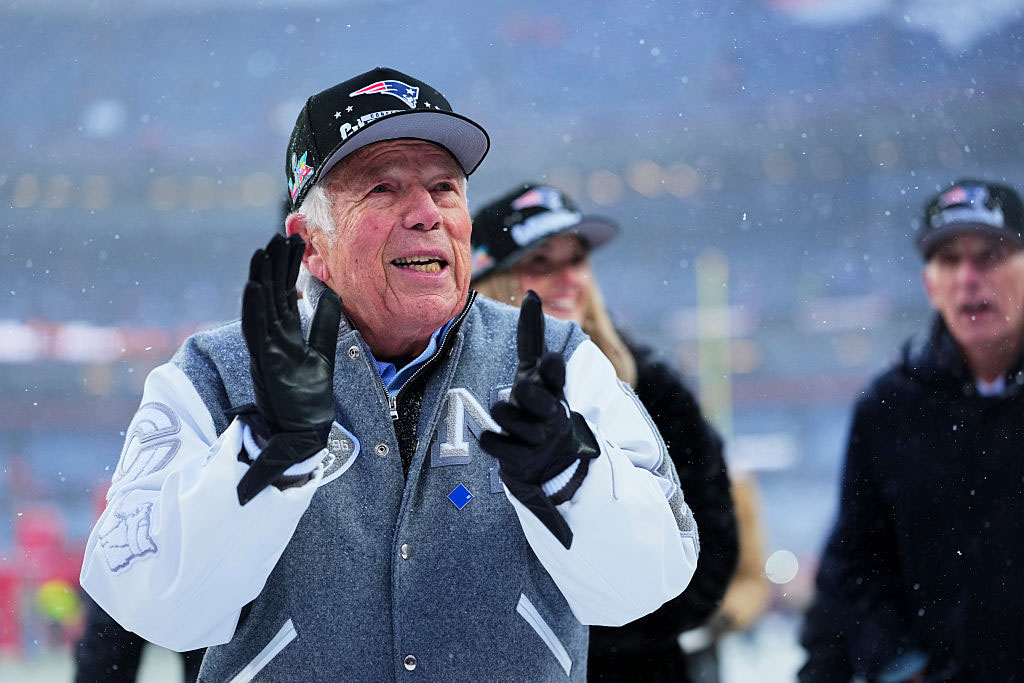
For more than three decades, Robert Kraft has been one of the most powerful figures in the NFL. Not as a quarterback or a coach, but as an owner whose decisions helped shape how the league is built, televised and consumed. Six Super Bowl wins out of 10 appearances. A franchise rescued from relocation in the 1990s and turned into one of the league’s defining dynasties.
As the league heads into another Super Bowl weekend, Kraft does so with a different kind of attention around him. He is a finalist for induction into the Pro Football Hall of Fame in the contributor category, recognition tied to ownership and long-term influence rather than on-field performance. The vote was announced on the evening of Feb. 5. Kraft bought the New England Patriots in 1994 for a then-record $172 million, a move that kept the team from relocating. He later financed the construction of Gillette Stadium without any public funding, a rare practice in American professional sports in the 21st century.
Since then, the Patriots have appeared in more Super Bowls than any other franchise under a single owner. Kraft has served on 17 NFL ownership committees, including the broadcast and media committee since 1997, chairing it for the past 18 years. That role places him at the center of how football reaches the public, how games are packaged and how the league presents itself to a national audience.
That reach matters because the Super Bowl is, year after year, the most-watched television event in American life. Super Bowls dominate lists of the highest-rated broadcasts in history. And any given year, several dozen regular-season NFL games are amongst the most-viewed television broadcasts of the year.
Jewish involvement in professional football has never been absent, but it has rarely been the headline. Since the founding of the NFL in 1920, 18 Jewish players have won a Super Bowl or an NFL or AFL championship, spanning pre-merger titles and Super Bowl era. That group includes Julian Edelman, the only Jewish player named Super Bowl MVP, and Nate Ebner, his teammate on multiple Patriots championship teams. Kraft’s visibility has taken on new weight over the past two seasons — even when the Patriots were not competing for the Lombardi Trophy.
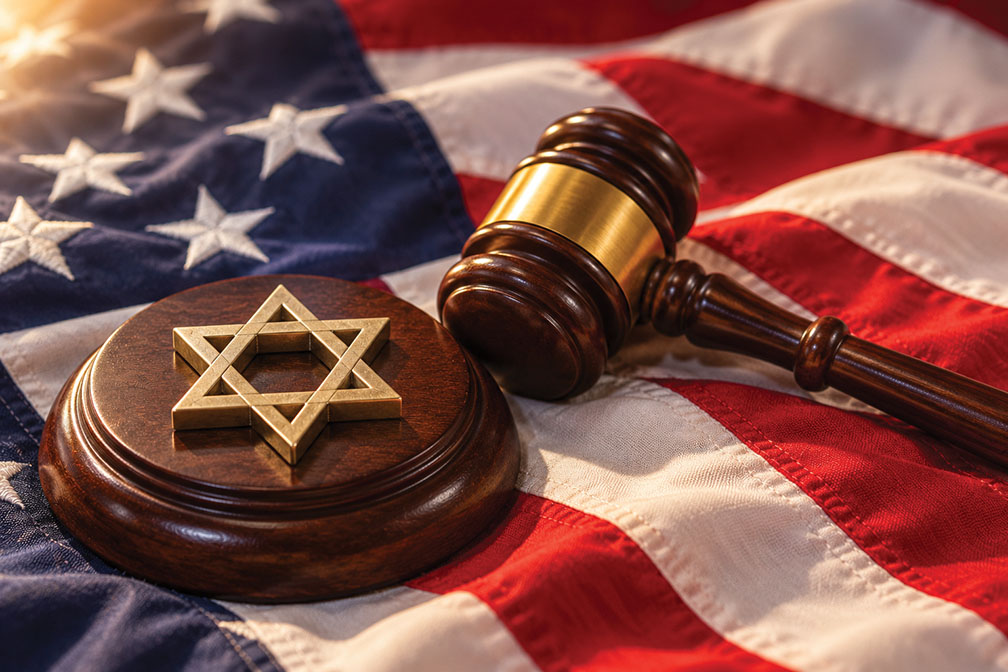
In 2023 and 2024, the Foundation to Combat Antisemitism, backed by Kraft, began using the Super Bowl as a platform to address rising antisemitism in the United States. Those efforts sparked debate within and beyond the Jewish community: was the Super Bowl the right place for that message, and how specific should it be?
The criticism came from multiple directions. Some argued that calling out antisemitism during a night built around entertainment felt out of place. Others argued that broad messaging risked diluting the problem itself. The tension reflected a broader challenge facing advocacy groups: how to reach an audience that may not feel personally connected to Jewish life.
That challenge appears to have shaped a shift in tone.
In December 2025 and during the 2026 NFL playoff broadcasts, Kraft’s Blue Square Alliance — formerly Stand Up to Jewish Hate — aired a television advertisement titled “When There Are No Words.” The spot did not feature celebrities or spectacle. Instead, it posed a series of questions directly to viewers: “What do you say when a Jewish boy is kicked on a New York City sidewalk?” “What do you say when a Holocaust survivor is firebombed on the streets of Colorado?” “What do you say when one in three Jewish Americans were victims of hate last year?”
The ad ended without a directive to change behavior. It closed with a symbol — a blue square — presented as a visible signal of concern in moments when language fails.
This year’s Super Bowl ad has not yet been released, and its content remains unknown. But the decision to air spots during NFL games leading into the postseason suggests a deliberate move away from spectacle and toward directness.
Kraft’s use of high-visibility platforms has coincided with renewed attention on his alma mater, Columbia University, where his philanthropy has long shaped Jewish student life. The Robert K. Kraft Family Center for Jewish Student Life, which opened in 2000, houses Columbia/Barnard Hillel and serves as a central gathering place for Jewish students across denominations and levels of observance. In November 2024, the Kraft Center became the site of protests by pro-Palestinian demonstrators calling on the university to sever ties with Hillel, during an event featuring Israeli journalist Barak Ravid. Protesters carried signs targeting Kraft by name, while Columbia’s administration issued a public statement affirming the Kraft Center as “a vital part of our campus” and a place where Jewish students can explore identity, culture and community. Months earlier, Kraft said he was not comfortable continuing to support the university amid what he described as intimidation and antisemitism on campus.
That move aligns with findings from a December 2025 Blue Square Alliance report examining antisemitism in the United States. The survey, conducted with more than 7,000 adults, found that while the rapid growth of antisemitism has slowed, it remains at elevated levels. More concerning, fewer Americans recognize antisemitism as a serious problem, fewer feel confident intervening when they encounter it, and fewer feel social pressure to speak up.
Only 15% of respondents said they were very familiar with recent events related to prejudice against Jewish people. Nearly half reported that they do not personally know any Jews, or do not realize that they do. To them, antisemitism feels distant, abstract and less urgent than other forms of prejudice. Many haven’t even considered caring — and most of which are not necessarily adversarial to the Jewish people.
The survey also found that only about one-third of Americans say they are very likely to speak up on behalf of a Jewish person experiencing hostility or prejudice. Among younger adults, belief in the ability to make a difference has declined. Messaging aimed at already-engaged audiences may not move the needle if large portions of the country do not see antisemitism as relevant to their daily lives.
Kraft’s position within the NFL gives him access to a stage few others control. But access does not guarantee impact. Super Bowl ads are consumed in seconds, judged instantly and often forgotten by Monday morning.
The question is not whether football can carry social messages — it already does — but whether those messages can meet viewers where they are without asking more than the moment can support. A Super Bowl audience is broad, distracted and not self-selecting. Any message that appears during the game must compete with humor, nostalgia and spectacle.
That reality may explain why recent efforts have focused less on instruction and more on visibility. A blue square does not demand agreement. It signals presence. It acknowledges the problem without assuming familiarity.
Kraft’s Super Bowl legacy is secure. What remains unsettled is whether the Super Bowl — the championship for the most valuable sports league in the world — can serve as a space for confronting antisemitism in a way that resonates beyond one night. That question does not have a clean answer, and it may not have one at all.
The game will end. The ads will cycle out of the news. The attention will move on.
What lingers, though, is the tension Kraft has spent years navigating: how to use influence without overreaching, how to speak without alienating, and how to bring a problem into view for an audience where the majority don’t care at all.