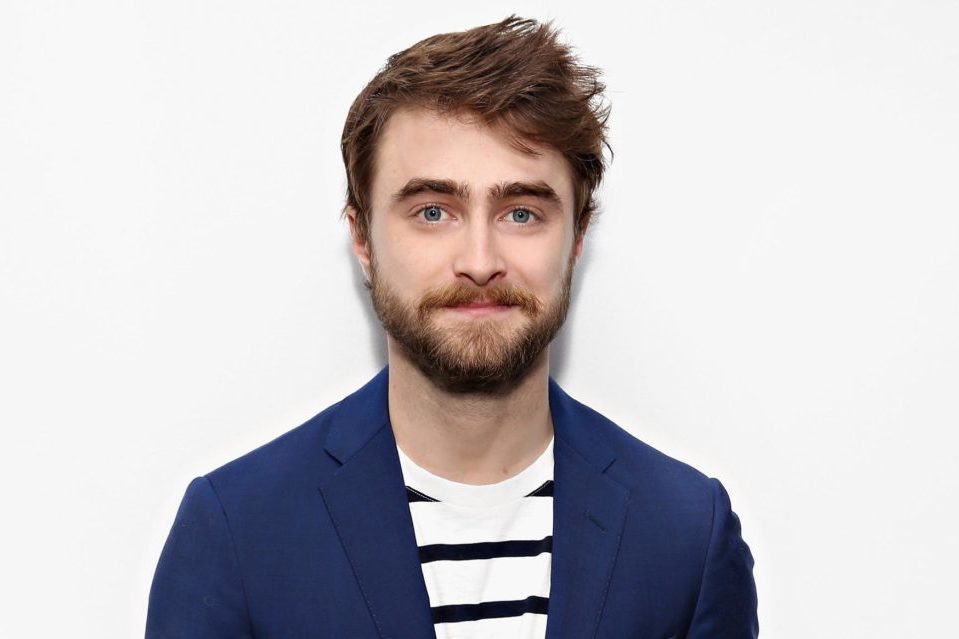
In the “Harry Potter” films, actor Daniel Radcliffe battled the evil Lord Voldemort with his wand and fortitude. Since the eighth Potter film premiered in 2010, the English actor has tried to diversify his career with films such as the supernatural thriller “Horns,” the gay, Jewish beat poet saga “Kill Your Darlings” about Allen Ginsberg, and the horror film “The Woman in Black.” Now he’s back with a new movie, “Jungle” — which hits theaters on Oct. 20 — based on the book of the same name by Israeli adventurer Yossi Ghinsberg. The memoir tells of Ghinsberg’s misadventures during three weeks stranded in the Amazon jungle in Bolivia in the early 1980s. The Journal recently caught up with Radcliffe, whose mother is Jewish, to talk about his new film.
Jewish Journal: Why were you drawn to the story and to the character of Yossi Ghinsberg?
Daniel Radcliffe: I pursued the part passionately. Sometimes when a story is true and incredibly powerful and communicates something that’s useful about the human survival instinct, I just wanted to become a part of further disseminating that story into the world.
JJ: Did you identify with the story’s themes of survival, especially as an actor after Harry Potter?
DR: You can be worried that people will typecast you, but I’ve been lucky because for every director who saw me out there as just Harry Potter, there was another one who was excited by the prospect of reinventing that image. You just sort of grab those opportunities when they come around as much as you can. And also I’m very lucky that I’m in a position where I don’t have to work, so I don’t have to accept roles that I’m not passionate about.
JJ: You spent many hours speaking to Yossi about his experiences. What kinds of questions did you ask him?
DR: Just talking to him about his inner monologue; how he kept himself going. He said an interesting and also very sad thing about hope. I asked whether the hope of getting home is what kept him alive, and he said actually the opposite was true. Most of the time, he was just surviving from one moment to the next. He said that the moment when a plane flew overhead, he thought he was going to be saved. But the second when that plane flew away was the most demoralizing, deepest despair he had ever felt. He said as useful as hope can be, it can also break your heart.
JJ: Did you learn anything interesting from Yossi about Israelis?
DR: It was this idea that for the generation of kids who grew up as the sons and daughters of Holocaust survivors, like Yossi, what is your responsibility? What do you have to live up to? I think that because Yossi wanted to go off backpacking, that was a disappointment to his father, a Holocaust survivor, and so I think his journey was tinged with a bit of guilt.
JJ: You went on an extreme diet for a month to lose weight for the final scenes of the film.
DR: I was generally having a fillet of fish or chicken and a protein bar every day, as well as vast amounts of coffee and cigarettes. It just makes you feel a tiredness that seeps into your whole being.
JJ: What was it like to film the scene in which your character removes parasitic worms from his forehead with a pair of tweezers?
DR: When you look up and you see the crew looking beyond grossed out, you go, OK, clearly it’s gone all right.
JJ: What was your most difficult moment on the shoot?
DR: One moment that was particularly heartbreaking was when the final scene was postponed for a week because the river had risen 7 or 8 feet and washed away our set. In my hotel room, I had a massive bar of chocolate and I had asked the kitchen to give me a steak for that night; I was going to eat finally. I was so close that I could practically taste it, and then it got rescheduled a week.