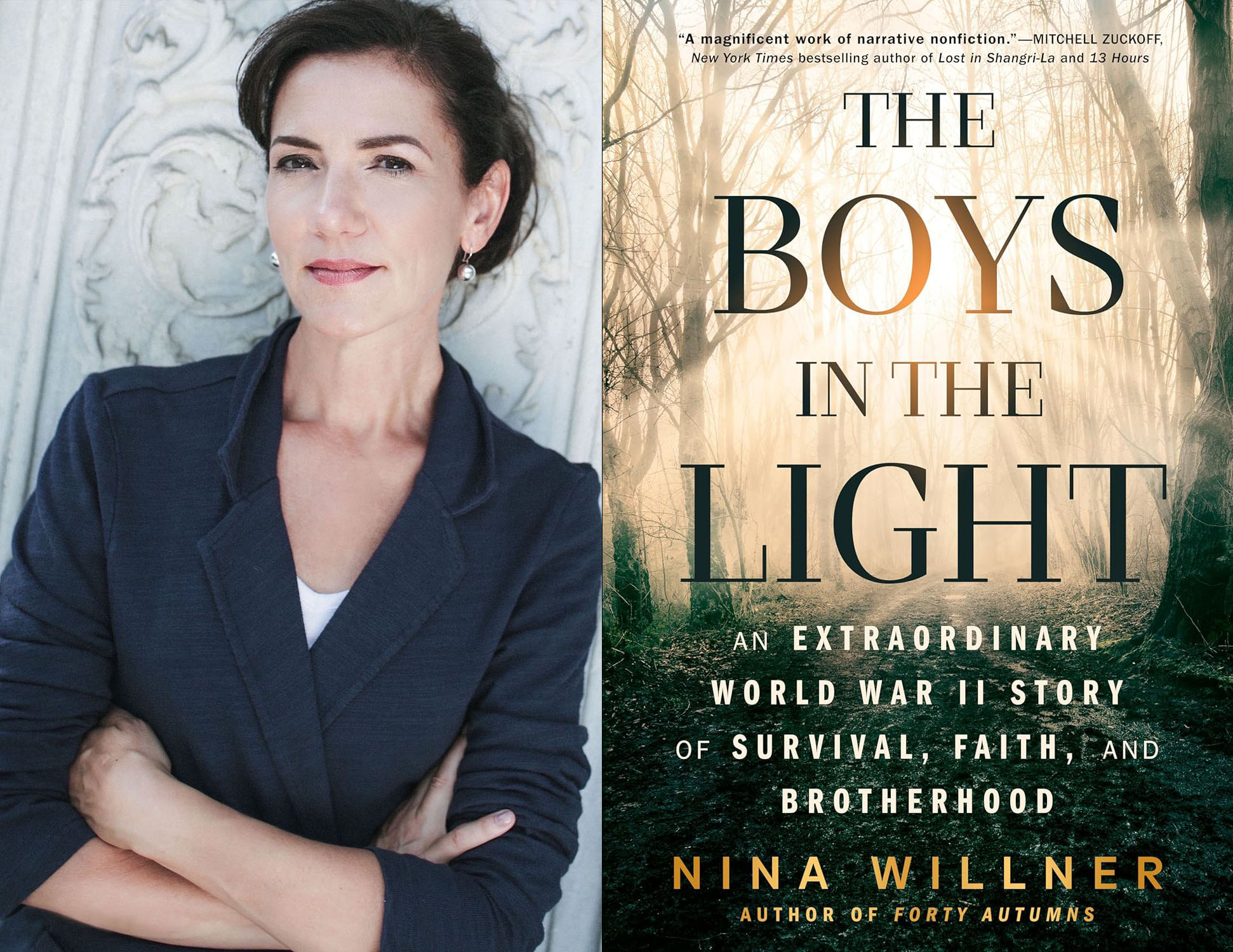
The history of the Holocaust and World War II have been told and retold through countless unforgettable stories — on the page, the screen and through the voices of survivors themselves. Just when it seems as though every story has been heard, another emerges. Despite the sheer horror of the war and the cruelty it exposed, there are also countless of stories of human kindness that restores our faith. ‘The Boys in the Light: An Extraordinary World War II Story of Survival, Faith, and Brotherhood’, a book by Nina Willner, is one such story.
The book tells the parallel journeys of Company D, a unit of young American soldiers in the Third Armored Division, and Eddie Willner, the author’s father, as they find themselves on opposite sides of World War II.
Eddie had been taken prisoner when he was 12 years old, when his family — having fled Germany — was betrayed while hiding in a village on the French-Belgian border. His mother was sent straight to the gas chamber at Auschwitz. Forced into slave labor alongside his father and his best friend, Mike, Eddie spent the next three years enduring the death camps, including the hell of Auschwitz itself. When his father turned 50, the Nazis murdered him — he was considered too old to be of any use at forced labor.
Across the Atlantic, young American men, only a few years older than Eddie, were enlisting in the U.S. Army, leaving behind farms, factories and coal mines to become untested soldiers thrust into the unforgiving battles of WWII.
Nina and her five siblings grew up listening to her father’s stories.
“My father and Mike were as close as brothers; we would overhear their conversations about the war. Mike also had a number tattooed on his forearm, only a few digits off from my father’s. What forged their close bond was a tale of inhumanity, perseverance, luck, bravery and kindness.”
Unlike many Holocaust survivors who found it difficult to speak of their experiences, Eddie Willner was remarkably open. “He wanted his children to know the story, and I think it was good for him,” Nina explained. “As a survivor, he felt an obligation to share it with others.”
Eddie and Mike escaped from a death march out of Buchenwald. Exhausted, starving and frail, they stumbled into the woods where they were discovered by a company of Third Armored Division tankers led by 23-year-old Lieutenant Elmer Hovland. The two emaciated boys, clad in blue-and-white striped uniforms, raised their thin tattooed arms in surrender. The young American soldiers immediately took them in and for the next few months sort of adopted them into the unit. They fattened them up, gave them their own clothes, and made them useful in the unit.
By the time they arrived in the United States, they were already speaking English fluently. Both enlisted soon after —Eddie in the U.S. Army, Mike in the Air Force. Eddie, served in the Army for more than 20 years, retiring as a major. He then worked as a linguist for the Commerce Department. Being of service was important for him, he wanted to show his country how grateful he was for everything it done for him.
After a lifetime of hearing her father’s stories, Nina embarked on a six-year quest to uncover the missing pieces — a journey that eventually turned into a book. She traveled through archives in the U.S., Germany, Belgium and Poland, retracing key events. She visited the towns where the central figures had lived, walked the grounds of death camps and battlefields, and stood on the bridge where her father and Mike made their escape.
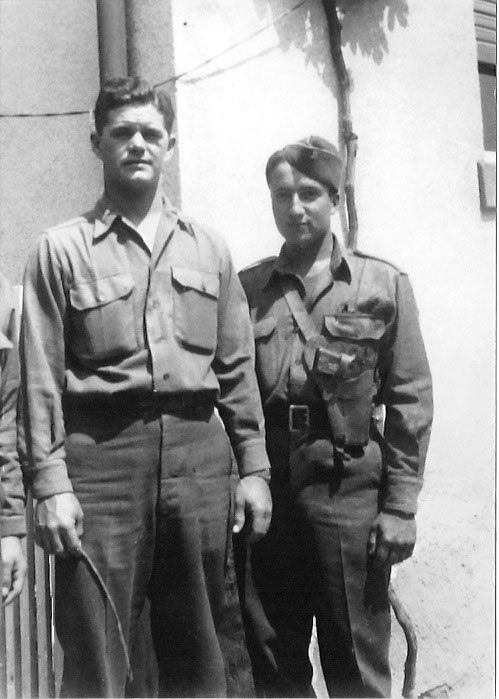
She sifted through testimonies, tribunal records, and the war diary of Company D. She examined soldiers’ and survivors’ letters, diaries, memoirs and photo albums. And always, she carried one hope: to find a photograph of her teenage father with the American soldiers who had given him back his life. Fifty-seven years after the war, in 2002, she finally did it. She located the men of Company D and reunited them with her father. The emotional reunion was captured in The Washington Post under the headline “Thanking the Boys Who Gave Him Life.”
Among the 60 people who arrived at the reunion — held at Willner’s home in Falls Church, Virginia — were family, friends, and the boys from Company D, including Hovland and Louis “Pepsi” Decola, who had taken him under their wings. Decola had been one of the mess sergeants and had given Eddie one of his extra uniforms when he was rescued.
Decola told The Post, “’Eddie grabbed his cane and hobbled as fast as he could to the front porch. There he is! Hey, buddy! How are you?’ hurrying into Eddie’s waiting embrace. The two men held tight. When he finally spoke, Eddie’s voice was choked with tears.‘Oh,’ Eddie cried on Pepsi’s shoulder. ‘Oh God, oh God.’‘I know,’ Pepsi murmured. ‘Would you have recognized me?’”
After Eddie’s death in 2008, Nina kept in touch with Pepsi and Hovland. They, along with their families, became part of her extended family. Eddie, who lost his entire family in the Holocaust, had built a new one with his wife, choosing to have a large family of six children to compensate for the family he lost in the war.
“All of my father’s family perished in the war, and it was a big family of hundreds of relatives,” Willner told The Journal. “I was able to trace each and every one of them and found that none of them made it out alive. When my father was in the camps with his father, he asked him to memorize 26 names. My father didn’t understand why, but later realized he wanted him to find them after the war. I traced each and every one of them, and all had died in the concentration camps— Auschwitz, Theresienstadt, among other places.”
Willner, who had already shared her mother’s story and how she escaped East Germany in “Forty Autumns,” ensured her father’s legacy in the book she wrote for him and the boys who had given him life.
Hovland and Decola had already passed away, but Willner remained in touch with their families. She said they were deeply grateful and pleased by her book, which documented their fathers’ courage and compassion and how their act of kindness had impacted two young boys’ lives.