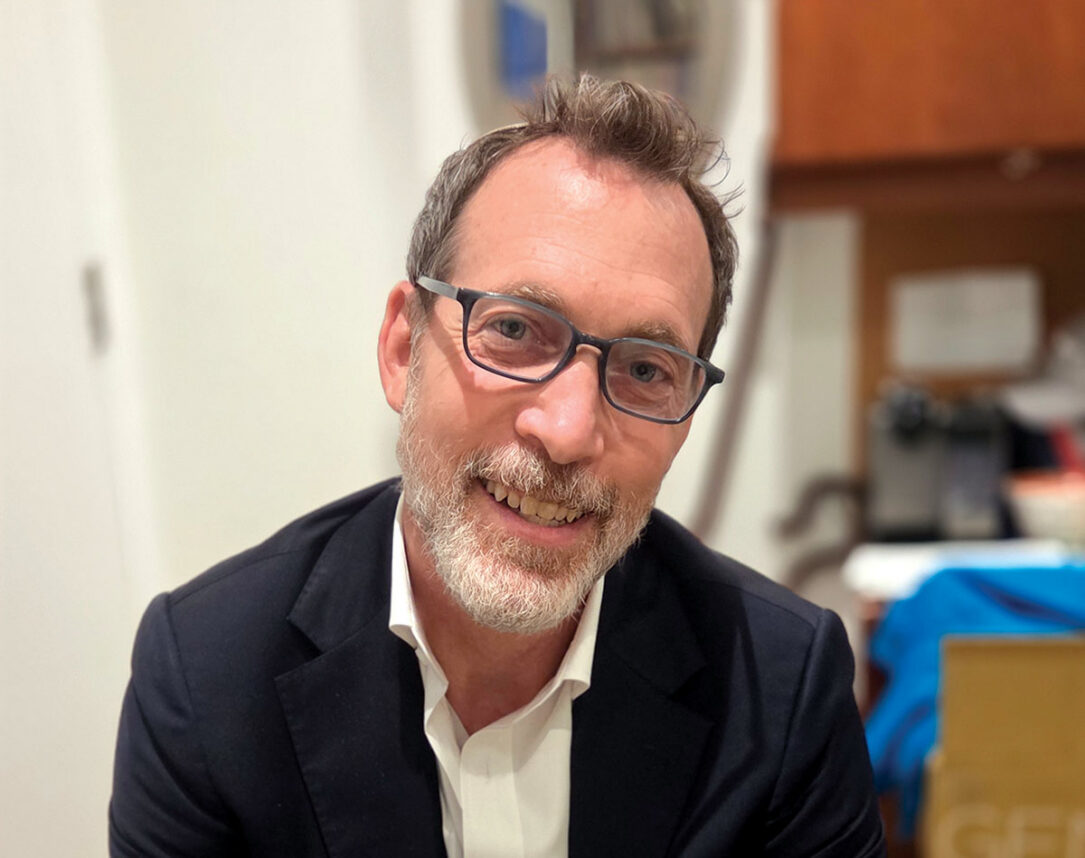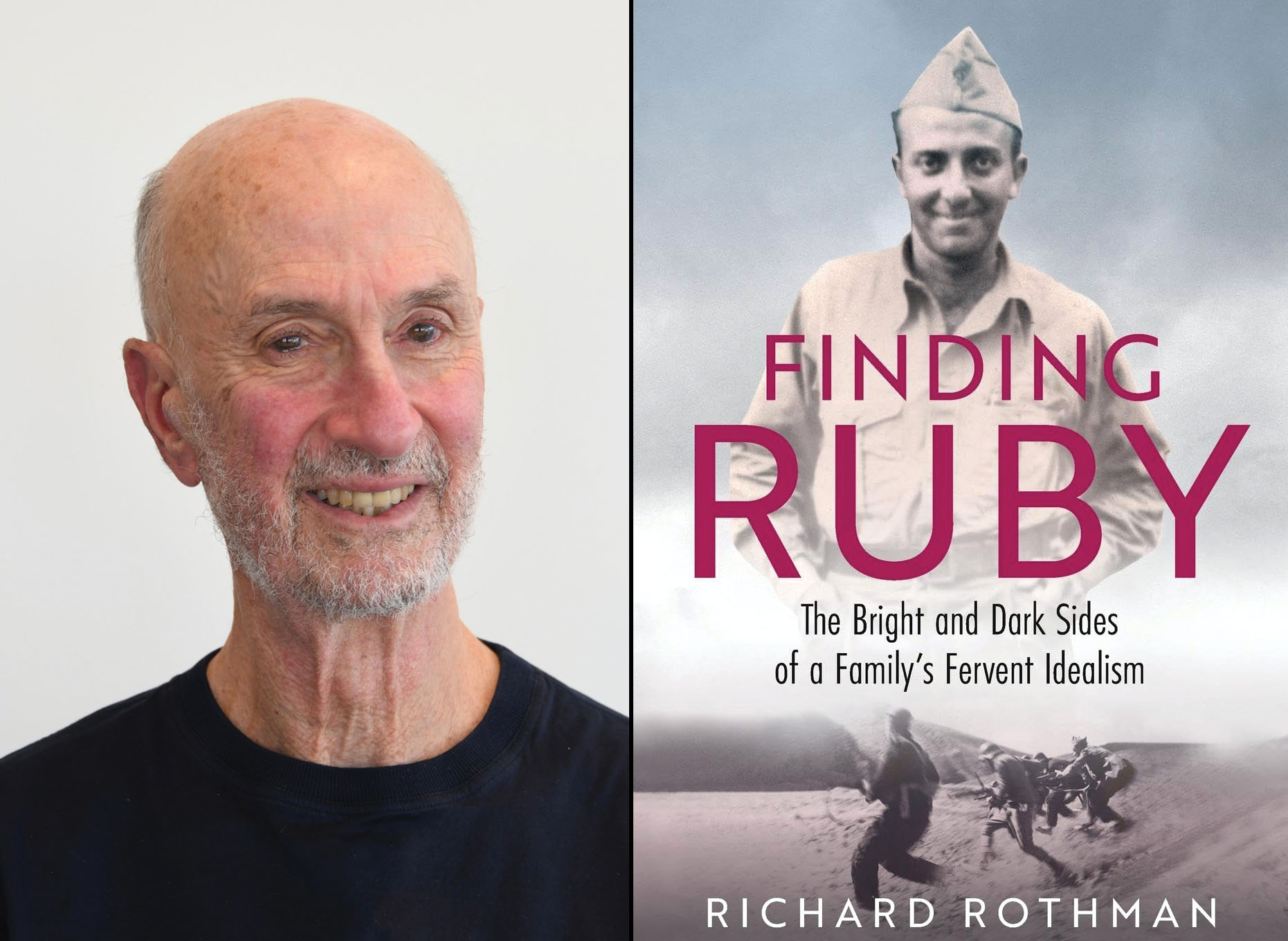
Attorney Richard Rothman didn’t know much about his grandfather. All he knew was that the man had left his wife and young child in Queens, N.Y. to fight in the Spanish Civil War — and died there. Nearly 90 years after his grandfather, Rubin Schechter — known as Ruby — had passed away, Rothman published a book about his long-lost family history, “Finding Ruby: The Bright and Dark Sides of a Family’s Fervent Idealism.”
What began as an attempt to understand a missing ancestor evolved into a sweeping, heartfelt historical investigation into legacy, idealism and politics. Rothman was curious to know why an Eastern European Jew who had immigrated to the U.S. as a child would one day leave his family and go fight in a foreign country. His grandfather wasn’t a soldier; in fact, he had been working for his father-in-law’s fish business, and previously in his own father’s fur business.
Rothman’s mother didn’t volunteer much information. Perhaps she preferred to let bygones be bygones. After all, following her father’s death, she had been placed in a boarding home. Those were not fond memories.
Schechter, like many Eastern European Jews at the time, was a Communist. “When the Spanish Civil War broke out he saw fascism and Hitler as a threat to humanity and he couldn’t understand how others did not see it the same way,” said Rothman.
Rothman, who lives in New York, now does pro bono work, primarily for victims of human trafficking and domestic violence. After his mother passed away in late 2020, his wife Melissa was tasked with going through her belongings and deciding what to keep or discard. During that process, she discovered a briefcase hidden on the top shelf of a closet.
Rothman had known about the existence of the briefcase, which was said to contain letters and information about his grandfather, but his mother had always insisted she had no idea where it was. He first saw the rectangular briefcase 50 years ago in his parents’ basement house in Connecticut, but back then, he didn’t spend much time investigating the content. “When I opened it up, I saw that there were a trove of letters that were sent from Spain by Ruby, and some of them were written to him but were returned [to the U.S.] with stamps on the envelope that said: ‘Mort,’ which means he had died. There were a few articles about him and volumes of poems.”
Rothman took the treasure trove of letters and notebooks and began work on what eventually became “Finding Ruby.“ In the book, he described how his grandfather had left two letters on the desk for his parents — one written in Hebrew for his father and the other in Yiddish for his mother. “He informed his parents that he had gone to Spain to fight against fascism and that they shouldn’t try to get him back or hire lawyers,” said Rothman. “He wrote that they have nothing to worry about because he is going to be just a secretary and would be nowhere near the fighting service.”
In actuality, Ruby immediately started training to go to the battlefield, where he eventually was injured. In a letter to his family back home, he wrote that he was shot in his hand but there was nothing to worry about and that he was going to return to the front shortly. However, the wound was much more serious than he had described, and three weeks later, he sent another letter. “He said the wound is tricky and it’s going to be a longer time before he’ll go back to the front,” Rothman said. His grandfather then proceeded to tell how he was wounded and blamed it on a donkey. “What he was doing at the front was a mystery, because he wasn’t supposed to be anywhere near the fighting as he promised his parents, but in any event, he volunteered to go and get ammunition for his battalion. They loaded it on a donkey and sent him on his way back.”
Ruby described with humor his trip back with the donkey, who was walking slowly, carrying the heavy load on his back. As they were marching through the battlefield, he turned to his donkey and said, ‘If you would only run, you would be the most famous donkey in history that the comrades would all salute you and you would be a donkey as no other donkey had ever been. But you are just prancing through this hail of bullets as if it were Sunday afternoon on Fifth Ave.’ He told the donkey, ‘You think you’re camouflaged and protected but they’re not shooting at anyone in particular and you’re going to get us both killed.’ Sure enough, one of the bullets hit him. We assume he died of an infection. He was only 32.”
His widowed grandmother eventually married Harry Nobel, who was his grandfather’s best friend and had also joined the Abraham Lincoln Brigade and in March 1937 went off to fight the Spanish Civil War against Generalissimo Francisco Franco.
Rothman admitted he felt a lot of conflict about his grandfather’s decision to leave his family. “My feelings about my grandparents kept changing each time while writing the book. I came upon one unlikely discovery after another,” Rothman said. “On one hand, he had abandoned my mother and became captive to a party dominated by Joseph Stalin, and on the other, he fought for a cause he believed in. When my grandparents joined the Communist Party in the 1930s, the party was doing a lot of good — fighting fascism, fighting poverty. Where I came to rest, ultimately, was this: I’m still proud of my grandfather for having volunteered in the war against fascism, at a time when the rest of the world was sticking its head in the sand.”