fbpx

August 7, 2025

The Shema: A Love Story

Eli Sharabi was abducted from his home in Kibbutz Be’eri on October 7th, and taken hostage by Hamas.

Sharabi had never recited the Shema. Until he was in Gaza.

Even though he was never a religious man, the Shema gave Eli enormous comfort; and he repeated it over and over again, as if it were a mantra. For 491 days, the Shema gave Eli the strength to go on.

A skeptic might dismiss this as a mere act of desperation; after all, “there are no atheists in foxholes,” and who wouldn’t turn to prayer when their life is in danger? But that would be a mistake, a misunderstanding of what the Shema is. It is not a prayer; it simply says “Hear, O Israel: The Lord is our God, the Lord is one.” This is a declaration directed at the person saying it, not God. In the tunnels of Gaza, Sharabi wasn’t praying when he recited the Shema; he was turning inward and reconnecting with Judaism.

On a practical level, the Shema is repeated daily to keep us focused. The Sefer Hachinuch explains that “since man is a physical being, seduced by the vanities of the world and drawn by his desires, he certainly requires a constant reminder of the Kingdom of Heaven to guard him from sin.” The Shema is a twice-daily reminder to stick to our goals.

This might be a suitable explanation for the commandment to recite the Shema; but it fails to describe the role the Shema has played in Jewish life. In his commentary, Rabbi Samson Raphael Hirsch offers a much broader picture. He begins by explaining that the Book of Deuteronomy was written for when the Jews enter their independent Homeland; they would no longer be in a compact camp arranged around the sanctuary. Before they disperse throughout the country, they would need to build inner spiritual strength. And that is why the Shema is Moses’ first commandment. Hirsch writes:

The very first sentence of the compendium of laws recorded by Moses… to guide the people in their dispersal is the sentence that, to this very day, keeps alive the Jewish consciousness in every Jew, even if he finds himself in the most scattered isolation; the sentence that is the first learned by the Jewish child …. and the last that fellow Jews call out as a farewell greeting to the departing soul…

The Shema is the Jewish mission statement, and even more; it has become over the years a symbol of Jewish identity. Small children sing it before they go to sleep; the infirm recite it on their deathbed. With it, no Jew is ever alone.

It is a seal inscribed upon the Jewish heart.

The continuation of the Shema commands us to “Love the Lord your God with all your heart and with all your soul and with all your strength.” This love is a demanding one; it obligates Jews to sacrifice their lives rather than worship pagan idols.

Martyrs through the ages read the Shema as they were being put to death. In the medieval chronicle of Solomon bar Simson, he describes the scene when the martyrs “all accepted the divine decree wholeheartedly and, as they yielded up their souls to the Creator, cried out: ‘Hear, O Israel the Lord is our God, the Lord is One.’”

In their last moments, these martyrs said the Shema. And in doing so, they were emulating the great teacher of Israel, Rabbi Akiva.

The Talmud describes the scene of Rabbi Akiva’s death. The Romans had outlawed teaching Torah, but Rabbi Akiva defied them. The Romans arrest Rabbi Akiva, and execute him in the public square. The Talmud describes his last moments:

When they took Rabbi Akiva out to be executed, it was time for the recitation of Shema. And they were raking his flesh with iron combs, and he was reciting Shema, thereby accepting upon himself the yoke of Heaven. His students said to him: Our teacher, even now? He said to them: All my days I have been troubled by the verse: ‘With all your soul’, even if God takes your soul. I said to myself: How would it ever be possible for me to fulfill this verse? Now that I can, how can I not fulfill it?

What is puzzling about this passage is the students’ short question: “Even now?” What exactly do the students mean?

Eliezer Berkovits offered a powerful explanation of this passage. Rabbi Akiva had been abandoned by God. The students couldn’t understand how Rabbi Akiva still insisted, amid absolute agony, to do one last Mitzvah. They wonder: “Even now?” Will Rabbi Akiva use his last bit of strength to say Shema, even after he was abandoned by God?

Yes. “Even now,” Rabbi Akiva still loves God.

A look at Jewish history will show that the covenant between the Jews and God has been an uneven partnership. One could ask the Jewish people the same question Rabbi Akiva’s students posed: Even now? How is it that after everything, after persecution and oppression, after the Crusades, the Holocaust, and so much more, that the Jews still recite the Shema?

But Jews never stopped to consider this question. They just kept saying the Shema. Even in hospital beds, even in concentration camps, even in the tunnels of Gaza, they took the Shema with them.

Jewish identity is considered a knotty, complex subject by all the scholars who approach it. However, for simple Jews, the Shema tells the entire story of Jewish identity. It tells of a mission held by a group of iconoclasts, with an unending passion for a covenant that is difficult to bear, who created a tight-knit community that spans across the world and through the centuries.

And like Eli, the Shema calls to the Jewish soul.

In 1946, Rabbi Yitzhak Halevi Herzog, then the Chief Rabbi of Mandatory Palestine, traveled to Europe to find, and repatriate to their families, Jewish children who had been taken in by non-Jews during the Holocaust. Many were held in Catholic institutions; and Rabbi Herzog went to visit Pope Pius XII to discuss the issue. He told the Pope that “Each child is like one thousand children, following this great tragedy.” Sadly, Rabbi Herzog was disappointed by the Pope’s tepid response.

But Rabbi Herzog did find support in the church hierarchy, and he went to visit Catholic institutions across Europe to find Jewish children. There is a story told about this journey, which has been told about many other Rabbis as well; and while it has no certain source, it is almost certainly true. Here is one retelling of the story:

One day in 1946, Rabbi Herzog arrived at a large monastery which was known to have taken in Jewish children …The Rabbi turned to the Reverend Mother, thanking her for saving the lives of the children and requesting to receive them back to the Jewish People, now that the war was over. The nun was happy to agree, but asked the Rabbi, “How can you know which of the hundreds of children here at the monastery are Jewish?”

Rabbi Herzog assured the Reverend Mother that he would know. He asked to gather all of the children in a large hall, ascended the stage, and cried in a loud voice:

Sh’ma Yisrael Adonai Eloheinu Adonai Eḥad ! (Hear, O Israel: the Lord is our God, the Lord is One)

Immediately, dozens of children rushed to the stage, shouting “mama!” and “papa!” as tears filled their eyes. Many were sobbing uncontrollably. Though few of the children remembered much of their early lives, the sound of the Shema, the most famous prayer in the Jewish faith, instantly brought back memories of reciting these Hebrew words with their parents before bedtime.

These young children, cut off from the rest of the Jewish people, had almost forgotten they were Jews.

But they remembered the Shema. They remembered the melody of this love song, and were ready to return back to their people.

Just as Jews always have, wherever they are.


Rabbi Chaim Steinmetz is the Senior Rabbi of Congregation Kehilath Jeshurun in New York.  

The Shema: A Love Story Read More »
We’ve Overlooked the Insidious Part About Antisemitism: The Brazenness

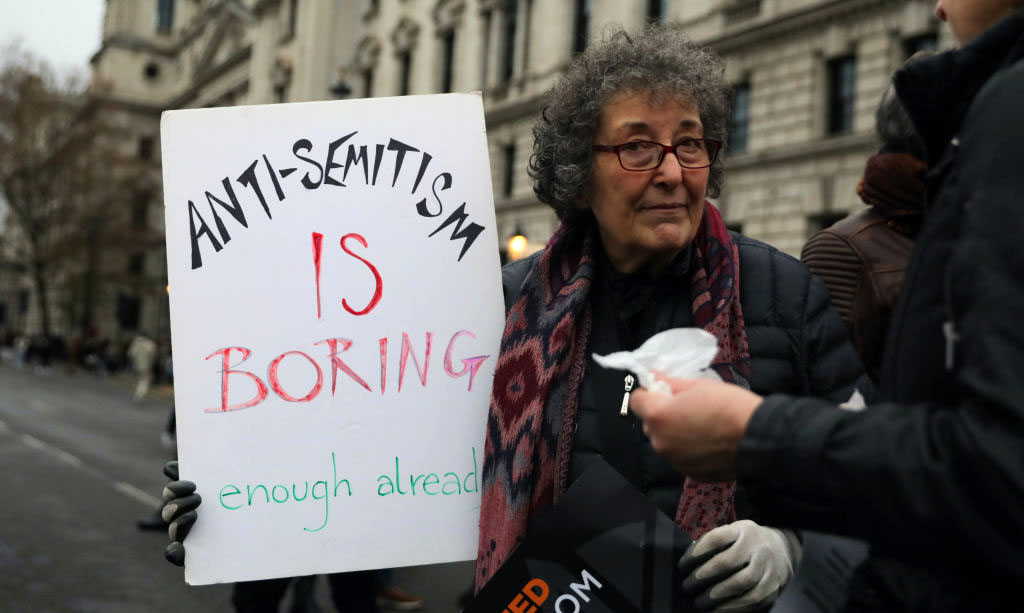
There’s a simple, obvious truth that helps explain why the Jewish community gets so agitated about acts of antisemitism, and it’s not just the hatred.

Everyone knows that our world is filled with racists and bigots and haters of all kinds. But we also know that one of the unwritten rules of society is that most people try to keep those hatreds to themselves. Who wants to advertise that they’re bigots?

The one exception seems to be the Jews.

For some reason, Jew-haters feel a sense of pure brazenness when it comes to showing off their Jew-hatred. They don’t seem to worry, in other words, about consequences.

Look at the latest figures released this week by the FBI. Although Jews make up around 2 percent of the U.S. population, they accounted for nearly 70 percent of all reported religion-based hate crimes in 2024. Anti-Jewish hate crime incidents were the highest number ever recorded by the FBI since it began collecting data in 1991.

That’s a lot of chutzpah and very little fear.

So, what is it about Jews that make us such a “safe” target for haters?

There are the obvious answers, like the fact that because we’re seen as being powerful and successful and are associated with “white privilege,” we can take it. And of course there’s always Israel as the most convenient weapon for Jew-haters.

But there’s something else, and one clue is the fact that I’m writing this column. Jews have a tendency to try to understand everything and then take responsibility for how we can “change” things. There’s a whole cottage industry in our community of organizations, think tanks and activist groups devoted to dissecting Jew-hatred and figuring out the best strategies to fight it.

Indeed we’re so busy analyzing, recording, exposing and fighting that we rarely take the time to sit back and reflect on the absurdity of it all.

Here are the Jews, the one ethnic group that has arguably given more to America than any other, being attacked more than any other. How does that make sense?

Now take the case of Israel. People routinely hate what happens in other countries, whether that’s China, Sudan, Russia or any number of countries that do horrible things.

But have you noticed that you never hear about people being anti-China or anti-Sudan or anti-Russia?

Evidently, “anti” is an exclusive stain reserved only for the Jewish state.

Have you noticed that you never hear about people being anti-China or anti-Sudan or anti-Russia? Evidently, “anti” is an exclusive stain reserved only for the Jewish state.

Even some Jews who are very upset with Israel are now using the “anti-Israel” label. And many of them are proud of it, too, because they say they’re “living their Jewish values.”

The fact that Jews are very public about their disagreements is especially true in Israel.

Imagine being one of those many Mideast countries without freedom of speech and all you see from Israel is nasty speech from Jews against Jews. You see Jews arguing in public, demonstrating against their government and screaming at each other on news shows. That kind of freedom to bash your own in public is nowhere to be found on Al Jazeera’s coverage of the region.

Add it all up, and Jew-haters may well conclude: Hey, if Jews themselves are bashing one another, what’s the big deal?

Being punished for our habit of airing out our disagreement, however, is a big deal. Yes, this habit has made it easier for bad actors to pile on the venom against Jews. It’s neither fair nor right, but it’s true.

In fact, much of antisemitism has a “piling on” quality. The haters make so much noise with their public protests that people can get caught up in the general fever— what activist like to call “normalizing.”

But there’s nothing normal about it.

Imagine if any of the hundreds of antisemitic acts we’ve seen in America over the past few years were by Ku Klux Klan members marching against Blacks or bigots marching against gays. That kind of hate would never get normalized.

That’s why Jews get so worked up at this epidemic of Jew-hatred. The brazenness is spooky. They understand that this is not normal, but that doesn’t make them feel any better.

We’ve Overlooked the Insidious Part About Antisemitism: The Brazenness Read More »

Table for Zuul – A poem for Parsha Vaetchanan

You must not intermarry with them: you must not give your daughter to a son of theirs, and you must not take a daughter of theirs for your son, for your daughter’s husband will turn away your grandchild from following Me, and they will worship other peoples’ deities. ~ Deuteronomy 7:3-4

Okay, but there are some
pretty cool other deities out there.
Ganesh comes to mind, immediately –

many arms, elephant head – You don’t
get much more I want to hang out
with that guy than Ganesh.

Thor’s had a moment recently.
Started out a little too serious, but
really just a softie with a hammer.

You, for sure, won’t run out of wine
if Dionysus is at your party. In fact
it’s always a party when he’s present.

Ame-no-Uzume-no-Mikoto may not
be the most famous of the bunch
but in Japan she brings the mirth.

Some of these are made up
you might say, and I say, yeah
I think you’re getting it now.

I’m all for perpetuating the family.
I swear if my great-grandchildren
aren’t salivating over the challah

I’m not sure what I’m doing here.
But I have room at my table for
Ganesh, or Apollo or even Zuul.

If our sons and daughters could
marry others’ sons and daughters
perhaps all the fighting would stop.

Bring home who you love,
oh, son of mine, I’ll sing B’ruchot Habaot
at the wedding and at least

the food will be interesting.


Rick Lupert, a poet, songleader and graphic designer, is the author of 29 books including “God Wrestler: A Poem for Every Torah Portion.” Visit him at www.JewishPoetry.net

Table for Zuul – A poem for Parsha Vaetchanan Read More »

In a First, Ambassador Mike Huckabee Meets with Bnei Brak Leaders

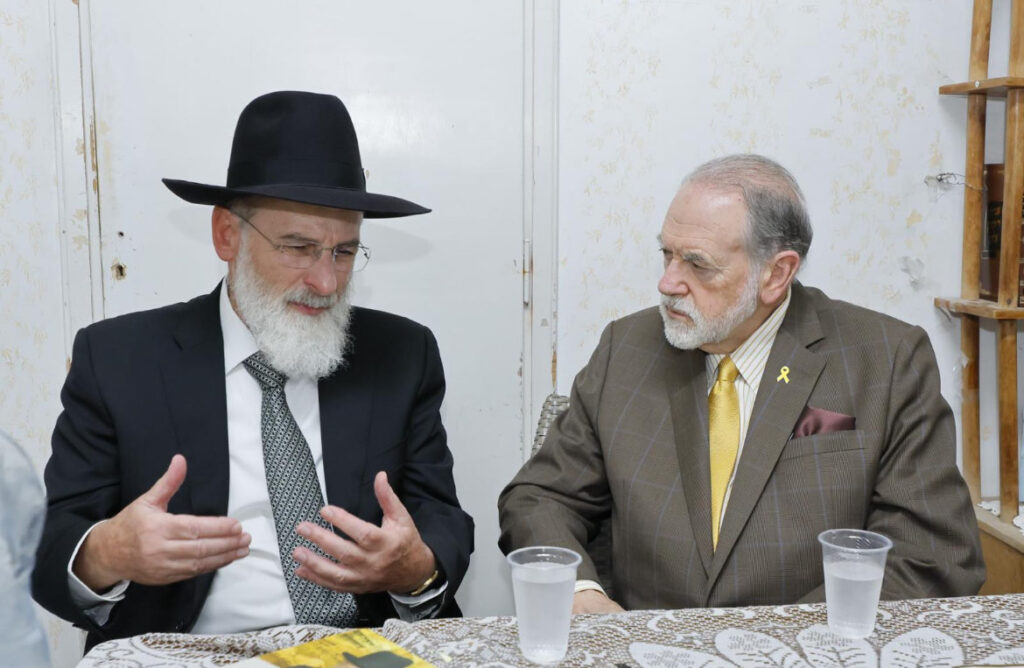
At the end of July, during a trip to Israel, U.S. Ambassador to Israel Mike Huckabee met with Orthodox rabbis and community members in Bnai Brak, including Lithuanian Haredi leader Rabbi Dov Landau. This was the first meeting between Haredi leaders and Huckabee.

During the 25-minute conversation, Landau, speaking through a translator, brought up the issue of Haredim serving in the IDF, saying, “Please tell [the ambassador] that the Jewish people live and endure thanks to the Torah. The yeshiva students are our defenders. Their role and honor must be protected… Please, tell President Trump to work for the Torah world. The Jewish people live and exist by virtue of the Torah. Torah scholars are the protectors, and their status must be preserved and their value sanctified.”

Huckabee replied, “In addition to soldiers, we need Torah scholars, who will remind us who you are and why you are here.”

According to Rabbi Dovid Hofstedter, who organized the meeting, the overriding objective was to find common ground among the ambassador and the Haredim.

“I thought it was very important that the ambassador not only meet with the secular community, but also the Haredi community, which is a vital and central part of Israel that he had no knowledge of,” Hofstedter, the founder of Dirshu, the world’s largest Torah organization, said. “Ambassador Huckabee greatly values and cherishes the Bible and the Torah and those who study them. Sometimes you need someone from outside to shine the light on what’s inside. Sometimes we live in our own darkness and four walls and don’t see what’s inside. It was very enlightening for the Jewish world at large to see how much Ambassador Huckabee respects learning Torah and Torah leaders of our community.”

While in Israel, Hofstedter also took Huckabee to meet with Rabbi Moshe Hillel Hirsch, the rosh yeshiva of Yeshivas Slabodka in Bnei Brak, another big leader in the Haredi world. They discussed the critical importance of Torah learning as well.

According to Hofstedter, the son of Holocaust survivors, the ambassador understands the fact that many issues stem from a lack of spiritual awareness happening in the world.

“Currently, there are all kinds of issues facing the Jewish people. It’s a very trying time. I’ve never seen the situation as threatening and precarious situation for the Jewish people. Antisemitism is unfortunately rearing its ugly head all over. There are ways to combat it, and the ambassador has a unique view which aligns with the view of the ultra-Orthodox: most antisemitism stems from the fact that people don’t respect and believe in the Torah and the Bible and the commandments.”

The rabbi has known Huckabee for a few years and has seen just how supportive he is of the Jewish people and Israel. “He feels that the security of the world also depends on the security of the Jewish people,” said Hofstedter. “He sees the Divine Hand in the rebirth of the Jewish nation following the Holocaust.”

Now that the ambassador is acquainted with the Haredi community and its needs, Hofstedter said that the conversation can keep moving forward.

“There is so much room for dialogue and working together. We hope it will continue.”

In a First, Ambassador Mike Huckabee Meets with Bnei Brak Leaders Read More »

Hedva Amrani’s New Album ‘Lost Songs’ Revives a Lifetime of Memories

At 81, Hedva Amrani has just released a new album, “Lost Songs — a compilation of long-forgotten tracks she recorded during the 1970s and ’80s. The 14-track album features 13 songs in English — a mix of originals and cover songs — and one in Arabic, each with its own personal backstory from her life and career.

The Israeli-born singer moved to Los Angeles at the height of her fame in the 1970s, following her heart — and her now-husband, American-Jewish doctor Dudley Danoff.
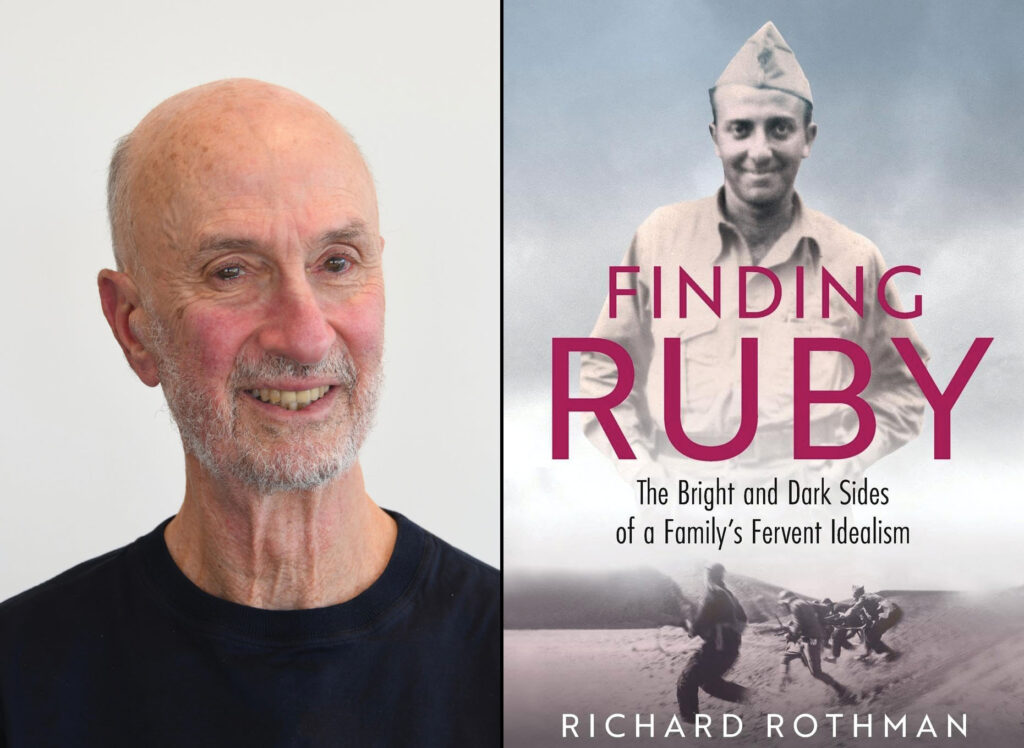


In an interview with The Journal, Amrani explained how the album came about. It all started during a radio interview in Israel, when the host asked what happened to a song in Arabic she had recorded in Egypt back in 1978.

“Her question made me dig around until I found it on a cassette,” Amrani said. “That led me to realize how many recordings I had that were never released or had simply been forgotten over time. I felt I had to do something about it. So I started this journey of rediscovery and sent the materials to Alon, my personal manager, who said we needed to upgrade the sound quality and so we did.”

Among the album’s tracks are covers of well-known songs like “Ballerina,” originally recorded by Nat King Cole, Brenda Lee’s “All Alone Am I” and “Kaleidoscope.”

“I recorded them in New York in the late 1970s for Buddah Records,” she recalled. “They were really excited about my work and thought I had great potential for a U.S. career. It was the disco era, and I recorded those tracks along with my own original material. But the album was never released, and I always felt I had to do something with it.”

The final track on the album is titled “Yaasfure Islam,” which means “Peace Dove.”

“It was after the peace agreement between Israel and Egypt,” said Amrani. “I was living in the U.S. and went to Egypt as part of a trip organized by the Friends of the Hebrew University. Someone introduced me to an Egyptian entertainment reporter, and through her I connected with a record company. They arranged for me to record the song with the Cairo Philharmonic. The conductor didn’t know I was Israeli — we wanted it to be a surprise.”

Amrani, whose parents made Aliyah from Yemen, learned to sing the song in Arabic and was excited about the chance to perform in Egypt — which would have made her the first Israeli to do so.

“We decided to invite (French-Algerian singer) Enrico Macias to perform with me, but once it was revealed that I’m Israeli, I received threats warning me not to come. In the end, Macias performed alone in front of the pyramids. It was a huge disappointment.”

One particularly emotional track is “My Child,” inspired by personal tragedy and loss. She wrote and composed it in 1979 after her first son passed away a month after birth due to medical complications.

“My husband and I tried for eight years to have children, and it just wasn’t working. It was very hard. I suffered many miscarriages,” she said. “Then I got pregnant, but the baby was born in the eighth month and things just didn’t go well. It was horrible — he spent a month in an incubator and then passed away. I said I couldn’t go through it again, but my husband insisted we try. I got pregnant almost immediately, and gave birth to my daughter Aurel in 1980. That’s when I wrote “My Child.” It was included in an album I released in Israel called “Isha” (Woman), but it never became a well-known song.”

Prior to her moving to the U.S., Amrani had been a very popular and well-known singer in Israel. She was part of a duo, Hedva and David. One of their best-known songs from that period is “Ani Cholem Al Naomi” (“I Dream of Naomi”). The song won first place at the first International Song Festival in Japan, held in Nov. 1970.  It was released there as a single and sold two million copies. They went on to release eight more albums there and later toured the United States and Japan.

“David and I were the first to open Japan to the West. There were huge posters of us all over the country,” she recalled. “The Israeli ambassador told us, ‘I could have lived here for 40 years and never achieved this level of popularity.’”

She met Danoff while touring the U.S. with the folk dance troupe founded by choreographer Yonatan Karmon and Gavri Levy. The group performed at the Palace Theatre on Broadway and toured across Europe and the United States, primarily for Jewish Diaspora audiences.

“He came to one of my concerts and later to the afterparty. We talked — he was very nice — and he gave me a ride back to the hotel,” Amrani recalled. “Shortly after, he went skiing in Austria, and my manager Roni happened to be there too. He told him, ‘Do you remember Hedva? You should call her — she likes you.’ When Roni came back to the U.S., he told me the same thing. ‘Remember Dudley? He really likes you. You should call him.’ I said, ‘Me and a doctor? I don’t think so.’”

She agreed to go out with him, but only if her manager could come along. “Dudley arrived in a red convertible with only two seats, so I sat with Roni on one seat while Dudley drove us to a fancy restaurant, Escargot on Fifth Avenue. I later learned that he only eats at fancy restaurants,” she laughed.

The two quickly became a couple and married in 1971 in Israel, in front of 1,250 guests. “We had top performers, including former Prime Minister Menachem Begin, members of the Knesset, and the British band Mungo Jerry — known for their hit ‘In the Summertime.’”

Amrani and Danoff have two children: Aurel, an attorney specializing in litigation and intellectual property, and Doran, a Nashville-based musician who writes music for commercials and more.

Throughout her years in Beverly Hills, she continued recording new material, performed in Israel on several occasions, and volunteered her time to entertain at local events for organizations such as the FIDF, Israel Independence Day celebrations, and Beit Halochem.

Today, when visiting Israel, she’s mostly recognized by those over 50. “The younger ones don’t know me, but when I sing one of my hits, ‘Salam Aleikum,’ they join in right away,” she said. “Had I stayed in Israel, I know I would have done much more — but I have no regrets. I have a beautiful family here, and I cherish that.”

Hedva Amrani’s New Album ‘Lost Songs’ Revives a Lifetime of Memories Read More »

‘Finding Ruby’: One Man’s Journey to Understand the Grandfather Who Chose War Over Family

Attorney Richard Rothman didn’t know much about his grandfather. All he knew was that the man had left his wife and young child in Queens, N.Y. to fight in the Spanish Civil War — and died there. Nearly 90 years after his grandfather, Rubin Schechter — known as Ruby — had passed away, Rothman published a book about his long-lost family history, “Finding Ruby: The Bright and Dark Sides of a Family’s Fervent Idealism.” 

What began as an attempt to understand a missing ancestor evolved into a sweeping, heartfelt historical investigation into legacy, idealism and politics. Rothman was curious to know why an Eastern European Jew who had immigrated to the U.S. as a child would one day leave his family and go fight in a foreign country. His grandfather wasn’t a soldier; in fact, he had been working for his father-in-law’s fish business, and previously in his own father’s fur business.

Rothman’s mother didn’t volunteer much information. Perhaps she preferred to let bygones be bygones. After all, following her father’s death, she had been placed in a boarding home. Those were not fond memories.

Schechter, like many Eastern European Jews at the time, was a Communist. “When the Spanish Civil War broke out he saw fascism and Hitler as a threat to humanity and he couldn’t understand how others did not see it the same way,” said Rothman.

Rothman, who lives in New York, now does pro bono work, primarily for victims of human trafficking and domestic violence. After his mother passed away in late 2020, his wife Melissa was tasked with going through her belongings and deciding what to keep or discard. During that process, she discovered a briefcase hidden on the top shelf of a closet.

Rothman had known about the existence of the briefcase, which was said to contain letters and information about his grandfather, but his mother had always insisted she had no idea where it was. He first saw the rectangular briefcase 50 years ago in his parents’ basement house in Connecticut, but back then, he didn’t spend much time investigating the content. “When I opened it up, I saw that there were a trove of letters that were sent from Spain by Ruby, and some of them were written to him but were returned [to the U.S.] with stamps on the envelope that said: ‘Mort,’ which means he had died. There were a few articles about him and volumes of poems.”

Rothman took the treasure trove of letters and notebooks and began work on what eventually became “Finding Ruby.“ In the book, he described how his grandfather had left two letters on the desk for his parents — one written in Hebrew for his father and the other in Yiddish for his mother. “He informed his parents that he had gone to Spain to fight against fascism and that they shouldn’t try to get him back or hire lawyers,” said Rothman. “He wrote that they have nothing to worry about because he is going to be just a secretary and would be nowhere near the fighting service.”

In actuality, Ruby immediately started training to go to the battlefield, where he eventually was injured. In a letter to his family back home, he wrote that he was shot in his hand but there was nothing to worry about and that he was going to return to the front shortly. However, the wound was much more serious than he had described, and three weeks later, he sent another letter. “He said the wound is tricky and it’s going to be a longer time before he’ll go back to the front,” Rothman said. His grandfather then proceeded to tell how he was wounded and blamed it on a donkey. “What he was doing at the front was a mystery, because he wasn’t supposed to be anywhere near the fighting as he promised his parents, but in any event, he volunteered to go and get ammunition for his battalion. They loaded it on a donkey and sent him on his way back.”

Ruby described with humor his trip back with the donkey, who was walking slowly, carrying the heavy load on his back. As they were marching through the battlefield, he turned to his donkey and said, ‘If you would only run, you would be the most famous donkey in history that the comrades would all salute you and you would be a donkey as no other donkey had ever been. But you are just prancing through this hail of bullets as if it were Sunday afternoon on Fifth Ave.’ He told the donkey, ‘You think you’re camouflaged and protected but they’re not shooting at anyone in particular and you’re going to get us both killed.’ Sure enough, one of the bullets hit him. We assume he died of an infection. He was only 32.”

His widowed grandmother eventually married Harry Nobel, who was his grandfather’s best friend and had also joined the Abraham Lincoln Brigade and in March 1937 went off to fight the Spanish Civil War against Generalissimo Francisco Franco. 

Rothman admitted he felt a lot of conflict about his grandfather’s decision to leave his family. “My feelings about my grandparents kept changing each time while writing the book. I came upon one unlikely discovery after another,” Rothman said. “On one hand, he had abandoned my mother and became captive to a party dominated by Joseph Stalin, and on the other, he fought for a cause he believed in. When my grandparents joined the Communist Party in the 1930s, the party was doing a lot of good — fighting fascism, fighting poverty. Where I came to rest, ultimately, was this: I’m still proud of my grandfather for having volunteered in the war against fascism, at a time when the rest of the world was sticking its head in the sand.”

‘Finding Ruby’: One Man’s Journey to Understand the Grandfather Who Chose War Over Family Read More »

Living in an Upside-Down World

The Associated Press recently came out with a haunting photo essay about the human toll of the October 7 massacres on Israeli victims and their families. Titled “Survivors of the October 7 Hamas attack on Israel struggle to recover,” it includes heartrending interviews with survivors who hid for hours, listening to neighbors cry for help as they were kidnapped from their homes, tortured in front of family members, and butchered in their beds. The piece tells the harrowing stories of their “slow, painful path to recovery.”

Just kidding. What the AP actually produced is a “report on the human toll of Israel’s exploding-pagers attack targeting Hezbollah.” The photographs and accompanying stories depict Hezbollah terrorists and those close to them who were injured after picking up one of the exploding pagers used exclusively by Hezbollah terrorists. The title of the piece, (I kid you not) is “Survivors of Israel’s pager attack on Hezbollah struggle to recover.”

If you didn’t know better, reading the stories of people the AP calls “survivors,” and what the AP describes as “a slow, painful path to recovery,” you’d think those profiled were innocent victims of a vicious terrorist attack. But all those profiled are “Hezbollah officials or fighters” (AKA terrorists — but the AP refuses to use that term) and their family members.

Hezbollah, an internationally designated terrorist organization, perpetrated decades of gruesome and horrific terrorist attacks on innocent civilians — including launching roughly 10,000 rockets at residential areas in the North of Israel after October 7, requiring approximately 80,000 Israelis to flee their homes.

On July 27, 2023, after about 75% of displaced Northerners returned, a rocket fired by Hezbollah from Lebanon landed on a soccer field in Majdal Shams in the Golan Heights, killing 12 young Druze Israelis and injuring dozens more.

These minor details about the nature of Hezbollah, which would provide important context regarding who was injured by exploding Hezbollah pagers, are absent in the AP piece.

Instead, quoting a Hezbollah “representative,” the AP wants us to view the pager operation not as a decisive win against a brutal terrorist organization, but a tragedy. “None of those injured has fully recovered,” we’re told, without a hint of irony.

Among the terrorists we meet are 35-year-old Mustafa Choeib, who, in a photo accompanying his story, “shares a tender moment with his daughter” (yes, that was the caption), and Mahdi Sheri, a 23-year-old terrorist who “can no longer play football” (so sad) and “realizes it’s impossible now to find a role alongside Hezbollah fighters” (such a shame). In other words, he’s unfit for terrorism duty.

The AP lets us know that Hezbollah is so benevolent it is “helping him find a new job.” Gosh. Such altruism.

We also meet 21-year-old Sarah Jaffal who “picked up the device belonging to a family member.” Which family member? We’re never told. Jaffal is not merely wise beyond her years but verges on angelic. “The driven, inquisitive woman” as the AP describes her, “leans on her faith to summon patience.”

“God only burdens us with what we can bear,” she says. “I forget my wounds when I see another wounded.” Hezbollah produces such saintly family members of terrorists.

The photograph that accompanies her story is of Jaffal holding her iPhone. In the case, we see a photo of the deceased Hezbollah terrorist leader, Hassan Nasrallah. Nasrallah, who was eliminated in a targeted Israeli air strike, was responsible for the deaths of hundreds of Americans as well as untold others.

A portrait of Nasrallah hangs on the wall above 26-year-old Zeinab Mestrah in the photo accompanying her story. We’re not told to which terrorist-family-member the exploding pager she picked up belonged. But five days after the pager explosions, she was flown to Iran for medical treatment. So we can guess that he must have been fairly high up in the terrorist hierarchy.

Finally, the AP introduces us to 12-year-old Hussein Dheini, who picked up his terrorist-father’s Hezbollah pager. In the accompanying image, he is pictured being comforted by his mother. Sadly, we’re told, he “can’t go swimming with his father” (the terrorist) anymore. “The boy,” as the AP refers to him, creating a sense of harmlessness and innocence, was “a member of Hezbollah scouts,” which the AP calls “the group’s youth movement.”

The Hezbollah scouts is a terrorist training program for children — the Hezbollah equivalent of the Hitler Youth.

In a normal world, a father either encouraging his child to become a terrorist or putting his child in harm’s way because of his own terrorist activities would be presented as child abuse. In upside-down world, however, a father did both, and a major news organization obscures his responsibility. Terrorists and budding terrorists are referred to as “survivors,” who, we’re told with no caveats, “blame Israel for their wounds.”

In a normal world, a father either encouraging his child to become a terrorist or putting his child in harm’s way because of his own terrorist activities would be presented as child abuse.

And in an upside-down world, the AP uncritically tells us that despite the operation being among the most precisely targeted attack on terrorists in the history of warfare (the other one being the Israeli operation using exploding Hezbollah walkie-talkies), “human rights and United Nations reports” call the pager operation “indiscriminate.”

The inversion couldn’t be more complete.

The AP acknowledges that “the pagers were exclusively sold to Hezbollah members” (in other words, terrorists) and that, according to the Mossad, “tests were conducted to ensure that only the person holding the pager would be harmed.” Even Hezbollah admits that “most of those wounded and killed were [Hezbollah] fighters or personnel” (i.e. terrorists).

Which makes the whole operation definitionally the opposite of indiscriminate (“done at random or without careful judgment”).

While we’re at it, in a normal world, when a bombing campaign demolishes 75% of buildings (many of which are booby-trapped, contain weapons, or provide access to terror-tunnels) and at the same time protects 97% of the population, that, too, is the opposite of “indiscriminate.”

It’s becoming increasingly clear that antisemites and the antisemitic-adjacent are either incapable of accurately defining words or have decided (like Ireland, Amnesty International, and others), that when reality is inconsistent with accurate definitions of their preferred, morally freighted words, the solution is to redefine the words.

In upside-down world, therefore, precision strikes are “indiscriminate.” In upside-down world, successfully providing humanitarian aid (as of this writing, more than 100 million meals) directly to those in need, rather than allowing Hamas terrorists to steal it, violates international humanitarian law — because it disadvantages Hamas and therefore works to Israel’s military advantage. (No joke, this is the reasoning.)

In upside-down world, exactly when a hostage deal seems possible and ending Hamas’s reign of terror is almost conceivable, a cabal of countries committed to maintaining a permanent state of existential threat against Israel declare their intention to recognize a Palestinian State, eliminating any incentive for Hamas to release the hostages.

And in upside-down world, while Hamas terrorists deliberately starve Israeli hostages, even publishing videos that make clear how emaciated and weak they are, the media ignores both the GHF success and the hostages’ plight. Instead, once again, they publish fraudulent stories on their front pages, with photos provided once again by Hamas, depicting what we’re once again meant to believe are formerly healthy, starving children, but who, once again, in actuality were born with severe medical conditions.

Despite what one must assume are their best efforts, no mainstream news outlet has put on its front page a single true story of a formerly healthy, starving Palestinian. In a normal world, the media would recognize what this means.

This is not to say that there is no hunger or other humanitarian issues in Gaza. It’s only to say that all the evidence points to a very different story than the one the media wants to report: The only truly starving people in Gaza — and certainly the only people being deliberately starved — are Israeli hostages.

But in an upside-down world, the truth, whether in Lebanon or in Gaza, is a story too inconvenient to tell.

Now, what about those poor victims of the Israeli attack on Hezbollah’s Walkie-Talkies?


A social psychologist with a clinical background, Dr. Paresky, an Associate at Harvard University, serves as Senior Advisor to the Open Therapy Institute and Advisor to the Mindful Education Lab at New York University. In addition to The Jewish Journal, her work appears in Psychology TodayThe GuardianPoliticoSapir, The New York Times, and elsewhere. She has taught at Johns Hopkins, the University of Chicago, and the United States Air Force Academy, and writes the Habits of a Free Mind newsletter. Follow her on Twitter at @PamelaParesky

Living in an Upside-Down World Read More »

Calling Israel’s Independence “Naqba”

When we have problems we’re advised
never to catastrophize,
and should therefore not be surprised
to hear the Arabs’ dreadful lies

when they call Israel’s independence
“catastrophe.” Themselves they curse
this way since they pronounce a sentence
that God is certain to reverse,

if He exists, and if by chance
He doesn’t, Jews will be compelled
without a partner in the dance
to dance without Him, self-propelled,

as a majority now do,
completely in denial of the view
that God has helped the people who
cling to false facts their foes eschew.

I call these foes the Naqabees,
who saying naqba can’t undo
the way that Jews called Maccabees
defeated Greeks — Jew haters who

denial post as a naqba,
Arabically devoted to “defeat,”
foes by the words Allahu aqbar
deceived, fake “Promised land” receipt.


In “Post-it notes: Do prefixes trap us in the past?” TLS, 7/25/25, Ben Hutchinson’s review of POST-: Nachruf auf eine Vorsilbe, by Dieter Thomä, suggested to me that the basic fallacy of naqba  ideology is that it bases post-Israeli reality on fixing this label onto the past like a post-it note, attempting to inflict a post-naqba defeat on Israel rather than attempting to fix the present and future.

Ben Hutchinson argues, only semi-facetiously, that we need a new discipline, “prefix studies” – as part of which “post”, coming after all the others, would be first among prequels:

Thomä’s ambition, in the end, is not so much diagnostic as curative. He wants to knock “postisms” from their pedestal, to provide fixes rather than prefixes.  Declaring that one period comes after another one, as he sees it, is a kind of self-fulfilling prophecy, since it is the very declaration – and subsequent discourse – that makes us feel this way. If we want epochal agency, he suggests, if we want to feel in control of our present age, we would do better to shake off the “backspin” of the past. Whether removing a prefix from our vocabulary will really make that much difference remains open to question: it is doubtful whether soft-pedalling the “postcolonial” history of the Israel–Palestine conflict will change much on the ground.


Gershon Hepner is a poet who has written over 25,000 poems on subjects ranging from music to literature, politics to Torah. He grew up in England and moved to Los Angeles in 1976. Using his varied interests and experiences, he has authored dozens of papers in medical and academic journals, and authored “Legal Friction: Law, Narrative, and Identity Politics in Biblical Israel.” He can be reached at gershonhepner@gmail.com.

Calling Israel’s Independence “Naqba” Read More »

A Moment in Time: “Proceed with Caution”

Dear all,

How do we know for certain when it’s time to make a move?

Are we spontaneous?

Are we strategic?

Do we listen more to our heart or our mind?

Do we miss the opportunity by allowing too much time to lapse?

Do we miss the opportunity by going too fast?

I am reminded of wisdom from my paternal grandfather, Bert Shapiro. He would always say, “Proceed with caution.”

Those words help me to keep my radar attuned whenever I need to make a decision. Yes, we need to move. But we should always move with caution. In that moment in time when we aren’t quite sure what to do, the worst thing is to be frozen.

So proceed. With caution. And keep your eyes toward the future.

With love and shalom,

Rabbi Zach Shapiro

A Moment in Time: “Proceed with Caution” Read More »

A Bisl Torah — Being Found

On a recent trip, I learned a bit about our flight attendant’s story. She explained that she commutes back and forth, from Atlanta to the airline’s home base in Chicago. Impressed by her commitment, I asked if she always wanted to be a flight attendant. She laughed and said, “Ask any flight attendant. This job finds you. And I couldn’t imagine doing anything else.”

The idea of being found is intriguing. Many go a lifetime and never really find themselves. They search for a purpose, trying to find a sense of ease within constant chaos and hoping to find a place where one belongs instead of feeling unanchored.

Being found sounds like such a gift.

But in a way, perhaps being found is a task that involves another person: Someone actively looking at another and reminding them of where they belong, which purposes they may achieve, and how they fit within a certain puzzle. On the bimah, Rabbi Sherman and I like to think about who should be future rabbis and cantors. But we forget that even in our dialogue, we are helping someone else find their place so that they, too, can say, “My future found me.”

It is a mitzvah to return a lost object. The Torah says we must return any lost object and not remain indifferent or pretend we did not see it. So, too, we may not remain indifferent when we see each other. If someone is lost and we see a path forward in a way they do not, it becomes our obligation to help them find their way.

Being found need not be a solitary task. Let each of us partner with God in helping others find their way.

Shabbat Shalom


Rabbi Nicole Guzik is senior rabbi at Sinai Temple. She can be reached at her Facebook page at Rabbi Nicole Guzik or on Instagram @rabbiguzik. For more writings, visit Rabbi Guzik’s blog section from Sinai Temple’s website.

A Bisl Torah — Being Found Read More »