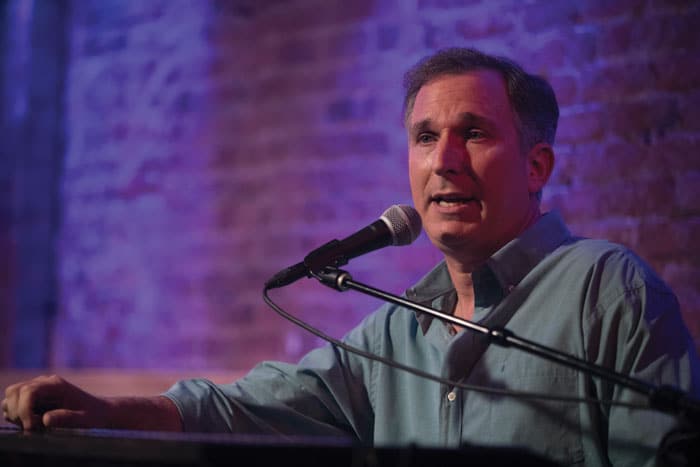
Two things are apparent when you talk to Wayne Federman. Number one, Wayne loves comedy. And number two, Wayne is completely obsessed with comedy.
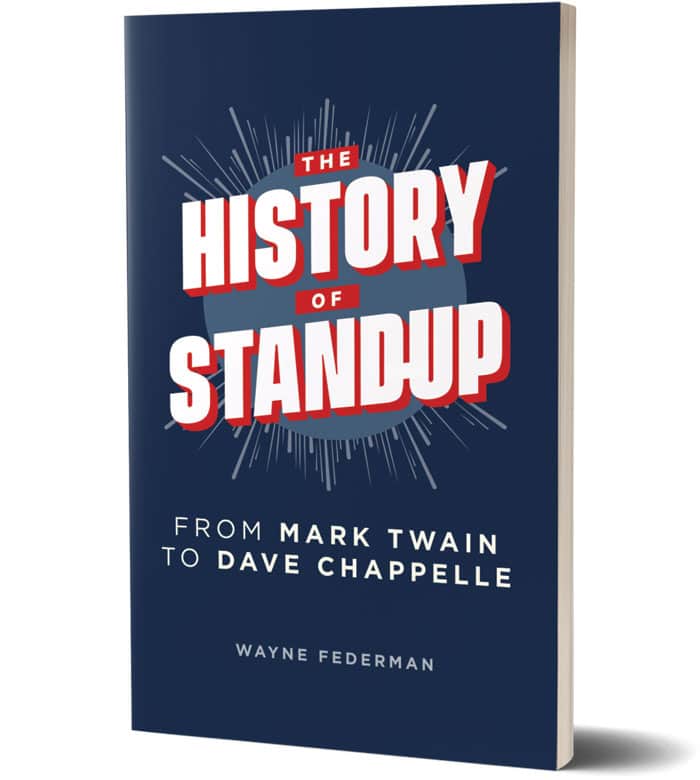
Not only does Federman perform standup comedy, as he has for over 35 years, but he also teaches comedy at the University of Southern California. Now, he’s written a book on the history of standup comedy called, “The History of Stand-Up: From Mark Twain to Dave Chappelle.”
“I had been a voracious reader of numerous books on comedy,” he said. “But no one had ever written the history of standup comedy.”
Federman, who has appeared on “Curb Your Enthusiasm” and “Silicon Valley” and in movies like “Knocked Up” and “Step Brothers,” writes about the earliest pre-vaudeville practitioners like Mark Twain and Artemus Ward and brings it up to the present day comedy scene.
There are plenty of interesting stories and personalities. One that especially stood out to Federman was Elsie Janis.
“She was an impressionist, actress and singer,” he said. “She did funny impressions for years in vaudeville, and she was the first performer to entertain the troops in a war zone in 1917, well before Bob Hope. She was in France during World War I.”
The book covers the Borscht Belt, where Jewish comedians were the influencing pioneers of early comedy. Back then, Federman said, many of them changed their names to sound less Jewish. Mendel Berlinger became Milton Berle and Jacob Maza became Jackie Mason, for instance.
“The History of Stand-Up” covers the Borscht Belt, where Jewish comedians were the pioneers of early comedy. Back then, Federman said, many of them changed their names to sound less Jewish. Mendel Berlinger became Milton Berle and Jacob Maza became Jackie Mason, for instance.
“All these comedians wanted to assimilate. It was one of the main goals of these comics, to get into mainstream, goyim society.”
Of course, in the book, there’s mention of one of the all-time greats, George Carlin, who gave comedians everywhere the best advice they could follow.
“He famously said it was the obligation of the comedian to find the line and deliberately cross it,” said Federman.
That’s especially relevant these days, when cancel culture is a big topic of conversation in the comedy world.
“There’s an element of comedy that pushes the envelope,” said Federman. “Obviously, comedians want to make people laugh but there’s another element of social satire that comedians like to lean into. People can take offense to that.”
Cancel culture isn’t new. According to Federman, it’s been happening since comedy began and this is just the latest iteration.
However, cancel culture isn’t new. According to Federman, it’s been happening since comedy began and this is just the latest iteration.
 “People have been trying to, and successfully, protesting comedians for well over 100 years,” he said. “Now we have social media, so it gets a lot more play. Some people think of cancel culture as ‘consequence culture,’ where you can say whatever you want, but you’ll have to deal with the blowback. It’s basically a battle of competing values. One of those values is free expression, and that value comes up against the value of an inclusive, welcoming society.”
Over the years, what’s funny has also changed dramatically. Federman brought up the example of “The Honeymooners,” where Ralph Kramden always tells his wife, “One of these days, Alice – Pow! Right in the kisser!”
“There wasn’t a lot of overt profanity, but there were many jokes about spousal abuse that people today would find offensive, and we wouldn’t find certain words offensive,” he said. “The social norms continue to evolve and change.”
Federman also pointed out that standup is generational. It’s for the people of that time.
“That’s one of the reasons it doesn’t tend to age well,” he said. “It goes bad, like milk. That’s why it’s hard to find standup comedy that spans generations.”
One thing stays the same, though.
“The basic idea of one person standing on stage, with their own thoughts, in front of an audience with the expectation of making them laugh has really remained constant,” Federman said. “It’s the defining mission statement of the job. And that has not changed since the 1800s.”
You can purchase “The History of Stand-Up: From Mark Twain to Dave Chappelle” on Amazon.