When is a dog in a medieval illustrated Hebrew manuscript more than a dog? When it’s a testament to the undying dedication of Jews to God’s law.
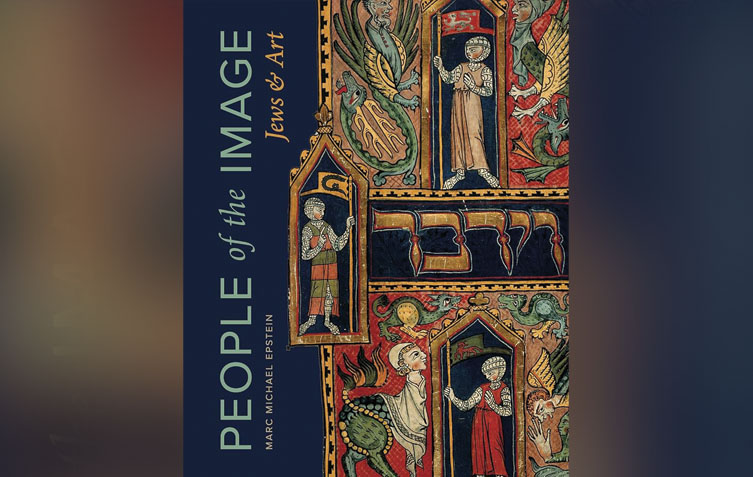
As the art historian Marc Michael Epstein details in his latest engaging analysis of Jewish artistic expression, “People of the Image: Jews and Art,” dogs appear in numerous artistically rendered Jewish texts accompanying passages related to Moses. After all, canines’ renowned loyalty was a natural representation of the “loyal transmission of the divine mandate from generation to generation.” And the Book of Numbers tells us that God believed Moses to be “the most loyal in My household.”
“Manuscripts were expensive,” Epstein reminds his readers. Every brushstroke cost time and money. Examining examples of medieval Jewish art, then, offers a window into the mentality of Jews at the time, as reflected in images they either drew themselves or commissioned. “Medieval art is usually thought of as patently non-Jewish,” Epstein writes, often because of the traditional aversion to violating the biblical commandment against the making of graven images. But Jews have drawn and painted nonetheless.
Training his sharp eye on “a few precious Jewish objects that survived owing to their relatively small size and portability,” Epstein shows how Jewish texts produced for well-to-do Jewish patrons reflect the Jewish cultural and religious experience of their owners and users.
In addition to dogs meant as stand-ins for Moses and his flock’s loyalty to the divine law, rabbits appear in numerous illustrated Haggadot in Europe during the Middle Ages. In many instances, they are being chased by dogs. In these representations, the dogs are not the Jews themselves, but rather, the historical antagonists of our people. The image of the hare is meant to remind readers at the Passover seder of the order of blessings to be recited if the Seder falls on a Saturday night. The Talmudic acronym for the order, Yaknehaz, is illustrated through a “jag den Häs,” German for “hare race.” The rabbit chase is also meant as a humorous attestation to the Jews always somehow avoiding the clutches of their foes. Some renditions of the theme illustrate the formerly aggressive dog now humbly serving a cup of blessing to a crown-wearing rabbit. The appearances of these animals testify to both knowledge of Jewish law and an appreciation for God’s ongoing protection of His people, key themes of the Passover seder.
Jews, due to their religious status as “outsiders” within the dominant surrounding culture, possessed “historical perspective and a certain ‘permanent observer status’ that was their birthright,” Epstein writes. They thus saw their contemporary enemies as simply the latest in line of others who their ancestors had outlasted.
In another manuscript, an ancient Israelite enslaved in Egypt is holding bricks that look like books. Epstein suggests that this dual-natured image is an allusion to both the oppression and the law, with the latter being Israel’s source of liberty and salvation. Using this particular instance to reflect on the nature of his project, he asks and answers “The lesson for us, as students of art? The material and spiritual, the practical and intellectual, humility and innovation, bricks and books – are all necessary elements of shalom – peace, stasis, equilibrium, balance between self and other.” In other words, these crafted Jewish books represent the ways in which Jews have both expressed their faith and expressed appreciation for the miracle of their ongoing survival amidst persecution.
“Beyond simply illustrating Jewish scripture, history, or rabbinic or mystical commentary” the author concludes, “art can become Jewish commentary in and of itself.” As the epigraph in one of the book’s chapters notes, the Irish playwright George Bernard Shaw observed “You use a glass mirror to see your face; you use works of art to see your soul.”
Rabbi Dr. Stuart Halpern is Senior Adviser to the Provost of Yeshiva University and Deputy Director of Y.U.’s Straus Center for Torah and Western Thought. His books include the newly released “Jewish Roots of American Liberty,” “The Promise of Liberty: A Passover Haggada,” “Esther in America,” “Gleanings: Reflections on Ruth” and “Proclaim Liberty Throughout the Land: The Hebrew Bible in the United States.”