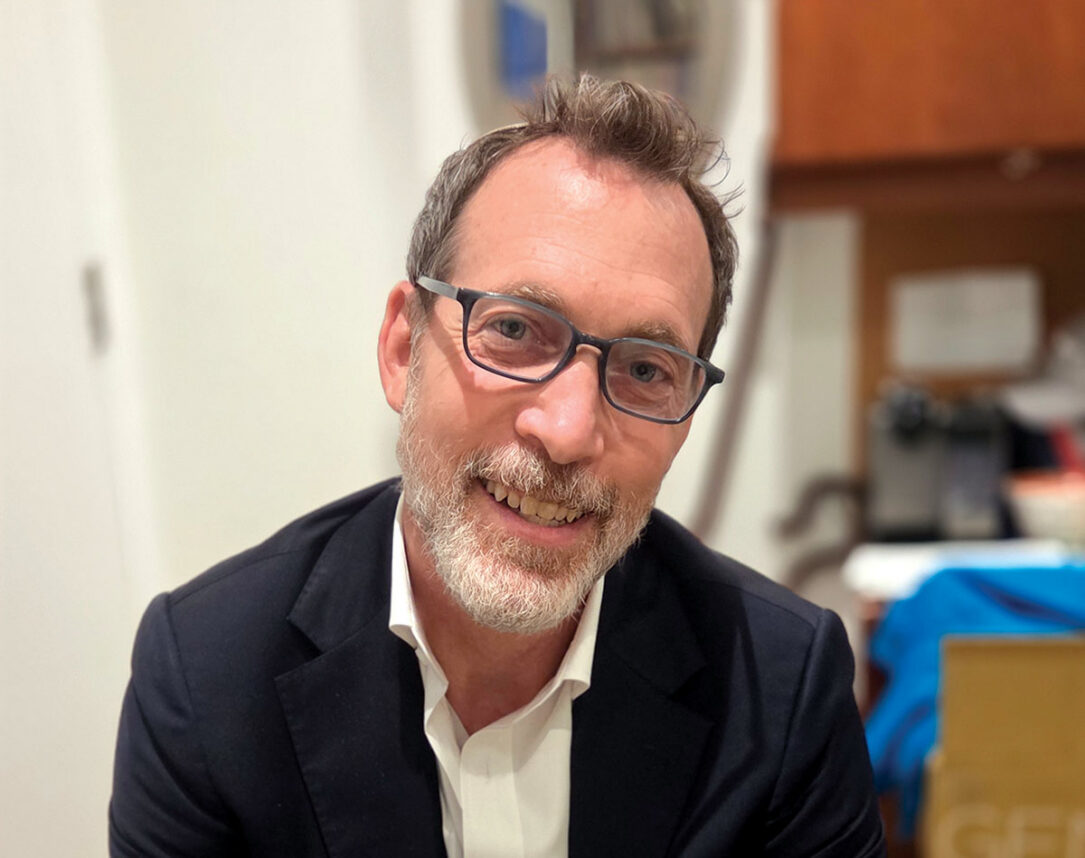
If Hollywood menschdom has a name, it might be SteveGuttenberg. For years, audiences have identified Guttenberg as a nice Jewishmensch in films such as “Cocoon” and “Three Men and a Baby.” But in his newfilm, “P.S. Your Cat Is Dead,” which opens Jan. 24, Guttenberg trades in hisimage — for 90 minutes, anyway — for a much darker persona.
In “P.S.,” the 44-year-old actor plays Jimmy Zoole, adown-on-his-luck writer whose life takes a dark turn one fateful New Year’s Evewhen he captures a gay burglar in the process of robbing his apartment. Theblack comedy not only signals a stretch for the actor but also marksGuttenberg’s directorial debut, in which he faced a number of challenges inadapting James Kirkwood’s 1969 play and book into a film.
Guttenberg said his biggest responsibility was to keep tothe theme. “It’s one that’s universal: No matter how bad it gets, if you hangon, it’s going to turn around.”
Those who know Guttenberg insist that in real life, thesingle actor deserves his success, as he hems closely to the friendly, engagingpersona on which he built his celebrity.
“That likeable and engaging personality you’ve seen up onthe screen — that’s him,” said childhood friend Richard Klein, who attendedBaldwin Drive Elementary and Plainedge High School in North Massapequa, N.Y.,with Guttenberg.
“He’s just really a nice guy,” said Guttenberg’s co-writer,Jeff Korn. “People say that all the time, but he’s very nice.”
Off screen, Guttenberg’s good nature has lent itself tocharity work. Long an ambassador for children’s causes, he started TheGuttenhouse, a place that supports young adults leaving foster care. He alsospearheads Sight for Students, a $7 million initiative to provide eyeglassesfor 50,000 underprivileged youngsters. Guttenberg credited his sense of tikkunolam (heal the world) to his Jewish upbringing.
“It’s the Talmud,” said the once-married actor, who has nochildren. “It’s a rule when you tithe the fields, you leave 10 percent for thepeople to eat.”
The well-liked Pacific Palisades resident is the honorarymayor of his affluent community.
Asked what Jewish organizations he is involved with,Guttenberg replied with a straight face: “The Academy of Motion Pictures Artsand Sciences…. I’ve been to the Friar’s Club.”
The “Diner” star won’t kiss and tell about the greatGuttenberg movies that got away. Instead, he starts reeling off a bunch offictitious sequels he declined: “‘Police Academy on the Moon’; ‘Three Men andGranny From the Beverly Hillbillies’; ‘Short Circuit,’ but not a robot, abeeper …, ‘CocClooney,’ about George Clooney….”
Korn observed that Guttenberg is “very family oriented. Hebrought his mother and father into the movie.” Guttenberg’s father plays aderanged old man in the film’s opening scene, while the his mother makes aquick walk in the house of Guttenberg’s aunt in the film.
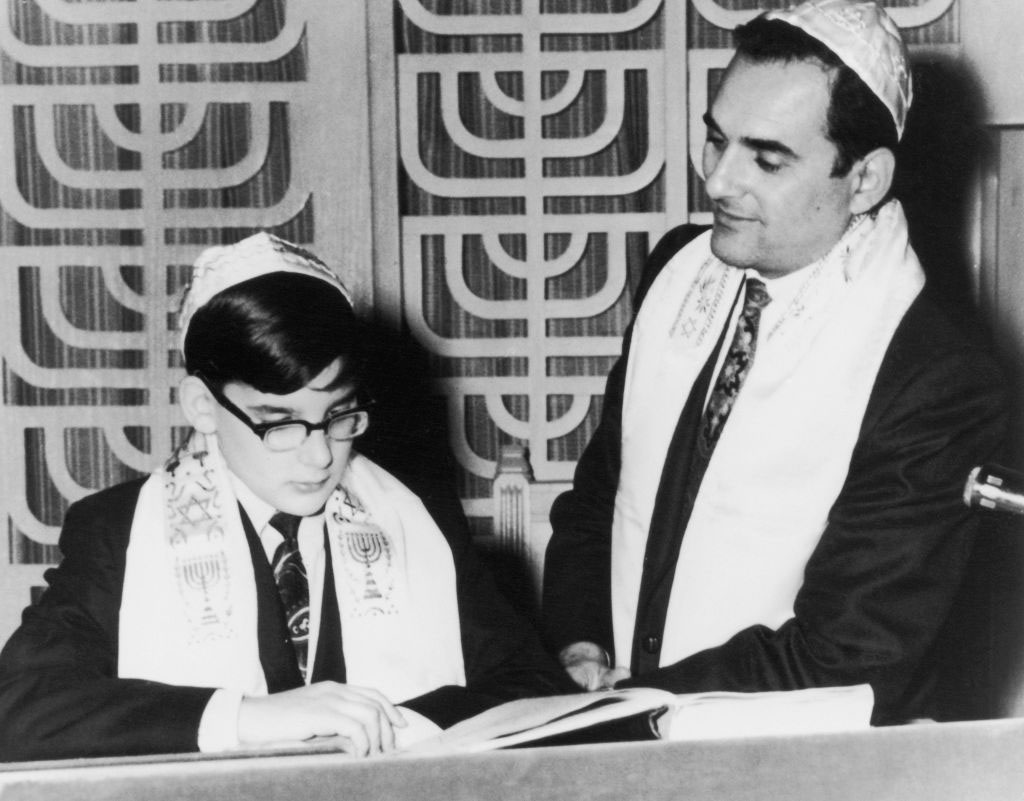
Guttenberg’s parents sent the young Steven to Hillel HebrewSchool, a synagogue housed in a converted home, where Guttenberg had his barmitzvah. Following his graduation from Plainedge in 1976, Guttenberg went toHollywood.
As a struggling actor, Guttenberg had his surname to contendwith. Even in the late ’70s and early ’80s, the impulse among actors with aJewish-sounding name was to change it to something that sounded less ethnic.
“I considered it,” Guttenberg said. “Many of my agentswanted to change my name.”
However, Guttenberg resisted, because to change one’s name”was a lifetime choice” that he did not feel comfortable making.
As a budding actor, Guttenberg led a rather charmed life.Early in his career, Guttenberg had roles in “The Boys From Brazil,” directedby Franklin J. Schaffner and starring Gregory Peck, Sir Laurence Olivier andJames Mason. Following a nuanced turn in Barry Levinson’s “Diner,” Guttenbergplayed leading roles in four top-grossing film franchises of the 1980s: “ThreeMen and a Baby,” “Cocoon,” “Police Academy” and “Short Circuit.”
“It’s fantastic,” Guttenberg said, noting that he’d like tocontinue directing and acting. “It’s just the most blessed job one can have.I’m so blessed that so many people like what I do and what I stand for.”
“P.S. Your Cat Is Dead” debuts today at Laemmle Sunset 5. For more information visit www.psyourcatisdead.com .