How does “a Jewish virtual outreach organization” without a building of its own, that doesn’t charge dues or have a paid staff, get the president of Blue Note Records, in-demand bassist, and Grammy-winning producer who has worked with Bob Dylan, Bonnie Raitt, Iggy Pop, Ringo Starr and the B-52’s, to produce their album?
According to Nashuva’s Rabbi Naomi Levy, best-selling author and spiritual leader of the congregation and the multi-ethnic, interfaith group of musicians that has been together for nearly 15 years, it was “a Hanukkah miracle type of thing. When you least expect it, something beautiful can come into your lap.”
Levy is referring to the legendary Don Was, who agreed to produce Nashuva’s album of Jewish prayers, “Heaven on Earth: Songs of the Soul.” Was, Levy said, is “a mensch beyond. A pure mensch.”
The meeting of Nashuva and Was was an act of serendipity when an elderly couple, Bill and Ethel Fagenson, started attending Nashuva’s services several years ago. They’d arrive early and offer to help set up. Levy was sure they’d been married forever. “They had that look of a couple that had been together for years,” she said, but about three years ago they asked if she would marry them. On the Shabbat before their wedding, there was a service to
bless the couple, and Bill asked his son, Don, to attend.
“I wouldn’t say I was reluctant,” Was (ne Don Edward Fagenson), told the Journal. “Let’s say I went in with low expectations.” However, he added, “the first thing I noticed was that this was actually good. I was really surprised.” The second thing he noticed was “the impact it was having on the congregation. There was no question that it was going deep and was really uplifting.”
After the service, he spoke with Levy. “I thought she had put [the prayers] together in a way that was relevant and that honored tradition,” he said. Although Was had not really attended services since his bar mitzvah, “I knew the prayers, and it was respectful of where the prayers come from but addressed our times and I saw the impact.”
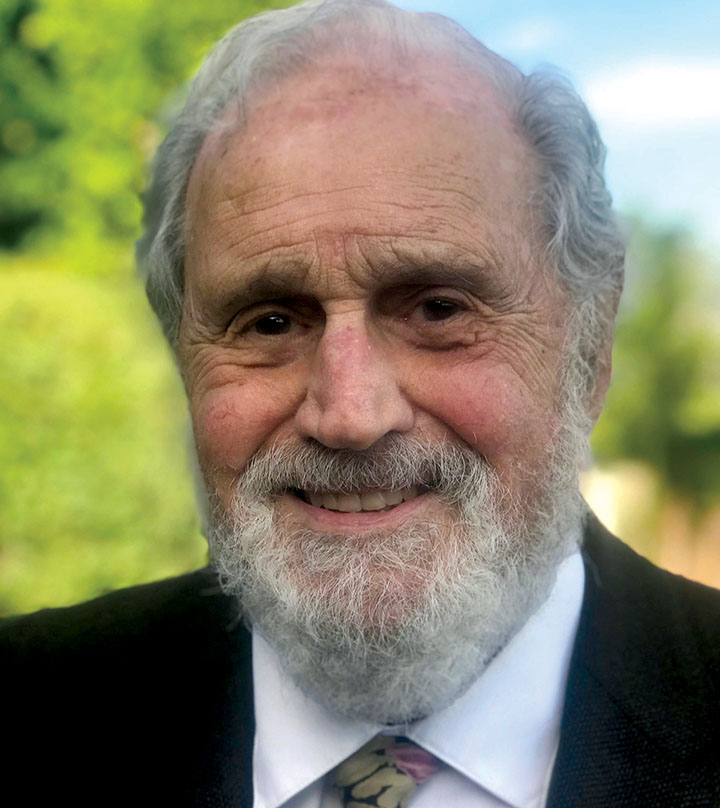
At the time, Levy had no idea who she was talking to. “I didn’t know who Don Was was,” she said. He attended the service in a black suit, white shirt, wide-brimmed hat with a full beard and a halo of hair. “I can’t tell you how many people said to me, ‘We didn’t realize Bill’s son was a Chasid,’ ” Levy said.
After speaking with Levy, Was agreed to produce Nashuva. While some of the Nashuva’s musicians play professionally, the group had never recorded together. The original plan was to record the band live, but “it was just easier to bring them to the [Apogee Studios in Santa Monica] than to bring the studio to them,” Was said.
Was listened to recordings of the band’s performances and chose the songs he felt worked best. To re-create the feel of a service, he set the band on a stage, and members of the congregation were invited to watch and sing along. Levy said they packed as many seats as they could into the room.
When some congregation members told Levy they were tone deaf, she asked Was if that was a problem. It wasn’t. “He said he wanted tone deaf,” Levy said. “He wanted the crowd to be organic and tone-deaf is good because it adds a certain kind of natural feel to it.”
The album was recorded “live” with very few overdubs. “They’re very well-rehearsed, and really good,” Was said. “I pressed record — the most important job there is.” He said he wanted “to make sure that the thing that you felt at the service was captured, which is sometimes hard to do.”
Levy described the sessions as “like a festival inside the studio. It felt joyous and loving. Most of the songs were recorded in one take. “If we didn’t feel chills, we didn’t use it,” Was said.
Describing what impressed him about the sessions, Was said, “They’ve landed on something that had a deep velour to it. It resonates. To me, playing music and recording music is spiritual, even if you’re not directly singing prayers.”
He also spoke of Nashuva having chemistry. “They’re a really cool band,” Was said. “It’s an odd collection of folks that come together, and the whole is greater than the sum of the parts. That, I think, is the essence of all great bands.”
Listening to the album, Levy said she was “overwhelmed by the warmth and beauty, and this beautiful gift we had been given.” Was added he thinks the band and album embodies Levy’s “call to the disenfranchised to reconsider.”
Did the experience cause him to reconsider?
Was laughed and said, “I’m always reconsidering.”
“Heaven on Earth: Songs of the Soul” is available for streaming on Spotify and Apple Music, or can be purchased on Amazon, iTunes, or through Nashuva.com.