fbpx

November 28, 2018

Elon Gold Gets Into the Hanukkah Spirit

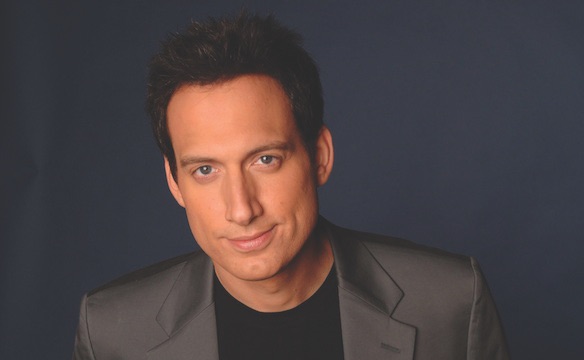
For comedian Elon Gold, this is a busy time of year, with stand-up appearances in his native New York, here in Los Angeles and in Israel, where he performed in Jerusalem on Nov. 24. He spoke with the Journal about Hanukkah memories, Christmas admiration and his comedy-centric dreams.

Jewish Journal: What Hanukkah memories stand out from your childhood?

Elon Gold: My parents were teachers on teachers’ salaries. We lived in an apartment on Pelham Parkway in the Bronx. I remember unwrapping one present and it was a package of three Bic disposable pens. But it was still a nice tradition, a gift every night. These customs continue generation after generation and I’m doing that with my family. I’ve got four kids, 9 to 18, and by night five [the presents] get very shvach (weak). But we end it with a bang on the last night. Hanukkah is not a religious holiday like Yom Kippur when you’re in shul all day. There’s no obligation other than lighting the menorah. It’s not so much a religious observance as a fun family tradition that recognizes our heritage and our people.

JJ: How are you celebrating Hanukkah this year?

EG: I’m doing five shows in New York and my family is coming with me. Then I come back to L.A. to emcee the (pro-Israel nonprofit) Stand With Us “Festival of Lights Gala” at The Beverly Hilton on Dec. 9, for the eleventh year in a row.  

JJ: Got a good Hanukkah joke?

EG: “There aren’t any songs on the radio for us, other than Adam Sandler and his great ‘Hanukkah Song.’ You know why? All the great Jewish songwriters were busy writing Christmas songs. They knew where their bread was buttered.” My brothers and I used to take Christmas songs and make up new lyrics, with a funny, Hebraic twist. 

JJ: You do an annual Christmas Eve comedy show.

EG: “Merry Erev Xmas” at the Laugh Factory, making Christmas fun for the Jews in L.A. This is our 10th year. Russell Peters, Alonzo Bodden, Ben Gleib and Dom Irrera will be there this year, and surprise guests. I love the whole holiday season, starting with the night before Thanksgiving through New Year’s, including Christmas. I kind of enjoy it. I like the lights and listening to Christmas music. I can get into the spirit of it, even if I don’t observe it.

JJ: Do you have any TV appearances coming up?

EG: Judd Apatow asked me to be in Season 3 of his show “Crashing” on HBO. I’m in two episodes. I think the first and second. I take Pete [Holmes, the lead actor] to one of my shul gigs. It premieres in January. I’m on a new family show on Netflix called “Best. Worst. Weekend. Ever.” I’m playing a really funny character, a pet store groomer, loosely based on a couple of Israelis that I know. I’m an integral part of the story about these kids who are trying to get into Comic-Con. I have a stand-up special streaming on Amazon Prime, “Elon Gold: Chosen & Taken,” and I’m working on my next hour-long comedy special. In July, I did an appearance on [“The Late Late Show With] James Corden,” where I got to dispel the inaccurate Jewish stereotype that Jews are obsessed with money. When there’s a message behind the joke, it makes it a little more important. I’m proud of that.

JJ: When did you know you were funny?

EG: In eighth grade I started doing impressions of my teachers, but the first time I knew I wanted to do this for a living was at a Purim spiel at Yeshiva University High School in my sophomore year. I wrote and performed two one-man sketches. It went so well that seniors and juniors that never looked at me, let alone talked to me, came over and said, “You’re funny, dude.” It was so gratifying. 

JJ: You always planned to do it as a career?

EG: For a while I was into the stock market, read The Wall Street Journal, but jokes come so naturally to me. This was what I was meant to do. Unlike a lot of people, it was never my intention to get into comedy to get girls. I met my wife when I was 15, and I knew I would marry her. We’re together 30 years. Our 25th wedding anniversary is coming up in June.

JJ: What’s on your career wish list?

EG: There are projects I’m trying to develop, including a comedy TV show with Howard Gordon, the [co-]creator of “Homeland.” I’m very active on WhatsApp and I want to keep putting out viral clips and have people share my work. For the first time in my 25-year career I feel like I have fans who are familiar with my stand-up and are excited to come see me live. 

I love being the go-to Jew for fundraisers and gala dinners. I get to help a cause and make people laugh — a total win-win. I’m happy where I’m at and creatively at the top of my game but I’m not satisfied. I don’t think I’ve scratched the show-business surface. A lot of comedians put in 20 years before things start cooking for them and hopefully I’m one of them. Meanwhile, I’ll keep coasting like I am. As long as I’m paying the mortgage, I’m OK.


Elon Gold hosts “Merry Erev Xmas” at the Laugh Factory on Dec. 24.

Elon Gold Gets Into the Hanukkah Spirit Read More »

What’s Happening: Cooper, Cohen and L.A. Phil Concert

SAT DEC 1

Anderson Cooper and Andy Cohen
Anderson Cooper, the Emmy-winning CNN anchor, and Andy Cohen, the Emmy-winning host and executive producer of Bravo’s late-night interactive talk show “Watch What Happens: Live,” provide a live, behind-the-scenes look at pop culture and world events. The two longtime friends interview each other and take questions from the audience during “Deep Talk and Shallow Tales.” 8 p.m. $60-$355. Dolby Theatre, 6801 Hollywood Blvd., Hollywood. (323) 308-6300.

Actress and writer Monica Piper

“Not That Jewish”
Actress and writer Monica Piper’s acclaimed one-woman show returns to the Jewish Women’s Theatre’s The Braid through Dec. 16. Emmy-winner Piper traces her experience growing up in a showbiz-oriented family in the Bronx and re-enacts failed relationships and her decision to adopt a child after her father’s death from heart failure. 8 p.m. Thursdays and Saturdays and Wednesday, Dec. 12; 2 p.m. and 7:30 p.m. Sundays. $40 general in advance, $45 at the door. The Braid, 2912 Colorado Ave., #102, Santa Monica. (310) 315-1400.

SUN DEC 2

Federation Super Sunday
Help The Jewish Federation of Greater Los Angeles via phone, text or mail on this community-building day of giving. Food provided. Volunteers must be at least 18 years old. Pre-registration required. Shifts: 9:30 a.m.-noon; noon-2:30 p.m. Free. Stephen Wise Temple, 15500 Stephen S. Wise Drive, Los Angeles. Call David Harris at (323) 761-8159 or email dharris@jewishla.org with questions.  

Sinai Temple’s Rabbi  David Wolpe

30 Years After’s Taboo Summit
Iranian-Jewish community members come together to address and explore community taboos around LGBTQ+ issues, body image, mental health and dating. Lectures, workshops and general resources raise awareness about generally stigmatized topics in the Persian Jewish community while giving attendees the opportunity to voice their experiences and learn from professional expertise. Speakers include Sinai Temple Rabbi David Wolpe; JQ’s Arya Marvazy and Amanda Maddahi; Michelle Nazarian; and marriage and family therapist Rodney Rabbani. Organized by 30 Years After, a nonpartisan L.A. nonprofit promoting Iranian-Jewish participation in political, civic and Jewish life. All ages. Kosher brunch and snacks provided. 10 a.m. $25-$40. Iranian Jewish Federation, 1317 N. Crescent Heights Blvd., West Hollywood.

WED DEC 5 

Mehta, Bronfman and L.A. Phil
A two-part musical experience features the Los Angeles Philharmonic with conductor Zubin Mehta, music director for life of the Israel Philharmonic Orchestra, and internationally acclaimed pianist Yefim Bronfman. The first event on Dec. 5 at American Jewish University is a pre-performance lecture with KUSC producer and host Alan Chapman. A concert on Dec. 16 at Walt Disney Concert Hall features Brahms’ Piano Concerto No. 2 and Symphony No. 2. Lecture: Dec. 5, 7:30-9 p.m., AJU Familian Campus, Shapiro Synagogue, 15600 Mulholland Drive, Los Angeles. Concert: Dec. 16, 2 p.m. Walt Disney Concert Hall, 111 S. Grand Ave., Los Angeles. $125 lecture and concert. (310) 440-1572.

El Yid
Longtime Hollywood television writer and producer Marc Sheffler performs as his new comedic character, El Yid, a 69-year-old Jewish man whose long white beard and black-and-white garb would immediately lead anyone to assume that he was a Chasidic rabbi from Brooklyn. He debuts new comedy material about anti-Semitism, focusing on the ignorance and intolerance that make incidents such as the shooting at the Tree of Life synagogue in Pittsburgh — Sheffler’s childhood shul — possible. 9 p.m. Free. Robin Hood British Pub, 13640 Burbank Blvd., Sherman Oaks. (818) 994-6045 or robinhoodbritishpub.com. Sheffler also performs on Dec. 6 at Palermo Italian Restaurant in Los Feliz. (323) 663-1178. 


Have an event coming up? Send your information two weeks prior to the event to ryant@jewishjournal.com for consideration. For groups staging an event that requires an RSVP, please submit details about the event the week before the RSVP deadline.

What’s Happening: Cooper, Cohen and L.A. Phil Concert Read More »

School Mural, Camp Fundraisers, AJCLA Hire

A new mural brightening a wall of Hollywood High School — the product of an effort between the Consulate General of Israel in Los Angeles, the Los Angeles Police Department (LAPD) and two artist-focused nonprofits — was unveiled during a ceremony on Nov. 13. 

“We are happy to collaborate with these amazing community leaders as partners,” said Karin Pery, the Consulate General’s consul for public diplomacy and culture. “When we come together for the collective good, there is nothing we cannot accomplish, and we leave the world a little more beautiful than we found it.”

The mural, “Unifying Eternities,” painted by artist Don Rimx of Puerto Rico, depicts two faces that represent the diversity on the school’s campus and throughout Hollywood and Los Angeles. The work is located on an exterior wall near the corner of Sunset Boulevard and Orange Drive. 

Capt. Cory Palka, commanding officer of the LAPD’s Hollywood Division, said he hoped the mural could help decrease crime around the school. “We know statistics show that when you start beautifying a neighborhood, you see a reduction in crime,” he said.

The mural was painted over six days, with the LAPD bringing together people to help with the project, the Consulate General providing paint supplies, and the organizations Artists 4 Israel and Arts Bridging the Gap coordinating the painting. L.A. City Councilman Mitch O’Farrell’s office provided crews to help with the preparation work. 

Artists 4 Israel CEO Craig Dershowitz said he hoped the mural at Hollywood High School would inspire tolerance: “Today, as racism and anti-Semitism show their evil faces each day, it is our joy to paint a different picture.”


American Jewish Committee Los Angeles’ new assistant director Holly Huffnagle speaking at the European Parliament in Brussels on Jewish community security in Europe in
May 2017. Phoro courtesy of OSCE

American Jewish Committee Los Angeles (AJCLA) has announced the hiring of Holly Huffnagle as its new assistant director.

Huffnagle’s responsibilities at AJCLA will include overseeing international diplomacy and AJCLA programs related to monitoring and combating anti-Semitism, intolerance and discrimination; and overseeing the AJC ACCESS young professionals program, the organization said in its Nov. 19 announcement. 

Huffnagle joins a senior staff at AJCLA that includes Dganit Abramoff, acting chief of staff; Siamak Kordestani, assistant director; Melissa Saragosti, associate director of development; and Saba Soomekh, assistant director of interreligious and intercommunity affairs.

Huffnagle previously served as policy adviser to the special envoy to monitor and combat anti-Semitism at the U.S. State Department from 2015-17. From 2010-15, she was a researcher for the Mandel Center of Advanced Holocaust Studies at the U.S. Holocaust Memorial Museum in Washington, D.C. 

AJC describes itself as the “leading global Jewish advocacy organization, with unparalleled access to government officials, diplomats and other world leaders.” Its three goals are to combat anti-Semitism and extremism, support Israel, and safeguard the rights and freedom of all people. 


From left: Steve Saltzman, Arnie Nelson and Bob Waldorf attended the Foundation for Camp Bob Waldorf annual Brunch and Family Day.
Photo courtesy of Jewish Big Brothers Big Sisters of Los Angeles

The Foundation for Camp Bob Waldorf (FCBW) held its annual Brunch and Family Day on Nov. 18 at Camp Bob Waldorf.

More than 150 community and businesses leaders and camp families attended the brunch, at which Stephen Saltzman received the Sydney J. Rosenberg Lifetime Achievement Award for his involvement as an active volunteer and board member for nearly 45 years.

The event also unveiled the camp’s new square, dedicated in honor of Arnie Nelson as a 90th birthday gift from his wife, Sherri Nelson. “The Arnie Nelson Camp Square will be an inviting, inclusive and central meeting space where the entire camp community can gather together,” the FCBW said in a statement. 

Arnie Nelson has served as a leader and supporter of the camp and its campers for decades and has served for 40 years on the board of Jewish Big Brothers Big Sisters of Los Angeles (JBBBSLA), which owns and operates Camp Bob Waldorf.

Camp Bob Waldorf Director Zach Lasker welcomed guests into the new camp square.

“Now, more than ever, is a time when we need safe spaces where our next generation of children can form relationships with positive role models while cultivating a sense of self-respect and compassion to others,” Lasker said. “This coming summer we will welcome 1,000 diverse young people into our community and hope to nourish their minds, bodies and hearts.”

The camp serves children in need entering grades 4-10.

The Brunch and Family Day raised more than $380,000 for FCBW, exceeding the event’s goal by $50,000, the FCBW statement said. The funds raised will support a full renovation of the camp’s cabins, including new flooring, lighting, cabinets, security systems and window shades.

During the event, guests heard speeches from parents of campers and enjoyed activities that included a petting zoo, face painting and a rope course. 

“Camp is more than just two weeks of fun for kids in need. It is a support system for families and a beacon of hope for our community,” said JBBBSLA and FCBW CEO Randy Schwab. “For 80 years, Camp Bob Waldorf has been their safety net and, thanks to the Foundation, which provides perpetual funding for the camp, our kids know that we will always be there.”


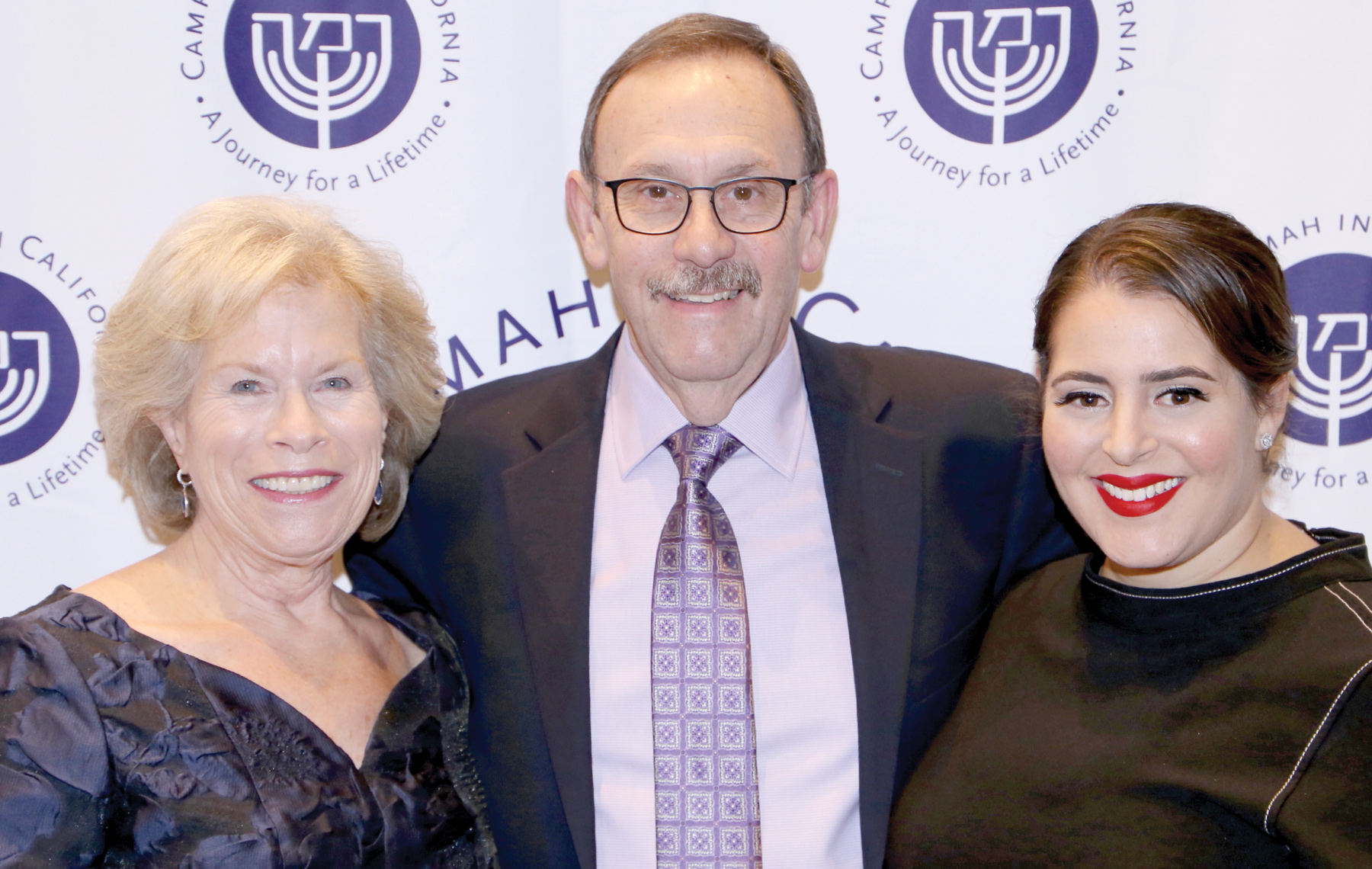
From left: Camp Ramah in California honorees Sheila Baran Spiwak and her husband, Alan Spiwak, and Maya Aharon. Photo courtesy of Camp Ramah in California

Camp Ramah in California, the Ojai-based Conservative summer camp, held its 2018 gala celebration on Nov. 4 at Barad Hall at Sinai Temple in Westwood.

The event raised more than $800,000 and honored Sheila Baran Spiwak and her husband, Alan Spiwak, along with Maya Aharon, who received the Alumni Leadership Award.

The Baran and Spiwak families have supported Jewish causes locally, nationally, in Israel and around the world. Their areas of focus include Jewish education, children, the elderly, Holocaust survivors and people with special needs.

Aharon, director of teen experiential programs at the Builders of Jewish Education, has been involved in a number of Jewish organizations throughout her life. They include Camp Ramah, Hillel and The Jewish Federation of Greater Los Angeles. She graduated from Milken Community Schools in 2004 and earned her bachelor’s degree in Jewish studies at Indiana University in 2008.

John Magoulas, director of development at Camp Ramah in California, said the money raised would make camp more affordable for families. “The event seeded our affordability initiative endowment,” he said.

The 500 attendees at the sold-out event included Jay Sanderson, CEO and executive director of The Jewish Federation of Greater Los Angeles, Magoulas said.

For the first time, the event was followed by an after-party at which more than 100 young adults enjoyed music, mingling and cocktails.   


Want to be featured in Movers & Shakers? Send us your highlights, events, honors and simchas. Email ryant@jewishjournal.com.

School Mural, Camp Fundraisers, AJCLA Hire Read More »

A Pop-Up Dreidel Card for Hanukkah

Of all the greeting cards I make, the ones that have pop-ups are the most popular. There’s something about opening a card and having a three-dimensional shape emerge that makes one all happy and surprised. 

So in the spirit of Hanukkah, here’s a card in which a dreidel pops up when you open it. Hanukkah is all about celebrating a miracle, and the miracle of this card is that it’s actually easy to make. 

What you’ll need:
Two sheets of cardstock in contrasting colors
Pen
Ruler
Scissors
Double-sided tape

1. Cut two sheets of cardstock in contrasting colors so they measure 10 by 7 inches each. Then fold them in half so you have two cards that are 5 by 7 inches. (You can also cut out 4-by- 6 inch cards.) I used one sheet of blue and one sheet of white cardstock. One card will be the exterior piece, and one card will be the interior piece that pops up.

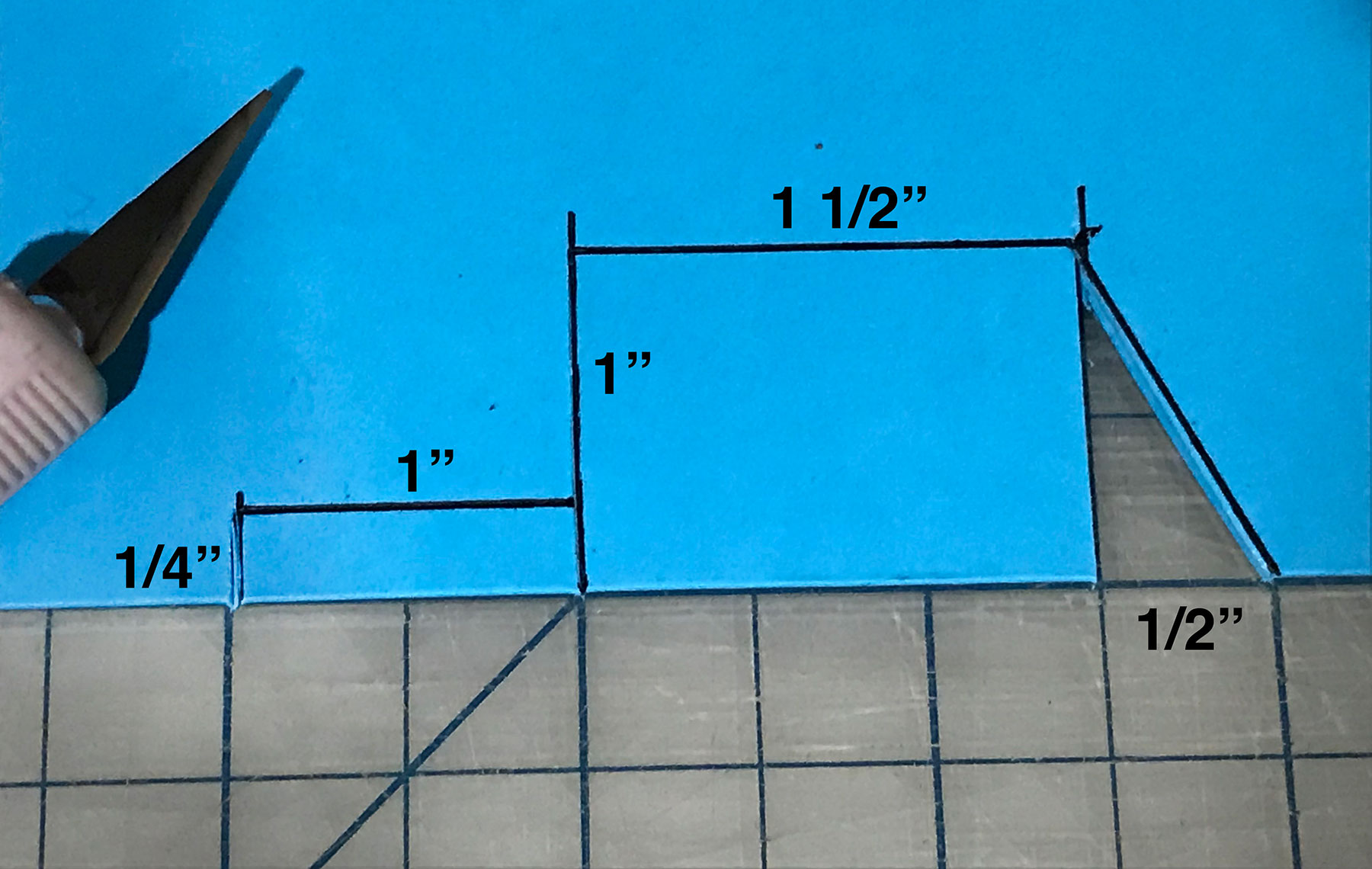
2. Choose the card that will be your interior piece, and place it in front of you with the folded side down. Using the template in the photo above, cut three vertical slits on the folded side of the card — one that is 1/4 inch high, one that is 1 inch high that’s 1 inch to the right of the first slit, and another that is 1 inch high that’s 1 1/2 inches to the right of the second slit. Then draw a diagonal line from the top of the third vertical slit to the fold, about 1/ 2 inch to the right of that slit. Discard the triangular piece you’ve cut. Don’t cut along the horizontal lines of the template — those are crease lines.

3. Open the card, and push the cut-outs in the opposite direction of the fold so they pop up. Then close the card and press down. Those horizontal lines on the template that weren’t cut are now the vertical edges of the pop-up dreidel, and they will crease when you press down on the card.

4. Apply double-sided tape to the back side of the interior card, and adhere it to the exterior card. If you have trouble lining up the two cards evenly, just do the best you can and trim the card afterward to even out the sides.


Jonathan Fong is the author of “Flowers That Wow” and “Parties That Wow,” and host of “Style With a Smile” on YouTube. You can see more of his do-it-yourself projects at jonathanfongstyle.com.

A Pop-Up Dreidel Card for Hanukkah Read More »

Obituaries Nov. 30: Sister Cecylia Roszak and Ricky Jay

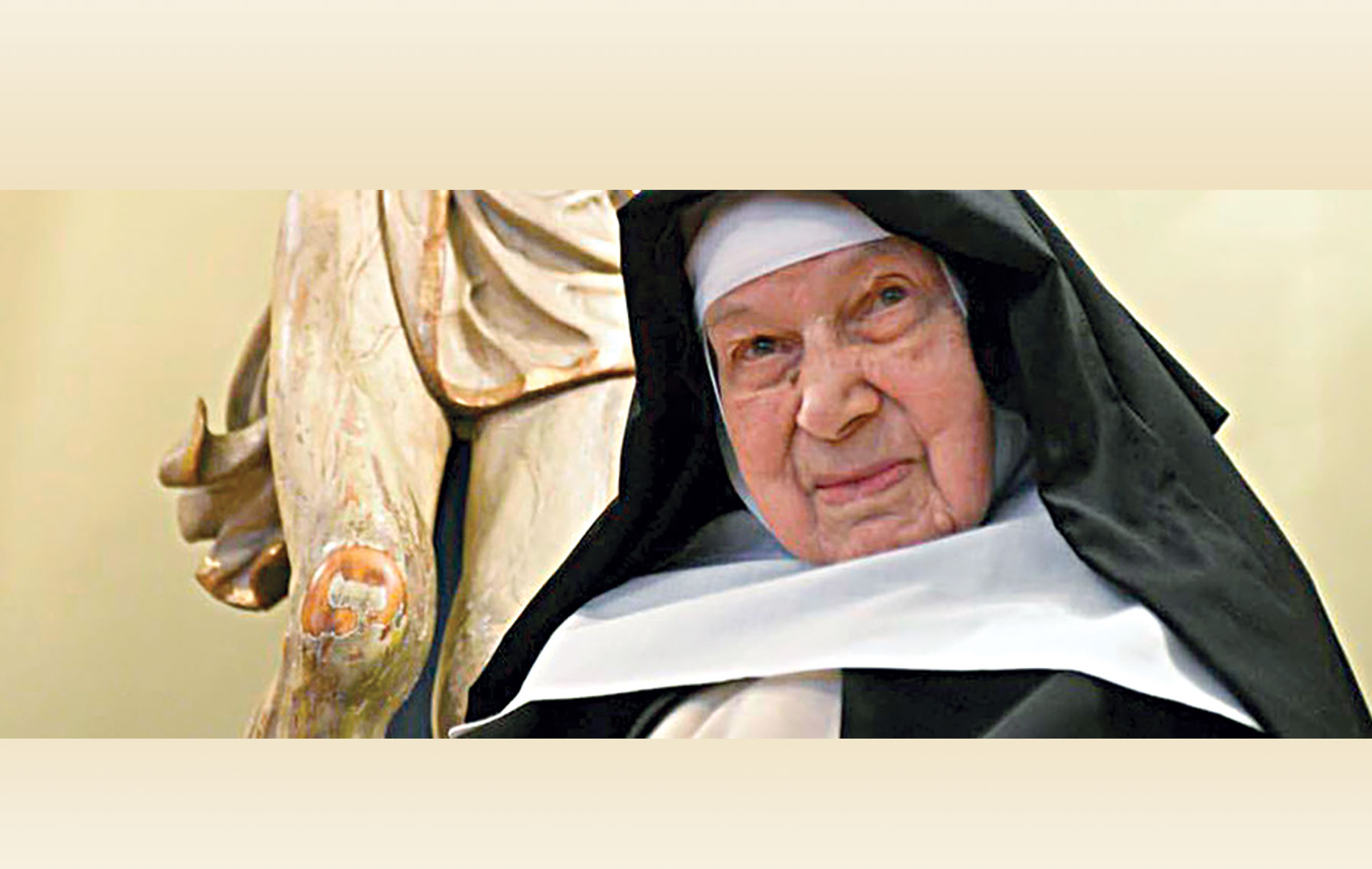
Sister Cecylia Roszak, Saved Jews During WWII, 110
Sister Cecylia Roszak, one of a group of Polish nuns who risked their lives rescuing Jews from the Holocaust and was honored as one of the Righteous Among the Nations by Yad Vashem, died last week in Krakow, Poland. She was 110 and, at the time of her death, was thought to be the oldest nun in the world.

Born March 25, 1908, she entered the Dominican order when she was 21. During the German occupation of Poland, Sister Cecylia, along with several other nuns, established a new convent in Vilnius, in what is now Lithuania. They opened its doors to 17 Jews who had escaped from the nearby ghetto, including the activist and writer Abba Kovner, who later testified at the trial of Nazi war criminal Adolf Eichmann. The fugitives worked with the nuns in the field during the day while continuing their resistance work, including writing, printing and distributing anti-Nazi manifestos. Kovner later claimed that the seeds for the ghetto rebellion were planted in the convent. The Jews left the convent on New Year’s Eve 1941 to continue their fight; the Germans closed the convent in 1943, and arrested Anna Borkowska,  the mother superior.

After the war, Roszak returned to Krakow, where she was a church organist and cantor. At her funeral, among the memorials was a bouquet sent by Wanda Jerzyniec, who along with her brother, was one of those saved by Sister Cecylia. 

Mother Superior Stanislawa Chruscicka told the Associated Press that Sister Cecylia’s philosophy was that “life is very beautiful but too short.” 


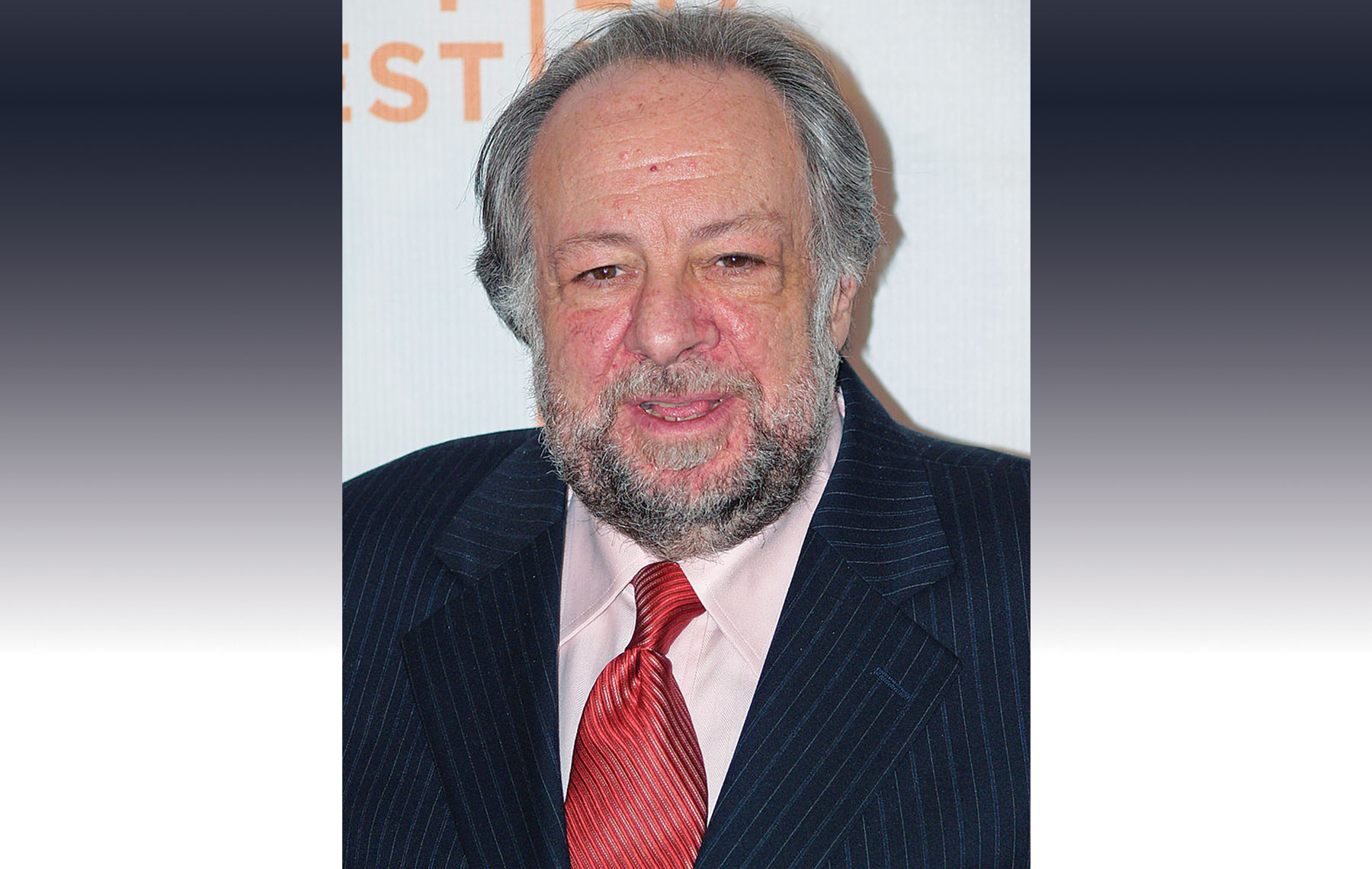
Ricky Jay: Magician, Actor, Author
Ricky Jay, the author, actor and magician the New Yorker called “perhaps the most gifted sleight-of-hand artist alive,” died Nov. 24 at his home in Los Angeles.

Born Richard Jay Potash was born in Brooklyn, N.Y., in either 1946 or ’48, to Samuel and Shirley Potash. By the time he was 7, Jay had become adept enough to appear on a local TV show, “Time for Pets,” where, billed as “the world’s youngest magician,” he turned a guinea pig into a chicken. 

By the time he was 15, the lack of family support (Jay claimed his fondest memory of his parents was their booking magician Al Flosso perform at his bar mitzvah) prompted him to leave home. He ended up performing in the resort community of Lake George, N.Y., where he gained enough notoriety that in the mid-’60s, he was booked at the Electric Circus in New York City. Tours of the United States and Europe followed. A move to Los Angeles in the 1970s led to regular appearances at McCabe’s Guitar Shop and The Magic Castle. 

Jay practiced what is known as close-up magic; a stout, avuncular presence, he was a master of cards tricks and he could flip playing cards with such speed and accuracy he cut into a watermelon, all while keeping up a line of erudite, deadpan stage patter. A one-man show, “Ricky Jay and His 52 Assistants,” was an off-Broadway hit and filmed for a 1996 HBO special. As an actor, he appeared in David Mamet’s “House of Games,” “The Spanish Prisoner” and “State and Main,” and Paul Thomas Anderson’s “Boogie Nights” and “Magnolia.” In 2002, he married Chrisann Verges, who survives him. 

A student of magic and a fine prose stylist (The New York Times described him as a “master of a prose style that qualifies him as perhaps the last of the great 19th-century authors”) Jay wrote 11 books, most notably “Learned Pigs & Fireproof Women,” a history of eccentric entertainers. His knowledge of the history and mechanics of illusion led to his co-founding Deceptive Practices, which offered “arcane knowledge on a need-to-know basis.” 

Obituaries Nov. 30: Sister Cecylia Roszak and Ricky Jay Read More »

Making Loss Matter

On April 10, 1995 — at the height of the Israeli-Palestinian “peace process,” a year after Nobel Prizes had been awarded to Yitzhak Rabin, Shimon Peres and Yasser Arafat — Alisa Flatow, a Brandeis honors student spending her junior year in Israel, boarded a public bus for a brief vacation in Gaza at Gush Katif. 

As the bus entered Gaza, a Palestinian terrorist rammed it with a van filled with explosives. Flatow and seven others died. Later, in federal court in Washington, D.C., it was proved that a faction controlled, financed, and directed at the highest levels of Iran’s government had carried out the attack. In a 35-page opinion, Judge Royce C. Lamberth awarded the Flatow family $20 million in compensatory damages and $225 million in punitive damages.

The lawsuit was the result of the indefatigable efforts of Alisa’s father, Stephen M. Flatow. In the moving memoir “A Father’s Story: My Fight for Justice Against Iranian Terror” (Devon Square Press), he writes that he believed his obligations to his daughter continued after her death. Asked in court whether he had been Alisa’s father, he answered, “No – I am Alisa’s father.” In testimony before Congress he said, “A father’s responsibility to his child does not end with her murder.”

Flatow lobbied Congress to pass what became known as the “Flatow Amendment,” allowing victims of terror to sue the state sponsors of it. Then he found a lawyer to take his case (Steven Perles), and a witness (Patrick Crawford of the Washington Institute) to provide expert testimony. He eventually collected a portion of the damages (roughly $25 million) through intricate legal proceedings he describes in this book, and he used the money to fund the Alisa Flatow international programs at Nishmat in Jerusalem, which enables others to follow in Alisa’s footsteps in Jewish studies.

“Stephen M. Flatow lobbied Congress to pass what became known as the “Flatow Amendment,” allowing victims of terror to sue the state sponsors of it. “

Flatow’s memoir covers conversations with former President Bill Clinton and various senators during the legislative process, court proceedings that were alternately empowering and frustrating, as the Clinton administration suddenly backed Iran against his efforts to levy upon its property in the United States (imagine, Flatow writes, if Nazi Germany had financed terrorist operations against Americans and the U.S. had tried to prevent families from being compensated from German assets), and the search for Iranian assets to pay his judgment. Barack Obama’s administration eventually returned $400 million plus interest to Iran from a blocked Iranian account in the United States that Congress had intended to be used to cover judgments such as Flatow’s.

The most moving parts of the memoir, however, are those that cover his relationship with his daughter. It had been Alisa who had introduced the Flatow family to Judaism, when she had insisted at age 4 that she go to a Jewish school with her friend. From his studies of Torah and Talmud and books about them, Flatow learned to love a religion about which he writes in engagingly straightforward terms. Here is how he describes his fascination with Judaism:

In how many other religions do you see your heroes do bad things and then have them tell you about it? So many want to have a perfect religion, to be able to say “My God is the best.” That attitude is what destroyed the Roman gods, because they were held to be above all others — until people realized they didn’t exist. Judaism endures in part because it acknowledges imperfection. What bends is much harder to break.

In her short life, Alisa visited Israel six times, the first at the age of 11. 

As a little girl, she had a bike accident that severely injured one of her toes, requiring surgery that had left two toes permanently sewn together. On the car ride to the hospital, she had asked her father, “Daddy, why do these things happen to me?” He had explained to her that things happen we don’t understand, and she had simply been in the wrong place at the right time. 

A decade later, when Flatow rushed from the U.S. to the hospital in Israel to identify his daughter, he did so by lifting the part of the sheet covering her feet, saw her toes, and knew it was she. Years later, as he thinks back on what happened to her, he says to her in his mind: “This time, Alisa, you were in the land you loved, among the people you loved, studying the religion you love, you were in the right place.”

Then he ends his memoir, a story of a continuing effort now in its third decade, with this: “I can only hope that I will find my right place.”


Rick Richman is the author of “Racing Against History: The 1940 Campaign for a Jewish Army to Fight Hitler” (Encounter Books, 2018)

Making Loss Matter Read More »

New Hanukkah Picture Books Feature Hamsters and Talking Latkes

The good news about the recent crop of Hanukkah-themed picture books is that publishers clearly have come to a consensus that the “ch” of the word “Chanukah” is gone for good. It is particularly skewered by author-cartoonist Alan Silverberg in his funny and far-fetched explanation of Hanukkah rituals by a family of talking latkes, titled “Meet the Latkes.” Prolific local author Michelle Markel includes a cute and fuzzy hamster as a Hanukkah companion, and famed artist Paul Zelinsky beautifully reconstructs the timeless family originally introduced by Sydney Taylor in her “All-of-a-Kind Family” series.

“Hanukkah Hamster” by Michelle Markel. Illustrated by Andre Ceolin. Sleeping Bear Press, 2018.
Edgar, an Israeli immigrant alone in a big city, is a cab driver who grabs a welcome nap at the end of his shift on the second night of Hanukkah. He wakes up to discover that someone has inadvertently left a cute hamster in his cab, and he takes the small creature home. When no one claims the hamster, Edgar names him “Chickpea” after an ingredient in his homemade Israeli salad. Edgar celebrates the eight nights of Hanukkah with his new friend, and when the true owners are finally found, they realize that little Chickpea may have already found his forever home. This sweet story was inspired by a true event when the author’s daughter actually found a hamster in her Uber. Readers beware: Kids may ask for their own Hanukkah hamsters after reading this charming tale.

“Meet the Latkes” by Alan Silverberg. Viking, 2018.
“Meet the Latke family.  They’re just like you and me. Except they’re potato pancakes!” Thus begins the story of the miracle of Hanukkah, accompanied by outsized, cartoonish and super-funny illustrations of anthropomorphized latkes, doing appropriate Hanukkah-related things, like making sufganiyot, decorating the house, and singing the dreidel song. Lucy Latke, her parents, her dog, Applesauce, along with her annoying, headphone-wearing teenage brother Lex and her cranky and misinformed grandpa, imaginatively reinvent the ancient holiday tale. When Grandpa confuses giant bees with Maccabees and Antiochus with “alien potatoes from planet CHHHH,” thank goodness Applesauce the dog knows the real scoop and sets everything straight. Human families will surely find this wild spin on the Hanukkah story lots of fun.

“Light the Menorah! A Hanukkah Handbook” by Jacqueline Jules. Illustrated by Kristina Swarner. Kar-Ben, 2018.
For those looking for a more serious take on Hanukkah rituals, this self-described handbook serves as a meaningful “manual for the contemporary Jewish family.” The author posits that the “Hanukkah rituals are worth thinking about” and offers useful poems and reflections that families can refer to on each night, along with the appropriate blessings. The reflections include important information about why some rituals are practiced, such as the lighting of the candles in particular ways or how the hanukkiah is constructed, or why we put it in a window for all to see. One lovely reflection highlights the shamash candle as the “helper” and asks us to remember all the people in our lives who serve and help us, including, “parents, teachers, medical professionals, librarians, police officers, firefighters, custodial workers.” Recipes, songs, crafts and the Hanukkah story are also included and illustrated beautifully by noted watercolor artist Kristina Swarner. This is a recommended first purchase for young Jewish families wishing to begin their own holiday rituals.

“How It’s Made: Hanukkah Menorah” by Allison Ofanansky. Photographs by Eliyahu Alpern. Apples & Honey Press, 2018.
The author and photographer of the engaging “How It’s Made” series of books about important Jewish objects, previously featured how Torah scrolls and matzo are made. The books are informative and also well designed to catch the eye of a curious child by using appealing photos, sidebars and popping design elements with lots of white space. Different pages show the process of making a wooden, brass or a glass menorah, and then offer tips for making your own. Also included are instructive photos showing how candles and olive oil are made, as well as latkes and sufganiyot. Easy-to-access information for how to light a menorah, blessings, songs and other rituals are also featured. This is a good book for inquisitive children; those who may already be familiar with Hanukkah basics and those who would be happy with an introduction to what this holiday is all about.

“All-of-a-Kind Family Hanukkah” by Emily Jenkins. Illustrations by Paul O. Zelinksy. Schwartz & Wade/Random House, 2018.
It’s about time that someone attempted to write a picture book recalling the characters from the classic Sydney Taylor “All-of-a-Kind Family” series. The books about a Jewish immigrant family in the early decades of the 20th century have been beloved by generations of middle-grade readers since 1951. (The back flap states that author Emily Jenkins read aloud the books to her children for years.) Lovingly illustrated by famed Caldecott Medal-winning artist Paul O. Zelinsky, the plot highlights the family’s busy Hanukkah preparations for the first night of festivities. We meet the girls as they prepare latkes and Hanukkah dinner in their Lower East Side tenement: Ella is twelve. Henny is ten. Sarah is eight. Charlotte is six. Gertie, who is four, thinks it is nice being all girls — “all of a kind,” Papa and Mama like to say.” Unfortunately for little Gertie, most of what looks like fun kitchen preparation involves peelers, knives, graters and hot oil, so it is too dangerous for her to take part. A mini-meltdown follows, and she is sent to her room until candle lighting. When Papa comes home, he saves the day with charming, good-parenting wisdom. Zelinksy’s large, exuberant paintings depicting cramped but joyous tenement life reflect the spirit of the beloved source material well. The choice of an orange-red-brown palette with bold black outlines recalls the early 20th century and the many full double-paged spreads encourage full engagement by the youngest readers. Zelinsky states that he purposely used this style instead of a more delicate “lace and frills” style that would have been more popular in 1910 because he wanted to reflect Gertie’s passionate nature and imitate children’s art “where the laws of perspective don’t apply.” The endnotes pay homage to the original Sydney Taylor books, stating that Taylor was the “first writer to publish books about Jewish children that reached readers from other religions.” Also included is a list of resources that the author used to authenticate the narrative. This is a wonderful beginning to what will hopefully be a new picture book series featuring these wonderful characters.


Lisa Silverman is the director of the Burton Sperber Jewish Community Library located at American Jewish University.

New Hanukkah Picture Books Feature Hamsters and Talking Latkes Read More »

‘A Festival of Delights’ Kindles Hanukkah Memories

They barely knew each other and their time together was limited, but with the camera rolling, documentarian David Anton got the man known worldwide as Captain Kirk to share — of all things — a cherished Hanukkah memory.

“I asked him to describe his mother’s kitchen,” Anton recalled of his interview with William Shatner for the documentary “Hanukkah: A Festival of Delights” which begins airing on PBS stations Dec 2. “He smiled and looked off to the side and said, ‘The stove is over here and the place to eat is over here, and my mother is standing over a frying pan dropping ground potatoes into sizzling fat, and there’s a bowl of applesauce on the table, and I had a glass of milk in my hands….’”

“I only had about twelve minutes with Mr. Shatner,” Anton said. “I got the sense that that was the first time he had ever been asked those questions, and it brought him back to some of those moments in his life.”

As “Festival of Delights” so profoundly demonstrates in its 60 minutes, Hanukkah often has that kind of effect on people. It is the favorite and most personal holiday for many Jews for an assortment of reasons, according to the film. Many consider it a holiday built around the celebration of a military victory and the subsequent miracle of the lights. Sometimes viewed as the “Jewish Christmas,” many use Hanukkah as an opportunity to indulge in the gift-giving spirit of the season.

That’s not uncommon, and the film traces the child-focused consumerization of the holiday to Max Lilienthal and Isaac Mayer Wise, a pair of Reform rabbi from Cincinnati. In the mid 19th century, Lilenthal and Wise created family festivals out of the holiday in their synagogues and publicized the festivals through newspapers that they operated, later getting congregants from synagogues across the country to talk about how their congregations had created similar events. The trend grew and the holiday took on a new meaning to millions of American Jews. 

But in exploring his subject, a follow-up to his film “Hugs and Knishes: A Celebration of Our Jewish Foods and Traditions,” Anton had a different kind of agenda than exploring the “Jewish Christmas.” Instead, he came to view Hanukkah as the Jewish Thanksgiving. 

“I was looking to make a film for families that would bring the holiday back to the original theme of hope that we explore in the film that is so important these days,” Anton said. “I started off with the idea of a young girl and a young boy asking questions of their rabbi, and that became a theme of the program.”

The film features interviews with Rabbi David Ingber of Kehilat Romemu in New York, and Rabbi Rafi Rank of the Midway Jewish Center in Syosset, Long Island; authors Dianne Ashton and Abigail Pogrebin; Susan L. Braunstein, senior curator at the Jewish Museum in New York City and Judaica artist Joy Stember. In addition to Shatner, the other celebrity voice comes from actress Lainie Kazan (“My Big Fat Greek Wedding,” “My Favorite Year”) who talks about preparing for her grandson’s first Hanukkah. 

The sweet, festive and savory traditions like dreidel spinning, chocolate gelt devouring and latke frying are all favorites, but it’s the menorah and the symbolism of the Hanukkah lights that, according to the film, take us into a deeper discussion of what the holiday is all about. A Jew’s willingness to put a menorah in the window not only announces his pride in his cultural heritage, but also symbolizes a desire to shine a light during dark times. 

Pogrebin learned several perspectives on the holiday while researching her 2017 book “My Jewish Year: 18 Holidays, One Wondering Jew.” Multiple rabbis conveyed the idea that Hanukkah was a holiday recognizing the Jews’ ability to fight back against Assyrian oppression and worship openly.

“The Maccabees were, in a sense, to use the modern shorthand, [the] ultra-Orthodox of their day,” Pogrebin said. “They had no tolerance of those Jews who became enamored of the Greek way of life and had become Hellenized. I had rabbi after rabbi tell me that Hanukkah should be a warning, reminding us of what happens when we become Hellenists and water down our Judaism.”

She discusses the year that her family observed the holiday around the hospital bed of her dying father-in-law and notes the fact that Jews gather as families and continue to embrace the light and hope even when one of their members is departing. 

To Anton, Pogrebin’s story has a parallel to an account told by Rabbi Rank of a rabbi who was a prisoner in a concentration camp during the Holocaust. Although any celebration was forbidden, the rabbi and his fellow inmates gathered a potato, some butter and some threads and manufactured a makeshift menorah. One of the inmates got angry, complaining the potato and butter were valuable nutrients that should be consumed by the starving prisoners. 

“The rabbi said, ‘I understand, but remember that people can live without food, but the day they do not have hope, they cannot live another second,’” Anton said. “I loved that story and the message that even during the darkest times of the year, we always look forward and always look for solutions to the problems that surround us.”


“Hanukkah: A Festival of Delights” airs Dec. 2 on PBS SoCal at noon, and on KVCR at 5 p.m.; Dec. 3 on KCET at 1 p.m.; and Dec. 8 on KCET at 7 p.m.  

‘A Festival of Delights’ Kindles Hanukkah Memories Read More »

‘Tzeva Adom’: The Little Film That Could

In a short video clip in May of this year, Los Angeles director Michael Horwitz is chatting with Israeli actress Shani Atias. Producer Todd Felderstein is filming them against a glorious shot of the beach in Cannes on the French Riviera. The pair are discussing how Horwitz’s very first film, a 20-minute short called “Tzeva Adom: Color Red,” released in November 2017, is a finalist in the Cannes Film Festival’s Emerging Filmmaker Showcase.

Atias says she still can’t believe the success of the film in which she stars. “My agent told me [doing this film] would be ‘Trader Joe’s money,’ ” she quips of “Tzeva Adom,” which to date has won a slew of awards at festivals around the world, including the Los Angeles Cinema Festival of Hollywood and the San Diego and Los Angeles Jewish film festivals. It also was a semifinalist at the NBC Universal Shortfest, where it was one of 15 short films chosen out of 3,600 submissions. Most recently, it was screened last week at the 34th International Short Film Festival in Berlin. 

A well-known actress in Israel, Atias’ star has been rising in the United States over the past few years, having landed roles in “NCIS,” “Shameless,” “CSI Cyber” and “Ten Days in the Valley.” 

Despite the fact that Atias can now demand competitive wages, she said of “Tzeva Adom,” “I [told my agent], I love this story and I don’t care about anything else.”

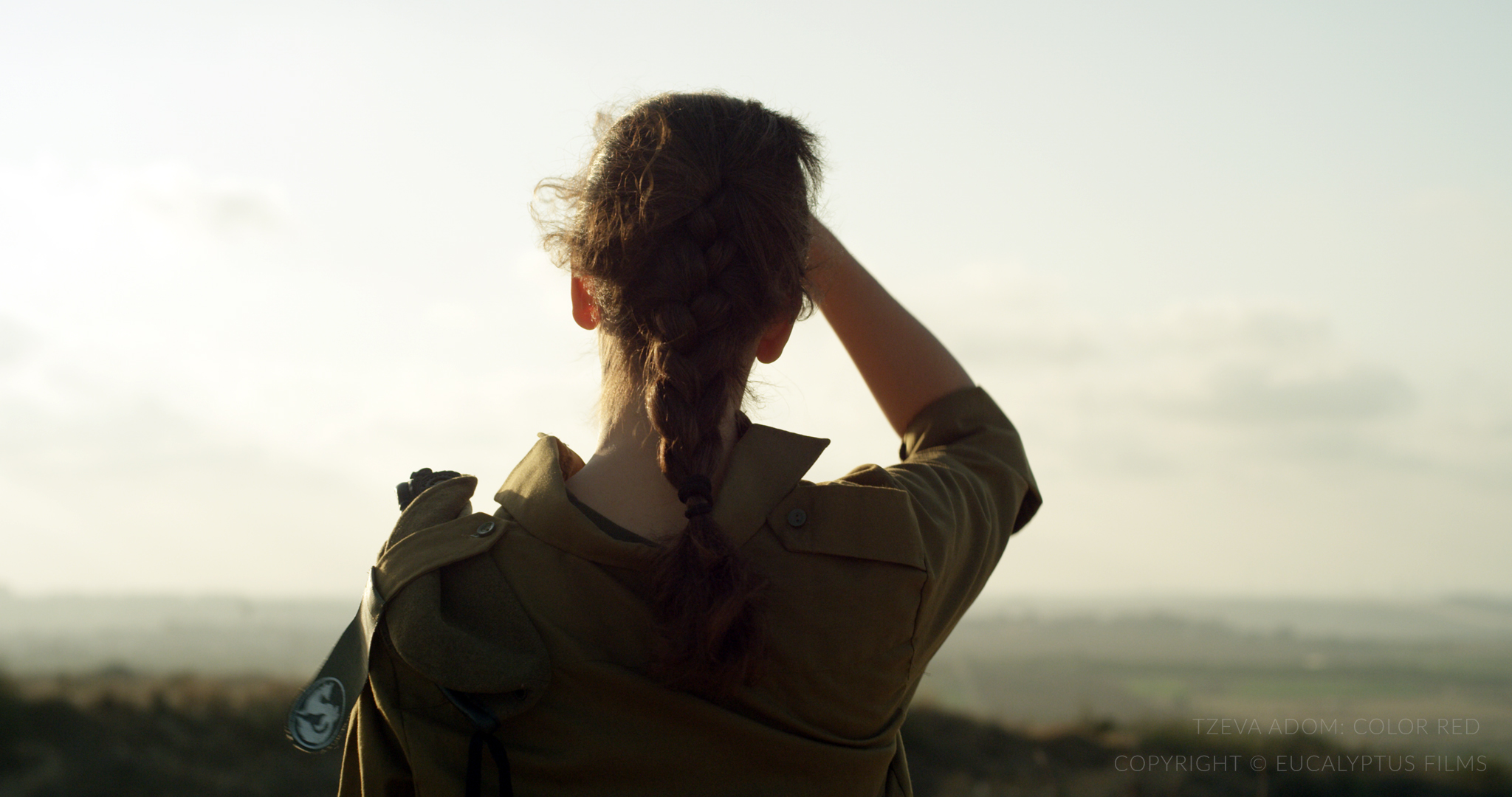
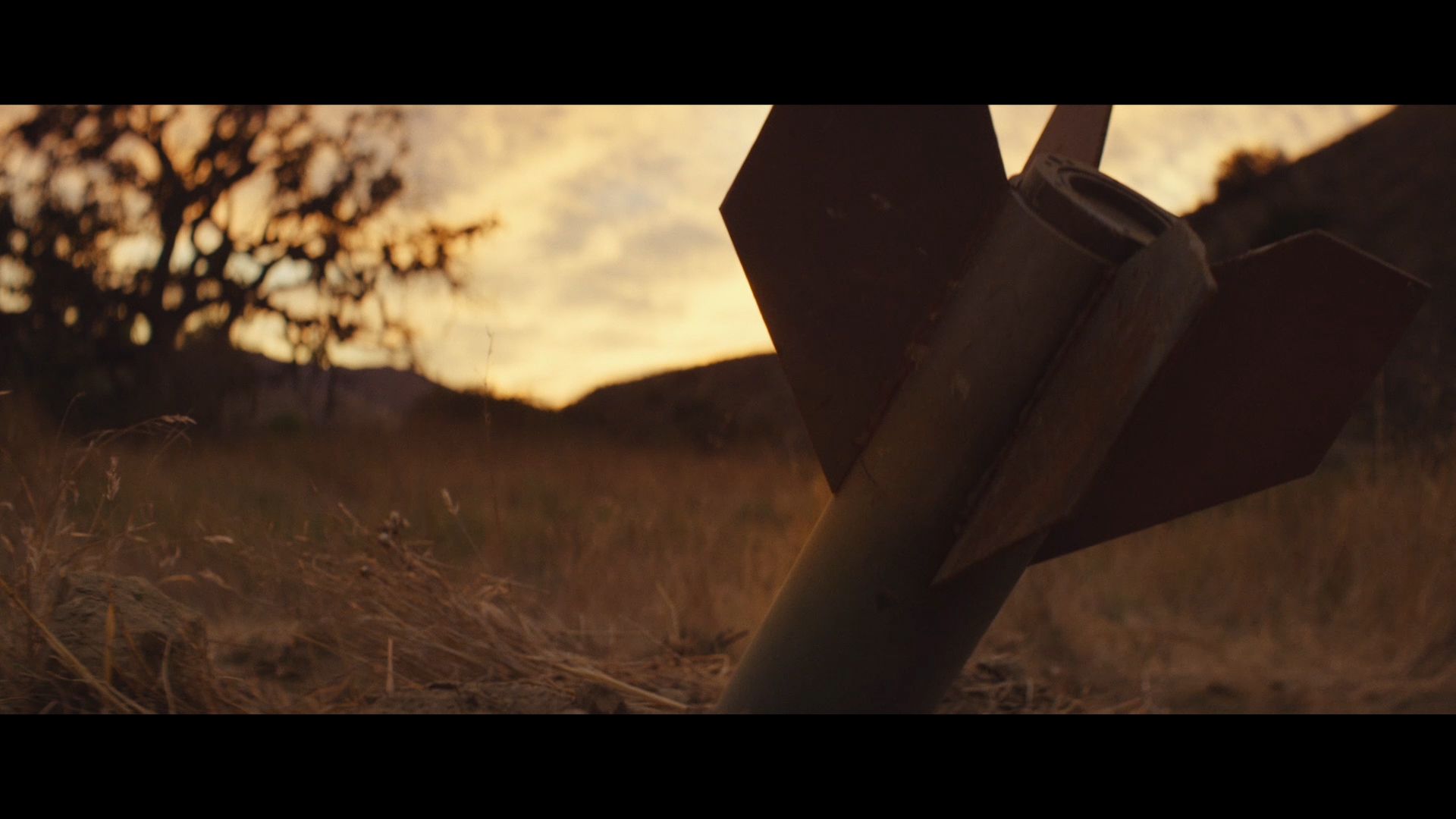
Audiences seem to agree. “Tzeva Adom: Color Red” is named after the alarm in Israel that lets people know that rockets are being fired from Gaza. The plotline is simple but the questions the film raises are anything but. 

The film follows the story of an Israel Defense Forces (IDF) soldier, Ronit, played by Atias, and Omar (Mohaned Abdulla), a young Palestinian boy who gets caught at the Gaza border. Tensions are exacerbated on social media as Ronit and Omar grapple with both cultural biases and what is morally correct.

Horwitz told the Journal the film “is a short of just 20 minutes but within that time conveys the drama and difficult circumstances that surround one of the most hotly contested borders on the planet.”

Shot in English, Hebrew and Arabic and filmed in Los Angeles (the Gaza border scenes take place in Simi Valley) and in Israel, the film tackles a difficult subject and refuses to take sides. In his program notes, Horwitz writes, “Our film tells the story from both sides of the border and ultimately presents a message of peace, tolerance, hope and responsible communication within the Israeli-Palestinian conflict.”

Still from “Tzeva Adom”

“Tzeva Adom” was part of the lineup at the recent 32nd Los Angeles Israel Film Festival. Coincidentally, on the night it was screened at the Laemmle Ahrya Fine Arts Theatre in Beverly Hills, earlier that day, close to 300 rockets were fired from Gaza into Israel in less than 24 hours. 

At a Q-and-A after the screening with Atias and Horwitz, the director said, “It’s surreal. This morning I was getting ready to go to work and my phone was going off with the notifications of rockets being fired into Israel nonstop.”

He added, “It breaks my heart because I wish it would stop. I wish we could find a way to come up with new ways to have a dialogue, for people to connect with each other and stop this madness.”

Atias said, “I was reading the news all day and my heart was literally aching. It’s so hard to be out here in this bubble knowing that people are literally under tzeva adom.”

She also spoke of how challenging the role of Ronit was, to embody and play a nuanced nonradicalized soldier. “It’s easy to play the radical soldier like my fellow solider you see on the screen,” she said. “It was important for me to show that it’s not black and white. Not all of us are like the soldiers you see on CNN.”

Also in attendance at the screening was 21-year-old Wiley Jawhary, making his acting debut in the film, as one of the two Palestinian brothers caught along the Gaza border by IDF soldiers. 

Still from “Tzeva Adom”

Jawhary, a broadcast journalism major at Cal State Long Beach, spoke with the Journal before the screening. His parents are Lebanese and while he has been to Lebanon, he’s never traveled to Israel.

“I’m not too familiar with the deepness of the politics [in the region],” he confessed. “I do know there’s drama all over the place when it comes to politics and Israel.”

He noted that family members who saw the film started discussing the political ramifications of the movie, but Jawhary said, “Let’s just try and look at this film as a way [toward] peace.” 

Horwitz believes it’s this lofty goal that has brought the film so much success. That and his writer, C. Ashleigh Caldwell, whom he credits with creating the nuanced script. “I gave her all my ideas and she created this incredible screenplay with really great restraint,” he said. 

As Jawhary said, “I try to tell people who want to get into the politics of the film that at the end of the day, people are dying on both sides. Let’s just try to focus on the peaceful twist to things. Let’s try to start a new story.”

‘Tzeva Adom’: The Little Film That Could Read More »

Distant Cousins’ Musical Hanukkah Message

Consider yourself warned: Should you encounter a distant cousin, you, too, could inspire a song. 

Dov Rosenblatt recalls playing a gig at Rockwood Music Hall in New York during the summer of 2017 with Ami Kozak and Duvid Swirsky, his bandmates in the folk-pop trio Distant Cousins. At the show, Rosenblatt reconnected with a longtime friend and fellow musician who later bade him farewell with the words, “Good luck on the road.”

Those words became the inspiration and the final track on “Next of Kin,” Distant Cousins’ about-to-be-released first full-length album. 

“She knew we needed good luck on the road,” Rosenblatt said. “It was less ‘Good luck with it’ and more ‘Be careful out there as you guys grow and grow.’ And we do acknowledge that so much of where we’re at is because of the hours we put in, and there’s just a lot of being in the right place at the right time.” 

The Los Angeles-based band will go back on the road after the New Year and the three musicians, who are not related, figure to create their own luck. As for timing, their moment appears to be now.  

“Next of Kin,” the band’s first album with the indie label Julian Records, will drop on Nov. 30, after a release party concert at The Mint on Nov. 29. In another bit of fortunate timing, the band’s song “On Your Own (Are You Ready)” accompanies the trailer of the latest film in the hit animated franchise “How to Train your Dragon: The Hidden World,” due out in early 2019. 

“The trailer has gotten something like 6 million hits and tons of buzz,” Rosenblatt said. “That song was pitched for that trailer 11 months ago, and it happens to come out the week we’re putting out our album. Those are the things we’re grateful for.”

“I like to use the analogy that the music business today is a lot like farming,” Kozak added. “We’re constantly planting seeds everywhere. You don’t know exactly where they’re going to come to harvest but they pop up in random places that you don’t even remember that you plowed.”

Longtime players on the Jewish and Israeli music circuit, the men who would become “cousins” seemed destined to find one another. Kozak and Rosenblatt attended the same New Jersey high school (four years apart) while Swirsky grew up in Israel and was raised on the music community, Moshav Mevo Modi’im. Rosenblatt was the lead singer of the Jewish group Blue Fringe, and Swirsky was a founder and singer of the Moshav band. During their various gigs, the three musicians would regularly encounter each other, and they shared a bill in 2012 after Kozak relocated to Los Angeles. Kozak offered to produce the song “When We Love” that Rosenblatt and Swirsky had written, and he joined the band soon thereafter.

“I like to use the analogy that the music business today is a lot like farming. We’re constantly planting seeds everywhere.” —  Ami Kozak


“The whole process felt so natural, that we just kept rolling from there,” Swirsky said. 

The 11 tracks of “Next of Kin” draw their inspiration from a range of sources, everything from Bob Dylan to late-night affirmations inspired by Election Night 2016. Songs have sprung from riffs that have sat in the group’s idea file until a cousin stepped forward and prodded his band mate to finish it. 

The track “Like Me,” for example, originated as a jam session at Kozak’s home studio with Swirsky beating out a drum rhythm, Rosenblatt playing guitar. The song remained unfinished and stuck in the band’s “in progress” folder on Dropbox. The beat was good, but something was missing. When they later reassembled to finish the song, Swirsky pulled out a recording on his iPhone of the late folk singer and civil rights activist Odetta, singing a live rendition of “Hit and Miss.” Kozak recorded “Hit and Miss” into the song, chopped it up and incorporated it into “Like Me.” The late singer’s estate granted permission, and Distant Cousins had their featured guest artist. 

“It’s the only song that we have a co-writer on,” Swirsky said, “and our only co-writer is Odetta, which is pretty cool.”

The album’s opening track, “Lights On,” has become the band’s opening number at live shows. It’s a high-energy number offering a message consistent with many of Distant Cousins’ songs about venturing out on your own, taking life by the horns and staying true to oneself:

“Secrets will eat you if you let them defeat you

So you might as well be who you are.

Turn your lights on. Turn your lights on. 

No more hiding in the dark”

The album is being released days before Hanukkah at Hollywood’s Amoeba Records. “Next of Kin” will be featured as a special gift idea. And while the light-out-of-darkness messaging of “Lights On” may not have explicitly been inspired by Hanukkah, there is a certain resonance to the spirit of the holiday according to the cousins.

“The theme of the song is being proud of who you are and not feeling the need to cover up who you really are inside,” said Rosenblatt, “and when we thought about that, that’s what Hanukkah is about. It’s not, ‘Put your candle in the window so everybody knows you’re Jewish.’ It’s ‘Put your candle in the window so you’re expressing who you are inside.’”


Distant Cousins performed with M. Tennyson and Zev the Wolf on Nov. 29 at The Mint, 6010 W. Pico Blvd., Los Angeles. Click here for info.

Distant Cousins’ Musical Hanukkah Message Read More »