
On April 10, 1995 — at the height of the Israeli-Palestinian “peace process,” a year after Nobel Prizes had been awarded to Yitzhak Rabin, Shimon Peres and Yasser Arafat — Alisa Flatow, a Brandeis honors student spending her junior year in Israel, boarded a public bus for a brief vacation in Gaza at Gush Katif.
As the bus entered Gaza, a Palestinian terrorist rammed it with a van filled with explosives. Flatow and seven others died. Later, in federal court in Washington, D.C., it was proved that a faction controlled, financed, and directed at the highest levels of Iran’s government had carried out the attack. In a 35-page opinion, Judge Royce C. Lamberth awarded the Flatow family $20 million in compensatory damages and $225 million in punitive damages.
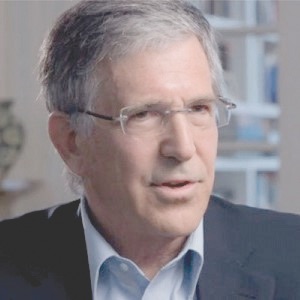
The lawsuit was the result of the indefatigable efforts of Alisa’s father, Stephen M. Flatow. In the moving memoir “A Father’s Story: My Fight for Justice Against Iranian Terror” (Devon Square Press), he writes that he believed his obligations to his daughter continued after her death. Asked in court whether he had been Alisa’s father, he answered, “No – I am Alisa’s father.” In testimony before Congress he said, “A father’s responsibility to his child does not end with her murder.”
Flatow lobbied Congress to pass what became known as the “Flatow Amendment,” allowing victims of terror to sue the state sponsors of it. Then he found a lawyer to take his case (Steven Perles), and a witness (Patrick Crawford of the Washington Institute) to provide expert testimony. He eventually collected a portion of the damages (roughly $25 million) through intricate legal proceedings he describes in this book, and he used the money to fund the Alisa Flatow international programs at Nishmat in Jerusalem, which enables others to follow in Alisa’s footsteps in Jewish studies.
“Stephen M. Flatow lobbied Congress to pass what became known as the “Flatow Amendment,” allowing victims of terror to sue the state sponsors of it. “
Flatow’s memoir covers conversations with former President Bill Clinton and various senators during the legislative process, court proceedings that were alternately empowering and frustrating, as the Clinton administration suddenly backed Iran against his efforts to levy upon its property in the United States (imagine, Flatow writes, if Nazi Germany had financed terrorist operations against Americans and the U.S. had tried to prevent families from being compensated from German assets), and the search for Iranian assets to pay his judgment. Barack Obama’s administration eventually returned $400 million plus interest to Iran from a blocked Iranian account in the United States that Congress had intended to be used to cover judgments such as Flatow’s.
The most moving parts of the memoir, however, are those that cover his relationship with his daughter. It had been Alisa who had introduced the Flatow family to Judaism, when she had insisted at age 4 that she go to a Jewish school with her friend. From his studies of Torah and Talmud and books about them, Flatow learned to love a religion about which he writes in engagingly straightforward terms. Here is how he describes his fascination with Judaism:
In how many other religions do you see your heroes do bad things and then have them tell you about it? So many want to have a perfect religion, to be able to say “My God is the best.” That attitude is what destroyed the Roman gods, because they were held to be above all others — until people realized they didn’t exist. Judaism endures in part because it acknowledges imperfection. What bends is much harder to break.
In her short life, Alisa visited Israel six times, the first at the age of 11.
As a little girl, she had a bike accident that severely injured one of her toes, requiring surgery that had left two toes permanently sewn together. On the car ride to the hospital, she had asked her father, “Daddy, why do these things happen to me?” He had explained to her that things happen we don’t understand, and she had simply been in the wrong place at the right time.
A decade later, when Flatow rushed from the U.S. to the hospital in Israel to identify his daughter, he did so by lifting the part of the sheet covering her feet, saw her toes, and knew it was she. Years later, as he thinks back on what happened to her, he says to her in his mind: “This time, Alisa, you were in the land you loved, among the people you loved, studying the religion you love, you were in the right place.”
Then he ends his memoir, a story of a continuing effort now in its third decade, with this: “I can only hope that I will find my right place.”
Rick Richman is the author of “Racing Against History: The 1940 Campaign for a Jewish Army to Fight Hitler” (Encounter Books, 2018)