fbpx

November 28, 2018

Nashuva Teams With Don Was on Album of Jewish Prayers

How does “a Jewish virtual outreach organization” without a building of its own, that doesn’t charge dues or have a paid staff, get the president of Blue Note Records, in-demand bassist, and Grammy-winning producer who has worked with Bob Dylan, Bonnie Raitt, Iggy Pop, Ringo Starr and the B-52’s, to produce their album?  

According to Nashuva’s Rabbi Naomi Levy, best-selling author and spiritual leader of the congregation and the multi-ethnic, interfaith group of musicians that has been together for nearly 15 years, it was “a Hanukkah miracle type of thing. When you least expect it, something beautiful can come into your lap.”

Levy is referring to the legendary Don Was, who agreed to produce Nashuva’s album of Jewish prayers, “Heaven on Earth: Songs of the Soul.” Was, Levy said, is “a mensch beyond. A pure mensch.”

The meeting of Nashuva and Was was an act of serendipity when an elderly couple, Bill and Ethel Fagenson, started attending Nashuva’s services several years ago. They’d arrive early and offer to help set up. Levy was sure they’d been married forever. “They had that look of a couple that had been together for years,” she said, but about three years ago they asked if she would marry them. On the Shabbat before their wedding, there was a service to
bless the couple, and Bill asked his son, Don, to attend. 

“I wouldn’t say I was reluctant,” Was (ne Don Edward Fagenson), told the Journal. “Let’s say I went in with low expectations.” However, he added, “the first thing I noticed was that this was actually good. I was really surprised.” The second thing he noticed was “the impact it was having on the congregation. There was no question that it was going deep and was really uplifting.”

After the service, he spoke with Levy. “I thought she had put [the prayers] together in a way that was relevant and that honored tradition,” he said. Although Was had not really attended services since his bar mitzvah, “I knew the prayers, and it was respectful of where the prayers come from but addressed our times and I saw the impact.”

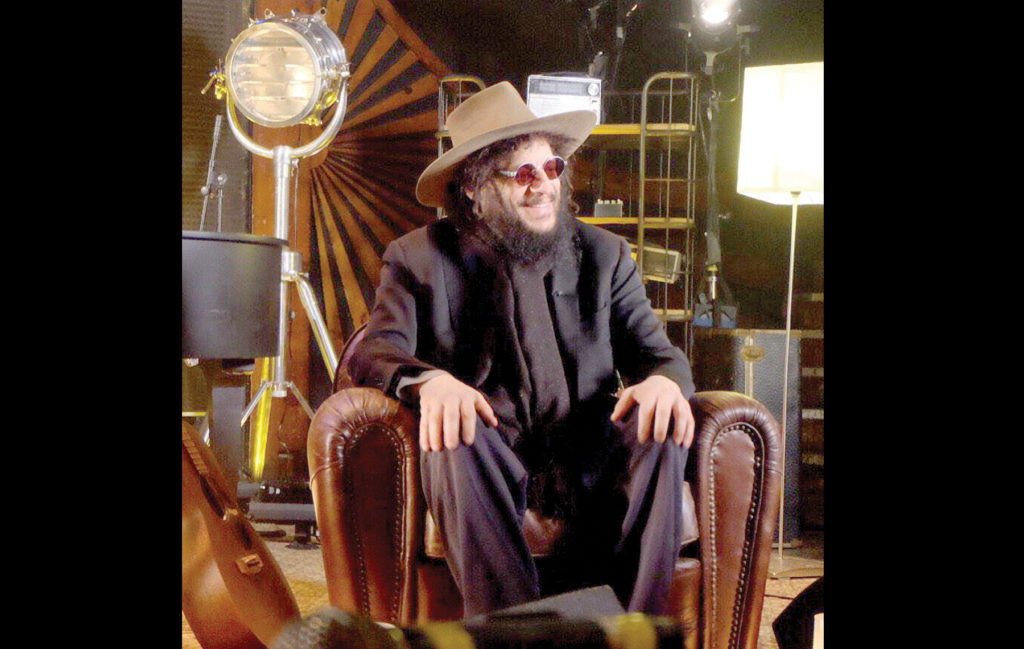
At the time, Levy had no idea who she was talking to. “I didn’t know who Don Was was,” she said. He attended the service in a black suit, white shirt, wide-brimmed hat with a full beard and a halo of hair. “I can’t tell you how many people said to me, ‘We didn’t realize Bill’s son was a Chasid,’ ” Levy said. 

After speaking with Levy, Was agreed to produce Nashuva. While some of the Nashuva’s musicians play professionally, the group had never recorded together. The original plan was to record the band live, but “it was just easier to bring them to the [Apogee Studios in Santa Monica] than to bring the studio to them,” Was said. 

Was listened to recordings of the band’s performances and chose the songs he felt worked best. To re-create the feel of a service, he set the band on a stage, and members of the congregation were invited to watch and sing along. Levy said they packed as many seats as they could into the room. 

When some congregation members told Levy they were tone deaf, she asked Was if that was a problem. It wasn’t. “He said he wanted tone deaf,” Levy said. “He wanted the crowd to be organic and tone-deaf is good because it adds a certain kind of natural feel to it.”

The album was recorded “live” with very few overdubs. “They’re very well-rehearsed, and really good,” Was said. “I pressed record — the most important job there is.” He said he wanted “to make sure that the thing that you felt at the service was captured, which is sometimes hard  to do.” 

Levy described the sessions as “like a festival inside the studio. It felt joyous and loving. Most of the songs were recorded in one take. “If we didn’t feel chills, we didn’t use it,” Was said. 

Describing what impressed him about the sessions, Was said, “They’ve landed on something that had a deep velour to it. It resonates. To me, playing music and recording music is spiritual, even if you’re not directly singing prayers.” 

He also spoke of Nashuva having chemistry. “They’re a really cool band,” Was said. “It’s an odd collection of folks that come together, and the whole is greater than the sum of the parts.  That, I think,  is the essence of all great bands.” 

Listening to the album, Levy said she was “overwhelmed by the warmth and beauty, and this beautiful gift we had been given.” Was added he thinks the band and album embodies Levy’s “call to the disenfranchised to reconsider.”

Did the experience cause him to reconsider? 

Was laughed and said, “I’m always reconsidering.”


“Heaven on Earth: Songs of the Soul” is available for streaming on Spotify and Apple Music, or can be purchased on Amazon, iTunes, or through Nashuva.com. 

Nashuva Teams With Don Was on Album of Jewish Prayers Read More »

JVS SoCal Celebrates the Resilience of Women

Growing up in Cleveland, Justine Siegal dreamed of being a professional baseball player with the Cleveland Indians. She played baseball throughout her youth, but at 16, when she realized she probably wasn’t going to become a Major League Baseball (MLB) player, she decided to become an MLB coach. When she shared this with her then-baseball coach, Siegal said he laughed at her. “He said no man will listen to a woman on a baseball field.”

Siegal, 43, who proved that coach wrong, shared her story at the sixth annual Woman to Woman Conference at the Skirball Cultural Center earlier this month, hosted by the JVS (Jobs. Vision. Success.) Women’s Leadership Network. The half-day fundraiser, which supports JVS SoCal’s job training, counseling and placement work, was billed “Resilience: The Strength of Women.” 

Other featured Jewish speakers included Michaela Mendelsohn and Susan Feniger. Mendelsohn, a transgender woman and activist and CEO of Pollo West Corp. (as in El Pollo Loco), spoke about the challenges of her midlife transition, particularly the devastating impact it had on her children. Today, however, she said her relationship with them is “wonderful.” Feniger, the celebrated Los Angeles chef and restaurateur, recalled her early stints in professional kitchens, often as the only woman, and her restaurant failures and successes.

“If we keep waiting to be superwoman, we are never going to get anywhere. Making history is an honor but it’s much more important that we build a better future.” — Justine Siegal

Siegal, who today runs Baseball For All, a nonprofit that supports girls playing baseball, said she was discouraged by the words of her trusted coach, but not deterred The Los Angeles resident graduated from MLB scout school and got her doctorate in sports psychology. She coached college baseball and in 2015, became the first female coach in the MLB, joining the Oakland Athletics in their instructional league. Today, her Athletics uniform is on display at Cooperstown, N.Y., at the National Baseball Hall of Fame and Museum. In 2016, Siegal was recruited as the mental-skills coach for Israel’s team in the World Baseball Classic qualifier.

“I’ve done all this stuff and it’s been really great but there is nothing special about me,” Siegal said. “All I have is these intangibles within me that we all have within us: This ability to work hard, to be passionate, to never give up, to be kind to others, to just have a vision and go with it. And as women we are often told, or we often feel, like we need to be more. If we keep waiting to be superwoman, we are never going to get anywhere. Making history is an honor but it’s much more important that we build a better future.”

Of course, sometimes the seemingly simple act of putting one foot in front of the other becomes impossible, or seemingly impossible. That’s how it was just a couple years ago for JVS client Lorrie Williams. Williams, who shared her story at the event, suffered devastating personal losses, including the death of her 19-year- old son in a car accident. Estranged from her family and having difficulty paying her rent, Williams was referred to JVS’s West Los Angeles WorkSource/America’s Job Center in Culver City. With their support, she was able to enroll in the intensive construction class she wanted. After graduating with multiple certifications, she landed a job and is part of a team building a metro station in Downtown Los Angeles. “I finally have true stability in my life,” she said.

“Every day is the best day ever,” Williams told attendees. “I was on the brink of homelessness. I am no longer estranged from my children and family. I tell people, when you want to reinvent yourself, [JVS SoCal] is the place to come.”

JVS SoCal Celebrates the Resilience of Women Read More »

De Toledo High School: Hub of Community and Hope

For over a month now, de Toledo High School (dTHS) in West Hills has opened its doors and its arms to those in need.

Head of School Mark Shpall told the Journal that de Toledo has been busy since the Pittsburgh Tree of Life synagogue shooting on Oct. 27. “It was about our communal and also educational response to Tree of Life, and all the feelings that it brought up in our students: the sense of fear for their safety, fear for being Jewish, and how we dealt with that as a community,” he said. 

“As that started to wane, you had the Borderline Bar & Grill mass shooting, in basically our backyard,” he added. “And [less than] 24 hours later, the fires popped up.”

The go-to for organizations with no place to go as a result of the Woolsey Fire, dTHS has hosted leaders and community members from Ilan Ramon Day School, Camp JCA Shalom, Congregation Or Ami and Temple Aliyah, providing them with office and event space. 

And the communities have responded to dTHS’ gestures in record numbers. When Ilan Ramon held a Havdalah service for its community at dTHS, organizers expected around 100 people, but close to 250 showed up. Camp JCA Shalom also held a gathering at the school and organizers had set up the space for 400 people, yet 550 arrived. Congregation Or Ami took advantage of dTHS’ hospitality and immediately set up a camp with activities for displaced children. 

“I’ve sent at least one daily update to my community, just letting them know what we’re doing, how we’re looking at things,” Shpall said. “In addition, we’ve been on daily conference calls with the Jewish Federation to make sure there are resources for families who now need to rebuild.”

dTHS made the decision to reopen their doors to students on Nov. 13. “Looking through our ZIP codes, we figured close to 40 percent of our families were affected or in the evacuated zone,” Shpall said. But after evacuees began returning, “we made the decision that the quicker we can get these kids back into a sense of a normal routine, the better for them.”

“Because, we’re able to say yes to people, why wouldn’t we? It’s an honor to be able to help out our community because we know they would help us out.”  — Mark Shpall

Shpall said the school made it clear to parents “if either your student can’t come or isn’t as prepared as usual, there is going to be nothing held against them.”

On that same day, Temple Aliyah of Woodland Hills held its early childhood education and preschool on dTHS’ campus. “Their teachers said if our kids had free periods and wanted to help out, they could,” Shpall said. “They ended up having to turn my students away from the door, because too many of them were volunteering. It’s really a nice problem to have.”

While Temple Aliyah was able to return to its campus the following day, Shpall said Jewish organizations affected by the fire are welcome to utilize dTHS’ premises for as long as they need.  

“We love having them there,” Shpall said. “It only adds to the Jewish life that’s in our building. Moving forward, we’re going to do what we do every other day of the year — just be there as a support for our students.”

Shpall dismisses the kudos the school has received in the wake of the fires.  “Because, we’re able to say yes to people, why wouldn’t we?” he said.  “It’s an honor to be able to help out our community, because we know they would help us out. Our original name was New Community Jewish High School. ‘Community’ was our middle name. It is as deep in us as the ‘Jewish’ is in us.”

De Toledo High School: Hub of Community and Hope Read More »

From 1947 to 2018, the Miracles of Nov. 29

When supporters of Israel worldwide think about Nov. 29, they think about miracles. 

In 1897, Theodor Herzl convened the First Zionist Congress in Basel, Switzerland, and proclaimed the right of the Jewish people to national rebirth in their own country.

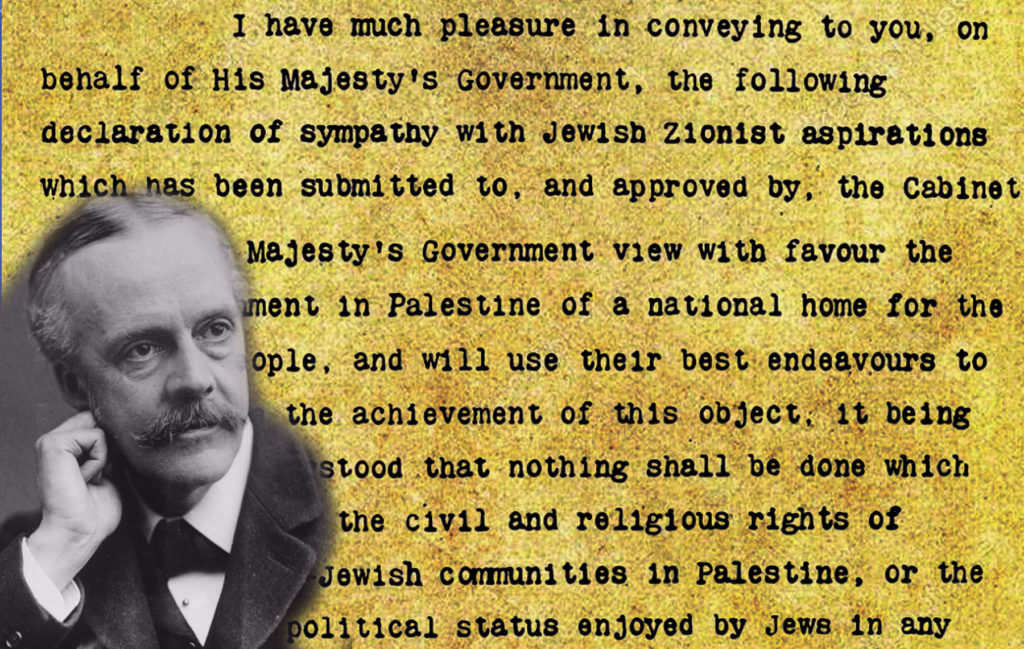
This right was recognized in the Balfour Declaration of 1917, and re-affirmed in the Mandate of the League of Nations, which, in particular, gave international sanction to the historic connection between the Jewish people and Eretz Israel and to the right of the Jewish people to rebuild their national home.

Nov. 29, 1947, marked one of the greatest milestones along the road to realizing the miracle of the modern Jewish state. On that day, the United Nations General Assembly passed a resolution calling for the establishment of a Jewish state in Eretz Israel. This recognition by the United Nations of the right of the Jewish people to establish their state is irrevocable. 

Subsequent events cemented this miracle, including how the nascent Jewish state proceeded to declare independence, and then to defy the odds by overcoming formidable Arab armies in the War of Independence. But the roots of the miracle were planted at the U.N. on Nov. 29.

I’ve dedicated my career and personal life to appreciating, advocating for, and preserving this miracle. Now, quite fittingly on Nov. 29, I’m adding an even more personal layer as to my part in the sacred responsibility that we all share in securing this miracle. 

On Nov. 29, I begin my new role as world chairman of Keren Hayesod-UIA (United Israel Appeal). Born and raised in a religious Zionist environment in Miami Beach, I’ve long savored the realization of a modern Jewish state and the Jewish people’s miracle of sovereignty in their ancestral homeland. But even as I advanced in my career working on behalf of the State of Israel, it would have been hard to imagine that today I would find myself at the helm of an organization that has the most direct connection possible to the state itself by serving as the fundraising arm of the global Zionist movement.

Never would I have thought that an American Jew from Miami Beach would assume this position, whose selection process involves direct coordination with the prime minister of Israel — the leader of a strong and thriving Jewish state, dedicated to protecting the Jewish people worldwide. Although my appointment was announced about a month ago, I am still processing its full ramifications. How did my personal and professional journey ever bring me to this point?

After fulfilling a lifelong dream and making aliyah alone at age 17 in 1990, I served as a combat soldier in the Israel Defense Forces (IDF) armored corps, and later in the IDF reserves as a casualty officer. But my ensuing career was a back-and-forth journey between Israel and the U.S., including jobs in finance and law (in addition to attending business school and law school at the University of Miami), as director general in Israel for the World Jewish Congress, and as Consul General of Israel in Los Angeles to the Southwest United States — appointed by Prime Minister Benjamin Netanyahu. It was truly humbling to have earned the prime minister’s confidence for my immediate past role in Los Angeles, as well as for my new position with Keren Hayesod, together with the support of the international Jewish leaders who comprise its board of trustees.

My time in Los Angeles was a high-level crash course in Israel-Diaspora ties and diplomacy.

My time in Los Angeles was a high-level crash course in Israel-Diaspora ties and diplomacy, and in Israel’s crucial relationships with various demographic groups and communities, from American Jews to Israeli-Americans to Latinos to Hollywood. Indeed, representing Israel in Los Angeles gave me the once-in-a-lifetime opportunity to engage and meet one-on-one with celebrities like Conan O’Brien, Billy Crystal, Mayim Bialik, Kareem Abdul-Jabbar and many others. In doing so, I had the privilege to build and fortify those relationships in an Israel-centric context enhancing our country’s diplomatic standing. I’ll never forget those exciting, action-packed years.

But now I’m moving on to a new, next-level challenge. And to understand that challenge, one really needs to understand what Keren Hayesod is and what it does. Admittedly, amid today’s “alphabet soup” of Jewish and Israeli nonprofits, it’s easy for true awareness about any organization’s actual work and mission to get lost in the shuffle.

Founded in 1920, Keren Hayesod helped lay the foundation for the future Jewish state. With the help of donations from throughout the world, it brought tens of thousands of Jews fleeing Europe to the land of Israel, helped absorb them, and started more than 900 urban and rural settlements. It provided the newcomers with homes and jobs, and developed the economic, educational and cultural framework of pre-state Israel. After Israel’s independence, Keren Hayesod-UIA became one of the country’s national institutions.
Today, in partnership with the global Jewish community and friends of Israel in more than 45 countries, Keren Hayesod-UIA helps advance the national priorities of the state. The most important priorities are rescuing Jews from places where their lives are in peril, encouraging aliyah, and absorbing new immigrants. Further, scores of Keren Hayesod-UIA projects strengthen weak populations in Israel, provide opportunities for disadvantaged youths, and connect young Diaspora Jews to Israel and to Jewish life. Our newest projects are the renovation of Israel’s national heritage sites and the development of efficient alternative energy.

As I reflect on these two improbable events occurring on Nov. 29 — the U.N.’s approval of the partition plan, and the beginning of my time as Keren Hayesod’s world chairman — I keep coming back to the word “miracle.” The modern State of Israel has forged a highly unlikely path to existence and continued survival and, personally, I’ve experienced an unlikely journey to my current role. I am the grandson of Holocaust survivors and the great-grandson of those who were murdered in the Holocaust. Yet today, my own children are approaching the age of IDF service and will soon defend the Jewish state. A few days before Hanukkah, I can’t think of a greater miracle.


Sam Grundwerg is world chairman of Keren Hayesod-UIA (United Israel Appeal) and the former Consul General of Israel in Los Angeles.

From 1947 to 2018, the Miracles of Nov. 29 Read More »

Grateful for Hanukkah in a Paradise Postponed

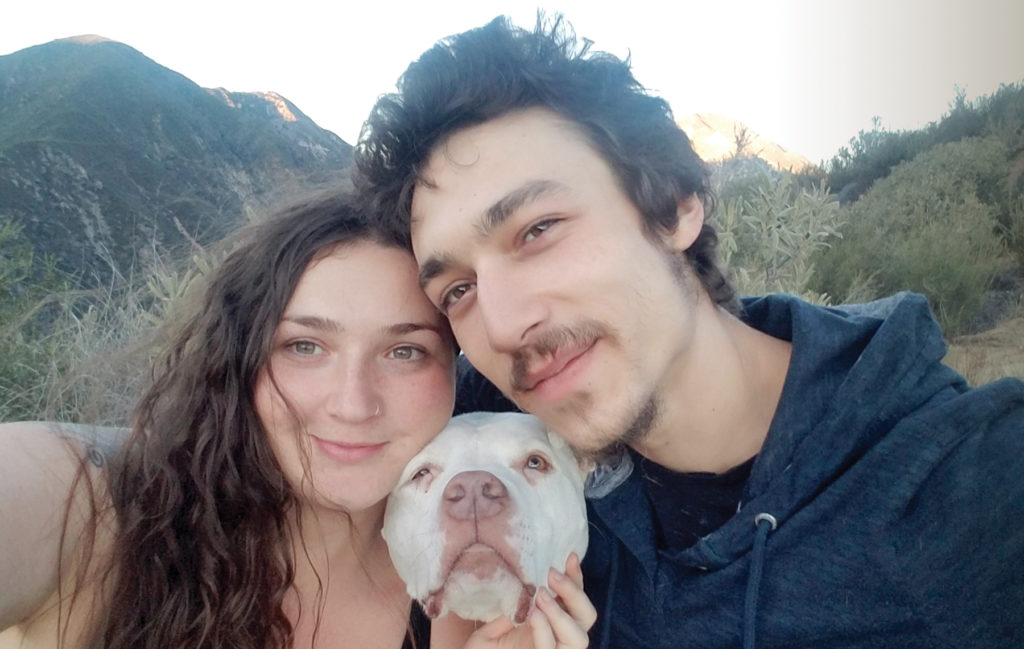
After losing their home in the Camp Fire in Northern California, Milena Ovseevich, 30, and her boyfriend, Elijah Pine Cohn, 23, have had to put their dreams on hold. 

The couple met in December 2017, drawn together by their Russian roots and their love of nature. Ovseevich, an herbalist and alternative healer, was born in the former Soviet Union. Her family moved to Haifa when she was 2, and then to Sunland when she was a teenager. Cohn, an ecological landscape designer and permaculturist, grew up in Mount Shasta in Northern California. 

“We have a lot of similarities and a lot of passion for healing the earth, bringing people together and connecting back to the earth,” Ovseevich told the Journal. 

At the beginning of 2018, the couple bought an RV and headed up the coast. They spent the first few months working on a vegetable farm near Chico, until someone introduced them to 13 acres of land that was available to rent in Concow, near Paradise. 

Said Ovseevich, “We wanted to create this beautiful abundant land, where like-minded people come together to share the bounty of the land, grow food and contribute to the community with their unique individual skills. Kind of like a kibbutz.”

The owners were happy for Ovseevich and Cohn to rent the property. “They [told us], ‘do whatever you want. Your vision is beautiful. This land needs some work.’ And they were really supportive of our dream,” Ovseevich said.

“I don’t know what would have happened if our friend [hadn’t been] there to wake us up.”
— Milena Ovseevich

The couple spent the next six months developing and investing in the land. Friends came to help, leveling the ground and planting trees and wildflowers. But on the morning of Nov. 8, the couple were awakened in their RV by knocking on their door. One of their friends who was staying on the property had spotted the Camp Fire on the hill adjoining the property.

“The first thing we did was put our dog in the car and check on everyone — our landlord, three workers and two other people on the parcel next door — who were on the property,” Ovseevich said. “Our landlord was packing quickly and was about to come get us.” 

Ovseevich and Cohn grabbed a few things, jumped in their car and quickly made their way down the trail. “At that point the fire was already cresting down the ridge, very close to our land and smoke was everywhere,” Ovseevich recalled. “We were scared [we would be] stranded and we were in a state of panic.”

As they were trying to flee, Cohn remembered that a friend on the property, Theo, had a van with a dead battery. The couple quickly turned around and went to rescue Theo and three workers who were supposed to be leaving with him. 

“Elijah grabbed our pickup truck and loaded [everyone] in it,” Ovseevich said. “We rushed down the road and made it safely to the dome gas station where all the evacuees from Concow had gathered.”

Growing permaculture food gardens for the community.

A few days later, Ovseevich and Cohn received photos of the property from a neighbor who was rescuing animals in the area. Everything was gone. Their RV, Theo’s van, the developed land. Miraculously, the woodshed survived.

“Everybody on our property managed to leave,” Ovseevich said. “We were very lucky to get out, but some of our friends in Paradise weren’t so lucky. I don’t know what would have happened if our friend [hadn’t been] there to wake us up.”

Ovseevich and Cohn have not yet been able to return to the property. The roads to Concow are still closed. They have been bouncing between friends, their landlord’s other house in Chico and Cohn’s family in Mount Shasta.

“We wanted to create this beautiful abundant land, where like-minded people come together to share the bounty of the land, grow food and contribute to the community. Kind of like a kibbutz.” — Milena Ovseevich

“We’re waiting anxiously and trying to keep our spirits up while being patient,” Ovseevich said. “It’s been very hard, but every day that passes, it feels more clear. We feel even more passionate about rebuilding.”

Ovseevich had nothing but praise for the local community, which she described as “incredible. As tragic as this is, you can’t help but see the other side of it — how people are coming together and bringing ideas of how to rebuild,” she said.

With Hanukkah just around the corner, Ovseevich said she is grateful to be able to celebrate with family.

“Hanukkah is the holiday of light and fire, and I think that this year I’m really [feeling] the power of transformation that fire can bring. To know that we can gather together and celebrate the holiday this year, it means everything to us because a lot of people didn’t get that opportunity. When you go through something like this, you realize what’s important is your life, your loved ones, your family, your community and to be here for one another.”

Grateful for Hanukkah in a Paradise Postponed Read More »

Beyond the Maccabees: Saving Your Family Stories

Most families celebrate Hanukkah with familiar rituals. Candles are lit, prayers recited, gifts exchanged, dreidels spun, gelt counted and the Maccabee family history is recalled. 

This year, what if during Hanukkah we celebrated our own family’s history? 

As an oral historian, I too often hear this lament: “We kept meaning to record my grandparents’ stories, but we were too busy. Now it’s too late.” Sadly, most people don’t get around to preserving the memories of their older relatives, and these precious stories are lost, which is a tragedy.

Not only is it a loss for future generations that miss knowing about their heritage, it’s also a loss for the storyteller who doesn’t have the opportunity to leave this most important legacy behind.

“We don’t come from thin air. We come from somewhere,” said Danny Maseng, spiritual leader and founder of Makom LA. “If you don’t know where you come from, you are, in a sense, missing a whole element of yourself. That can come into true relief if you know the stories of those who came before you.”

This Hanukkah, I invite you to interview your older relatives, and record their life stories and memories.  

“I love this idea,” said Rabbi Susan Goldberg of Wilshire Boulevard Temple. “Unless people intentionally take the time to ask questions, we often don’t get to hear the stories. Hanukkah is a unique time when you have your elders gathered with the younger people in the family. Choose a certain night of Hanukkah that’s ‘story night.’ If the fifth night is for gathering stories, then that’s the gift.”

“Unless people intentionally take the time to ask questions, we often don’t get to hear the stories of our elders. Hanukkah is a unique time when you have your elders gathered with the younger people in the family. — Rabbi Susan Goldberg

When we ask an older relative to share life experiences, we honor them for who they are and the life they have lived. Some might object, saying they have nothing of interest to tell, but we can assure them that their personal stories and memories, whether they are joyous or painful, have tremendous value to us. 

“The story of Hanukkah is about conflict and tensions,” Goldberg said. “And that’s also a part of our family stories, because a lot of people’s lives are hard. So it’s not like, ‘Tell me just the good stuff.’ It’s, ‘I want to hear everything about your life.’ 

In ancient tribes, passing down family stories and values to the next generation was a natural part of life. Taking the time to record our relatives’ oral histories is a way to renew this tradition. 

“The connection to storytelling in Judaism is inextricable,” Maseng said. “So that you know where this happened, where you came from, why this happened. When you are aware of such histories, you are better prepared for life.”

When I became an oral historian, I interviewed my parents. My father was a wonderful storyteller. One of his memories has inspired me since childhood. Dad recalled, “During the Depression, I’d occasionally come home from school to find a strange, unshaven man, dressed in rags, sitting at our kitchen table. My grandmother was serving him an entire meal – from soup to dessert. This ritual greatly concerned my mother, since Bubbe was a tiny, frail woman. When Mom asked my grandmother why she did this, Bubbe simply said, ‘How could I not do this? He was hungry.’”

Everyone has a story. And they are worth saving.

Here are some specific suggestions for creating your own Hanukkah Story Night.

Before Hanukkah: 

1. Designate the night for the interviews and invite your family’s participation. Plan to have the storytelling before or after the meal, when there will not be the noise of silverware or dishes.

2. Ask relatives to come with 10 or more questions to ask older family members. Open-ended questions typically work best. For example, rather than asking, “Was your mother a good cook?” you might ask, “What sorts of things did your mother cook?” Examples could include: “What can you tell me about your own grandparents and their lives?” “How would you describe them?” “What do you know about your parents’ childhoods?” “How did they meet?” “What do you think drew them together? “What are your earliest memories? Frightening memories? Favorite family times?” “Memories of deliveries, radio, TV, movies?” “What was the importance of being Jewish and family traditions?” “What did you learn from your parents?” “What were the most impactful world events during your lifetime?” “Describe meeting your spouse. What made them the perfect mate? What have you appreciated about them over the years?” “What have been your biggest life challenges, and how did you get through those?” “What are favorite memories of your children? How was each one unique?” “What are your hopes for your grandchildren?” 

3. Encourage children to ask their grandparents questions. Examples could include: “What were your favorite toys? What did you like best or least in school? Did you ever get into trouble?” “What did you want to be when you grew up?” 

Questions from teenagers could include: “Favorite movies or music?” “First love?” “Challenges for teens in your day?” 

4. Ask the older relatives to list any stories and experiences they might want to share. This could include meaningful or amusing experiences growing up, life lessons or words of wisdom. If they express anxiety, reassure them that this isn’t a performance; it’s just a conversation, and a precious gift to the family. If they say they recall little of their past, tell them not to worry about making the list.

5. If you are the oldest relative in the family, invite your children and grandchildren to do the above. Make a list yourself of what you want to make sure your descendants know about those who came before them: their experiences, their values, their challenges and successes. What do you want to share about your own life and what has been most important and meaningful to you? This is your chance to give a priceless gift to your family.

6. Choose the audio and/or video recorder you’ll use. A teenager might be the perfect person to handle the equipment. Plan for enough storage (memory cards or flash drive) and power (batteries or electrical). Important! Practice first, to see how and if the equipment works. It’s also a good idea to record on two devices.

Story Night: 

1. If possible, seat the older relatives in one area, so that the microphones will capture all of their voices. Someone should make sure that the recorder is near the person speaking, especially for relatives who speak softly. When someone asks a question, don’t hesitate to ask follow up questions to get more details.

2. Many families have one or two more talkative people, so some other relatives might sit and listen during family gatherings. They might need encouragement to join in. Most older people love the chance to reminisce and be heard, and frequently family members are surprised at how much the “quiet ones” have to say.

 3. If you have relatives who grew up together (i.e., siblings or cousins) it’s fun to have them respond to questions together about shared childhood and family experiences, descriptions of family “characters,” memories of growing up together and values learned within the family. Amusing disagreements can also result (e.g. the name of the dog, or which uncle always told the same joke).

4. If a relative is unable to answer a question or has memory problems, please be patient. Don’t correct them. If it will help to jog their memory, gently remind them. Otherwise, just move on. Whatever they can remember is perfect. This should be a positive experience for everyone.

5. If family members experienced painful or challenging events in the past, you might consider asking them before the gathering if they are willing to talk about these memories. Often, parents and grandparents protect their family from hearing about their difficult times, but if they know you want to hear about their experiences, they are frequently relieved to share. If someone gets emotional, that’s OK.

6. Whether stories are “happy” or not, entertaining or not, let your relatives know how grateful you are for the chance to hear and save their recollections. Finally, ask, “Is there anything else we didn’t talk about that you’d like to say?” Most of all savor this time with your older relatives. We never know how long we’ll have them.

7. Make copies of the recordings for family members. Someone in the family might edit the recordings into a book or video — a great gift for next Hanukkah. Because, as Goldberg noted, “As a Jewish tradition, we really believe in the power of narrative. Story is what connects us as a people. We have come to form who we are based on the stories of Torah, based on our passing down the traditions from great-grandparents to children. It’s the core of who we are.” 

Happy Hanukkah!


Ellie Kahn is a freelance writer and oral historian, and owner of LivingLegaciesFamilyHistories.com. 

Beyond the Maccabees: Saving Your Family Stories Read More »

ADL Responds to CNN Commentator Calling for a ‘Free Palestine from the River to the Sea’

Screenshot from Twitter.

The Anti-Defamation League (ADL) called CNN political commentator and Temple University Professor Marc Lamont Hill’s call for a “free Palestine from the river to sea” on Wednesday “divisive” and “destructive” in an email to the Journal.

According to Arutz Sheva, Hill accused Israel in a Wednesday speech at the United Nations of infringing upon “citizenship rights to Palestinians just because they are not Jewish” and denying “due process” to Palestinians.

Hill went on to endorse the Boycott, Divestment and Sanctions (BDS) movement and said that while peace is the highest priority, “we must not romanticize or fetishize it.”

“We must promote non violence at every opportunity, but cannot endorse narrow politics that shames Palestinians for resisting, for refusing to do nothing in ethnic cleansing,” Hill said.

He added that he thinks that there needs to be “a Free Palestine from the River to the Sea.”

Sharon Nazarian, the Anti-Defamation League’s (ADL) senior vice president for international affairs, told the Journal in an email, “Those calling for ‘from the river to the sea’ are calling for an end to the State of Israel.”

“It is a shame that once again, this annual event at the United Nations does not promote constructive pathways to ‘Palestinian solidarity’ and a future of peace, but instead divisive and destructive action against Israel,” Nazarian said.

Similarly, Simon Wiesenthal Center Associate Dean Rabbi Abraham Cooper told the Journal in an email, “Justice requires a ‘Free Palestine from the River to the Sea’? Marc Lamont Hill is a confirmed anti-Zionist ideologue. His extremist, anti-peace views merit coverage on CNN, not as a paid pundit but as a supreme propagandist unfettered by facts.”

Cooper added, “By the way Marc, where will you put the nearly 9 million Israeli citizens, nearly 20% of whom are Arabs? Any Palestinian entity we’ve been told will be Judenrein—only place left is… Mediterranean Sea.”

Hill responded to some of the criticism he received from his remarks on Twitter:

Hill has not responded to the Journal’s request for comment as of publication time.

ADL Responds to CNN Commentator Calling for a ‘Free Palestine from the River to the Sea’ Read More »

Challah and Sufganiyot in the Clouds

Winston Churchill was so impressed by Uganda during his 1907 safari that he wrote a book about it titled “My African Journey.” Published in 1908, Churchill wrote of the then-British Protectorate: “For magnificence, for variety of form and color, for profusion of brilliant life — bird, insect, reptile, beast — for vast scale — Uganda is truly the Pearl of Africa.” 

Churchill’s arduous journey took him from Mombasa and Kisumu in Kenya, across Lake Victoria and into Entebbe and Jinja in Uganda. 

Upon reaching Ripon Falls, he left “modernity” behind, walking, bicycling and canoeing until he reached Murchison Falls, the world’s most powerful waterfall. Although he continued by boat along the Nile through Uganda into Sudan to Khartoum, it was Uganda that he fell in love with. Most visitors to Uganda still do, only now, much more comfortably than Churchill did and enjoying much better food than was available in 1907.

Indeed, after living in Uganda for over a decade and having traversed the continent, I’m left breathless every time I venture outside its lively cities. A two-hour drive outside the capital Kampala’s perimeter delivers nature’s full bounty with plentiful wildlife and endless swamps of papyrus, forests and vast African plains. As a chef and founder of two of Kampala’s first Western restaurants, I’m often asked to train to various lodge staffs around the country, some with remote bush kitchens, little more than tin shacks without running water or sometimes even electricity. 

Last week, I was elated to have a four-day Thanksgiving holiday weekend free and an invitation to southwest Uganda to a remarkable award-winning lodge called Clouds, part of a five-star franchise of safari lodges in isolated locations around the country. Wildplaces camps are remote, luxurious throwbacks to a more glamorous era with personal butler service, spas, gourmet food and some of the world’s most stunning views. The brainchild of Montreal-born Pamela Kertland and her British husband, Jonathan Wright, I’d been to some other of their properties, and they never disappointed in a single detail. 

Clouds, Uganda’s highest-elevation lodge, is located near the Nkuringo trailhead, ideal for gorilla tracking. It sits on a mountaintop at an elevation of 7,000 feet overlooking the Bwindi Impenetrable Forest and is ringed by active volcanoes that glow red in the night sky. It is also a UNESCO World Heritage Site and home to almost half of the remaining endangered mountain gorilla populations, making it a “bucket list” destination for international tourists who buy tracking permits for a few hours of up close and personal time with these mesmerizing behemoths.

I left Kampala at daybreak on Thanksgiving and was driven seven hours until the fully paved roads gave way to gravel trails that hugged the side of the steep mountain for another two hours until I reached Clouds. 

We arrive in the afternoon under heavy black clouds hanging above the volcanoes into a breathtaking, warehouse-sized reception hall with a ceiling rimmed in Swiss chalet-style beams of wood. There is no mistake, though, that this is Africa in between the wooden sculptures and masks, I recognize the works of the most famous Ugandan painters and photographers in frames on the walls. 

I’m greeted by the young resident manager, chef Annabelle Wright, daughter of the lodge owners and a graduate of the London’s Michelin-starred Hambleton Hall and the revered Bocca di Lupo. My job is to teach her staff some American favorites in the form of bagels and doughnuts, challah for French toast and New York-style pizza dough recipe. 

That evening, dinner is eaten by candlelight and we all inhale Wright’s fresh butternut squash ravioli dressed simply in browned butter and sage from the vast garden behind the property.

The next morning, I spend the day in the kitchen with Wright hand mixing challah dough, teaching her the blessing as I braid it, and then how I turn it into sufganiyot or Hanukkah doughnuts. We decide to make a crème patisserie and, while it’s chilling in the refrigerator, I shape the remaining half of the challah dough into balls for sufganiyot. While they are rising, I paint the now-risen challah with egg wash and place it into a charcoal stove for baking (there is no thermometer-regulated oven in the kitchen). I push in the loaf and hope for the best.

After frying the sufganiyot, letting them cool and filling them with pastry cream, we garnish them with fresh borage flowers from the garden. We present them on a bed of coarse sugar to an American couple drinking champagne in the lodge. I explain the meaning of Hanukkah and the eight-day tradition of eating food fried in oil, and they proceed to taste them.

Their eyes widen at first bite. “We can’t believe we came to Uganda to eat the best doughnut we’ve ever tasted!” they exclaim. 

I bet that’s exactly what Winston Churchill would have said.

CHALLAH SUFGANIYOT
1 1/2 cups lukewarm water
2 1/2 teaspoons active dry yeast
1/4 cup sugar
2 large eggs, beaten
1 egg yolk, beaten
1/4 cup vegetable oil, plus 4 1/4 cups for frying
4 to 4 1/4 cups all-purpose flour
1 teaspoon kosher salt
1/4 teaspoon freshly grated nutmeg
1 cup seedless jam or jelly, any flavor or pastry cream
Powdered sugar for garnish

To make the dough, put lukewarm water in the bowl of stand mixer. Add yeast and sugar, and stir to combine. Let the yeast mixture rest for 5 minutes.

Add the beaten eggs and egg yolk, along with 1/4 cup of oil, to the bowl and stir to combine.

While the mixer is running slowly, add the flour, salt and nutmeg, and mix until the dough comes together. Mix for 5 minutes to knead the dough well. Turn off mixer and let the dough sit in the bowl of the mixer for 15 minutes.

After the rest period, turn the dough out into a lightly oiled bowl, cover the bowl with plastic wrap and refrigerate the dough for at least 8 hours — preferably overnight.

When ready to form sufganiyot, remove dough from the fridge and portion into about 1 1/2- to 2-ounce balls, resting each on a baking paper-lined sheet tray.

Cover the doughnuts with lightly greased cling film or a cloth kitchen towel and let them rise in a warm part of the kitchen until doubled in size, or about one hour. 

To fry the doughnuts, heat the remaining vegetable oil in a pot or wok until the oil reaches 360 F on a thermometer. Carefully add a few doughnuts to the hot oil and fry until golden brown, about 1 minute per side. Use a slotted spoon to remove the doughnuts from the hot oil and place them on paper towels to absorb extra oil. 

Let the doughnuts cool completely. To fill, place filling of your choice in a plastic bag or piping bag. Using a chopstick, make a hole in the top or side of doughnut. Remove chopstick and insert the tip of the piping bag. Pipe in 2 or 3 teaspoons of jam or cream into the center of each doughnut. Sprinkle with powdered sugar if desired.

Makes about 20 sufganiyot.


Yamit Behar Wood, an Israeli-American food and travel writer, is the executive chef
at the U.S. Embassy in Kampala, Uganda, and founder of the New York Kitchen Catering Co. 

Challah and Sufganiyot in the Clouds Read More »

Weekly Parsha: Vayeishev

One verse, five voices. Edited by Salvador Litvak, Accidental Talmudist

He has not withheld anything from me except you, because you are his wife. Now how can I commit this great evil, and sin against God? – Genesis 39:9


Rabbi Cheryl Peretz
Associate Dean, Ziegler School of Rabbinic Studies

“Nearly all men can stand adversity, but if you want to test a man’s character, give him power.”
— Abraham Lincoln

Joseph’s rise as a trusted associate of Pharoah is among one of the most curious stories of the Bible. From the adversity of his own childish brotherly taunting to being sold into slavery to the accusation of infidelity that follow this verse, Joseph certainly faces his own share of adversity.

Recognizing that God is present with him and that he has Potiphar’s vote of confidence, Joseph is made personal attendant and later, minster over the entire house. Seen for his talent, Joseph gains prominence and power. By all Biblical accounts, he is quite successful.

A true test of his character, Joseph is tempted with sex. Knowing how fragile is his success, to whom he owes loyalty, and that he always stands in front of God, Joseph affirms that to pretend he can do anything he might want to do just because he wields power would be corrupt and morally bankrupt.  

Much in life is absolute wrong or absolute right. Still, there are those who justify small steps even when they know they are wrong, beginning a slippery slope of rationalization and moral equivalency that leads to greater out-of-character acts.

In contrast, in this moment, Joseph knows that he may be in charge of the house, but it is not his home. To assume otherwise would be a violation of all that is sacred and a perversion of his own character.

Rabbi Matt Shapiro
Temple Beth Am

Rabbi Eliyahu Dessler emphasized the importance of moments when an individual could go one way or another on his path in life, when the outcome is uncertain. We all experience them; if we’re lucky enough, we notice them, and make a mindful decision toward goodness and growth. This verse encapsulates one such moment for Joseph.

This narrative’s watchword of ra’ah, evil, doesn’t first appear in this verse. Earlier, it describes the report Joseph gives to his father, Jacob, about his brothers; it also characterizes the animal Joseph’s brothers later claim mauled him when they lie to Jacob. It then lingers further on in the narrative, when the brothers are fearful that Joseph will revisit ra’ah upon them after Jacob’s death. But here, Joseph wrestles with the possible ra’ah in front of him, and emerges unwilling to sin before God, to cause damage to a relationship, or to act counter to his values. We don’t know what leads to his new perspective. Up until now, Joseph has seemed primarily focused on his own well-being and gratification. What prompts this awakening? More importantly, we know he remains on this path, rebuffing Potiphar’s wife’s advances repeatedly in the days to come.

Through his decision, Joseph brings himself closer to the moniker of tzadik, righteous one, assigned him by the rabbis. May we each choose wisely when these moments emerge in our lives, and then continue to “turn away from evil, and do good,” living in integrity with our choices.

Rabbi Shlomo Seidenfeld
Aish Hatorah JMI, COO Harkham-GAON Academy

Faith is tested by both pain and power. In fact, it is only in the company of those two realities that anyone can know with certainty just how real their faith is. I often wonder if my “unconditional faith” is in fact, conditional. Would it survive the traumas that so many Jews have experienced throughout history? And conversely, would it be compromised by my ascension to a position of power? 

Joseph experienced peaks and valleys in his life and yet neither state estranged him from the well of his faith. 

In the beginning, his life seemed charmed, with a father who showered him with love and divine dreams that seem to crown him as a future leader. Then the bottom fell out! His own brothers sold him into dehumanizing slavery. His own brothers! I can only imagine the voices in his head as he was taken to Egypt. Betrayed by his own family and seemingly abandoned by God, those voices could have easily commandeered his faith.

Yet, the Torah tells us that he entered the house of his Egyptian master with a faith that was unshaken. Impressive, but would his faith also survive power?

Enter Potiphar. Despite being given unparalleled power in his master’s household and also being subjected to daily seductions from his master’s wife, Joseph remained faithful to God and uncompromising in his morality and humility. Joseph’s faith, like his coat, was multicolored and brilliant.

May Joseph’s life-energizing faith reassure us and inspire us! 

Rabbi Jackie Redner
Vista Del Mar Child and Family Services

With his refusing the advances of Potiphar’s wife, we understand that Joseph has changed, and he has changed profoundly. He is no longer the child who doesn’t understand the implications of his behavior. The mortal desires of flesh and blood do not define him, nor do the mortal fears of punishment drive him. 

We understand now that Joseph has become a man of conscience — a person who navigates the tensions of human life through an abiding awareness and connection to the presence of God, and through a loyalty to that presence. 

The children of Israel are not yet in Egypt, nor have we crossed the sea. Yet, our ancestor Joseph already is teaching us what it means to be a Jew at its essence. It is conscience that eventually humbles the big and little barbarian in each of us, and allows a true human being to emerge. 

Salvador Litvak
AccidentalTalmudist.org

Joseph tells Potiphar’s wife he will not have sex with her because it is a great evil and a sin against God. Wouldn’t it have made more sense for him to say, “How can I commit this great evil against Potiphar?” After all, he arrived in Egypt as a slave and now he’s chief of staff to one of the most powerful men in the land. Sleeping with his wife would certainly be ungrateful, but why is it a sin against God?

Rashi points out that adultery was prohibited by God after the flood — one of the Noahide laws given to all humans. But this raises the same question: Why does God care with whom we engage in sex?

Perhaps because we are entrusted with the incredible responsibility to protect God’s honor in our little corner of the world. When the Soul of the Universe places a bit of God’s infinite energy into one of us, God hopes it will be for the good. Yes, hopes. God places good and evil before us and hopes we will do the right thing because he will be diminished if we don’t.

How could an infinitely perfect being be diminished by our lowly actions? Because God grants us this power. God even tells us we can give him pleasure or anger, the ultimate humility for one so far beyond us. And because God is personally invested in us, he will strengthen us in fighting our temptations if we just remember to ask.

Weekly Parsha: Vayeishev Read More »

Nov. 29: The Jewish Thanksgiving Day

Please join me in celebrating the Jewish Thanksgiving Day, a day when we give thanks to Lady History and to the many heroic players who stood behind the historic United Nations vote of Nov. 29, 1947, an event that dramatically changed the physical, spiritual and political life of every Jew in our generation.

I have aspired to see Jewish communities in every major U.S. city invite the consuls general of the 33 countries that voted yes on that fateful day to thank them publicly for listening to their conscience and, defying the pressures of the time, voting to grant the Jewish nation what other nations take for granted — a state of its own. Imagine 33 flags hanging from The Jewish Federation building, the names of 33 countries called out with pride and each affirmed with the word “Yes!” in a staged re-enactment of the 33-13 vote that led to the partitioning of Palestine into a Jewish state and an Arab state.

That idea came to partial fruition in 2012, when a spectacular production of “The Vote” was performed at American Jewish University in Los Angeles, featuring clergy, speakers, actors, musicians, singers and dancers commemorating that miraculous and fateful day 65 years earlier.

Efforts to turn the commemoration into an annual nationwide event have so far not borne fruit, perhaps because we have become overly fragmented or have needed time to digest our debt to history to appreciate the impact that such a ceremony would have on strengthening the spines of our children and grandchildren.

But I am not one to be deterred by shortsightedness. This year, I celebrated the 71st anniversary by myself, unaware of any public celebration planned in Los Angeles. But there are many ways you and I can give thanks where thanks are due.

Let us give thanks to the 33 countries that voted yes and for the dignity, pride and self-image that every Jewish soul has since enjoyed because of them.

Let us give thanks to Eddie Jacobson, President Harry Truman’s friend and former business partner from Kansas City, Mo., who risked that friendship and wrote to Truman on Oct. 3, 1947: “Harry, my people need help and I am appealing to you to help them.”

Let us give thanks to Albert Einstein, who pleaded, albeit unsuccessfully, with Jawaharlal Nehru, then prime minister of India, to vote for “the august scale of justice.”

Let us thank Cardinal Francis Spellman, head of the Catholic Church in New York City, who used his personal influence in Latin American countries to urge their leaders to vote yes.

“We have witnessed worse degradations of mankind before the birth of Israel, and we will endure this tantrum too. Israel has made us 10 feet taller.”

Let us thank the many ordinary yet courageous folks, from Peru to the Philippines, who understood the collective responsibility that history bestowed upon them in 1947, and used everything in their power, from personal pleading to arm twisting, to get their governments to vote yes.

Let us thank the communities of people in Los Angeles whose native countries voted yes and remind them that we Jews do not forget friends who stood with us on the side of justice. We give thanks and ask for nothing in return.

And while we thank history for its miracles, let us issue reminders of a few basic facts:

• Let us remind the world that Israel exists by historical right, not by force, nor by favor.

• Let us remind the U.N. what kind of institution it once was, and let us do it this year while, in Orwellian mockery, Saudi Arabia, Congo, Qatar and Pakistan are members of the U.N. Human Rights Council — the annointed guardians of human rights.

• Let us remind ourselves of all the arguments, pro and con, regarding the idea of a Jewish state — arguments our enemies have mastered to perfection and that we have naively assumed to be no longer necessary, to the point of delinquent forgetfulness.

• Let us remind ourselves to express ceremonially what we have tacitly understood for quite some time: Despite all the talk about rifts and cracks, Israel remains the only uniting force among world Jewry, without which collective Jewish identity would cease to exist.

• Finally, let us remind the Arab world that the U.N. voted for two states, not only for a Jewish state as opponents of Israel claim, and that the option of Palestinian statehood is still on the table, waiting for Palestinians to internalize the meaning of the word “coexistence” and to learn to utter the words “equally legitimate and equally indigenous” that were contained in the U.N. resolution.

True, the music of these words sounds terribly outdated as we watch Palestinian intellectuals flock to UCLA under the banner “Make Israel Palestine Again,” proudly imitating the “Make America White Again” banners of Charlottesville. Still, Nov. 29 is history’s way of assuring us: “We have witnessed worse degradations of mankind before the birth of Israel, and we will endure this tantrum too. Israel has made us 10 feet taller.”

Happy Thanksgiving Day!


Judea Pearl is chancellor’s professor of computer science and statistics at UCLA and president of the Daniel Pearl Foundation.

Nov. 29: The Jewish Thanksgiving Day Read More »