fbpx

November 28, 2018

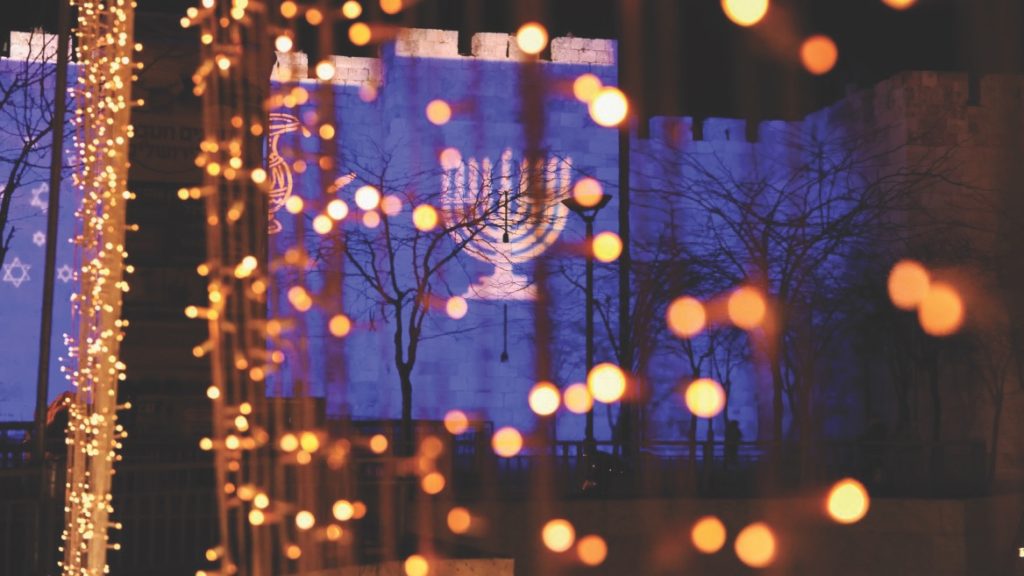
Celebrating Light and Hope in Our Time of Darkness

The last five weeks have pummeled us with horrific experiences of hate-filled violence, darkness of the soul and death. With our country already riven by bitter and hostile social and political differences, the shootings at a Pittsburgh synagogue and a Thousand Oaks bar inflicted pain, outrage and darkness upon countless persons. Then, the Camp and Woolsey fires took dozens of lives (with hundreds still unaccounted for), destroyed or damaged hundreds of homes and devastated community institutions. 

As we continue to sift through the physical and emotional rubble, and try to assess the financial and psychological damage, suddenly Hanukkah is upon us — a time to connect with family and friends in our homes in celebration of a storied miracle in which a flame burned longer than it was expected to. The dissonance is stark: Many among us have no homes to go to. Families have been fractured. Scores of people have lost everything to fires that could not be contained.

How do we celebrate the rededication of the Temple destroyed long ago, when we and our families, friends and neighbors are reeling from these urgent crises?

In the wake of the devastating fires, can we connect with the Festival of Lights and its images of a reconstructive flame? Is it possible to look at the light of the menorah and see illumination instead of destruction? 

The Journal posed these questions to local rabbis and leaders — some of whom are on the front lines of caring for victims — to help us understand. 

Fires of Destruction and Lights of Hope
Rabbi Paul Kipnes and Rabbi Julia Weisz, Congregation Or Ami, Calabasas

This Hanukkah, Congregation Or Ami rededicates the temple, literally reconsecrating our Calabasas sanctuary during our first Shabbat since evacuating the synagogue during the fires. Through the Maccabean efforts of our Fire Remediation Task Force and our crisis manager, Joffe Emergency Services, the temple is (again) professionally cleansed. As we light our hanukkiah, ancient past and devastating present blend together.

By lighting eight candles that differentiate between fires of destruction and miraculous lights of hope, we:

1. Remember that we were targets, condemned equally by an evil king long ago and an enraged murderous shooter a few weeks ago, who hated that we seemed different and sought to erase our uniqueness from the polity.

2. Caution that angry sparks, set intentionally or not, quickly and easily burn out of control, creating targets among the innocent.

3. Seek to extinguish flames of hatred that burn to harm others.  

4. Encourage wide-eyed awareness and intentional responses to the statements, policies and actions that fan the flames of hatred and/or neglect to lock down weapons of destruction.

5. Retell the story of courageous Maccabean first-responders: firefighters, police and countless volunteers who faced flames or braved bullets to save countless people and properties.

6. Celebrate the vast communal response forged in the fires, and our role as one shamash within, that kindled deep partnership to shine light for the common good.

7. Sing praise that Nes Gadol Haya Sham … v’Poh (a great miracle happened there … and here), reflecting the blessings of the Holy One, who works through decidedly human but nevertheless holy people.

8. Rededicate our synagogue home as a center of learning and holy activism, committed to repairing our broken world. 

Becoming Part of the Rededication Miracle
Rabbi Adam Kligfeld, Senior Rabbi, Temple Beth Am, Pico-Robertson

The much-beloved teaching by Rabbi David Hartman about what, indeed, was the miracle on the first night of Hanukkah, such that the holiday is eight days rather than seven (after all, the first day they did have enough oil, so what was ostensibly miraculous?), speaks directly and poignantly to this moment.  

To have hope, to begin to illuminate crushing darkness when there is no guarantee of what tomorrow brings, is the epitome of human resilience. It is what is called upon in moments of tragedy, whether personal, local, national or global. The conquering heroes lit that first night, rather than submit to understandable disconsolation. That was a miracle too — of heart, not of oil. In Rabbi Hartman’s words, inspired by our ancestors, we “ought to pour infinite yearnings even into small vessels.” 

In the Maccabean era, the fires of destruction came not only from the flames of enemies, but also from the burning civil discord in the face of incalculable emergency. Today, individuals and communities in our midst face devastating darkness. Let our generosity — of time, spirit and financial resources — be their first candle. Let our togetherness deter rancorous and divisive blame-games. Let us be part of their miracle of rededication. 

Reclaiming Shammai, Reducing the Flames
Rabbi Lori Shapiro, The Open Temple, Venice

The story of Hanukkah is a literary tale formed over several millennia, its origins spinning through the Book of Maccabees I and II, through Josephus, the Talmud, Maimonides and beyond. It’s a literary time machine. And if each evolving civilization imprints its own addition to this tale, might we look around at our times and ask, “What is our contemporary contribution to the telling?” Perhaps this year nothing is more important to illuminate than the Spirit of Machloket (disagreement), as most famously demonstrated in the mental sparring of Hillel and Shammai, the rabbis of the Talmud who respectfully preserved the minority opinion in matters of dissent.  

According to the house of Hillel, we begin with one light and increase the light each day until we have all eight illuminated. What if, this year, all of us reclaim the Shammai hanukkiah, in addition to our beloved Hillel hanukkiah (Shabbat Bavli, 21b)? Perhaps we should begin with a blaze, akin to the great fires in our city, state and nation, and reduce the flame for eight nights as a symbol of our humility, unity and oneness?  

This Hanukkah, The Open Temple shares this tradition at our annual “Hanukkah on the Canal Parade,” and we dedicate ourselves to the search for light in times of darkness. We hearken to the sounds of strangers and invite the Other into our hearts and homes as an eight-night meditation of reduced light to guide our return, until a singular candle, representing all of us, together and alone, becomes our sole companion. A singular light, reminiscent of the mystery and promise of creation. 

In the Darkness, Create Light
Rabbi Cheryl Peretz, Associate Dean, American Jewish University, Bel Air

In a remarkable demonstration of courage, the Maccabees rededicated the Temple, pouring faith into kindling light from one small flask of oil. We light candles counting upward, each night adding one more candle. The more light, says the Talmud, the more holiness.  

At a time of darkness and challenge, our response is to increase the light. Unlike any other time of year, during Hanukkah the lights are for the sole purpose of witnessing the shining brightness, finding in it the inspiration to create more light.

Lighting the Hanukkah candles invites us to take time to see our own soul’s light. In so doing, we are reminded that deep within us we hold the truly miraculous weapons of hope and faith that we can use to fight darkness, evil and pain.  

The Book of Proverbs says it best: “The light of God is the human soul.” It is this light that guides us to illuminate the darkest paths and leads us to kindle additional light deep in the holy souls of other people. 

Don’t Cancel Holidays: Celebrate the Will to Rebuild
Rabbi Mordecai Finley, Ohr HaTorah Synagogue, Mar Vista

Some of the people who frequent our synagogue were forced to evacuate their homes and/or lost their homes entirely in the recent Woolsey Fire. There may also be someone in our midst who is grieving a loved one lost in the Camp Fire’s destruction of the town of Paradise, the Borderline Bar & Grill shooting in Thousand Oaks or the Tree of Life synagogue attack in Pittsburgh.

Everyone is shaken. The news cycle brings the catastrophes home to each of us. As a religious and spiritual community, we have to acknowledge the pain and trauma and guide people through it — how to grieve and how to console.  

But we don’t cancel holidays or turn them into rites of mourning. Some who have suffered grievous loss can have their spirits lifted by the wisdom, beauty and joy in our holidays. Perhaps for a brief time, they will want to be at one with the community and the tradition. 

It’s a fine line: being present for the grieving, but also trusting that our traditions have enough depth and wisdom for anyone at any time of life. This Hanukkah we are reminded of people who risked everything and many who lost everything. They asked us to celebrate their victory, their moment of rededicating that which had been desecrated. 

We are a tough people, with the vision and will to grieve, restore and rebuild. Let’s celebrate Hanukkah. 

Recognize the Candles in Our Families
Rabbi Nicole Guzik, Sinai Temple, Westwood

I recently read an odd but inspiring answer to the question: “How many candles do we light on Hanukkah?” The Mishneh Torah explains a rare tradition in which you light a candle for each family member, the following night it doubles, triples and so on. By the end of the eighth night, your home is filled with candle after candle, pinpoints of light that pierce the darkness. 

But it’s more than just an aesthetically pleasing sight. It is a plea to each of us that even within our own families, where disagreements and grudges can run high, we must push through our differences to find ways to see each other. There is no perfect family. Extending further, the Jewish nation has been filled with opposing opinions and ideologies for thousands of years. But to do God’s work of diminishing the darkness in this world of shadows, we must recognize the candles within our own family. Candles yearning to be lit. Candles yearning to be seen. 

No matter how much we disagree with those we love, they are family. See them. Perhaps one day, you will need their light.

Working Together, Rising From the Ashes
Jay Sanderson, president & CEO, The Jewish Federation of Greater Los Angeles

For me, the definitive image of Hanukkah is a menorah radiating in the window of my family’s home. Those flames, burning brightly, symbolize our victory over tyranny and oppression. This past week I drove through the West San Fernando Valley, Conejo Valley and Malibu, parts of our Jewish community ravaged by our recent fires. I saw how flames can cause tremendous destruction and felt many emotions. But what I experienced rising from the ashes was the strength and resilience of our Jewish community. 

As we approach Hanukkah this year, I am deeply inspired. I recognize the long journey we have ahead to rebuild lives, homes and institutions, but I am emboldened by how our Federation staff, lay leaders, communal leaders and rabbis have selflessly stepped forward to do this essential work together.

Eight Bring-Light-to-the-Darkness Kavanot
Rabbi Yosef Kanefsky, B’nai David-Judea Congregation, Pico-Robertson

The recent man-made and natural calamities have, for me at least, blended into a broader and deeper darkness that has served as their backdrop and soundtrack. This is the darkness produced by the incivility and indecency of our political and social discourse over the past number of years. When we can banish this darkness, we can be realistically optimistic that we can banish any darkness that may come our way. In this spirit, I offer these bring-light-to the-darkness kavanot (intentions) for our eight nights of Hanukkah.

Night 1: Let us speak only truth. Not what “might be” or “could be” or “who knows?” Just truth.

Night 2: Let us not abuse God’s gift of speech by using it to ridicule, mock or demean other human beings.

Night 3: Let us oppose all forms of bias and hatred, not only the ones that suit our politics. 

Night 4: Let us imagine what it would feel like to stand in the shoes of the other, before we espouse a position that impacts that other.

Night 5: Let us take to heart the strict Talmudic prohibition upon affixing nicknames to people.

Night 6: Let us respond to division by trying to heal it, not by exploiting it to our benefit.

Night 7: Let us remember that the only consequence to opening our ears more is that we will understand more.  

Night 8: Let us recommit to the idea that humility is not a weakness to be taken advantage of, but a virtue to be admired.

Celebrating Light and Hope in Our Time of Darkness Read More »
Killing Another Linkage

You might not remember the debate about whether the road to Middle East peace ran through Jerusalem or Baghdad. In the early 1990s, U.S. Secretary of State James Baker believed that peace between Israel and Palestine was the key to solving the main problems of the Middle East. During the second Bush administration, a reverse suggestion was made — and debated: that solving the problem of Baghad would hasten a peace between Israel and the Palestinians. Time proved both theories wrong, or at least premature. Peace was not achieved, and the Middle East still has problems. Very few people still believe in a so-called “linkage.” 

Of course, peace with the Palestinians has merit, but avoiding the linkage between achieving that goal and pursuing other Middle East advances removes some of the pressures on the Israeli-Palestinian issue. The Palestinians cannot hold all other Middle East advances hostage until their issue is resolved. The world no longer lives under the illusion that Israel-Palestine peace is the first priority (more important than, say, Iranian nuclear advances). Israel is no longer blamed — at least not by serious people — for causing trouble in other areas in the region. 

With that linkage basically put aside, Israel is now aiming for the jugular of the second linkage: whether it can be legitimized in the Arab Muslim world when its conflict with the Palestinians is still an open wound.

“Israel is now aiming for the jugular of the second linkage: whether it can be legitimized in the Arab Muslim world when its conflict with the Palestinians is still an open wound.”

Egypt was the first country to erode this linkage when it signed a peace agreement with Israel (with provisions aimed at advancing a solution for the Palestinians). Jordan likewise signed a peace agreement with Israel in the early 1990s, when Israel and the Palestinians seemed for a while as if they were moving toward resolution. 

The situation today is much changed. It is clear that Israelis and Palestinians are not moving toward peace. It is also clear that when Arab Muslim countries get closer to Israel that they are not doing it because of the Palestinian issue but rather in spite of it. They are doing it because they have other priorities — concerns about Iran; economic or technological needs Israel can satisfy; or political needs that can be addressed through Israel’s ties in Washington. 

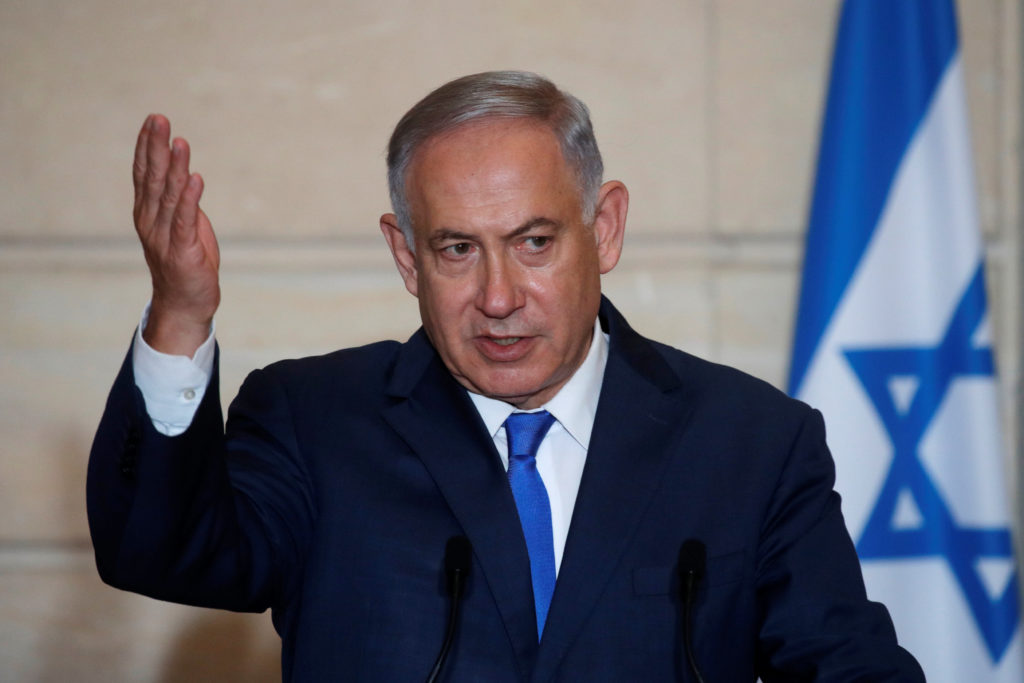
Relations with Persian Gulf countries have improved. Prime Minister Benjamin Netanyahu recently visited Oman, and there is now talk about an upcoming visit to Bahrain. Relations with Saudi Arabia are of great importance to both countries. And then there is Africa, where Israel is slowly edging toward renewing relations with more countries. 

On Nov. 25, the president of Chad, Idriss Déby, visited Israel. Chad is a poor, corrupt country in the middle of Africa that is plagued by political violence and ranked very high on the failed-state index. Déby has dealt with rebellions and coups d’état attempts since he first became president in 1990. Chad has little to contribute to Israel — except on the issue of linkage. It has a small Muslim majority, and in the early 1970s, it severed ties with Israel under pressure from Saudi Arabia, Libya and other Arab countries in an attempt by the Arab world to keep Israel illegitimate. (President Déby was highly influenced by former Libyan dictator Moammar Gadhafi.)

Now that the second linkage seems to be dying, or maybe is dead, the Palestinians are no doubt following this process with apprehension. It takes away one of the key tools they used in their battle with Israel: the power of the Arab Muslim world to put pressure on the Jewish State. For Israel, it’s a triumph. It carries the hope that the Palestinians will finally realize that time is not necessarily on their side. It also carries a certain risk: Israel might be tempted to forget the Palestinians. But while Chad is far away, the Palestinians, with or without the support of Arab Muslim countries, still live in Israel.


Shmuel Rosner is senior political editor. For more analysis of Israeli and international politics, visit Rosner’s Domain at jewishjournal.com/rosnersdomain.

Killing Another Linkage Read More »

Limbo, Nimrod Back, Boogie Dice, Pressy, Hanukkah, Jewish Journal, jewish news

Nimrod Back Creates A New Spin on the Ancient Top

If a one-day supply of oil that ends up burning for eight days is a supernatural occurrence that’s been celebrated for over 2,000 years, then a top that can spin continuously for forty hours is a veritable modern-day Hanukkah miracle. 

Nimrod Back is the miracle-maker behind Limbo, a solid-metal spinning top with a gyroscope hidden inside that allows it to spin in perpetuity — or at least until the rechargeable battery runs out. 

Back, 34, got the idea from watching the movie “Inception,” where Leonardo DiCaprio’s character deduces whether he’s awake or dreaming according to whether the spinning top topples over. Back said his customer base falls into three categories: The first category is made up of people who are into what Back calls “executive toys” — C-level suits fidgeting with a spinner during board meetings, for whom the Limbo is a prestige item (it costs around $60). “We develop toys for children with salaries,” he explained.

The second category is comprised of physics aficionados. “The Limbo represents a very cool principle called angular momentum,” Back said, referring to the rotary inertia of an object in motion around an axis, like our planet. 

The third category includes “Inception” fans. Of the thousands of comments Limbo has attracted from several viral videos, the one that is most often repeated is along the lines of, “Oh s—, we’re still in a dream,” Back said.

An industrial engineer living in Tel Aviv, Back always liked making things. When he was 12 and his skateboard was confiscated, he unscrewed the back of his wooden school chair and after sanding, filing and securing wheels to it had a new skateboard small enough to hide in his backpack. 

“It’s a weird object that stands on its tip and turns. It’s already kind of magic, a tiny miracle.” — Nimrod Back

His penchant for making things plus a love of fantasy made inventing magical items, as he calls them, an obvious career move. “I call them magical items and not magic tricks because you don’t need to be a magician to use them,” he said. 

He also invented Pressy, a tiny, customizable button that fits in a mobile phone’s headphone jack to start apps with a single press; and Boogie Dice, which roll when you clap your hands or snap your fingers. But only Limbo has earned his company, Fearless Toys, over $1 million, $800,000 of which came from a crowd-funding campaign and more than $300,000 in sales. 

Part of Limbo’s appeal, Back said, is something that even regular spinning tops have. “It’s a weird object that stands on its tip and turns. It’s already kind of magic, a tiny miracle,” he said.

He posited that watching a spinning top has a calming, hypnotizing effect because a person’s breathing ends up synchronizing with the rotations in much the same way it does when a person watches a candle burn. In June, Limbo beat the existing Guinness World Record for spinning with a 27-hour spin. 

Beyond its record-breaking capabilities, Limbo is “pretty good for hustling,” Back said. He explained that at restaurants he will wait for the waiter to approach before spinning the Limbo on the table. Invariably, the server will wait patiently for it to fall before taking Back’s order. At that point Back will smile wryly and say, “Let’s bet that I’ll finish my dinner before it falls.”

While it was not designed as a dreidel, Back said he hopes that by next year he will market a Limbo version for Hanukkah.

Nimrod Back Creates A New Spin on the Ancient Top Read More »

Tipping Point: Israel and the ‘Community of Nations’

News of the surprise two-years-in-the-making visit to Israel by the president of Muslim-majority Chad broke on the same day that the Czech head of state announced in Jerusalem his nation’s intention to move Prague’s embassy to the holy city. This came on the backdrop of reports that the Jewish state is seeking to establish full diplomatic ties with Mali, Niger and even Sudan. Jerusalem also purportedly is eyeing Bahrain and Oman, the latter of which just reiterated that “the Arab states need to come to terms with the reality that Israel is a fact of life in the region.”

For its entire history, the State of Israel has been widely viewed as a pariah, a status quo many assumed would persist for as long as its conflict with the Palestinians — and perhaps thereafter. According to conventional wisdom, it would languish forever in a sort of diplomatic purgatory with only the Americans in its corner.

Yet, a simple glance at the world map reveals a growing landscape dotted with countries clamoring for Israeli expertise in fields ranging from defense and counterterrorism to agriculture and medicine. It seems that the Jewish state is on the precipice of a major, overarching and perhaps redefining diplomatic breakthrough.

After 70 years, Israel may be on the verge of joining the so-called “community of nations.”

To this end, Prime Minister Benjamin Netanyahu revealed he would soon travel to other Arab countries; this, after his October trip to Oman, which immediately preceded Culture and Sport Minister Miri Regev’s visit to the United Arab Emirates. Intelligence Minister Yisrael Katz this month likewise attended a conference in Oman, while Economy Minister Eli Cohen reportedly received an invitation to visit Bahrain in early 2019 to participate in a high-tech summit organized by the World Bank.

All of this follows Netanyahu’s alleged secret trip to Cairo in May, which came on the heels of his high-profile public meeting last year with Egyptian President Abdel-Fattah el-Sissi at the United Nations General Assembly in New York. Despite Jordanian King Abdullah’s often-harsh rhetoric, Amman maintains close security and economic ties with Israel and recognizes the important role Jerusalem plays in ensuring continued Hashemite rule of Jordan.

”It is abundantly clear that Arab and Muslim nations would love to establish bilateral relations,” said Chuck Freilich, a former deputy national security adviser in Israel and currently a senior fellow at Harvard’s Belfer Center. “The reasoning is threefold: a common interest in curbing Iran; fatigue with the Palestinian issue; and the knowledge that Israel is the only dynamic and high-tech economy, especially in the cyber field, in the region.

“It seems that the Jewish state is on the precipice of a major, overarching and perhaps redefining diplomatic breakthrough.”

“Despite this, the cup-half-empty side of the story is that Israel’s international image is at a nadir, as the overall level of delegitimization is increasing. Even in many countries with which Israel has good working relations, public opinion is horrible. This is most apparent in Europe and is making inroads into the United States. To offset the potential severe consequences, Israel will need to change its policies vis-a-vis the Palestinians. It is unclear if anything can be done to end the conflict — and people forget the Palestinians previously were offered comprehensive peace proposals — but Jerusalem could halt settlement activity and publicly reiterate support for the two-state solution. This might not fully solve the problem, but it would help.”

While the stalemated peace process continues to cause friction with Western European countries, Netanyahu nevertheless has over the past six months received German Chancellor Angela Merkel and was welcomed in both London and Paris. Moreover, to counter what the prime minister has described as the European Union’s “hostile” attitude toward the Jewish state, efforts have been made to strengthen ties with lesser powers on the continent.

For example, Netanyahu recently was the first-ever foreign leader to partake in a summit of the Craiova Forum, consisting of Bulgaria, Romania, Serbia and Greece. In August, he met in Vilnius with the heads of Lithuania, Latvia and Estonia. Before that, he attended a meeting of the Visegrad Group, made up of Poland, Hungary, Slovakia and the Czech Republic. Over the summer, Netanyahu hosted Austrian Chancellor Sebastian Kurz.

A further examination of the West shows relations with the United States — which, along with Israel’s technological and military prowess, forms the bedrock of its global standing — have never been better than under President Donald Trump. 

Moving forward, Netanyahu is expected to travel to Brazil for the inauguration of president-elect Jair Bolsonaro, who vowed to make the Jewish state the destination of his first trip abroad. Last year, the prime minister became the first sitting Israeli leader to visit Latin America, making stops in Argentina, Paraguay, Colombia and Mexico. Israel’s ties to Honduras and Guatemala also appear to be at all-time high levels.

Concurrently, Israel has focused on deepening its connection to many states in Africa, to which Netanyahu has traveled three times in the past two years. Ghana’s foreign minister recently announced that her government is assisting Jerusalem in its bid to gain observer status at the African Union, a potentiality publicly backed by Kenya and Ethiopia. Representatives from Angola, Cameroon, the Republic of Congo, the Democratic Republic of Congo, Ivory Coast, South Sudan, Rwanda and Zambia reportedly attended the opening in May of the American embassy in Jerusalem. Ties have been re-established with the Republic of Guinea and Tanzania.

“Netanyahu during the past half-decade has made an effort to reach out to governments that in the past have not been approached,” said Ofer Israeli, a lecturer and senior research fellow at the Institute for Policy and Strategy at the Lauder School of Government, Diplomacy and Strategy of the Interdisciplinary Center in Herzilya. “These are smaller countries in the international arena but when it comes to the United Nations, every vote is equal. So Israel has tried to make as many ‘friends’ as possible.

“This policy is partially the product of ‘liberal’ states like Britain, France and Germany not supporting Israel because of the Palestinian issue. Jerusalem has no other option but to look elsewhere, including to those less democratic in Eastern Europe, Africa and the Gulf. Israel also is trying to create ties with nations such as Brazil, where the leadership [has shifted to the right]. Another main objective is to target whoever might move their embassy to Jerusalem.”

This more-the-merrier attitude has not inhibited Israel from attracting the attention of traditional and emerging powers, including Russia, as evidenced by ongoing military coordination in Syria despite the recent crisis over the accidental downing of a Russian reconnaissance plane. Meanwhile, bilateral relations are budding with China The bond between Netanyahu and his Indian counterpart, Narendra Modi, is well-documented.

Overall, this expanding network of government-government relationships is reshaping Israel’s geopolitical standing, albeit this success has not fully extended to the level of populations. While that is a concern that needs to be addressed, a country that has a lot to offer will invariably be courted, respected and, by extension, accepted. Israel has become a model for this type of modern diplomacy, which has opened up to it potentialities once thought unimaginable.

Tipping Point: Israel and the ‘Community of Nations’ Read More »

Theresa May: ‘Anti-Semitism Is Racism’

Britain’s Prime Minister Theresa May leaves 10 in Downing Street in London, Britain, November 28, 2018. REUTERS/Henry Nicholls

UK Prime Minister Theresa May tore into anti-Semitism in a Monday speech, explicitly stating that it is an example of racism.

May said in her speech at a reception on Downing Street following the Sara Conference, which focused on anti-Semitism and sexism, that “Jewish women are increasingly coming under dual attack” from sexism and anti-Semitism.

“These attitudes are not limited to the far-right,” May said. “As is so often the case with anti-Semitism, bigotry directed at Jewish women also comes from those who would never consider themselves to be racist, including within the women’s rights movement itself.”

May added, “Some Jewish women have been told that they’re not ‘real’ feminists unless they publically disavow Israel’s right to exist, or been thrown off pride marches for flying rainbow flags that feature the Star of David.”

She pointed out that such lines of attack against Jewish women are excused by the “canard” that it can’t be racist because racism views minorities as inferior, whereas Jews are seen as “universally wealthy and powerful.”

“I have no time for equivocation,” May said. “Anti-Semitism is racism – and any ‘equality’ movement that indulges or ignores it is not worthy of the name.”

May then highlighted some of her administration’s accomplishments in tackling anti-Semitism and other forms of bigotry, including the government’s adoption of the International Holocaust Remembrance Alliance’s (IHRA) definition of anti-Semitism and providing funding for Holocaust education:

Standing in the heart of our democracy on a site right next to Parliament, the National Holocaust Memorial will be accompanied by an education centre that will lead a national effort to fight hatred and prejudice in all its forms.

As the Chancellor announced in last month’s Budget, we will also provide £1.7 million for school programmes marking the 75th anniversary of the liberation of Bergen-Belsen.

And we are continuing to support the Holocaust Educational Trust, not just backing its Lessons From Auschwitz programme but extending it to cover universities. The first students and university leaders to take part in the new scheme travelled to Poland just last week.

May concluded her speech by stating, “Freedom of thought and freedom of speech have never meant freedom to abuse and freedom to threaten. Anti-Semitism and misogyny have no place in this country.”

Read her full speech here.

Theresa May: ‘Anti-Semitism Is Racism’ Read More »

Open Letters to Melvin Oliver, President of Pitzer College

From Rabbi John Moscowitz in Toronto

President Oliver,

I write you as a Pitzer graduate (1975) and as a Jew. I do so in sadness and disappointment— in response to the Pitzer faculty voting to cut off the college’s program in Haifa.

My two most important teachers at Pitzer were Lucian Marquis and Tom Hayden. I was close to both, not just while in Claremont, but to the end of each of their lives. I would speak with each about my love of Israel, including with Tom as he was dying two years ago.

Interestingly, Tom, the Irish Catholic radical, was a good deal more knowledgeable about Israel than Lucian, the German Jewish refugee.

That said, no professor was more memorable and influential than Lucian— in part because he provided his students a window into the fascism from which he fled. He cautioned us, his wide-eyed and idealistic American students, that fascism was possible anywhere. We were clueless but curious. Lucian made us both less clueless and more curious—smarter, in fact. Come to think of it, so did Tom.

Tom Hayden, much like Lucian Marquis, would become allergic to the kind of herd-like mentality that consumed Lucian’s mid-century Germany. It was one of the reasons the hard left eventually bore Hayden much ill will.

In any case, I strongly suspect both men, were they alive today, would share my deep disappointment. Both saw Pitzer as different from other colleges and universities: more free of dogma; more wedded to fairness; more inclined toward principle. Not perfect, but worthy of significant esteem. I learned the virtue of independent thinking from these two men. I’ve been grateful ever since.

This was the Pitzer that Lucian and Tom knew— indeed, the college I experienced and have since been proud to include on my resume.

No longer. The Pitzer faculty’s Haifa vote is illiberal— and betrays a knee-jerk animosity towards Israel as ignorant as it is disguised as principled. This is the kind of animus that often proves infectious, even dangerous, as it can turn individuals into crowds. It’s hardly what the Pitzer College I once knew was about.

I suspect you don’t share the Faculty’s views on the Haifa program. Even more, I’m gratified that your students (the official student council,  in any case) are prepared to buck their teachers.

Nonetheless, the vote badly tarnishes the college— and leaves a foul wind in its wake that won’t easily dissipate.

Yours sincerely,

Rabbi John Moscowitz, ‘75


From Rabbi Nolan Lebovitz in Los Angeles 

Dear President Oliver,

As a rabbi in Los Angeles, and as a current student at Claremont Graduate University, I find the decisions made by the Pitzer College faculty regarding its relationship with the State of Israel deeply troubling. In a time of complex social and political issues, in which institutions of higher education should be encouraging their students to engage across political boundaries and create learning opportunities from different perspectives, Pitzer College faculty has voted to suspend its study abroad program with the University of Haifa. While I would oppose any boycott against Israel, since Haifa is well within the internationally recognized borders of the State of Israel, the only message this sends Pitzer students and the broader community is that the Pitzer faculty believes their students should distance themselves from all of Israel and all Israelis. The second faculty vote to dissent from the Board of Trustees’ decision to protect the college from the dangerous forces of Boycott, Divestment, and Sanctions against the only Jewish State in the world and the only democracy in the Middle East cements a clear agenda of racism.

These tactics by the faculty punish Israel and isolate its academia without helping the Palestinians at all. Having lived in Israel for a year, I can attest that Haifa, the third largest city in Israel, is home to populations of Israeli Jews, Israeli Arabs, Palestinian Arabs, Israeli Druze, the Bahai World Center, and others. Haifa is often celebrated as an example of beautiful co-existence in the region. What part of this offends the Pitzer faculty? These decisions seem to announce that Israel is solely to blame for the situation in the region, when in fact the Palestinians have formally rejected statehood a handful of times and the Palestinians continue today to foster a culture of hatred and hostility. How many other study abroad programs have the Pitzer faculty opposed to this extent? How should this kind of extreme political agenda on the part of the faculty toward the Jewish State be addressed by the administration? There is no doubt that this type of censorship of academic opportunities in the form of this boycott effort against Israel by the Pitzer faculty should be met by the harshest criticism.

All Jewish families should reconsider sending our children to be “taught” by the faculty at Pitzer. Connection to Israel is one of the key elements of Jewish Identity in the twenty-first century. If I would have to choose at this point for my own children to learn according to a worldview between the faculty of Pitzer and the faculty of the University of Haifa, there is no doubt I would prefer my children adopt the open welcoming academic outlook of Haifa. I hope and pray you are able to guide your institution back to a position of open-minded rational thought. I look forward to receiving a response.

Sincerely,

Rabbi Nolan Lebovitz

Open Letters to Melvin Oliver, President of Pitzer College Read More »

Jews and Intermarriage: A Love-Fate Relationship

It’s becoming the great unspoken yet perennial source of anguish haunting the Jewish world. It’s that nerve pressing on the blue-and-white or red-white-and-blue spine, inflaming the anguish fueling most Jewish arguments today. It’s American Jewry’s great divider, pitting the Orthodox and a dwindling handful of conservative Conservatives against everyone else while distinguishing most Israelis from most American Jews. It used to be considered a threat. Now, some are trying to give it a makeover as an “opportunity” — even a pluralistic, humanistic, universalizing blessing — as we evolve beyond our “racist,” particularist sins. “It” is intermarriage.

Think about it. No Jewish community could ever survive a 70-percent intermarriage rate (higher if you only count non-Orthodox marriages). No community can sustain itself with negative population growth. And no community, theoretically or practically, can exist without red lines: A community needs unity about something.

Yet, every intermarriage is a love story. In a broken world where so many are so lonely, who dares mourn when people find caring partners for life? Every intermarriage is a success story — only in America would Jews emerge as the most admired religious community. Only in America and some other Americanized democracies could we coin that deliciously neurotic, oh-so-Jewish lament: “Once they killed us with their hate; now they’re killing us with their love.” And every intermarriage is a story making the American dream come true. From “The Jazz Singer” to “My Big Fat Greek Wedding” to “Today’s Special,” Hollywood treats parents who oppose intermarriage as the heavies, who usually see the red-white-and-blue light by the time the story reaches its happy ending.

In today’s overheated politics, as he’s doing with nationalism, President Donald Trump is giving the notion of any borders a bad name. But boundaries don’t just keep people out. They also build meaning, solidarity and pride inside. For states, nations, communities and families, lines separating those from within and without foster internal bonds. True, rigid boundaries can become nooses, choking off the oxygen flow that healthy groups need to grow and thrive; but no community can survive without some frameworks. As Momma Troy warned, if you’re too open-minded, your brains fall out.

Intermarriage looms underneath all the Jewish identity-building, educating, Birthrighting and Hebrew schooling. Intermarriage shrinks the Jewish-peoplehood power that needs Israel, relies on Israel and loves Israel. Most Israelis can’t understand this modern Masada, this mass act of communal suicide. As one nonreligious Israeli friend said: “We do everything — we take out the Jewish people’s garbage. We fight. We pay taxes. We sacrifice sometimes with our lives. American Jews just have to do one thing — stay Jewish. But they can’t even do that right.”

Clearly, this hair-trigger issue requires more conversation, not less; less political correctness, not more; braver thinkers, not cowards. Yet, intermarriage has become the third rail of Jewish politics. Non-Orthodox rabbis risk repudiation from colleagues if they endorse it; non-Orthodox non-rabbis risk ostracism if they oppose it — condemned as racist, judgmental or mean.

This issue of issues is so complex, the stakes so high, that we need capacious, creative and courageous thinkers to help.

Fortunately, one ace thinker has arrived — Robert Mnookin. He has a superlawyer’s parsing skills and elegance. He has a mediator’s decency and out-of-the-box insights. And he need not be brave: He has tenure at Harvard Law School, a position guaranteed to intimidate most Jewish American success junkies.

In his ambitious, thought-provoking, dazzling and, yes, sometimes frustrating book — “The Jewish American Paradox: Embracing Choice in a Changing World” — Mnookin deftly tackles this volatile intermarriage issue. The Samuel Williston Professor of Law, the chair of the Program on Negotiation at Harvard Law School, and the director of the Harvard Negotiation Research Project, Mnookin finds Jews’ traditional matrilineal standard too exclusive yet too inclusive. Why should someone who wants to be Jewish not be welcomed? he wonders. And why should somebody who doesn’t care, yet has a Jewish mother, merit lifetime membership?

This question is not simply theoretical for him. In this deeply personal book, Mnookin tells his family’s story as a modern Jewish American parable. Raised as assimilated Reform Jews in the 1940s and ’50s, he and his wife were thoroughly ambivalent, take-it-for-granted Jews. “The idea wasn’t to deny being Jewish,” he recalls, “but rather to fit in.” They mimicked many other successful Jews, “accepting my Jewish heritage, if not exactly embracing it, and then thinking about it as little as possible.” Then, while Mnookin was on an Oxford sabbatical, their 11-year-old daughter, Jennifer, asked, “When are we actually going to become Jewish?” She also demanded a bat mitzvah.

Jennifer’s challenge jump-started a process that accelerated decades later when Mnookin became Grandpa Mnookin. “Continuity suddenly mattered to me,” he writes.Today, he’s activated his Jewish identity and he laments that some of his grandchildren are dismissed as “half-Jewish” because one of his two daughters intermarried, even though all his grandchildren are halachically Jewish.

Such bizarre, seemingly arbitrary categorizing offends his legal and liberal sense of fairness. The result is his thoughtful compromise rejecting the traditional approaches of matrilineal descent or Orthodox conversion as the only two entrees into Judaism. If you want to call yourself Jewish, you’re Jewish, he insists, embracing a big-tent approach. But let each institution and each denomination define its own membership rules, he says. Belonging to the Jewish people should have a low, voluntary bar, while belonging to an Orthodox or Conservative synagogue could still follow tradition.

Mnookin’s proposal is genuinely lovely, acknowledging the pain people feel when rejected. It expresses a welcoming spirit difficult to dislike. And to a people so obsessed with our fate that the scholar Simon Rawidowicz, a half-century ago, christened Jews “the ever-dying people,” it says, logically: Let ’em in!

The modern me, the American me, the academic me, the liberal me and especially the nice-guy me want to high-five Mnookin and thank him for solving this painful dilemma. Yet, the Jewish, Zionist and Israeli in me resist — especially because I just finished reading Jonathan Haidt’s majestic “The Righteous Mind: Why Good People Are Divided by Politics and Religion.” Haidt recalls living in India, where he learned to appreciate other values beyond his, ahem, orthodox liberalism, individualism and openness. Beyond liberal “autonomy,” he discovered what his fellow cultural psychologist Richard Shweder calls “community” and “divinity,” let alone authority.

“Liberals hate the idea of exclusion,” Haidt writes, as if he were writing a memo to Mnookin — but then notes how inconsistent that perspective is. When one of his students condemned Catholics for rejecting doctrinal rebels, Haidt noted how many applicants are rejected by their own University of Virginia department (let alone Harvard Law). Haidt urges liberals to appreciate values such as community, authority and sanctity (he urges conservatives to respect liberals’ commitment to caring and fairness, too). 

Mnookin’s openness sacrifices the authority, the sanctity and the mystical powers that sustain Judaism. The moats the rabbis dug around Judaism worked. And they reflected sincere beliefs, not just anthropological appreciation, for cultural props. Such faith can bring out the best in people, speaking to their most spiritual, altruistic and communal selves.

Mnookin’s welcome mat invites the critique that the feminist writer Anne Roiphe offered of her similarly universalist parenting in her 1981 book, “Generation Without Memory.”

“Judaism and Jewishness in America (with some exceptions) appear to be thinning,” Roiphe wrote. “I appreciate our Thanksgiving and Christmas. I know that I will make beautiful weddings for our daughters and that our funerals will serve well enough. But I do believe that the tensions of the ancient ways, the closeness of primitive magic, the patina of the ages and the sense of connection to past and future that are lacking in our lives are serious losses.”

Mnookin’s criteria lack the “primitive magic, the patina of the ages” that reinforce much of Jewish tradition. Tolerating it on denominational sublevels isn’t enough.

Moreover, as a Zionist, while loving his outreach, I fear the fragmentation occurring as boundaries collapse and demarcations of Jewish peoplehood proliferate. Clearly, Mnookin is not responsible for this condition and is trying to help Jews cope. But we need more centripetal forces — pushing us inward toward one another, not centrifugal forces flinging us outward in multiple directions.

Finally, as an Israeli, I appreciate the need for uniformity. While cheering Mnookin’s marvelously crisp, clear chapter about Israel’s “who is a Jew” controversy, I believe states need consistent rules. A Jewish state defined aptly by the novelist A.B. Yehoshua as a state for all its citizens as well as for the Jewish people needs certain standards for determining who can immigrate under the Law of Return.

My skepticism about his proposal didn’t detract from my delight in reading this wonderful book. Mnookin jumps off the pages as a master teacher, a charming intellectual companion. He knows how to challenge substantively, disagree agreeably and spark discussion amicably.

His book beautifully summarizes modern Judaism — and the modern Jewish American condition. He identifies four causes of modern Jewish American drift: Most American Jews don’t practice the religion; Jews aren’t persecuted in America; Israeli policies cause bitter conflict instead of unity; and intermarriage. He addresses the anomaly — still true after the Pittsburgh synagogue shooting — that anti-Semitism rarely occurs yet constantly dominates the Jewish American psyche. He writes passionately about the “Jewish spark” that his Americanizing, assimilating, globetrotting and career-ladder climbing couldn’t extinguish. He identifies many Jewish American challenges, including how to fit in yet stand out; how to navigate the slipperiness of individual identity and the solidity of collective loyalty; how to explain this shared sense of destiny; and the need so many of his peers have to see their grandchildren somehow stay Jewish.

And he’s practical, not just theoretical. A chapter on raising a Jewish child offers valuable relationship advice on how intermarried parents should navigate their differences and nurture their children’s Jewish identities. He identifies four critical elements: Jewish activities in the home, Jewish education, Jewish social networks and exposure to Israel. He coaches grandparents on how to help. And in the spirit of his core belief — that being Jewish should be a choice, a mission, not merely a “status” — he identifies three categories of activities he integrates into his week, which others can follow: study, have a Jewish experience, and engage communally with other Jews.

Most profoundly, his book will help non-Jewish readers explore their own values and identities — or lack thereof — while Jewish readers consider his core areas of concern: “Why I am choosing to be Jewish, why being a part of our diverse tribe is meaningful for me, and how being Jewish does make a difference in how I am living my life.”

Unfortunately, this clearly thoughtful guy doesn’t fully appreciate Judaism’s metaphysical depth or countercultural power. His graceful summary of the “smorgasbord of Jewish values, music, food, traditions, rituals, spirituality, language, philanthropic causes and connections with Israel” needed to add that enchanting, weighty word — philosophy.

But even where I disagree, or feel he fell short, I remain grateful for the categories he developed and the tone he set.

I recently met a proper British Jewish banker, who every Monday unintentionally makes his non-Jewish colleagues envious. He simply describes all his weekend Jewish communal and spiritual activities, from Shabbat dinners to charity events. Mnookin’s book reminded me of my friend. None of us would be arrogant enough to brand Judaism the best way or the only way. But we all value Judaism as our way. To anyone, Jewish or non-Jewish, who can’t imagine “why bother,” this book is a must read.

Ultimately, even those of us skeptical about Mnookin’s anti-matrilinealism can appreciate his celebration of his “re-Jew-venation” as his even greater contribution to the intermarriage debate. “Thou shalt nots” won’t prevent intermarriage or assimilation. Only smart, compelling and welcoming visions of what Judaism was, is and can be — like his — will work. And the more Jews are challenged and charmed by Mnookin’s excellent primer, the more likely they will be to make an “I” statement, namely, “I choose to be Jewish, not because it’s important to my parents or grandparents but because it’s important to me.” 

That renewed Jewish journey, not some hoary guilt trip, is the key to a dynamic Jewish future — and the reason to hail publication of this important, accessible, stimulating contribution to our 3,500-year-old debate about who we are, who we have been, and who we can be.


Gil Troy, a distinguished scholar of North American history at McGill University, is the author of “The Zionist Ideas: Visions for the Jewish Homeland — Then, Now, Tomorrow.”

Jews and Intermarriage: A Love-Fate Relationship Read More »

Hanukkah Is Not Christmas. This Year, Let’s Embrace That

It’s that time of year again when American Jews bask in the wintertime flavor of Christmas — when we teach our children that the Jewish version of Christmas is called Hanukkah, that the equivalent of the Christmas tree is the menorah, that while Christians have a big gift-giving blowout, we have eight crazy nights (in Adam Sandler’s iteration). The prominence of Christmas in America means that American Jews often attempt to ride the Christmas coattails, to get into the “holiday spirit” — or, more cynically, to compete with Christmas in order to prevent our children from falling for the romance of Christmas. 

To that end, we elevate Hanukkah as a holiday, treating it as more sacred than actual sacred days. A 2010 study published in The Economic Journal by Ran Abramitzky, Liran Einav and Oren Rigby found that while 38 percent of Jewish Tel Aviv University economics undergraduate students ranked Hanukkah among the three most important Jewish holidays, 68 percent of Jewish economics undergrads at Stanford University did so. Orthodox Jews celebrated Hanukkah whether they had young children in the home, but Reform Jews tended to celebrate the holiday only if they had young children in the home as a counterbalance to Christmas. As the study stated, “Jewish individuals may be more responsive to Christmas if their children are at a higher ‘risk’ of intermarriage, conversion, or feeling envy and left out during Christmas.”

This is a problem.

Hanukkah ought to be celebrated in its own right. And failure to see Hanukkah for what it truly it means that our children will be far more likely to abandon Judaism than to embrace it, no matter how many Lego sets we buy them to outdo Santa Claus.

The message of Hanukkah is precisely the opposite of what more secularized Jews believe it is. Hanukkah isn’t just a wintertime festival rife with consumerism and kitschy lights. It’s about the requirement for a fulsome Jewish lifestyle that infuses our entire being, that motivates us all year, that gives us something to live and die for. Hanukkah reminds us that Judaism cannot survive by outcompeting other religions, but by focusing inward — by creating a profound sense of Jewish identity. 

Hanukkah, after all, is about a war: a war against Hellenism, the attempt by Greek forces to force a pagan vision upon the Jews. Hellenism offered a rich philosophic and aesthetic culture, a vision of the universe free of the burdens of the Torah. The Jews rebelled against that vision, refusing to allow our Temple to be defiled. Jews even fought other Jews who wished to join in the Hellenization, refusing to allow the land to be governed by the rule of foreign gods. In the vision of the Maccabees, Judaism was a lifelong commitment worth defending and protecting. The miracle was a result of that commitment.

This authentic view of Hanukkah enables Jews to see Christmas in a different light: not as a competing holiday, but as a ritual complete with aesthetic beauty but lacking any Jewish spiritual relevance. Thank God that America welcomes Jewishness; Christmas isn’t a threat. We can enjoy Irving Berlin songs and smile at Santa with children on his knee confident that our spiritual heritage isn’t threatened by the “fun” of the season. After all, we offer more than fun to our children. We offer a light we shine before the world proudly, unwaveringly and with a spirit of confidence, rather than in a spirit of nervous competition. If we fail to commit to Judaism more broadly but think that a few presents and some over-oiled hash browns will keep our kids Jewish, we’ve missed the message of Hanukkah entirely.


Ben Shapiro is editor-in-chief at The Daily Wire, host of the podcast “The Ben Shapiro Show” and author of The New York Times best-seller “Bullies: How the Left’s Culture of Fear Silences Americans.

Hanukkah Is Not Christmas. This Year, Let’s Embrace That Read More »

Airbnb’s Decision Is a Teachable Moment

When Airbnb announced its decision to remove listings in Israeli settlements, supporters of Israel immediately expressed deep concern. While we can disagree about the specific responses, ranging from boycotting Airbnb entirely to reaching out to state representatives to fight this decision, I leave that to the Israel advocacy organizations to figure out. 

As an educator, I’m more interested in the educational implications of this moment, with one guiding question — how should we discuss this decision with our children and students?

Here are four educational issues to consider:

1. Significance of the moment. The boycott, divestment and sanctions (BDS) movement is not new, but when a major company like Airbnb takes its cues from BDS, this is a troubling development that could signal a new level of targeted hostility toward the Jewish state.  This must be noted.

2. Criticism vs. disproportionate criticism. Every student knows that when one child is singled out repeatedly for reprimand, while other students are rarely mentioned, it’s usually the teacher who is to blame. Criticism of Israel is legitimate, but singling out Israel for disproportionate criticism is not. For example, students should be encouraged to express different opinions on Israeli history and Israeli politics, with some supporting the recent nation-state law and others disagreeing with it. Allowing for that dispute is the hallmark of a healthy educational and democratic experience within a Zionist framework. Yet an example of disproportionate criticism would be suggesting that Zionism is racism, which the United Nations did in 1975 (and retracted in 1991). When China murders its own citizens or when countries segregate its own people, as the United States did until 60 years ago, the delegitimization of these countries or the threat to their right to exist is not mentioned. As for those who cry that bringing up the misdeeds of other countries is mere “Whataboutism,” I think that misses the mark in this case and shows a lack of empathy towards the feeling many Israelis have when they are the target of obsessive criticism.

“Criticism of Israel is legitimate, but singling out Israel for disproportionate criticism is not.”

3. Misrepresentation of nuance. Nuance has become such a buzzword to the point that it has lost much of its meaning. Seemingly, everyone wants to show they own the gray space. Airbnb’s self-congratulatory sense of pride centered around what it perceived as taking the middle road — choosing not to boycott Israel entirely despite its West Bank policies but also ensuring it punished the specific people in the specific territory it believes are particularly problematic. 

I’m a big proponent of nuance, but nuance should be articulated thoughtfully and meted out responsibly, and this decision by Airbnb feels like it’s less about nuance and more about idiosyncratic capriciousness dressed up in sophistication. Nuance requires consistency, and the choice to single out Israel among all the nations of the world, and punish Israel for policies Airbnb disagrees with, seems like it is more about caving into a certain zeitgeist right now, in which Israel plays the favorite scapegoat.

4. Misguided self-righteousness. The pursuit of moral and just behavior should be the Jewish community’s North Star, but we know that the pursuit of righteousness can sometimes take a dangerous detour into sanctimony. And sanctimony is the subtle opposite of humility. 

There is no better example than Airbnb’s decision here. Businesses are becoming more entangled with politics than ever before, and when Israel is often demonized as the “big, bad guy,” then automatically people will come to the conclusion that the settlements in the West Bank are oppressive and anachronistic without taking the time to consider Israel’s security needs and the national-religious aspirations of being there.

Let’s hope Airbnb reverses its decision, but even if it chooses not to, let’s remind the youth that we cannot control the actions of others; we can only impact what is within our locus of control. Let’s use this as an opportunity to teach our students about the uniqueness of the Jewish experience, to be willing to stand up for ourselves, and to not make the same self-righteous, non-nuanced mistake Airbnb just made.


Noam Weissman is the senior vice president of education of Jerusalem U, a digital media company focused on Israel education and Jewish identity.

READ MORE: Israeli Band’s Viral Video Slams Airbnb Over Anti-Israel Move
Florida, Illinois Might Use Anti-BDS Laws Against Airbnb
Beverly Hills City Council Advocates for Boycott of Airbnb

Airbnb’s Decision Is a Teachable Moment Read More »

David and Goliath, Judaism, Pro-Israel, Jews

When Jews Are Seen as Goliath, Not David

When the American Jewish community looks in the mirror, we see David carrying his sling. But to everybody else, we look a lot like Goliath. 

The 12 tribes of Israel have thousands of years of underdog status that should give us the hard-earned credibility to stand with other subjugated peoples. Which makes it especially frustrating when those whose travails are of more recent vintage see us as oppressors rather than the oppressed.

It becomes even more aggravating when groups of Palestinian provocateurs set up shop on our children’s college campuses, deliberately baiting us into a series of high-profile confrontations for which there is no clear path to success. If Jews and other pro-Israel voices push back against the lies and hatred directed at our community and our homeland, we provide our antagonists with an even more visible platform. Even more damaging is that a public altercation reinforces that David and Goliath narrative — in precisely the wrong direction — as the presence of well-meaning political and community leaders standing on Israel’s behalf elicits predictable bleating from the conspiracy-minded about the influence of the “Jewish lobby.” 

The alternative is even worse, as failing to push back allows the worst of the anti-Zionists and anti-Semites a free pass to peddle slurs and slanders to a young and impressionable audience.

This brings us to the curiously named faction known as Students for Justice in Palestine (SJP). With the possible exception of the two prepositions, there are absolutely no truthful words in the group’s title. Most of their member “students” are very occasional and heavily subsidized attendees of graduate classes. There is no evidence of the organization’s existence in or adjacent to the biblical boundaries of Palestine. (The group was founded in Berkeley, just over the border with Oakland.) And the term “justice” suggests a concern for fairness, respect and peace that is altogether absent from its public pronouncements.

But the SJP-ers are persistent, and they understand that most college campuses are petri dishes in which support for the suppressed is carefully tended, but whose residents have not been on the planet long enough to remember when those terms applied to the children of Israel. So, a familiar scenario played out on the weekend of Nov. 16-18 at UCLA, where the pro-Palestinian antagonists planted their flag for a membership gathering. 

Leading politicians denounced the assemblage, stirring the student government to denounce the collusion of “outside powerful forces.” The pro-Israel and Jewish communities turned out in peaceful but virulent protest, and by the time the conference ended nothing had dramatically changed. The haters had hated. The protesters had protested. But the protracted erosion of pro-Israel sentiment among our nation’s next generation of leaders had incrementally advanced, creating an even greater long-term challenge for our community and our future.

“It’s hard out there for Goliath, especially in a pro-David crowd. And it’s even more challenging when that crowd believes that we are simply Goliath pretending to be David.”

The result is that brave Jewish and pro-Israel students of UCLA and other universities throughout the state will continue to spend their days on campuses where young progressives develop growing levels of antipathy toward Israel and corresponding levels of empathy for its detractors. 

It’s hard out there for Goliath, especially in a pro-David crowd. And it’s even more challenging when that crowd believes that we are simply Goliath pretending to be David. Overcoming this credibility gap won’t be easy. But the first step for a Jewish community that still thinks of ourselves as the underdog is to be willing to see ourselves as our potential progressive allies currently see us.


Dan Schnur is a professor at USC’s Annenberg School of Communication and Journalism, and at UC Berkeley’s Institute of Governmental Studies.

When Jews Are Seen as Goliath, Not David Read More »