fbpx

November 28, 2018

Chief Rabbinate’s List Has Glaring Omissions

This week, Israel’s Chief Rabbinate, for the first time in its history, published an official list of non-Israeli rabbinical courts whose authority it accepts for the purposes of conversion to Judaism and divorce. The list’s publication resulted from a near-daily battle waged by the organization I founded and direct — ITIM: The Jewish Advocacy Center. In the past six years, ITIM has held meetings, filed legal petitions, initiated Knesset hearings and more to pressure the Chief Rabbinate to make its decision-making — which affects the lives of thousands of Jews in Israel and around the world — transparent to the public it is supposed to serve.

I welcomed news of the list’s publication. But within moments of reviewing it, I was hit with the reality: Yes, there is now a list, but it again shows the Chief Rabbinate’s incompetency, even as it tries to be more transparent.

The list of 70 Orthodox rabbinical courts approved for conversion and 80 approved for divorce is out of date and inconsistent. Some of the rabbis listed no longer reside in the communities they are meant to serve. Others appear twice. Although the list purports to be comprehensive, there are major American rabbinical courts that have been omitted.

But the real flaw isn’t about who is or isn’t on the list. Rather, it is the glaring lack of concern that the list demonstrates for the tens of thousands (perhaps hundreds of thousands) of Jews whose rabbis “don’t make the cut,” according to the Chief Rabbinate. Rather than embracing Jews — particularly Jews by Choice — the Chief Rabbinate is dismissing and excluding them. This is a biblical prohibition: Our tradition teaches us to love the convert, certainly not to persecute him or her. 

As I write this, my inbox is teeming with emails from people around the world who converted through rabbis not on the list. “Where does this leave me?” they are asking.  I don’t yet know how to answer.

And what about Los Angeles? The Chief Rabbinate’s list of approved rabbis consists of four rabbinical court directors in Los Angeles: Rabbis Avraham Teichman, Avrohom Union, Shmuel Ohana and Nissim Davidi. And although another seven rabbis are included, it is unclear whether their conversions will be accepted without approval of one of the four directors.

Moreover, there are prominent Los Angeles Orthodox rabbinical courts that have been operating for decades but have been left off the list. Who will speak up for their hundreds of converts? What about the hundreds of conversions that took place more than two decades ago, when virtually none of the rabbis on the list was performing conversions?

“Our tradition teaches us to love the convert, certainly not to persecute him or her.” 

The list makes a travesty of halachic [Jewish legal] thinking and drives a further wedge between Jews in Israel and around the world. The Chief Rabbinate’s deliberate politicization of conversion — by choosing some rabbis and not others — highlights its attempt to extend its monopoly on Jewish life beyond the borders of Israel into the rest of the Jewish world, where, frankly, it isn’t wanted or needed. With both intermarriage rates and religious extremism on the rise, the Rabbinate ought to be a body that promotes moderation and diversity rather than one that espouses fundamentalism and exclusion — the very things the list demonstrates.

In the coming weeks, ITIM will take every possible step to rectify the situation. It will file petitions on behalf of rabbinical courts that wish to be included on the list, and will assist individuals concerned about their official Jewish status in Israel. As ITIM does this, I will be thinking back to January 2016, when I stood in a Jerusalem municipal court as Justice Naava Bar Or demanded the Chief Rabbinate make a list of acceptable rabbinical courts available to the public. She concluded by dressing down the director of the Chief Rabbinate’s Personal Status Division. “Your office is acting with no moral or Jewish values,” Bar Or told him.

And I will be thinking back to July 3, 1950, when Prime Minister David Ben-Gurion spoke in the Knesset on the issue of “Who is a Jew?” He said, “The State of Israel is not a Jewish state merely because the majority of its inhabitants are Jews. … It is a state for all the Jews wherever they may be and for every Jew who so desires.”


Rabbi Seth (Shaul) Farber is the director of ITIM: The Jewish Advocacy Center. He lives in Raanana, Israel, with his wife, Michelle, and their five children.

Chief Rabbinate’s List Has Glaring Omissions Read More »
My Day with Conservative Ideas

What if many Jews’ reflexive leftism stems from assimilationist insecurity? What if the only way to reground Jewish identity — and thus tackle a significant part of today’s anti-Semitism — is through more aggressive Jewish education, starting in the synagogue? What if a rekindled pride in the role our Jewish heritage played in the creation of the United States can help solve many of our country’s philosophical problems?

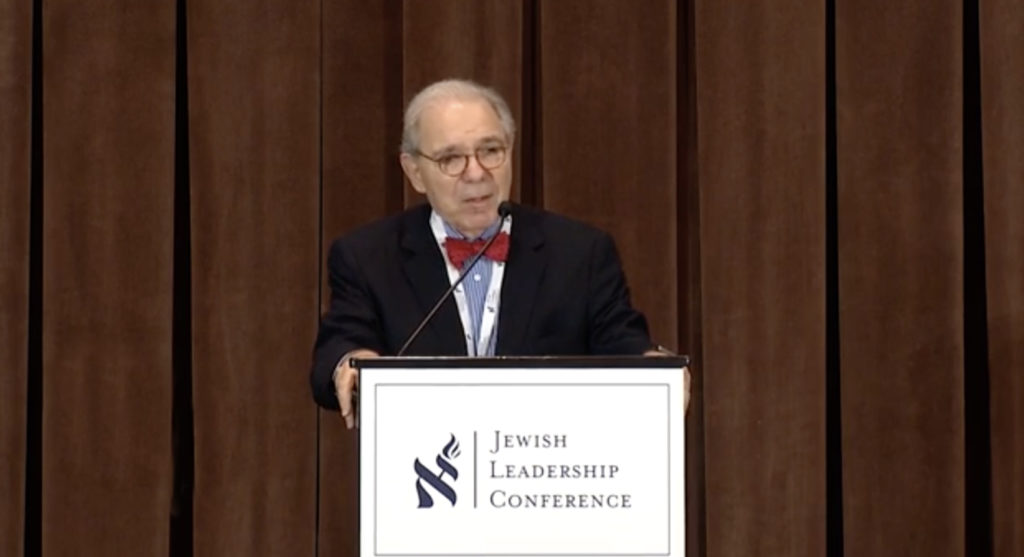
These are the types of questions that came to mind at the second annual Jewish Leadership Conference (JLC) on “Jews and Conservatism” held recently in New York City.

Let’s first put the labels aside so we can focus on these important questions. I’ve never called myself a conservative. Twenty-five years ago, conservatives were obsessed with taking away our liberties, not grounding them. I’ve always called myself a liberal, despite the fact that most people today who use the word don’t know what it means. Today, it’s illiberal leftists who are obsessed with taking away our liberties. 

The goal of this conference was to finally say: Enough. And to say it without violence, rage or incivility. Rather, to say with ancestral dignity, We the Jews — the children of Abraham, Isaac and Jacob — are no longer going to stay silent while our enemies and assimilationist Jews try to define us. We are here to define ourselves and serve as beacons of light and morality for this country, which, cut off from its biblical roots, has lost its sense of purpose.

“Our story has already changed the world,” said Rabbi Meir Soloveichik. Biblical Israel shaped American character and American exceptionalism, he added, “But we need to fight for freedom — against totalitarianism — in every generation.” 

“We have a great story to tell,” said Roger Hertog, chair of the Tikvah Fund. “Our goal is to inspire the next generation with our heroic Jewish story, with the power of ideas.”

“The moral and political teachings of the Hebrew Bible stand at the center of Western and American civilization,” one of the JLC’s core principles states unequivocally. “Modern Jews, both religious and secular, should see themselves as the carriers of this great civilization and accept the responsibility of perpetuating Jewish ideas, Jewish culture, and Jewish life from this generation to the next.”

Most of what panelists discussed was based on classical liberal principles. Today, the line between classical liberalism and conservatism appears negligible.

Melanie Phillips put it bluntly: “Anti-Semitism is part of a larger struggle — two views of the world: What it means to be moral; What it means to be human. Because Judaism represents the foundations of Western culture — the belief in the innate dignity of every human being is rooted in the Hebrew Bible — Jews are always the primary targets when a society begins to turn on itself.”

Caroline Glick was even more direct: “Unlike other forms of racism, anti-Semitism’s goal is the annihilation of the Jewish people.”

What was suggested was that today’s prevailing ideology is antithetical to not just Israel but to traditional Jewish values and, by extension, Western values. One idea that came through in the conference is that Jews don’t follow trends — they set them.

So, Hertog and others want us to step up to take a leadership role in reviving our country’s roots in its Hebraic values. Do we need to call ourselves conservatives to do so? I don’t think so, but in this label-obsessed country, I see why we may have to. 

The other day, as I was watching a Harry Potter movie, I finally understood why author J.K. Rowling so staunchly defends Israel. The epic series is rooted in the Jewish Bible: good vs. evil; right vs. wrong. And Harry, like all biblical heroes, is brave and kind and finds strength when he needs it most.

I don’t need to call myself a conservative to teach my son those values. But if it’s going to take a new movement to change the leftist world order, then yes, I’m proudly part of that movement. I may sit on the iconoclastic wing, but I’m in.


Karen Lehrman Bloch is an author and cultural critic living in New York City.

My Day with Conservative Ideas Read More »

Israeli Chief Rabbinate Releases Standards for Recognizing Orthodox Converts

Israel’s Chief Rabbinate released their standards on Nov. 27 for recognizing those that have undergone a conversion to Orthodox Judaism.

According to the Jerusalem Post, the rabbinate’s criteria states that they will only recognize rabbinical courts that consist of three judges and convene on a regular basis. Rabbinical judges in courts that do not meet that criteria will have to undergo tests in Israel from the Chief Rabbinate for recognition.

Even if the rabbinical judges pass those tests, the Chief Rabbinate has to conclude that they liked the “impression” given by the judges to receive recognition.

The Times of Israel reports that under those standards, the rabbinate approved 70 Orthodox courts and 80 rabbinical judges; however, the Post notes that thousands of Orthodox-Jews –by-choice in the Diaspora would not be recognized under those standards because most Diaspora rabbinical courts do not convene on a regular basis.

The Chief Rabbinate’s criteria was made public after ITIM, a nonprofit that helps Jews with Israel’s religious bureaucracy, pressured the Rabbinate for years to do so.

“I am proud that ITIM’s steadfast public policy and legal work over the past six years has made the workings of the Chief Rabbinate more transparent,” Rabbi Seth Farber, the director of ITIM, told the Times of Israel. “This is the first step in improving relations between Israel and rest of the Jewish world.”

Israeli Chief Rabbinate Releases Standards for Recognizing Orthodox Converts Read More »

hanukkah, candles, racism, racist, America, Jewish Journal, David Suissa

Is America a Racist Country?

There’s a powerful story in the Nov. 26 issue of Time magazine titled, “I Love America. That’s Why I Have to Tell the Truth About It.” It’s written by Pulitzer Prize-winning novelist Viet Thanh Nguyen.

In his piece, Nguyen addresses the criticisms of America and other countries that he included in other writings, which prompted protests from a few U.S. military veterans. Nguyen explained that those criticisms were really a sign of love.

“I made such criticisms not because I hated all the countries that I have known but because I love them,” he writes. “My love for my countries is difficult because their histories, like those of all countries, are complicated.”

I understand Nguyen’s way of expressing a “difficult” love through criticism. Love is a complicated emotion. And criticism can spur improvement and help make things better. 

What I would suggest is that if we don’t complement criticism with progress, we can create a distorted view of reality. Take, for example, the issue of racism in America.

In recent years, there’s been a popular meme contending that America is an inherently racist country. As The Washington Post’s Eugene Robinson declared in 2015, “America will only end racism when it stops being racist.” Even President Barack Obama said at the time that “racism remains a blight that we have to combat together.”

Since President Donald Trump entered the White House two years ago, the racism meme has only gotten louder. From the continued expansion of Black Lives Matter to professional football players protesting police violence against Blacks to white supremacists making more noise, the implication has been that racism is alive and thriving in America.

But is it? Let’s pull back and look at the bigger picture.

According to a 2017 report in The Economist, “Americans appear far less racist than in the past. Only 4 percent of Americans supported interracial marriage in 1958. By 1997 that was 50 percent; today it is 87 percent.”

Also, according to The Economist, “racially and ethnically motivated hate crimes reported to the FBI fell 48 percent between 1994 and 2015.”

How about racist hate groups like the Ku Klux Klan? According to a 2012 report in Slate, the KKK is “clearly contracting, since its rolls have shrunk from millions in the 1920s to between 3,000 and 5,000 today.” 

“While we must always stay vigilant and pounce any time racism rears its ugly head, we also have an obligation to show the full picture.”

In a recent podcast interview on City Journal, Hoover Institution Senior Fellow Shelby Steele, who specializes in the study of race relations, multiculturalism and affirmative action, also touched on the theme of racial progress:

“The impulse of racism is something that all human beings, I think, have to come to terms with, struggle against, learn all sorts of moral lessons from. But it is not, I don’t believe at any rate … the problem that Black America faces today. And I think one of the most unrecognized features of American life is the enormous moral progress America has made since the ’60s.”

Steele, who is Black, added: “I grew up in segregation. I know what that was like. And when I look at my life today in America, everything is wide open. I can do anything I want. … I don’t detect any will in the society, in American society, to oppress Blacks anymore. Any hint of wanting something like that would be utterly ruinous to a person, to their reputation. They would pay a terrible price for it.” 

None of this is to suggest that racism is dead, or even dying, in America. As Steele reminds us, the “impulse of racism,” however shameful, is something that may never be eradicated. 

What the new reality does suggest, however, is that the long arc of racial justice in America is going in the right direction.

You probably wouldn’t know about this progress from watching the evening news, for the simple reason that good news doesn’t sell. It’s hard to imagine a special report on CNN on how “Americans appear far less racist than in the past.” How sensational would that be? 

And yet, we need those reports. While we must always stay vigilant and pounce any time racism rears its ugly head, we also have an obligation to show the full picture. Bad news may be more lucrative than good news, but good news can often give us a more balanced view of reality.  

That’s why I wrote this column. Just like Viet Thanh Nguyen, I love America, and I have to tell the truth about it.

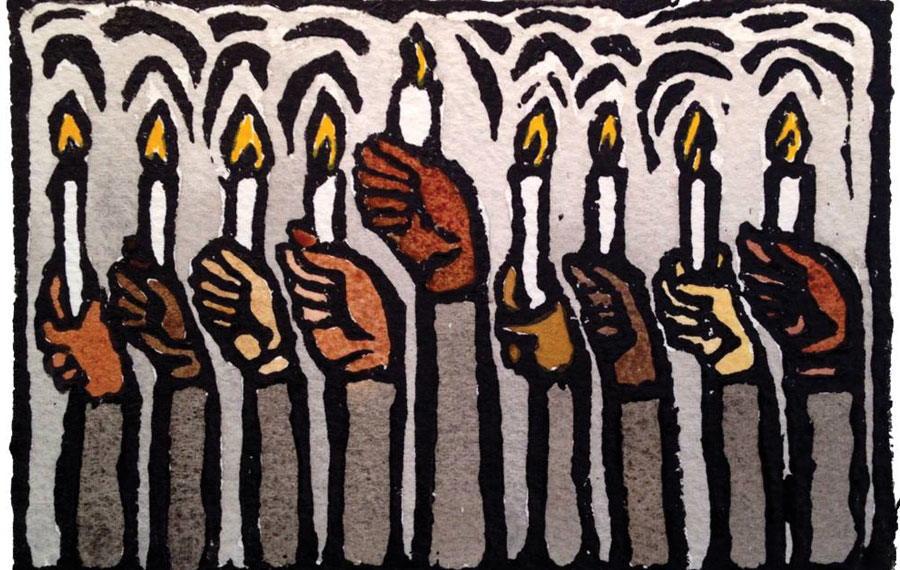
And part of that truth is: Just as Jews light a candle for every night of Hanukkah, America has fought its own darkness by lighting a candle of justice for every generation.

For me, it is those inexorable candles of hope, however hazy they may appear at times, that are the real drama of this country.

Happy Hanukkah. 

Is America a Racist Country? Read More »

Nov. 30, 2018

Nov. 30, 2018 Read More »

Letters: Mass Shootings Can Be Stopped, Distinguish Between Legal and Illegal Immigration

Mass Shootings Can Be Stopped
My heart goes out to the families of the Borderline Bar & Grill victims, who joined a club no one wants to belong to. That this sort of scene is the new “normal” is horrifying. Ben Shapiro writes, “Mass shootings, unfortunately, are unstoppable” (“We All Care About Gun Violence, but There’s No Easy Solution,” Nov. 16).

Really? These do not happen to the extent they do in the U.S. (more than 200 occasions where more than three people died) in countries where getting a gun is more difficult. Canada and Israel have very strict gun control policies; people have to be evaluated before a permit is issued and the permits are re-evaluated regularly. Forty percent of gun owners in this country bought their weapons without even a minimal background check.

Shapiro says we should start with enforcing existing laws. The Gun Violence Restraining Order could have prevented the Thousand Oaks massacre if only police were aware of it. Shapiro writes that the only thing we can do is attempt to build a social fabric together, to pull together to grieve, to look at fatherless young men, but this ignores the obvious common denominator to mass shootings: the ease with which almost anyone can purchase a high-powered lethal weapon.

There might be instances of a drive-by knifing or an event where someone killed 12 people with a baseball bat, but not more than 300 of those events in less than a year.

Those of us who advocate for gun violence prevention don’t talk about banning or confiscating weapons. We talk about preventing these shootings. Brady Act background checks have prevented thousands of people from purchasing guns — but it’s so easy in so many states to get a gun with not even a hint of a background check.

There are more guns than people in the U.S. If guns make us safer, this would be the safest place on earth. And the price of freedom? How free are we when we need a bulletproof vest to go to the movies, a bar, a mall, a house of worship, a school, a yoga studio, a restaurant?

A large percentage of these shootings are preventable — there is no perfect solution. If history is any indicator, this will fade out of the news until another shooting occurs. And nothing will change because there are flaws in every solution. But why would we do nothing? If we could prevent even one mass shooting, isn’t it worth the effort?
Rhonda Mayer, via email

I saw a newspaper article that said semiautomatic guns make shootings deadlier. We all know this, yet nothing has changed.

One: We all have access to guns. Two: We can’t collect them all. Three: It’s obvious there will never be sufficient resources to identify, keep an eye on and prevent all potential mass murderers from killing people. Four: The gratuitous shootings portrayed on TV, in movies and video games, and even sung about — and their impact — could be lessened through censorship, but few want this.

However, because these perpetrators all seem to want their 15 minutes of “fame,” this could be denied them and copycats by the media not reporting these horrific events, or at least making them minor stories.

No question that their broadcast ratings and print media circulation would suffer. But if just one major media outlet took this bold step, others might follow — or perhaps be reported on as perverse — and these obscenities replaced by more important stories. It’s worth the gamble, no?

Otherwise, all things considered, we have to be ever vigilant, suspect everyone, and keep our heads down. Is this the way we want to live?
Hal Rothberg, via email

Distinguish Between Legal and Illegal Immigration
In Rabbi Ken Chasen’s story “Germany’s Lesson for America,” (Nov. 23), he wonders if “our treatment of endangered immigrant populations” might change if we reminded ourselves of the degradation of Japanese Americans who were interned during the Second World War. I’m an immigrant myself, and I know innumerable immigrants (friends, co-workers, neighbors, relatives).

I’ve asked many of them if they feel endangered or threatened in any way by the Trump administration’s stepped-up efforts to deport people who entered the U.S. illegally. I get blank stares and laughs in response, which I suspect is because these people immigrated legally. When Chasen writes about “endangered immigrant populations,” he obviously means people who entered the country illegally, and his attempt to avoid mentioning this fact is a typical attempt by the left to avoid the legal-illegal distinction.
Chaim Sisman, Los Angeles

NCJW Should Rethink Priorities
Teresa Shook, co-founder of the Women’s March, called on the movement’s leadership to step down, because they “have allowed anti-Semitism, anti-LBGTQ sentiment and hateful, racist rhetoric to become a part of the platform by their refusal to separate themselves from groups that espouse these racist, hateful beliefs.”

But Nancy K. Kaufman, chief executive of the National Council of Jewish Women (NCJW), continues to support the Women’s March, while reserving the right to change the group’s stance. Apparently the Women’s March leaders’ refusal to condemn the anti-Semitic remarks of Nation of Islam leader Louis Farrakhan are not a game-changer for Kaufman and the NCJW.

She outlined her group’s priorities this way: “What does it mean to be clear in our fight against anti-Semitism and Islamophobia and women’s rights while also fighting division in the (Women’s March) movement?”

Actually, a firm, clear rejection by the NCJW of any association with Farrakhan would go a long way toward resolving division in the movement.

Is preservation of the movement the most important consideration for the NCJW?
Julia Lutch, Davis, Calif.

Stars of Hope After Tragedies
I had already seen the photo of the stars in the Jewish Journal story “Pittsburgh Tragedy: Azerbaijan Extends Solidarity and Hope” (Nov. 9). That photo was taken after my 15-year-old grandson had hung those Stars of Hope on the barricade in front of Pittsburgh’s Tree of Life synagogue.

I wrote to Gabriel afterward and asked him why he had traveled from Armonk, N.Y., to Pittsburgh that day with his mom, my daughter. This is part of how he responded: “Saba, this was overwhelming to me. You know I love Pittsburgh. We had my bar mitzvah there. I know exactly what the Stars are and what they mean. They are Stars of HOPE, a project that Mom has been involved with for a long time. Stars of Hope pop up wherever sudden pain and grief occur. So we have sent Stars of Hope to California after the wildfires, and after the mass shooting in San Bernardino and then to Thousand Oaks. Saba, I JUST HAVE TO believe that love is stronger than hate. It means so much that this piece of tikkun olam that I am involved with is bringing hope to Pittsburgh and California.”

Thanks, Gabriel.
Rabbi Stanley M. Davids, Santa Monica

CORRECTION
The last name of actress Rachel Brosnahan was misspelled in the Fall Arts and Entertainment Guide (Nov. 23).


Don’t be shy. Send your letters to letters@jewishjournal.com Letters should be no more than 200 words and must include a valid name and city. The Journal reserves the right to edit all letters.

Letters: Mass Shootings Can Be Stopped, Distinguish Between Legal and Illegal Immigration Read More »

Smoke, Butte County, Mars Landers, firestorms, NASA, Jewish news, Jewish Journal, Susan Esther Barnes

Will Mars Landers Save Us From The Firestorms?

On Monday this week, I was driving to lunch when I heard, live on the radio, the last few minutes of the landing of NASA’s InSight lander on Mars. It was a suspenseful few minutes, and I could hear the emotion in the voices of the announcers as the good news started to come in. The heat shield successfully separated. The telemetry looked good. The lander located the ground and approached at a reasonable speed.

Unexpectedly, I found my eyes growing misty. Human beings had, once again, against stiff odds, managed to do something that would have been impossible in my parents’ childhood. A lander had been deployed on another planet, and it gave me great hope about what we can accomplish when smart people work together to find a solution to a complex problem.

On Wednesday last week, I was grateful for the rain that finally cleared out the dense smoke and debris from the air that was plaguing the community where I live since shortly after the wildfire in Butte County started. It made my eyes water, it made my chest feel tight, and it kept me indoors, even more than usual for an indoors type like me.

The three largest wildfires in California history have occurred in the last 12 months. Many of us believe these large wildfires have been caused, at least in part, by climate change, with fuel loads increased after the recent long drought in the state.

Last Friday, the Intergovernmental Panel on Climate Change released a special report that states, “Warming from anthropogenic emissions from the pre-industrial period to the present will persist for centuries to millennia and will continue to cause further long-term changes in the climate system, such as sea level rise, with associated impacts.” In other words, climate change is here to stay.

Is it any wonder, then, that after seeing the devastation of these recent wildfires, and the release of this report that seems to say they’re only going to get worse while the President continues to deny the need to do anything about it, that I got a bit emotional about the triumph of human endeavor over long odds embodied in the InSight Mars landing?

In Breshit (Genesis) 1:26 we read, “And God said, ‘Let us make a human in our image, after our likeness, and they shall rule over the fish of the sea and over the fowl of the heaven and over the animals and over all the earth and over all the creeping things that creep upon the earth.’”

Some say this passage means that since God gave the world to us to rule over, we have every right to do anything we want with it, including causing mass extinctions and climate change. Others say this passage means that, since we were made in God’s image, we are responsible for trying to behave like a benevolent ruler, and are tasked with taking great care of the earth and all the living beings on it.

Given the evidence I’ve seen over the last 20 years or so, I’m not overly optimistic that we’re going to have the will to try to stop climate change before it gets much worse than it already is. I’m even less certain that we’ll ever find a way to reverse it, and return the earth to a pre-industrial “normal.”  I have long thought the only way to save humankind may be to find a way to get off this planet, to colonize elsewhere, so our descendants can learn from our mistakes and do better on other worlds in our solar system and others.

So part of my emotion about the success of the Mars landing is not just about the triumph of mind over matter. It’s also a hope, however small, that it will be followed by a viable, self-sustaining human colony on Mars, as a first step toward human colonization on other planets in other star systems. It may seem like a far-fetched thing, but I fear that if we don’t soon change course, it may be our only hope for the human species to thrive, rather than to just try to survive trapped on a harsh, weather-beaten earth.

Will Mars Landers Save Us From The Firestorms? Read More »

Rosner's Domain Podcast

Dan Ben-David: Are Israelis having too many children?

Shmuel Rosner and guest Dan Ben-David discuss Israel’s future overpopulation, the importance of quality education, Israel’s brain drain and more..
Professor Dan Ben-David is the founder and President of the independent, non-partisan, Shoresh Institution for Socioeconomic Research and a senior faculty member of the Department of Public Policy at Tel-Aviv University.  He is the former executive director of the Taub Center for Social Policy Studies.
Dan Ben-David

Follow Shmuel Rosner on Twitter.

Dan Ben-David: Are Israelis having too many children? Read More »