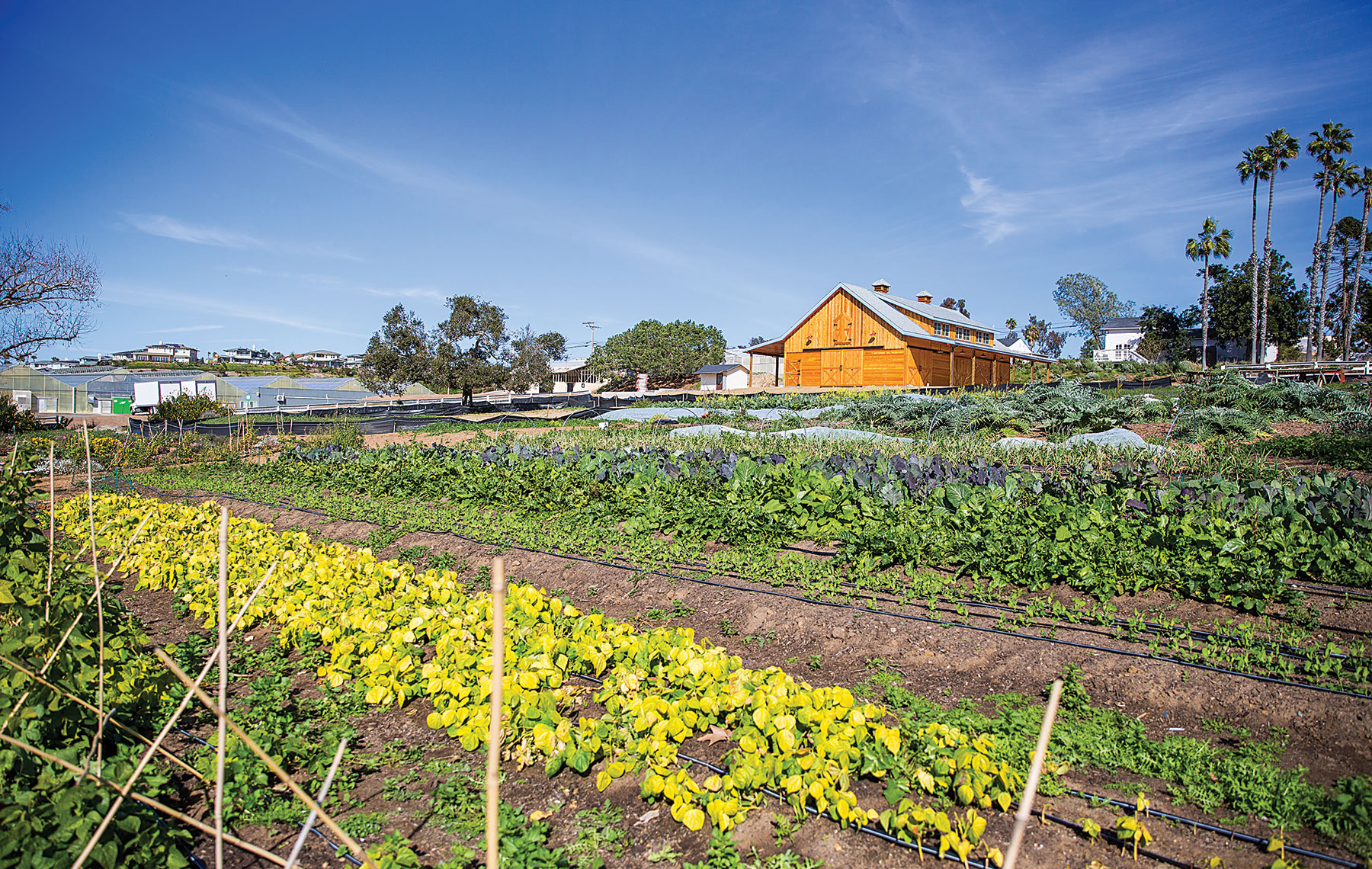
Coastal Roots Farm in Encinitas is guided by Jewish values, and is committed to caring about community. That’s why, for the past seven years, it has held a Sukkot Harvest Festival, which brings individuals and families throughout the region together to celebrate the holiday. This year, however, it will look a little different because of COVID-19. Nonetheless, the event still will strive for togetherness and tradition during these tough times.
“Sukkot is a harvest holiday that you can experience at the farm firsthand,” Kesha Spoor, philanthropy manager for Coastal Roots Farm, told the Journal. “We grow seasonally. Rosh Hashanah comes and we have pomegranates. Sukkot comes and there is lots of squash. It’s a really fun way to experience the Jewish agricultural backing of our history while connecting with our community in a unique way.
And while the farm is not religious, Spoor said, “We’re certainly founded with Jewish values in mind and we live them in how we grow our food and interact with our community.”
The festival, which runs Oct. 4 through Oct. 8, is historically the farm’s biggest event of the year, with more than 1,000 people attending in years past. Now, people can attend by driving through the farm and listening to a guided audio tour from their smartphones, see the fruits, vegetables and chickens and hear about the holiday. They can learn about the significance of the lulav and the etrog, write down their wishes for the future and get an inside peek into what’s going on at the farm. There will be one tour for adults and one for young families.
Cars will be invited in one at a time and on the tour, attendees can hop out and color a square on a color-by-number mural. “By the time the festival finishes, everyone who comes will have contributed to this one consolidated image that we hope will be on the farm for years to come,” Spoor said.
Though Spoor acknowledges that people can’t gather in the traditional sense this year, she said Coastal Roots Farm didn’t want Sukkot to pass by without observing it because it’s so crucial to the farm’s identity.
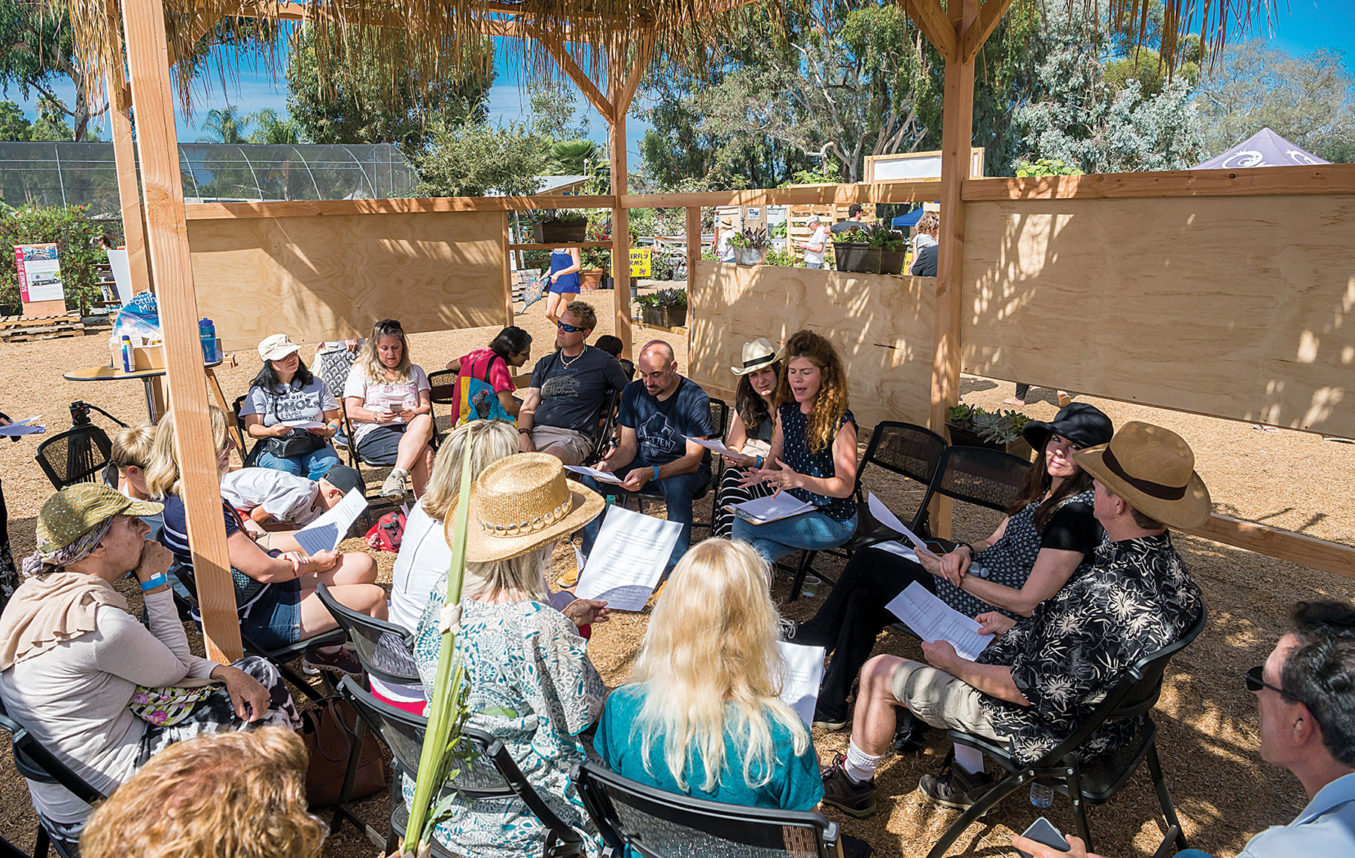
“Sukkot is about hospitality and celebrating community and welcoming the fall season,” she said. “We felt we could still put on an event that would uplift a lot of those things and keep each other and ourselves safe so people could gather and experience Sukkot from their car.”
In addition to the on-site experience, the farm, which teams up with community partners including Chabad Hebrew Academy and the city of Encinitas, is holding two virtual Sukkot events. One is for adults in conjunction with the local JCC, and one is for young families. During these events, participants will learn how Jewish law promotes food justice.
“Food justice is a complex and really lofty goal,” Spoor said. “We believe we’re part of a much larger system. We’re one piece of the puzzle.”
Coastal Roots Farm, which Leichtag Foundation started in 2012, became its own nonprofit in 2015 but still rents Leichtag Commons, a 67.5-acre property, from the foundation. It holds a twice-a-week farm stands on Sundays and Thursdays, and its products are pay-what-you-can. They give those in need up to $30 worth of produce for free. The farm also lines the corners of the field for the strangers, the poor and the widows, like the Torah advises, and strives to be kind and humane to the chickens that hatch the farm’s eggs.
“We are in partnership with the land and the chickens,” Spoor said. “All these Jewish agricultural values just happen to be farming best practices as well, like taking care of the soil. [Judaism] provides a lens we can look through.”
Coastal Roots Farm also is bringing people together during this time through its virtual Havdalah events as well as its after-school farm camp, where kids can explore the farm. “They learn how food grows and why it matters and how they can make the world better,” Spoor said.
Even though the world may seem out of control, Spoor said that Coastal Roots Farm is able to provide experiences that will help the community feel better about the state of things.
“People are just feeling really like their lives are upside down right now and they really appreciate these markers of time, like holidays, that they can feel positive about,” she said. “There’s something about gathering in a positive way that makes the world better. People want to enjoy themselves, be part of something good and connect.”
To learn more about the Sukkot event, visit the website.