fbpx

October 1, 2020

Why Is It so Hard for There to Be Zero Tolerance for Jew-Hatred on Campus?

On March 7, 2015, members of the University of Oklahoma (OU) chapter of Sigma Alpha Epsilon (SAE) were filmed on a bus performing a racist song that used the “N word” and enthusiastically referencing Jim Crow.

The video of the incident was reported by The Oklahoma Daily on March 8. That same day, the national office for SAE closed the OU Chapter house, and OU officials gave SAE members until the end of March 10 to move out. Soon after, OU Facilities Management removed the fraternity’s Greek letters, put a padlock on the facility’s gate, blocked off the SAE chapter house parking lot, and changed the locks on the building. At the same time, OU’s President David Boren, ordered Levi Pettit and Parker Rice, the frat members singing in that video, be expelled.

By the middle of March, OU had completed its seizure of the former SAE house. And by the beginning of the 2016 academic semester, the frat house had become the location for OU’s Disability Resource and Student Veterans Association. OU responded swiftly and arguably thoroughly to the racism exhibited by one of its fraternities in an off-campus incident.

Approximately five years before that, at the University of California San Diego (UCSD), there was an incident called the “Compton Cookout.” The off-campus party, hosted by several UCSD students, was intended to mock Black History Month. Attendees were invited to wear costumes that stereotyped minorities living in “ghettos,” particularly African Americans.

UCSD promptly announced a new diversity campaign, “Racism: Not in Our Community,” held an on-campus teach-in about diversity and tolerance, and further responded by carrying out long-standing demands presented to the school administration by the Black Student Union. The UCSD Office for Equity, Diversity and Inclusion created a “EDI Unit plan” that listed strategic goals, initiatives and accomplishments for furthering equity, diversity and inclusion at UCSD. And in 2011, UCSD made taking and passing a Diversity, Equity and Inclusion course a requirement to graduate. Like OU, UCSD responded swiftly and substantively to the Compton Cookout and made it clear that racism, even off-campus racism, had no place at UCSD.

In 2015, at the University of Southern California (USC), an allegedly drunk member of a fraternity threw a drink at then-USC Student Government President Rini Sampath, and called her an “Indian piece of [excrement].”

In response to her Facebook post about the incident, USC’s dean of Religious Life was quoted in The Washington Post, expressing that USC had a zero-tolerance policy for such racist behavior and asking Sampath to file a formal complaint. Four days after the incident, the vice president for student affairs signed a letter condemning any expressions of racism or bigotry at USC. Subsequently, the USC Interfraternity Council issued a statement saying it was “deeply saddened by the incident involving racist comments directed towards Student Body President Rini Sampath by a member of a fraternity” and that the council supported “the actions taken by the chapter to hold their member accountable by suspending his membership and evicting him from the chapter house.”

Within three days of a racist incident affecting its then student body president, the USC administration and its Interfraternity Council made it clear that there would be no tolerance and severe consequences for expressions of racism at USC.

All of this — sadly — stands in sharp contrast to how USC has responded to Jew-hatred on its campus.

A Different Standard

In February, Rose Ritch won the race for vice president of USC’s student government. Another Jewish student, Isabel Washington, scored the most votes in the senate race. Their respective happiness, however, was short-lived. Within six months, they, together with another Jewish student named Nathaniel Manor, became the subjects of a relentless and open cyberbullying campaign calling for their resignations. The expressed reason? In Ritch’s case, it was solely because she identified as a Zionist (meaning that she believes Jews have a right to self-determination and sovereignty in part of their indigenous, historical and religious homeland).

Ritch and her peers were lambasted by a few dozen extremists at USC. Both Washington, an African-American Jew, and Ritch were attacked for their affiliation with Hillel, the most mainstream and unmistakably Jewish organization on most college campuses. One social media post by Shaden Awad, directed at Washington (who wrote that she joined Hillel solely because she is Jewish), implied that in order to be members of student government, Jews must not join any campus Jewish organizations because doing so “smears blood on ur hands.”

Ritch also was attacked online for her affiliation with the American Israel Public Affairs Committee (AIPAC)  — the most visible, mainstream and bi-partisan American lobbying group that supports a strong U.S.-Israel relationship. One post referred to Ritch as “working with an evil lobbying group,” evoking a centuries-old trope about “evil Jews” who seek to nefariously control governments. Another post accused Ritch, without any evidence, of making “Palestinian students feel unsafe” simply because of her association with Jewish organizations on campus and her identification as a Zionist.

This anti-Semitic cyberbullying campaign — which was openly and publicly celebrated by a number of students at USC — worked. After Washington resigned (due, in part, because she was accused of making inappropriate comments), Ritch did, too. When she submitted her letter of resignation, Ritch eloquently made it quite clear why: “I have been told that my support for Israel has made me complicit in racism, and that, by association, I am racist.” She added, “Students launched an aggressive social media campaign to ‘impeach [my] Zionist a–.’ This is anti-Semitism, and cannot be tolerated at a University that proclaims to ‘nurture an environment of mutual respect and tolerance.’”

Ritch also made it clear that her identity as a Jew and  a Zionist are inexorably connected. Most American Jews, she said, “support Israel as the Jewish state, inherently connected to our religious history and communal peoplehood. An attack on my Zionist identity is an attack on my Jewish identity.”

But USC’s reaction to the harassment of its Jewish students has been — to put it lightly —not nearly as strong as its response to the racist statement made to the student government president in 2015. Nor has USC’s response been anywhere as strong as OU or UCSD’s responses to the SAE or Compton Cookout incidents.

One thing every victim of bigotry does know, however, is that a different standard for one form of discrimination is itself discriminatory.

To date, at USC, no investigation has been announced. No one has been expelled or even sanctioned. And no concrete programs have been even suggested to prevent further bullying and harassment of Jews for simply identifying as Zionists. Instead, all that current and prospective Jewish USC students have received are statements by the USC administration that it stands against anti-Semitism. But nowhere in the letter does USC list any concrete actions to prevent or create consequences for anti-Semitism.

As a result of this plainly inadequate response to the Jew-hatred on open display at USC, on Aug. 16, the #EndJewHatred movement (which I am a part of) issued four very simple demands that the USC Board of Trustees should adopt to demonstrate USC’s commitment to ending Jew-hatred:

  1. Public recognition that there is a problem of Jew hatred on campus at USC.
  2. A public commitment to adopting the International Holocaust Remembrance Alliance (IHRA) definition of anti-Semitism at USC.
  3. A disciplinary system inquiry into the harassment of Rose Ritch and other Jewish students by Jew haters on campus.
  4. A commitment to bringing in appropriate experts to ensure staff are properly trained to oppose Jew hatred on campus and that students are educated about the specific forms it takes (as well as the adverse consequences for engaging in Jew hatred).

After these basic demands went unmet by USC and its board of trustees, the #EndJewHatred movement held a Labor Day rally at the Grove in Los Angeles to call on USC — specifically, the chair of its board of trustees (who owns The Grove) — to enact these four demands.

The response to date? Sadly, nothing tangible.

All of this begs the question: why the different standard? Why does one racist statement directed at the student government president back in 2015 result in clear, appropriate and immediate consequences, while we are now four months into the virulent anti-Semitic campaign against three Jewish students and no one at USC has been investigated, let alone punished? How is it that OU and UCSD responded quickly and unequivocally to off-campus racism by some of its students, while USC can’t seem to do anything other than issue vague statements of opposition to anti-Semitism?

No one, outside the USC administration or the USC board of trustees, can truly know the answers to these questions. One thing every victim of bigotry does know, however, is that a different standard for one form of discrimination is itself discriminatory. And if you treat Jew hatred differently (and less seriously) than you treat other forms of bigotry, then you are effectively engaging in Jew hatred, too.

As those demanding an end to racism against African Americans have often noted, silence is complicity.

USC, your silence here is deafening.

Why Is It so Hard for There to Be Zero Tolerance for Jew-Hatred on Campus? Read More »

Turkish President Calls Jerusalem ‘Our City’

Turkish President Recep Tayyip Erdogan called Jerusalem “our city” during an Oct. 1 speech to Turkish lawmakers.

The Times of Israel reported that Erdogan said, “In this city that we had to leave in tears during the First World War, it is still possible to come across traces of the Ottoman resistance. So Jerusalem is our city, a city from us. Our first qibla [direction of prayer in Islam] al-Aqsa and the Dome of the Rock in Jerusalem are the symbolic mosques of our faith. In addition, this city is home to the holy places of Christianity and Judaism.”

Erdogan lamented “the oppression of Israel against the Palestinians and the indifferent practices that disregard the privacy of Jerusalem” and vowed to support the Palestinians.

“We consider it an honor on behalf of our country and nation to express the rights of the oppressed Palestinian people on every platform, with whom we have lived for centuries,” the Turkish president said. “With this understanding, we will follow both the Palestinian cause, which is the bleeding wound of the global conscience, and the Jerusalem case to the end.”

Jewish groups denounced Erdogan’s remarks.

“So were Cairo, Athens, Budapest, Bucharest — and many more — at the height of the Ottoman Empire,” the American Jewish Committee tweeted. “But this is 2020, President Erdogan, and nostalgia isn’t a policy. Jerusalem is the capital of Israel.”


StandWithUs Israel executive director Michael Dickson tweeted, “Just like Iran’s Ayatollah, this other dictator plays politics with Jerusalem to act like a big man in the Middle East, when his influence is waning and his leadership dragging Turkey down the drain.”

He added in a subsequent tweet: “Meanwhile Jerusalem, the eternal Jewish capital, free and open to all since reunification, is experiencing a renaissance, the ancient city modernizing and bursting with life. And forward-thinking Arab countries are making peace with Israel for joint prosperity.”

In its long and complex history, Jerusalem has been attacked 52 times and recaptured 44 times. The Romans conquered the city in 63 B.C.E. Muslim caliphs and Christian Crusader forces also controlled the city during various ancient and medieval times.

Jerusalem was under the purview of the Ottoman Empire from 1517-1917; in 1880, the majority of Jerusalem’s population was Jewish, according to Jewish Virtual Library. Turkey has frequently accused Israel of “Judaizing” the city, according to The Times of Israel.

Turkish President Calls Jerusalem ‘Our City’ Read More »

Major Satmar Hasidic Leader Critically Ill With COVID-19

(JTA) – As COVID-19 test positivity rates continue to climb in Orthodox communities in New York, a major leader of the Satmar Hasidic sect was put on a ventilator Wednesday morning after becoming critically ill with COVID-19, according to Yeshiva World News.

Flyers circulated online Wednesday morning calling for prayers for Mayer Rispler, a community leader in the Aronim faction of the Satmar community.

An accountant by trade, Rispler has long been one of the community’s most important leaders and a major donor to Satmar institutions. He has also served as a spokesperson for the community at times.

In April, after a large funeral prompted New York City Mayor Bill de Blasio to lash out at the community in a widely criticized tweet, Rispler defended the mayor and called for compliance with government health regulations.

“We do not condone any behavior that puts people at risk and pledge to keep working alongside the brave men and women of the NYPD in addressing and eliminating any such occurrences,” Rispler wrote at the time.

Rispler is not the first major leader in the Satmar community to become gravely ill with COVID-19. Rabbi Aharon Teitelbaum, head of the Aronim faction, reportedly tested positive for the virus in March.

Major Satmar Hasidic Leader Critically Ill With COVID-19 Read More »

Obituaries: Oct. 2, 2020

Shirley Bemel died Sept. 24 at 95. Survived by daughters Terrie (Richard), Cyndi (Ross); Rodger (Babs); 6 grandchildren; 8 great-grandchildren; brother Arnold Kupetz (Victoria). Feldman Mortuary, Denver

Francine Bogotch died Sept. 22 at 88. Survived by son Hal (Laura); 1 grandchild. Mount Sinai

Leon Brenner died Sept. 14 at 90. Survived by daughter Adrienne (Neil); son Steve (Erika); 1 grandchild. Hillside

Naomi Chusid died Sept. 17 at 93. Survived by daughters Ivy Giles, Stephanie Kleinman, Miriam Hintz; 5 grandchildren; 2 great-grandchildren. Mount Sinai 

Edith Cogan died Sept. 14 at 89. Survived by son Robert; 2 grandchildren. Hillside

Barry Essenfeld died Sept. 12 at 84. Survived by wife Susan; daughter Rachel; son Robert; brother Howard (Patricia). Hillside 

Marvin Friedman died Sept. 28 at 91. Survived by daughters Erica Michaels, Racelle Rosett; sons Dean, Aram. Wellwood Cemetery, Pinelawn, N.Y. 

Ronald “Ron” Gart died Sept. 23 at 66. Survived by daughter, Kylie; sister Debbie Holdway; brother, Ricky (Angela). Mount Sinai

Elane Norych Geller died Sept. 17 at 84. Survived by son David; 4 grandchildren.Mount Sinai

Denise Gershon died Sept. 14 at 68. Survived by sister Michele (Ben); brother Mark; daughter-in-law Margy. Hillside

Lester Gilbert died Sept. 18 at 98. Survived by wife Florence; sons Ronald, Robert. Mount Sinai 

Randall Gingold died Sept. 25 at 57. Survived by wife Allison; sons Zachary, Blake; stepson Jeff (Cathy); mother Susan; brother Stephen (Renee). Hillside

Rosalyn Jennings died Sept. 16 at 96. Survived by husband David; sons Geoffrey (Linda), Alan (Daryl); 2 grandchildren; 4 great-grandchildren; sister Lois. Hillside

Ezra Joseph died Sept. 17 at 74. Survived by daughter Robyn (Richard Arnold) Joseph-Arnorld; sons Justin, Cameron; 1 grandchild; brother Ezekial. Malinow and Silverman

Charlotte Karow Kahn died Sept. 25 at 94. Survived by daughters Helene (Robert), Donna (Greg); son Alan; 5 grandchildren. Hillside

Alfred Kasha died Sept. 14 at 83. Survived by wife Ceil; daughter Dana; 1 grandchild. Hillside

Deanne Kass died Sept. 13 at 88. Survived by daughter Susan; sons Michael (Katsuko), Jonathan; 5 grandchildren; 4 great-grandchildren. Hillside

Dorothy Markley died Sept. 20 at 104. Survived by sons Neill, Bryan; 1 grandchild; 3 great-grandchildren. Mount Sinai 

Beverly Padway died Sept. 16 at 77. Hillside

Nancy Marie Pearlberg died Sept. 27 at 90. Survived by sons David, Stephen. Mount Sinai 

Jack Rath died Sept. 18 at 95. Survived by daughter Deborah; son David (Leah); 4 grandchildren. Hillside

Albert Robuck died Sept. 23 at 87. Survived by wife Eunice; stepdaughter Alissa; stepson Mitchell. Hillside

Zita Leah Rosen died Sept. 17 at 85. Survived by daughters Hilary Rubin, Shawn Sorokin; 3 grandchildren; 2 great-grandchildren. Mount Sinai

Erika Schwartz died Sept. 21 at 96. Survived by daughter Eileen (Brian) Cohen; son Peter (Jill); 4 grandchildren; 2 great-grandchildren. Malinow and Silverman

Murray Shapiro died Sept. 26 at 97. Survived by wife Shirley; daughter Sheryl (Roger); sons Gary (Gaye), Leland; 6 grandchildren; 9 great-grandchildren; brothers Phil Stevens, Clarence Stevens. 

Mario Sherman died Sept. 21 at 86. Survived by daughter Lisa; son Sidney; 1 grandchild. Hillside 

Rickie Snyder died Sept. 18 at 59. Survived by wife Lori; daughter Nicole; son Joshua; brother Chuck; sister-in-law Robbin Goichenberg (Eran); brother-in-law Scott Drucker. Malinow and Silverman

Richard Phillip Solomon died Sept. 18 at 70. Survived by daughter Phoebe; son Michael; sister Caroll. Mount Sinai

Charlene Sperber died Sept. 27 at 90. Survived by daughters, Ellice (Dale Van Fosson), Michelle; son Richard (Shawn); 7 grandchildren; sister Helene Heller. Mount Sinai

Gary M. Spero died Sept. 17 at 55. Survived by wife Sheryl L. Joiner Spero; daughter Esther Rose; son James Robert; brother Nathan. Home of Peace

Stanley Samuel Stone died Sept. 19 at 90. Survived by wife Dorothy; daughters Andrea, Kimberly Stone Pugach, Victoria Stone Hartvig; son-in-law Robert G. Pugach; 3 grandchildren; 1 great-grandchild. Mount Sinai 

Bernard Tillipman died Sept. 23 at 97. Survived by wife Pearl; sons David (Deborah), James (Jane); 2 grandchildren. Hillside

Nanette Wenger died Sept. 15 at 71. Survived by daughter Sara. Hillside

Jerome Zeitman died Sept. 17 at 90. Survived by daughters Deborah, Catherine (Robert); daughter-in-law Denise; 4 grandchildren. Hillside

Nysan Yitthak Zysman died Sept. 18 at 82. Survived by wife Klara; daughter Cipora (Stuart) Kricun; son Zev Benjamin (Olga); 5 grandchildren. Mount Sinai 

Obituaries: Oct. 2, 2020 Read More »

NYU Reaches Settlement With Dept. of Education Over Anti-Semitism Complaint

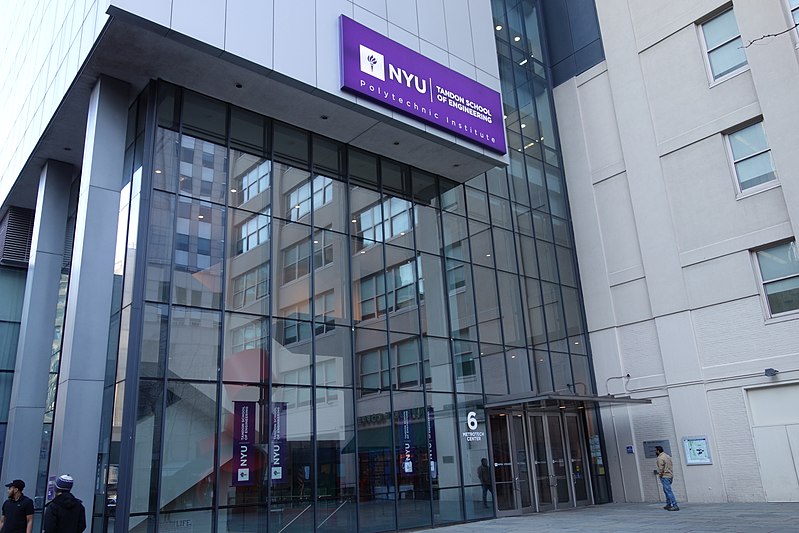
New York University (NYU) agreed to a settlement with the U.S. Department of Education on Sept. 15 over a complaint filed in 2019 alleging that the university improperly handled instances of anti-Semitism on campus.

Adela Cojab, who was an NYU student at the time, filed the complaint after NYU’s Students for Justice in Palestine (SJP) chapter received the university’s President’s Service Award in April 2019 despite a member from the group being charged in April 2018 for assaulting a pro-Israel student during a Yom HaAtzmaut rave. The Department of Education’s Office of Civil Rights (OCR) announced in November 2019 that it would investigate NYU over the matter.

According to a copy of the settlement obtained by the Journal, NYU is required to update its Non-Discrimination Anti-Harassment Policy to include a definition of anti-Semitism as defined under the Executive Order on Combating Anti-Semitism, which uses the International Holocaust Remembrance Alliance (IHRA) definition of anti-Semitism. NYU’s policy also will be required to explain how anti-Semitism manifests itself on campus and what actions the university will take against anti-Semitic incidents, “including anti-Semitism that involves student clubs.”

NYU was required to submit the revised policy to OCR by Sept. 15 and then provide proof to the OCR that the university has adopted the revised policy by Oct. 15.

Additionally, the settlement stated that NYU President Andrew Hamilton or a designee is required to issue a statement by Sept. 30 stating that anti-Semitism will not be tolerated on campus, explaining how anti-Semitism manifests itself on campus and encouraging students who experience anti-Semitism and other forms of discrimination to report it to the university. NYU spokesman John Beckman told the Journal that the statement and the revised policy have already been submitted to OCR.

The university also will host town halls during the 2020-21 and 2021-22 academic school years addressing anti-Semitism and other forms of discrimination on campus and provide training to students, staff and faculty on the matter during those academic years.

The settlement also requires NYU to meet with Cojab by Oct. 31 and that NYU engage in outreach to the Jewish community on campus.

Beckman said in a statement to the Journal, “We are pleased that the U.S. Department of Education has decided to end its review without finding any wrongdoing by NYU. NYU has long been understood as a place that is welcoming to and supportive of members of the Jewish community. For that reason, the university has gladly agreed to several steps that would bolster our longstanding commitment to opposing and responding to anti-Semitism.

“Anti-Semitism is vile, and its renewed spread in recent years defies both decency and understanding.  It is at odds with the values of the NYU community, and we should all be joined in common cause against it. Anti-Semitism’s resurgence reminds us that there is a need for constant vigilance and effort in combating hate of all kinds.”

Cojab, who is now a northeast coordinator for the Maccabee Task Force, told the Journal in a phone interview that she was glad that NYU agreed to settle because it shows that “they know there are things they can improve on, they know there’s been instances of anti-Semitism and they do want to come to a resolution.”

However, she expressed concerns that the settlement doesn’t go far enough, arguing that the reporting deadlines listed in the settlement are unrealistic, pointing out that she’s supposed meet with the university by Oct. 31 and the university hasn’t reached out to her yet. Cojab also said she’s skeptical that the university will uphold the IHRA definition of anti-Semitism.

Professor Amin Husain, who openly talks about his participation in the First Intifada, is still a teacher at NYU,” Cojab said. “He holds events, he holds talks, so how can you have all these anti-Semitism sensitivity trainings when you have a professor that explicitly flaunts his participation in violent riots against Jewish people?”

Cojab added: “I wouldn’t want this agreement to just be a way for them to get the OCR case out of the way instead of actually be introspective, look at their system and see what the system is promoting.”

NYU alumnus Judea Pearl, who is also a chancellor professor of computer science at UCLA, National Academy of Sciences member and Daniel Pearl Foundation president, said in a statement to the Journal that the settlement is “a milestone decision that will soon affect other campuses, such as USC and UCLA.” OCR had announced in January that it plans to investigate two complaints of anti-Semitism at UCLA.

“However, I am afraid the victory will be short-lived, because the word Zionism is not mentioned explicitly in the agreement,” Pearl continued. “This omission is a major mistake, inviting the Zionophobes to zigzag their way around the words and continue the harassments with impunity.”

Zionophobia is a term Pearl uses to describe “an irrational fear of Zionism and an obsessive commitment to delegitimize Israel,” he told Ha’Am, UCLA’s Jewish magazine in 2018.

Alyza Lewin, president of the Louis D. Brandeis Center for Human Rights Under Law, called the settlement “an extraordinary development, a victory for all Jews, and a defeat of anti-Semitism that will undoubtedly improve the climate on NYU’s campus. Other universities that are serious about combating anti-Semitism should follow suit and similarly incorporate the IHRA working definition into their university policies.”

Liora Rez, executive director of the Stop Antisemitism.org watchdog also said in a statement to the Journal, “It’s a shame it took a lawsuit for NYU to do the right thing and protect their Jewish students from discrimination and harassment. We believe this is just the start of many legal complaints we will be seeing by others thanks to the protection Jewish Americans now have under the President’s new Executive Order on antisemitism.”

NYU Reaches Settlement With Dept. of Education Over Anti-Semitism Complaint Read More »

Sukkot with Rabbi Nate DeGroot

Rabbi Nate DeGroot is the Hazon Detroit associate director and spiritual & program director. Hazon is a U.S. faith-based environmental organization that strives to  strengthen Jewish life and contribute to a more environmentally sustainable world.

DeGroot was ordained at Hebrew College in Boston, where he also received a Masters in Jewish Education. He most recently served as the inaugural Jewish Emergent Network Rabbinic Fellow at IKAR in Los Angeles, and before that founded a grassroots cooperative Jewish community in Portland, Ore.


Previous Torah Talks for Sukkot

Rabbi Naftali Rothenberg

Rabbi David Segal

Rabbi Yoshi Zweibeck

Rabbi Jair Melchior

Rabbi Steven Henkin


Sukkot with Rabbi Nate DeGroot Read More »

Decorate Your Sukkah With Paper Bag Stars

When decorating a sukkah, I like to think big. The larger the decorations, the fewer you have to create. These bold, beautiful stars made out of paper lunch bags measure 20 inches across, so they make quite an impact. And each star requires only seven bags. I left the star plain, but you can paint the individual bags to add color and pizazz. 

What you’ll need:
Paper lunch bags
Glue


1. Gather seven paper lunch bags. Leave them plain or decorate each one with paint or markers.


2. Stack the bags on top of one another pointing in the same direction, gluing them to one another in the “T” pattern indicated in the photo. Let the glue dry.


3. Cut the corners off the top of the bags to form a point. I measured three inches from the top on both sides and cut from there.


4. Spread the paper bags and they will form a star. Glue or staple together the two end bags. Poke a hole in one of the bags and hang with a string.


Jonathan Fong is the author of “Flowers That Wow” and “Parties That Wow,” and host of “Style With a Smile” on YouTube. You can see more of his do-it-yourself projects here.

Decorate Your Sukkah With Paper Bag Stars Read More »

Seagram Heiress Clare Bronfman Sentenced to More Than 6 Years in Prison for Involvement in Sex Cult

(JTA) — Seagram heiress Clare Bronfman was sentenced to more than six years in prison for her involvement in a self-help organization that has been accused of being a sex cult.

Bronfman, 41, was sentenced Wednesday in Brooklyn federal court for assisting the Nxivm group. She was not a member, but was estimated to have spent at least $116 million to help the group, according to The New York Times.

She pleaded guilty in April 2019 to harboring an undocumented immigrant for financial gain and committing credit card fraud on behalf of Keith Raniere, Nxivm’s leader. Prosecutors say some Nxivm members were forced to have sex with Raniere and were branded with his initials.

Bronfman was given a longer sentence than the five years requested by prosecutors. She was also fined $500,000.

“I am troubled by evidence suggesting that Ms. Bronfman repeatedly and consistently leveraged her wealth and social status as a means of intimidating, controlling, and punishing” Nxivm’s enemies, Judge Nicholas Garaufis said at the sentencing.

Bronfman and five others, including Raniere, were indicted in March 2018. Raniere was found guilty of sex trafficking, forced labor and other felonies during a trial last year.

Her late father, Edgar Bronfman Sr., was a scion and longtime head of the Seagram’s Company, at one point the largest distiller of alcoholic beverages in the world. Bronfman was president of the World Jewish Congress for many years and was a major supporter of an array of Jewish causes, including the Jewish Telegraphic Agency, where he was a board member, and JTA’s partner site MyJewishLearning, which he founded in 2003.

Edgar Bronfman died in 2013 at age 84.

Seagram Heiress Clare Bronfman Sentenced to More Than 6 Years in Prison for Involvement in Sex Cult Read More »

The Significance of Aesthetics in Judaism: Sukkot, 5781

We appreciate our Jewish heritage for a long list of reasons. It gives us a sense of identity, links us to our community, past, present and future, and spells out what is moral and motivates us to act morally. Judaism marks events in our lives, including the passing of each day and of the days of the week and year, and the life cycle events in our lives, thereby giving a sense of differing meanings to those times. It also gives us a sense of God that is the transcendent aspect of human experience, and enables us to respond to that experience together with its forms of relationship to God, its duties, joys and sources of meaning. And, perhaps most unexpectedly, Judaism makes life a work of art, giving us music, art, dance and drama.

That last reason is not what many Jews envision when they think of their connections to their heritage. But a text from Shir Hashirim Rabbah describing some elements of Sukkot demonstrates that the rabbis were explicitly aware of this aesthetic aspect:

“You are beautiful, my love” (Song of Songs 1:15). You are beautiful through the commandments, both positive and negative—beautiful through good deeds;…beautiful in the field through gleaning, the forgotten sheaf, and the second tithe; …beautiful in the law of circumcision; beautiful in prayer, in the reading of the Shema, in mezzuzot and tefillin,in the lulav and etrog; beautiful too in repentance and in good deeds; beautiful in this world and beautiful in the world to come.

One reason to obey the commandments, then, is to make life beautiful. Jewish law requires that we adorn our sukkah to make it beautiful and that we intentionally choose our lulav and etrog, both to make it ours (in accordance with Leviticus 23:40), but also to ensure that the ones we pick are pleasing to our aesthetic sense, so the holiday is  more beautiful in our eyes. As the Talmud says (B. Shabbat 133b):

דְּתַנְיָא: ״זֶה אֵלִי וְאַנְוֵהוּ״, הִתְנָאֵה לְפָנָיו בְּמִצְוֹת: עֲשֵׂה לְפָנָיו סוּכָּה נָאָה  וְלוּלָב נָאֶה, וְשׁוֹפָר נָאֶה, צִיצִית נָאָה, סֵפֶר תּוֹרָה נָאֶה, וְכָתוּב בּוֹ לִשְׁמוֹ בִּדְיוֹ נָאֶה, בְּקוּלְמוֹס נָאֶה, בְּלַבְלָר אוּמָּן, וְכוֹרְכוֹ בְּשִׁירָאִין נָאִין.

As it was taught: “This is my God and I will glorify Him [v’anveihu]…” [Exodus 15:2. The Sages interpreted anveihu homiletically as linguistically related to noi, beauty, and interpreted the verse in this way:] Beautify yourself before Him in mitzvot. Make before Him a beautiful sukkah, a beautiful lulav, a beautiful shofar, beautiful ritual fringes [on one’s tallit], beautiful parchment for a Torah scroll, and write in it in His name in beautiful ink, with a beautiful quill by an expert scribe, and wrap the scroll in beautiful silk fabric.

A large part of my attraction to Judaism growing up were the songs I was taught at Camp Ramah and the gorgeous Levandovsky melodies of my synagogue choirs every Friday night, on the High Holy Days and festivals like Sukkot. But it was not until I met Shlomo Bardin (of blessed memory) that aesthetics became a conscious part of my understanding of Judaism.

During the 1970s, I spent one day in July and in August at the Brandeis Camp Institute in Simi Valley, where I  described Conservative Judaism in the morning and then engaged in an extended discussion with the college and graduate students in the evening. One afternoon, I asked Bardin why he insisted  the participants spend one hour each day learning Israeli songs and another hour learning Israeli dances. He said, “Because Judaism is caught, not taught.” That is, we are attracted to Judaism emotionally, not intellectually.

As a person who became a serious Jew because of a series of weekly philosophical discussions at Camp Ramah when I was 15, I think that Judaism is both caught and taught. If we are really to do what the Shema requires — that we love God “with all our heart, with all our soul and with all our resources” — then we must not limit our commitment to our emotions or our minds. It must appeal to and emerge from the whole of our being and all of our relationships.

Our varying experiences with Judaism in these parts of our being reinforce each other. None of us is just a body, mind, set of emotions or will, and none of us lives alone on an isolated island. I am glad my upbringing in my home, my synagogue, and Camp Ramah engaged those parts of my being to shape my Jewish commitments.

Our varying experiences with Judaism in these parts of our being reinforce each other. None of us is JUST a body, mind, set of emotions, or will, and none of us lives ALONE an isolated island.

That said, on this Sukkot especially, when we are all isolated in our homes, unable to engage with the social and professional activities that give meaning to life, the aesthetic part of Sukkot may be just what we need to lift our spirits.

So take time this Sukkot to build a sukkah if you can and to make it beautiful with decorations. Pay attention to the shape, color and scent of the etrog you choose. Don’t be embarrassed about focusing on the aesthetics of these acts, for that aspect of observing Sukkot does not diminish. Rather, it enhances the religious significance of the holiday. As is evident from the texts above, aesthetic concerns have been part of Judaism for hundreds of years.

We are called to feel joy on Sukkot, which Jewish liturgy declares is zman simhatenu, “the time of our joy.” Experiences of beauty can help us do that. May this Sukkot be a time of joy for all of us, and may the sheer beauty of this holiday enable us to feel that joy.


Elliot Dorff is distinguished professor of Philosophy at American Jewish University and visiting professor at UCLA School of Law.


The Significance of Aesthetics in Judaism: Sukkot, 5781 Read More »

Sisters, Secrets and Shivah in the Novel ‘Evening’

“I have always been intrigued by what is hidden,” announces a character in “Evening,” the latest novel by Nessa Rapoport (Counterpoint).

The voice we hear belongs to Eve, a woman who (not unlike the author herself) was born into a Jewish family in Toronto but “sought grandeur and danger in New York.” As the book opens, Eve has returned to join her family at the funeral of her sister, Tam, which is the occasion for a long-delayed reunion that is blighted by shared loss. “What secrets is she taking with her, I find myself wondering, as the dismayingly small box is lowered into the depths,” muses Eve, thus defining with precision the mystery that the author is seeking to solve in the pages of “Evening.”

Rapoport is an accomplished writer whose earlier and much-lauded work includes a novel (“Preparing for Sabbath”), a collection of prose poems (“A Woman’s Book of Grieving”) and an award-winning memoir (“House on the River”). She tells her tales with utter clarity and dignity, and yet her prose also is charged with energy, emotion and sly humor. Above all, she is capable of revealing the innermost thoughts and perceptions of her characters in deft and illuminating strokes.

All of these gifts are richly displayed in her latest novel. Thus, for example, when Eve describes her sister’s funeral, she calls our attention, ever so briefly but with sharp impact, to “the horror, the open rectangle before me.” Her brother-in-law’s demeanor at the gravesite is summed up in single spare phrase: “A rebuke.” And we will eventually discover that Eve cannot erase the memory of the dismissive words that her sister once spoke to her: “Everything you’ve done has been driven by what’s between your legs.”

Nessa Rapoport tells her tales with utter clarity and dignity, and yet her prose also is charged with energy, emotion and sly humor.

Eve may seek to find what is hidden, but Tam does not make it easy. When young Eve finds her sister’s diary, “it read like an army manual.” Yet Eve finds “something ferocious, spellbinding, in her relentless transcription of the mundane.” The diary is only a clue: “What would I discover,” she muses, “that would explain with finality not Tam’s secrets but the secret of Tam?” When Eve comes upon a spare but provocative entry — “I know something Eve doesn’t know” — Eve is baffled but realizes that “Tam had verbalized the operating assumption of our lives.”

The story that Rapoport tells begins on the day of her sister’s funeral and continues, day by day, for the seven days of shivah. But the narrative flashes back and forth across the lives of Eve, the rebel who ends up “teaching obscure women about obscure women,” and Tam, “an everywoman raised one or two degrees above the norm” who becomes a media celebrity in Canada. And Eve fulfills her vow, revealing her own intimate relationships and those of her sister and the other members of her extended family.

Rapoport infuses her novel with both poignancy and humor, sometimes in the very same passage. For example, she describes how Tam turns to Eve in adolescence with an urgent demand.

“I want to know how to be sexy, and I want you to teach me.”

“ ‘How to be sexy,’ I repeated stupidly.”

“ ‘It can’t be what you wear,’ Tam said, “ ‘because you dress like a schlump.’”

“Undeniable.”

And yet, once Tam is gone, it is Eve who “is jealous of my dead sister because she had a lover who could say to her, ‘I want to breathe you into me’ ” while one of her own suitors dismisses “the words of youthful love” as nothing more than “a language illicit love must imitate to achieve the same density of desire.” Eve replies to her half-hearted lover with a stab of ironic humor: “I love it when you talk dirty.”

Not every revelation is shattering or titillating. Rapoport shows us an encounter between Eve and her young niece, Ella, who demands that Eve tell a story about Eve and Tam in childhood that Ella has heard many times before from her mother. The scene is both charming and heartbreaking because Ella knows the story so well that she can finish her aunt’s sentences right down to the punchline: “We laughed so hard that we peed in our pants.”

We are meant to follow in Eve’s footsteps as she searches for her sister’s secrets, but Eve herself is the character whom we come to know best, whose quirks we admire and whose pain touches our hearts. “I am appalled to realize how much I’d love to blow up everything, a frenzied anarchist,” she confesses at one moment. At the very moment when she arrives at the front door of her family home on the day of the funeral, she allows us to glimpse what drove her away so many years ago. “Waiting for the doorbell to chime is like waiting for Canada to change,” Eve thinks to herself. “I have never been able to explain to my family why this country’s most soothing feature, its sedate proceeding from one occurrence to the next, is such an irritant to me, inciting behavior more outrageous than I’d planned.”

At times, Eve’s burden seems unbearable: “I want to anoint the altar of grief with a sacrifice,” she tells us, “but I do not know what to offer.” The author herself, however, understands that the only appropriate offering is to bear witness to the life of the deceased. That’s exactly what Rapoport does in the pages of “Evening,” thus reminding us of what is really meant when we add the words “of blessed memory” to the name of one who is gone.

Jonathan Kirsch, author and publishing attorney, is the book editor of the Jewish Journal.

Sisters, Secrets and Shivah in the Novel ‘Evening’ Read More »