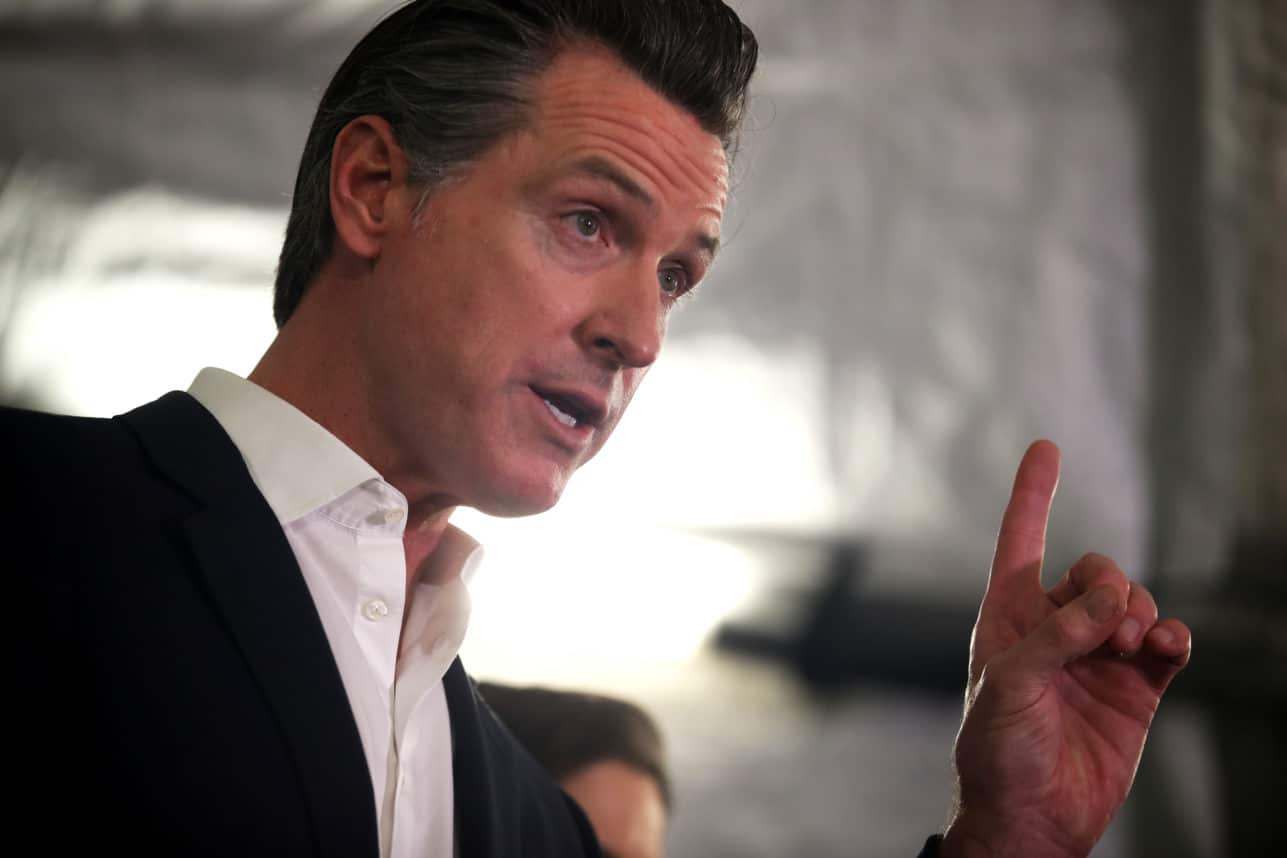
Several Jewish groups praised California Gov. Gavin Newsom, a Democrat, for vetoing a bill on Sept. 30 that eventually would have required the state’s high school students to take a course on ethnic studies.
Newsom explained in his signing statement that he was vetoing the bill, AB 331, because “there is much uncertainty about the appropriate K-12 model curriculum for ethnic studies.” He added that in 2019, he was concerned “that the initial draft of the model curriculum was insufficiently balanced and inclusive and needed to be amended. In my opinion, the latest draft, which is currently out for review, still needs revision.”
He concluded his statement by stating that California celebrates diversity and “that should be reflected in our high school curriculum.”
AB 331 would have mandated high schools to offer ethnic studies courses starting in the 2025-26 academic year and then, in 2029-30, start to require students to take an ethnic studies course in order to graduate.
Several Jewish groups applauded Newsom.
“We appreciate Governor Newsom’s insistence on developing balanced and inclusive educational materials for California’s schools, so that all children will confront racism in all its forms, build bridges of interethnic understanding, and see themselves in the curriculum,” American Jewish Committee Los Angeles Regional Director Richard S. Hirschhaut said. “It is worth taking the time to get this right.”
The Simon Wiesenthal Center tweeted, “Thank you Governor @GavinNewsom
for your courageous and important veto of a controversial and deeply flawed ethnic studies curriculum.”
Thank you Governor @GavinNewsom for your courageous and important veto of a controversial and deeply flawed ethnic studies curriculum. https://t.co/ZOpqJQG0CO
StandWithUs CEO and co-founder Roz Rothstein similarly said in a statement, “We are relieved Governor Newsom acknowledged the concerns that so many citizens across California have expressed about the Ethnic Studies Model Curriculum (ESMC). The latest draft must be revised to accurately represent and include Jews, teach about antisemitism in all its forms, and remove guiding values and principles which will be used to justify bringing bias and hate into our classrooms.”
AMCHA Initiative director Tammi Rossman-Benjamin also said in a statement, “There is an important distinction between the broad and worthy field of ethnic studies, with its goal of understanding and celebrating the contributions of California’s and our nation’s diversity, and the narrow field of ‘Critical Ethnic Studies’ that the developing California curriculum is modeled after. The mission of this narrow understanding of ethnic studies is to promote political beliefs and political activism that are antithetical to the educational setting, inherently anti-Semitic and pose a dangerous threat to Jewish students.
“We commend the Governor for recognizing this important distinction, and we hope that moving forward, the state legislature will take steps to ensure that state approved instructional materials and K-12 classrooms are free from political bias and not used to advance political causes.”
Progressive Zionists of California board chair Rachel Bracker said in a statement, “We’re disappointed that Ethnic Studies will not be a graduation requirement, but it is an unfortunate necessity following the significant problems with its model curriculum, which must be amended to include California’s Middle Eastern minorities, Armenians, and Sikhs. We sincerely hope that this hail mary to save the integrity of Ethnic Studies will encourage the model curriculum’s drafters to draw from versions created with community buy-in, like LAUSD [Los Angeles Unified School District]’s, and add necessary anti-hate guidelines such as the IHRA definition of antisemitism.”
Democratic Assemblymember Jose Medina, who sponsored the bill, criticized Newsom’s veto as “a missed opportunity,” saying that the ethnic studies curriculum is needed “at a time when the Trump administration is threatening to punish school districts for teaching anti-racism and anti-bias curriculum.”
“As civil unrest and racial tension have risen across the nation, California has marketed itself as a progressive beacon working to overcome its past transgressions and chart an equitable future. In order to build racial justice in this state and country, all of our students need to learn the real history of America — and that history includes the diverse experiences and perspectives of people of color.”
Myriad Jewish groups had criticized the most recent draft of the ESMC for not including Jews in the Middle East and anti-Semitism in the curriculum and argued that the draft left the door open for pro-boycott, divestment and sanctions (BDS) advocacy against Israel in the classroom.
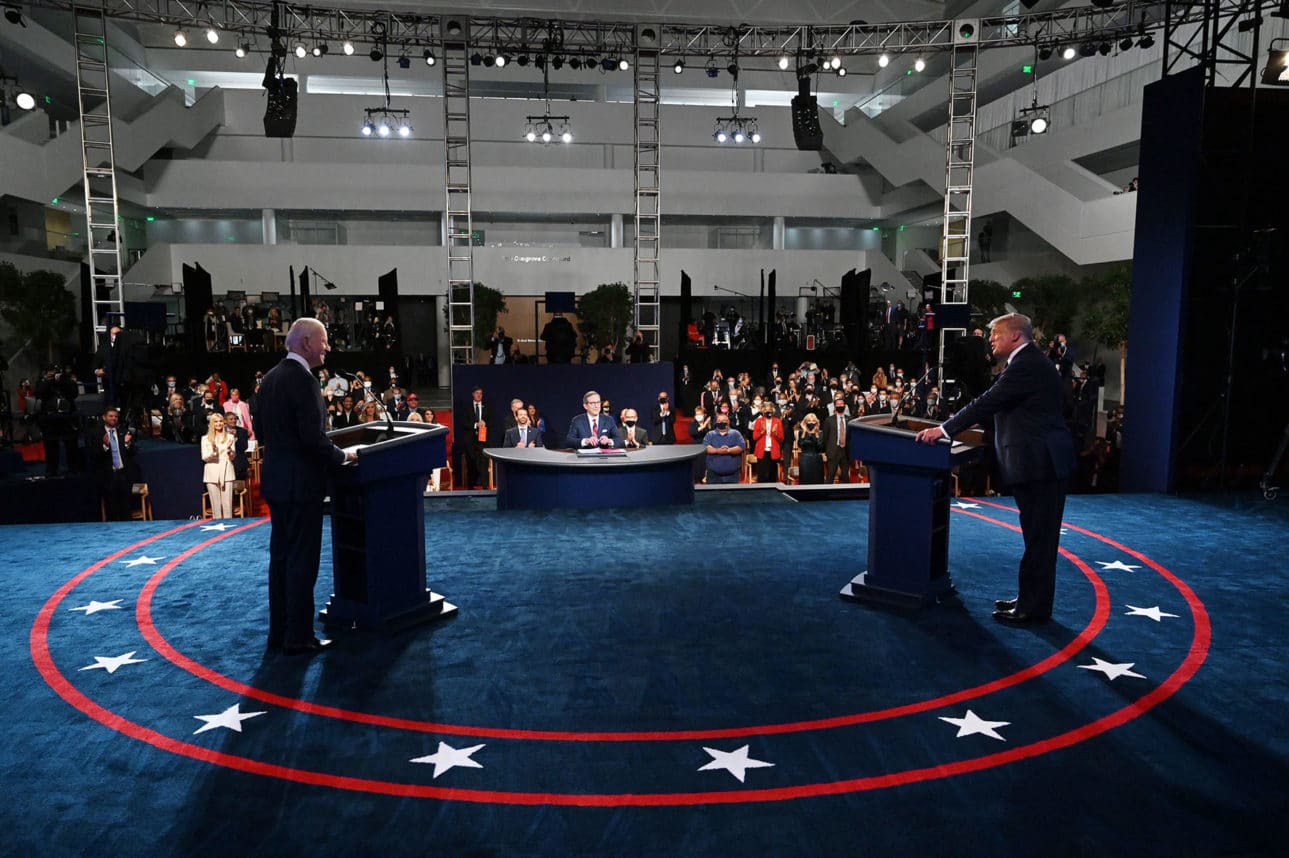
As I watched the disturbing Trump-Biden debate on Sept. 29, I couldn’t help but think about the ways that Jewish voters would react and what that will mean for the election. Here are five key factors to watch:
Traumatized Voters: Tuesday evening’s terrifying performance may have only added for Jewish audiences a further state of unsettled concerns about our democracy. We saw a president unwilling to condemn white supremacy, and an election process where the outcome has further been challenged by a sitting president apparently unprepared to accept the voters’ choices while seeking to create doubt concerning the electoral process itself. Over the past several years, we have seen an uptick in Jewish concerns about physical safety and about heightened anti-Semitic and anti-Israel expressions and actions. How will this manifest itself on election day in connection with Jewish voting behavior?
The Gilded Voter: Despite the president’s conduct and questionable debate performance, there remain “hidden” voters who remain committed to the president. Last year, I labeled these as “Gilded Voters” — individuals, both Republicans and Democrats, who have benefitted from the president’s tax and fiscal policies and intend to support him for re-election in November. Within this sector, one finds Jewish voters, who may or may not publicly articulate their preference for this president. In the end, for this class of voters, the economy is the defining element.
October Surprise(s): As with past campaigns, incumbents have a distinct advantage in being able to deliver late campaign announcements. One should expect this White House to follow suit, as it has already demonstrated its capacity to deliver to the American public outcomes beneficial to the president’s re-election. Presidents have the ability to provide such outcomes through executive orders or administrative directives to change operational policies. This may entail, for example, expanding the definition of school choice (thereby creating new federal funding streams for parochial/day schools) as a means of strengthening the president’s support among religious communities concerned with rising tuition costs. In what ways might the Trump administration seek to play to Jewish and other target audiences by last-minute actions and/or statements?
In what ways might the Trump administration seek to play to Jewish and other target audiences by last-minute actions and/or statements?
Foreign Actors: As we know, many foreign players are seeking to impact the outcome of this election. What triggers might they pull to upend or influence this year’s election?
Late Money: Campaigns are dependent on early contributions, but even more important are late donations. Currently, fundraising is robust for both candidates and we are likely to see new campaign totals over the coming weeks. The 2012 election saw each candidate (Mitt Romney and Barack Obama) raise in excess of $1.2 billion. 2020 is likely to find new record outcomes. Jewish donors are heavily committed to their respective candidates and have already been identified as among the high-end financial supporters in this campaign cycle. Will we continue to see a significant flow of new dollars from Jewish contributors?
Steven Windmueller is an emeritus HUC faculty member who regularly writes about Jewish political and communal trends. His writings can be found at www.thewindreport.com.
(JTA) — By 11:42 a.m. on the morning after Donald Trump refused to condemn white supremacists during the presidential debate, Heather Segal had received four inquiries from Americans interested in moving to Canada. Two of them were Jewish.
Segal, an immigration lawyer in Toronto, knows there’s always a spike in inquiries during U.S. election years. But in her 25 years of experience, it’s never been as big as it is now.
In 2016, she said, she received a couple dozen inquiries, total, from Americans looking to move to Canada. This year, she gets six or seven inquiries every day. And most of them, she said, are from Jews.
“In my life, I have never seen what I’m seeing,” said Segal, who is herself Jewish. She said she hears the same fears from one Jewish American after another.
“What they echo to me: ‘We’ve seen this before,’” Segal said. “‘I’m not going to get stuck. I’m not going to get caught. We know how this goes. There’s going to be a civil war. It’s going to be the end of democracy. I’m very concerned for our future. I don’t want to wait and see what happens. My grandparents left Poland in World War II.’”
She added, “Whatever it is, honestly, it gives me pause. What do I hear? ‘I never thought that I would be looking for this. I’m well established in the United States. My family is here, my business is here. This is not something I ever thought would happen or that I even considered.’ That line is not one person saying it. I hear it several times a day.”
Americans vowing to move to Canada after the presidential election is almost a cliche. Among observant Jews, the same might be said of moving to Israel — where most Jews get automatic citizenship — if the wrong person takes office or if conditions change in the United States.
This year feels different, say immigration lawyers and others who work in the small industry of Jews permanently crossing borders. Much of the drive to leave has to do with the prospect of President Trump winning reelection, potentially after a chaotic post-election period in which he or others dispute the results of the vote. American Jews, lawyers and advocates say, are also chilled by a climate of rising extremism and anti-Semitism, some of it stoked or condoned by the president.
Longtime Jewish leaders who are seen as moderate are now comparing this moment in American politics to early 1930s Germany, when Hitler rose to power and the fate of the Jews in Europe began to be sealed. For members of a people who have never experienced lasting security under any government until the last century, the moment is awakening deep-seated anxiety about how to ensure their family’s safety if the worst comes to pass in the United States.
“There’s a lot that goes through my head while this is going on, about what was my family thinking as Hitler was rising to power?” said Sarah Morris, a lawyer in Colorado whose grandfather, originally from what was then Czechoslovakia, was the only member of his family to survive the Holocaust.
A sign marks the Canadian border. (Lorie Shaull/Flickr)
Morris is one of an increasing number of American Jews who are exploring finding a home outside the United States — whether in Canada, Israel or the European Union. She is eligible for Canadian citizenship and submitted her application in August, spurred by fear of what could happen on and after Nov. 3.
It is, of course, too soon to tell if the presidential election and its aftermath spark a wave of Jews and other Americans moving abroad. Certainly, most people who vow to emigrate over election results ultimately do not.
But Morris’ story reflects the anxiety that is shaping many American Jews’ thinking right now.
She and her wife have discussed getting a mobile home, partly in case they decide to leave home at a moment’s notice for a prolonged period of time.
“You think about those kinds of questions: What would be the triggering point that would cause me to leave the country?” she said. “It’s really challenging to know exactly what that tipping point should be. And I think I have a different sort of understanding of that challenge that our ancestors probably had to go through in deciding whether or not to go.”
Other Canadian immigration lawyers are seeing the same pattern.
Joseph Young, another Jewish immigration lawyer in Toronto, usually gets about two inquiries per week about moving to Canada. That number has jumped recently to at least five. And though Jews make up approximately 2% of the U.S. population, he estimates that about 20% of his inquiries are from Jews.
Nan Berezowski, another Canadian immigration lawyer, also said inquiries about leaving the United States have risen, though she couldn’t quantify the increase, and that at least 20% appear to be from Jews.
“Things in the United States are getting a little bit out of hand,” Young said. “If Trump wins, I think you’re going to see more people continuing and completing their [immigration] applications, or at least applying. They’ve lived through four years and they’re saying ‘I’m not going to live through another four years.’”
Moving to Canada is not simple. Applications for permanent residency are evaluated based on a points system that takes into account language fluency, age, profession and whether the applicant has previous connections to Canada, such as Canadian family or a Canadian academic degree. The process can take a year or more.
“If you speak English, you’re a graduate of a Canadian university and young, you’re a prime candidate for Canadian immigration,” said Greg Siskind, an immigration lawyer in the United States who is considering working on emigration from the U.S. as well, based in part on the rising number of people seeking to leave. “If you are older and middle class, you’re probably not going to have such an easy time.”
Another option available to some American Jews is also onerous: securing a European passport. A handful of European countries, owing to their histories of anti-Semitic persecution and expulsion, offer citizenship to Jews whose ancestors fled their borders. Austria widened its doors earlier this month.
On that front, too, interest appears to be on the rise. Hollander-Waas Jewish Heritage Services, an agency founded last year that helps Jews track down genealogical records and navigate the countries’ citizenship processes, is getting two to three inquiries about pursuing European citizenship per week, as opposed to one a month several months ago.
The founders, Caitlin Hollander and Michael Waas, have also both individually pursued European citizenship for themselves, for emotional and practical reasons. Hollander has obtained her German citizenship, while Waas is still in the process with Portugal, the homeland of his ancestors.
The irony of potentially seeking refuge on the continent where the Holocaust and centuries of anti-Semitism were perpetrated does not escape them. Both, however, said the idea of having an option outside of America was compelling at a volatile time.
“If I can have another passport — a Jew can never have too many passports,” Hollander said. “It gives you that one little piece of freedom, one little piece of being able to travel freely without having to worry about one more visa, one more restriction, what new restrictions could exist.”
She added, “It’s reclaiming something that had been stolen, and saying this was mine. You can’t take this. And to me, at least, it’s righting a wrong that was done in 1938.”
Israel, of course, represents a global redress for the wrongs done in that year and the following decade. Almost any Jew in the world is eligible under the Law of Return, which gives Jews the ability to claim citizenship in the country if they move there.
Right now, the number of American Jews seeking to exercise that right is on the rise. Nefesh B’Nefesh, which facilitates Israeli immigration, has seen double or triple the number of applications opened from the U.S. every month from May through September compared to the previous year. The number of completed applications, indicating a sustained interest, has also doubled or tripled every month. Even September, which saw skyrocketing COVID-19 case numbers in Israel, saw a 72% increase in completed applications compared to September 2019, to 523 people.
But a spokeswoman for the group, Yael Katsman, said most people completing the process had long been interested in moving to Israel and felt able to make the leap after their workplaces went remote because of the pandemic.
“The political unrest is not dominant at all,” she said.
That may be because Jews must actually move to Israel to gain citizenship, making it a perpetual and vital backup plan but not a first-line destination for Jews anxious about the political situation in America.
In contrast, citizenship programs for Jews in European countries don’t require applicants to live in the country. So for those who qualify, citizenship in Europe gives them a potential refuge while they see how things in the U.S. turn out.
“Especially this year, it’s been like, I need to have a backup beyond Israel because to have a Portuguese passport doesn’t necessarily mean you have to go and live in Portugal,” Waas said.
Hollander added, “It’s having multiple options, multiple routes, and that’s what a lot of people are realizing more and more.”
A move abroad appeals even to Jews who don’t fear direct, physical danger following the election but worry that another Trump term will transform the U.S. into a place that does not reflect their values.
Jeremy, an educator in Pennsylvania who has focused his energies on teaching immigrants and underprivileged students, has found himself recently searching Canadian job boards and researching the cost of living in different Canadian cities. He said Canada is appealing because life there seems relatively similar to the U.S., but that the country appears to care more for marginalized groups, which is important to him as a Jew.
“I knew from a young age that I’m different because I’m Jewish,” said Jeremy, who did not give his last name due to concerns regarding privacy and job security. “That makes us able to understand certain things, to live certain fears that we have or that pretty close ancestors of ours have had in this country or in other countries. That very directly relates to how I feel about immigration. That very explicitly relates to how I feel about systemic racism.”
Segal, the Canadian immigration lawyer, said the rising number of people seeking to leave the U.S. is “devastating to see,” despite the uptick in potential business for her. She’s always looked at the United States as an inspiration. Now she views it with fear and concern.
“It saddens me because, you know, I love America and what it stands for and what it’s accomplished,” she said. “I keep saying to myself, what is going on in America? Because I see a lot of fear and I feel like we’re at this stage [where], the fear, we don’t know what it’s going to bring.”
As I reflect on the meaning of Yom Kippur, a Jewish holiday centered around forgiveness and reconciliation, I become deeply concerned about Proposition 20, an initiative on California’s November ballot that seems to contradict these principles.
Prop. 20 makes petty theft — something as minor as stealing a bicycle — into a potential felony, instead of strictly a misdemeanor, as it is today. Someone who steals as little as $250 worth of valuables — one of the lowest monetary thresholds in the nation — could be charged with a felony and face years behind bars. Even after an individual is released, having a felony on their record will make it extremely difficult to access employment, housing, education, or even food stamps. This would devastate families and communities, especially communities of Color. Ultimately, Prop. 20 would push parolees back into the prison system. Since they would lack the essential resources to succeed, parolees would have very few options but to steal to survive.
Prop. 20 is a dangerous initiative. According to a recent report from the Center on Juvenile and Criminal Justice, Prop. 20 would “generate hundreds of millions of dollars in new annual spending on law enforcement and incarceration,” consequently forcing cuts to other essential social programs and community-based services. It would also contribute to gross overcrowding in California jails and prisons.
Voting “NO” on Prop. 20 is not only a human, moral imperative, but also a Jewish one
Prop. 20’s proponents say that criminal justice reforms aimed at decreasing incarceration rates could endanger Californians. In reality, violent crime rates have dropped steadily since peaking in the 1990s in California, despite (or because of) criminal justice reforms. Even former Gov. Jerry Brown called Prop. 20 “the latest scare tactic on criminal justice reform.”
This initiative also effectively erases the gains made by the criminal justice reform laws AB 109, Prop. 47, and Prop. 57, which were passed between 2011–2016 and intended to decrease prison populations in California by incentivizing early release for good behavior and reclassifying low-level, non-violent crimes from felonies to misdemeanors. By incarcerating fewer people, these initiatives have saved the state and local governments hundreds of millions of dollars — money that has been used instead to support local community corrections, juvenile justice programs, courts, and mental health services.
If it passes, Prop. 20 will disproportionately affect Black and Brown communities. As has become abundantly clear in the last few months, systemic racism plagues our criminal justice system. Witness, for instance, the death of George Floyd. Or take a look at the demographics of incarcerated Californians: According to a 2017 California Department of Corrections report, African American men are incarcerated at 10 times the rate of white men, and Latino men are incarcerated at twice the rate of white men. Black women are incarcerated at five times the rate of white women. These discrepancies are not due to lower crime rates among white people. Rather, they are a direct consequence of racial bias in our legal system, determining who goes behind bars and who goes free. A 2018 study by Harvard Law, for instance, revealed that judges’ political affiliations contributed to racial inequities in sentencing.
Simply put, California cannot afford the consequences of Prop. 20. Prisons and detention centers are already overwhelmed by overcrowding. Inmates at Solano State Prison, for instance, have been forced to sleep in the prison yard. AB 209, Prop. 47, and Prop. 57 were passed to address this overcrowding problem, which was so severe 10 years ago that the Supreme Court ruled that it violated the Eighth Amendment’s protections against cruel and unusual punishment.
Living in a pandemic, we must not forget that overcrowding often leads to the spread of disease. COVID-19 has become so rampant in California prisons, that over 1,400 people have become infected, and 60 people have died. Inmates are not receiving adequate PPE, sanitary living conditions, space to socially distance, adequate medical care, or even access to contact loved ones. California is failing to keep safe those who are locked up in the name of preserving public safety (and prison staff are endangered, as well).
Prop. 20 would worsen the inhumane, racially skewed, overcrowded and unhealthy conditions in California’s jails and prisons. What we need to do, instead, is put fewer people in jail and set them up for success once they are released. Let’s invest in our communities, not in building more jails. Let’s focus on providing jobs with livable wages, affordable housing, education, and mental health care. Given the High Holidays and the motivation to forgive and repent, voting “NO” on Prop. 20 is not only a human, moral imperative, but also a Jewish one.
Alison Sloan is a nurse practitioner and member of Bend the Arc in the Bay Area.
When I was 16, I worked for an architect on Nantucket Island. It was an idyllic summer. I rode my bike 10 miles each way. I ate delicious foods from local farms and bakeries. Each Friday I led services at the local shul.
One evening, I went to the pizza place to get a well-deserved dinner. As I walked out, an older teen approached me and said, “Hey, you’re the guy who stole my bike.” He then knocked the pizza off my plate. I still remember it hitting the ground. He continued, “You’re Jewish, are you?”
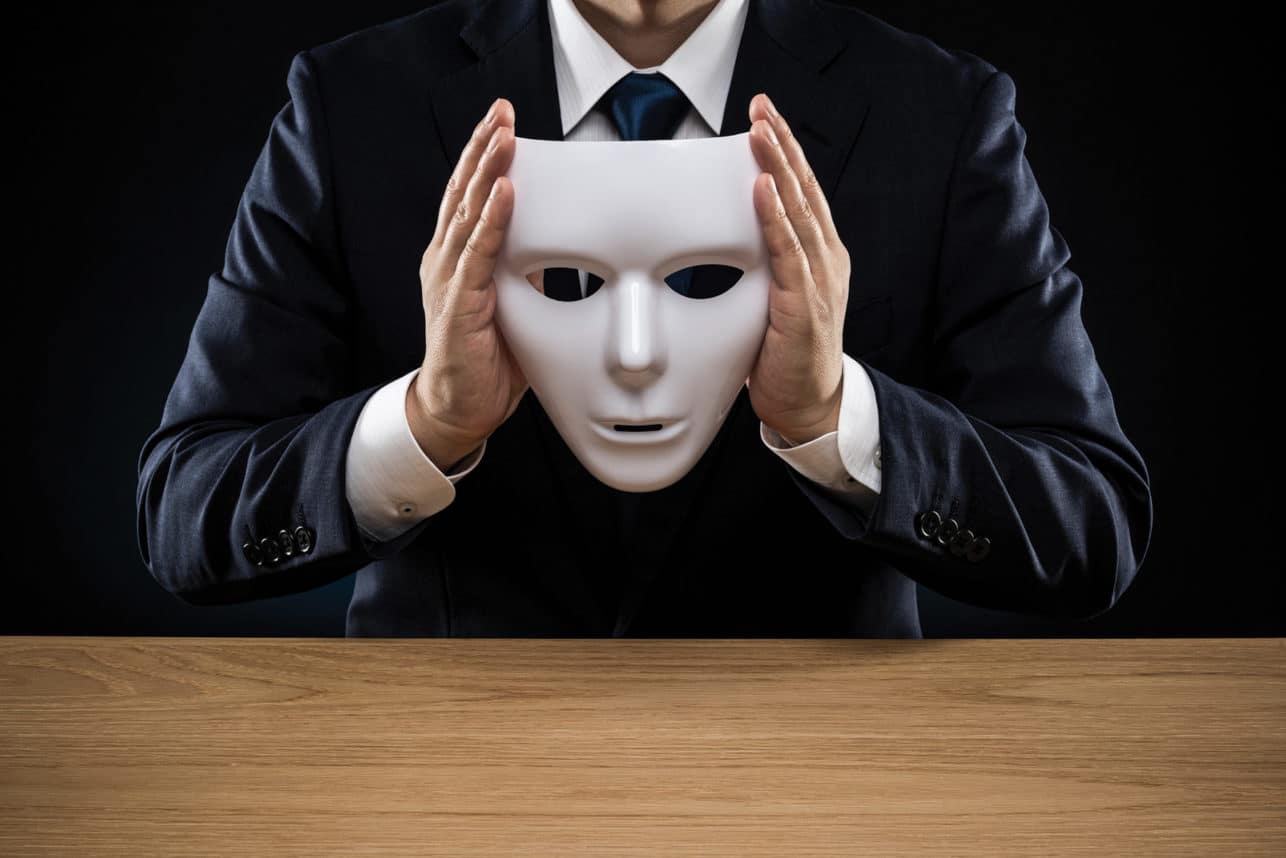
I froze. It’s amazing. Thirty-five years later, and I still remember the feeling up my spine. I lied. I was truly terrified. He then said, “Wait, you’re not the guy.” I hopped on my bike and rode off, relieved. But I was also ashamed. I had never before lied about being Jewish. I had never worn that mask. On the one hand, this mask hid me. On the other hand, it protected me.
We are living in a time when masks are part of everyday conversation. At times, the laws regarding them seem necessary. And at times, they seem arbitrary. But the metaphorical masks we wear are far more significant and penetrating than the physical masks of this awful pandemic. Yom Kippur is a time to think deeply about the everyday masks we wear, because Yom Kippur is a reminder that we all have things that we hide from the rest of the world.
Yes, we all wear masks. And yes, those masks can protect us. But they also canbecome barriers to the light that is within.
Here are four biblical examples of masks:
The mask of Joseph
One of the 12 sons of Jacob, Joseph hid his identity from his brothers because of years of anguished childhood memories. Joseph was the favored son of Jacob, whose brothers sold him into slavery — expecting never to see him again. But Joseph emerges as the prime minister of Egypt. Because of famine in Canaan, his brothers come to Egypt for food. They don’t recognize that the prime minister is Joseph. Indeed, Joseph conceals himself, perhaps out of vengeance, perhaps out of spite. But the turning point happens when Joseph removes the mask and says, “I am Joseph, your brother.” It is one of the most authentic moments in the Torah.
There are times we wear the mask of Joseph:masks that separate us, elevate us, and make us feel better about ourselves. And there are times we are able to take off the masks.
The mask of Moses
When Moses comes down from Mount Sinai carrying the tablets, our text teaches, “the skin on his face sent forth beams” (Exodus 34:30).
The people are afraid to approach him. As a precautionary measure, Moses places a veil — a mask — on his face so that the people will not be overwhelmed. What does this mean? Moses’ job was not an easy one. The people often complained, and they even rebelled at times. Moses’ shining face revealed too much light at any given time, and the people were not able to absorb it all at once. And so, he had to wear a protective mask as part of his uniform, because others just were not able to understand him.
The mask of Esther
In our Purim story, Esther must conceal her Judaism in the face of Haman. How many Jews throughout history have been in hiding? How many Jews during the Crusades and the Inquisition? How many Jews during the pogroms and the Holocaust? How many “Rabbi Zachs” when confronted by a bully?
Esther, whose very name means secret, had to wait for the right opportunity to reveal her identity. She created the opportunity — to stand up, to remove her mask and to use her voice to effect change.
The mask of God
What is the mask that God wears? There’s a section in the Torah that I often struggle with. God says to Moses: “I will make all My goodness pass before you …. But you cannot see My face, for a person may not see Me and live.” God said [further]: “Here is a place with Me. Station yourself on the rock and, as My Presence passes by, I will put you in a cleft of the rock and shield you with My hand until I have passed by. Then I will take My hand away and you will see My back; but My face will not be seen.”
I’ve tried time and again to come to terms with this text. Why must there be a barrier, a mask between humanity and God? Shouldn’t we be able to absorb God’s divine light without a filter, without a mask?
Chassidic Master Rabbi Nachman of Breslov taught that “The end of knowledge is that we do not know.” He means that our search for God must begin with an element of doubt. If we could see God right away, our spiritual quest would be empty. And so, there is a mask. And we spend our lives trying to understand.
Why must there be a barrier, a mask between humanity and God? Shouldn’t we be able to absorb God’s divine light without a filter, without a mask?
Perhaps, just like with this mask of God, there is opportunity for us today, behind our masks, to look more deeply into someone’s eyes, to listen more intently to their voice, to discover more completely their emotions, to see them soul-to-soul in a way we might otherwise take for granted.
For the first 26 years of my life, I wore a mask, pretending to be straight. I tried.
The women I dated were more like buddies. My senior year in college, I dated Lucy. But I realized a few months in that I was miserable in the fraud, so I broke up with her. It wasn’t an honest break up. A few weeks later, Lucy and I had a heart-to-heart.
I was on the verge of coming out to her but I didn’t. In the depth of the conversation, Lucy looked at me and said, “Zach, when you take your mask off, and you are being honest, you are beautiful in a way I’ve never seen you.”
Yes, we all wear masks. And yes, those masks can protect us. But they also canbecome barriers to the light that is within. But remember, we are all in the image of God. God’s handprint has the opportunity to touch everything we touch, and God’s smile has the ability to shine upon each face we encounter. If we hide behind a mask, we deny ourselves — and the world — an experience with divine goodness.
While we might need to wear the mask to protect us from the elements, on this Yom Kippur, we take off the masks that prevent us from being our true selves — that eclipse our loves, our passions, our truths from blossoming. We take off the masks that hide our essences, that compromise our dreams and that deny our wisdom. Joseph, Moses, Esther — they all removed their masks. And God, we ask today that You remove Your mask, just for this moment in time, that we may connect more closely.
Dear God, on this Yom Kippur, we want so very deeply to connect. May our souls be open to receiving Your light, and may our faces then shine with beauty, truth and radiance.
Rabbi Zach Shapiro is the Spiritual Leader of Temple Akiba, a Reform Jewish Congregation in Culver City.
Israeli President Reuven Rivlin tweeted on Sept. 29 that it was “shocking” to see a swastika emblazoned on a car in Britain during Yom Kippur.
The Bristol Post reported that the swastika was spray-painted in a neon color on a car in Kingswood, a suburb of Bristol, on Sept. 28.
Rivlin tweeted, “This is the shocking sight of rising #Antisemitism — a swastika sprayed on a car on Yom Kippur in Britain yesterday. Words of condemnation are not enough. We need #Holocaust education and remembrance so governments and societies everywhere actively challenge this threat to Jews.”
This is the shocking sight of rising #Antisemitism – a swastika sprayed on a car on Yom Kippur in Britain yesterday. Words of condemnation are not enough. We need #Holocaust education and remembrance so governments and societies everywhere actively challenge this threat to Jews. pic.twitter.com/1GMigw7QZI
The World Zionist Organization (WZO) also condemned the graffiti.
“The incitement and incidents of anti-Semitism against Jews don’t stop on the holiest day of the year, Yom Kippur,” WZO Vice Chairman Yaakov Hagoel said in a statement. “Anti-Semitic criminals know exactly when to hit their targets.”
He called for a harsh punishment against whoever perpetrated the vandalism.
“We need a heavy hand and deterrence through a harsh punishment, which won’t allow those responsible the freedom to target Jews anywhere they want around the world,” Hagoel added.
Nick Helfenbein, who lives across the street from the vandalized car and is Jewish, told The Bristol Post that seeing the swastika was “a gut punch. Me and my wife, who is the granddaughter of a Holocaust survivor, feel anxious about this — it was right next door to where we live.”
Police said they are investigating the matter.
Another recent instance of swastika graffiti in the Bristol area included the words “Mask = [swastika symbol]” spray-painted on a bench in a Bristol park.
(JTA) — Two Palestinians armed with a knife and grenades infiltrated into southern Israel from Gaza on Thursday before they were apprehended by soldiers.
They threw a grenade, which proved to be inactive, prior to their arrest, according to the Israel Defense Forces. They were questioned at the site. No one was injured in the attempted attack.
Hours earlier, Israeli troops arrested a lone unarmed Palestinian infiltrator.
Coastal Roots Farm in Encinitas is guided by Jewish values, and is committed to caring about community. That’s why, for the past seven years, it has held a Sukkot Harvest Festival, which brings individuals and families throughout the region together to celebrate the holiday. This year, however, it will look a little different because of COVID-19. Nonetheless, the event still will strive for togetherness and tradition during these tough times.
“Sukkot is a harvest holiday that you can experience at the farm firsthand,” Kesha Spoor, philanthropy manager for Coastal Roots Farm, told the Journal. “We grow seasonally. Rosh Hashanah comes and we have pomegranates. Sukkot comes and there is lots of squash. It’s a really fun way to experience the Jewish agricultural backing of our history while connecting with our community in a unique way.
And while the farm is not religious, Spoor said, “We’re certainly founded with Jewish values in mind and we live them in how we grow our food and interact with our community.”
The festival, which runs Oct. 4 through Oct. 8, is historically the farm’s biggest event of the year, with more than 1,000 people attending in years past. Now, people can attend by driving through the farm and listening to a guided audio tour from their smartphones, see the fruits, vegetables and chickens and hear about the holiday. They can learn about the significance of the lulav and the etrog, write down their wishes for the future and get an inside peek into what’s going on at the farm. There will be one tour for adults and one for young families.
Cars will be invited in one at a time and on the tour, attendees can hop out and color a square on a color-by-number mural. “By the time the festival finishes, everyone who comes will have contributed to this one consolidated image that we hope will be on the farm for years to come,” Spoor said.
Though Spoor acknowledges that people can’t gather in the traditional sense this year, she said Coastal Roots Farm didn’t want Sukkot to pass by without observing it because it’s so crucial to the farm’s identity.
Photo courtesy of Kesha Spoor
“Sukkot is about hospitality and celebrating community and welcoming the fall season,” she said. “We felt we could still put on an event that would uplift a lot of those things and keep each other and ourselves safe so people could gather and experience Sukkot from their car.”
In addition to the on-site experience, the farm, which teams up with community partners including Chabad Hebrew Academy and the city of Encinitas, is holding two virtual Sukkot events. One is for adults in conjunction with the local JCC, and one is for young families. During these events, participants will learn how Jewish law promotes food justice.
“Food justice is a complex and really lofty goal,” Spoor said. “We believe we’re part of a much larger system. We’re one piece of the puzzle.”
Coastal Roots Farm, which Leichtag Foundation started in 2012, became its own nonprofit in 2015 but still rents Leichtag Commons, a 67.5-acre property, from the foundation. It holds a twice-a-week farm stands on Sundays and Thursdays, and its products are pay-what-you-can. They give those in need up to $30 worth of produce for free. The farm also lines the corners of the field for the strangers, the poor and the widows, like the Torah advises, and strives to be kind and humane to the chickens that hatch the farm’s eggs.
“We are in partnership with the land and the chickens,” Spoor said. “All these Jewish agricultural values just happen to be farming best practices as well, like taking care of the soil. [Judaism] provides a lens we can look through.”
Coastal Roots Farm also is bringing people together during this time through its virtual Havdalah events as well as its after-school farm camp, where kids can explore the farm. “They learn how food grows and why it matters and how they can make the world better,” Spoor said.
Even though the world may seem out of control, Spoor said that Coastal Roots Farm is able to provide experiences that will help the community feel better about the state of things.
“People are just feeling really like their lives are upside down right now and they really appreciate these markers of time, like holidays, that they can feel positive about,” she said. “There’s something about gathering in a positive way that makes the world better. People want to enjoy themselves, be part of something good and connect.”
To learn more about the Sukkot event, visit the website.
It is fitting that “The Keeper,” set post-World War II when people and nations across the globe were groping for a new normalcy, is opening in the Los Angeles area in the virtual format that has become our new reality.
The title of the German-British movie refers to the goalkeeper on a soccer team — a sport known everywhere except in the United States as football.
It is the world’s most popular sport, but for Angelenos who aren’t bitten by the bug, the film offers additional points of interest.
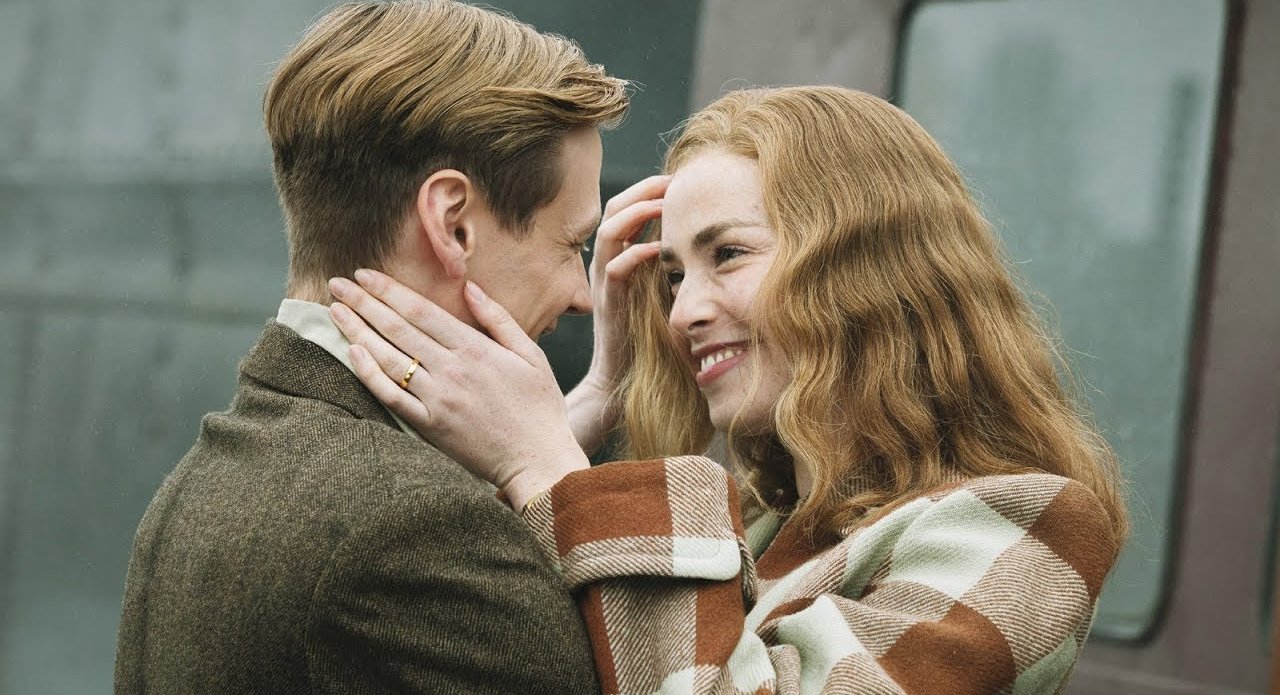
The film, directed by Germany’s Marcus H. Rosenmuller, is based on the life of German-born Bert Trautmann (David Kross). A former decorated paratrooper in Hitler’s army, he is now a British prisoner of war, who dazzles his captors with his prowess as a goalkeeper.
There also is a love story between Trautmann and a patriotic English woman. Perhaps most interestingly, the film asks whether those who stood idly by in the face of Nazi crimes can ever be forgiven by the victims or, perhaps, by their own consciences?
We first meet Trautmann in 1947 in a POW camp (tens of thousands of prisoners voluntarily remained in the U.K. prisons after the war), where the British guards freely express their hatred of the “Krauts.” Yet, in a pickup game with members of a local town team, Trautmann displays his amazing agility as a goalkeeper, to the delight of the team’s coach, desperate to win a game with his team of losers.
Later, we see Trautmann follow his dreams of becoming a professional football player in Manchester, England, but he continues to draw ire from area residents until a local rabbi comes to his rescue by writing a newspaper column insisting that each man must be judged on his personal worth.
Soccer is becoming more popular in the United States, (spurred by a champion U.S. women’s team and a professional men’s league) and has come a long way since this reporter, who was born in Germany, played on the UCLA soccer team in 1946, when there wasn’t a single American-born player on the roster.
“Trautmann was not a hero in any sense, but after the war he worked to make sure that English and German youth would never shoot at each other again.” — Marcus H. Rosenmuller
Still, it is difficult to imagine the emotional investment fans in other countries have in their soccer teams. For comparison, one would have to combine the collective enthusiasm of American baseball, basketball and football fans for their teams.
So, in 1956, when Manchester City qualified for England’s Football Association Cup against Birmingham City — akin to the World Series in U.S. baseball — the city and fans went wild.
Rosenmuller, who scored his first successes with movies in his native Bavarian dialect, saved the film’s more serious themes for the end of the movie, which he discussed in a phone interview with the Journal.
One theme, which pervades any serious discussion with Germans today — more than 75 years after World War II ended — is the nation’s guilt, not only for the Holocaust but for its pervasive series of war crimes. So just as the film seems to be hurtling toward a happy Hollywood ending, Rosenmuller turns to the darkest chapter in German history. Trautmann, the football hero, has to confront his service in a German parachute unit in the brutal fighting in the Ukraine and the Soviet Union. Although not a war criminal, Trautmann is among the legions of bystanders who witnessed Hitler’s madness and evil but refused to protest and intervene.
The director notes one incident (not shown in the film) in which Trautmann’s comrades executed 50 Jews in the Ukraine, but then swore everyone — including Trautmann — to silence. “Trautmann was not a hero in any sense, but after the war he worked to make sure that English and German youth would never shoot at each other again,” Rosenmueller said.
Trautmann’s confrontation with his past comes at the very end of the film, when he suffers a personal tragedy. The shattered soccer star tells his wife it was his punishment for not intervening when his comrades killed the Jews.
After the end of World War II, the German people — as much of the rest of the world — were in denial or indifferent to the extent and toll of the Holocaust, but gradually, the postwar generations have acknowledged the guilt, not only of the perpetrators but also of the bystanders who turned their backs.
“The Keeper” begins streaming at Laemmle theaters on Oct. 2. Visit the website. For a direct link to the film, click here.
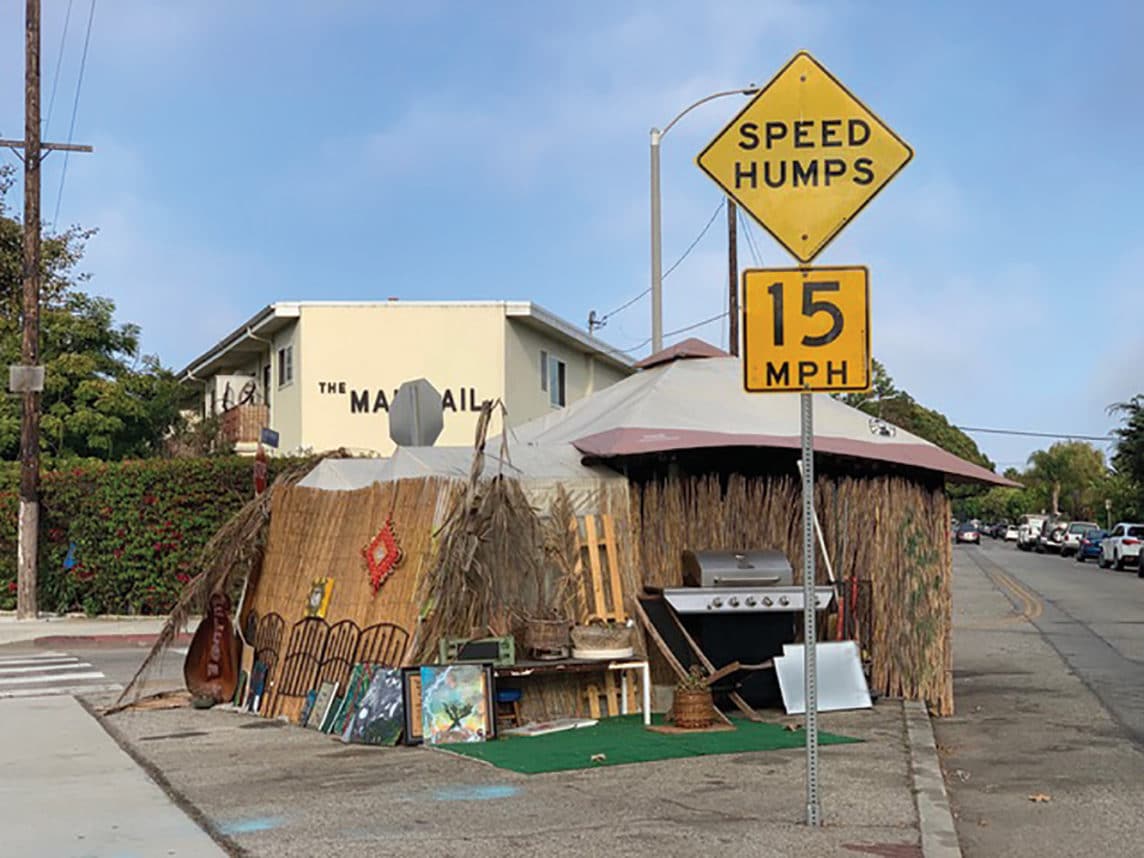
On the corner of Washington Way and Venice Boulevard, an island grants pedestrians a safe haven as they cross the expansive street. Sometime within the past few months, a structure appeared on the island. With four walls of various materials and a sheet of bamboo as the only separation between the occupant and the sky, it was the first sukkah in Venice this year.
You’ve likely seen similar structures. When we leave our quarantine bunkers and make our way through the city, it seems as if a tribe of new people multiplies as plentiful as stars in the sky.
Throughout Los Angeles, row after row of tents — under overpasses, over concrete islands, standing side by side — proliferate. In many ways, they appear like the community of Israel as described by Rashi: “When Balaam cursed the Israelites, God changed Balaam’s curse into a blessing; he was struck by the beauty of what he saw in our itinerant, refugee ancestors.”
Today’s sukkot and their inhabitants, however, are controversial. In a recent Facebook thread, one woman posted about a local homeless man needing help, then was accused of enabling his presence in our neighborhood. Beyond their “Not in My Backyard” attitude, homeowners have a genuine fear of this proliferating tribe. Open up any Citizen app at 10 p.m. and it’s filled with orange squares reporting incidences of “shooting,” “armed robbery” and the mysteriously ubiquitous “man wielding hammer.” Fears of COVID-19 infection have recast the presence of the homeless into a kind of leper colony, with dogwalkers crossing the street rather than walking alongside them.
There is no shelter from the pandemic, fires and civil unrest within a sukkah’s walls.
Lining our avenues for blocks at a stretch, these sukkot seem to create new neighborhoods in our midst and transform the conversation from one of homelessness to one of homesteaders. Their inhabitants are a rising tribe, some of whom are referred to as L.A.’s homeless population, although many of them, I have learned, don’t identify as homeless. They do have homes, they assert, such as this “sukkah” on a pedestrian island in Venice.
The sukkot in our midst are a visible reminder of the formerly invisible homeless. Since the Los Angeles Homeless Services Authority’s (LAHSA) annual “Greater Los Angeles Homeless Count” in January, the number of homeless individuals has significantly risen. The tents are proliferating, and people dwell inside of them. Are they a symbol of urban blight and human depravity, or do they serve as a visible reminder of our shared humanity and the temporal nature of life? Do they inspire us to look closer or turn away?
Tents in Penmar Park, Venice; Photo courtesy of Rabbi Lori Shapiro
A shelter, but not a hiding place
As Sukkot approaches, these tents remind me of the omnipresence of sukkot in Jerusalem. As I walk in Venice, I consider whether or not the rabbis would consider these tents kosher. They have at least 2 1/2 sides with walls at least 40 inches high and have coverage allowing the starlight to make its way inside and shine upon the dweller. Some are built alongside fruit trees, and one has a pomegranate bush bursting with buds. I recall the uniquely crafted sukkot in Union Square Park in Manhattan, N.Y., in 2010 — a reimagined design of what a kosher sukkah could be. I wandered through masses of wire, stacks of tinder and globular structures and was inspired by their temporal nature and the heartbreak of their evanescence. Seeing the newfangled sukkot of Los Angeles, I think about how much the world has changed in such a short time, and yet, the structures arouse a similar heartbreak.
As I walk past these tents, I pass a lemon tree and it reminds me that I have yet to order my lulav and etrog. This year, it’s one per customer — no sharing. During Sukkot, we wave the arba minim, the four species of plant life (willow, myrtle, palm and citron) around us, marking the celestial sphere that surrounds us. Symbols of heart, eyes, lips and spine, of taste and smell are reminders that Sukkot is an embodied practice as well as a vestige of ancient pagan rituals, appropriated to worship the God of the Israelites. Sukkot is sensual; it arouses our bodies toward life. We crawl into the sukkah each night, surrounded by a bounty of harvest, constellations, tastes, smells, touches, sounds and sights, and we sleep inside of it. The sukkah is a womb, and as we slumber and dream, we dwell inside the mystery of life itself.
Sukkot magnifies the temporal nature of life and amplifies our relationship with the rustic world around us. There is no shelter from the pandemic, fires and civil unrest within a sukkah’s walls. Nature is indifferent to our existence and the sukkah is a visible reminder of nature’s steadfast persistence and ostensible victory. Oblivious to our suffering and the fragility of human life, dwelling in a sukkah reminds us that all of us are but visitors here.
“Samuel” Photo courtesy of Rabbi Lori Shapiro
Seeing Samuel
On one particular walk in front of these sukkot, I happened upon a man whom I shall call Samuel. (In the Book of Prophets, Samuel was the son of Hannah, who was gifted to the priest Eli. Samuel helped identify King David, and it is from King David’s progeny, in the biblical imagination, that the Messiah will appear.) This Samuel, however, sat on the open concrete, his shirt exposing his heart, drooling as he cried. Morning joggers and cyclist passed him, indifferent. No one seemed to notice him. There are so many Samuels in Venice now, calling out to us to recognize redemption.
But something drew me to him, so I said, “Hello, friend. My name is Lori. Why are you crying?”
Standing in front of him, I felt a sense of cognitive dissonance. Samuel was raw, his skin sunburned, his mouth agape, a figure of mournful, abject sadness. He was so exposed and I thought, maybe that is why the rabbis insist on Sukkot being “mo’adim l’simcha,” a time of rejoicing. Perhaps we created this celebration to defy the existential loss of life that we constantly face. We trick out our temporary dwellings like Christmas trees, gathering trinkets and tapestries each year to mask how temporary each year is.
Although Sukkot is a holiday “d’oreita” (from the Torah), vivid descriptions of how Sukkot was celebrated in the ancient world are discussed by the rabbis in the Mishnah and Talmud. The holiday culminates an annual cycle that begins with fecundity of Pesach, climaxes with God’s revelation at Sinai on Shavuot, and erupts with the harvest of Sukkot. Sukkot is the fulfillment of God’s promise, and in ancient Jerusalem, it included the water drawing festival, Simchat Beit Hashoavah. As described in the Talmud, candelabrum lined Jerusalem’s streets, jugglers passed torches, knives and wine goblets, and acrobats flipped and bound down the stone streets. The Levites formed an orchestra and everyone took to the streets to dance. The pageantry of Simchat Beit Hashoavah evokes imagery of a Jerusalem Junkanoo or Carnivale.
There are so many Samuels in Venice now, calling out to us to recognize redemption.
In the same moment, as I considered this commandment of joy, Samuel’s tears reminded me that Sukkot is the bloodiest of holidays. The Israelites offered hundreds of animals as sacrifices on the altar, filling the streets with the rank stench of death and foreshadowing that an arid winter could bring crop failure, famine and our ultimate demise. Sukkot is our panoply of light and darkness, abundance and scarcity, past and present, as we continue to hang in the scales of justice for an uncertain future. Sukkot displays a dizzying array of truths, and the fleeting booths we build are a mere stand-in for the bodies that house our souls.
Samuel blinked quickly and replied, “I lost my HUD (government Housing and Urban Development) housing after I had hip surgery. After the hospital, they sent me to an old age home, and when I was discharged, they told me my HUD was given away. They dropped me off at Skid Row 35 days ago, and I made my way to Santa Monica. I walked up to Venice yesterday.” He pulled down the side of his pants and displayed a fresh surgical scar. “I tried to get one of the LAHSA workers to help me, but all of the services are saying there is nowhere to go because of the COVID.”
I asked if he had a family. He told me about his mother in West Virginia, his brother in Ohio. “Where is your father?” I asked. “My father …” he stammered, and began to cry. “My father died a year and a half ago.” “And he really loved you?” I asked. Through his cries, he gasped, “Yes.” “What was his name?” I asked. “Jamie … James. His name was James.”
In the sukkah, we call forth our ancestors, or in Aramaic, ushpizin. Their presence draws forth the reality of the world that existed before we did, and reminds us that one day, not so soon in the cosmic sense of time, we will join them. As we look up at the stars through our sukkah, the very same stars that shone upon our ancestors shine upon us. Sukkot demands that we invite in the ancestral system; like the ofrendas (offerings) from Dia de Muertos (Day of the Dead), we place photos of our grandparents and great-grandparents inside the sukkah, and our meals take on a heavenly presence. Samuel’s grief reflects that wherever we may tarry, our ancestors are with us always, waiting for us to feel their loss, remember their words, integrate their love and find our way.
Samuel and I walked toward the beach. He shared that he was HIV positive, that young people were doing drugs on the streets, and he cried again. “What’s making you cry?” I asked. “They are so young,” he responded.
The final days of Sukkot create an off-ramp into our lives. Hoshanah Rabbah is like the spin cycle that dries us out; circling in procession, we whack the willows to remove the final drops of transgression within us. Shemini Atzeret offers a seasonal turning from the arid months to the wet ones. This final observance prolongs the Sukkot festival by gently pressing down on the breaks, signaling that the High Holy Days are literally stopping. Our etrog and myrtle are to be dried and turned into besamim (spices) for Havdalah, an olfactory bridge to enter the next week, and our lulav will be upcycled and woven into a basket, where we will place these spices. Then, on Simchat Torah, we will rewind our ancestral story, and the cycle will begin again.
Sukkot displays a dizzying array of truths, and the fleeting booths we build are a mere stand-in for the bodies that house our souls.
Rejoice with the stranger
Samuel and I stopped at a bench. I’d bought him a sandwich. He ate heartily, and my dog snatched some turkey from his roll. Samuel laughed and ran his hands through her coat. “She’s a good dog,” he said.
I spotted a Parks and Recreation vehicle patrolling the boardwalk and flagged it down. I asked the driver if he knew of any shelters that could take in new residents, “None,” he replied, “and I know. I’ve been living in this truck for four months now. I’m homeless, too.”
I stayed with Samuel for another hour. I bought him a shirt the color of techelet (turquoise), and he told me it was his favorite color — he would have chosen it, too. He asked if I could get him a Mountain Dew. We picked up a few groceries, and it was time for me to go back to the place I call home.
As I walked away, I turned back a number of times and saw him swigging his soda with futility in my heart — an incomplete mitzvah. As I walked down Ocean Front Walk, the lawns were filled with the sukkot of the men and women of this new Tribe. My inner Torah echoed a chant from Deuteronomy 16:14: “You shall rejoice in your festival, with your son and daughter, your male and female slave, the Levite, the stranger, the fatherless and the widow in your communities.”
A cop car passed slowly on the walkway. I wondered what sukkah Samuel would sleep in that night. Maybe he would camp on the beach beneath the stars, like Jacob at Beth El, with a rock as a pillow. My vision blurred, passing tent after tent. The words from the Sukkot haftarah echoed in my mind, expressing the paradox of life’s joys and sorrows: “Utter futility,” said Koheleth, a pseudonym ascribed to King Solomon, the purported author of Ecclesiastes. “Utter futility. All is futile.”
And yet, the futility of it all hangs in a delicate balance: A time for weeping and a time for laughing; a time for wailing and a time for dancing.
My heart turned to Samuel … I’d look for him tomorrow.
Rabbi Lori Shapiro is the founder and artistic director of The Open Temple in Venice.