How does one export the Arab-Israeli conflict to the West on terms that are pro-Palestinian? This question underscores a critical issue: while many in the West are engrossed in resolving the conflict, they often fail to recognize that a viable solution is unattainable as the conflict itself frames Israel as guilty of crimes against humanity. On such terms, the only solution is, indeed, an “intifada revolution,” annihilation of all of Israel by violent means.
While many in the West are engrossed in resolving the conflict, they often fail to recognize that a viable solution is unattainable as the conflict itself frames Israel as guilty of crimes against humanity.
Although the Arab-Israeli conflict began in the early 20th century, efforts to “center Palestine” in American academia took clearer shape in the early 2000s. Inspired by Edward Said’s “Orientalism” in the 1970s, this movement gained momentum with three key events: the second intifada (2000), the 9/11 attacks (2001), and the 2001 Durban Conference on Racism.
Each event, to a lesser or greater degree, positioned the Jew as the villain. Whether dressed in the language of the Jew-puppeteer who secretly controls the world from “The Protocols of the Elders of Zion” or through Marxist, anti-colonial narratives that portrayed Jews, via Israel and Zionism, as oppressors, the Jew once again found himself recast in the role of villain, doing what he is accused of doing best: destabilizing world order.
In search of fertile ground to cultivate anti-Jewish sentiment through this conflict, academia — already primed by the “long march through the institutions” — offered ideal conditions to incubate and “center Palestine.” Replete with post-colonialism theory that condemns ‘the West’ for all ills of the world, the fecundity of departments such as Near East Studies, Sociology, Anthropology, History, English, Gender Studies, and Comparative Literature that employ post-colonial theory, provided those who wished to “center Palestine’’ with prime real estate space.
In search of fertile ground to cultivate anti-Jewish sentiment through this conflict, academia — already primed by the “long march through the institutions” — offered ideal conditions to incubate and “center Palestine.”
But what mechanisms would the faculty within these departments use in order to spread the anti-Zionist message, core to “centering Palestine?” Having arrived at U.S. campuses in 2001, the key mechanism used to “center Palestine” and denormalize Israel and Zionism is BDS (Boycott, Divestment and Sanctions). In February of that year, the Council of Palestinian National and Islamic Forces (PNIF) released a statement entitled “A Call for Comprehensive Confrontation,” outlining the three main “nonviolent” ways to achieve victory against the Jewish state: 1) advocating for the Palestinian “right of return”; 2) boycotting Israel; and 3) employing anti-normalization of anything Israel or Zionist. These three activities were meant to mobilize those in the West to achieve what they called “the blessed Intifada” — the eradication of the Jewish state. Within a few years, these three sets of “nonviolent” efforts — designed to support PNIF’s campaign to violently overthrow the Jewish state — became the goals and objectives of the BDS movement. Of the three methods outlined by PNIF, it is the anti-normalization of Zionism and Israel that is the most effective vessel used to propagate anti-Israeli sentiment.
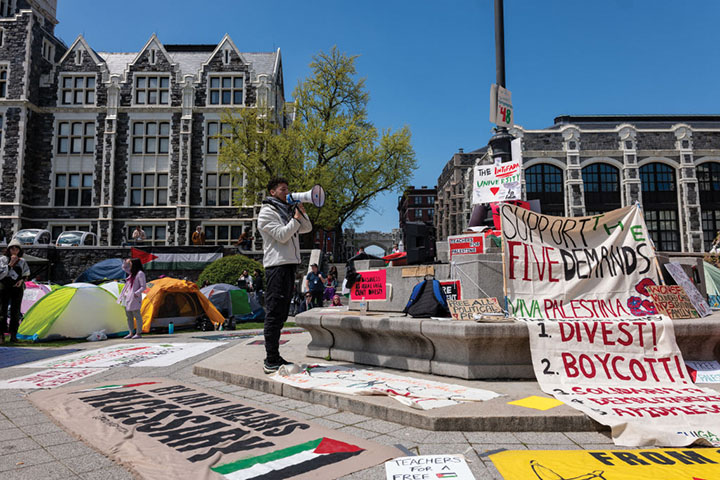
Significantly, the BDS movement successfully brings the Arab anti-normalization laws that currently exist within the broader Arab states to America and the West. Put differently, and most alarmingly, citizens of the United States may be enacting foreign laws on American soil. How so? Labeled as a “Powerful Weapon in the Fight Against Peace,” anti-normalization laws within the Arab world “stipulate that any type of contact between Arab and Israeli citizens is prohibited, with punishment ranging from a few months in prison to death.”
Anti-normalization is the vehicle used to spread anti-Jewish messaging. According to the BDS Movement’s own declaration, “normalization, tatbee in Arabic, means dealing with or presenting something that is inherently abnormal, such as oppression and injustice, as if it were normal.” This view labels Israel and Zionists as “inherently abnormal,” making normalization with the sole Jewish country unacceptable.
While supporters of the anti-normalization BDS campaign frame their actions as political activism, the campaign’s demonization of Israel mirrors the Nazi effort to isolate Jews. Significantly, while supporters of the anti-normalization BDS campaign may think they are participating in political activism, the demonization of Israel by the BDS movement shares eerie similarities with the Nazi campaign to label Jews as gefahrlich, “dangerous.”
The demonization of Israel by the BDS movement shares eerie similarities with the Nazi campaign to label Jews as gefahrlich, “dangerous.”
Throughout the 1930s, the Nazi Party enacted a series of laws that increasingly isolated and vilified Jews, leading to the boycott of Jewish businesses in Germany, and culminating with the ‘Final Solution,’ the attempted genocide of Jews in Europe and North Africa, as the only perceived solution to the “dangerous” and “abnormal” figure of “der ewige Jude” (“the eternal Jew”) was his complete isolation and eventual eradication. Essentially, according to “tatbee,” Israel and Zionists are “inherently abnormal.” As such, normalization with the sole Jewish country on earth would be beyond the pale of acceptable.
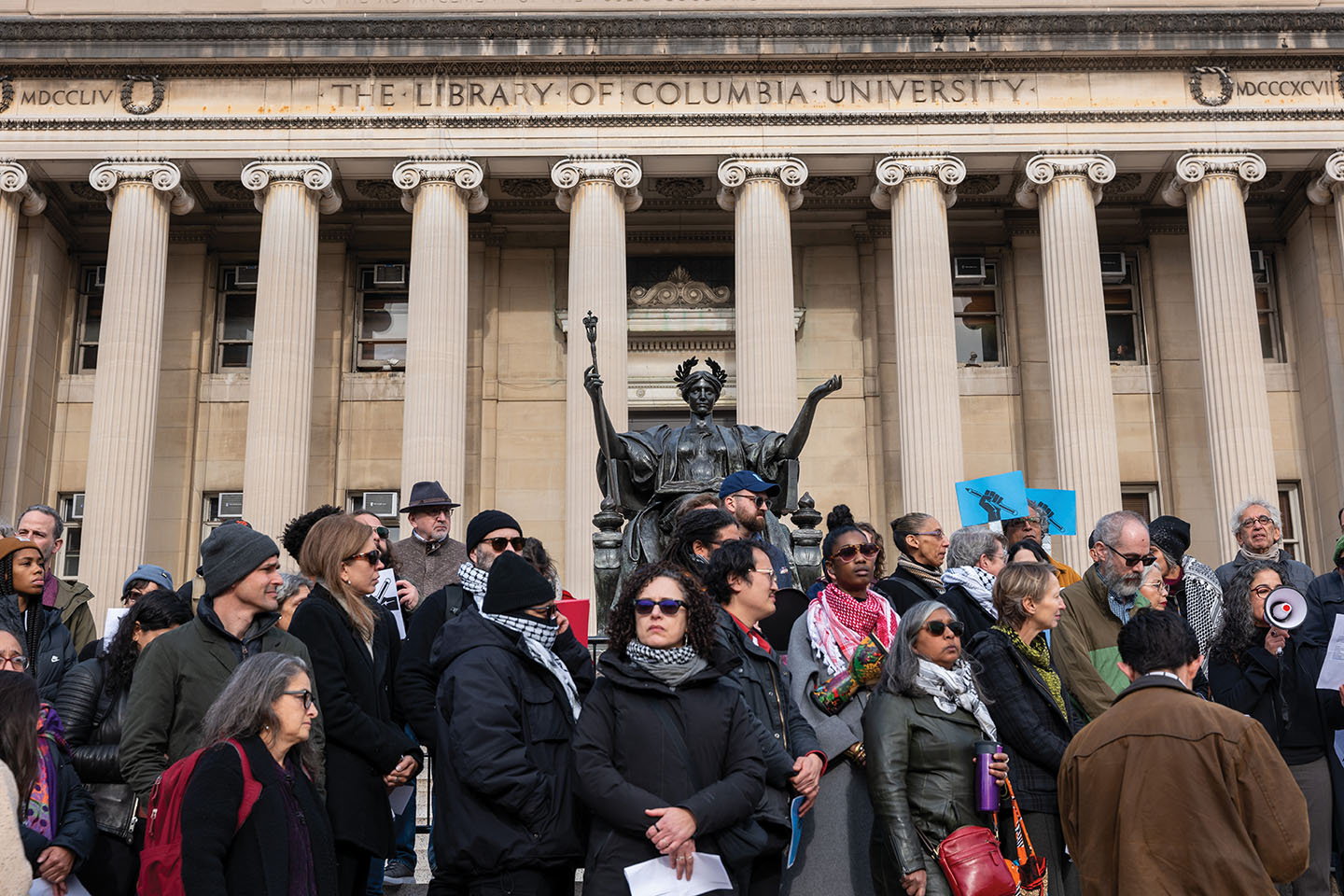
It is not a fluke, therefore, that at a protest against Hillel at Gallaudet University in February 2024, students yelled “Zionists off our campus!” or at UC Santa Cruz, the Faculty for Justice in Palestine (FJP) chapter posted to its Instagram page an advertisement for a student group’s “March Against Zionism” to shut down a Jewish student event, with the FJP group adding the following message: “UCSC: time for us to show up again! Let’s make it clear — zionism [sic] is not welcome on our campus.”
Similarly, it is not random that among the prominent demands from faculty groups that support Palestine is “to dismantle Study Abroad in Israel programs” because shutting down events about Israel, pro-Israel speakers, and going after Jewish organizations such as Hillel on campus is exactly how one were to implement anti-normalization mandates on U.S. campuses: PACBI (The Palestinian Campaign for the Academic and Cultural Boycott of Israel) instructs its supporters to avoid “any form of academic and cultural cooperation, collaboration, or joint projects with Israeli institutions,” which translates to a concerted effort to kick Zionists and Zionist institutions off campuses.
If the main vehicle for promoting and spreading anti-normalization is the BDS movement, who is operating this so-to-speak vehicle on campuses? For years student groups such as Students for Justice in Palestine (SJP) and individual faculty members from the aforementioned departments provided an imprimatur for BDS. However, the establishment of dozens of FJP chapters post-Oct. 7 across U.S. campuses played a significant, if not key, role in connecting faculty to one another and to a broader national and international network with a singular goal and the ability to effectively coordinate efforts to achieve the elimination of Zionist and Israel activities on campuses. Indeed, per AMCHA Initiative’s 2024 findings, having an active FJP chapter on a campus correlates with a more successful deployment of anti-normalization: campuses with an FJP presence were 11 times more likely to promote BDS in 2023.
While the accelerated success of anti-normalization activities may be traced to the presence of FJP, it does not fully address a larger problem: what is it about the institution of higher learning that allows for the spread of racist laws inherent in the wider Arab world? What is certain is that academic fields with a particularly high proclivity for using post-colonialism theory tend to be at the forefront of academic BDS. Indeed, an AMCHA Initiative study conducted back in 2015 found that 48% of faculty who support BDS are from a Humanities department, 36% from Social Sciences, and only 7% of Israel boycotters are affiliated with departments in Engineering and Natural Sciences. More specifically, the departments with the largest numbers of boycotters were English or literature, followed by ethnic studies, history, and gender studies.
But why English? One would expect a professor of political science to care more about politics. But the English discipline, where there is not an obvious connection between the academic discipline and the Arab-Israeli conflict — why? Of the 143 professors of English who endorsed the BDS studied by AMCHA in 2015, 92% had research interests that include race, gender, empire, and class, all of which adhere to the formulation of darling post-colonial critic, Michel Foucault, that “power is everywhere.”
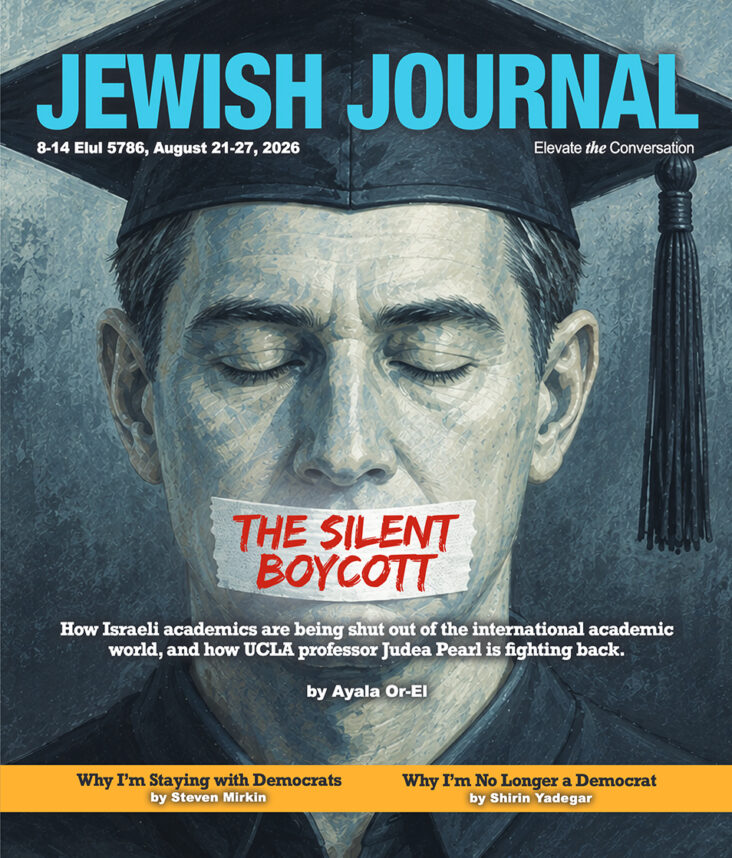
As the disciple of English developed to incorporate research interests that privileged systems of power, so too did the profile of the English professor evolve. Those who operate the vehicle that spreads anti-normalization, namely professors from the Humanities disciplines, firmly believe that their job on campus is not to be transmitters of knowledge but activators of social change. Case in point: at NYU’s Changemaker Center, professors help students “realize the world they want.” At the same university, faculty formed a chain around the Gaza Solidarity Encampment as student organizers prepared to pray, which begs the question: what are the faculty members doing while on the university’s payroll?
Influenced by their disciplines which have become totally politicized, faculty are thus not averse to enacting anti-normalization mandates as they already believe that canceling what they deem to be beyond the pale of acceptability is the right thing to do. And so, while the effort to indoctrinate against Israel may have arrived well over 20 years ago, the changing nature of academic disciplines coupled with cancel culture successfully transformed universities to become epicenters for enacting anti-normalization campaigns inherent to the Arab world.
In sum, while our universities have increasingly become centers for de-normalizing the Jewish state, the minds of thousands of students are increasingly being won by a movement that positions itself as “nonviolent.” Of course, the antisemitism that accompanies anti-normalization of Zionism and Israel belies the chicanery of this “nonviolent” movement, as Jewish students are 7.3 times more likely to have been physically assaulted and 3.4 times more likely to have been subjected to threats of violence or death threats in schools with a large number of faculty members supporting BDS.
Jewish students are 7.3 times more likely to have been physically assaulted and 3.4 times more likely to have been subjected to threats of violence or death threats in schools with a large number of faculty members supporting BDS.
Knowing that the conflict has been successfully shipped to the West on anti-Israel terms and that anti-normalization campaign is being totally enacted on U.S. campuses, Jewish students may be the primary victims, but also the answer. And while many Jewish students are fighting back, we must ask ourselves, what is the best strategy? Is another report detailing discrimination of Jews on college campuses or passing the IHRA definition on antisemitism going to serve the Jewish students well? If anything has been learned from the success of anti-normalization of Israel and Zionism, it is that prevailing necessitates having a shared language and objective.
In America and the broader Western world, Jews are losing the narrative battle. We do not have an anti-normalization campaign, nor do we employ a mechanism such as BDS to call out the violation of human rights within the Muslim world. The reason is straightforward: unlike Israel, which listens to its willing executioners, Jews in the West are not hearing their assassins. In many ways, the situation mirrors where Israel stood after the 1967 war when the Arab world issued the three Nos. However, unlike Israel at that time, the current strategy in the West is one of engagement — engaging with those who actively work toward their demise. For example, organizations like Hillel continue to promote dialogue on campuses even after Oct. 7. Hillel at Ithaca College hosted a discussion on the Israeli-Palestinian conflict on Feb. 6, 2024, featuring Nizar Farsakh, who stated on QNews, a Cairo-based media platform, that it was “hard to argue that Israel tried to avoid civilian casualties” during the IDF’s Gaza incursion.
And of course, unlike the physical war between Israel and her neighbors, this battle is fought with words — with the sharp blade of rhetoric. A few years ago, an SJP talk took place at UCLA. I went undercover and played the part of an enthusiastic anti-Israel student. The young lady leading the presentation was a third-year undergrad, and during her entire presentation, she never once referred to the land that lies from the river to the sea as Israel; she always referred to the land as “occupied Palestine.” Likewise, when talking about the IDF, she used the acronym IOF (Israel occupying forces). I remember sitting there and thinking, this young lady is remarkable. She is fighting in the trenches of language and not giving one inch. She has entirely soaked up the ideology of her movement and, in many ways, absorbed the 3 Nos: she does not recognize Israel.
Another time, I went, again undercover, to an SJP meeting at Pitzer College, one of the Claremont schools in California. There, a young lady leading the discussion warned us not to use the word Jew in public, though, and I won’t forget the applause she received when she remarked, “we all know we mean Jew when we say Zionist.” Meanwhile, Israel advocates in the West often undermine their own position with excessive concessions, equivocations and false symmetries by saying things like not all criticism of Israel is antisemitic; we need to distinguish between anti-Zionism and antisemitism; Zionism and Judaism are not the same; and both the Palestinians and the Israelis must stop the violence.

I can hear the chorus of humanistic Jews, Jews who have emerged scarred from the Diaspora, inflicted by the illness of wanting to be loved, rebuke my invitation to go on the “offense.” If we employ the tactics of our detractors, then we are no better. This, however, would only be true if the two sides are equal. If one sees the side fighting for Israel’s existence as a sovereign Jewish state and the side fighting for a Palestinian sovereign state from the river to the sea as equal, then I concede to this symmetry. However, as the British writer Salman Rushdie observed, having a Palestinian state “right now” would mean a “Taliban-life state.” Conversely, having a sovereign Jewish state from the river to the sea secures the safety and well-being of not only Jews, but non-Jews who, under Israel’s sovereignty, currently enjoy equality, freedom of speech and freedom of religion.
There is nothing abhorrent to going on the “offense” and employing tactics that would call out the inhumane face of Hamas, and by extension, Muslim states that do not uphold the values we hold dear to us. There is nothing unethical to using a lexicon that states with tenacity that the Jewish people hail from Judea and Samaria.
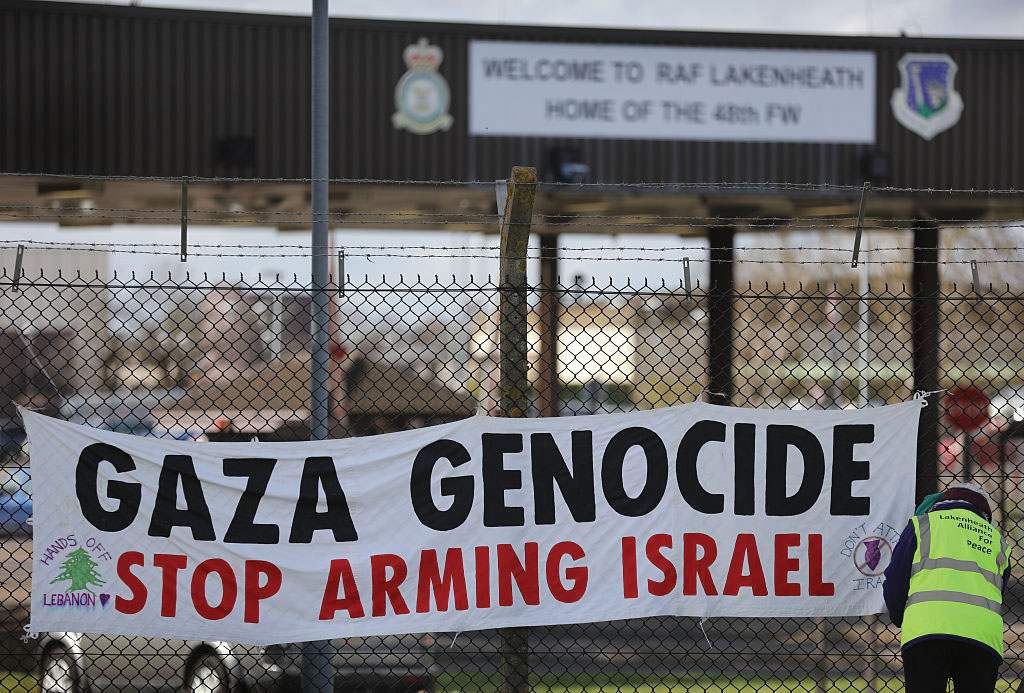
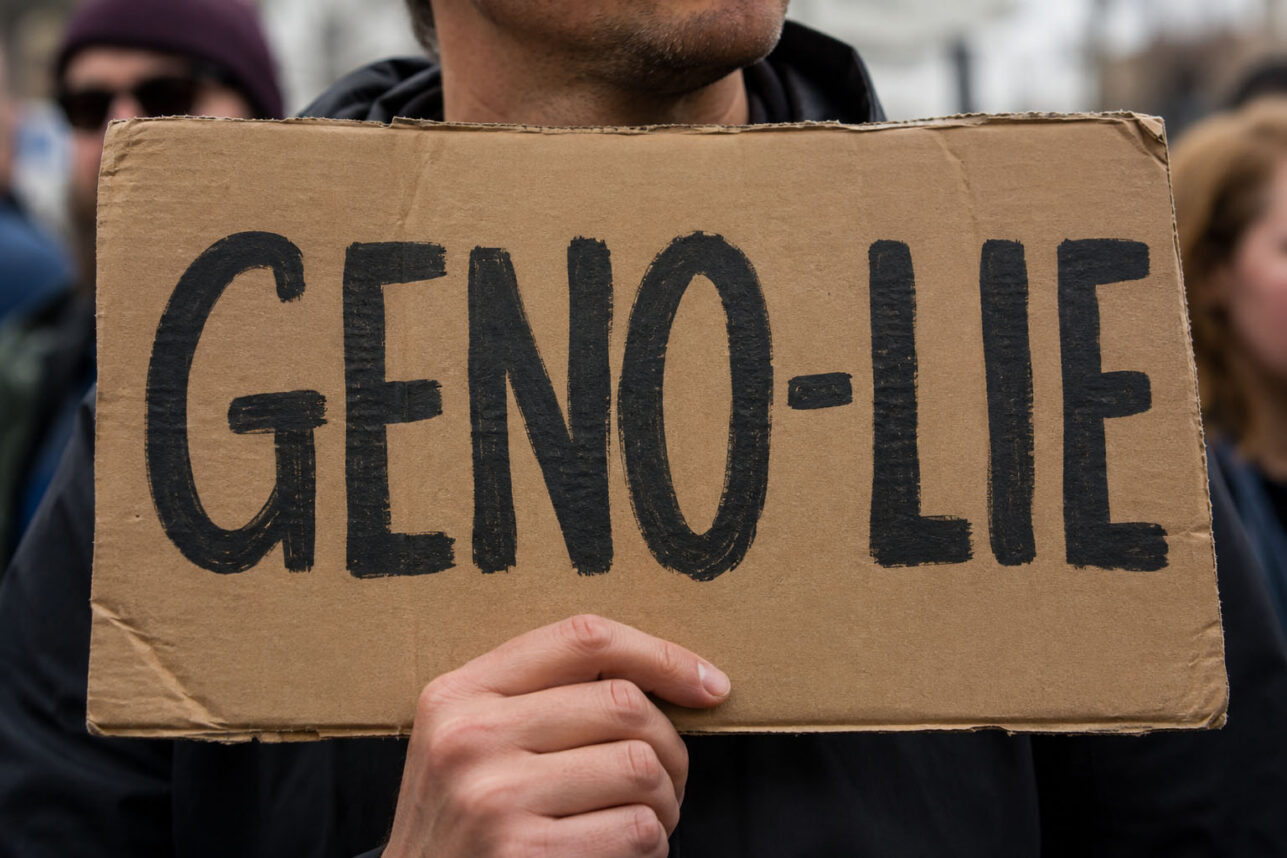
True, those who have been shipping the conflict on pro-Palestinian terms may very well have over 20 years on the Jewish people. But we can take the conn and save academia from the storm by understanding that antisemitism is not a threat to the Jews, but a symptom of a disease. The host body, here being academia, has been infected by antisemitism but only because its immunity has been suppressed by the devastation of higher education becoming increasingly politicized. To stay on course, we must call out those who have hijacked the academy: groups like Faculty for Justice in Palestine, Students for Justice in Palestine, Faculty Against Genocide, and faculty members who see themselves as activists first, and educators second.
Naya Lekht is currently the Education Editor for White Rose Magazine and a Research Fellow for the Institute for Institute for the Study of Global Antisemitism and Policy.