The newest issue of White Rose Magazine, titled “Bearing Witness: IDF Testimonies,” features first-hand accounts of primarily young reservists who were invited to write their own stories from the war that began after the terror attacks of Oct. 7, 2023.
In an editor’s note, executive editor Ben Poser called the issue “its own form of Shabbat,” describing it as a haven for soldiers whose humanity, he wrote, has been erased by media that “speak of Israeli soldiers while invariably obscuring their own voices.”
It’s not hot takes on how to solve the Middle East crisis or the latest incidents of antisemitism gone undeterred on a college campus. Editor in chief Karen Lehrman Bloch gave minimal directions to the soldiers, saying, “we’d like you to write about your experience.” What the soldiers sent back was anything but minimal.
It began when Lehrman Bloch, who has edited White Rose for four years with senior editor and poet Darren Glick, started hearing firsthand accounts that no one else was publishing.
“We were seeing endless commentary about Israel,” Lehrman Bloch told the Journal, “but none from the people actually fighting to save it.”
Named after the 1942 group of German students who tried to disseminate the truth about the Third Reich, the mission of White Rose Magazine is to encourage bravery in the face of fascist ideologies and reteach the principles of classical liberalism. Lehrman Bloch knew what the 26th edition of White Rose needed to be while she was attending a small gathering in New York where IDF reservists described what they had seen.
The collection of writings from soldiers, Lehrman Bloch says, has no ulterior motive other than to allow these soldiers to tell their own stories.
“This is not an official PR campaign from the IDF; we’re a magazine,” Lehrman Bloch said. “This is not activism. We are an intellectual magazine, and because of our heritage, there’s an onus on us to bear witness.”
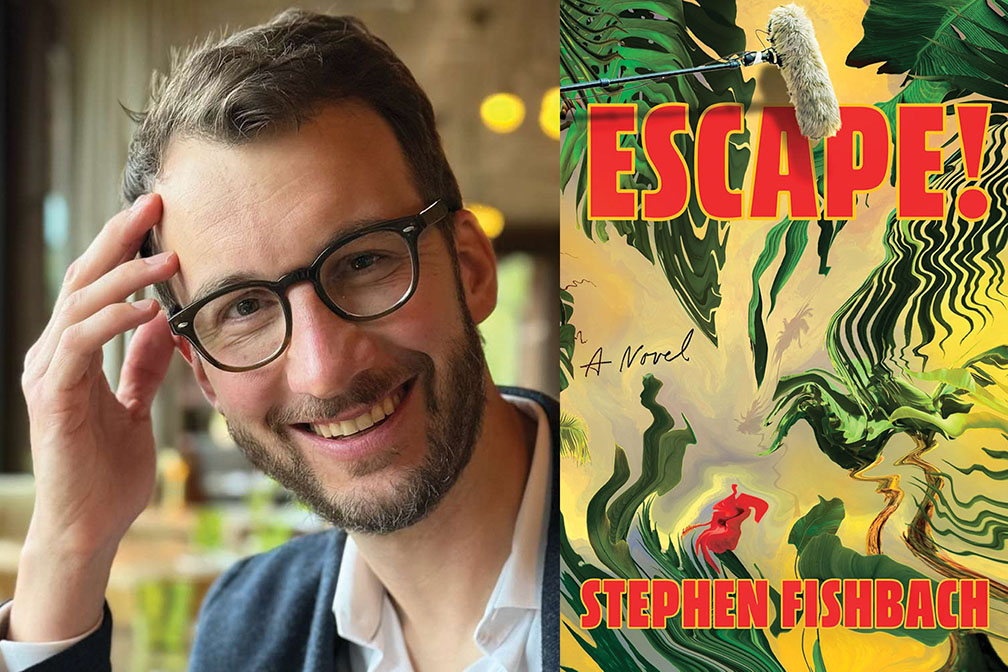
Lehrman Bloch and Glick eventually gathered nine contributors. Some were still on active reserve duty; others had fought in previous conflicts. One of them, Dr. Yair Ansbacher, contributed an excerpt from his forthcoming memoir “The War We Failed to Foresee, the Devastating Price We Paid, and the Miracles That Saved Us.” Others, such as Abe and Hezi, wrote their pieces exclusively for White Rose.
In “October 7, 2023,” Ansbacher describes rushing south as the attack unfolded, finding himself among burning kibbutz homes and unburied bodies.
“Later, we watched footage from the GoPro cameras recovered from the dead terrorists,” Ansbacher wrote. “One thing stood out very clearly. The moment they encountered IDF fire, they scattered and became disoriented. All the members of the squad—about ten terrorists—kept calling out the name of their commander, over and over again, waiting for his direction to know what to do next. Their ability to show flexibility and adapt to what happened once the original mission went off course was virtually nonexistent.”
In “My Judean Soul,” Abe, a paratrooper, wrote, “With every step, the atrocities grew worse. I came upon an Israeli vehicle burnt to a crisp. Inside was a mother, completely burned, shielding her two children in the backseat as they hugged each other, also completely burned. That image never leaves my mind.”
Looking back, Abe said, “I will never regret drafting, nor will I regret experiencing what I did because it shaped me into the man I am today. I will always do my best for those who can’t, and often think about those who are no longer here with us.”
In “Surviving Evil,” Aaron documents the quiet work of retrieving bodies from Kfar Aza. “When it became clear there were no terrorists left in the area, part of my squad was given one of the toughest missions imaginable: along with the medical crews and slightly older reservists, it was time to clear the bodies, identify them, and prepare them for a proper burial.”
In “Stepping Into the Unknown,” Hezi, an armored-vehicle reservist, tells of bulldozing through the ruins of Gaza. “It is impossible to describe the cruelty of an enemy that hides behind the innocent, using women and children as shields,” Herzi wrote. “Each time, my heart broke, but my determination grew stronger.”
And in the magazine’s exhibition section, “Giborim – Heroes of the IDF,” Ben Poser presents photographs of soldiers over the last 77 years alongside with quotes from Prime Minister Yitzhak Rabin, Elie Wiesel, Rabbi Lord Jonathan Sacks, and King David (Psalm 27:2-3). The quality of the photographs improves with time but the look of struggle meeting strength on each soldier’s face seems to look the same year after year.
“We’re not hearing somebody’s interpretation of what’s going on in their heads or what’s happening,” Lehrman Bloch said. “These are their voices talking. There is a reason the documentary ‘Bearing Witness’ [by James Maslow] has such a monumental power over Jews especially.” In that documentary, Maslow hears the firsthand stories of survivors of Oct. 7. The 43 minute documentary was released on YouTube in 2024.
Lehrman Bloch said she used restraint in editing the soldiers’ writing, even though English isn’t typically their first language. In fact, she and Glick expected the testimonies to come back in Hebrew. None of them did. She encourages other soldiers to reach out to White Rose to have their stories be heard.
“These guys risk their lives for the truth, for morality, for Israel,” Lehrman Bloch said. “The least we can do is give them the mic and say, okay, what was your experience? And tell us about it. And that will help. And in fact, I think it’s helped them, a couple of them are now thinking about doing books and doing more things from the experience. And so that makes me happy, inspiring these young heroes themselves.”
Glick, who had been in Israel on 10/7 and stayed for months after, helped confirm each story’s authenticity, and knew many of the soldiers personally. His poem “Testimony,” conveys a sense of inward conflict:
Who among us is pure?
In deed and deeper?
Not the warmonger,
Nor the peacekeeper
And I’ve seen too much,
Jaded my core
And felt not enough,
So I embellished the score
Glick explained that White Rose Issue XXVI does something that anyone with a heart can do: listen. The difference here is that White Rose publishes what the soldiers have actually experienced.
“This shows the human side, and one of the things I recognized in spending all that time in Israel was [the soldiers] didn’t have a voice and they were so happy that there was an American or a foreigner that was coming to their bases meeting with them,” Glick said. “I did very little talking. I was there to show my appreciation for what they were doing, risking their lives and defending the country.”
Whatever one thinks of the war, White Rose’s IDF issue stands apart for its simplicity in presenting the most complicated of emotions. It publishes the sentences of people who have nothing to prove and so much to remember and process.
Any IDF soldier—active, reservist, or veteran—who wants to share their testimonies with White Rose Magazine may contact Karen Lehman Bloch at KLBloch@whiterosemagazine.com