Between the ancient stone structures of the port city of Jaffa and the ultra-modern skyscrapers of Tel Aviv lie the charming, narrow streets of Neve Tzedek. It was founded in 1887, by a group of fifty Sephardic families who sought to leave the overcrowded area of Jaffa. They had the encouragement and financial support of Shimon Rokach, an agricultural pioneer from Jerusalem and Aharon Chelouche, an Algerian landowner and businessman living in Jaffa.
In late January 2024, I traveled to Israel to visit our daughter Alexandra who was studying at a seminary in Jerusalem. While she was busy at school, my cousin Dorit and I took a tour of Neve Tzedek, which started at the Nachum Gutman Museum. We learned that the original residents of the area built houses close together and took turns as night watchmen in order to prevent violent attacks by armed Bedouin bandits.
On our walking tour, we admired the carefully preserved houses and tiny gardens, many featuring Art Nouveau and Bauhaus architecture.
We heard that Rabbi Avraham Isaac Kook was the first rabbi of Neve Tzedek, that he built a Yeshiva there and that he was close friends with many of the writers living there, especially Nobel laureate Shai Agnon.
I was fascinated to hear about the life of Israel Prize winner Nachum Gutman. He was born in Moldova in 1898 and in 1905, his family moved to Ottoman Palestine. He grew up in the neighborhood, attending the Herzliya Gymnasium in Tel Aviv. At the Bezalel School of Art and Design, he was part of a group of artists who originated the “Eretz-Israeli” style of art. His dreamy, softly rendered, colorful paintings show the influence of the French naïve and Expressionist styles. But his prolific work captures the unique beauty and biblical history of the people and the landscape of Israel.
After hours of walking, listening to history and viewing art, my cousin and I sat in a small, trendy cafe for a well-deserved meal. We enjoyed an herby omelet, a leafy green salad, black olives and a chopped tomato salad. But the showstopper was a golden, rustic loaf of za’atar spiced, cheesy brioche-style babka.
During the recent Sukkot break, Alexandra was baking challah and we decided to play with the leftover dough and make a savory cheese babka, inspired by the one I ate in Israel.
We rolled out the dough into a thin rectangle. We spread the dough with a smear of Boursin cream cheese, grated Gouda and a sprinkle of za’atar. Then we rolled the dough into a long snake. We cut the dough into two thin ropes and twisted them. The twisted dough was rolled like a snail and placed in a baking dish. We topped it with caramelized onion, grated Parmesan and more Za’atar.
Our Golden Gouda Za’atar Babka was rich and decadent, with creamy layers of nutty, salty cheese, sweet onion and herbaceous Za’atar.
A perfect treat for breakfast, brunch, lunch and dinner.
—Sharon
Babka originated in the 19th century in Eastern Europe, when Jewish women would roll their sweet yeast dough with fruit jam or cinnamon.
While babka means “little grandmother” in Yiddish, it may also refer to the traditional round shape which resembles a grandmother’s pleated skirt.
When the Jews of Eastern Europe immigrated to America they brought the tradition with them. By the mid-20th century, babka became a staple at New York City Jewish bakeries and soon enough, babkas featured decadent chocolate fillings.
Nowadays, babkas have become incredibly popular, from the $5.99 version at Trader Joe’s to the gourmet variations with exotic fillings, like candied orange, dried baby roses, matcha and black sesame.
We hope next time you bake challah, you try this wonderful savory babka recipe. Serve it warm with a pat of butter or a dollop of sweet jam.
It’s definitely not your bubbe’s babka!
—Rachel
Golden Gouda Za’atar Babka
1 1/2 pounds challah dough
1/2 cup extra-virgin olive oil, divided
1 large onion, thinly sliced
2/3 cup Boursin cheese or cream cheese
4 Tbsp za’atar, divided
1 cup freshly grated Gouda cheese
1/2 cup grated Parmesan cheese
Preheat the oven to 350°F.
Lightly grease a round pie dish.
In a large skillet, warm 1/4 cup olive oil over medium high heat. Add the onions, lower heat to medium low and sauté until caramelized. Then set aside.
On a lightly floured surface, roll out the challah dough into a rectangular shape.
Mix the Boursin cheese with 1/4 of a cup of olive oil. Smear the Boursin cheese over the dough, then layer the Gouda and 3 tablespoons of za’atar on top.
Roll the dough into a long log, then slice it down the middle. Twist the two halves of the log into a long braid, then roll into a snail shape.
Place babka in the dish and place caramelized onion in the crevices of the babka. Then sprinkle with Parmesan and 1 tbsp za’atar.
Bake for 30-45 minutes, until babka is a delicious golden brown. Serve warm.
Note:
Tightly-wrapped Babka can be stored in the refrigerator for up to seven days.
Reheat or toast sliced Babka before serving.
Sharon Gomperts and Rachel Emquies Sheff have been friends since high school. The Sephardic Spice Girls project has grown from their collaboration on events for the Sephardic Educational Center in Jerusalem. Follow them on Instagram @sephardicspicegirls and on Facebook at Sephardic Spice SEC Food. Website sephardicspicegirls.com/full-recipes.
November is known as pumpkin season. The time between Halloween — when pumpkins were used as décor — and Thanksgiving — when they find their way into pie — is perfect for incorporating more pumpkin into your meals. And what better way to enjoy the star of fall flavors than in soup. These recipes, which came from plant-based chefs Marisa Baggett and Micah Siva, are as nutritious as they are delicious.
Marisa Baggett’s pumpkin lentil soup is easy to make on weeknights, yet elevated enough for Shabbat dinner. “This soup gets richness from canned pumpkin purée,” Baggett, a kosher vegan sushi chef, told The Journal. “The result is a pareve soup that feels indulgent without a fussy preparation.”
Pumpkin Lentil Soup
Serves 4
2 Tbsp olive oil
1 medium onion, finely diced
1 bell pepper (any color), finely chopped
2 carrots, sliced into rounds
2 garlic cloves, minced
1 medium potato, diced (I leave the skin on.)
1 (14.5-ounce) can fire-roasted diced tomatoes
5 cups vegetable stock
1 cup dried green lentils, rinsed
1½ tsp ground cumin
1½ tsp smoked paprika
1 tsp coriander
1½ tsp kosher salt, plus more to taste
¾ to 1 cup canned pumpkin purée (Use the full cup for a creamier soup.)
Optional garnish: chopped parsley or cilantro
1. Heat the olive oil in a large pot over medium heat. Add the onion and bell pepper and cook until softened.
2. Stir in the carrots and garlic; cook for another 1–2 minutes, until fragrant.
3. Add the potatoes, tomatoes, vegetable stock, green lentils and seasonings. Stir to combine.
4. Bring to a boil, then reduce the heat so the soup simmers. Simmer for 30 minutes, or until the lentils and potatoes are tender. If the lentils aren’t tender, simmer a few minutes more.
5. Stir in the pumpkin purée and simmer uncovered for 5 minutes more. Taste and add more salt, if desired.
6. Serve with freshly chopped parsley or cilantro, if desired.
“Ilove that I don’t need to use my stove for this pumpkin soup,” Micah Siva, founder of “Nosh with Micah” and author of “Nosh: Plant-Forward Recipes Celebrating Modern Jewish Cuisine,” told The Journal. “Simply roast and blend for a simple, cozy, weeknight dinner!”
Oven Roasted Pumpkin Apple Soup
Serves: 6
2 medium apples, cored and quartered (I like Granny Smith, but use whatever you have on hand!)
1 medium onion, quartered
4 cloves garlic, peeled
1-inch ginger
2 Tbsp olive oil
2 15-oz cans pumpkin puree
6 cups vegetable broth
1 cup coconut milk
Juice of 1 lemon
1 tsp miso paste
1/2 tsp Aleppo pepper
1/2 tsp cinnamon
1/2 tsp kosher salt
1. Preheat the oven to 400°F.
2. In an oven-safe dish, combine apple, onion, garlic, ginger, salt and pepper. Drizzle with oil and roast, uncovered, for 20 minutes.
3. Remove the dish from the oven, and add the pumpkin puree. Return to the oven, and roast, uncovered, for an additional 15-20 minutes or until onion and apples are tender.
4. Transfer to a blender. Add broth, coconut milk, lemon, miso, chili pepper, cinnamon and salt, pureeing until smooth. Season with salt and pepper, to taste.
One verse, five voices. Edited by Nina Litvak and Salvador Litvak, the Accidental Talmudist
And I will make of you a great nation, and I will bless you, and make your name great; and you shall be a blessing.
– Gen. 12:2
Liane Pritikin
Writer, Public Speaker
Two questions usually lead when asking a single woman about her dating preferences:
1) How old of a guy will you date, and 2) Will you move? Earlier in my dating career (and yes, at this point it feels like a career), I would have said, “sure, I’ll go anywhere for anyone.” But the older I get, the more settled I am, and the more I just don’t want to move. At the same time, it’s hard to imagine that if I was introduced to an awesome man close to my age — someone emotionally healthy, smart, loving, kind, funny, responsible, a good listener, and all the other stuff that’s on a dating list — that I would say no to moving. But even good life change is stressful. And that’s why, even with promises of greatness and blessing by none other than the Creator of the world himself, relocation is still a test for Abraham. The line preceding our pasuk says that Abraham is to leave his country, birthplace, and father’s house. To a land that G-d will show him. But there is no detail about where. No timeline. No explanation of how this blessing and greatness will come about. At this point Abraham is 75 years old. What he has to go on is faith and trust. And that’s what the rest of us have to go on too. Knowing greatness and blessing is our birthright. But often with no specific answers to our many burning questions.
Rabbi Shmuel Reichman
Bestselling Author, International Speaker, and Business Coach
To understand why Abraham merited to become the source of the Jewish People, let us try to understand the greatness of the journey he embarked upon.
When Hashem originally commands Abraham to leave his home, Abraham is told “Lech lecha me’artzecha… — Go for yourself, from your land….” (Bereeishit s 12:1). This directive is quite strange. Abraham is told where to leave from, but he is not told his destination. What kind of journey lacks a destination?
The answer to this question lies within the words “lech lecha.” While this phrase is often translated as “go for yourself,” it can also be translated as “go to yourself.” Abraham was commanded to embark on a journey toward “himself,” toward his true and ultimate self. In a genuine journey to the self, we don’t know the destination; all we know is where we’re leaving from – where we are right now. Only once we arrive can we retroactively see where the journey was taking us all along.
To embark on such a journey, we need to step outside our comfort zone, overcome our fears, and take the unpaved and uncharted path, the path toward greatness. It was because Abraham embarked on this journey that he merited to become the source of the Jewish People. But Abraham was not the only one entrusted with a lech lecha journey. Each of us are entrusted with this mission as well – each one of us must embark on our own lech lecha journey, striving to become our ultimate selves.
Rabbi Tal Sessler
Temple Beth Zion
The second commandment that God gave Abraham is often-times overlooked. It is the commandment “to be a blessing.” What does it mean to be a blessing? According to Rashi, this means that we conclude the first paragraph of the Amidah blessing articulating Abraham’s name. In order to go deeper, and understand what it means to be a blessing for the contemporary Jew, we need to observe the life and legacy of Abraham Joshua Heschel, who was a humanitarian activist, a towering theologian, and a profoundly spiritual being. Heschel personified what it means to be a blessing. Heschel was, as a Jew, a blessing collectively to America, and to his non-Jewish environment, by advocating for civil rights. Heschel was also a blessing to his students and disciples, by being personally attuned and sensitized to their individual needs and concerns. Lastly, Heschel prayed with fiery fervor, When Heschel prayed, he was utterly absorbed in the liturgical text. In other words, he was fused with the words of the blessing. He was one with the blessing he articulated. So this is what it means to fulfill the divine imperative to be a blessing. First, it means to be a blessing to the non-Jewish environment. Secondly, it means to be a blessing to the individual who faces you directly at any given point in life. Thirdly, it means to become spiritually one with the blessing you articulate in prayer with heartfelt devotion. May we be blessed to be a blessing on all these levels.
Rabbi Chaim Tureff
Rav Beit Sefer at Pressman Academy, Author of “Recovery in the Torah”
Do Jews believe in karma? Well … this parsha is in accordance with the command from Hashem to Abrahamto move from the only home he knew. In turn Abraham will be blessed with amazing things. Is this a bribe that Hashem is giving Abraham? We’re supposed to serve Hashem altruistically. Pirke Avot 1:3 states we should serve Hashem without any expectations of reward. So why all these great promises? Instead of a bribe, it could be our Jewish concept of Karma. Isaiah says, “Hail the just, for he shall fare well …Woe to the wicked, for he shall fare ill; As his hands have dealt, so shall it be done.” So karma isn’t a punishment, per se, but the energy we put out there we receive back. Hence Abraham’s reward was more a “consequence” of his action. By leaving, here are the blessings that come from the demonstration of emunah. Those struggling from addiction often hear about the Promises, which comes from the Big Book of AA, “If we are painstaking about this phase of our development, we will be amazed before we are half way through. We are going to know a new freedom and a new happiness …” This isn’t a reward per se, but the shift in energy from their past experiences. Just as Abraham’s reality shifted with his move, so we too can shift our reality with our actions. Our actions reverberate and can dictate the next step of the way. So let’s get started!
Abe Mezrich
Author of Torah | Writing on Substack
Before God destroys Sodom and Gomorrah, He consults with Abraham. “Shall I hide from Abraham what I am about to do?” God asks Himself. After all: “Abraham is to become a great and populous nation and all the nations of the earth are to bless themselves by him.”
So God reveals His plan to demolish the cities. Abraham responds by bargaining for the lives of the righteous and the wicked.
Moses promises that if we keep God’s Laws, the world will take notice. “For what great nation is there,” all peoples will ask, “that has a God so close at hand as is our God HaShem? Or what great nation has laws and rules as perfect as all this Teaching?”
God has given us a unique role in the world. We are to stand between people and God, and remind each of the other.
That is what makes us great. That is how we are blessed.
In February, when American rock band Disturbed announced that they would be playing a show in Dublin, Ireland on Oct. 22, 2025, a petition circulated demanding the promoter cancel the show. The petition accused lead singer David Draiman of “championing the slaughter of Palestinian children” and called on “anti-colonizer” Ireland to tell him he wasn’t welcome.
By the time Disturbed took the stage on Oct. 22, the petition had reached over 10,000 signatures — roughly one for every person in the arena. The show went on as planned, and only nine days after 20 Israeli hostages were released from Hamas captivity in an exchange for Palestinian prisoners.
Over the past two years, Draiman has been among the loudest voices in rock music confronting antisemitism. The Jewish frontman has spoken publicly about Hamas’ atrocities and called for other musicians to do the same. After several of Matisyahu’s shows were canceled in early 2024 due to pro-Palestinian protests, Draiman launched a GoFundMe campaign that raised more than $29,000 to fund private security for him.
In June 2024, Draiman traveled to Israel, where he met with families of the kidnapped, visited the Hostages Families Forum offices in Tel Aviv and signed IDF artillery shells with messages directed at Hamas.
That same summer, he received the Jerusalem Post and World Zionist Organization’s Award for Outstanding Contribution to the Fight Against Antisemitism. Accepting it in New York, he said, “The world can seem like a very, very dark place these days. But it takes incredibly powerful light to dispel darkness, and it is up to each and every one of us to be that light.” He called on his peers to speak out: “We just experienced the worst Jewish loss of life since the Holocaust. Does something more impressive need to happen for you to finally open your mouths?”
Draiman later formed a friendship with former hostage and bereaved father Yarden Bibas, who was released from Hamas captivity on Feb. 1, 2025. Three weeks later, the dead bodies of Bibas’s wife, Shiri, and their sons, Ariel, four, and Kfir, one, were returned to Israel. During the Feb. 26 funeral at Kibbutz Nir Oz, Bibas played a recording of Disturbed’s “Hold on to Memories.” Draiman said of the song, “It was a song about the many colleagues that we’ve lost over the years — Chester Bennington (Linkin Park), Scott Weiland (Stone Temple Pilots), Chris Cornell (Soundgarden, Audioslave).” Bennington and Cornell both died by suicide in 2017, and Weiland died of a drug overdose in 2015. Yarden had two other metal songs played at the funeral, “I Thank you Child” by Ozzy Ozbourne’s lead guitarist Zakk Wyld, and “Roman Sky” by Avenged Sevenfold.
Ari Ingel, executive director of the non-profit Creative Community for Peace, informed Draiman that the father, Yarden, was a fan of Disturbed and that one of his songs was played at the funeral. After being put in touch by CCFP, Draiman and Yarden began a friendship. When the two men met in person for the first time that July in Israel, Draiman wrote on Instagram, “This man is the living embodiment of strength and perseverance. One of the sweetest and purest human beings on the planet. The very best of us. Anything, anytime, anywhere, achi. All the love. #AmYisraelChai.”
Ireland’s relationship with Israel had already grown tense by the time Disturbed arrived in Dublin. The Irish government recognized a Palestinian state in 2024, joined South Africa’s genocide case against Israel at the International Court of Justice in early 2025 and watched Israel close its embassy in Dublin months later. Pro-Palestinian protests had become routine across Irish cities, while the country’s tiny Jewish community — roughly 2,000 people — reported feeling increasingly isolated. Against that backdrop, Draiman knew exactly what kind of audience he was walking into.
OCTOBER 22, 2025: DISTURBED CONCERT IN DUBLIN, IRELAND
That night in Dublin, Draiman addressed the tension.
“It’s good to be back in Dublin. This is the homeland for our guitar player, Mr. Dan Donegan. There’s something I need to remind everyone. There are many people in this world who want nothing more than to pull us apart from each other over and over and over again … Everyone is welcome, everyone is f—ing welcome at this show … I believe at the bottom of my heart that music is the best bridge building, cohesive, unifying element in the entire creation. And if there’s anything that can save the world, it’s the right f—ing music at the right time … sometimes darkness can show you the light.”
The crowd erupted. He didn’t say “antisemitism” or “Israel,” but everyone knew what he meant.
Among those in the audience was Ohad Levy, a 35-year-old Israeli studying electrical engineering in Dublin. He came for the opening act, Megadeth, but knew Draiman’s record of support for Israel.
Levy told The Journal that he expected Palestinian flags and anti-Israel signs but saw only one — which was quickly taken down. Like Draiman, he wore a Star of David around his neck. He has lived in Ireland for three years, his first language is Hebrew but he speaks English with an Irish accent. Levy said there were tears in his eyes during Draiman’s speech.
“The concert gives hope for the decent people amongst us. It’s a dream for me, I want to re-believe in society,” Levy said.
Before the Oct. 7 attacks, Draiman had already fielded calls from fellow musicians wary about scheduling concert dates in Israel.
“I reassure them and help them understand,” Draiman told the Journal in 2021. “You’re going to be dealing with a wave of s—. It’s temporary … the extremist voices are the loudest. There aren’t as many of them as you think.”
At a 2024 rally in the rain in Beverly Hills outside the offices of agent Ari Emmanuel, Draiman told The Journal that “Joseph Goebbels would’ve been very proud of the demonization we’re seeing, with all the implying that Jews drink the blood of victims of war … Music is about truth. It’s about standing up for who you are.”
When Hamas attacked southern Israel in 2023, one of their first targets was music lovers. Three hundred seventy-eight people were killed and 44 were abducted at the Nova Music Festival in Re’im. Israelis, tourists, and international DJs were still dancing when Hamas terrorists parachuted and bulldozed their way into the festival grounds starting at 6:29 a.m.
On the Wednesday before the attacks, Bruno Mars played for 70,000 people at Park HaYarkon in Tel Aviv. (A second show in Tel Aviv was scheduled for Oct. 8, but was canceled.) Mars and his crew fled Israel to Athens on Oct. 7, leaving without any of their instruments or production equipment.
Since that day, major music acts have yet to return to Israel. The Jewish state had long been a divisive tour stop for popular acts, but after Oct. 7 it became radioactive. Canceling concerts in Israel isn’t new. In 2011, when Elvis Costello called off his planned shows, Universal Music Publishing Chairman David Renzer saw a cultural boycott taking shape. Along with Steve Schnur, president of music at Electronic Arts, Renzer co-founded CCFP to get entertainment professionals to counter the cultural boycotts and defend artistic freedom through dialogue.
“We’re living in a time when antisemitism has reached levels that I’ve never seen in my lifetime,” Renzer told the Journal. “We must ensure that artists have the freedom to perform anywhere in the world without intimidation or fear …Our mission hasn’t changed. We continue to promote coexistence and build bridges through music.”
After Oct. 7, that mission took on new urgency.
****
Borrowing from “Righteous Among the Nations,” “Righteous Among the Rockers” are the musicians and massive industry figures who, in this time of rising antisemitism, have used their voices, risked their fanbases and took public stands against antisemitism. Plenty of executives have taken quiet stands and made big moves behind the scenes. One executive under the condition of anonymity told The Journal that they got a major entertainment publication to remove the word “genocide” from two articles about Israel. But it’s the boldface names that make the loudest noise — Rock & Roll Hall of Famers Gene Simmons of KISS and John Mellencamp have taken a stand. Indeed, both were among the biggest names to stand in solidarity with the Jewish people at CCFP’s annual Ambassadors of Peace (AOP) gala in October 2025.
Gene Simmons attends the world premiere of “The Strangers: Chapter 2” at the AMC Century City 15 on September 16, 2025 in Los Angeles, California. (Photo by Paul Archuleta/Getty Images)
MATISYAHU
In early 2024, Matisyahu traveled to Israel to meet and perform for soldiers, families of hostages and wounded civilians. He turned the experience into “Song of Ascent,” a concert documentary directed by Shlomo Weprin. It was filmed over two trips to Israel, where Matisyahu visited the site of the Nova Music Festival, walking through several devastated kibbutzim, and met survivors who lit memorial candles for the murdered. The film also captured the contrast between his time in Israel and his U.S. tour, where several shows were canceled amid protests — what he called a “cultural storm.”
“Hopefully it’s just a voice that my experience is similar to a lot of people’s experience — a lot of Jews after Oct. 7, and our connection with Israel and our struggle in America,” Matisyahu told The Journal. “We just documented that time period, and I think people will find some sense of hope and strength in it.”
Matisyahu performs in concert during the “Hold The Fire Tour” at Stubb’s Waller Creek Amphitheater on February 10, 2024 in Austin, Texas. (Photo by Rick Kern/Getty Images)
FIVE FOR FIGHTING — JOHN ONDRASIK
John Ondrasik, who performs as Five for Fighting, is a UCLA alumnus who isn’t Jewish. Still, since Oct. 7, he has written, recorded and performed songs framing the massacre and hostage crisis as a test of conscience for the entire arts community.
In early 2024, he released a protest song, “OK (We Are Not OK)”; the song’s video juxtaposing footage from the Nova Festival and pro-Hamas rallies with his refrain, “This is a time for choosing.” “I’m just a guy who sees evil and doesn’t like it,” Ondrasik said. “We all have a role to play.”
John Ondrasik arrives at “Gosnell: The Trial of America’s Biggest Serial Killer” Premiere at Saban Theatre on October 9, 2018 in Beverly Hills, California. (Photo by Maury Phillips/Getty Images)
For him, that role includes education. “We’re going to go to these schools, we’re going to support the Jewish kids — UCLA, USC. Nobody’s going to wear a mask or chant to anybody,” he said at the American Jewish Committee’s annual Kaufman Family Annual Meeting in June 2024. “The arts is how we win. The arts is how we fight this battle.”
Earlier this year, Ondrasik rerecorded his 2001 hit “Superman (It’s Not Easy)” as a tribute to Israeli hostage Alon Ohel, changing one lyric from “Find a way to lie, ’bout a home I’ll never see” to “Find a way to fly, to a home I will soon see.” He told The Journal that, “The boundless spiritual fortitude of the hostages and their families is beyond words … It felt right to change the lyric, to remind the world they are still there.”
When asked what drives him, he put it plainly: “It’s not just about being pro-Israel — it’s pro-civilization.”
SCOOTER BRAUN
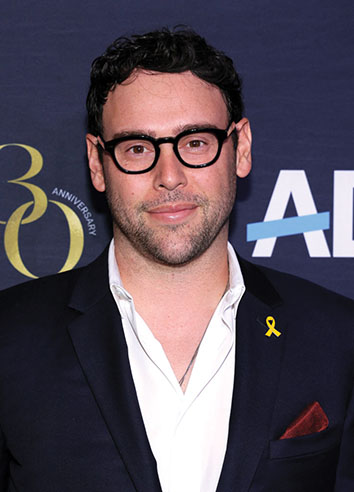
No music executive has leveraged his influence more directly than Scooter Braun. Known for managing Ariana Grande, Justin Bieber, and Demi Lovato, he is one of the few figures whose actions can bring music into global conversation.
Braun had experience with a music-world terror attack before.
“When Manchester happened,” he said, referring to the 2017 terrorist bombing at an Ariana Grande concert, “the whole world rallied. Here, the world abandoned them,” Braun said. He was 2.5 hours away in London at the time of the attack, and headed to Manchester as soon as he learned of the horrifying news. “This was never about politics. It was about humanity. Two things can be true. I should mourn for your family in Gaza the same way you mourn for these people.”
Braun helped bring “The Nova Music Festival Exhibition: October 7th, 06:29 a.m. — The Moment Music Stood Still” to New York and Los Angeles. It has since had installations in Miami, Washington, D.C., Toronto, and Boston.
The exhibit recreated the festival grounds near Re’im.
“Here I was standing in front of these kids [at the site] where over 400 were killed, and no one was saying anything … This is about seeing your daughter, your mother, your friends and speaking to others and demanding they see this,” Braun told The Journal.
In Los Angeles, the exhibit became a rallying point. Braun organized a vigil for six slain hostages found in Gaza. As the one-year mark of the attacks approached, the Nova Exhibit evolved into both a memorial and a meeting space for communal healing.
What also mattered was who Braun brought with him. Celebrities who might have otherwise stayed quiet — Cindy Crawford, Usher, Sia, Octavia Spencer, Kristen Bell, Jessica Alba, Mila Kunis and Ashton Kutcher, Sharon Osbourne, Will Ferrell and others — visited the exhibit. Even brief news stories about these visits put a spotlight on the tragedy that for so many was ignored or forgotten. Over its four-month run in Los Angeles, the Nova Exhibition drew more than 170,000 visitors. Schools across Los Angeles sent students, teachers and superintendents to see the installation.
Scooter Braun attends the 2024 ADL “In Concert Against Hate” at the Kennedy Center Concert Hall on November 18, 2024 in Washington, DC. (Photo by Jemal Countess/Getty Images for Anti-Defamation League)
At the Anti-Defamation League’s annual concert later that year, Braun spoke again:
“Innocent people dying at a music event is wrong,” he said. “These Nova survivors have given me the greatest gift … Something shifted since Oct. 7. They live by this mantra: ‘We will dance again.’ So I hope you’ll understand I’m done saying the negatives. I want to say again and again… we will be strong again. We will be proud again. We will dance again and again and again.”
DAVID FISHOF
The producer behind Rock ’n’ Roll Fantasy Camp — the program that pairs musically-inclined fans with rockstars for weekend jam sessions — is doing all he can with all the musicians he’s befriended over the years. The son of a Holocaust survivor and cantor, Fishof has long viewed music as a vehicle for connection. In early 2024, he invited 10 Israeli musicians affected by Oct. 7 to Los Angeles for a special camp session. The group included Nova Festival survivor Raz Shifer, reserve soldier Dov Engel, and Bar Rudaeff, whose father — a Magen David Adom volunteer — was later confirmed murdered in Gaza.
“I think the biggest issue we Jews have in America is what can we do? We all want to do something,” Fishof told The Journal. “So for me, I was able to do something.”
He didn’t tell campers or counselors about the Israeli guests, worried one might object. “I just needed one guy to say, ‘I didn’t pay money to come to a camp with a bunch of Israelis,’” Fishof said. “I was prepared to refund him and send him home.” Instead, when he introduced them on day one as “my heroes,” the campers gave a standing ovation.
One non-Jewish band in the camp renamed itself Tzuri — Hebrew for “Rock.”
Fishof said 85% of campers were not Jewish, and many had never met an Israeli before. “Do you use Waze? Do you use WhatsApp? Do you use Wix?” Fishof asked. “This all comes from Israel.”
After visiting Auschwitz months earlier, he saw the mission in personal terms. “The guy giving the tour was comparing Auschwitz to Oct. 7,” Fishof said. “It was smaller, but it was Auschwitz. I heard those stories from my father. But now to be able to do something — that’s why it was great.”
The Los Angeles camp, which ended March 17, 2024, became, in Fishof’s words, “the greatest one we ever did.” That camp featured jams with Van Halen bassist Michael Anthony, as well as Warren DeMartini — guitarist for glam metal band Ratt. Singer Sebastian Bach (formerly of Skid Row) wore dog tags in honor of the hostages when performing with campers at the Whisky A Go Go.
Fishof will soon release a documentary about how helping Israelis heal with music is the “greatest, proudest accomplishment” of his music business career.
“None of it matters to me,” Fishof said. “I’m a Jew first. That’s the most important. But to be able to do something like that … I felt good when I did it.”
EUROVISION: ISRAEL TAKES THE HIGH ROAD
In 2024, Eurovision became appointment viewing in Jewish homes across the United States. The annual contest — a major event for all of Europe but not on the radar for music lovers in the U.S. — turned into the most positive week of social media posts amongst the Jewish people in the seven months since the attacks. In both years, following the performances of Eden Golan in 2024 and Yuval Raphael in 2025, a sense of pride and joy washed over the people in the Jewish community, who paid attention like it was “American Idol” Season 1.
Both Golan and Raphael were proudly Israeli and outspoken against antisemitism, but what made their presence historic was the timing — two talented musical artists, each barely in their 20s, standing on one of the world’s largest stages as the faces of a nation under siege. They both needed head-of-state level security to and from the Eurovision venues due to the outrage against Israel’s participation in the event. Still, they each took the high road, and even made friends backstage with some of the other performers. Golan’s “Hurricane” and Raphael’s “New Day Will Rise” are now considered anthems of resilience for Israel and Jews around the world.
Both singers finished in the top five through massive public voting support — from some of Europe’s largest countries, as well as votes from countries with miniscule Jewish populations. That result spoke for itself: audiences responded to the music, not the noise surrounding it.
In the process, Eurovision became an unexpected arena for pride in Jewish communities around the world. Golan and Raphael were thrust into the role of accidental ambassadors — untrained diplomats whose voices carried Israel’s heart and pain to millions of viewers. As of fall 2025, the debate still hasn’t quieted. There are still calls for Israel to be excluded from Eurovision in 2026. But German Chancellor Friedrich Merz said that if Israel is banned from Eurovision, Germany will pull out (and take their 80 million citizens with them).
RED CARPET FRONTLINES
As political messaging seeped into awards season, some artists used the world’s biggest stages to turn performance into protest. At red carpets and televised ceremonies, “Artists4Ceasefire” pins, keffiyeh scarves and watermelon accessories became cultural battlegrounds. A handful of Jewish and pro-Israel figures answered in their own way.
Montana Tucker arrives at the Los Angeles Premiere Of Paramount Pictures “Regretting You” at Paramount Studios on October 20, 2025 in Los Angeles, California. (Photo by Steve Granitz/FilmMagic)
Montana Tucker, the pop artist and influencer with millions of followers, has made Holocaust education and Jewish pride the center of her public life. In 2022, she created the ten-part docuseries “How To: Never Forget,” retracing her grandmother Lilly’s survival at Auschwitz. “A lot of people my age and younger don’t even know what Auschwitz is,” Tucker said. “Education is the only way we can stop history from repeating itself.”
Since then, she’s used her social media presence — TikTok, Instagram, and beyond — to reach younger audiences who might never otherwise encounter Holocaust history. “I realized how important it is to use my platform for something bigger than myself,” she said. Her partnerships with the Claims Conference and USC Shoah Foundation helped bring those lessons into classrooms and public spaces across the country.
After Oct. 7, Tucker shifted from remembrance to advocacy. “People are scared to say they’re Jewish right now. I want them to be proud,” she said. At the 2024 Grammys, Tucker walked the red carpet in a dress designed by Israeli fashion house MadeByILA, featuring a large yellow ribbon reading “Bring Them Home” — a reference to the hostages held in Gaza. Since then, she has continued using her platform for Holocaust and Israel awareness, later producing “The Children of October 7,” a documentary featuring young survivors who witnessed atrocities firsthand. Each of her public appearances — from film premieres to award shows — became a statement of Jewish pride and solidarity amid an industry often uneasy about Israel.
“You don’t have to be Jewish to stand up against antisemitism,” Tucker said. “Social media can spread hate — but it can also spread truth.”
Also at the 2024 Grammy ceremony, Harvey Mason Jr., CEO of the Recording Academy and a past honoree of CCFP, used his appearance to reaffirm music’s role as a universal connector. Listing terror attacks that had targeted concertgoers — from Paris to Manchester to Las Vegas — he included the massacre at Israel’s Nova Music Festival.
“Every one of us, no matter where we’re from, is united by the shared experience of music,” he said. “It brings us together like nothing else can, and that’s why music must always be our safe space.”
He then introduced a string quartet composed of Palestinian, Israeli, and Arab musicians.
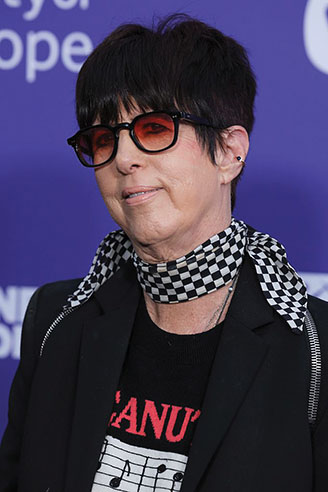
Sixteen-time Academy Award-nominated songwriter Diane Warren — another past honoree of CCFP’s Ambassador of Peace award — has remained outspoken. “Anything that has to do with Jewish people and is good means a lot to me,” Warren said. “It’s scary right now. You don’t think there needs to be armed guards at a synagogue in 2023.” She signed multiple CCFP open letters defending artistic freedom, supporting Israel’s inclusion in the Eurovision Song Contest and calling for compassion for all civilians while rejecting cultural boycotts. “Music and art is healing,” she said. “We’re Jews — we push on, we fight on.”
Diane Warren attends City Of Hope’s 2025 Spirit Of Life Gala at Pacific Design Center on October 15, 2025 in West Hollywood, California. (Photo by Robin L Marshall/Getty Images)
At the ADL’s 2024 Concert Against Hate in Washington, D.C., pop star Sia dedicated the song “Titanium” to survivors of the Nova Music Festival massacre, saying, “We will dance again,” as survivors joined her on stage. In New York, the Moscow-born singer/songwriter Regina Spektor wrote on social media on the day of the Oct. 7 attacks, “Killing Jews isn’t fighting for human rights. It never will be. It’s just murder. Love must prevail. Peace must prevail. Hope is always with us.”
At CCFP’s 2025 gala, KISS’ Simmons told reporters, “Jewish self-hatred is at an all-time high, which is astonishing. And I fully support the ‘they/them’ community, the Queers for Gaza, but they’re not informed. If you’re queer in Gaza you’re going to be ‘was/were.’ You’re going to be thrown off a building. Education is important.”
At the same event, Mellencamp took the stage to introduce Universal Music’s Bruce Resnikoff for an award and declared, “And to the Jewish haters, I say, f— you! Yeah, you need to open your eyes and remember the Golden Rule: What is hateful to you, do not do to others, and try to learn that ignorance is not a virtue.”
Before he passed away in July 2025, legendary Black Sabbath singer Ozzy Osbourne and his wife Sharon signed several open letters by CCFP supporting Israel after the Oct. 7 attacks. During the Nova Exhibit’s run in Los Angeles, Sharon frequently visited and spoke with survivors who were present to share their trauma.
A QUIETER CHORUS
It is not all sunshine and solidarity. But two years on, it’s important to look back at the horrific week of the Oct. 7 attacks and remember which music superstars publicly acknowledged the pain of the Jewish people. Regardless of what they’ve said since, their words then still hold value in the fight against antisemitism and using music to spread peace.
The blog IsraellyCool kept a scrapbook of screenshots from celebrities who publicly posted support within 24 hours of the Oct 7 attacks. Culture Club’s lead singer Boy George said, “When you hurt women, children and the elderly your cause is doomed. I stand with Israel.” Sara Bareilles wrote, “Now and always we stand with the people of Israel.” Others whose posts are archived on the blog include Josh Gad, Barbra Streisand, Justin Bieber, Samantha Ronson, and Jack Black.
On Oct. 12, 2023, CCFP circulated an open letter that called on the “global entertainment community” to “support artistic freedom and condemn the targeting of civilians.” Notable signers included Dee Snyder (Twisted Sister), John Fogerty (Credence Clearwater Revival), Peter Frampton, AJ McLean (Backstreet Boys), Ziggy Marley, Jason Derulo, Josh Groban and KISS’ Paul Stanley.
On Oct. 24, 2023, hundreds of entertainers signed a “No Hostages Left Behind” open letter to then President Biden thanking him for “unshakable moral conviction, leadership and support for the Jewish people, who have been terrorized by Hamas … and for the Palestinians, who have also been terrorized.” The letter also called for “freedom for Israelis and Palestinians to live side by side in peace … and most urgently, freedom for the hostages.” Signers included Lana Del Rey, Madonna, Chris Jericho, Justin Timberlake, Lea Michele and Lance Bass.
From short posts to full letters, these artists publicly recognized antisemitism for what it was — even briefly — when silence was the safer option.
During Irish band U2’s 40-show residency at the Sphere in Las Vegas, Bono paused during a performance of “Pride (In the Name of Love)” to honor the Israeli concertgoers killed at the Nova Music Festival. “In the light of what’s happened in Israel and Gaza, a song about nonviolence seems somewhat ridiculous, even laughable,” he told the silent crowd. It was only the fifth show ever at Las Vegas’ new Sphere concert venue. “But our prayers have always been for peace and for nonviolence. But our hearts and our anger, you know where that’s pointed. So sing with us … and those beautiful kids at that music festival.” Then, as the band launched into the song, Bono altered the lyrics: “Early morning, Oct. 7, the sun is rising in the desert sky. Stars of David, they took your life but they could not take your pride.” Brandi Carlile, who was in the audience that night, said “Antisemitism is WAY too comfortable for people even in this country and I condemn it with my entire heart.”
Mere weeks after the Oct. 7 attacks, Pink, said “Any violence or hate-filled demonstrations taking place around the world are making the problem worse, not better.” Rush’s Geddy Lee said, “it was important to express the pain we were feeling watching this, what could be arguably called one of the worst massacres since World War II of the Jewish people.”
Throughout this year, there were still rockers in the music world taking a stand with Jewish people in peril and speaking out against boycotts. Jonny Greenwood (Radiohead) and Israeli singer Dudu Tassa said in May 2025, “Intimidating venues into pulling our shows won’t help achieve the peace and justice everyone in the Middle East deserves.” Smash Mouth’s Zach Goode was harangued by the anti-Israel Instagram account Zionists In Music for stating his solidarity with fellow Jews in a comment thread: “It’s a war. Kinda have to pick a side. … One side wants us dead.” In 2025, Rise Against frontman Tim McIlrath advocated for peace and specifically called for the hostages to be returned home: “I am part of the chorus of voices calling for an immediate ceasefire and release of all hostages. One life is one too many.”
After the last 20 hostages were released back to Israel on Oct. 13, Avenged Sevenfold (A7X) frontman M. Shadows showed how compassion could still cut through division. The band’s Israeli fan community on X had reached out to let them know that two of the freed hostages, Guy Gilboa-Dalal and Evyatar David, were longtime A7X fans who had been abducted from the Nova Festival. Shadows recorded a private video welcoming them home: “We’ve been following the story closely. We knew you guys were devoted A7X fans and we appreciate it so much. The things you guys have been through, it’s just unspeakable, terrible … hopefully we see you guys soon.”
Shadows later gave permission for the video to be shared publicly, saying, “If you think it would help, of course I’ll do it. We wanted to give them some sort of reprieve, some sort of relief or some sort of joy.” When some accused him of taking sides, Shadows told Rolling Stone, “It’s not something that I’m going to worry about; I know that it’s the right thing to do. I think you have to stick to your moral compass. To me, that video is just a human doing something for another human. It’s not making a political stance. It’s not sticking it in someone’s eye. It really is about two human beings that have been through hell. And if we can’t agree on that, it’s really hard to agree on anything.” He said the gesture came from grief, not ideology — two Israeli women the band befriended were murdered at the Nova festival.
Shadows said he respected Draiman “not just for where he stands, but that he believes in something and he’s full-force into it.”
The war’s politics will keep shifting, but what these artists did will outlast it. They sang, they showed up, they refused to stay silent. And for the people who lost everything that morning in the desert, that still matters. Because in moments when the world feels impossible to reach, it’s the people who make us dance who are often the best at helping us gain allies — the righteous among the rockers. As Draiman said, “if there’s anything that can save the world, it’s the right f—ing music at the right time. Sometimes darkness can show you the light.”
Brian Fishbach is an entertainment journalist and memoir ghostwriter in Los Angeles.
When empty, a parenthesis
provides mysterious emphasis.
When filled, you wonder whether
the contents weigh more than a feather,
causing to be underscored
words that are sequestered
and liable to be ignored
treated as if empty-nested.
Parenthetically our lives are brackets
in which if we try to sequester
events of life in parceled packets
we’ll fail, because they’ll start to fester,
like memory, perhaps, if everyone replaces
use of the Gutenberg parenthesis
with cybercoded information as the basis
of memory, a target that with blanks we’ll miss.
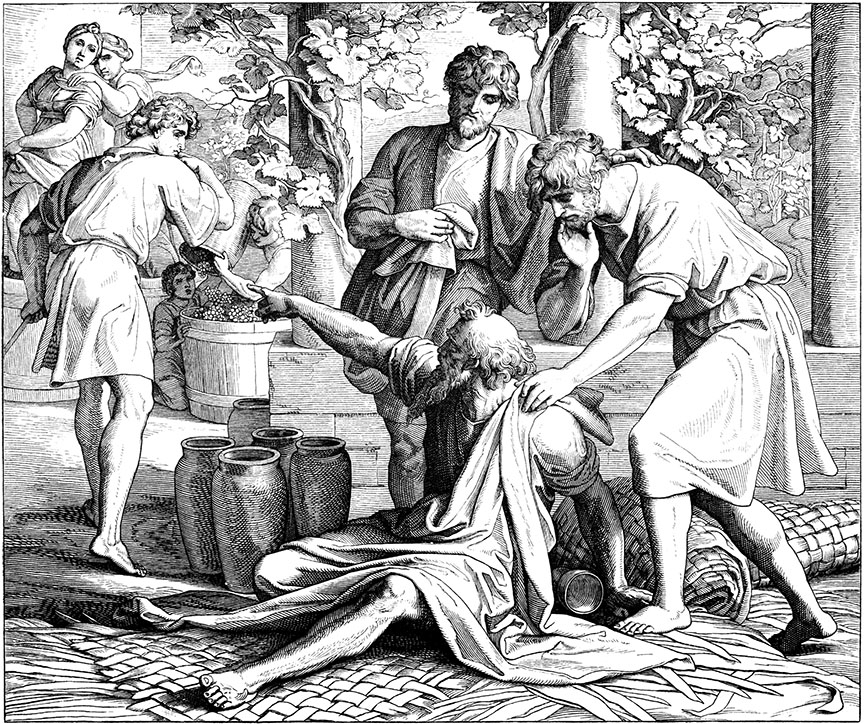
On 10/24/25, inspired by “Noah’s Nakedness: How the Canaan-Ham Curse Conundrum Came to Be,” by Zev Farber in thetorah.com, I found a bilingual pun in Gen. 9:18-19:
בראשית ט:יח וַיִּֽהְי֣וּ בְנֵי־נֹ֗חַ הַיֹּֽצְאִים֙ מִן־הַתֵּבָ֔ה שֵׁ֖ם (וְחָ֣ם) וָיָ֑פֶת וְ(חָ֕ם ה֖וּא אֲבִ֥י) כְנָֽעַן: ט:יט(שְׁלֹשָׁ֥ה אֵ֖לֶּה בְּנֵי־נֹ֑חַ) וּמֵאֵ֖לֶּה נָֽפְצָ֥ה כָל־הָאָֽרֶץ: Gen 9:18 The sons of Noah who came out of the ark were Shem, (and Ham,) and Japheth—and (Ham is the father of) Canaan. 9:19 (These three were the sons of Noah), and from these the whole world branched out.
Why is Canaan being punished for the sin of Ham? The text implies that children may be punished for the sins of their parents transgenerationally, a view disputed by Ezek.`4:12-20 and 18:1-32, as pointed out in “ ‘Transgenerational Righteousness’ ” in Ezekiel and Aramean (Samaritan) tests,” JBL 144 (2025);463-74, by Theodore J. Lewis. The words חָ֕ם ה֖וּאאֲבִ֥י, He is the father of, explain this in parenthesis, implying, in a bilingual pun on the word “parenthesis,” that this is Noah’s thesis regarding transgenerational sins, a parental thesis which explains why Canaan, the son of Ham who is Noah’s son, is being punished for Ham’s sin and also, perhaps, for a sin that Noah committed, exposing his nakedness like Adam Two and Eve in the Garden of Eden, after consuming the forbidden fruit of the tree of knowledge – wine – a sin that was transgenerationally punished for all generations!
Gershon Hepner is a poet who has written over 25,000 poems on subjects ranging from music to literature, politics to Torah. He grew up in England and moved to Los Angeles in 1976. Using his varied interests and experiences, he has authored dozens of papers in medical and academic journals, and authored “Legal Friction: Law, Narrative, and Identity Politics in Biblical Israel.” He can be reached at gershonhepner@gmail.com.
It’s the season of recommendations: Students applying for high schools and colleges; college students already looking to the summer for internships. Clergy and school personnel are typing away, writing meaningful statements about ways their constituents make a difference.
As we craft these letters, repeating long lists of extracurriculars seems silly. Each letter essentially parallels the other. Instead, it feels more beneficial to replace the idea of what activity stands out on someone’s resume to pondering, what do they stand for?
Some students stand for kindness and compassion. Others stand for justice and respect. Students stand for Jewish identity and Israel. Others stand for strong family ties and tradition. While many of those descriptions exist in an entire person, there is always a quality or two that rises to the surface. The question is when you look at yourself, which quality do you want to see? Which quality is revealed to others?
Noah was known as a righteous person within his generation. Abraham was known for his faith. Miriam’s courage was steadfast. Moses is the ultimate example of a leader. History tells the stories of biblical and rabbinic figures and which of their qualities stand out. Their stories reflect what they stood for.
We must wonder: what will history record of us?
Forget the litany of resume builders. Instead, may we be proud when we look in the mirror. And may future generations see within us qualities we fought to achieve and the pivotal moments for which we stood.
Shabbat Shalom
Rabbi Nicole Guzik is senior rabbi at Sinai Temple. She can be reached at her Facebook page at Rabbi Nicole Guzik or on Instagram @rabbiguzik. For more writings, visit Rabbi Guzik’s blog section from Sinai Temple’s website.
Drinking cacao changed Matthew Jonas’ life! So much so, he created Good Karma Chocolate with food scientist David Foerstner.
Good Karma Chocolate offers bean-to-bar chocolate, drinking cacao, cacao blend-ins and plenty of positive vibes.
“Dave and I share a passion for all things dark chocolate,” Jonas told the Journal. “Most of the [bean-to-bar and cacao] brands out there are very serious, and we thought, when you get a chance to taste really good chocolate in your life, that is a moment of joy.”
Jonas said that while they are serious about how they make it – and are ethical in its production – they also want people to feel good when they eat it, to really enjoy the experience.
“When you buy Good Karma, you also know that farmers are getting paid a living wage and the earth is being taken care of, and you’re putting organic products into your system,” Jonas said. “So it’s creating good karma for you and for the world.”
As single-origin chocolate makers, they order the beans, hand roast them and then process, grind and make bars from one origin bean. The three different bars they currently offer are from India, Madagascar and Columbia.
Each bar of chocolate includes little seeds of good karma wisdom; these are quotes from a wide range of people, from the Dalai Lama and Dolly Parton to Anne Frank.
Jonas had been seeking an alternative to drinking coffee, when, two years ago, he discovered drinking cacao. He didn’t like the products that were commercially available, however. “They were instant products and heavily flavored and not good,” he said.
So Jonas bought some beans and started experimenting. Then, he reached out to Foerstner, who is also founder and technical director of Food Forward Consulting, to see if he wanted to partner on making a cacao drinking product.
“I think your exact words were, ‘You need to talk me out of doing this chocolate,’” Foerstner told the Journal. Foerstner replied, “I’m the wrong guy to talk you out of things. … I’m the guy that makes you do things or helps you do things.”
Foerstner said he’d do it on one condition: “I’ve always wanted to make chocolate.”
Foerstner, who had been a foodie and cooked since he was a kid, got into food science by accident. He had a temp job in Nestle’s research and development department more than 30 years ago. They quickly realized he was a super-taster – a person with a higher than average number of taste buds, who could keenly identify flavors and ingredients – so they mentored him on all aspects of food science from chemistry and microbiology to engineering and manufacturing for three and a half years.
“I was trained by the biggest food company in the world,” said Foerstner, who is also founder of Food Forward Consulting. “I was good at it. I liked it … so I stayed with it.”
Foerstner, who went to art school and has a degree in fine art photography, said food science is like traditional darkroom photography. It is all about the process: measurements, trials and writing things down.
“But for food it’s creative, it’s visual and it’s technical,” he said.
Jonas is a serial entrepreneur, who started a marketing company with two partners in the early 2000s, where they worked with the other biggest candy company in the world, M and M Mars.
“They were our client for many years, so I’ve been on the creative and strategy side of things,” Jonas said.
But the real impetus: spreading the word about the benefits of cacao.
“I finally found a drink that I could drink every day,” Jonas said. “It gave me what I needed from what coffee used to do, but it was just so much healthier for me and made me feel a lot better.”
Good Karma’s recipe for drinking cacao is below.
Although Jonas was born a Jew, he did not embrace Judaism until later in life.
“I grew up in a household which was Jewish-affiliated, but not even lox and bagel Jews,” he said. “I chose to be Jewish, when I got married, and when I was going to have a baby, and I wanted to raise her Jewish; I wanted to give her what I didn’t have, which was some foundation.”
Jonas is now married to celebrity chef Katie Chin, and their teen twins have been raised with both their cultures. Jonas and all three of his kids are b’nai mitzvah.
“The first synagogue that I was really a part of was this really robust and vibrant place, and it had so much energy and enthusiasm,” he said. “This chocolate community is a little bit like that – even at the chocolate salons, where you meet other chocolate makers – we’re all passionate about … it.”
He added, “This idea of community and trying to make a better impact on the world, leave it better than I found it, I take that from my experience of … choosing to become active in my Judaism.”
Serves: 1
Prep Time: 5 minutes
Total Time: 5 minutes
A warm, uplifting beverage made from Good Karma Organic 100% Cacao. This ceremonial drink blends rich cacao with aromatic spices and optional sweetness, creating a nourishing ritual to start your day or center your mind.
Ingredients
4–6 squares Good Karma Organic 100% Cacao (or 0.7–1 oz Good Karma Ceremonial Cacao)
½–1 teaspoon Good Karma Ceremonial Spice Blend (Chai or pumpkin spice taste great too)
1 cup water or milk of your choice (almond, oat, dairy, etc.)
Honey or preferred sweetener (optional)
Instructions
Heat the water or milk until hot but not boiling.
In a mug, add the cacao and spice blend.
Pour in the hot liquid and stir or froth until smooth and creamy. (A wand frother works beautifully.)
Sweeten to taste, if desired.
For a richer version, top with additional warm milk or your favorite creamy beverage.
Optional Alternative
Add 2–6 squares of Cacao to your morning coffee for an extra rich and chocolatey start to the day.
Debra Eckerling is a writer for the Jewish Journal and the host of “Taste Buds with Deb.” Subscribe on YouTube or your favorite podcast platform.Email Debra: tastebuds@jewishjournal.com.
Whenever you think things can’t get any worse, you find an open letter from so-called experts, researchers from various disciplines who need to express their “concern” in a public way. October 7, 2025 marked the second anniversary of the Islamist-jihadist massacres carried out by Hamas and eight other Palestinian terrorist organizations in southern Israel. The massacres were the reason for the war in Gaza. The war has ended for now, but Islamist-jihadist means in plain language that the “resistance” of the Palestinian Mujahideen (as they call themselves) will not end; they will fight to the death in the name of their faith and take everyone and everything that stands in their way, including Palestinian women, children and men.
The second anniversary of the massacres was an occasion for academics in Germany who see themselves as progressives and experts to initiate or support events to assess the factors that led to Oct. 7. Recently, the initiative “Beyond raison d’état. How historical responsibility, strategic interests and international law can be reconciled. Expert paper for a change in Middle East policy” was published. This refers to the security of Israel formulated by Angela Merkel in the Israeli Knesset as part of the German raison d’état. This is always cause for outrage, criticism and excitement. At the “pro-Palestinian” demonstrations, the simply formulated criticism is “Free Gaza from German Guilt” or “Germany finances—Israel bombs.” During the anti-Israeli demonstrations worldwide, but also even among prominent antisemitism, Holocaust and genocide researchers, a similar argument is repeatedly constantly: that the German government is involved in a “genocide” in Gaza, and this is based on the allegation that Germany is “uncritically” supplying the state of Israel with weapons because of Germany’s guilt for the Holocaust.
The “expert paper” sees the existence and founding of Israel as a problem, asserts that the state must apologize, and suggests that encounters between Jews and Muslims should be promoted, an idea that sounds good but is already a reality. Palestinians appear here exclusively as victims, while the Islamic Republic of Iran, the Muslim Brotherhood (the spiritual brother of Hamas) do not appear. The narrow view focuses on two peoples. The war of the neighboring Arab states against the newly founded state of Israel is also omitted, and the almost complete expulsion of Jews from Arab countries in the course of the founding of the state is conspicuously missing. Today, these Jews make up around 60% of Israeli society. It could hardly be more ahistorical and one-sided to omit this fact. In addition to many other questionable statements, there is also a plea for the genocide accusation to be considered a relevant opinion.
Academic genocide accusations drive antisemitic hatred and violence.
After the antisemitic murders in Manchester by a Syrian-British Islamist, the victims were blamed on social media the same day “because of the genocide in Gaza” and the acts were justified. It has now become normal to insult Jews and Israelis who do not belong to the extremist anti-Zionist organization “Jewish Voice for Peace,” to denigrate them as “Zionists” (now a cipher for all evil par excellence) and to threaten them with violence. All Jews, Israelis or Israel-solidarity actors who do not unilaterally blame Israel for the war in Gaza or who assign responsibility for the massacres of Oct. 7 to Palestinians are the target of hate speech. They are boycotted, marginalized and attacked. And it is apparently also “normal” to defame non-Jews who provide a balanced picture by using their real names and threatening them with death.
These academics do not seem to understand the reality.
These academics do not seem to understand the reality. The Hamas-led massacres were the trigger for the war in Gaza, which was framed in academically questionable terms as “textbook genocide” by Israeli Holocaust researcher Raz Segal just six days after Oct. 7. Although it took almost a year for the Israeli Holocaust researcher Omer Bartov from Brown University to come to the same conclusion “as a former IDF soldier,” by then he had attested to war crimes and crimes against humanity in a defamatory manner and unilaterally assigned the “blame” for Oct. 7 to the Netanyahu government. In the absence of substantive statements, he repeatedly used research on the Holocaust to frame the war in Gaza and was among those researchers who permanently misapplied the German genocide of the Herero and Nama to “explain” the genocide in Gaza in the form of an analogy, a commonality with the “UN- Special Rapporteur” Francesca Albanese. Here, together with researchers from the “Journal of Genocide Research,” he created a new phenomenon: genocide inversion. The Chief Editor is A. Dirk Moses.
Meanwhile, an intellectual low has been reached, in that it is enough to say it is a genocide because Bartov says so. Other points of view, such as those of historian Jeffrey Herf or Holocaust researcher Norman W. Goda, are not often published and counter-arguments such as those of antisemitism researcher Balázs Berkovits are ignored. This is why the false claim that there is a “consensus” that Gaza is a genocide is now circulating widely. More than 500 Holocaust and antisemitism researchers and academics recently opposed a statement by the International Association of Genocide Scholars. The Israeli researchers Danny Orbach, Yagil Henkin, Jonathan Boxman and Jonathan Braverman have examined all of the accusations against the state of Israel and refuted them with facts. But they too are simply ignored, even though they were able to disprove the targeted killing of civilians, for example.
The genocide accusation provides violent antisemites on the left and in Muslim communities with the legitimization to take violent action against all those who refuse to accept this view. Right-wing antisemites take a different approach, mobilize no less hatefully and generally do not use the accusation of genocide. Antisemitism worldwide is at its highest level since the Second World War and anything Jewish or Israeli-associated is the target of attacks, including monuments, restaurants, publications, etc.
The Fritz Bauer Institute in Frankfurt am Main invited Bartov to speak on Oct. 6, 2025, on the eve of the second anniversary of the massacres, about his new book “Genocide, the Holocaust, and Israel-Palestine. History, the present, and what went wrong.” A corrective to his one-sided theses—in his own words a “journey from Buczacz to Gaza”—which always omit Palestinian responsibility for their own history and spreading Hamas narratives, was not provided. The only critic, Daniel Rotstein, who was born and raised in Frankfurt am Main, was silenced with a false accusation of “insult.”
For two years, Bartov has tirelessly blamed the state of Israel and the IDF for the Oct. 7 massacres. In doing so, he makes massive mistakes, for example like Segal, Moses and others, by claiming that the International Court of Justice in The Hague has certified the “plausibility” of a genocide in January. Bartov is not a reliable source and has not carried out a fact check, but even spreads disinformation when he describes the abuse of civilians in Gaza as human shields as “Israeli propaganda.” This formulation has since been deleted from the original text in DIE ZEIT, but the original version is available. Academic standards obviously don´t apply to these scholar activists. Now Bartov is speaking at an institute that stands for the lifetime achievements of Fritz Bauer, who was largely responsible for the Frankfurt Auschwitz trial in which the German perpetrators were convicted. And Bartov is one of the experts on the crimes of the genocidal German Wehrmacht and their involvement in the Holocaust. During a talk by Bartov with soldiers at Ben Gurion University of the Negev in Beer Sheva in June 2024, he used findings from his research on the Wehrmacht and drew similarities between the mindset of Israeli soldiers and German Wehrmacht soldiers at the time.
So is the IDF like the Wehrmacht? The presumption of innocence applies, because the “Jerusalem Declaration on Antisemitism” allows such analogies and comparisons. Let us also remember Jan. 27, 2025, the International Day of Commemoration of the Victims of the Holocaust, eighty years after the liberation of Auschwitz. German magazine SPIEGEL published an interview with Bartov with the ahistorical question “Gaza equals Auschwitz?” This was followed by Bartov’s quote “The Holocaust serves Israel as a lesson in inhumanity.”
Although this headline was changed shortly after, the interview remains a one-sided, defamatory attack on the state of Israel. Perhaps this is precisely why it is so popular in Germany? Bartov is paradigmatic of a German academia that, in the name of Palestine solidarity, protects only those Israelis or Jews in general who fit into its own world view. The event on Oct. 9, 2025 at the Hebbel am Ufer (HAU) in Berlin can also be understood in this sense. It was moderated by the director of the Centre for Research on Anti-Semitism in Berlin; also invited was Palestinian lawyer Ahmed Abofoul, who publishes on the antisemitic platform “Electronic Intifada” and is present as a representative of Al Haq Europe, an organization that operates under the title of human rights and has classified the Hamas attack on Israel as “an operation carried out in response to the escalating Israeli crimes against the Palestinian people”. Al Haq Europe does not stand for normalization between Palestinians and Israelis, but for “lawfare,” a method that uses Western legal systems in the name of Palestine solidarity to delegitimize the state of Israel. The umbrella organization Al Haq co-finances Forensic Architecture´s project “Cartography of Genocide,” a project led by British architect Eyal Weizman, which has been claiming genocide in Gaza for two years and proceeds in its methodology as if there were no Hamas or Islamic Jihad in Gaza and as if the IDF were deliberately murdering civilians. “Forensic Architecture” was also at the forefront when it came to claiming state violence in the aftermath of a “pro-Palestinian” demonstration, uncritically disseminated in the Süddeutsche Zeitung. It is also Weizman who is convinced that there were “three genocides” under German responsibility. This is absolutely correct for German Southwest Africa and the Holocaust. Gaza is then also a German genocide because “Germany finances and bombs Israel.” Claiming the genocide in Gaza as the third in this series is, on the one hand, a consequence of the entry of post-colonial theory into Holocaust research, which often insinuates a continuity between the genocide in present-day Namibia and the Holocaust without empirical evidence. The social scientist Ingo Elbe rightly describes this type of historical view as a “progressive attack” and can provide comprehensive empirical evidence for this. On the other hand, the “three genocides” theory is also a consequence of the “victim of the victims” thesis, also promoted by Bartov and others and now recently once again staged by the “Jenseits der Staatsraison” initiative. In this world view, Palestinians are never perpetrators and always victims. This is also known as racism of low expectations (or “Palestinianism,” an over-identification with Palestinian narratives).
Bartov is paradigmatic of a German academia that, in the name of Palestine solidarity, protects only those Israelis or Jews in general who fit into its own world view.
As a final example of intellectual dubiousness, the German “Council for Migration” (Rat für Migration – an association of approximately 200 scientists in German-speaking countries who deal with issues of migration and integration), can be cited as an example of how Jewish and/or Israeli lecturers are deliberately selected in Germany to apparently reflect their own views. Its board is not afraid to ask Judith Butler, a central figure in queer feminism, to give a lecture. Butler did not miss the opportunity to celebrate Hamas or Hezbollah as “progressive social movements” and anti-imperial forces, or, like Bartov, to celebrate Hamas’s intentions with regard to Oct. 7: “Hamas’ despicable attack must be seen as an attempt to draw attention to the plight of the Palestinians.”
We find here blatant misjudgment that consistently fails to mention the crimes committed by Hamas against the Palestinian civilian population, which is currently happening in Gaza. Yes, the Jews and Israelis in Germany are specifically chosen and anti-Zionists or, preferably, extreme left-wing Israelis are allowed to have their say. Left-wing Israelis, who supported the Palestinians for years and promoted coexistence and lost hope for peace after Oct. 7, are not to be found there. Nor do they deal with Palestinians who live under police protection precisely because they are for peace and against Hamas and are in favor of genuine dialogue. Just recently, Ahmed Alkhatib, who lives in the U.S., was rejected by the New York Times because his views—pragmatic peace, renunciation of terror and the violent resistance narrative—do not correspond to those of the majority of Palestinians. This is actually true, because there is a common discourse in Palestinian communities that opposes any normalization with Israel. And it says that “the occupation” or “the Zionist entity” is largely responsible for internal Palestinian problems.
Narrowing of the Discourse in Germany
We are currently experiencing a narrowing of discourse in Germany in which there are no longer any scientific debates. For it is precisely those researchers whose names appear on countless open letters who exclude all those who disagree with them, sometimes defaming other researchers (for example, as “racists”) or blocking them (as we experienced ourselves with regard to the question of why Hamas’s crimes against the civilian population in Gaza are being concealed). And two years later, the genocidal massacres—carefully investigated by Israeli legal scholar Avraham Russell Shalev—carried out by Hamas are apparently no longer an issue for progressive German intellectuals.
We are currently experiencing a narrowing of discourse in Germany in which there are no longer any scientific debates.
Just recently, editor-in-chief of Deutschlandfunk, Stephan Detjen, interviewed genocide researcher A. Dirk Moses. Two days after the arrests of Hamas members in Berlin, Moses insinuated that Hamas is no longer a threat to Israel (obviously also not to Palestinians). In this interview, it is already clear what the future holds: It was “splitting hairs” to consider whether there was genocide in Gaza. It is much more important to name the mass violence by Israel against Gazan civilians. But war is always mass violence; innocent people always die. The war in Gaza is over now, and scholar activists who spread Hamas narratives are silent while Hamas murders hunt Palestinian “collaborators” with Israel.
Is the genocide proven? No, it is not.
There is no judgment by the International Court of Justice in The Hague, but the bottom line is always to portray Israel as the perpetrator, for different motivations. Detjen’s comments on this are enlightening. After suffering criticism from the Central Council of Jews in Germany because he characterized the state of Israel as analogous to Nazi Germany, he now sees himself as a victim of the Central Council and attests to a “blindness” in Germany and an unwillingness to see what is “actually” happening in Gaza. The word “genocide” is not used here, but one can guess. The blindness probably lies in what Moses says in the above interview, which also reflects Bartov’s argumentation. “Just because the genocide in Gaza is not like the Holocaust does not mean it is not genocide.” Detjen’s comments are intended to provide clarity, but they also indicate what this obsession with wanting to establish genocide with all one’s might is all about. “Also” the state of Israel—allegedly perceived in Germany as a victim country—is now a “perpetrator.” This seems to be a hidden whitewashing of Germany´s Nazi past. An editor-in-chief of a mass medium is not supposed to indoctrinate, but to inform.
You don’t choose your Jews and Israelis at random.
Perhaps Germans finally want to be victims too. Yes, Germany was a perpetrator at the end of the Second World War, but it was also a victim. Which German considered himself a perpetrator after the end of the war, after the unconditional surrender, bombed cities, raped women, a whole generation of children who had to endure the bomb shelters? Nobody.
Perhaps Germans finally want to be victims too.
Detjen suggests with the support of Moses: Yes, the Germans were perpetrators, but “also” victims. This is then projected onto Israel. And that might be the reason why Bartov is celebrated—because he uses the desired analogies between the IDF and the Wehrmacht. Is that antisemitism? Sometimes it’s not that easy to answer. But it definitely helps to fuel the willingness of antisemites to use violence. The accusation of genocide against the state of Israel is not antisemitic per se, but if it is still being spread uncritically, in October 2025, despite contradictory sources, there should be a discussion about the way in which antisemitism researchers promote antisemitic narratives and whether Israeli Holocaust researchers are not also stirring up antisemitism in the name of freedom of science or freedom of opinion.
Antisemitic rhetoric has antisemitic consequences, according to British researcher David Hirsh. So if Palestine solidarity does not entail taking responsibility—it not only has a right to “resist,” but also a duty to be responsible for peace—then it does not deserve the name because it manifests the conflict and is not progressive. It is not balanced, and its statements are not based on empiricism, but on opinions where it is quite clear that no source criticism has taken place. There are false claims, as with the initiative “Jenseits der Staatsraison,” which continues to claim a targeted starvation campaign by Israel, long since refuted by the study by Danny Orbach and others. One cannot claim to discuss “Israel/Palestine” but only criticize and defame Israel. This is not being “multidirectional,” but one-dimensional. It also does not make one an expert on the Middle East or antisemitism. Antisemitism as an ideology and as a fusion of Nazi antisemitism and Islamic, anti-Jewish world views plays no role in Bartov, Butler and others’ explanations of the massacres of Oct. 7, and is not even discussed as a possible framework. Oct. 7 is “explained” solely from the motive of repression.
If the search for truth no longer plays a role, but what appears to be true is staged as truth, then science has lost.
Dr. Verena Buser is an associate researcher of the Holocaust Studies Program at Western Galilee College, Israel and lives in Berlin.
Elliot Shoenman built an impressive career in television as a writer and producer. He served as executive producer and showrunner of “The Cosby Show,” and later became the executive producer and showrunner of “Home Improvement.” Yet neither of those accomplishments, nor the Emmy he won, were as personal or meaningful to him as the play he wrote about his own family.
“Paper Walls,” produced by The Inkwell Theater and now playing at the Broadwater Main Stage in Hollywood, tells the story of the Goldman family. Sara (Dana Schwartz) and Herman (Warren Davis) Goldman and their two sons, Albert (Derek Manson) and Walter (Casey J. Adler), live a comfortable life in Berlin. But when Hitler rises to power, Albert tries to convince his parents they must flee. Like many other Jews at the time, they resist, caught between denial, hope that “this too shall pass,” and reluctance to abandon the home and life they know.
When they finally confront the reality that the Nazis are there to stay, their business is burned down and their life is in danger, they attempt to immigrate to the United States. However, restrictive U.S. immigration policies force them to wait. Quotas are in place, and they are painfully limited.
In the play, four actors portray 12 distinct characters, including a Nazi officer, a rabbi, a U.S. immigration official who makes it nearly impossible for Jews to obtain entry permits, and an Austrian gay baker who risks his life to help Albert. The transformations between characters happen quickly and convincingly. The actors also help move the set between scenes, turning props into everything from a German bakery to an American consulate room or a train. This understated staging keeps the focus exactly where it belongs — on the characters, their emotional journeys and the growing urgency of their situation.
Dana Schwartz, Derek Manson Photo by Zoia Wiseman
The title “Paper Walls” refers to the bureaucratic restrictions, quotas and administrative barriers the U.S. government used to deter Jewish refugees from entering the country before and during World War II. Although the United States officially had immigration quotas that theoretically would have allowed many more refugees to enter, those quotas were deliberately left unfilled. The U.S. did not build physical walls — but it built barriers of paperwork.
These quotas were never revised, even as Nazi persecution escalated. In fact, during the height of World War II, the United States allowed in only about 10% of the number of visas permitted by law. Officials within the State Department, including Breckinridge Long, instructed consulates to delay and obstruct visa applications using excessive paperwork, financial requirements, affidavits, and arbitrary “security reviews.” These administrative barriers became the “paper walls” that effectively shut America’s doors to refugees.
Anti-immigrant and antisemitic sentiment in the U.S. fueled these policies. The era saw the rise of the America First movement, a powerful isolationist campaign that argued America should stay out of European affairs and protect American jobs from foreigners. Its rhetoric often masked xenophobia and antisemitism. Henry Ford used his newspaper, The Dearborn Independent, to spread conspiracy theories about Jewish control of the world. Meanwhile, radio commentator Father Charles Coughlin broadcast weekly antisemitic sermons to an audience of millions, blaming Jews for Communism, capitalism and the war.
Jewish leaders and rabbis in America pleaded with President Franklin D. Roosevelt to allow more refugees to enter. In 1943, a delegation of over 400 rabbis marched to Washington, urging FDR to take action to save European Jews. Roosevelt refused to meet them. Letters from desperate families flooded the White House, begging for help, but most went unanswered. Even after news of mass extermination reached U.S. officials in 1942, the priority remained winning the war, not rescuing Jews.
The play is based on Shoenman’s father’s life, though he did not hear it directly from him. Like many Holocaust survivors, his father didn’t speak about the past. It was only in adulthood, years after his father had passed away, that Shoenman began researching his family history. He traveled to Washington, D.C., Berlin, Vienna, Warsaw and Gdańsk, retracing his family’s footsteps. His search led him to an abundance of material: documents from the National Archives in Washington, the apartment where his family lived in Berlin and even his father’s hiding place in Vienna.
Shoenman believes the play is highly relevant today, particularly in the context of immigration laws. In an interview with Broadway World, he said: “My play, I believe, underlines the difference between an immigrant and a refugee. An immigrant chooses to leave his country, a refugee has to leave.”
But the play, directed by Darin Anthony, also resonates in another profound way. Once again, Jews in Europe are facing a rise in antisemitism. Synagogues are being attacked, Jews are murdered, children wearing kippot are harassed on their way home from school and Jewish businesses are vandalized. It is difficult not to draw parallels to the years leading up to World War II — the warning signs, the denial and the hopeful assumption among many Jews that it was only a temporary wave of hatred that would eventually fade away.
The Inkwell Theater was created by Shoenman and his son Daniel in 2004 and is dedicated to supporting new plays and playwrights in the Los Angeles community.
“Paper Walls” opened on Oct. 17 and will run until Nov. 9.Performances are on Thursday and Saturday at 8pm and Sunday at 3pm at the Broadwater Main Stage Theater, 1076 Lillian Way, Los Angeles, CA 90038. Tickets are $35 with PWYC tickets available for all performances. For reservations, call (310) 551-0918 or visit https://inkwelltheater.com/
There were around 20,000 people at the Oracle World AI Convention, held at the Venetian Hotel in Las Vegas October 12–16. The delegation from Oracle Israel, consisting of 70 members, stood out for leading some of the most advanced technologies in the world.
Larry Ellison, who founded Oracle in 1977, has a deep appreciation for Israeli innovation and often highlights the groundbreaking technologies and AI solutions developed in Israel, many of which play a pivotal role in Oracle’s global strategy.
Among the companies Ellison mentioned in his keynote speech was Imagene AI, a health-tech company specializing in artificial intelligence for precision medicine. Founded by Dean Bittan, Yonatan Salah and Shahar Porat in 2020, Imagene AI developed breakthrough technology for rapid cancer detection. The company uses data from genomics, biopsies, and medical records to advance clinical trials and personalized medicine, including early disease detection, treatment response prediction, and recurrence assessment.
Photo by Ayala Or-El
“It sounds like pure magic and only in Israel does this kind of magic happen,” Safra Catz, former CEO of Oracle, who was appointed senior vice chair of the board this October, said. Bittan developed this technology after his mother was diagnosed with cancer and had to wait three weeks for her biopsy results.
To date, the system has been implemented in approximately 20 medical centers and laboratories worldwide, including several of the largest pharmaceutical companies. The company’s most advanced test can detect cancerous mutations in healthy tissue from a biopsy image in just a few minutes, compared to the several weeks typically required today, allowing personalized treatment to begin much earlier. The test is already approved for marketing and distributed in the U.S. by Tempus. In Israel, the company collaborates with leading medical centers, including Ichilov and Sheba Hospitals.
Imagene AI recently raised $23 million in a Series B funding round, led by Ellison, who also supported the previous round. This brings Imagene AI’s total funding to $45 million. Existing investors, including Aguras Pathology Investments (Il Gura and Dr. David Agus), also participated.
Upon announcing the funding round, Ellison commented: “Imagene AI’s ability to develop a unified artificial intelligence engine that integrates diverse medical and biological data is exactly the kind of breakthrough I believe will drive the next generation of precision medicines and advanced diagnostics. Their approach opens the door to a new era of personalized medicine –adaptive, precise and accessible to all.”
Photo by Ayala Or-El
Several other prominent Israeli companies have formed strong partnerships with Oracle, particularly in cloud innovation, enterprise technology and AI. Among them, Nayax, a global leader in cashless payment systems operating in over 75 countries, relies on Oracle Cloud to support its rapid international growth. Amdocs, one of Israel’s largest and most established tech companies, has collaborated with Oracle for years to deliver large-scale telecom and cloud solutions worldwide. Taboola, the Israeli content discovery platform used by major publishers, integrates Oracle Data Cloud to enhance audience analytics and advertising performance.
Ellison, the world’s second-richest person with an estimated $342 billion, has long been a supporter of Israel. Following the events of Oct. 7, 2023, Oracle posted the message, “Oracle stands with Israel,” across its global websites in every local language. No one at Oracle appeared concerned about potential reactions in certain markets.
At the convention, Shmulik Hauzer, head of Oracle’s sales division, told The Journal “We understood that we might lose customers because of our support for Israel, but it didn’t matter to us. Supporting Israel is in our DNA, even if it costs us clients. That’s our agenda.”
Oracle also extended exceptional support to its Israeli employees. During the first months of the war, all employees in Israel received double salaries, including those called up for extended reserve duty. The company donated $1 million to Magen David Adom and launched a global employee fundraising campaign for Israeli nonprofits, pledging to match every dollar raised. Oracle also sent supplies to IDF soldiers, relocated employees living near the Gaza border to central hotels and provided company credit cards for essentials. Employees fearful of remaining in Israel were offered relocation to any world destination they chose. When tensions escalated with Iran, Oracle ensured the safety of employees lacking reinforced shelters (mamad) by moving them to hotels or Airbnb apartments equipped with protected rooms.
Catz moved to the United States at age six with her parents, Leonard and Judith Catz, after her father, a physicist, accepted a position at MIT. She is married to former kibbutznik Gal Tirosh and is a mother of two. Considered to be one of the most influential figures in the global tech industry and a driving force behind Oracle’s growth and strategy, she joined Oracle in 1999 and quickly rose through the ranks, joining the board of directors in 2001 and becoming president in 2004. She is credited with leading Oracle’s aggressive acquisition strategy, including the $10.3 billion purchase of PeopleSoft in 2005, which transformed Oracle into a global enterprise software leader.
Photo credit: Oracle Israel
Following the death of Mark Hurd in 2019, who had served as co-CEO of Oracle alongside Catz, she became Oracle’s sole CEO. Known for her sharp business instincts and negotiation skills, she has consistently ranked among the most powerful women in business and was the highest-paid woman among Fortune 1000 companies in 2011, earning over $51 million that year.
Catz was visibly moved when meeting the Oracle Israel delegation. She began speaking in Hebrew, later switching to English, reflecting on how emotional she had been the day before when the Israeli hostages were finally freed.
Her strong connection to Israel is well known; she often says, “For us, it’s the U.S., Israel and then the rest of the world. We don’t hide it,” a phrase she repeated that evening before inviting the guests to raise their glasses in celebration of the hostages’ release and Simchat Torah, which was celebrated that night.