When empty, a parenthesis
provides mysterious emphasis.
When filled, you wonder whether
the contents weigh more than a feather,
causing to be underscored
words that are sequestered
and liable to be ignored
treated as if empty-nested.
Parenthetically our lives are brackets
in which if we try to sequester
events of life in parceled packets
we’ll fail, because they’ll start to fester,
like memory, perhaps, if everyone replaces
use of the Gutenberg parenthesis
with cybercoded information as the basis
of memory, a target that with blanks we’ll miss.
On 10/24/25, inspired by “Noah’s Nakedness: How the Canaan-Ham Curse Conundrum Came to Be,” by Zev Farber in thetorah.com, I found a bilingual pun in Gen. 9:18-19:
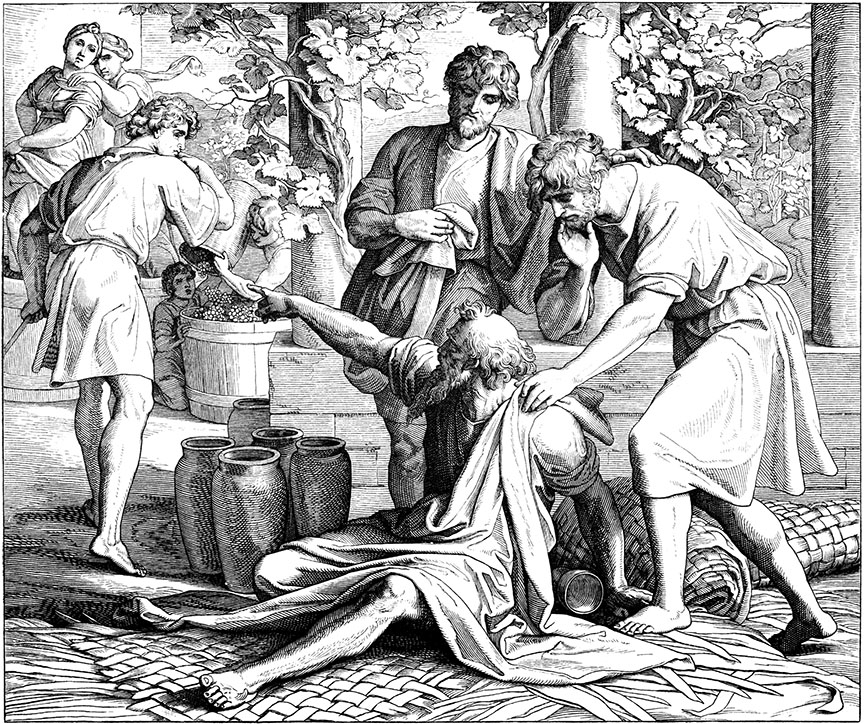
בראשית ט:יח וַיִּֽהְי֣וּ בְנֵי־נֹ֗חַ הַיֹּֽצְאִים֙ מִן־הַתֵּבָ֔ה שֵׁ֖ם (וְחָ֣ם) וָיָ֑פֶת וְ(חָ֕ם ה֖וּא אֲבִ֥י) כְנָֽעַן: ט:יט(שְׁלֹשָׁ֥ה אֵ֖לֶּה בְּנֵי־נֹ֑חַ) וּמֵאֵ֖לֶּה נָֽפְצָ֥ה כָל־הָאָֽרֶץ: Gen 9:18 The sons of Noah who came out of the ark were Shem, (and Ham,) and Japheth—and (Ham is the father of) Canaan. 9:19 (These three were the sons of Noah), and from these the whole world branched out.
Why is Canaan being punished for the sin of Ham? The text implies that children may be punished for the sins of their parents transgenerationally, a view disputed by Ezek.`4:12-20 and 18:1-32, as pointed out in “ ‘Transgenerational Righteousness’ ” in Ezekiel and Aramean (Samaritan) tests,” JBL 144 (2025);463-74, by Theodore J. Lewis. The words חָ֕ם ה֖וּאאֲבִ֥י, He is the father of, explain this in parenthesis, implying, in a bilingual pun on the word “parenthesis,” that this is Noah’s thesis regarding transgenerational sins, a parental thesis which explains why Canaan, the son of Ham who is Noah’s son, is being punished for Ham’s sin and also, perhaps, for a sin that Noah committed, exposing his nakedness like Adam Two and Eve in the Garden of Eden, after consuming the forbidden fruit of the tree of knowledge – wine – a sin that was transgenerationally punished for all generations!
Gershon Hepner is a poet who has written over 25,000 poems on subjects ranging from music to literature, politics to Torah. He grew up in England and moved to Los Angeles in 1976. Using his varied interests and experiences, he has authored dozens of papers in medical and academic journals, and authored “Legal Friction: Law, Narrative, and Identity Politics in Biblical Israel.” He can be reached at gershonhepner@gmail.com.