
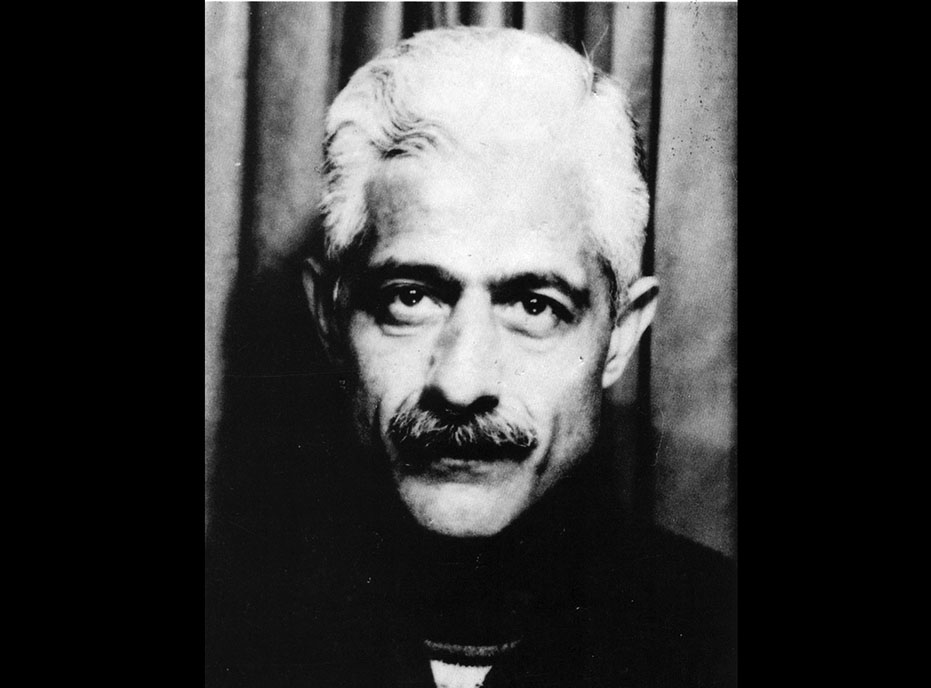
While no one can predict how the simmering conflict with Iran will end, it’s worth revisiting in the meantime a remarkable episode in the history of Israel’s relationship to the country. In February of 1963, the Iranian essayist, sociologist and anthropologist Jalal Al-e-Ahmad visited Israel and came away deeply impressed.
He described the Jewish state as a “true miracle” produced by the “clear-vision” of “guardians” such as David Ben-Gurion, whom Al-e-Ahmad perceived to be a cross between a politician and a prophet.
As William Eichler recently noted in the British journal History Today, Al-e-Ahmad’s fascination with Israel emerged from a particular moment in his country’s development. In the first half of the 20th century, Iran lurched from foreign interference to forced modernization. Reza Shah tried to build a strong, independent nation, only to be pushed aside by the British and Soviets during World War II. His son took over, but after Prime Minister Mohammad Mossadegh nationalized Iran’s oil, the CIA and MI6 helped engineer the 1953 coup that restored the shah’s power. A decade later, the shah’s “White Revolution” sought to rapidly modernize the country through land reform, women’s suffrage and economic development while keeping communism at bay.
Al-e-Ahmad came of age in the middle of this upheaval. Born in 1923 to the son of a village mullah, he became a teacher, literary critic and translator of Sartre and Camus. Politically, he followed a path familiar to many postwar intellectuals: first embracing the communist Tudeh Party, then breaking with it over its loyalty to Moscow, and ultimately supporting Mossadegh’s nationalist movement.
Al-e-Ahmad was best known in his day for his 1962 pamphlet “Gharbzadegi” (“Occidentosis”). It, in fiery prose, argued that the industrialized, capitalist West subjugated and exploited the East and infected it with cultural mores grown in foreign soil. “In our clothes, our houses, our food, our civilities,” Al-e-Ahmad wrote, Iran had become “estranged from itself.”
To avoid becoming ensnared in someone else’s modernity Iranians should reconnect with their own culture, he believed. For this, Israel was a model, having emerged reborn from its traditional roots into a flourishing faith-infused culture.
Tehran and Tel Aviv were friends in the 1960s, standing together against pan-Arab nationalism championed by figures like Egyptian President Gamal Abdel Nasser. To cultivate this cross-national friendship both governments regularly organized cultural exchanges. So Al-e-Ahmad and his wife, the novelist Simin Daneshvar, traveled to the Jewish state for two weeks (and in return, young Israeli diplomat Zvi Rafiah headed to Tehran). They toured Tel Aviv, Acre, Haifa and Nazareth, participated in an archaeological dig, and spent time at kibbutz Ayelet HaShachar. In Jerusalem, they paid their respects at Yad Vashem, where both were reduced to tears. Simin delivered two lectures at the Hebrew University and wrote in the kibbutz’s guest book, “As I see it, the kibbutz is the answer to the problem of all the countries, including our own.”
So it was that this Iranian intellectual expressed his admiration for the blend of religion, Hebrew culture and collectivism that he saw in Israel. “In the eyes of this Easterner, Israel, with all its faults and all the contradictions concealed in it, is a base of power, a first step, the herald of a future not too far off” for his own people, he predicted.
“Remarkable as it might seem given its subsequent trajectory,” Eichler writes, “Al-e-Ahmad saw in the Jewish state a model of how to be modern without mimicking the West, an example of decolonization done properly.” As Scott Abramson quipped in Tablet magazine, to Al-e-Ahmad, “as far as East and West were concerned, in Israel the twain not only met, they mingled in harmony.”
The Iranian changed his tune following the Six Day War and Israel’s defeat of antagonistic Syrian, Egypt and Jordan. He lamented then what he perceived to be Israel’s imperialism while ranting antisemitic clichés about Jewish media control. It is this iteration of Al-e-Ahmad that adorns postage stamps across Iran and a highway in Tehran, and has a literary prize named in his honor. But the scholar’s earlier affinity for the Jewish state is worth revisiting and appreciating, reminding us in this moment of uncertainty that more positive possibilities could very well emerge between two nations, a friendship as existed decades ago, renewed.
Rabbi Dr. Stuart Halpern is Senior Adviser to the Provost of Yeshiva University and Deputy Director of Y.U.’s Straus Center for Torah and Western Thought. His books include the newly released “Jewish Roots of American Liberty,” “The Promise of Liberty: A Passover Haggada,” “Esther in America,” “Gleanings: Reflections on Ruth” and “Proclaim Liberty Throughout the Land: The Hebrew Bible in the United States.”