For most of my life Jewish achievement clichés involved “my son, the doctor.” Being a professional was the ideal. My own mother, God rest her noble soul, married to a Rabbi and thrilled when I applied to a rabbinical program, exclaimed when I brought home my GRE scores, “You could have gone to law school!” I’m still not sure she was joking.
Currently there is a dearth of students applying to be Rabbis in the non-Orthodox movements. Sociologists have suggested that the drought stems from student debt, shifting Jewish demographics, and a cultural tilt toward careers that require less commitment. Additionally, the composition of the rabbinate has changed, with more women than men applying, and by one metric, more than half of the applicants identifying as LGBTQ.
So here is my moonshot – I want to persuade you to enter rabbinical school. Now I understand that being a hedge fund manager in your mid-40s, or starting a family or paying off your student debt so you can open the White Lotus resort in Thailand may seem marginally more attractive than entering another several years of graduate study; it sounds quixotic to ask someone to trade spreadsheets for siddurim — but that’s why they call it a moonshot!
I want to make the case that for life satisfaction there are few, if any, professions or callings that begin to match being a Rabbi. And are more needed by the Jewish world, and even the world in general.
This moment in Jewish history makes the call urgent. You want to make a real difference in the world? Rising antisemitism asks that strong and confident voices arise for the defense of our people. Increasing antizionism demands that Zionist voices be raised to defend an ancient people in its historical homeland. Increasing alienation from our tradition cries out for people who love its rich wisdom to spur revival in the lives of modern Jews. Before we even discuss what being a Rabbi means to your life, let’s recognize what it means to our people.
We need Rabbis who are bold, determined, and most of all, who are driven by ahavath yisrael, love of the people and land of Israel. If you imagine you have it in you to help lead in a confused time, here is your chance.
There are downsides, to be sure. Rabbi is not what you do, it is who you are. Professional failures are inevitably thought of also as personal failures. You might like your dentist and think they are actually a lousy dentist. Nobody says, “My Rabbi is a lovely person but a terrible Rabbi.” Given the stakes of religious life, Rabbis have a lot on the line.
Moreover, (spoiler alert) Jews do tend to be opinionated. Some have very definite ideas about who their Rabbi should and should not be. The hammer of judgement comes down on the rabbinic head in many ways, and everyone wields it. The Rabbi needs a skin thick enough to endure criticism but thin enough to feel with others. It requires sensitivity without self-absorption.
Yet even if there are disappointments, never will the suspicion strike, as it does in so many professions, that you are wasting your life with insignificant tasks. You will touch lives, hold people’s hands in their final moments, celebrate their deepest joys, and collect a lifetime of mental snapshots of unparalleled human moments. In an age of disillusion, you stand in a line of those who began at Sinai to learn and to teach. L’fum tza’ara agra — the reward is according to the effort. The disappointments are real, but the meaning is inexhaustible.
The Rabbi leads a mission-driven life. You are both in the community and in a very helpful way, apart from it. Much of the competition that afflicts society does not touch you. You are not supposed to be making the same kind of money as many of your congregants. Your status does not depend upon that – rather, you have a separate social position. You are needed by people in all walks of life because of the gifts you can proffer: tradition, ritual, comfort, inspiration, meaning.
A few days before writing this, I married the child of someone whose parents I had married 26 years before. It was the first time I officiated inter-generationally. That the daughter of the couple wanted me to marry her meant that I represented something to them, a continuity, a tradition and a sense of how God has blessed their lives. Speaking under the chuppah is the kind of sippuk nefesh – satisfaction of soul – the Rabbi is fortunate enough to have that is matched by very, very few callings in this world.
A Rabbi is both a transmitter and shaper of tradition. My niece is a Rabbi in Atlanta. I asked her what she would say to the question of why one should become a Rabbi. Her answer was that this is an age in which people can shape the role. And it is true: the tradition is both set and flexible. Rabbis are able to create new paradigms, different kinds of communities, speak in various venues, not only in the synagogue, but in other roles open to them. I have spoken in churches, mosques, universities and many other settings: they did not show up to hear David Wolpe, but Rabbi David Wolpe. The knowledge that you speak from a tradition deeper than yourself draws others to hear your words.
Being a Rabbi gives one tremendous flexibility. The title unlocks doorways: teaching, chaplaincy, writing, activism, halakhic work, community building. It is less a job than a passport. Many choose the pulpit, but you can be in a Hillel, a hospital, a variety of roles. No matter which role you choose, the title “Rabbi,” signaling as it does years of study and a lifelong commitment, brings a certain kavod, an esteem that is integral to the role.
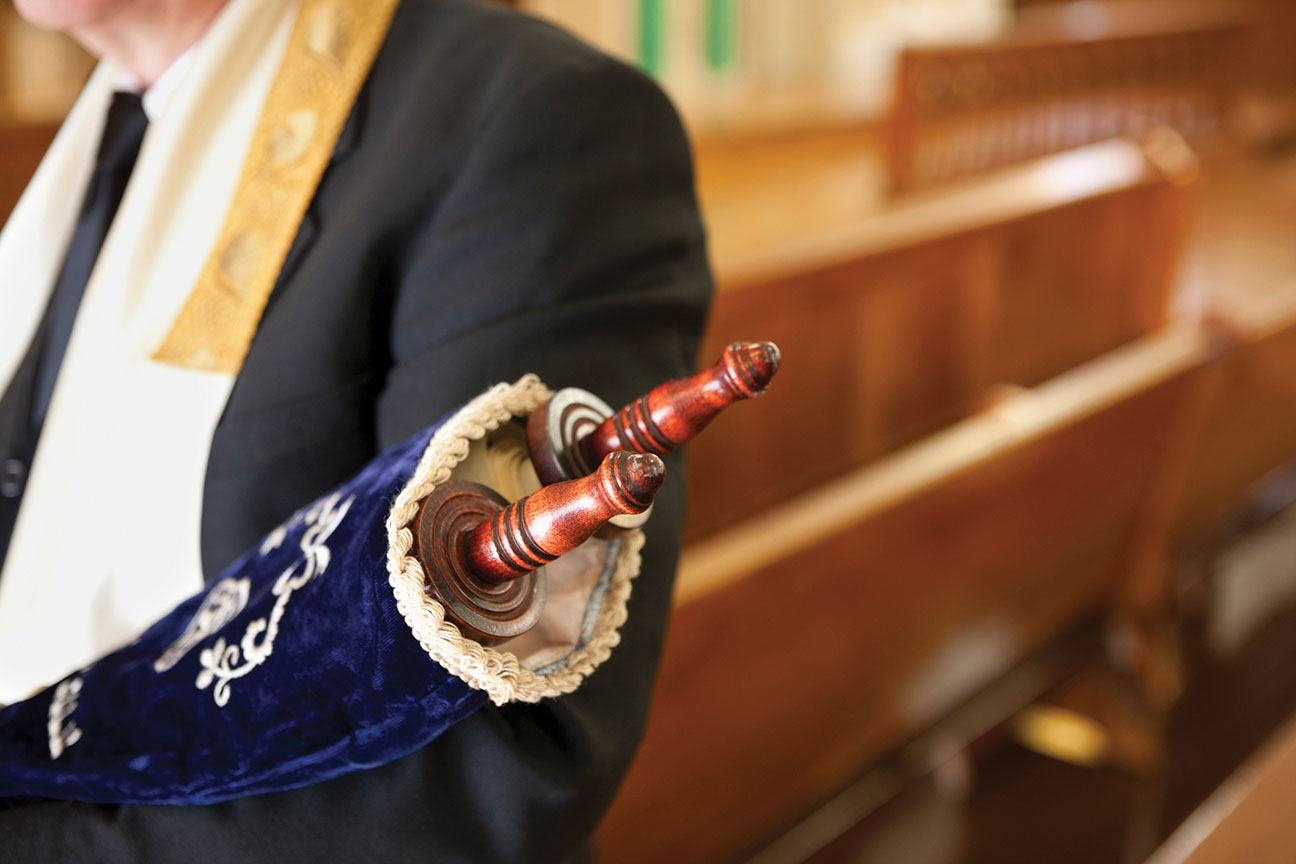
No matter which path a Rabbi chooses, the core mission endures: To comfort those who are sick or hurt or in trouble, to counsel people caught up in the perplexities of life, to teach a deep and wise and wonderful tradition, to bring spiritual uplift to the lives of others and, especially in these fraught times, to defend our people and its land and legacy. The Torah is the baton in this sacred relay race, and dropping it is unthinkable.
When you come to a community as a Rabbi, you start with a bank of goodwill. It is possible to lose it, of course. Rabbis are as subject to the vagaries of fortune and shortcomings of human conduct as anyone else. Rabbis are attacked and people get angry. But most people want the Rabbi to do well, and with very few exceptions, will cheer them on to do so.
Despite the prevalence of “clergy burnout” – learning to set limits can help tremendously. Yes, you will disappoint people at times by not attending this party or that celebration. But even this is double-edged: the disappointment results because people want you there, and your presence matters.
A lifetime of learning? The rabbinate is an intellectual feast. The Jewish tradition lays its infinite riches before you and your colleagues – other Rabbis who accompany you on your spiritual and professional journey.
When I entered rabbinical school I did it “on spec.” Despite my father being a wonderful Rabbi – and father – I wasn’t sure I would stay. But I saw the devotion of my teachers. It dawned on me that as a Rabbi one’s self can be not an obstacle but an instrument. Even failure could be worthy.
I graduated college wanting to be a writer. One day a Rabbi, Elliot Dorff, pulled me aside and asked, “What do you want to write about?” I told him I didn’t know, because I didn’t know anything, but I was searching. He said, “Why don’t you go to rabbinical school for a year. The worst that happens is you learn. At best, you will find your subject.”
I asked Rabbi Dorff why he liked being a Rabbi. I will never forget his answer: “Each night when I go to bed, no matter how good or bad my day, I can say, ‘I did it for God, Torah and Israel.’”
Few times in our history has it been more urgent to give voice to God, Torah and Israel. It sounded pretty good to me then. It still does. I hope it does to you, too.
David Wolpe is the Max Webb Emeritus Rabbi of Sinai Temple.