With the recent loss of my beloved Papi, my brothers and I are in the heartbreaking process of clearing out our parents’ home.
It is emotional work, made up of long days sorting through a lifetime of my parents possessions. Then there are those breathless moments when an ordinary object stops us in our tracks and pulls us straight back to another time.
After my mother passed away in 2022, my father wanted her belongings left where they were, saying that made it feel like she was still there. So now I am packing, grieving them both at the same time.
So much of what we are finding came with my parents from Morocco in 1973. A gift from my grandfather, a Hanukkah menorah which they faithfully lit for more than sixty years. Delicate turquoise glass Moroccan teacups. Elegant tall colored glasses. A couple of old ashtrays. A retro metal ice bucket. A sugar bowl that sat on the table for decades.
None of it is especially valuable dollars-wise, but every object is priceless. Every one of them testifies to Shabbat dinners, holidays, celebrations and everyday family life.
Then, I dived deep into their closet. Tucked away were two iconic needlepoint pieces that my mother had hung in our home in Casablanca and later, our first apartment on Doheny Drive in Beverly Hills. I hadn’t seen them in over thirty years. It felt like opening a door into my childhood.
But the greatest surprise was still in store. Hidden beneath layers of her scarves and handkerchiefs, my mother had saved a trove of letters from her mother who lived in Israel. Breathlessly, I gathered them and brought them home. On Friday night, I pulled a letter from the stack and began to read it aloud. Written in Spanish, my grandmother wrote “I was so happy to receive Raquel’s letter and drawings.”
Chills shivered down my spine. How was it that of all the letters that was the one that I had pulled out of the stack? It felt magical and otherworldly.
Raquel– that was me. (I only became Rachel when we moved to America.)
She wrote that she was overjoyed to receive my letter, that she was so happy to know that I was always in the kitchen with my mother, helping her. (I must have been about ten years old.) Reading that was confirmation of my mother’s claim that I had been by her side in the kitchen, since I was a baby in my high chair.
My mother would tell me that she would boil potatoes, allow them to cool, and then hand one to me to peel with my small hands. Long before I understood how deeply food would shape my life, that was my first kitchen task.
My grandparents made Aliyah from Larache, Morocco in the late 1950s. My grandfather owned a candy store. To this day, people in Ein Karem, Jerusalem still remember him as a kind man with a generous heart. I only knew my grandparents from our short visits to Israel, a few precious weeks at a time.
A few years ago, my younger cousin Raymonde gave me a huge treasure—a collection of my grandmother’s recipes that her mother, my aunt, had saved. Reading through them, I recognized the dishes. The same foods my mother had made over and over again, the flavors of our home.
The recipes include Pastel, a potato and meat dish similar to a shepherd’s pie. Rosquitas, cake-like donuts soaked in honey syrup. Spanish red rice. Tortitas, fennel-scented Moroccan biscuits. And the biscochos, pinwheel cookies of chocolate and vanilla, as well as date and walnut cookies.
My heart feels broken. Clearing out my parents’ home has been one of the hardest things I’ve ever done. I feel like a lost little girl. Grief has a way of collapsing time and returning you to the time and place where you were once most protected.
I will hold on to my parents’ dishes and silverware and use them for special occasions and celebrations. Serving their purpose of bringing people together, as well as helping us remember our loving, devoted parents.
My grandmother Simcha Bensabat was a very special woman. Her name Simcha, Joy, tells you everything. She was tiny and God-fearing and had the biggest heart. She passed love and blessing to all six of her children. Somehow, across generations and oceans, that love reached me.
Her letters and these recipes are everything to me, bringing me comfort in a time of deep loss. A reminder that love can be written down, cooked, saved and passed on, sometimes folded carefully into an envelope, and sometimes baked into a cookie, shared at a family table.
—Rachel
When I was a child, my grandmother baked black and white pinwheel cookies. I remember thinking how different they were alongside all the traditional Iraqi desserts—baba t’amar (crispy date-filled crackers), cheese sambusak, almond and cardamom sambusak and baklava.
Later, I found out that she had learned to bake them in Israel from a Moroccan neighbor, who had become a good friend.
My grandmother loved to innovate recipes and sometimes she would add flakes of dried coconut to the plain dough. These nostalgic pinwheel cookies are simply delicious. Perhaps you’ll bake them and create special memories for a child in your life.
—Sharon
Pinwheel Cookies
2 cups white sugar
1 large lemon
3 eggs
1 1/2 cups avocado or vegetable oil
3 tsp baking powder
4 cups all purpose flour
1/4 cup dark cocoa powder
Place the sugars in a medium bowl. Zest the lemon directly into the sugar and massage with hands to ensure that the lemon oils flavor the sugar.
Place the eggs in the bowl of a stand mixer and beat the eggs, then slowly add the sugar until the mixture is fluffy and pale yellow.
Add the oil and continue beating on low until well incorporated. Add the baking powder.
Turn off the mixer and add 1 cup of flour, then beat on low speed. Repeat process until all the flour is incorporated into the dough.
Halve the dough and place one ball into another bowl, then set aside.
Add the cocoa powder to the bowl of the mixer and beat for a few seconds until the cocoa is well combined.
Wrap both balls of dough in plastic wrap and refrigerate for 30 minutes.
Place parchment paper on the counter and roll each dough ball into a rectangle shape, then layer one on top of the other.
Slowly roll the dough outwards to form a log. Wrap the log and refrigerate for two hours.
Preheat the oven to 350°F.
Slice the logs into 1/4-inch rounds and place 2 inches apart on a lightly greased baking sheet.
Bake for 10 to 12 minutes, just long enough for dough to set. Cool on wire racks.
Sharon Gomperts and Rachel Emquies Sheff have been friends since high school. The Sephardic Spice Girls project has grown from their collaboration on events for the Sephardic Educational Center in Jerusalem. Follow them on Instagram @sephardicspicegirls and on Facebook at Sephardic Spice SEC Food. Website sephardicspicegirls.com/full-recipes.
There are at least five pie
holidays throughout the year, not including March 14 aka 3.14 aka Pi Day.
National Pie Day is Jan. 23. These produce-based pies are the perfect addition to any milchig or parve meal.
Judy Elbaum’s quiche-like vegetable pie lends credence to the saying “easy as pie.”
“Once you’ve prepped all the ingredients, you combine them in a food processor, pour into a pie plate and then bake for 40 minutes,” Elbaum, founder of LeaveIttoBubbe.com, told The Journal.“One bite of zucchini pie provides a scrumptious commingling of zucchini, onions, garlic and cheese with a delightful texture that is a cross between a cheesecake and a pudding.”
Zucchini Pie
Serves 8 to 10
Pam
4 eggs, beaten
3 cups zucchini, sliced
½ cup canola oil
½ cup Parmesan cheese, grated
¼ cup onion, chopped
4 garlic cloves, grated
1 cup Bisquick
salt and pepper to taste
1. Before you begin, spray a nine-inch pie plate or cake pan with Pam.
2. Preheat the oven to 350°F.
3. Place all ingredients in a food processor fitted with a steel blade. Process until well combined and smooth.
4. Pour into the prepared pie plate.
5. Bake in preheated oven for about 40 minutes.
6. The zucchini pie is ready when the center is set and the pie is lightly browned.
7. Serve warm, at room temperature or refrigerate and serve cold. The pie will keep in the refrigerator for several days.
Elbaum’s quick and easy key lime pie is a great addition to your National Pie Day celebration.
The recipe below walks you through every step. However, there is a way to put it together even quicker.
“You can have one of these ready in 30 minutes if you use a prepared graham cracker crust, pre-squeezed key lime juice, and Cool Whip,” Elbaum said.
Key Lime Pie
Graham Cracker Crust:
1 ½ cups graham cracker crumbs
6 Tbsp butter, melted
4 Tbsp sugar
¼tsp cinnamon
¼ tsp nutmeg
Key Lime Filling:
1 14-ounce can of sweetened condensed milk
3 egg yolks
1 Tbsp key lime zest (optional)
½ to 2/3 cup key lime juice
Garnish:
Cool Whip
Key lime zest
Key lime slices
1. Preheat the oven to 350°F.
2. For the crust: Into a large mixing bowl, place graham cracker crumbs, melted butter, sugar, cinnamon and nutmeg. Mix well.Press into a 9 inch glass pie plate.Make sure it is evenly distributed along the bottom and sides of the pie plate.Place into the oven and bake for 12 minutes.
3. For the Filling: Place the condensed milk, egg yolks, and key lime juice optional lime zest into a large mixing bowl. Whisk together all ingredients well for about 2 minutes.
4. Pour the batter into the graham cracker crust. Bake at 350°F for about 15-18 minutes. Allow the pie to cool to room temperature, then place in the refrigerator for at least an hour.
5. If desired, garnish with Cool Whip, slices of lime and lime zest.
Adaeze Rosenberg’s sweet potato pie is a family favorite, one she grew up enjoying.
Pies make for a sweet ending to any meal. But there are other benefits.
“Pies symbolize abundance, smiles and creating memories year-long with familiar faces and some new,” Lenny and Adaeze Rosenberg, owners of New York Bagel Deli & Bakery in Santa Monica, told The Journal. “[They make] the ending [of a meal] always sweetly positive.”
Adaeze’s Southern Sweet Potato Pie
3 sweet potatoes
½ cup sweet butter
1 cup granulated sugar
2 tsp vanilla
2 whole large eggs
½ cup evaporated milk
1 9-inch unbaked pie crust
1. To bake the sweet potatoes, preheat the oven to 400°F. Scrub the sweet potatoes until clean, prick them 4 to 5 times with a fork.
2. Place onto a baking sheet and bake for 45–50 minutes until the sweet potatoes are tender when pricked with a toothpick.
3. Remove from the oven and allow to cool until they can easily be handled. Peel the skin from the sweet potatoes and place the sweet potatoes into a large mixing bowl. Reduce the oven heat to 350ºF.
4. To Make the Pie Filling: Add butter to the sweet potatoes and mash until smooth. Add the sugar(s) to the sweet potatoes and mix until well combined. Add the vanilla extract, milk and the eggs. Mix until well combined. Pour into the unbaked pie crust.
5.Bake the pie until the center of the pie is set, about 1 hour. Remove the pie from the oven and allow it to cool slightly.
One verse, five voices. Edited by Nina Litvak and Salvador Litvak, the Accidental Talmudist
“Then the LORD said to Moses, ‘Go to Pharaoh, for I have hardened his heart and the hearts of his servants, in order that I may show these signs
of Mine among them.’”
– Exodus 10:1
Rabbi Mari Chernow
Senior Rabbi, Temple Israel of Hollywood
If God’s hardening of Pharaoh’s heart presents a theological challenge (i.e., could God really be the cause of Pharoah’s arrogance and the suffering that ensues) then God’s sending Moses to warn Pharaoh is even more perplexing. It is difficult enough to make sense of Pharaoh’s seeming lack of free will. Do Moses and Aaron then make a mockery by acting as if Pharaoh has an actual decision to make?
Or is it possible that the warning that God commands in this verse comes to teach the opposite? That, in fact, even in the most impossible situations, we maintain free will? That, even when God – if you could say such a thing– even when God is working against us, we ultimately have control over our words, our decisions, our deeds?
It is plainly obvious that Pharaoh will stay that course, that he is intractably committed to his stubborn position. Still, is it possible that he might just – against all odds – change his mind? Is it possible that the power-hungry might someday choose beneficence rather than dominance? That those who have always acted treacherously might unexpectedly discover integrity? That a lifetime of self-interest could be followed by a single action that is generous and just?
It must be possible.
Go to Pharoah. Warn him of what’s to come. Perhaps, even as I have hardened his heart, he will find the courage and the strength to change his mind.
Gilla Nissan
Author of “Meditations with the Hebrew Letters – Guide to the Modern Seeker” SeekAleph.com
This verse unsettles almost everyone. Why would God harden Pharaoh’s heart? Where is free will? It seems unfair, as if the order of moral choice is suddenly overturned. And God always does it.
But when we look honestly at our own lives, we notice something similar. We often acted one way and not another, and only later judged ourselves harshly, thinking we were foolish or made terrible mistakes. Yet this judgment is still not deep enough.
Kabbalah teaches that everything is in the hands of Heaven. What unfolded did so because it needed to unfold. Each soul has its own path, its own inner necessity. Freedom, then, is not random choice, but the willingness to choose what the soul itself has already chosen to live through.
This is not fatalism, and not pessimism. It is a call to deeper wisdom, not theories that rise and fall, but Torah wisdom, Torat Emet, that endures. When we learn to read our lives through this lens, we stop fighting the past and begin gaining true deeper understanding and thus victory over the challenges before us. Let this understanding guide us.
This line struck me with its unbelievable timeliness this year. Today, when Jews go and speak out about antisemitism, whether to prime ministers, university presidents, media tastemakers, podcasters, the U.N. or college students, they are speaking to people who have hardened their hearts against Jewish suffering. Today’s “pharaohs” sit in their comfortable perches, twisting victim into oppressor, coldly turning against us, denying our right to even exist.
And yet, like in this parsha, God has already shown incredible signs that should reassure us that ultimately He will deliver us from oppression. A recent article on Aish.com by Rabbi Uri Pilichowski, “We’re Living Through Miracles but Can’t See,” cites a series of stunning victories since Oct. 7 that are clear miracles, yet we were too immersed in current events to register them as such. The article is a must-read. These miracles include: the detonating pagers and walkie-talkies of Hezbollah fighters in September 2024; destroying Nasrallah’s “impenetrable” bunker ten days later; the June 2025 precision bombing of Iran, shattering its arsenal and killing 30 generals and nine nuclear scientists; Iron Dome’s interception of 99% of Iran’s missile barrage, and many more. Also astonishing: Yahya Sinwar apparently triggered the Oct. 7 pogrom months before a far grander, multi-front plot meant to annihilate the Jewish nation was ready.
Today’s pharaohs will also fall. Let’s take a moment to express our thanks to God for His consistent miracles. Let’s stand proudly as Jews to continue to merit these signs and wonders.
Baruch C. Cohen, Esq.
Civil Trial Attorney
This verse is unsettling precisely because it strips us of easy moral comfort. Pharaoh is no longer merely stubborn; his heart has been hardened by God Himself. And yet Moses is still commanded to go. To speak. To confront. To stand before a man who will not listen. Why? Because redemption is not only about changing the oppressor, it is about revealing truth to the world.
There are moments in history when hearts calcify so completely that persuasion becomes impossible. Logic fails. Compassion is mocked. Warnings are ignored. In those moments, God does not retreat. He reveals. He transforms resistance into revelation. Pharaoh’s refusal becomes the stage upon which Divine justice, patience, and moral clarity are displayed.
This verse teaches that leadership is not measured by outcomes, but by obedience to truth. Moses is not sent to succeed, he is sent to testify. To stand in the fire and speak anyway. Sometimes God hardens hearts not to destroy the righteous, but to expose the hollowness of tyranny and the limits of human arrogance. The plagues are not merely punishments; they are disclosures, unmaskings of power without conscience. And so, when we face systems or individuals impervious to moral appeal, we are not absolved from action. We are summoned to witness. To speak truth even when it will not be received. To trust that revelation itself is redemption in motion. Because history is shaped not only by those who rule, but by those who refuse to be silent before them.
Gavriel Sanders
Spokesman, Be A Mensch Foundation
The text is unsettling. At first glance, it sounds unfair. If God hardens Pharaoh’s heart, where is free will? The Hebrew helps. The word used for “hardened” is hikbadti — from kaved, meaning heavy, not sealed or locked. Pharaoh’s heart isn’t removed; it’s weighed down. God doesn’t take away choice — He makes the consequences heavier.
Here’s the pattern: Pharaoh repeatedly hardens his own heart. Only later does God “strengthen” that resistance. Why? Because at some point, resistance itself becomes the lesson. Think of someone who ignores warning lights in a car. At first, the dashboard flashes gently. Over time, the engine doesn’t suddenly “lose freedom” — it simply locks into the reality created by repeated neglect. The system hasn’t betrayed you; it has revealed you.
That’s the purpose clause of the verse: so that I may place My signs. Not only to punish Pharaoh, but to teach Israel — and history — how power collapses when it refuses humility. The application is uncomfortable and urgent. There is a moment when persuasion gives way to exposure. When a heart resists truth long enough, God may stop arguing — and start demonstrating.
That shift doesn’t announce itself. It looks like business as usual: habits calcify, feedback gets dismissed, and consequences feel “sudden” only because they were ignored for so long. What was once a warning becomes a weight. The question this passage asks us is not “Why Pharaoh?” but: Where might I be mistaking stubbornness for strength — before heaviness sets in? That’s a warning worth hearing early.
There are few conferences where attendees recognize one another even before reaching the conference hall. Yet at the Israeli-American Council (IAC) Summit in Florida, that recognition began at the airport — regardless of which one.
During a layover at Dallas-Fort Worth, I noticed a small group of adults and teenagers nearby. From snippets of their conversation, it was clear they were headed to Fort Lauderdale.
“Are you going to the IAC conference?” I asked.
They looked surprised and answered yes. The group included Rabbi Andrew Bloom, his wife Michal, a teacher, the principal and their students. For the teens, this would be their first time attending the summit, where they planned to take part in programs and workshops designed especially for young participants. They came prepared with suitcases full of candies, snacks and bathing suits.
Once we landed and I made my way to the rideshare area, dozens of people were already waiting for their Uber or Lyft. Many of them were speaking Hebrew. And as Israelis often do, a father and daughter who learned we were headed to the same place — the Diplomat Beach Resort — invited me to join them for the ride.
By the time I reached the hotel’s check-in counter, I had already run into a dozen people I knew. There were hugs, quick catch-ups and repeated stops — half a dozen more — on the way to my room.
More than 3,500 participants — Israelis and American Jews, teenagers and veteran community leaders — had gathered for a three-day convention that blurred the lines between conference, reunion and social scene.
Photo credit: Noam Galai
This marked the 10th annual summit, and it featured a packed program that included panel discussions and workshops with titles such as “How to Pass Judaism and Israeli Identity to the Next Generation and Raise American Jews Who Won’t Turn Their Backs on Israel” and “When the World Turns: Exposing the U.N.’s Double Standard on Israel.” There was also a dedicated medical track featuring professionals from across the healthcare world, alongside numerous panels focused on antisemitism and strategies for combating it.
In addition, dozens of organizations staffed information tables throughout the conference, each hoping to attract support and donations — all united by a mission to advance causes connected to Israel.
The nonprofit IAC had come a long way since it was first founded in 2007 by Israel’s Consul General, Ehud Danoch, together with a group of Israeli-American business leaders in the local LA community.Many of its founding members are still active in the organization, including Adam Milstein, Naty Saidoff, Shoham Nicolet and Shawn Evenhaim.
The turning point in the organization came in 2013, when Milstein invited Dr. Miriam Adelson and her husband, billionaire Sheldon Adelson, to an IAC gala. They immediately saw the potential, and they believed in the mission. The Adelsons took the organization, then known as the Israeli Leadership Council, under their wings. It was renamed the Israeli-American Council to reflect its growing nationwide reach. Soon after, it expanded across the United States, establishing regional chapters and hosting community events, leadership programs and educational initiatives, all aimed at cultivating Israeli-American identity, bringing the Israeli and American Jewish community together and encouraging civic and cultural engagement.
Across the country, countless Jewish and Israeli nonprofits compete for attention and support, each offering important services and hoping to make an impact. What sets the IAC apart is its community-focused mission. It seeks to provide meaningful programs and opportunities rather than just ask for donations. The bigger question, though, is how eager the broader Jewish community is to engage with what it has to offer.
Most of the people attending the summit were Israeli-born, but there were also American Jews, as well as members of other organizations who appreciate the IAC’s mission and its importance to the Jewish community.
Elan Carr. Photo credit: Noam Galai
The IAC’s CEO for the past two years has been Elan Carr, a lawyer and diplomat who served as the United States Special Envoy for Monitoring and Combating Antisemitism under President Trump from 2019-21. In an interview with The Journal, he emphasized the importance of pride, engagement and education in facing the challenges the community now confronts. “Our kids don’t know enough about who we are, our history or our connection to Israel. That’s why the IAC runs programs for children, teens and families. You can’t defend yourself if you don’t know who you are, and you can’t defend Israel if you don’t understand Israel,” he said.
Over the past two years, since Oct. 7, 2023, the IAC has found itself battling antisemitism more than ever. The organization has received hundreds of complaints from students about antisemitic incidents in schools and has trained teachers in public schools to better understand antisemitism.
“I’ve seen it for decades. I’ve been involved in campus life for many years, and I can tell you it’s been getting worse and worse,” said Carr, who during his college years served as the international president of the Jewish fraternity Alpha Epsilon Pi. “Fighting antisemitism in schools isn’t only the key to protecting our community and our future — it is critical for protecting the American future, because if we lose the schools, we’ll lose the future. And it won’t just be Mamdani who gets elected; it will be even higher offices. So we’ve got to win this fight.”
The summit also featured 229 notable speakers, including U.S. Attorney General Pam Bondi, who delivered a forceful message about the administration’s stance against antisemitism. Emphasizing zero tolerance for harassment and intimidation, Bondi said, “The days when it was acceptable to bully Jewish students on campuses simply because they are Jewish are over. That will not happen under President Trump’s leadership. We will no longer allow antisemitism in America to go unpunished.”
Other speakers who participated on panels or on stage during the opening and closing nights were high-profile figures like Steve Witkoff, who played a significant role in negotiating the release of the hostages;Safra Catz, executive vice chair of Oracle and member of its Board of Directors; Dovi Frances, an Israeli-American venture capitalist and former “shark” on “Shark Tank Israel” who has become a leading voice in technology and entrepreneurship; Caitlyn Jenner; and Eli Beer, founder and president of United Hatzalah, known for emergency medical response efforts.
For some, the abundance of speakers felt overwhelming. One attendee said he experienced “FOMO” (fear of missing out) for the first time. “I kept thinking that maybe I was missing a better lecture or a more interesting panel. By the end of each day, I felt exhausted.”
Eti El-Kiss Mizrahi, who attended the three-day summit with a friend, said she struggled to see the real purpose of the conference. “There were simply too many speakers, which diluted the impact and made it difficult for any message to truly land,” she said. “Overall, it felt more like a social scene than a serious effort to combat antisemitism or build future leadership.”
Mizrahi added that overall, the conference was enjoyable and that she was happy to reconnect with people in the community. While she found some of the speakers fascinating, she felt the IAC would have benefited from selecting fewer and stronger voices that resonated more with teens and people in their 20s.
More than anything, the gathering served as a reminder that they are not alone in their efforts, strengthening resolve and offering encouragement to those who are on the front lines — students, educators, activists and community leaders — to continue the work they are already doing.
At the same time, other attendees described the summit as a meaningful and energizing experience, particularly considering the challenges facing the Jewish community. More than anything, the gathering served as a reminder that they are not alone in their efforts, strengthening resolve and offering encouragement to those who are on the front lines — students, educators, activists and community leaders — to continue the work they are already doing.
Perhaps those who knew best how to navigate between the many events and workshops were the teens, who made sure to also enjoy the pool, the beach and other amenities the seaside resort had to offer. It is hard to say whether they fully understood that this large-scale gathering was designed primarily for them, as the future leaders of the community. They are the ones whose Israeli parents and grandparents hope will maintain a strong Jewish identity, remain connected to Israel and advocate for it, continue to celebrate Yom Ha’atzmaut and stand up against antisemitism.
Photo credit: Noam Galai
Feeling loyalty and connection to Israel often comes naturally to those who were born and raised in the country, but it is different for those born in the United States, who do not always share the same lived experiences or ties as their parents. There are, of course, exceptions. Carr, for example, was born in the U.S. to Israeli parents, speaks fluent Hebrew and feels deeply Israeli. He raises his children with the same values and love for Israel that he received from his parents. However, this is not always the case for the children of Israeli immigrants.
That, Carr says, is why the IAC plays such an important role: preserving the connection to Israel and educating the next generation through programs for children and parents, as well as dedicated initiatives for teens.
Organizers made sure to include not only long speeches on stage – and there were plenty of those – but also a good amount of entertainment, including performances by singers, Idan Raichel and Ivri Lider, standup comedian Yohay Sponder and an emotional performance by Sagui Dekel Chen, who was kidnapped from his home in Kibbutz Nir Oz and held for 498 days by Hamas. He has since become a speaker on resilience and advocacy.
There were many uplifting stories during the event, like that of Yael and Adi Alexander whose son Edan, who served as a lone soldier, returned home after 548 days in captivity. “Last year we were in a different place while we were here,” said Yael.
Yael, who lives with her family in New Jersey, recalled that it was a Sunday morning on Mother’s Day when her husband noticed 10 missed calls from Witkoff, whom they were in touch with on a daily basis. They immediately knew something had happened.
They called him back, and he said, “Open the TV. Hamas is going to announce they are releasing your son. Get your plane tickets now.”
Witkoff himself provided some emotional moments.“The issue of the hostages was very personal for President Trump,” he said. “When the 20 living hostages came to the White House, the president came up to me and I saw tears in his eyes, and he doesn’t like people seeing his tears. He told me: ‘This was the greatest day I ever had at the White House.”
Witkoff spoke about how fortunate he feels to do the work he does and to have taken part in negotiations aimed at securing the release of the hostages.
Witkoff lost his 22-year-old son, Andrew, to an opioid overdose in 2011. Helping others rescue their children from Hamas’ hands, he said, was a blessing. “It meant so much to me. I feel like my boy puts his hands on my shoulders and leads me. God took him back at 22 but made me meet these families, and it’s the greatest blessing of my life.”
One of the most remarkable stories shared at the event was that of Bar Assraf and Karni Guez, two young Israeli soldiers who, with their all-female tank unit, made history on Oct. 7 as the first women in Israel — and likely in the world — to fight in a tank. In a heroic engagement, they killed dozens of terrorists and saved an entire kibbutz. Now, their incredible story is coming to the big screen in the film “Tankistas,” starring Assraf, who portrays a character inspired by her own experience.
“We want to show that women can and should be in combat units,” said Asraf. “We proved ourselves.” She added that participating in the movie was a therapeutic experience for her. The film was produced by Israeli producer Ehud Bleiberg, who lives in Los Angeles.
From heroic feats to star-studded moments, the summit had it all — history, celebrity and everything in between.
Everywhere you turned, people stopped to shake hands, introduce themselves or ask for a selfie. Some weren’t aware of their celebrity status until the summit, like Dr. Avi Almozlino, co-chair of the IAC alongside Tal Shuster. While doing an interview in the lobby, he was interrupted twice by guests asking for photos. Almozlino, who is also the chief neurologist at a Boston-area hospital, obliged happily. His patients never ask him for selfies.
Then there was Ivri Lider, one of Israel’s most prominent singers, who had to pause repeatedly for photos even before entering the hotel. Daniel-Ryan Spaulding, the popular comedian and social media influencer, faced perhaps the greatest challenge of all: trying to finish his sandwich in the lobby while fans gushed over him. With a mouth full of food, he managed a polite smile and nod, a near-impossible balancing act of eating gracefully and maintaining charisma.
Celebrity sightings weren’t limited to the lobby. On the way down from the 27th floor, two women were flirting with a tall, striking man in the elevator.
“You look like George Clooney,” one said.
“Thank you,” he replied with a smile. “That’s a nice compliment.”
“No,” her friend interjected. “You’re way better looking. We don’t like Clooney because of his criticism of Israel.”
“I like you already,” he said, grinning.
When they reached the lobby, he said goodbye and stepped out.
“Do you know who that was?” they asked me.
“Oh yeah,” I said. “That’s General Michael ‘Erik’ Kurilla — a four-star general in the U.S. Army.”
Dr. Miriam Adelson, Shawn Evenheim and Haim Saban Photo credit: Noam Galai
At the summit’s closing night, two Israeli-American billionaires — on opposite sides of the American political spectrum — sat down for an interview moderated by Evenhaim, IAC Board Member and Chairman Emeritus. Haim Saban, a well-known supporter of the Democratic Party and, during the 2024 election, Kamala Harris, and Dr. Miriam Adelson, a major backer of President Trump, discussed Israel’s standing with the U.S. government, the regional landscape and the influence of the Jewish community.
Saban warned about the U.S.’s lack of understanding regarding security assistance to Israel, emphasizing that it serves American interests as well. “We’re talking about $3.8 billion a year … agreed for 10 years on the condition that Israel spend all of it in the U.S.,” he said. “It subsidizes the entire defense industry, creates jobs, and even among lawmakers, awareness of this is low. It’s our role to keep reminding them how important this alliance is.”
After the discussion, the two were presented with awards for their long-standing contributions to the community. Saban quipped that it should go to someone else: “I heard the Nobel Prize is passed from one to another.”
“Maybe Obama can give it to Trump,” suggested Adelson.
“I think it’s a great idea,” Saban replied — leaving the room to laugh and wonder, has he crossed over?
It’s impossible to review a book with 45 thought pieces, in this case “Coexistence and Other Fighting Words: Selected Writings of Judea Pearl, 2002—2025,” and hope to do it justice. How do you absorb a kaleidoscope of so many different ideas on some of the most pressing issues of our time and still make sense of the whole?
You can’t.
The ambitious reviewer will try to find some overall theme that somehow will capture the kaleidoscope. But that’s no easy task, because Pearl himself can’t easily be captured; his personality covers a broad canvas from whimsical to deadly serious to everything in between. He seems allergic to predictability.
When he writes about his son Daniel’s murder 24 years ago, which shook up the world, he surprises the reader with a message of “hope” from “the horror of my son’s murder.” One doesn’t usually associate such horror with hope. Pearl finds a way.
That tendency to keep us off balance announces itself immediately in the book’s title, as he mischievously calls “coexistence” a “fighting word.” It continues with the dedication page to his late wife, Ruth, whom he thanks for being “my compass and comfort for the past 5,786 years.”
A world-renowned scientist who goes through so much and still has a sense of whimsy is not something to be taken lightly.
This reflex to surprise takes him to unexpected places, as in the essay, “You Have the Right to Be Offended.” After receiving an email from a colleague that accused Israel of being an “apartheid regime,” Pearl writes that an “invisible force” jolted him into this response:
“The word ‘apartheid’ is offensive to me. In fact, it is very, very offensive. And, since I am not situated on the extreme end of the political spectrum, I venture to suspect that there are others on your e-mail list who were offended by it and who may wish to tell you that this word is not conducive to peace and understanding.”
How does a sophisticated scholar decide on a rather primitive response like being “very, very offended”? His email suggests an answer: he thinks it works. He’s showing us how raw emotion can sometimes cut through the dull terrain of clichés and conventional wisdom.
He’s also showing us that “fighting words” don’t have to look like fighting words. Telling a colleague you’re “very, very offended” are fighting words that work because they disarm, rather than anger.
This may well be the throughline of Pearl’s life as a passionate Zionist: fighting with words that work.
But he’s also a passionate scientist. The book shows us that “scientist” and “Zionist activist” don’t have to be mutually exclusive.
After all, much of his award-winning academic career at UCLA has revolved around the study of cause and effect, as demonstrated in a recent book on causality, “The Book of Why.” So the man looking for the right ideas to fight for his beloved Israel is the same man credited with “developing a theory of causal and counterfactual inference based on structural models” and “for fundamental contributions to artificial intelligence through the development of a calculus for probabilistic and causal reasoning.”
His causal reasoning gives him the chutzpah to challenge a widely accepted term like “antisemitism,” arguing that the word has limited impact because it’s too easy to deny. Instead, he has championed the term “Zionophobia” to capture the irrational hatred of Jews and Israel.
Another way Pearl mixes it up is to zero in on key words that make all the difference, as he did while attending a Muslim American conference in Doha in 2005.
At dinner, an Arab leader asks him why Israel didn’t accept the Saudi peace proposal of 2002: “Did it not offer them everything that they ever wished for: peace, recognition, security, you name it?”
Pearl quickly pounced on the missing word.
“Do you know what Israelis see when they read a peace proposal in the newspaper?” he asked. “They skip the text about peace, recognition and security and seek the one word that counts: ‘refugees.’ The rest is trivial. If that word is embedded in ‘right of return’ or ‘a just solution’ or ‘Resolution 194’ or some other euphemism for dismantling Israel, the proposal is automatically deemed a nonstarter.”
Cutting through verbal clutter with sharp words doesn’t stop Pearl from offering practical ideas.
“Here comes my humble suggestion, resting again on Saudi wisdom and good will,” he writes. “Instead of drawing fancy peace proposals, the Saudis, together with other oil-rich countries, should immediately launch a ‘Palestinian Marshall Plan’ to build permanent housing for Palestinian refugees in the West Bank.”
Then he gets philosophical: “We are constantly being told that the ball of peace lies entirely in Israel’s court, because Palestinians have no control over their destiny and Israel’s economy is so much stronger. It ain’t necessarily so. Here is a peace proposal that depends entirely on Arab good will and peaceful Palestinian intentions. It should start today.”
In “Jews of Discomfort,” Pearl takes his fight to Jews who are celebrated for how they bash Israel. These Jews are a “prophetic voice for many Jews of Discomfort,” he writes. “They used to feel guilty for Israel’s actions while conscious of her problems; no more. Elevated in virtue, they now see every blemish on Israel’s face as ‘the litmus test’ for her impure personality — hers, not theirs.”
Knowing the power of contrast, he brings up the approach of his friend, the French philosopher Bernard-Henri Lévy: “He too, feels uncomfortable with some of Israel’s actions, and he, too, proposed ways to correct them. Yet instead of pointing fingers at the Jewish establishment … he tells his leftist colleagues: Stop this madness, look at yourself in the mirror. Is your liberalism dead when it comes to Israel?”
Beyond the fighting spirit, the book reminds us of Pearl’s sentimental side, as when he reflects on the blessing of belonging to an eternal people. When asked what it means to be a Jew today, he writes: “Being Jewish is to see oneself as a member of an extended family, bonded by shared history and shared destiny.” He talks about ancient Jewish characters as if they were friends.
In “Wearing My Purim Rabbi’s Hat,” he writes:
“I have come to see a profoundly personal meaning in the story of Purim, especially in this powerful message that Mordecai sends to Queen Esther: ‘Do not imagine that you, of all the Jews, will escape with your life by being in the King’s palace,’ says Mordecai. ‘For, if you keep silent in this crisis, relief and deliverance will come to the Jews from another quarter, while you and your father’s house will perish. And who knows, perhaps you have attained to royal position for just such a crisis.’”
When Mordecai says, “Who knows, perhaps you were destined for this very moment,” Pearl sees a message for his Ivory Tower colleagues, but one can’t help thinking that Pearl himself was indeed destined for this very moment.
What is most striking about this quirky professor is that his fighting spirit coexists with his cheerfulness. We’re friends, so I’ve seen it. He loves to laugh, he loves to sing, he loves to live. There’s never a bad time for him to pull out an old Zionist song.
The Zionist story moves him like none other. He collects original letters from David Ben-Gurion and an original “J’Accuse” front page from the days of the Dreyfus affair. He brings these precious documents to a Shabbat gathering like a doctor might bring a medical kit to make a house call.
When asked what Jews bring to the world, he can’t help but weave in Israel: “Empowered by Israel, we offer the world an unprecedented role model of a society that was blighted by oppression and managed to lift itself from the margin of history to become a world center in art, business and science.”
Even with the well-known founding of the Zionist project, he throws in a surprise. He calls it the “unexpected result” that came out of the Basel Congress in 1897, when a Viennese journalist named Theodor Herzl faced opposition from all sides. He wrote in his diary: “In Basel I founded the Jewish state,” but then added, “If I were to say this out loud today, everybody would laugh at me. In five years, perhaps, but certainly in 50, everybody will agree.”
The unexpected result, Pearl writes, is that “[Herzl] understood that the very act of bringing the Jewish question to the international arena, regardless of its outcome, would change the cultural ills of the Jewish masses and rally them to the cause.”
True to form, he finds the “one forgotten statement” Herzl made in his first speech at Basel that Pearl says has the “most significant impact” on our lives as Jews: “Zionism is a homecoming to the Jewish fold even before it becomes a homecoming to the Jewish land.” Few issues are more hotly discussed in the Jewish world today than the connection between Zionism and Judaism.
What compelled Pearl to share his writings of the past 22 years with readers troubled by the madness of the past two years?
The simple answer, he writes in his introduction, is that “the madness did not start today, but at least 22 years ago. More specifically, as we are grappling with the worldwide surge in anti-Westernism, antisemitism, and anti-Zionism in the wake of Oct. 7, we must understand the latent forces that had been fueling these convulsions for decades before they exploded into our view.” The book is, in part, his take on these latent forces.
His essays, whether dealing with “science and human freedom,” “our new Marranos,” “inspiration and a rallying cry for graduates,” how Hamas became the “darlings of the West,” “the moral dimension of Palestinian statehood,” or “the crater of Oct. 7,” all offer fresh insights from a restless mind looking for just the right words.
Perhaps the most salient essay in the book is a love letter to words.
Pearl takes the world’s most intractable conflict into his lab and concludes that “It’s Time for Words to Lead the Peace Process.”
“If we cannot move on the ground,” he writes, “we should move above it — in the metaphysical sphere of words, metaphors and paradigms — to create a movement that not only would maintain the perception of ‘keeping the momentum going,’ but could actually be the key to any future movement on the ground.”
Pearl never says that words can resolve the peace process, only that they should lead it.
Indeed when Pearl uses fighting words that work, you realize they’re no longer the “fighting words” in the book’s title. They’re more like lively words that can hold even a cynical reader’s attention.
All this may suggest an overall summary for this kaleidoscope of a book: A lively, fearless writer with big thoughts, a big heart, a fighting spirit and verbal precision.
Oh, and who loves Israel, loves to sing, loves his people, loves searching for truth, loves to laugh, loves irony but not snark, can’t stand clichés, takes conflicts very seriously, lives with his son’s memory at all times, is not afraid to put his reputation on the line, loves to surprise…
In the early hours of Shabbat morning on Jan. 10, the UC Santa Barbara residential AEPi house was trespassed on and vandalized with a swastika on a bathroom mirror. According to the ADL, this is the fourth time since November that this particular Jewish residential institution has been targeted with antisemitic hate. Isla Vista Foot Patrol, which is part of the Santa Barbara County Sheriff’s Office, is actively looking into the incident and has yet to release any official information to the public.
This is not just another example of individual hatred, but a dangerous normalization of antisemitic behavior which perpetrators in our community now feel emboldened to cross personal and physical boundaries.
As the investigation in Isla Vista continues, the Regional Director of the Anti-Defamation League in Santa Barbara/Tri-Counties, Joshua Burt, released a statement: “The swastika is a symbol of hate and terror, and its use to intimidate Jewish students in their own home is reprehensible. This escalating pattern of harassment is unacceptable and has no place in our community.”
This wasn’t defacing the stall of a bathroom on campus or on a classroom whiteboard (which would be bad enough.) No, someone invaded a safe space created for young Jewish men and threatened them with the most potent symbol of their people’s genocide ever created.
Imagine walking into your bathroom and seeing a dehumanizing slur staring you in the face. How quickly would your feeling of safety erode? The anger and frustration students must feel from being victimized, while in a community that prides itself on diversity and inclusion is profound and deeply alienating.
How many members will think twice now before entering? How much of their budget will need to be allocated to extra security just to exist openly? Wiping away the shaving cream is easy, but feeling safe again is its own battle.
What’s all the more sad is that AEPi members aren’t surprised. “My initial reaction was disgust and fear, but honestly, I’m Jewish. To say this isn’t my reality, would be a lie. … I’m proud to say I’m Jewish, and I’m proud to say no amount of swastikas or attacks will ever change that,” shared Justin Shirazian, a pre-med junior and the Sentinel of AEPi UCSB.
Jake Zicklin, another AEPi brother, was asleep in his room at the time of the attack. He woke up from the noise and noted he was “horrified to leave my room because I was unsure if they were armed.” Thankfully, Zicklin was able to get a photo of the perpetrators’ faces before they left. “This has nothing to do with Israel…. This has everything to do with Jews existing,” said Zicklin.
Our campus depends on mutual respect. The perpetrators are testing boundaries. If they face no real consequences or community pushback, they will feel emboldened to repeat the behavior or escalate it further. Unfortunately, this is not a West Coast phenomenon.
Campuses across the country have faced increasing amounts of unabashed Jewish hate. Just last month, the Michigan State University Chabad was vandalized with swastikas accompanied by the words “He’s back,” presumably referring to Hitler. When asked about the incident, Jewish MSU student, Ruben Sobol, expressed sentiments that would resonate with Jewish students around the world: “Hatred is so normalized, I don’t even know who to trust anymore when I meet new people.” These incidents aren’t simply vandalism. They create a culture that prohibits Jewish students from feeling safe in their own educational spaces.
Aside from the current rise of antisemitism that we’re seeing, it’s hard not to see parallels with pre-Holocaust Nazi radicalization in German universities. As the Nazis were increasing their influence, Jewish professors and students were already being alienated on campuses. Jewish faculty was boycotted, and petitions were circulated to limit Jewish participation in universities. Swastikas were everywhere.
The time to pay attention is now. We cannot allow Jewish students to live in fear of constant attacks because it’s easier than finding ways to have hard conversations and explore resolutions.
What happened at AEPi wasn’t a funny prank and it wasn’t harmless. It was someone entering illegally into a Jewish home and vandalizing the home with an intimidating hate symbol. Talking about incidents like this matters, because when they’re ignored, it sends the message that this kind of behavior is normal and acceptable. Once hate is allowed to enter people’s homes without real consequences or pushback, it starts to feel normal, and that’s when the problem becomes much bigger than one house or one incident.
Lily Karofsky is Vice President of Jewish Life at UCSB Hillel and a CAMERA on Campus Fellow.
Israel has a good reason to object to the inclusion of dignitaries from Turkey and Qatar in the so-called Gaza executive committee. That’s one of several bodies, committees and other bureaucraticinfrastructure that were put together by the Trump administration to handle the “day after” in Gaza. A statement last Saturday made Israel’s displeasure clear, if mild. This inclusion of Qatar and Turkey, said PM Netanyahu, “was not coordinated with Israel and is contrary to its policy.” He then said that the Foreign Minister was instructed to discuss it with Secretary of State Marco Rubio. So Netanyahu, while objecting to the move, is shifting the burden of handling a delicate matter to a deputy. A clear sign that Israel isn’t going to break any dishes over this.
There are four things to consider as we ponder the U.S.-declared transition to a “second phase” in Gaza – namely, from a cease fire to a beginning of the process of “demilitarization, technocratic governance and reconstruction.”
The first of which is that the move’s timing is quite arbitrary. Neither Israel nor anyone else is readier and more willing to move to a second phase today than it was a month ago. Israel isn’t ready to withdraw. Hamas isn’t ready to disarm. No country seems ready to send in peacekeeping forces. The PA has yet to “reform.” The only thing that’s changed and prompted this move is the level of U.S. impatience. Trump and his team want to move forward. They seem to think that moving forward in and of itself can produce a positive result.
It is also clear that Netanyahu and his government are finding themselves in a bind. On the one hand, Hamas is still in power and the promise of elimination unfulfilled, on the other hand, the Trump administration seems insistent on moving forward, Israel’s protests notwithstanding. Moreover: it insists on moving forward without full consultation with Israel, hence the supposed uncoordinated inclusion of Turkey and Qatar in the process (it wouldn’t be overly out of line to assume that Netanyahu did know in advance this is happening and only faked surprise for political purposes).
Thirdly – the U.S. must understand that without Israeli cooperation nothing is going to happen in Gaza. With all due respect to all other players, Gaza is Israel’s backyard. Rebuilding it without Israel’s consent and active assistance will be impossible. True – the Trump administration has huge leverage over Israel, and it’s hard to imagine a government in Jerusalem publicly resisting it. But dragging its feet is always a possibility. Trump has a short attention span and already seems much more interested in Greenland than in Russia, Iran, Venezuela and Gaza combined.
The fourth point is the most inconvenient from Israel’s standpoint: the new and troubling plan is, at least partially, its own fault. Starting in early 2024, when IDF forces were just entering Gaza and beginning the lost process of uprooting Hamas, Israeli military planners and diplomats pressured the PM to begin planning for the day after. Time and again they pleaded with him, time and again he refused to do such thing, for a mixture of tactical reasons (such as wanting to wait for President Trump) and political reasons (such as not wanting to upset his right-wing partners). Some of his partners, hearing Trump talking about relocation of Gazans, began to imagine a utopian future of an Israeli return to the settlements in the Gaza strip. In fact, they still do. Finance Minister Smotrich warned the PM on Monday that its “either full Israeli control [over Gaza], the destruction of Hamas, encouraging the voluntary emigration of the enemy, and permanent Israeli settlement – or, God forbid, letting the heavy price of this war go to waste.” Close to 40% of Israel still think that under the current circumstances, Israeli control over Gaza might be the only viable option for Israel to have security.
But Israel never had a plan. It had wishes, it had dreams, it had illusions, it had hopes. A viable plan – for complete occupation, for complete withdrawal, for whatever, was never presented by Israel’s leaders. The vacuum was an invitation for U.S. involvement. The vacuum was an invitation for Qatari and Turkish meddling.
Qatar and Turkey aren’t a part of a solution for Gaza. They are part of the problem – they support Hamas. If you’re an Israeli living on the Gaza border, the news of their participation in a process of disarmament would make you queasy. If you’re a military commander on the Gaza border the news of their participation in a process of disarmament would make you cock the gun.
The U.S. invited them in because these are the countries who can extract a grain of compromise from Hamas leaders, and because of other regional interests unrelated to the Gaza rebuild. If Israel doesn’t want them as part of the process it must present an alternative, and right now all it has is a bag of tricks filled with ideas of postponement (Netanyahu) or of apocalypse (Smotrich).
Something I wrote in Hebrew
When head of Shin Bet, David Zini, declared that he will not be shaking the hands of new female officers because of religious restrictions, I wrote this:
It is easy to be France, a country where young women are forbidden from coming to school with a headscarf, and where Zini would not be allowed to wear a kippah if he headed the security services. It is easy to be Iran, a country where wearing a head covering is mandatory, and where one cannot be appointed head of an organization without strictly observing the religious rules. It is hard to be Israel: this is a country that has not exactly decided what it wants to be yet, and therefore an incessant squabble takes place over things like a handshake.
A week’s numbers
If Israelis were getting what they want… (JPPI survey)
A reader’s response
Aron Komin writes: “Admit it: Trump blew it on Iran.” My response: Yes. “Help is on the way” was premature. But did he have a feasible option to help without complication? It’s not clear that he did.
Shmuel Rosner is senior political editor. For more analysis of Israeli and international politics, visit Rosner’s Domain at jewishjournal.com/rosnersdomain.
If you have ever lived in Australia for more than five minutes, you have heard it: “She’ll be right.”
To non-Australians, it can sound like a charming national habit, spoken with a shrug and an easy confidence. In plain terms, it means it will be okay, it will work itself out, don’t worry too much. For generations, that instinct has helped Australians get through droughts, floods, bushfires, recessions, and the ordinary knocks of life. But it is a disastrous approach to hate. Hate does not work itself out. It spreads when it is tolerated, excused, minimized, rationalized, or treated as someone else’s problem.
And that, in many ways, is how we got here.
Australia did not wake up one day as a country where antisemitism could operate in plain sight. We arrived here through thousands of small decisions to look away, to downplay, to avoid “making it worse,” to keep the peace, to pretend that a hard conversation was somehow more dangerous than the hatred itself. Even when voices inside and outside the Jewish community warned that the temperature was rising, the response from too many corners of public life was predictable: don’t overreact; don’t inflame tensions; it’s just protest; it’s just politics; she’ll be right.
But what happens when that reflex meets the modern ecosystem of radicalization, online incitement, imported ideological extremism, and a protest culture that learns it can push further, and further again, with little consequence? You get a country where hate preachers can operate openly, and where the enforcement line becomes so blurry that it ceases to function as a line at all.
A particularly stark example came when an Australian federal court found that Sydney cleric Wissam Haddad’s sermons breached racial vilification laws, with orders requiring removal of content and restraint on repeating similar racist statements about Jewish people. That was not a niche community dispute. It was a warning flare to the entire nation: incitement was being broadcast; it was crossing legal thresholds; and it was doing so in an environment where too many people still wanted to pretend it was either “controversial speech” or someone else’s problem.
One of the most corrosive dynamics in Australia’s public conversation has been the tendency to repackage antisemitic incitement as merely “speech,” and then to treat objections as evidence of intolerance. That rhetorical trick has done enormous damage. It allows people to avoid the hard question a democracy must face: what is our obligation when hatred is actively cultivated, when it targets a minority, and when it seeks not just to offend but to intimidate?
We do not lack a framework for answering that. Australian law and public standards distinguish political disagreement from vilification and incitement. In late 2025, the Australian government publicly responded to a plan to combat antisemitism and flagged measures including an aggravated hate speech offence aimed at preachers and those who use platforms to promote hateful antisemitism. Whatever one’s politics, the fact that government had to explicitly address “preachers” tells you where the line had drifted. That drift did not happen overnight. It happened through years of shrugging, excuse-making, and a preference for comfort over clarity.
Slogans matter in this context, not because words are inherently violence, but because words can be permission structures. They can normalize contempt. They can be recruitment tools. They can teach people which targets are legitimate. After October 7, Australians watched a pattern take hold: open hostility toward Jews, moral inversion, and rhetoric that did not aim for peace but for escalation. Chants such as “Globalize the intifada” were tolerated in protests and on campuses, even though they function as a call to export violence into Western streets. In the wake of subsequent events, commentators and security analysts have repeatedly warned that hate speech does not stay in the realm of slogans: it translates into intimidation, harassment, and sometimes violence, with the deliberate purpose of making communities afraid. Australia was warned in real time. Too many people chose to treat those warnings as exaggeration, or as an inconvenience to the national self-image.
Then it happened here.
On Sunday, 14 December 2025, Jews celebrating Chanukah at Bondi Beach were attacked. It is difficult to overstate what that meant. Bondi is iconic Australia, the postcard version of our national story. The target was not an abstraction. It was Jews gathered openly, publicly, celebrating their identity. The Commonwealth later recognised the national impact with formal reflection and commemoration. A royal commission was announced to examine the circumstances and failures around the massacre.
But here is the part that should make every decent Australian pause. A commission, however necessary, is not a substitute for cultural and civic accountability. And the most chilling detail is not only that this attack occurred, but that our public debate still struggled to speak plainly about the conditions that made it possible.
Because even after Bondi, the line kept moving. The instinct to rationalize, to relativize, to insist that “it’s complicated,” to reach for euphemisms rather than speak plainly, remained. If a society cannot draw a clear boundary after a mass casualty attack targeting Jews at a religious celebration, then the problem is not confusion. It is moral failure, and it is institutional cowardice.
This is where the “she’ll be right” mentality becomes dangerous. It tells decent people the adults will handle it, the institutions will self-correct, the extremists will burn out, the country will naturally return to balance. But extremists do not burn out when they are rewarded with attention, tolerance, and platform. They escalate when they learn there is no meaningful cost.
The media conversation, too often, has been trapped in a false binary: free speech versus censorship. That frame is convenient for those who want to avoid doing the difficult work of distinguishing legitimate political expression from incitement and harassment. It also obscures the cumulative reality. One sermon becomes a “controversy.” One rally becomes “passionate activism.” One antisemitic incident becomes “unfortunate.” One campus campaign becomes “student politics.” And then people act shocked when Jewish Australians say they no longer feel safe, when security becomes normalized around synagogues and schools, when families reassess what it means to live openly as Jews in a country that once felt uncomplicated.
Australia did not “suddenly” change. We were watching it change. We just did what we often do best.
We shrugged.
So where to from here? Australia has a choice. We can keep treating antisemitism as episodic, or we can confront it as systemic. That requires more than statements. It requires enforceable standards and the willingness to apply them consistently. It means drawing bright lines around incitement and vilification, and acting when those lines are crossed. It means refusing to launder hate through the language of “debate,” and being honest that dehumanization, intimidation, and calls to violence are not contributions to a pluralist society. It means treating Jewish safety as a national issue, not a niche concern, because Bondi was not only a Jewish tragedy. It was an Australian one.
And it means demanding institutional courage from universities, cultural institutions, and community leaders, rather than watching them outsource moral judgement to PR teams and crisis committees. A liberal democracy cannot function if it has no confidence in its own moral boundaries. Multiculturalism cannot survive if it becomes a cover for tolerating extremism. Social cohesion is not maintained by pretending the problem is smaller than it is. It is maintained by confronting what threatens it, early, clearly, and consistently.
Australians are proud of being laid-back. But there is a difference between being laid-back and being asleep.
“She’ll be right” might be fine when you are talking about a dented car door, a late train, or a rainy weekend. It is not fine when hatred is organizing, recruiting, preaching, marching, and escalating.
We got here because too many good people assumed someone else would stop it.
If Australia wants to be the country it says it is, then the next cultural reflex cannot be a shrug.
It must be resolve.
Michael Gencher is Executive Director of StandWithUs Australia
The world has a habit of forgetting the Kurds — until catastrophe strikes. Even the most progressive movements, governments and institutions that speak eloquently about human rights often fall silent when Kurds demand the most basic of them: dignity, safety, political recognition and the right to exist without fear. Kurds are noticed only when they are facing yet another atrocity, another mass displacement, another erasure.
Today, all three major parts of Kurdistan urgently need humane attention and international accountability.
In Northern Kurdistan, under Turkish control, a historic moment is unfolding — and stalling. The Kurdistan Workers’ Party (PKK), which has been designated a terrorist organization despite posing no threat to any Western governments, has laid down its arms after four decades of conflict with the Turkish state. This decision marked the potential beginning of a genuine peace process. In return, Turkey was expected to recognize Kurdish political and cultural rights and to end systematic assimilation policies.
Yet the talks between the Turkish government and the imprisoned PKK leader Abdullah Öcalan remain opaque. No details have been shared publicly. Kurdish rights remain in limbo. Meanwhile, human rights organizations and Western governments — so vocal elsewhere — have failed to ask the most basic question: why has this historic opportunity been stalled, and at whose expense?
In Western Kurdistan (Rojava), the situation is even more dire. Rojava has represented one of the most compelling democratic experiments of our time: local governance by the people, of the people and for the people. Kurdish forces — largely civilians, alongside other Kurdish and non-Kurdish communities — took up arms with U.S. support to defeat ISIS, the most brutal terrorist organization of the 21st century. More than 15,000 lives were lost; thousands more were wounded or permanently disabled.
The victory in Kobane is commemorated worldwide every Nov. 1, yet the people who made that victory possible are now being abandoned.
Since then, the Syrian Democratic Forces (SDF), led by Kurds, have continued working with the United States to prevent the resurgence of ISIS, protect religious minorities such as the Yezidis and maintain stability along Syria’s northern border. Crucially, Rojava has never demanded secession. Kurds have advocated instead for a decentralized Syrian state that guarantees dignity and safety for all communities—Kurds, Arabs, Yezidis, Druze, Turkmen and others.
That fragile stability began to collapse when the West rushed to legitimize a temporary leadership in Damascus under Ahmad al-Sharaa (formerly known as Jolani). Initially, Kurdish leaders approached the new government with cautious optimism, offering cooperation to safeguard Syria’s sovereignty and protect civilians. When SDF leadership traveled to Damascus for talks, hope briefly surfaced.
Then came betrayal.
In early 2026, Syrian government-backed militias launched brutal attacks on Kurdish, Yezidi and Druze neighborhoods in Aleppo under the pretext of “eliminating Kurdish forces” — the very forces that defeated ISIS. Civilians were killed. Women and children were displaced in the dead of winter. Videos circulated of militia members torturing Kurdish civilians, throwing people from buildings and posing for selfies.
And how did the world respond?
By calling for “restraint on both sides.”
Once again, Kurds are asked to justify why they are defending themselves. Once again, the West refuses to acknowledge its own misjudgments in empowering leaders who have neither credibility nor commitment to pluralism.
In Eastern Kurdistan (Rojhelat), under Iranian rule, the situation is no less complex or alarming. While the Iranian regime represses women, minorities and dissenters across the country, Kurds and Baluchis have been among its primary targets. Executions, mass surveillance, militarized cities and cultural repression are routine. Kurdish resistance is criminalized with particular brutality.
As discussions of regime change in Iran intensify, Kurds are once again left asking: what comes next for us? A restored monarchy that may please Western interests and loosen dress codes for women — but continue to treat Kurds as internal enemies? The West may celebrate cosmetic reforms, but Kurdish history teaches us to ask deeper questions about power, rights and exclusion.
Nothing in Kurdistan is black and white. Kurds do not ask for blind sympathy or simplistic narratives. We ask for consistency. We ask why Kurdish lives are treated as expendable bargaining chips. We ask why international law, human rights frameworks and progressive values seem optional when Kurds are the ones demanding them.
The world must stop seeing Kurds only as useful fighters against terrorism — or as tragic victims when massacres occur. Kurds are a people with political agency, cultural depth and a long history of contributing to global civilization.
We do not need to be dying to deserve attention.
Xeyal Qertel is a New York-based educator and human rights advocate. Originally from North Kurdistan (Bakur), she migrated to the United States and made New York her home. Xeyal is the founder and president of the New York Kurdish Cultural Center (NYKCC) and the director of the annual New York Kurdish Film Festival (NYKFF).
On Oct. 6, 2013, Israel’s Haaretz newspaper ran an article titled “Grave of the ‘First American Consul’ in Jerusalem Uncovered.”
Why the quotation marks around the individual in question’s title?
Well, as the piece about the discovery in Jerusalem’s Mount of Olives cemetery detailed, “Warder Cresson, one of the most colorful figures of 19th-century Jerusalem, was the first American consul in Jerusalem – at least, he acted as though he was.”
Cresson led a quirky life, to say the least. His story is worth revisiting, touching as it does so many timely topics related to today’s discussions of Jews, Christians, America and Israel nearly two centuries after Cresson’s death.
Born in 1798 to a Philadelphian Quaker family, Cresson married Elizabeth Townsend while in his 20s. Through farming he became an affluent and respected member of the local Philadelphian Quaker society. In 1827, the Great Separation arose amongst the Quakers, which divided into Hicksites and Orthodox Quakers. Cresson, 29 at the time, became a Hicksite.
As Michael Medved details in a 2019 article in Commentary, as Cresson approached the age of 30, “religious doubts began to torment him, and he published outspokenly radical religious tracts (including ‘Babylon the Great Is Falling!’) that questioned his Quaker faith, challenging its perceived emphasis on ‘an outward form, order of discipline’ without proper attention to the ‘inward man.’ Cresson formally rejected the Society of Friends and affiliated himself with a series of unconventional sects that had arisen during America’s second ‘Great Awakening,’ including, in turn, the Shakers, the Mormons, the Seventh-day Adventists, and the ‘Camp-bellites,’ who believed in restoring the united, purified Christianity of the apostles.”
In 1840, Cresson befriended Isaac Leeser, the rabbi of Philadelphia’s Mikveh Israel congregation, and found himself interested in Judaism. Leeser introduced Cresson to Mordecai Manuel Noah, who, 15 years after his failed attempt to build a temporary homeland in upstate New York for the global Jewish community, had now set his sights on revitalizing Jewish life in the Holy Land.
Cresson concluded that “there is no salvation for the Gentiles but by coming to Israel” and that God had created America to save the Jews of the world from oppression. The American eagle, in his view, was a reflection of the vision of the Jewish prophet Isaiah, who had prophesied that, for the tired and troubled, “the Lord will renew their strength; they will soar on wings like eagles.” The soaring power of America, Cresson believed, would “overshadow the land with his wings,” allowing Israel to be born again.
So an excited Cresson, having spent years in a Christian milieu that anticipated the return of the Messiah to his home country, petitioned President John Tyler’s Secretary of State John Calhoun to send him to Jerusalem in the official capacity of America’s first Consul. While the ancient city, under Ottoman control, hardly merited an American appointee to liaise with its meager population, the request was accepted. It helped, to be sure, that the wealthy Cresson offered to take on the role without pay.
In the late spring of 1844, he left his wife and six children and boarded a ship to the Middle East. In London, where he stopped on the way, Cresson published a short tract “Jerusalem, the Centre and Joy of the Whole Earth” in which he explained how:
“I might have still remained at home in my ceiled house, with a beloved and virtuous wife and lovely family. Great and precious were the many privileges that I enjoyed there, and I feel most sensibly the deprivation of them; but the light and conviction of God’s precious promises, in reference to the return of the Jews and the setting up of his everlasting kingdom at Mount Zion and Jerusalem, became so great, taken in connection with the signs of the times, that I could no longer remain at home; therefore I have forsaken houses, brethren, sisters, mother, wife, children and lands for the kingdom of God’s sake.”
Alas, though Cresson triumphantly and flamboyantly descended from the docked boat in Jaffa holding an American flag in one hand and a caged dove (presumably symbolizing peace) in the other, he was fired before he made it to Jerusalem.
Samuel Ingham, who had served as Andrew Jackson’s Secretary of the Treasury, had written to Calhoun arguing that Cresson’s appointment was an embarrassment to the United States. Cresson’s track record, after all, was that of a “weak minded man” who “has a passion for religious controversy.”
Cresson’s response to hearing the news was simply to ignore it. He declared himself the U.S. Consul anyway. The locals didn’t seem to mind.
In his imagined capacity, he hosted the British novelist William Makepeace Thackeray, telling the renowned writer that the United States would work closely with England to encourage other European nations to establish a renewed homeland for the Jews.
Taking a spiritual likening to the Jewish community, Cresson began campaigning against Christian missionaries who were seeking to harass the Jews into converting. He wrote pamphlets and articles in Leeser’s The Occident newspaper in support of the Jews, signing them under the pseudonym “Michael Boaz Israel.” He then converted to Judaism, took on his pseudonym as his actual name, and explained his decision in his 1848 book, “The Key of David: David the True Messiah.” In it, he wrote: “I remained in Jerusalem in my former faith until the 28th day of March, 1848 when I became fully satisfied that I could never obtain Strength and Rest, but by doing as Ruth did, and saying to her Mother-in-Law, or Naomi ‘Entreat me not to leave thee for whither thou goest I will go’… In short, upon the 28th day of March, 1848, I was circumcised, entered the Holy Covenant and became a Jew.”
This was a bridge too far for Cresson’s family. When he returned to settle his affairs back home in 1848, his wife (who had converted to Episcopalianism in the meantime), brother, son and son-in-law tried to seize his estate and have him declared insane due to his conversion from Christianity to Judaism. Included in their accusations was that he planned to rebuild the Jewish Temple on Mount Moriah. Initially convicted, Cresson appealed in a trial that received national coverage.
As Stuart Schoffman documents in a 2004 article, Cresson’s attorney, General Horatio Hubbell Jr., “was a distinguished veteran of the Pennsylvania Volunteers, a poet and lyricist, and coauthor of a proposal, submitted to an unreceptive Congress in January 1849, to lay a transatlantic telegraph cable connecting America and Europe. The thrust of Hubbell’s argument was that religious enthusiasm, however unconventional, was in no way tantamount to insanity, and that to convict Cresson because he had become a Jew was a disgraceful display of religious prejudice. Hubbell cited St. Paul on tolerance (Rom. 14), and Thomas Jefferson on pluralism: ‘[I]t is immaterial, as Mr. Jefferson observed, whether a man worships one god or 20, as long as he fulfills the duties and executes the obligations demanded of a citizen.’ His client’s accusers, declared Hubbell, were ‘relentless persecutors, who like the Inquisitors of Spain, would gloat with malignant vengeance over their immolated victim.’”
Cresson, citing the biblical story of Purim, decried his brother as the “GREAT ‘HAMAN’ in my case,’’ and denounced the ‘‘wicked design,’’ of his family “to take all my property from me.”
The proceedings, like its subject, were colorful. Hubbell gathered 73 witnesses, nearly half of them Jewish, to testify to Cresson’s sanity. Posthumously, Mordecai Manuel Noah was one of them. Cresson had written to Noah from Jerusalem, in 1847, about the messianic significance of the Mexican War. Noah, shortly before he died in March of 1851, penned a letter that attested to Cresson’s soundness of mind. Also in support of Cresson’s case was an amateur naturalist named Peter Browne. He, utilizing the science of his day, attempted to prove to the jury that Cresson was not crazy by comparing specimens of Cresson’s hair roots to those from his catalog of specimens he obtained at a Virginia insane asylum.
Menachem Levine has noted that while “no one denied Cresson’s reputation as ‘a strange bird’ (in the words of one correspondent), the leaders of the nation’s small Jewish community testified on his behalf, resisting the notion that conversion to Judaism in any way constituted natural proof of insanity.” Hubbell’s “closing statement ended with a dramatic denunciation of the attempt to discredit an unconventional thinker based on his religious ideas alone. ‘The only charge left with which to accuse my client,’ he thundered, ‘is that he became a Jew!’”
Cresson won his case, divorced his wife, and headed back to the Holy Land, leaving most of his property to his family, because why not.
In the fall of 1852, as Sir Moses Montefiore and the American businessman and philanthropist Judah Touro were undergoing a similar effort, Cresson proclaimed his plan to establish an agricultural colony in Emek Refaim (which he, alas, was unable to raise funds for).
Cresson married a Sephardic woman named Rachel Moleano and had two children, David Ben-Zion and Abigail Ruth, who both passed away young. He continued to write occasional dispatches for Isaac Leeser’s Occident, and lived out his days as a Sephardic Jew in Jerusalem, palling around with the future Sephardic chief rabbi, Harav Yaakov Shaul Elyashar. He died in 1860.
Melville scholars credit Cresson as the model for Nathan, a central character of “Clarel,” what Schoffman called “Melville’s vast (150 cantos, almost 18,000 lines), impenetrable, and perennially unpopular poem of the Holy Land which he published in 1876,” that sits alongside Twain’s “The Innocents Abroad” “as texts that both illuminate and subvert the self-identification of Americans as the ‘’New Israel,’ a ‘covenantal’ people authorized by God.” In 1856, Melville had met Cresson, and after hearing his aspirations for Israel’s national revival, thought them a waste of time. “The idea of making farmers of the Jews is vain,” Melville wrote. “In the first place, Judea is a desert, with few exceptions. In the second place, the Jews hate farming … and besides the number of Jews in Palestine is comparatively small. And how are the hosts of them scattered in other lands to be brought here? Only by a miracle.”
All this is to say that Warder Cresson’s wondrous story is an amalgam of the countless characters, Jewish, Christian and other, that have been drawn to the Holy Land from the Land of the Covenant, as Israelis call the U.S. His psyche was an internal swirling of competing theological claims and communities, somehow rolled into one, that had come out Jewish — full of hope for the improbable, which somehow, eventually, actually became reality.
Schoffman’s detailed academic study concludes with a resonant consideration of Cresson as a pioneer. “It may be impossible to prove that he was the first American oleh to Eretz Israel,” he writes, “but I will continue to salute him as the great trailblazer, the ur-meshuggener who gave up the ‘great and precious privileges’ of the Old Country for the manifold challenges, spiritual and material, of Jerusalem. His divine madness continues to afflict many of us ‘Anglo-Saxons’ who frequent the avenue called Emek Refaim, shopping for Cheerios in thickly accented Hebrew, agonizing about our collective future over cappuccino. Here, among friends, Warder Cresson is a most honored ghost.”
As an oleh myself, living just a short train ride from Jerusalem and struggling to order groceries in the local language, call me crazy, but I’m happy to have Cresson’s specter by my side.
Rabbi Dr. Stuart Halpern is Senior Adviser to the Provost of Yeshiva University and Deputy Director of Y.U.’s Straus Center for Torah and Western Thought. His books include the newly released “Jewish Roots of American Liberty,” “The Promise of Liberty: A Passover Haggada,” “Esther in America,” “Gleanings: Reflections on Ruth” and “Proclaim Liberty Throughout the Land: The Hebrew Bible in the United States.”






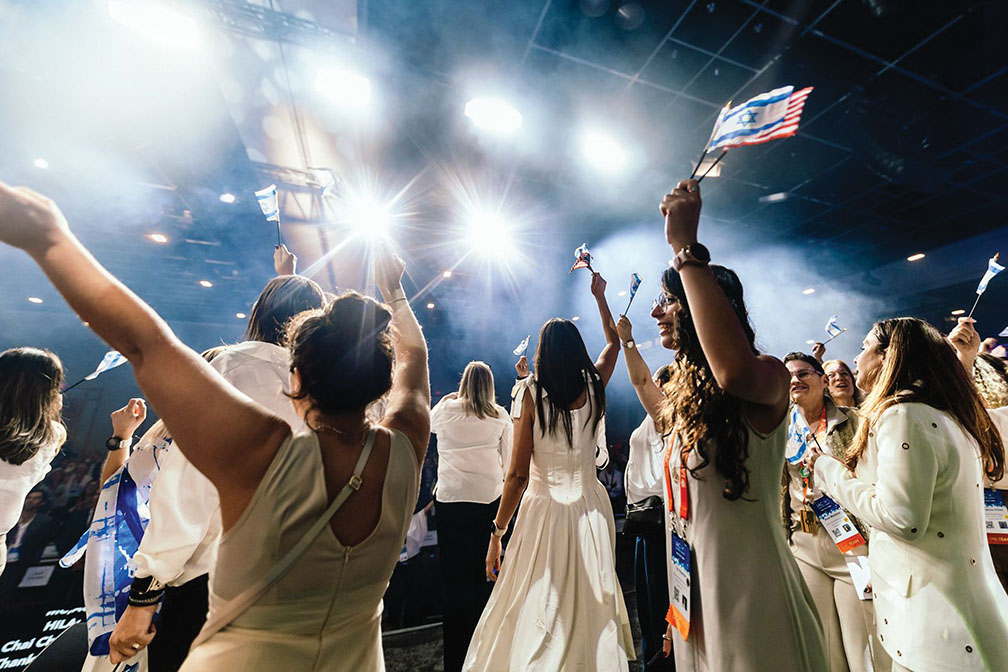

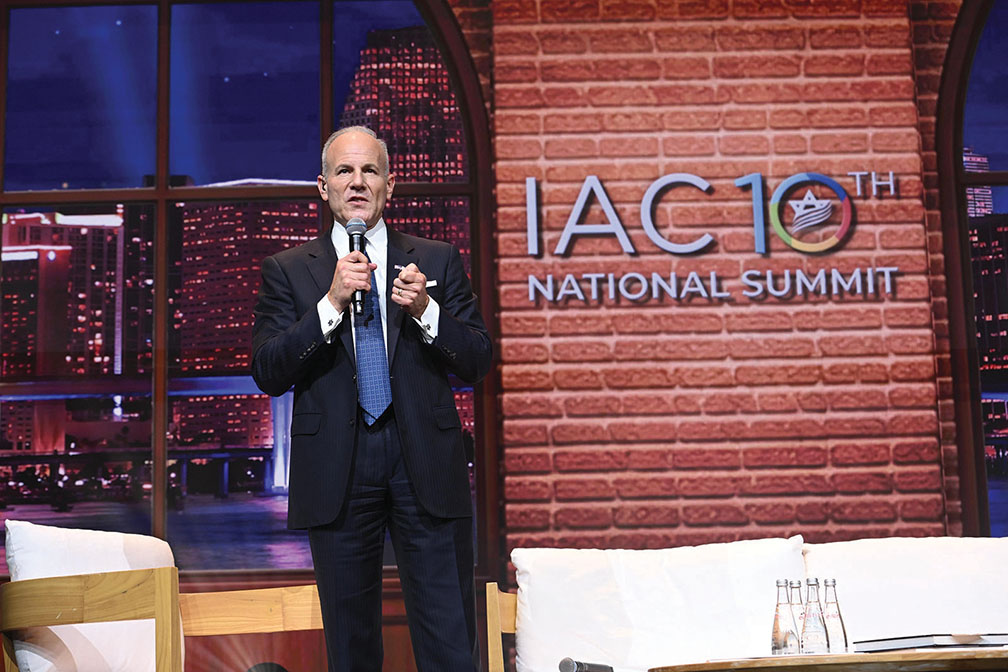


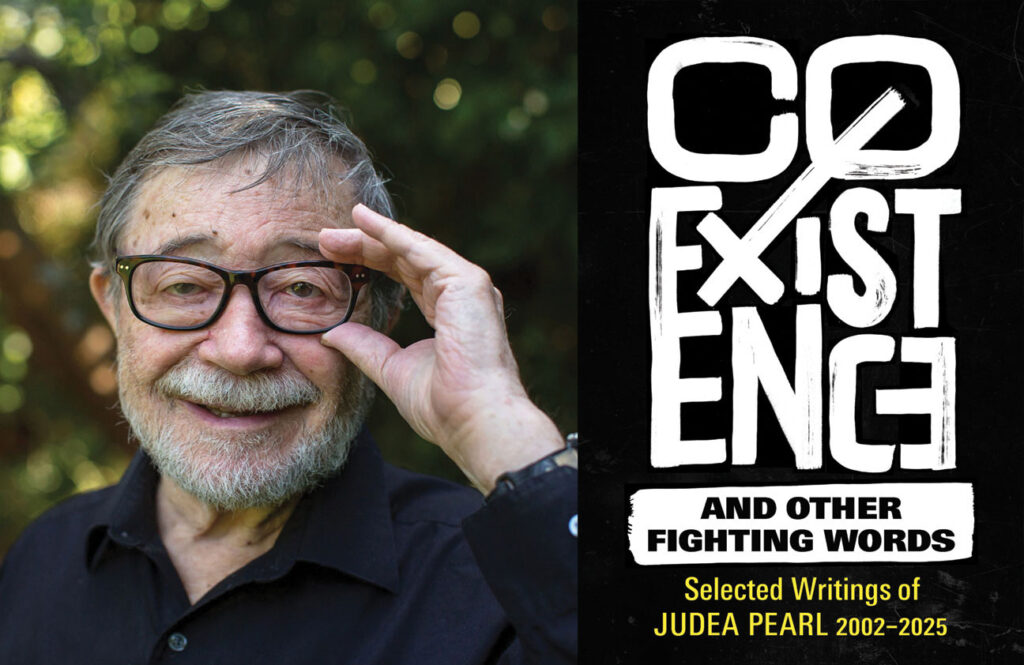


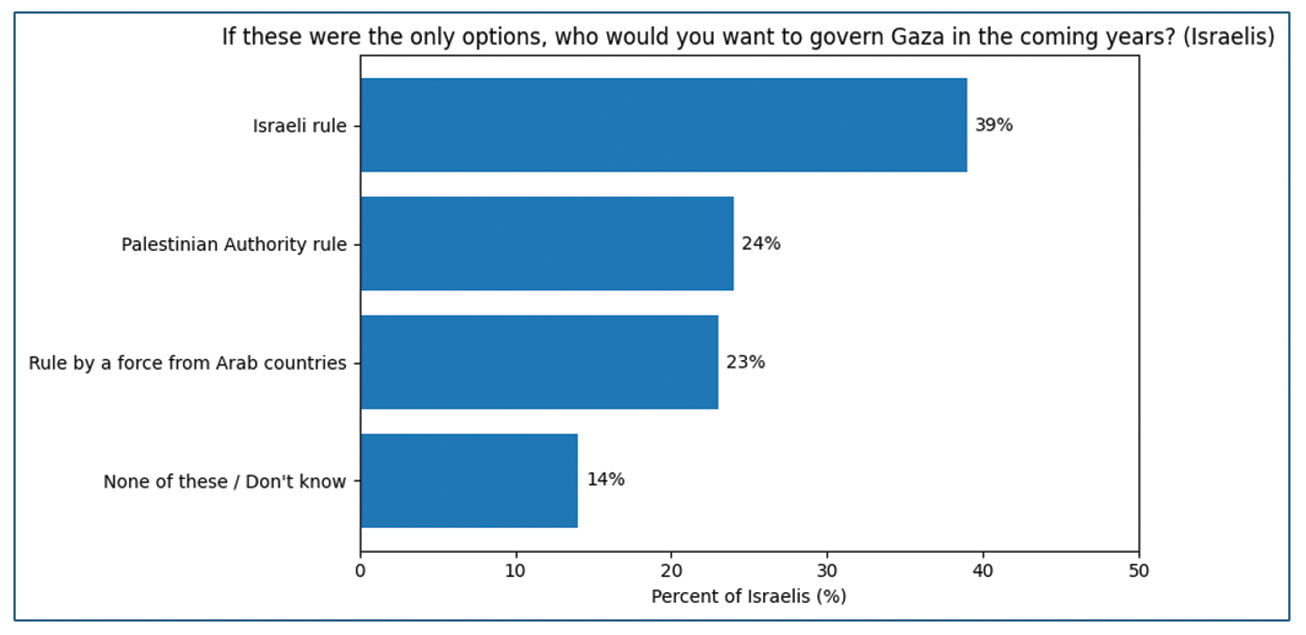


 “I might have still remained at home in my ceiled house, with a beloved and virtuous wife and lovely family. Great and precious were the many privileges that I enjoyed there, and I feel most sensibly the deprivation of them; but the light and conviction of God’s precious promises, in reference to the return of the Jews and the setting up of his everlasting kingdom at Mount Zion and Jerusalem, became so great, taken in connection with the signs of the times, that I could no longer remain at home; therefore I have forsaken houses, brethren, sisters, mother, wife, children and lands for the kingdom of God’s sake.”
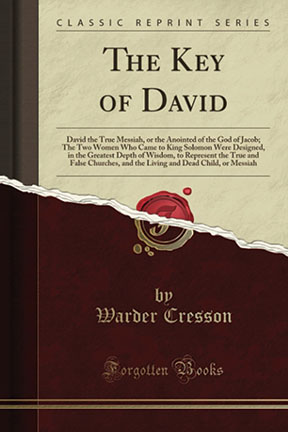 Taking a spiritual likening to the Jewish community, Cresson began campaigning against Christian missionaries who were seeking to harass the Jews into converting. He wrote pamphlets and articles in Leeser’s The Occident newspaper in support of the Jews, signing them under the pseudonym “Michael Boaz Israel.” He then converted to Judaism, took on his pseudonym as his actual name, and explained his decision in his 1848 book, “The Key of David: David the True Messiah.” In it, he wrote: “I remained in Jerusalem in my former faith until the 28th day of March, 1848 when I became fully satisfied that I could never obtain Strength and Rest, but by doing as Ruth did, and saying to her Mother-in-Law, or Naomi ‘Entreat me not to leave thee for whither thou goest I will go’… In short, upon the 28th day of March, 1848, I was circumcised, entered the Holy Covenant and became a Jew.”