
Every Sunday morning, 88‑year‑old Mike Leven opens his email and waits for the latest numbers to appear on his screen. They come in from his team at Jewish Future Promise, the global movement he founded to secure the future of Jewish life through charitable giving. Each update tells him how many more people have signed “The Promise” to direct at least half their charitable giving to Jewish or Israel‑related causes.
“When I see the numbers on Sunday morning, I smile,” Leven said. “So, I hope we keep going.”
Leven was speaking to the Journal just as his Jewish Future Promise recorded its highest-performing month to date, with nearly 7,500 new signers joining the initiative this past July.
The 7,478 new signers to the Jewish Future Promise (JFP) last month marks an eight percent increase over June, when 6,928 new signers joined, and a 114 percent increase over January (3,491), making July responsible for nearly 19 percent of all new signers this year, according to JFP.
“Momentum is building, and so is resolve,” Leven said. “But let’s be clear: words and well-meaning statements are not enough. We need to act boldly and strategically. This is a promise to ourselves, to our children, and to the future of the Jewish people.”
To date, more than 122,000 individuals and family foundations from around the world have signed the pledge. Leven, who started the initiative during the pandemic, hopes it will attract 175,000 signers by the end of 2025.
Launched in 2020, JFP, formerly known as Jewish Future Pledge, invites individuals of all backgrounds to commit, during life or through their estate, to allocate at least 50 percent of their charitable giving, or anything they can, big or small, to Jewish or Israel-related causes. Each signer joins a growing chorus of individuals taking a stand for Jewish identity, continuity and pride.
The initiative is gathering signatures at a time when it has become clear that not enough Jewish charitable dollars are going to Jewish causes. In 2017, a study found that just 11 percent of foundation donations from Jewish individuals were being invested in Jewish causes. The study, “American Jews and charitable giving: An enduring tradition,” was undertaken by Hanna Shaul Bar Nissim, now serving as deputy director at the Ruderman Family Foundation. At the time of the study’s publication, Bar Nissim said she “analyzed the giving patterns of the 33 Jews who made the 2016 Forbes 400 list of the richest Americans,” before drawing her conclusions.
She found that so-called Jewish “mega-donors” often gave to secular institutions—universities, hospitals, civic programs—rather than explicitly Jewish ones. Between 1995 and 2000, for instance, only 9.6 percent of gifts from such donors that totaled $10 million or more funded Jewish causes, her research indicated.
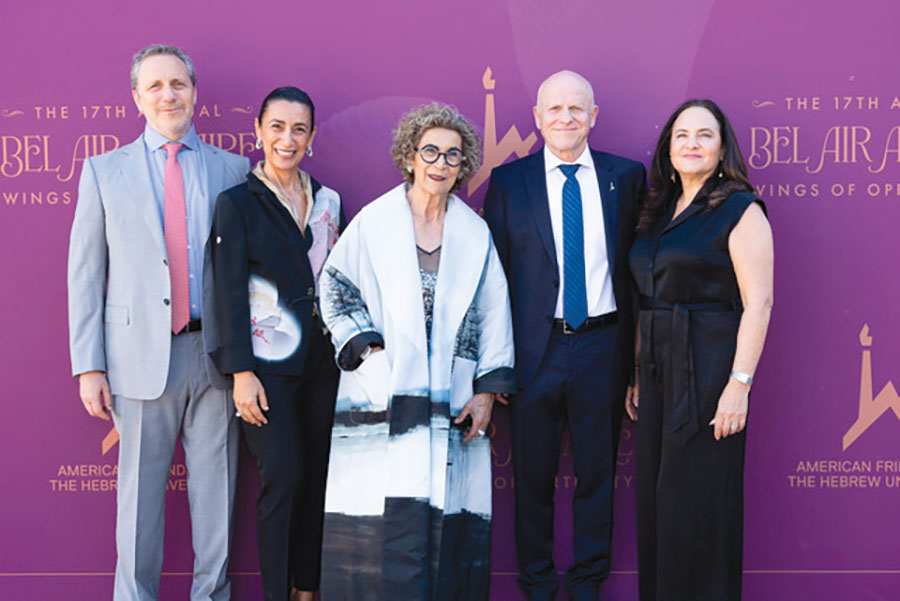
It was against this backdrop, as well as the uncertainty brought on by the pandemic, that Leven, former CEO and chairman of the Georgia Aquarium, founded JFP. In building the movement, he’s been joined by Mark Silberman, former national board member of the Union for Reform Judaism; Amy Holtz, a leader in the Jewish nonprofit space; and Hadara Ishak, who had a career in both the for-profit and nonprofit worlds before assuming her current role as president and chief operating officer at JFP.
When someone signs the pledge, the promise is not a legal commitment, but a moral one.
“You are simply promising that 50% of any funds going towards charity in your will— whether it’s $10 or $10 million—will go to Jewish causes,” according to the JFP website.
Since JFP launched in 2020, signers have spanned all generations, from Gen Z students to multi-generational philanthropists. They include teacher Tamy P., who has had a 31-year career shaping young lives and has been thinking about what her most lasting contribution will be—beyond the classroom.
“As a teacher for the past 31 years, education is key to fight injustice and antisemitism. What we’re facing now as Jews shows how our society has been indoctrinated rather than educated,” Tamy P. said, when asked why she signed.
JFP’s work is two-fold. Along with building momentum for Jewish giving, it also seeks to inspire young adults through the Jewish Youth Promise, fostering lifelong engagement with the Jewish community for 13- to 24-year-olds.
Leven attributed the strong numbers in July to successful social media campaigns. A veteran of Jewish philanthropy, he funds JFP from his own pocket and said non-Jewish individuals have committed to supporting Jewish causes as well.
“This isn’t just a Jewish issue,” Leven, who is a trustee with the Marcus Foundation and is an honorary board member of Birthright Israel Foundation, said. “It’s a human one. Anyone who understands that Jewish continuity and Israel’s survival are essential to a moral, democratic, and spiritually vibrant world should care about this movement.”
To sign the Jewish Future Promise or learn more, visit https://jewishfuturepromise.org/sign-the-promise