Growing up, my parents had to drag me to shul. Why waste an evening or morning in synagogue when I could be playing sports or hanging out with my buddies?
As an adult, my attendance at services was largely limited to the High Holy Days and the occasional life-cycle event.
That all changed 25 years ago when a friend invited me to attend a Shabbat service with her. I discovered that it was nothing like the spectacle of Rosh Hashanah and Yom Kippur, when finding decent parking and a good seat was reminiscent of the arduous journey the Israelites took in search of the promised land.
Realizing that Shabbat services were both moving and enjoyable, my sporadic temple visits turned into regular attendance. And then, a dozen years ago, I decided to organize my calendar around Shabbat.
I belong to three synagogues, and unlike the man stranded on a desert island in that old joke, I don’t define myself by the ones I don’t attend. In fact, I cherish them all. Each provides something unique and quite exceptional. I never miss streaming Friday night Kabbalat Shabat services from Am Shalom in Glencoe, Illinois, or attending Saturday morning services in person at Adat Ari El in Valley Village. And during the summer months, I take advantage of the time difference between the Midwest and LA to spend Friday nights “Under the Stars” at Leo Baeck Temple.
As satisfying as Shabbat services typically are, every once in a while one rises to the next level.
That was the case this past Friday at Leo Baeck, where seven adults became b’nai mitzvah.
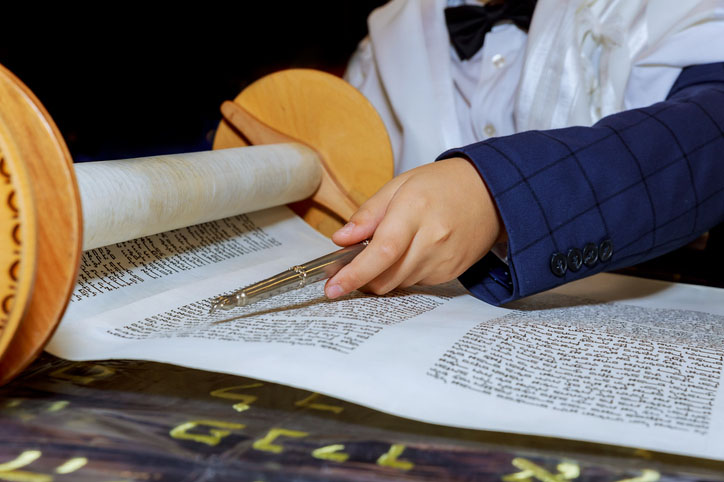
Such a ceremony emerged in recent decades in recognition of the reality that some Jews never had the chance to experience this important milestone earlier in their lives. That was particularly true for women of a certain age.
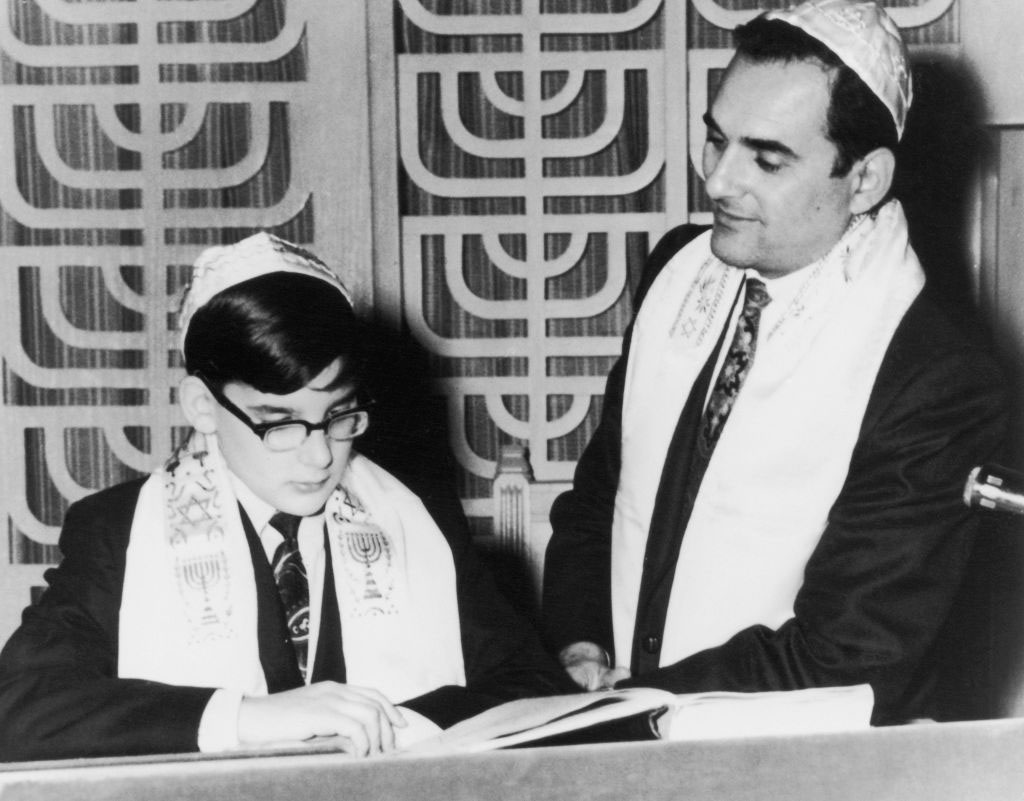
At a service last week at Adat Ari El, a 13-year-old who became a bat mitzvah pointed out that she is the third generation of women in her family to be called to the Torah. I was amazed, given the fact that many young women who grew up when I did in the 1950s and ’60s had missed out. While Judith Kaplan, the daughter of the influential rabbi Mordecai Kaplan, celebrated her bat mitzvah in 1922, it took until the 1970s for the practice to be widely adopted. Being raised as members of a Conservative synagogue in New Jersey, as unthinkable as it would have been for me not to become a bar mitzvah, it was equally unthinkable for my sister to have been given the same opportunity to be recognized as a Jewish adult.
During the adult b’nai mitzvah service Friday night, some of the participants remarked that they hadn’t had access to religious education when they were growing up. Another, my friend Lisa, became a Jew by choice later in life.
They told moving stories about their lives, introduced prayers, chanted from the Torah and led the service with remarkable skill and enthusiasm.
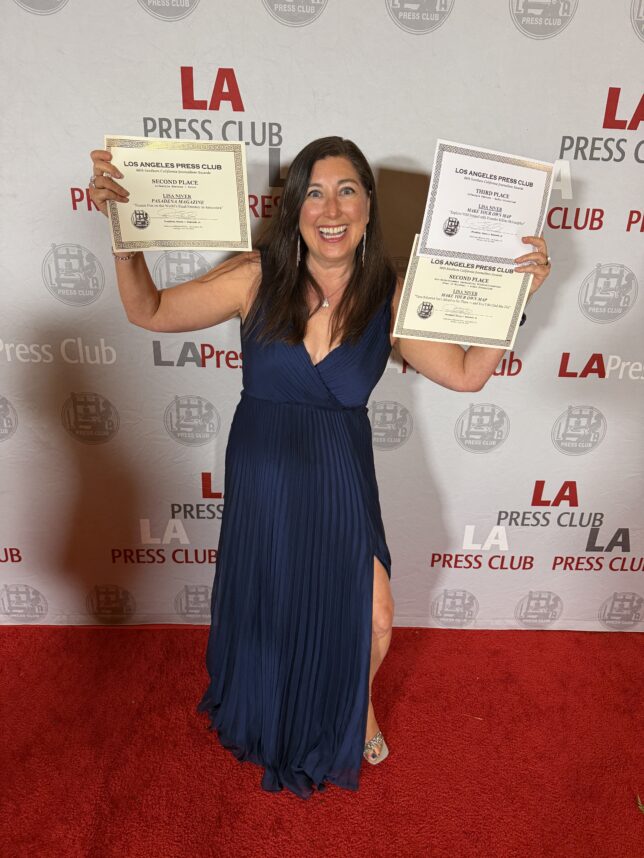
I was especially proud of Lisa, who grew up as a Presbyterian in the Bible Belt, and doesn’t recall ever having met a Jew before relocating to Los Angeles, where she fell in love with a Jewish man. She decided to raise children within the Jewish faith and went all in: conversion lessons, lighting weekly Shabbat candles, joining a Shabbaton, visiting Israel and sending her son to a Jewish day school. Her Christian family back home embraced her decision. Lisa’s mom crocheted her grandson’s yarmulke when he became a bar mitzvah, and her sister flew across the country this week to attend Lisa’s big event.
In her remarks, Lisa said that becoming a bat mitzvah was another step in her Jewish journey. She worked hard preparing with her classmates, and came away more committed than ever to a lifetime of Jewish learning.
Rabbi Ken Chasen concluded the night by marveling at how the b’nai mitzvah group so proudly and publicly declared their commitment to our faith. We all left the sanctuary inspired and uplifted.
During these days when it is so easy to succumb to despair, religious services can serve as a wonderful antidote to hopelessness. Especially this one.
Morton Schapiro served for more than 22 years as President of Northwestern University and Williams College. He taught almost 7,000 undergraduates over his more than 40 years as an economics professor.