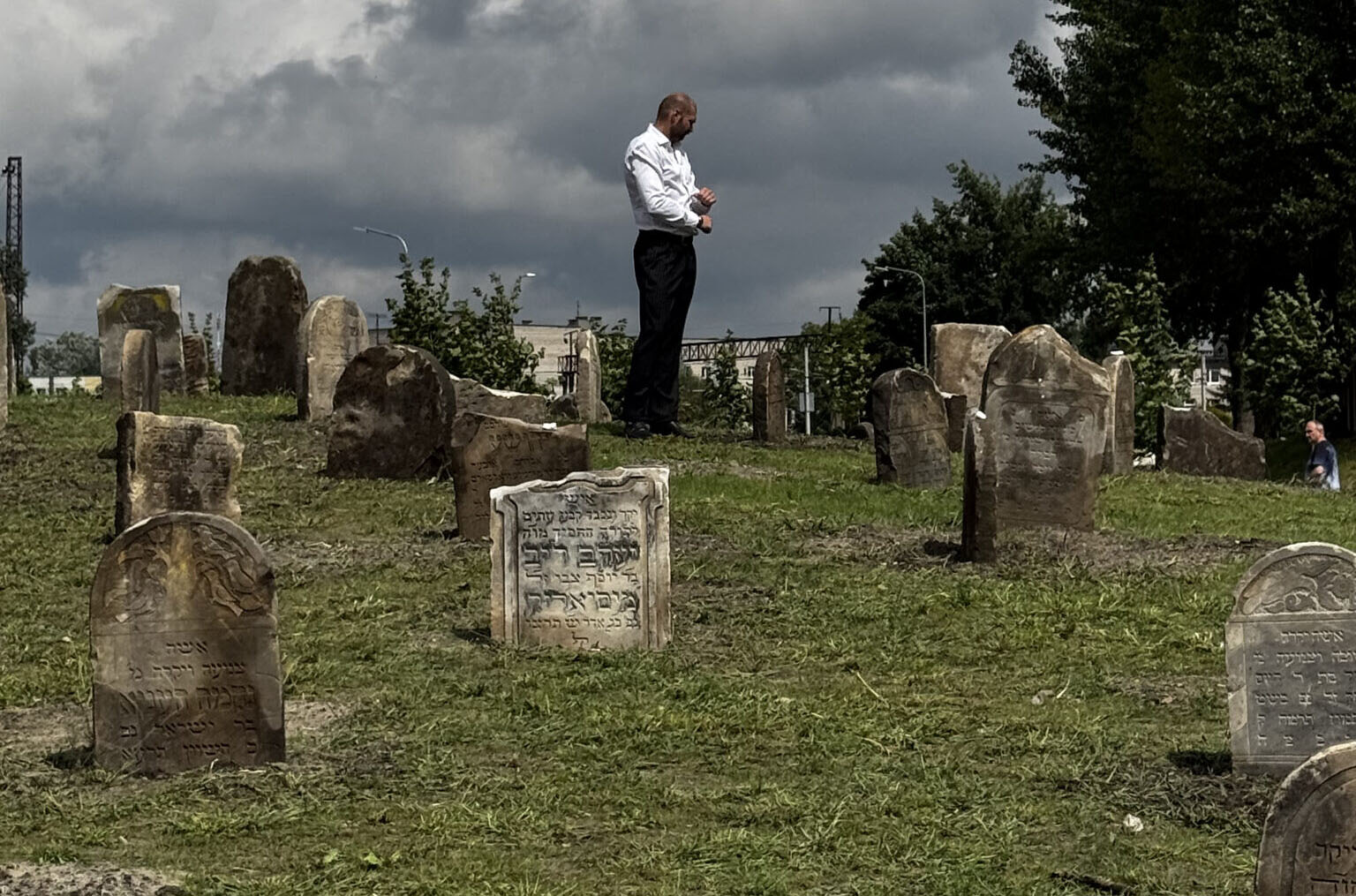
When Stephen Grynberg first stepped onto the grounds of Brest’s old locomotive football stadium in 1997, he wasn’t expecting to find fragments of his family’s past buried beneath the turf. The stadium sat atop what had once been the Jewish cemetery of Brest—his father’s hometown, a center of Jewish life before the Holocaust.
“There was a feeling of such deep and buried sadness amidst the silence of the place” Grynberg said.
More than two decades later, the silence has been broken. On July 28, a striking new memorial—Memory Embrace—was unveiled on a portion of the original cemetery in Brest, Belarus. It is the culmination of a two-decade effort to restore dignity to a sacred site that was destroyed by the Nazis and paved over by the Soviets. The monument, built from recovered headstones, now stands as a public act of remembrance and reclamation.
Brest, once known as Brisk or Brest-Litovsk, was home to a vibrant Jewish community that helped shape Eastern European religious and cultural life. Founded in 1835, the city’s Jewish cemetery held more than 35,000 graves before the Second World War. But when the Nazis arrived, they murdered nearly all of Brest’s 23,000 Jewish residents and began systematically dismantling the cemetery. The destruction continued in the postwar Soviet era, when the grounds were paved over to build a football stadium, and headstones were used as construction material throughout the city.
Beginning in the early 2000s, those headstones began to resurface—literally. They emerged during roadwork and renovations, fragments of memory refusing to stay buried. To date, more than 1,200 full and partial stones have been recovered, catalogued, and preserved.
Grynberg, a Los Angeles-based filmmaker and founder of The Illuminate Foundation, learned about the site during his visit to Brest. His late father, Jack Grynberg, was the city’s last living Holocaust survivor. “When I saw the headstones for the first time,” he said, “the idea of returning dignity to this place, to the people buried there, and to the vibrant Jewish community they created was a powerful antidote to the attempted erasure.”
Grynberg helped mobilize an international effort to reclaim and memorialize the site. He partnered with The Together Plan, a UK-based nonprofit led by Debra Brunner, members of the Jewish community from Brest, and Belarusian officials.
To design the memorial, Grynberg turned to Brad J. Goldberg, a renowned artist whose work explores the intersection of memory and material. The two men have known each other since childhood in Denver, where their fathers were friends. That long-standing bond gave the project a personal resonance for both.
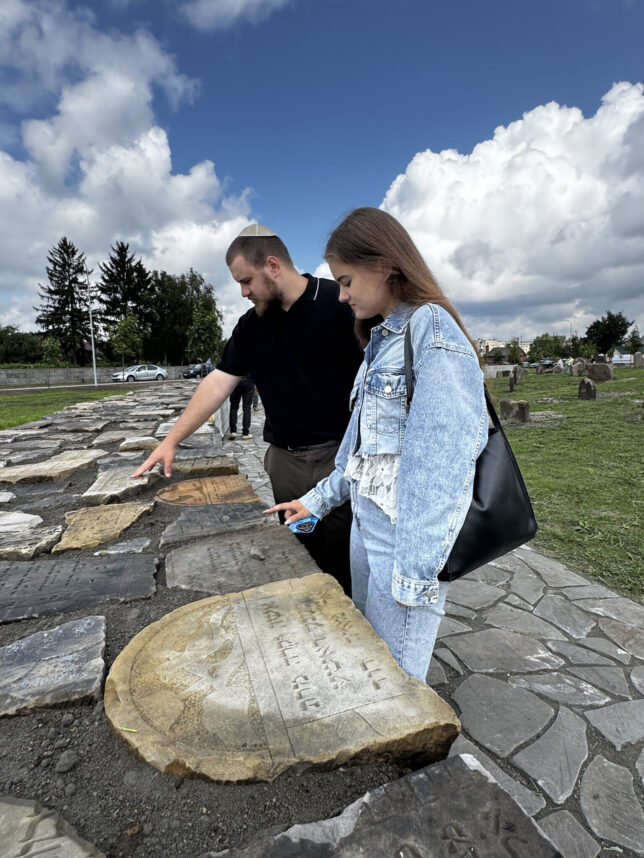
The resulting structure, Memory Embrace, features two curving stone walls that cradle a raised mound of earth, both surfaces embedded with recovered headstones. The design invokes both sacredness and shelter—embracing memory within the very soil that once hid it.
“There is this phrase called tikkun olam, about repairing the world,” Goldberg said. “A lot of the work I do is about repairing—cities, towns, places. I’m really hoping this project invokes a sense of sacredness, a sense of peace, and a sense of not allowing this kind of thing to happen again.” For Belarusian Jews who grew up under Soviet rule, where Jewish memory was often suppressed or erased, the unveiling was more than an artistic event—it was a moment of communal reckoning. “Growing up in Soviet Belarus, Jewish history was a shadow—present but unspoken,” said Artur Livshyts, Chairman of the Jewish Religious Union in Belarus. “By consecrating this memorial, we break that silence. This is more than stone and memory; it is an act of defiance against forgetting.”
Brunner, whose team spent years researching the site and building local partnerships, called Memory Embrace a first in the region. “This is a first-of-its-kind memorial in Eastern Europe: bold in scale, concept, and message. It transforms a long-erased cemetery into a sacred site of dignity, reflection, and education.”
As the stones were returned to their resting place,Memory Embrace emerged not only as a tribute to those lost, but as a call to conscience. A physical reminder that dignity can be restored, memory reclaimed, and justice—even delayed—can still take root.