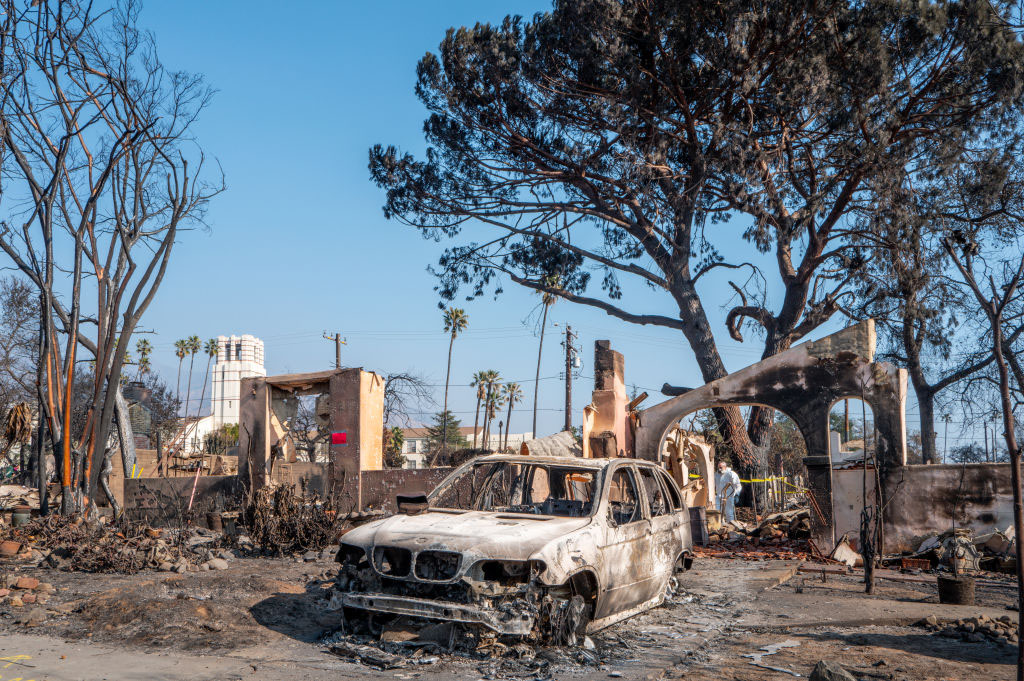
In the wake of the wildfires that leveled entire neighborhoods, the Jewish Free Loan Association (JFLA) has announced a broad zero-interest loan program for fire victims, both Jewish and non-Jewish.
Loans are available to people of all faiths and backgrounds who live in Los Angeles, Santa Barbara, or Ventura counties who have been impacted by the wildfires. While seeking to aid the widest portion of Southern Californians affected by the wildfires, JFLA reserves the right to request proof of negative impact from the fires.
Two types of zero-interest, zero-fee loans are available:
- Up to $25,000 for eligible applicants to assist with temporary housing, transportation, food, medicine and other essential needs.
- Loans of up to $10,000 are available for persons without a guarantor.
Additionally, Jewish Free Loan is extending support up to $50,000 to nonprofits and small businesses affected by the wildfires. These loans may be applied to inventory purchases, relocation costs, signage, marketing, replacement of computers and essential equipment among other items.
Loans up to $10,000 can be made to non-profits and small businesses without a guarantor.
Rachel Grose, executive director of Jewish Free Loan, said her agency understands the challenges confronting disaster victims. “Our goal is to provide immediate financial relief,” she said.
Ground rules for applicants:
• They must be at least 18 years of age and have a Social Security number and current California-issued ID or driver’s license showing permanent residency in Los Angeles, Ventura or Santa Barbara County.
• Applicants must demonstrate a need.
• Documentation provided must have a consistent mailing address.
• Applicants must show ability to repay the loan. Loans are paid back within 36 months and payments begin 30-45 days after receiving funding. (A few loan funds have shorter or longer repayment rates. Check the loan description for more information.)
• Applicants cannot be a current borrower or guarantor on a loan from Jewish Free Loan.
• Married couples are considered as one applicant or one guarantor.
Jewish Free Loan Fire Relief loans may be used for the following costs:
• Temporary housing, hotel or motel rooms, short- and long-term rentals.
• Transportation, vehicle replacement, vehicle repairs, car rentals, purchase of a used car, among other options.
• Essentials: Food, clothing, medicine, bedding, towels.
• Housewares, including replacement furniture, kitchenware and other equipment.
• Appliances.
• Electronics – smartphones, laptops, tablets, chargers, accessories.
• School supplies, books and backpacks.
• Toys, games and comfort items.
JFLA said the application process for wildfire relief loans is intended to be simple and efficient, with a team ready to assist applicants throughout the process. To ensure that JFLA can continue providing emergency loans to those affected by the wildfires, the organization is calling on the community for support.
Donations may be made directly to JFLA through their website. A spokesperson asserted that every contribution will make an important difference in the lives of those in need.
For more information about JFLA’s Fire Relief Fund loans or to make a donation, visit their website, www.jewishfreeloan.org.
Founded in 1904, JFLA is committed to helping people of all faiths and backgrounds achieve financial stability and self-sufficiency.