fbpx

January 22, 2025

ICC’s Geller Fellows Visit Israel and UAE to Learn About the Abraham Accords

Since 2020, Kian Kohanteb had been captivated by the groundbreaking Abraham Accords. Eager to deepen his understanding of them, he immersed himself in lectures, podcasts and articles.

At the start of the new year, he got to experience the effects of them firsthand as a fellow with the Geller International Fellowship, part of Israel on Campus Coalition. Along with 42 other students, he traveled to Israel and the UAE from December 30 to January 9 to learn about the Abraham Accords and the efforts to bring peace to the Middle East.

“The notion that four Arab nations had finally recognized Israel’s right to exist fascinated me,” said Kohanteb, a senior majoring in political science at UCLA. “However, no amount of research could compare to the transformative experience of witnessing the Abraham Accords in action during my trip to the UAE.”

As a Geller fellow with the pro-Israel ICC, Kohanteb is part of a cohort of students from college campuses across the United States. They participate in a six-month program, learning about Israel from the experts and engaging in critical conversations surrounding the U.S.-Israel relationship as well as the Abraham Accords. The trip to the UAE is the culmination of the fellowship.

The Geller fellows, who are made up of Jewish and non-Jewish students, toured around hotspots in Israel and the UAE like the Old City in Jerusalem, Shuk Hacarmel in Tel Aviv, the Sheikh Mohammed Centre for Cultural Understanding in Dubai, the Presidential Palace (Qasr Al Watan) in Abu Dhabi and Sheikh Zayed Grand Mosque, the largest mosque in the UAE.

In between visiting must-see sights, the fellows heard from influential leaders like Eric Reiner of Vine Ventures, who spoke about venture capital and international operations, Former Member of the Israeli Knesset Ruth Wasserman Lande and Loay Alsharef, a Saudi peace activist.

One of the most powerful moments was going to the Abrahamic Family House in Abu Dhabi, where the fellows went a tour led by Chief Rabbi of the UAE, Rabbi Levi Duchman.

“Seeing a synagogue built by the Emirati government on behalf of the Jewish community was profoundly moving,” Kohanteb said. “It was a tangible demonstration of the UAE’s commitment not only to recognizing Israel but also to fostering reconciliation with Jewish communities worldwide.”

“Seeing a synagogue built by the Emirati government on behalf of the Jewish community was profoundly moving.”

Simone Beilin, a senior at UC Berkeley majoring in economics welcomed the trip, because it was an inspiring contrast to the darkness she’d experienced on campus since October 7.

“Today’s college campuses may feel like a cesspool of ignorant hatred and antisemitism. This fellowship reminded me that progress is not only possible, but actively happening,” she said.

Another Geller fellow, Eunho Jung, a junior majoring in political science at UPenn, was touched by the group’s visit to Hostage Square in Tel Aviv and the sites of the Oct. 7 massacre.

“These experiences made me more resolute in fighting back against the anti-Israel hate on our college campuses and beyond, especially as a non-Jewish student,” she said. “It is unfathomable to me that there are American citizens still held hostage in Gaza today. Nevertheless, I am inspired by the resilience of the citizens of Israel.”

The goal of the Geller fellowship is to show the fellows Israel and the UAE up close and broaden their understanding of the region. Along with going on the trip, what the fellows get is solidarity with pro-Israel peers, which is so critical at a time when antisemitism is running rampant on college campuses.

 “These fellows return to campus with a renewed sense of purpose and a commitment to sharing their experiences,” said Jacob Baime, the CEO of ICC . “This fellowship reflects ICC’s ongoing work to strengthen the U.S.-Israel relationship and develop new leaders.”

For Kohanteb, the trip offered a glimmer of hope for a brighter future ahead.

“After a challenging year at UCLA marked by extremist protests and divisive campus encampments, this trip offered a powerful reminder that peace is not just a distant ideal—it is an attainable reality,” he said. “Witnessing these groundbreaking efforts firsthand has renewed my hope that more countries in the region will join the Abraham Accords and that lasting peace will spread throughout the Middle East.”

ICC’s Geller Fellows Visit Israel and UAE to Learn About the Abraham Accords Read More »
New Free Loan Plans for Fire Victims

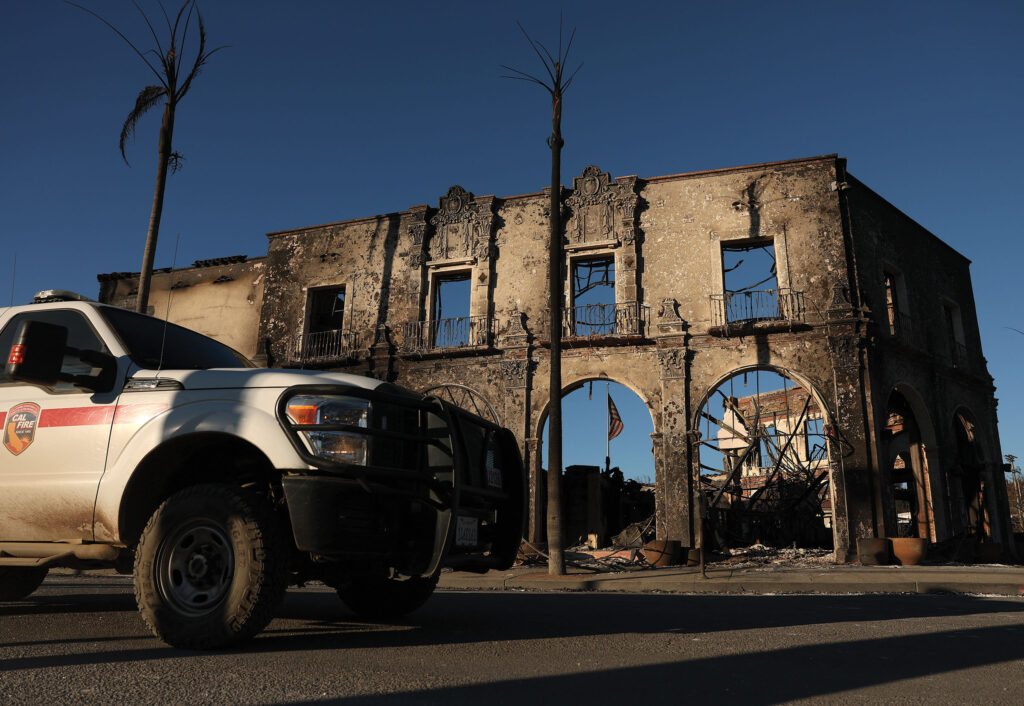
In the wake of the wildfires that leveled entire neighborhoods, the Jewish Free Loan Association (JFLA) has announced a broad zero-interest loan program for fire victims, both Jewish and non-Jewish.

Loans are available to people of all faiths and backgrounds who live in Los Angeles, Santa Barbara, or Ventura counties who have been impacted by the wildfires. While seeking to aid the widest portion of Southern Californians affected by the wildfires,  JFLA reserves the right to request proof of negative impact from the fires.

Two types of zero-interest, zero-fee loans are available:

  • Up to $25,000 for eligible applicants to assist with temporary housing, transportation, food, medicine and other essential needs. 
  • Loans of up to $10,000 are available for persons without a guarantor.

Additionally, Jewish Free Loan is extending support up to $50,000 to nonprofits and small businesses affected by the wildfires. These loans may be applied to inventory purchases, relocation costs, signage, marketing, replacement of computers and essential equipment among other items.

Loans up to $10,000 can be made to non-profits and small businesses without a guarantor.

Rachel Grose, executive director of Jewish Free Loan, said her agency understands the challenges confronting disaster victims. “Our goal is to provide immediate financial relief,” she said.

Ground rules for applicants: 

• They must be at least 18 years of age and have a Social Security number and current California-issued ID or driver’s license showing permanent residency in Los Angeles, Ventura or Santa Barbara County.

• Applicants must demonstrate a need. 

• Documentation provided must have a consistent mailing address.

• Applicants must show ability to repay the loan. Loans are paid back within 36 months and payments begin 30-45 days after receiving funding. (A few loan funds have shorter or longer repayment rates. Check the loan description for more information.)

• Applicants cannot be a current borrower or guarantor on a loan from Jewish Free Loan.

• Married couples are considered as one applicant or one guarantor.

Jewish Free Loan Fire Relief loans may be used for the following costs:

• Temporary housing, hotel or motel rooms, short- and long-term rentals.

• Transportation, vehicle replacement, vehicle repairs, car rentals, purchase of a used car, among other options.

• Essentials: Food, clothing, medicine, bedding, towels.

• Housewares, including replacement furniture, kitchenware and other equipment.

• Appliances.

• Electronics – smartphones, laptops, tablets, chargers, accessories.

• School supplies, books and backpacks.

• Toys, games and comfort items.

JFLA said the application process for wildfire relief loans is intended to be simple and efficient, with a team ready to assist applicants throughout the process. To ensure that JFLA can continue providing emergency loans to those affected by the wildfires, the organization is calling on the community for support. 

Donations may be made directly to JFLA through their website. A spokesperson asserted that  every contribution will make an important difference in the lives of those in need. 

For more information about JFLA’s Fire Relief Fund loans or to make a donation, visit their website, www.jewishfreeloan.org. 

Founded in 1904, JFLA is committed to helping people of all faiths and backgrounds achieve financial stability and self-sufficiency.

New Free Loan Plans for Fire Victims Read More »

Trump Surprises: 5 Comments on The Deal

1. Once again, there was a preconception. Once again, there was a failure of intelligence.

Preconception: Trump will come, and we’ll be able to fight with our hands untied. Let’s hold off until Trump comes, and then we’ll be able to decisively defeat Hamas (not to mention annexation, encouraging emigration, expanding settlements, collapsing the Palestinian Authority).

Intelligence failure: No one sounded the alarm that Trump was planning to do exactly the opposite. And if someone did, the warning went nowhere. A future inquiry committee would easily conclude that the warning signs were there. Trump kept saying what he wanted to happen. But that’s the nature of preconception: you only hear what aligns with your predetermined view.

And so, once again, Israel was caught off guard. The very president who was supposed to remove the shackles tightened them instead. Trump wanted a deal “before” entering the White House. He got it. Trump said: “This must end.” And apparently, this is what he meant.

Or maybe this is just another preconception.

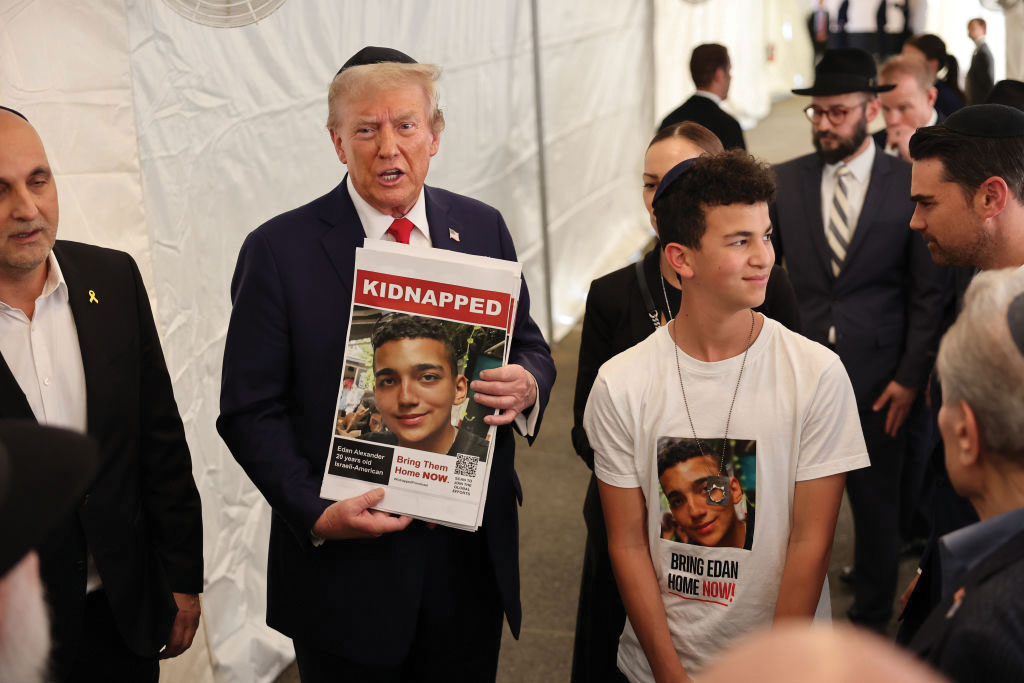
2. In Israel’s history, there has never been such a sour reaction to a sight as heartbreaking and exhilarating as the return of three hostages from captivity.

3. The Israeli government keeps saying — and the Trump administration keeps saying — that Hamas will not rule Gaza.

What neither is saying is how we move from Point A (Hamas in power, as this week’s images showed) to Point B (Hamas out of power).

Does Hamas believe Israel is truly committed to ensuring it will soon cease to exist? If it did, it might have held on to its best bargaining chips — the hostages — instead of agreeing to a deal.

On the other hand, maybe it does believe this. Maybe that’s exactly why it agreed to have a gradual deal — to buy time, to rearm, to resupply, to boost morale. As for phase 2 of the deal? In phase 1 of the deal 33 hostages (including bodies) are supposed to be sent back to Israel. The deal stipulates that negotiations for a second phase are to begin 16 days after the beginning of the implementation of phase 1, with the goal being the release of all remaining hostages, a permanent ceasefire, and the withdrawal of Israeli troops from Gaza.

That may never happen. Because Hamas, too, will never go through with a deal designed to bring about its own destruction.

4. The Israeli government does not seem to intend to proceed to phase 2 of the deal. If that’s the decision, it’s a gut-wrenching one. Let’s hope it wasn’t made for political reasons (holding the coalition together) but because the ministers genuinely believe that proceeding to phase 2 would be a grave mistake.

Phase 2 is the one involving the risk of leaving Hamas in power. 

When asked, the Israeli public refuses to accept such outcome. When asked “Would you support a deal that allows Hamas to remain in power?” a solid majority says no. So it seems that the public (the majority that supports the current deal) believes that the deal can be implemented without leaving Hamas in power.

But wait a minute. When asked “Do you believe Netanyahu’s promise that Hamas will not remain in power?” a 61% majority said they don’t believe the promise.

To summarize: the public supports the deal; the public opposes Hamas remaining in power; the public does not believe Hamas will be removed from power.

In other words: the public supports a deal whose likely outcome it opposes.

You shouldn’t mock Israelis for their confused feelings. The situation really is complicated.

5. The fact that Trump surprised everyone by putting pressure on Israel to accept the deal doesn’t mean he won’t surprise again.

He could surprise Netanyahu again by ramping up the pressure to complete phase 2 of the deal. He could also do the opposite — surprise the deal’s supporters by easing the pressure.

That’s the dizzying reality of having an unpredictable president.

If Trump agrees to halt before phase 2, Israel is likely to do likewise.

So the real question is: What if Trump keeps pushing to complete all stages of the deal? Can Israel be the obstacle to completing the deal, if Trump is fully committed to implementing it?

The short answer is yes: Israeli governments have withstood heavy American pressure before when they believed national interests required it.

The longer answer: It’s complicated. Because resisting Trump’s pressure isn’t the same as resisting Obama’s or Biden’s.

A right-wing Israeli government that stands up to an Obama or a Biden is seen as defiant, principled — and it can always reassure its supporters with a wink: “Hang in there, a friendlier president is on the way.” But a right-wing Israeli government that stands up to Trump? That’s a government telling the Israeli public: There is really no American leader we can work with.

Something I wrote in Hebrew

On Trump’s second term and the Middle East:

The Middle East Trump will encounter now is not the one he faced when he was first elected in 2016. What awaits him? New circumstances. An opportunity … Gaza is in ruins. Hamas is a diminished player. Turkey’s power has grown beyond recognition. Iran is under pressure. Hezbollah is struggling in Lebanon. Syria is no longer a functioning state. And Israel? Israel is not the same Israel. Socially and politically weaker. Perhaps economically too. Wounded, burdened with guilt and despair in the wake of the Oct. 7 trauma. Yet also projecting determination, resilience and the dynamic force of a country that was knocked down, got back up and landed painful blows on its enemies … Trump likes opportunities. And Trump likes Trump. That means the key is identifying the kind of opportunity that will appeal to him … Trump is not a philanthropist. He is not a president whose instinct is to champion noble ideals. He is a president of interests and deals. A president of profit and return.

A week’s numbers

Let’s see what they say when “phase 2” is on the table (see column above). 


A reader’s response

Jennifer Altman writes: “Shmuel, did you change your views on Trump?” My response: The question isn’t specific enough (changed in what way?), but generally speaking, I keep changing my mind from day to day as new information comes in, and recommend that you do likewise.


Shmuel Rosner is senior political editor. For more analysis of Israeli and international politics, visit Rosner’s Domain at jewishjournal.com/rosnersdomain.

Trump Surprises: 5 Comments on The Deal Read More »

Benediction at President Trump’s Inauguration

Let us Pray. 

Almighty God,

Your prophet Jeremiah walked the streets of Jerusalem and blessed its inhabitants with the Hebrew words: Baruch ha-gever asher yivtach baHashem, “Blessed is the one who trusts in God.” 

Thousands of years later, this great nation, which adopted these words as its motto—“in God we trust”—stands at a moment of historic opportunity. 

Americans are searching for meaning. Our Merciful Father, help us rise to meet this moment.

Bless President Donald J. Trump and Vice President JD Vance with the strength and courage to choose the right and the good. Unite us around our foundational, biblical values — of life and liberty, of service and sacrifice, and especially of faith and morality, which George Washington called the “indispensable supports” of American prosperity.

Guide our schools and college campuses, which have been experiencing such unrest, to inspire the next generation to pair progress with purpose, knowledge with wisdom, and truth with virtue.

Hear the cry of the hostages, both American and Israeli, whose pain our President so acutely feels. We are so thankful for the three young women who yesterday returned home and pray that the next four years brings peace to Israel and throughout the Middle East. 

Almighty God grant all Americans the opportunity to realize our shared dream of a life filled with peace and plenty, health and happiness, compassion and contribution. Stir within us the confidence to rise to this moment, for while we trust in God, God’s trust is in US, the American people. America is called to greatness, to be a beacon of light and a mover of history. 

May our nation merit the fulfillment of Jeremiah’s blessing, that like a tree planted by water we shall not cease to bear fruit. May all of humanity experience Your love and Your blessing. May it be Thy will and let us say Amen.


Rabbi Dr. Ari Berman is the fifth president of Yeshiva University.

Benediction at President Trump’s Inauguration Read More »

Leopoldstadt, Vienna: An Unlikely Safe Place for Jews

In Austria, the far-right is being invited to lead the government for the first time since World War II. Despite President Alexander Van der Bellen asking the Austrian Freedom Party (FPO) to form a coalition, Austria’s small Jewish community retains its unlikely optimism. 

 The majority of the country’s roughly 15,000 Jews live in Vienna, where Hitler spent his young adulthood and later returned to proclaim the Anschluss to an adoring crowd from the swastika-swathed terrace of the Neue Burg. In recent years, particularly since the chancellorship of wunderkind Sebastian Kurz, the country has maintained a vocal support of the State of Israel while offering a proactively supportive environment for its Jewish citizens. 

Here Hasidic Jews walk unafraid, shopping in bustling kosher supermarkets and dining in restaurants with Hebrew names like Veahavta (“and you shall love”) and Mea Shearim (named for the town in Israel). The Parliamentary Library prominently showcases an exhibit warning against the threat of antisemitism to the country’s democracy while showcasing the values of lived Jewish life. 

According to the exhibit’s curator, Parliamentary advisor Rifka Junger, herself the Orthodox daughter of survivors, its goal is to embody the principle articulated by Psalm 34’s verse encouraging “turning from evil, and performing good.” Compelling video testimonials of photogenic Viennese Jewish youth discuss the hateful rhetoric they have been subject to. But other clips emphasize religious traditions and values as well as the Jewish contributions to wider Austrian society and history. 

A spike in antisemitic graffiti was seen after Hamas’ Oct 7 attack against Israel. But this is relatively benign compared to the large-scale and often unruly anti-Israel protests plaguing European cities with much larger Jewish populations like London, Paris and Berlin.

Danielle Spera, a prominent former broadcast journalist and curator of the local Jewish Museum, and her husband, psychotherapist and former Parliamentarian Martin Engelberg, credit strong civil ties cultivated organically, coupled with politicians looking to bridge divides, not exacerbate them. To a group of Yeshiva University Straus Center students I helped lead on a recent visit, the couple expressed gratitude to Turkey’s ambassador to Austria for preventing violent outbursts from the country’s 300,000-strong Turkish Muslim community. 

Spera and a local Turkish Imam just published a book in which they engage in respectful interfaith dialogue without shying away from the ripple effects the Israel-Gaza war has had on their respective religious communities. Israel’s Consul to Austria, Yaffa Olivitsky, remarked to us that she has found Austria a refreshingly supportive community, sympathetic to Israel’s efforts to free its hostages held by Hamas, and in which she can publicly practice her own Orthodox faith. 

All this in a country which sought to destroy its Jewish community three times. Under Duke Albert V, in what became known as the Vienna Gesera, Jews were starved, tortured, forced to convert to Christianity, or executed. In 1421, 200 Jews were burned alive. The local synagogue was razed. Its stones were then repurposed to construct the University of Vienna. A Latin relief still at the site of the murders reads, in part, “Everything dissolves that is hidden and sinful. Thus did the flames of hate rage through the entire city in 1421 and punish the terrible crimes of the Hebrew dogs.”

Two and a half centuries later, Holy Roman Emperor Leopold I expelled the Jews, leading the cheering locals to rename what had been the Jewish quarter Leopoldstadt in his honor. 

Then came the deportation of 65,000 Jews to the concentration camps during the Holocaust. My own grandmother was one of the lucky Austrian Jews. She and her family escaped shortly after Kristallnacht and made it to the United States. As Richard Cockett describes in his history of Vienna, Kristallnacht “was more destructive and savage in Vienna than almost anywhere else in what was now Greater Germany. Up to 50 synagogues were burned and over 4,000 Jewish-owned shops looted. About 6,000 people were arrested, of whom at least 27 were murdered.”

German-speaking police now serenely guard their restaurants. Public displays of sympathy for the Nazis are outlawed, as is the giving of speeches from the terrace of the Neue Burg. And prayers are recited daily for the safety of their coreligionists in Israel. 

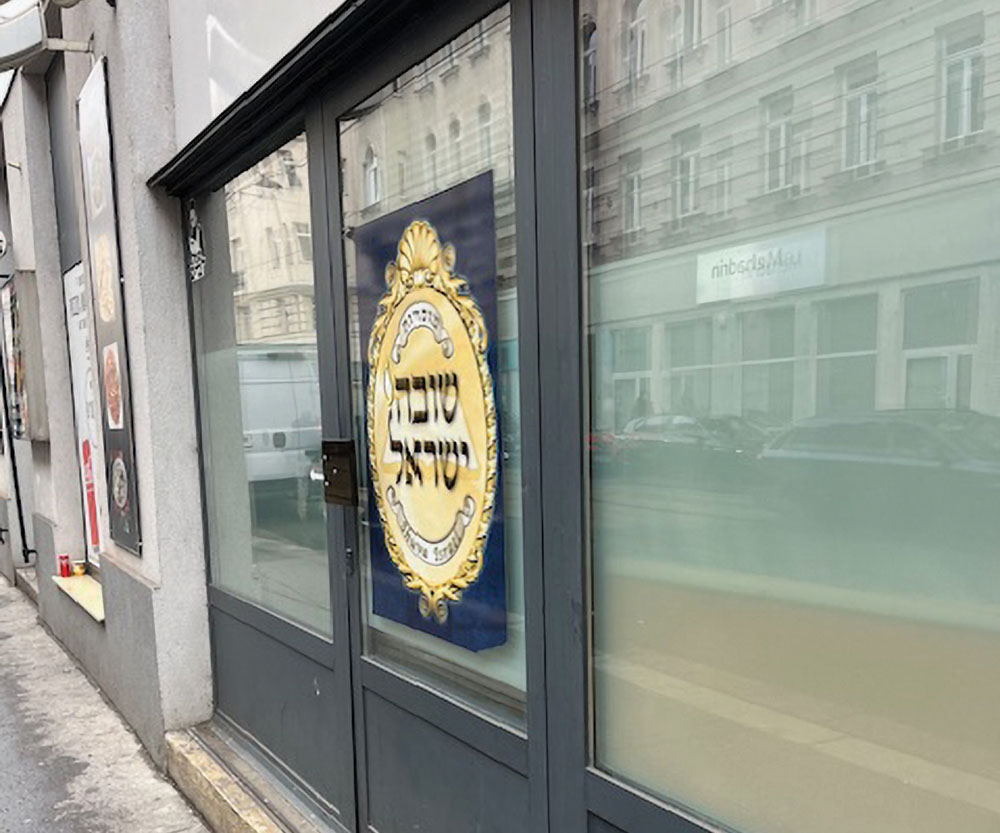
Despite their country’s history and the fraught current moment, the Jews who reside where both Sigmund Freud and the founder of modern Zionism, Theodore Herzl, once lived, do not dream of relocating. German-speaking police now serenely guard their restaurants. Public displays of sympathy for the Nazis are outlawed, as is the giving of speeches from the terrace of the Neue Burg. And prayers are recited daily for the safety of their coreligionists in Israel. The Jewish virtue of hope for bright days ahead remains unabated. Austria’s Jews have survived worse. One kosher restaurant proudly displays a large Hebrew sticker. It reads in Hebrew shuva Yisrael, return O Israel.


Rabbi Dr. Stuart Halpern is Senior Adviser to the Provost of Yeshiva University and Deputy Director of Y.U.’s Straus Center for Torah and Western Thought. His books include “The Promise of Liberty: A Passover Haggada,” which examines the Exodus story’s impact on the United States, “Esther in America,” “Gleanings: Reflections on Ruth” and “Proclaim Liberty Throughout the Land: The Hebrew Bible in the United States.”

Leopoldstadt, Vienna: An Unlikely Safe Place for Jews Read More »

The Reckoning

After the horror, we witnessed the deluge of voices telling us to see it as a morality tale — a harsh but necessary lesson about the hubris of living in a beautiful but dangerous place. 

“We couldn’t have stopped these fires,” cry our state and local officials and their defenders in the media. “Didn’t you see the size of those flames? The strength of those winds? Global warming had a lot to do with it, just like we’ve been warning for years. It was always preposterous to build a city in a hot dry land along an earthquake fault, and foolish to build homes in places where wildfires are a constant threat. The fires were tragic but inevitable.”

The people whose incompetence and lies are on full display would have us believe that not they, but we are guilty for choosing to live here, and shouldn’t expect them to do their best to protect us from the merciless avenging god. What, you expect water in the fire hydrants? Your mayor to keep her promise not to leave the country, just because her officials are warning of extreme fire danger? Firemen to respond to your 911 call begging for help to evacuate because you’re an old man in a wheelchair?  Don’t you understand it’s impossible to be safe in these perilous times?

Fires in California, and the Santa Ana winds, are indeed inevitable. Global warming probably did contribute to making the blazes worse. But there was nothing inevitable about how catastrophic they were. Global warming didn’t cut the LA Fire Department’s budget, turning it into the most understaffed fire department of any major American city. Global warming didn’t prevent California from building any of the reservoirs voters approved 10 years ago. Global warming didn’t make California cancel planned controlled burns last fall and fail to clear brush, leaving countless acres of fuel ready to ignite. Global warming didn’t prevent the city from pre-deploying firefighters where fires were most likely to break out. Global warming didn’t drain the Santa Ynez reservoir in the Palisades — 117 million gallons of water, exactly where it was needed — and leave it untouched and empty for nearly a year. It took people with political power to do these things, or fail to do them, and now they want us to believe that their obvious incompetence has nothing to do with the subsequent hellscape.

Global warming didn’t prevent California from building any of the reservoirs voters approved 10 years ago. Global warming didn’t make California cancel planned controlled burns last fall and fail to clear brush, leaving countless acres of fuel ready to ignite. 

You don’t get this level of ineptitude without some countervailing ideology behind it. Our true-blue leaders and officials just aren’t turned on by the drudgery of governance; their minds are enthused with the higher calling to purge society of its racism, sexism (or “gender-based inequality”), transphobia, neocolonialism and all manner of other social sins.  They are committed to redressing history’s countless injustices. They can’t be expected to think about all that and the infrastructure too. 

Those empty fire hydrants, for instance. A whistleblower told the Daily Mail that the fire department used to check every hydrant once a year, and often found them not functioning. The fire department would issue a report, and it would take months to get fixed. Last year the department, its budget cut beyond endurance, said they were simply too busy handling calls, and handed the job of checking hydrants to the water department. “I would be willing to bet DWP didn’t do this,” the whistleblower said.  

The DWP leaders had other priorities. On Karen Bass’ orders, last May the city somehow found the money to hire new CEO Janisse Quiñones at a salary of $750,000 — double that of her predecessor. She’d been a top executive at PG&E, which went bankrupt over its responsibility for several previous wildfires. She declared that putting an equity lens on everything was the “number one thing that attracted” her to her new role (the hefty salary presumably didn’t hurt). And she was a Latina, the first to head the corporation. Her elevation, in other words, was an inspiration for women of color everywhere. Why make a stink about an empty reservoir?

The LA Fire Department heads, too, were enraptured by the virtue of pursuing Diversity, Equity and Inclusion (DEI). Fire Chief Kristin Crowley, the department’s first female chief, created its first DEI Bureau and declared herself “super inspired” about creating a more diverse workplace. The day her appointment was unanimously confirmed by City Council, Crowley told NBC 4 she wasn’t looking for  specific numbers, because “it’s never enough.”

DEI proponents insist, of course, that no one is hired who isn’t qualified, but whistleblowers say that isn’t true; standards have been lowered to admit women. An anonymous firefighter told journalist Michael Shellenberger: “We no longer require two firefighters to be able to throw a 35-foot ladder because of the amount of women that were failing that. So now, it’s just a three-person ladder. We no longer require that as a job requirement. In the field that doesn’t work because we don’t have enough people to spare when a fire is happening to just throw one ladder.”

These DEI issues may very well have cost people’s lives. A fire department that was cut to the bone made a terrible situation worse by putting women in positions requiring the physical strength they simply don’t have. Material reality still matters, even in California.

This wildfire tragedy has roots that go beyond our state’s legendary absorption in tofu, yoga and airy-fairy beliefs, and they involve the kind of society we want to live in, and how we view ourselves. To our elected officials, above all Democratic Gov. Gavin Newsom, we are all groaning with sin and need to atone. We live on stolen land, enjoying wealth created by slavery and bloody imperial conquest. Only partial redemption may be granted to those who do the necessary penance. In this world, lies are not only permissible but virtuous, as long as they aren’t the other side’s lies. 

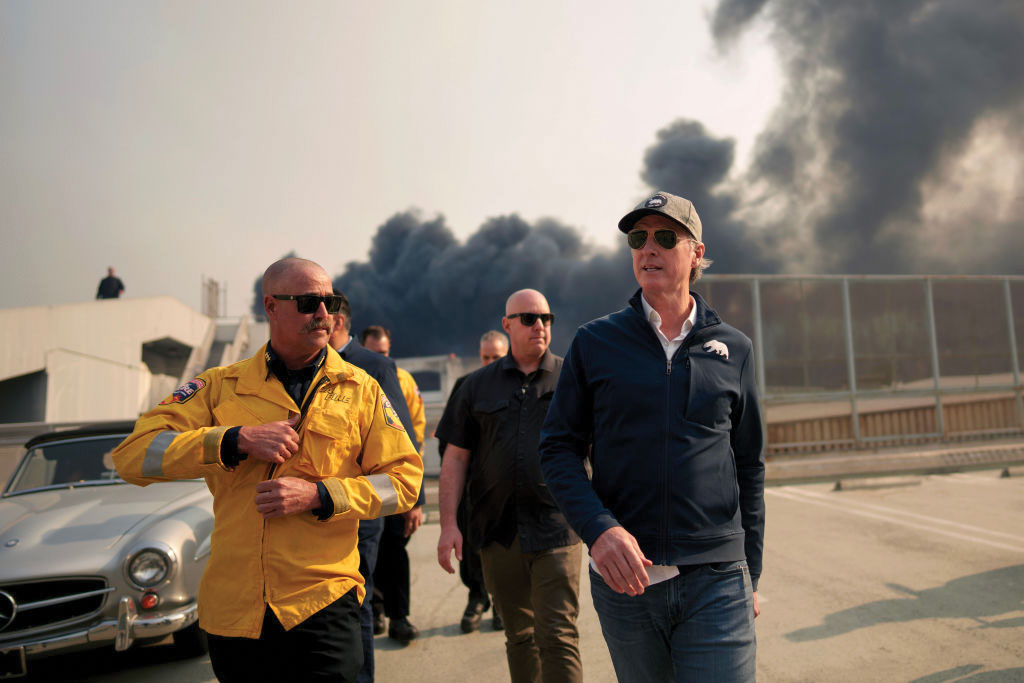
“I’m literally talking to the president right now,” Newsom told a distraught LA resident who confronted him about her daughter’s school burning down. He pointed to his phone. “To specifically answer the question of what we can do for you and your daughter,” he added.

“Can I hear it?” the woman asked. “Can I hear your call? Because I don’t believe it.” Newsom pointed again to his phone, his face registering helplessness. “I’m sorry, there’s literally– I’ve tried five times, that’s why I’m walking around to make the call.”

This ignominious scene — the state’s highest elected leader, lying to a citizen about what he was doing about the disaster that took place under his watch — should really be his epitaph. But it goes beyond him, or Bass, or Quiñones, or any of the other grifters who have so far failed to take any responsibility for their role in this horror show. It’s about a mindset fundamentally at odds with keeping people safe. DEI must DIE, or we will.


Kathleen Hayes is the author of ”Antisemitism and the Left: A Memoir.”

The Reckoning Read More »

Winter Break Was Fine. Please Stop Asking.

I worried about Jonathan, whose name I have changed to protect his privacy. He was a sweet little boy whose mother was suffering from postpartum depression and whose father had been out of work for months and was displaying anger toward his wife and children. I had known Jonathan’s family for years. They were good people, but they were struggling. Winter break, or “Yeshiva Week,” as it is known in the Orthodox Jewish community, was a week away and I knew that Jonathan and his family would be staying home. 

I offered Jonathan’s mother friendship and support. And during winter break, I invited him to our home for playdates because my family and I were also having a “staycation” after recovering from COVID. Jonathan was fun, curious and polite. I wasn’t exactly Mary Poppins, especially when I stepped on a dozen Legos and shrieked at every kid in my presence, but I, thankfully, had a freezer full of waffles. 

One afternoon, a fellow mother dropped off her son for a playdate with Jonathan and my kids at our home. When she saw Jonathan eating a waffle in our kitchen, she bent down and asked, “Aww, your family didn’t go anywhere for winter break?” She then turned to me and declared, “We were going to go to Cabo, but at the last minute, I didn’t feel like it.”

I don’t know how Jonathan choked down the rest of his waffle. Frankly, I don’t know how I choked down the rest of my Persian tea. 

As a community, we need to make some small changes in our attitudes and our speech regarding winter break, which is currently underway for thousands of Jewish families. With school restarting next week and teachers ready to ask students a slew of questions in front of the class about how kids spend their break, now is the right time to address those changes.  

First, let me clarify that modifying how we speak to children about winter break is not meant to wrap all children in a metaphorical bubble of emotional protection. Life is not equitable. Just ask anyone who developed male pattern baldness in his 20s. 

During winter break, some children enjoy lavish vacations at destinations they may never fully appreciate at a young age, while others spend eight hours watching TV shows at home because their parents cannot take time off from work, or their families cannot afford vacations. Other children must endure vacations with a dysfunctional family that makes even a few hours in the car an absolute nightmare. Still other kids will miss the structure of school and the kindness of teachers as they enter a home replete with dysregulated adults and/or siblings for 10 days. 

As for me, in the 12 years that I attended public school in Los Angeles, my family enjoyed one trip during winter break: In December 1997, we drove my mother’s 1986 Ford, complete with a spiffy cassette player, to Las Vegas, where we took advantage of every free entertainment opportunity offered by the city. This included the free bird show at the Flamingo Hotel, the free-to-watch exotic birds in cages in the lobby of the Tropicana Hotel, the free pirate show outside Treasure Island (which no longer runs), and best of all, the free volcano show outside the Mirage Hotel. That volcano, along with the hotel, was demolished last year, and thus ended free Vegas entertainment for a generation of refugees and immigrants (thankfully, the fountain at the Bellagio, which was built in 1998, “dances” every 15 minutes).

Here’s a thought: Whether you are a parent or a teacher, instead of asking kids, “Where did you go over winter break?” which assumes a child’s family enjoyed a vacation, let’s instead ask the following (of younger children): 

• Were you able to help anyone during winter break? 

• Was there a moment during winter break when you made a good choice, one that you feel proud of yourself because it was a hard choice?

•Tell me about a silly moment during winter break. What happened? Does it still make you laugh to think about it?

• Was there anything about your winter break that you felt grateful for because someone else may not have been so lucky? If the child scoffs or refuses to answer from a place of entitlement or sarcasm, an adult may follow up with observations such as, “Did you have warm clothes over winter break? How nice!” or “It must have been nice to have had a break from homework. We all need a break every now and then.”

For older children, we may ask even deeper questions, including: 

• Did you catch up on the news during winter break? Did anything surprise or bother you?

• Besides school, did you feel you had a break from anything else in a way that you really needed, or was helpful to you?

• Who did you help over winter break? Did you help your parents or a sibling? (in Southern California, it would also be apt to ask those who stayed home during winter break whether they or their families were able to help victims of the recent devastating fires).

• How did you handle moments of boredom over winter break? Or was your winter break so busy that you wish you had had a few minutes of boredom?

• And finally, how was your glamorous family trip to Dubai?

Kidding. 

Rather than asking kids what they did over winter break, I often ask, “Did you get a little rest?” Rest does not have to mean a vacation; rest can simply mean sleeping in during mornings when children would otherwise have to wake up early and follow strict regimens of time. It also forces kids to stop and realize that they did most likely sleep in or enjoy some time off from school.

Sometimes, I like to add, “Did you drive your parents crazy over winter break”? For younger children, I always want to know whether they lost any teeth, found any coins, or dug up anything interesting during their time off. Ever tired of older kids’ lackluster attitudes, I often simply ask them if they have downloaded any good apps lately.

I asked Suri Nowosiolski, a Licensed Clinical Social Worker (LCSW) and child anxiety expert who has worked in local schools for over 30 years whether she had any tips for teachers on discussing winter break with students. She suggested that teachers allow students to choose from “a menu of prompts.” These include:

• What is something you experienced over break that you are grateful for?

• Who did you most enjoy spending time with over the break?

• How did you make someone else feel good over the break?

• Did you challenge yourself in any way over the break? How?

• How did you have a growth mindset over break?

• Vacation time is a great time to practice being flexible. Name one way you were flexible over the break.

I have often relied on Nowosiolski, whom I call “the child whisperer” and who is the lead therapist and owner of Hearts and Minds Psychotherapy Group in LA, to offer helpful scripts that get through to kids. Her suggestions are always more helpful than my patented line, “You lost your water thermos again?! You owe me $16!”

Some aspects of life today are already hard enough for kids. And if you think I’m wrong, you’re not appreciating the fact that you probably did not grow up with social media. 

Let’s give kids a break from winter break, whether they traveled to sunny Italy, spectacular New Jersey, the legal borders of their house or apartment, or good, old (and slightly less-free) Las Vegas.


Tabby Refael is an award-winning writer, speaker and weekly columnist for The Jewish Journal of Greater Los Angeles. Follow her on X and Instagram @TabbyRefael

Winter Break Was Fine. Please Stop Asking. Read More »

The Unraveling of Liberal Zionism

“I’m an old-school Liberal Zionist, which means I support Israel and I hate myself for it.” — an anonymous acquaintance.

At its best, Liberal Zionism aspires to reconcile Jewish and Palestinian national ambitions, insisting that these aspirations are not mutually exclusive. At its worst, it is a way to virtue-signal: “I’m not that kind of Zionist.” Yes, Liberal Zionists support Israel, but they do so by wagging their finger at the Jewish state, tut-tutting its every move, and trying to “save it from itself.” 

Liberal Zionism is thus a paradox: a stance of support wrapped in apology, as though Zionism were a sin requiring indulgence. It seeks to stand with Israel while undermining and delegitimizing it at every turn. It insists that “a Jewish state” isn’t the problem — just this Jewish state.

Since Oct. 7, a wave of think pieces have declared the “crisis” of Liberal Zionism, arguing that Liberalism and Zionism have become incompatible, or perhaps that they always were. Writing in New York Magazine, Ayelet Waldman described an “inherent contradiction and willful blindness” in Liberal Zionism, calling it an ideology that “lost much of its political influence long ago” and, for her, was finally shattered by Oct. 7 and the ensuing war in Gaza.

Waldman is far from alone. Many people, watching Israel’s intense campaign against Hamas in the wake of Oct. 7, have come to associate Israel not with liberalism but with violence.

But the real problem isn’t a conflict between Liberalism and Zionism. After all, there is nothing illiberal about a nation defending itself from a terrorist invasion or fighting back after civilians are massacred. The deeper issue is that Liberal Zionism has largely accepted the core premises of anti-Zionism — namely that Israel is an illegitimate aggressor, or even that it is guilty of genocide. A Zionism which has absorbed these beliefs is unsustainable.   

The deeper issue is that Liberal Zionism has largely accepted the core premises of anti-Zionism — namely that Israel is an illegitimate aggressor, or even that it is guilty of genocide. A Zionism which has absorbed these beliefs is unsustainable.

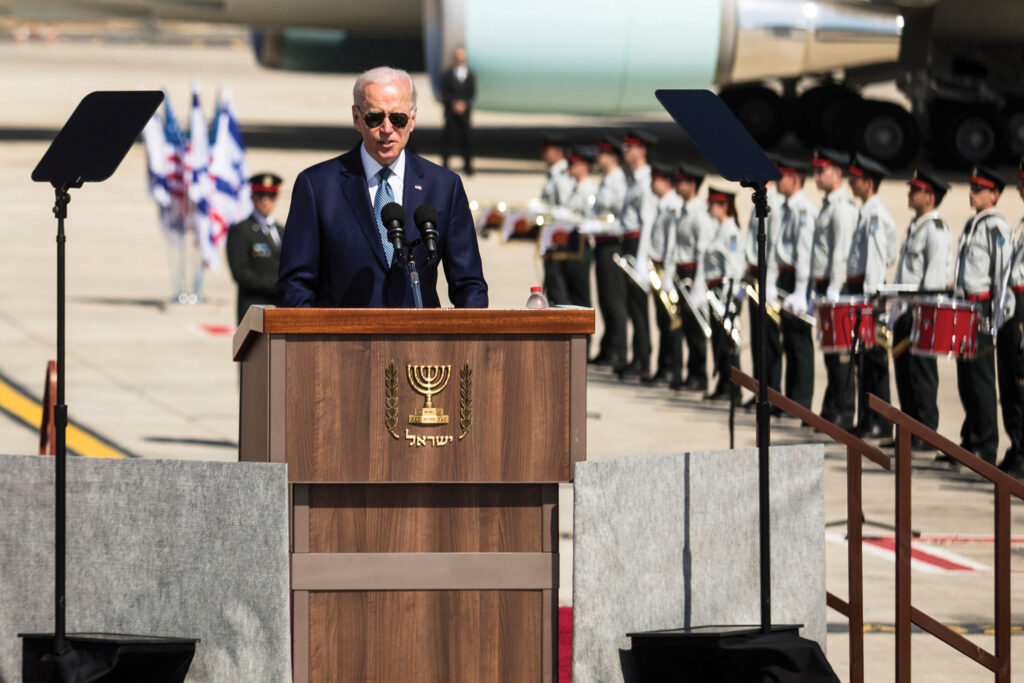
Joe Biden’s presidency provides a painful case in point. More than any other president, Biden embodied this shamefaced Liberal Zionism: He supported Israel but seemed embarrassed to do so. He stood by Israel during its darkest hour but simultaneously undermined its leaders, rewarded its enemies, and made it sound as though even he doubted the justice of the war he was bankrolling.

The result was incoherence. Zionists found his support lukewarm and conditional, while anti-Zionists saw him as complicit in war crimes.

But incoherence is only part of the story. More damaging was the ineffectiveness, now laid bare. Trump, for all his many and serious flaws, did more before officially starting his term to secure a hostage deal than Biden could in 15 months. Outgoing Secretary of State Antony Blinken, in an exit interview with The New York Times, admitted why: Biden’s policy of pressuring Israel emboldened Hamas to dig in its heels.

Of course, Biden wasn’t the only obstacle. Ben Gvir and Smotrich played their part to keep the hostages in darkness, as they have now admitted. But the takeaway is undeniable: Liberal Zionism failed to end the war and bring the hostages home. By contrast, unapologetic Zionism is already working to improve life for Israelis and Palestinians alike.

Unapologetic Zionism need not be uncritical Zionism. Nor does it mean — in the context of the presidency — giving Israel a free pass. We have already seen that Trump is better able to apply pressure and extract compromise from Netanyahu than his predecessor. That said, when Israel is being attacked by jihadist militias on all sides, unapologetic Zionists will not seek to comfort or coddle those in America who want nothing more than to see those militias win and Zionists lose. Rather, they will make the case, loudly and without quibbling, for why America, and Americans, ought to stand by Israel.

I pray this latest deal holds. Nothing matters more than the safe return of the hostages and the beginning of Palestinian rebuilding after such devastating loss.

We’ve seen too much heartache, fear, and bloodshed. Both sides of the border deserve peace and liberty. To say so is an affirmation of my Zionism, not an apology for it.


Matthew Schultz is a Jewish Journal columnist and rabbinical student at Hebrew College. He is the author of the essay collection “What Came Before” (Tupelo, 2020) and lives in Boston and Jerusalem.  

The Unraveling of Liberal Zionism Read More »

The Palisades Diaspora: A Tour of a Holy Town

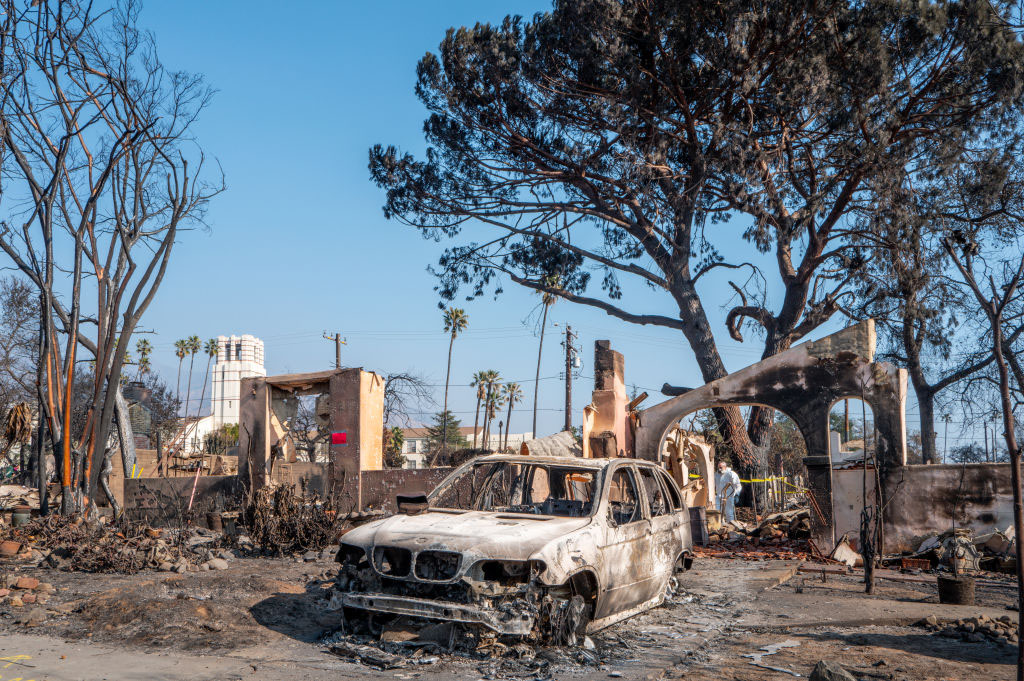
Pacific Palisades, our home for 42 years, is a holy place. My family is now part of the Palisades diaspora, having been forced to evacuate, losing our home and all our possessions. Since its founding, people from around the world have come to the Palisades as a place of refuge in Los Angeles. Beverly Hills residents were an example of those who sought safety and shelter in our land. Sacred sites including the Temescal Gateway Park, Will Rodgers State Beach, Will Rodgers State Historic Park, and the Palisades Recreation Center are a few of our holy places. The Palisades Village was our “Temple Mount,” eliciting so much attention and emotion. 

Originally founded by Methodists in 1922, religions of all faiths called the Palisades home.  Places of worship include the Self-Realization Fellowship Lake Shrine, the Corpus Christi Christian Fellowship, the Parish of Saint Matthews, the Calvary Church, the Presbyterian Church, the Methodist Church, and the Lutheran Church. The Jewish community would gather at Kehillat Israel and Chabad.  Every Thanksgiving, Palisades residents would gather for an interfaith service. Everyone co-existed and the biggest conflicts generally happened on the flag football or soccer fields.  

In addition to spiritual leaders, the Palisades has had a series of Honorary Mayors. Jerry Lewis, in 1953, was one of the earliest. Past Mayors including Billy Crystal, Martin Short, Anthony Hopkins and current Mayor Eugene Levy all lost their homes in the 2025 fires. Current town leaders including Rick Caruso, who rebuilt the Palisades Village in 2018, and Steve Soboroff, who was just appointed as the Chief Recovery Officer for the Palisades, will provide the leadership to restore the destruction of our community. 

People in the Palisades live in distinct neighborhoods ranging from the Palisades Highlands to the north, the three mobile home parks on Pacific Coast Highway to the south, Castellammare to the west and the Rivera to the east.  The Alphabet streets, named after founding Methodist ministers, were the center of the Palisades, and felt like its “Old City.”  New homes sat side by side with original cottages.  Rustic Canyon, a hidden gem, has a rich history that includes the Tongva people, European explorers, experimental forestry, the Uplifters social club and a bohemian community. Santa Monica Canyon, Mandeville Canyon and Sunset Mesa are disputed territories claimed by neighboring Brentwood and Malibu. The residents in Topanga Canyon always felt occupied by the people from the Palisades.

Many say that the Palisades seemed like two different countries. In the morning you could wake up to an ocean view sunrise in the affordable Palisades Bowl mobile home park (where I first lived in 1982 and proposed to my wife Dana), and in the afternoon make aliyah or go up to the luxurious and laidback Huntington Palisades or the Village. The economic, demographic, spiritual and political differences helped to define the Palisades.  

Despite differences, in the Palisades we spoke the same language, ate the same foods (shout out to Café Vida which took over as a central gathering place when legendary Mort’s Deli closed) and had a shared sense of sacred space. Ritualistically we had our festival holidays. We would participate in the annual Fourth of July race, watch our friends in the Palisades Parade, and elaborately decorate our homes for Halloween. Every Sunday, there was a pilgrimage to the farmer’s market. The Pacific Palisades Baseball Association (PPBA) was its own religion. We would hike and bike our trails. My most spiritual times included regular early morning walks from our home next to the Village to grab Starbucks coffee, followed by a stroll to the Via Bluffs overlooking the Pacific Ocean. I would always stop to look for dolphins swimming in the surf. For me, finding them was a sign.

Education was one of the highest values of the Palisades People. We strived for excellence in education whether at our charter public, private, or religious. Palisades High School was the cultural center of our town both spiritually and physically. Pali High was the location of so many films and TV shows ranging from Mod Squad to Modern Family.

Ultimately the people of the Palisades are more than the land. We are the people of the (Library) book. We are a united people who shall last for generations. In New York City last weekend, there were over 150 young adults from the Palisades who rented a bar to gather and recreate a sense of our community. Since the fires, when we pray, we face the Palisades hoping to return as a people. Everyone I have spoken to has said we will return and rebuild for our kids.  

Ultimately the people of the Palisades are more than the land. We are the people of the (Library) book. We are a united people who shall last for generations. 

L’dor v’dor from generation to generation. Kol Palisades Arevim zeh bazeh. All the people of the Palisades are responsible for one another.


Rick Entin is a long-time member of Kehillat Israel, where he formerly served as a member of the Board of Trustees and Chair of the Israel Matters Committee. 

The Palisades Diaspora: A Tour of a Holy Town Read More »

Doctors Must Fight the RFK Nomination

As a doctor, I consider Secretary Xavier Becerra and his Department of Health and Human Services (HHS) to be allies of practitioners like me. The behemoth federal agency administers Medicare and Medicaid, the Food and Drug Administration, and an army of public health workers. The Surgeon General, symbolic leader of the nation’s healthcare providers, reports to HHS. For decades, the Department has supported medical science in safeguarding the public’s health. Now that sacred trust faces the threat of Donald Trump’s nomination of Robert F. Kennedy Jr. to run HHS.

RFK’s first problem is a stunning lack of qualifications. After a laudable triumph over drug addiction, he used his legal background to work on environmental protection. Kennedy never held a federal government position nor administered any public agency. He now appears poised for on-the-job training at an agency with 80,000 employees and a $1.7 Trillion budget. In contrast, Becerra served for years in Congress and on its Health Sub-Committee. He also served as State Attorney General, managing 4,800 employees. The qualification issue is not political. During Trump’s first term, his last HHS secretary, Alex Azar, had served as HHS general counsel and president of pharmaceutical giant Eli Lilly. RFK has nothing remotely resembling his would-be predecessors’ qualifications.

Unfortunately, RFK’s shortcomings go well beyond mere lack of qualification. His distortions and public denials of established medical science infuriate practitioners like me. He casts baseless doubt on the well-established benefits of vaccines and on the polio vaccine in particular. Despite the seven decades since polio vaccine’s introduction, doctors still see patients who were infected before it was available. My patient Donna, born in 1955, counts herself among this group. She wears leg braces and often struggles with daily activities. For me, she symbolizes those who by accident of birth or happenstance missed the profound benefits of vaccines that RFK now disparages.

RFK also opposes fluoridation of water. Another patient, Judith, age 80, scoffs at such skepticism. She grew up in Niagara Falls, NY, before fluoridation and its dental protection. She remembers her childhood dentist finding 13 cavities and the trauma and pain of prolonged dental work at an early age.

Primary care doctors like me spend our professional lives working to prevent life limiting and life-threatening conditions like those affecting Donna and Judith. We struggle with the challenges of insurance denials, clunky electronic records, healthcare bureaucracy and ballooning patient loads. We don’t need an HHS administrator opposing our efforts to provide standard preventive care. And if RFK’s judgment on vaccines is so poor, who can trust him on other critical healthcare issues like pandemic management or drug authorizations?

How should physicians respond? I recently exchanged messages with a politically diverse group of local medical leaders. They all opposed RFK but disagreed on tactics. Some said that the American Medical Association leadership believes RFK to be headed for confirmation. They fear that failed opposition might jeopardize RFK’s support on Medicaid and Medicare reimbursements.

The local doctors’ reasoning reflects the same transactional “what’s in it for me” approach that led to RFK’s nomination. RFK mortgaged a share of the Kennedy legacy to help Trump win the Presidency. Now Trump is returning the favor with a cabinet position despite RFK’s lack of qualifications and practitioners’ opposition. Should organized medicine really adopt the same “what’s in it for us” approach?

I told my colleagues that I can accept being on the losing side. Despite my efforts, my patients sometimes get sick and even die. But I don’t quit on them or ask, “what’s in it for me?” So I will not shrug my shoulders as those representing America’s doctors swallow RFK’s nomination like a dose of castor oil. The senators voting on RFK have their own doctors and medical societies in their home states. Those doctors must explain to their senators why RFK is unacceptable to those on healthcare’s front lines.

I will not shrug my shoulders as those representing America’s doctors swallow RFK’s nomination like a dose of castor oil.

I have belonged to the California Medical Association for more than 20 years and to the American College of Physicians, the nation’s largest medical trade association, for over 30. Although proud of those associations, I will resign from both if they fail to issue strong, evidence-based statements explaining why the RFK nomination is unacceptable. I hope my colleagues do likewise.

As physicians, we take an oath to do no harm. Sometimes doing nothing causes harm. It is time for organized medicine to do the right thing and fight the RFK nomination.


Dr. Daniel Stone is Regional Medical Director of Cedars-Sinai Valley Network and a practicing internist and geriatrician with Cedars Sinai Medical Group. The views expressed in this column do not necessarily reflect those of Cedars-Sinai.

Doctors Must Fight the RFK Nomination Read More »