fbpx

January 22, 2025

How the Left’s Missteps Shaped Israel’s Struggles

The history of modern Israel is one of resilience, sacrifice and survival against all odds. However, the political choices made over the past three decades reveal a tragic pattern of mistakes, particularly by the left, that have directly endangered Israeli lives and compromised the nation’s security. Today, in the ceasefire deal, the unrelenting, misplaced pressure brought to bear on the government may be another misjudgment. God willing we will not pay again with more blood.

Before my critique, a caveat. Geopolitics is inherently complex, shaped by a web of political, historical, cultural and strategic factors that defy easy explanations. The lines between left and right are often blurred, and reducing such broad ideologies to binary terms can oversimplify the picture. Yet, amid this complexity, there is value in stripping issues down to their core truths. Simplifying doesn’t mean ignoring nuance; rather, it allows us to identify patterns and make sense of recurring mistakes. For Israel, this means confronting the direct consequences of key policy decisions over the past three decades—decisions often driven by the left’s idealism, but with dire results for the nation’s security that threaten our survival.

Oslo Accords and the intifadas

In 1993, the Oslo Accords were heralded as a breakthrough for peace, with Israel conceding territory and granting legitimacy to Yasser Arafat’s PLO. The left championed this as a step toward reconciliation, ignoring Arafat’s double-speak and incitement to violence in Arabic. The right protested vehemently, seeing violence as a much more likely outcome than the peace that they also desired. By the time the first and second intifadas were over, more than 1,200 Israelis—mostly civilians—had been murdered in waves of suicide bombings and terror. Oslo’s architects justified these deaths as “sacrifices for peace,” but for the grieving families and country, it was a bitter reckoning for misplaced trust and mistaken national security policy. The left refused to accept responsibility, as exemplified by its architect Shimon Peres stubbornly reaffirming in a 2013 interview that “I do not regret the Oslo Accords.”

The withdrawal from Lebanon

In 2000, Israel withdrew unilaterally from southern Lebanon under pressure from and leadership of the left. The vacuum left behind allowed Hezbollah to entrench itself and build an arsenal of over 150,000 rockets. The cost was felt during the 2006 Lebanon War and again in 2023, when Hezbollah’s missiles cleared northern Israel of its population for more than a year, with Israel barely escaping another Oct. 7.

The Gaza disengagement and its fallout

In 2005, the left coddled their new hero, the “reformed” Ariel Sharon, who spearheaded Israel’s unilateral withdrawal from Gaza, dismantling Jewish communities in the hope of fostering goodwill. The right again warned that ceding land without guarantees would embolden terror. Their fears were realized when Hamas seized control of Gaza in 2007 after winning the popular vote in a rare Palestinian election, turning it into an antisemitic Islamist hotbed, a giant underground terror state and a launchpad for thousands of rockets, leading to multiple wars and untold suffering.

The price of Gilad Shalit’s freedom

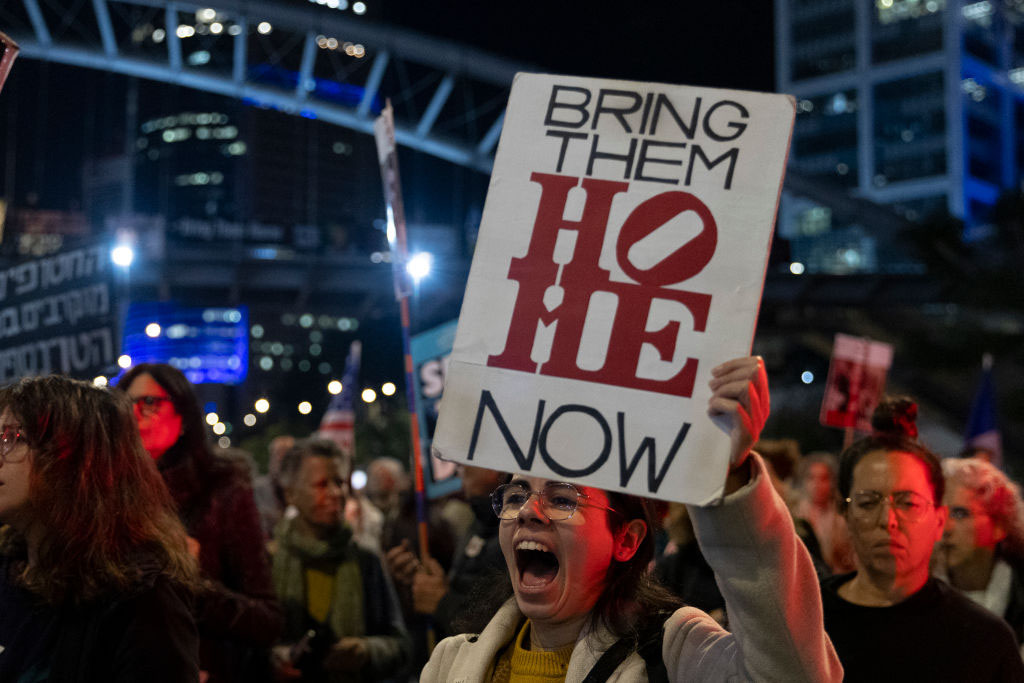
The 2011 exchange of 1,027 Palestinian prisoners for captured soldier Gilad Shalit was another tragic example. For five years, the left led relentless emotional campaigns, demanding his release “at any cost.” That cost became clear in October 2023, when freed terrorist Yahya Sinwar and his gang of released murderers orchestrated the massacre of 1,200 Israelis. The decision, driven by sentiment rather than strategy, directly contributed to one of the darkest days in Israel’s history and more than 15 months of brutal war that has cost the lives of 840 Israeli soldiers.

Judicial reform and division

In 2023, the right pushed for judicial reform to strengthen Israel’s democracy by curbing the overreach of unelected elites. The left, instead of engaging in debate, resorted to mass protests and threats, dividing the country. The result was a fractured and weakened Jewish people, which encouraged Hamas to attack.

The issue of moral simplicity

The left often frames its zeal in terms of morality, compassion, human rights and Jewish values. And indeed, these ideals typically underpin their positions. However, their ethical and strategic choices often lack the kind of judgment and sophistication needed; in geopolitics, values frequently conflict, and striking the right balance between competing moral principles—considering both long-term and short-term implications—is crucial. Often, fulfilling one “good” value comes at the expense of another. This is the reality we face today, when we need to make heart-wrenching decisions forced upon us by the evil of our enemies.

The 2025 hostage deal: A tragic moral dilemma

In the Israel-Hamas hostage deal, two good values are pitted against each other and are mutually exclusive. On one side is the profound Jewish value of redeeming captives (pidyon shvuyim), based on deep compassion for victims and their families. On the other side is the equally compelling need to prevent future murders, deter further hostage-taking and avoid another Oct. 7 tragedy. The left has championed the former value—redeeming captives—at the expense of the latter, which it has made sacrosanct. They have pressured for a deal at almost any cost.

The success of the left’s marketing campaign has been striking, wielding the same PR machinery that rallied relentless domestic and global pressure for the Shalit deal and more recently against judicial reform. The influence blitz turned the hostage issue into an untouchable ideal; it was a PR triumph, practically transforming the hostage issue into a form of worship. It succeeded in swaying many Jews in Israel and abroad to focus on one value while inadvertently sidelining the other and thereby pressuring for a hostage deal even at a very high price.

Yet, the costs of this deal are staggering; not only an IDF withdrawal from strategic areas that will allow Hamas to rebuild and restock, but in the first stage alone, Israel is expected to release 1,904 Palestinian prisoners—many of them mass murderers and attempted murderers. These include 737 individuals serving life sentences for heinous crimes, such as one responsible for six murders and another for forty-five. Disturbingly, 47 of these prisoners are repeat offenders—terrorists previously released in the 2011 Shalit deal who later committed additional attacks. The numbers paint a grim picture. Hard evidence from too many past deals provides hard evidence of what we can expect: for one Israeli saved, Gilad Shalit, well over 1,000 were murdered. Eighty-two percent of the 1,000 terrorists freed in the Shalit exchange returned to terrorism, according to the Israel Security Agency. Applying similar math to the 2025 deal sends chills down the spine.

The deal forced upon us by the left considers the deep, real and tragic pain of the hostages and their families. But what of the unspeakable anguish of those whose loved ones were murdered by the terrorists now set free? What of the grief of the families of soldiers who died heroically—who fought to eradicate Hamas, to make evil pay and to prevent another Oct. 7, only to see their sacrifices undermined as the terrorists grow emboldened?

And what of the pain of the civilians and families who will inevitably suffer when these released monsters strike again—those who will be murdered or abducted because of this decision?

The pattern of mistakes

The left’s idealism, while rooted in genuine desire for peace and justice, has repeatedly ignored the harsh realities of the region. These decisions have not only cost lives but have emboldened those who seek Israel’s destruction. The right has consistently warned against these dangers, often standing alone as the defenders of Israel’s security. The right has been consistently and unmistakably right since 1993. The left has consistently left reality behind and led the Jewish people to multiple disasters.

Maybe there is something we don’t know; I hope so. But our people and leaders need to exercise better judgment, using wisdom and humility to ensure that critical decisions reflect both practical reality and higher moral principles.

The way forward

Stopping the left’s destructive influence requires an honest reckoning. Strategic decisions are always complex and filled with difficult moral calculations, but security must always trump sentimentality and naivete. As history shows, Israel’s survival hinges on pragmatic, hard-headed policies that prioritize the safety of its citizens over fleeting hopes of appeasement driven by the blind idealism of one side that ignores the antisemitic reality of the other. It is time to learn from the past, to stop repeating the mistakes that have cost so much and to stand united as one people in the face of an enduring threat.

Our children have now paid the price for the mistakes of the older and unwise generation. Israeli youth rose to the occasion as Jewish lions. As Israeli President Isaac Herzog said, “We saw how the ‘TikTok Generation’ emerged as a generation of historic strength, whose bravery will be etched in the annals of Israeli history.” But now we grapple with whether the superhuman sacrifices of the soldiers and their families, while unquestionably heroic, will achieve the lasting impact they fought for.

While it’s too early to definitively label this deal a disaster—especially since there’s a strong likelihood that Hamas will undermine the agreement—it is both scary and deeply unsettling to consider what may lie ahead. While the prospect of bringing hostages home is incredibly heartening, decisions must ultimately be guided by calculated probabilities and strategic foresight.

At this time, our whole people is in a collective state of trauma brought on by the Oct. 7 massacre, almost a year and a half of war, missiles and hostages, and the devastating antisemitic response and betrayal of so much of the world.

Will the left at last fulfill another Jewish value, that of having the humility to admit its mistakes and stop pressuring for dangerous policies? If they do, two critical outcomes will be achieved: Jewish lives will be safer, and peace with our neighbors will be closer.


Raphael Shore is a human-rights activist, filmmaker and lifelong educational entrepreneur. As founder of OpenDor Media and the Clarion Project, he has helped shape public discourse around Jewish identity, antisemitism, radical Islam and the resilience of Israel.

How the Left’s Missteps Shaped Israel’s Struggles Read More »

An Open Letter to NAIS: The Danger of a Single Narrative

I planned to call NAIS out, boycott their February 26th conference in Nashville, and demand justice. Here’s why I’m not.

On December 7th, 2024, I drowned in the downpour of 8,000 people clapping for a speaker whose incendiary words ignited the crowd with a message of intolerance. At that moment, it became painfully clear: the pursuit of genuine understanding and the foundational principles of DEI had been traded away for a polarizing narrative of exclusion and villainization. My necklace with the word “אהבה”—“love”—hung heavy and screaming as the student sitting next to me tucked his Star of David under his shirt. A conference dedicated to uplifting minorities silenced one.

As I processed the intolerance that unfolded at the People of Color (PoCC) and Student Diversity Leadership Conferences (SDLC) in Denver, I came to the overwhelming realization that an urge to boycott and call out the National Association of Independent School (NAIS) would only further polarize us.

When I attended the SDLC in 9th grade, NAIS’ student conference, I saw firsthand the power of meaningful, difficult conversations — of “calling in” rather than “calling out.” I learned that “calling in,” the act of inviting uncomfortable dialogues, is the antidote to polarization. In forcing us to embrace those who we disagree with, we humanize in the face of dehumanization. It’s a direct contrast to what we often see instead: “calling out” – the demonization and shaming of the other to ostracize their voice. Inspired by the conference, my school’s delegation initiated programs to create a scaffolded space for brave conversation, replicating the atmosphere we experienced at SDLC. We invited students to challenge each other and learn to approach different perspectives with clarity, respect, and nuance –  to recognize and hold multiple truths. 

This year, I flew to Denver dangerously optimistic, believing that no matter what had riddled the past year since October 7th, my experience and reality could and would be acknowledged. I believed that I would be welcome, and SDLC would once again be a space to celebrate my identity and learn from others. In NAIS’s theme, we would “uplift each other as we climb.” 

Instead, during conversations with other students, the second that I uttered the word “Israel,” the home of my family – a fact of my reality  – I was met with immediate hostility. When I shared a part of my identity – my experience as a Jew – I was blamed for the suffering of others. 

My experience and reality were thrown aside through the words of speakers who presented a single selected narrative as an entire reality, denying my lived experience, and the existence of something more than their story; Suzanne Barakat and Ruha Benjamin stripped me of my humanity

Dr. Suzanne Barakat, a physician and activist on issues of social justice was this year’s PoCC keynote speaker. In a speech to educators from 1,300 of the nation’s top independent schools, she described Israel as “founded on ethnocentric superiority and an inherently systemically racist framework,” a statement steeped in intolerance and a blatant contortion of history. She referred to Zionism as a “strain,” likening the Jewish State to a disease. The comparison of Jewish people and culture to the unclean, parasitic, or virulent is a deeply offensive and recurring trope in the history of antisemitism. Her rhetoric completely ignored the historical and indigenous connection of the Jewish people to the land of Israel, an omission that is not only misleading but also ironic. The term “Palestina” itself was historically imposed by the Romans to erase the Jewish identity of Judea, highlighting the long-standing attempts to deny Jewish indigeneity. Such remarks perpetuate hate and intolerance, contributing to the vilification of Jewish identity and the erasure of Jewish history.

Dr. Ruha Benjamin, a Princeton professor who is currently under investigation for her anti-Israel activism, was the final speaker for both PoCC and SDLC. In her speech, she described Gaza “before and after the genocide,” and called for the dismantling of institutions of oppression for a “liberatory future.” She alluded to Israelis – Jews – as genocidal,  and portrayed them as immoral beings, who ethnic cleanse, and “annihilate an entire people.” She implied that Israelis lack humanity, that they are individuals who do not believe in the “seemingly radical notion that all life is sacred.” These statements dehumanize the Jewish people, distort reality, and fuel antisemitism and narratives of hate and division.

I was ready to confront difficult realities, engage in challenging spaces, and honor the diverse experiences of others, but instead, I was denied an identity; my story was erased. 

This year at NAIS’ People of Color and Student Diversity Leadership Conferences, I faced clear, evident antisemitism. The conference vilified those who shared a different experience and who carried different identities, then denied them a chance to speak and be heard. NAIS invited speakers who preached dehumanization, isolation, and hate to 8,000 educators and their students. How are we supposed to climb – to grow, if we step on others on our way up? How are we supposed to face our challenges head-on, and seek diversity, equity, and inclusion, while preaching a single narrative, invalidating each other’s experiences, and demonizing people’s identities? 

Three years ago, SDLC taught me to value, understand, and empower others to make their voices heard. I learned the importance of diversity, equity, and inclusion: the power that lies within the act of listening – of having difficult conversations, of embracing discomfort in the hope, the mission of understanding one another. SDLC, three years ago you equipped me with the tools to call in those who silence, to reject the narrative of a single story, to make noise in the face of unfairness. Three years ago you taught me. In Denver, you betrayed me. Now I am calling you in. This February, we need more than an apology; we need a return to NAIS’ mission – to the very values of DEI – to true dialogue.  


Adina Frid-Madden, a senior at Milken Community School, is Co-Editor-in-Chief of the school newspaper, The Roar, and the literary magazine, Responsa.


An Open Letter to NAIS: The Danger of a Single Narrative Read More »

A Torah Travels Through the Los Angeles Fires

As wildfires raged across Los Angeles, forcing evacuations and leaving destruction in their wake, Congregation Or Ami of Calabasas’s Torah scroll embarked on a profound journey. By the prescient, proactive decision of Rabbi Lana Zilberman Soloway, the Torah was evacuated from its home for safekeeping and entrusted to our synagogue’s vice president. It came into my possession when a Bar Mitzvah needed to rehearse with it. By then, the Sefer Torah (Torah scroll) had begun a remarkable journey, touching lives and serving as a symbol of resilience and connection.

Torah scrolls have always carried our people through moments of existential danger—from exile to persecution to natural disasters. This Torah’s journey similarly served as both a guide and an anchor, offering stability amid chaos and reminding us of the enduring strength of tradition. The Torah’s power to anchor us during turmoil inspires us to carry forward its sacred teachings, especially in the face of danger.

Early Morning: Resting Among Leaders

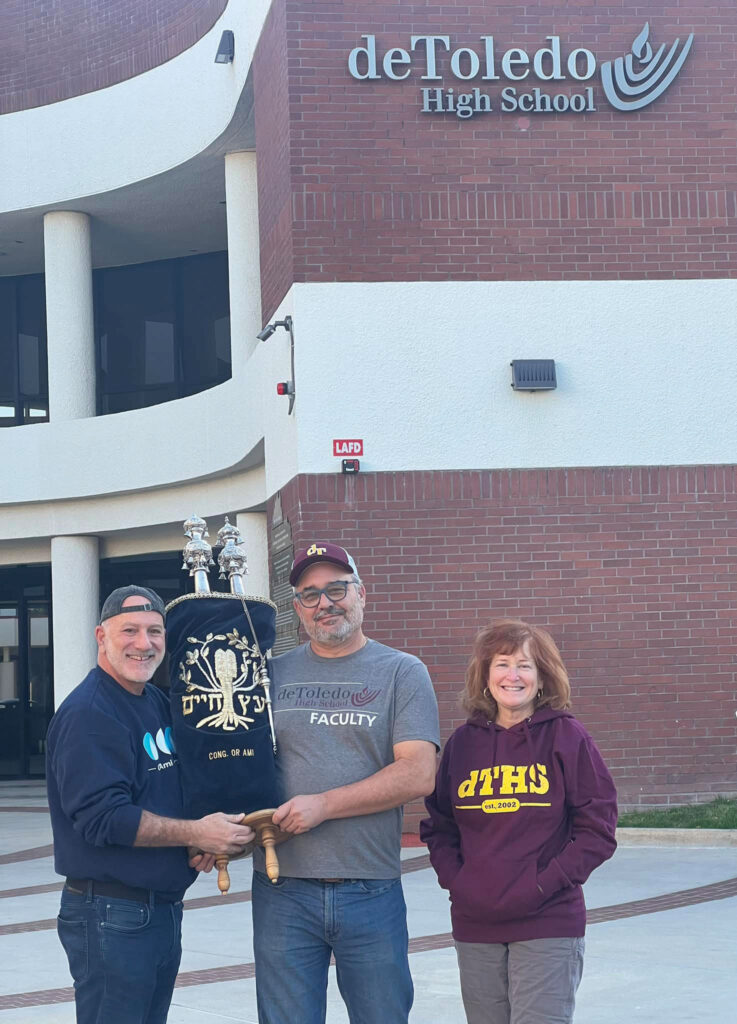
As Shabbat morning began, the Sefer Torahrested in the home of dear friends, Rabbi Ron Stern and Becky Sobelman-Stern, where my wife, Michelle November, and I had sought refuge as the fires threatened our house. During the week, Ron had been reaching out to help lead Stephen Wise Temple’s wildfire relief efforts. Becky had been raising funds and guiding the Jewish Federation’s relief efforts, reflecting on how best to continue supporting those impacted by the fires. Michelle—director of admissions at de Toledo High School in West Hills—was reimagining how displaced students from Pacific Palisades could connect with the school. I was supporting our Congregation Or Ami of Calabasas community.

The Sefer Torah’spresence in their home was grounding. Though we were all immersed in our responsibilities, the Torah conveyed a quiet, calming reminder of menuchat Shabbat (the peace of Shabbat) and menuchat hanefesh(tranquility of spirit). Amid the urgency of our work, its timeless presence steadied us and offered us a moment to breathe.

A Sacred Celebration at Temple Judea of Tarzana

By 8:30 a.m., the Sefer Torah was on the move, this time to Temple Judea of Tarzana, where it became the centerpiece of a Bar Mitzvah celebration. Without power at Congregation Or Ami of Calabasas, Rabbi Josh Aaronson’s gracious invitation to use their sanctuary created a space where our Torah could shine.

As Liam Frank held tightly to the Torah, the sanctuary filled with the voices of his loved ones. Yet the ark stood starkly empty, as Temple Judea of Tarzana’s Torah scrolls had been evacuated for safety. In that emptiness, Or Ami’s Sefer Torah became more than just a sacred object—it became a symbol of continuity, resilience, and shared purpose. It carried forward the strength of tradition, reminding us all that the stories and teachings it holds endure, even through the challenges of displacement.

Liam, who had rehearsed his Torah portion in my kitchen—a moment captured in The Forward—now stood before it, carrying on our people’s sacred tradition. Watching him chant and embrace the Torah reminded us that Torah is more than a scroll; it is a living connection between generations, an Etz Chayim Hee (a Tree of Life) and an enduring symbol of hope that remains steadfast through history’s trials.

A Sacred Encounter with a Non-Jewish Acquaintance

Later that afternoon, the Torah crossed paths with a Persian-American acquaintance of mine. As he noticed the Torah in its handcrafted carrying bag, curiosity sparked, and he asked me about it.

I explained how the Torah represents the essence of our people’s brit (covenant) with God—an Etz Chayim Hee (a Tree of Life) to those who hold fast to it. Torah possesses a universal ability to inspire awe and connection, even across cultural and religious boundaries. This brief interaction showed how the Torah, wherever it travels, brings with it the power to build bridges of understanding and shared humanity.

The Challenge of Relieving the Responsibility

By 2:30 p.m., the Torah and I had both traveled far that day. As I carried it through each stop, the sacred responsibility of protecting it weighed heavily—not just physically, but emotionally. The Torah had touched so many lives in the span of hours, and it was clear how much its presence mattered.

My friend, Rabbi Debra Robbins, checking in on me from Dallas, encouraged me to take time for myself. To breathe. But that required me finding somewhere safe to share the responsibility of protecting Torah.

This was no simple decision. Torah couldn’t be entrusted to someone who might face evacuation themselves or was already caring for elderly parents, young children, or pets.

Because the Torah is an Etz Chayim Hee—a Tree of Life, its strength sustains us, but it also depends on us to safeguard and honor it.

Sensing my struggle, Michelle suggested a solution: return the Torah to de Toledo High School in West Hills. This felt deeply symbolic. During the Woolsey Fire of 2018, when Congregation Or Ami of Calabasas was displaced, de Toledo became a sanctuary for our community. Now, years later, the Torah would once again find refuge there, placed in the care of Head of School Mark Shpall. It was a full-circle moment—a reminder of how sacred spaces and partnerships sustain us in times of need.

Finally, I returned home.

I confess I felt a profound sense of relief. The Torah’s journey that Shabbat had touched so many lives, offering strength at the Bar Mitzvah, solace to a community in need, and inspiration to everyone who encountered it.

As the Torah rested safely in its temporary home, I knew it would soon return to its rightful place in the ark at Congregation Or Ami of Calabasas, ready to inspire and guide our kehillah kedoshah (holy community) once more.

As long as we continue to hold it tightly—in our arms, our hearts, and our actions—Etz Chayim Hee—this Tree of Life—will always provide us with the resilience to carry on, especially in the face of danger.


Rabbi Paul Kipnes is leader of Congregation Or Ami in Calabasas, California. 

A Torah Travels Through the Los Angeles Fires Read More »

Strange Choice for U.S. Holocaust Council

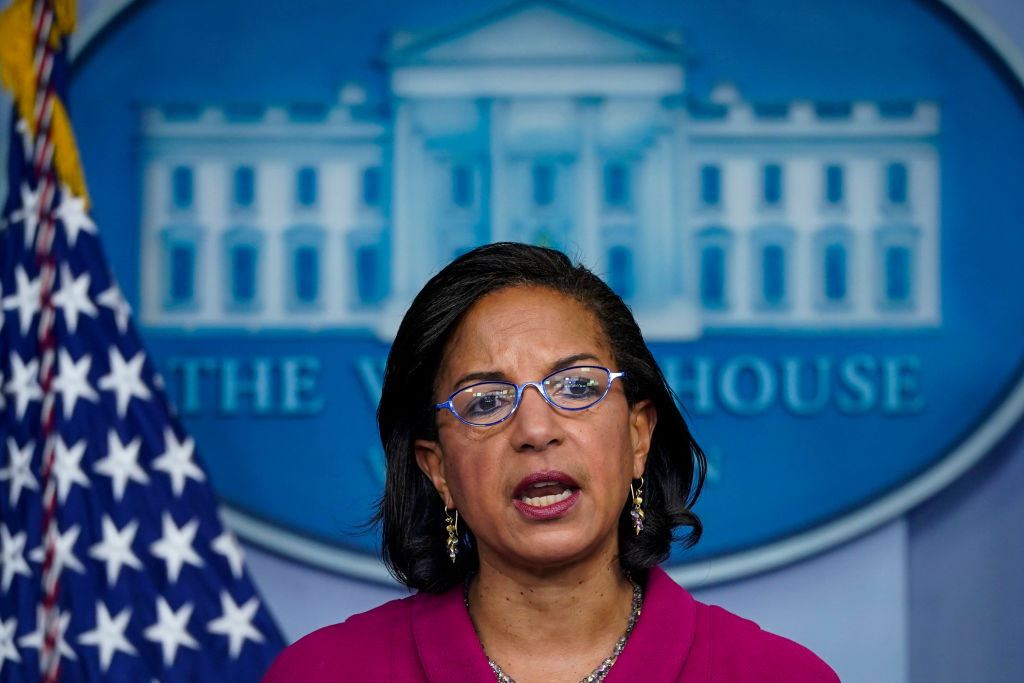
A former U.S. official who opposed intervening against the Rwanda genocide has been named to the United States Holocaust Memorial Council, which governs the U.S. Holocaust Museum. The appointment was one of President Biden’s final acts in office, and one of his strangest.

In the spring of 1994, Rice was director of Africa Affairs for the National Security Council, under President Bill Clinton. Reports began pouring in about machete-wielding militias of the Hutu tribe in Rwanda carrying out nationwide massacres of the country’s ethnic minority, the Tutsis.

What were Susan Rice and other U.S. officials saying about all this behind the scenes? Samantha Power gave us the answer. Power—who later became US Ambassador to the UN and then director of US AID—authored a Pulitzer Prize-winning book in 2002 about America’s responses to genocide. She revealed that senior State Department officials said they were “worried” that acknowledging genocide was underway in Rwanda “could commit [the U.S.] to actually ‘do something’.”

One of those officials was Rice. During one key discussion among about whether the U.S. should intervene, Rice remarked: “If we use the word ‘genocide’ and are seen as doing nothing, what will be the effect on the November [midterm] elections?” One other colleagues, Tony Marley, later recalled how shocked he was by Rice’s argument. “We could believe that people would wonder that, but not that they would actually voice it.”

When Power interviewed Rice about her statement, Rice replied that she “did not recall the incident.” She added: “If I said it, it was completely inappropriate as well as irrelevant.”

Electoral considerations should have been irrelevant. But they weren’t. They were part of the Clinton administration’s calculus in choosing to stand idly by as more than 800,000 Tutsis were slaughtered in Rwanda.

That troubling episode came up for discussion when Rice was nominated in 2012 to become President Barack Obama’s National Security Adviser. During her confirmation hearings, Rice was asked about the Rwanda-midterms remark. She replied that she did not recall having made that statement.

Concern about genocide having unpleasant political consequences is not a new phenomenon among U.S. government officials. Recall how the State Department responded in 1942, after receiving overwhelming evidence that the Germans were annihilating millions of Jews in Europe.

As information about the killings mounted, the British suggested to the United States that the two governments issue a joint statement acknowledging and condemning the mass murder. A Roosevelt administration official objected, on the grounds that if they issued such a statement, the Allies “would expose themselves to increased pressure from all sides to do something more specific in order to aid these people.”

Dr. Rice has suffered more than one memory lapse when asked about genocide. A wikileak cable in 2010 quoted a disturbing exchange between Dr. Rice and the chief prosecutor of the International Criminal Court concerning Sudanese dictator Omar al-Bashir, architect of the Darfur genocide. The ICC prosecutor informed Rice that Bashir had stashed away $9-billion in secret bank accounts. The prosecutor wanted to publicize that information in the hope of turning the Sudanese public against Bashir. But the U.S. never publicized it. After the cable was leaked to the press, a reporter asked Dr. Rice about it. She replied that she “didn’t recall” being told about the $9-billion.

After visiting Rwanda in 2013, Rice recalled how in 1994, six months after the genocide there ended, she walked through “a church and an adjacent schoolyard where one of the massacres had occurred [and] the decomposing bodies of those who had been so cruelly murdered still lay strewn around what should have been a place of peace….[W]e saw first-hand the spectacular consequences of the poor decisions taken by those countries, including my own… Left unspoken was Rice’s own role in shaping that U.S. policy.

Now, ironically, Rice will be joining the U.S. Holocaust Memorial Council, which is the governing board of the U.S. Holocaust Memorial Museum. Part of the museum’s declared mission is to “influence policy makers, and stimulate worldwide action to prevent and work to halt acts of genocide”—which makes it a strange place for someone with such a troubling track record on the Rwanda genocide.


Dr. Medoff, a member of the American Historical Association for more than four decades, is founding director of The David S. Wyman Institute for Holocaust Studies and author of more than 20 books about Jewish history and the Holocaust. His book The Road to October 7: Hamas, the Holocaust, and the Eternal War Against the Jews will be published on October 1, 2025, by The Jewish Publication Society / University of Nebraska Press.)

Strange Choice for U.S. Holocaust Council Read More »

Fulfilling a Family Bequest – More than 100 Years Later

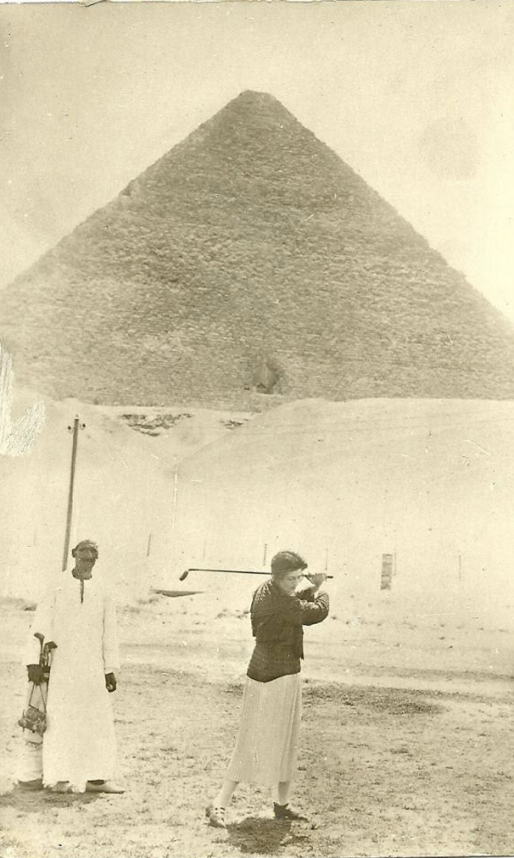
It all started with a grainy, black-and-white photo of a woman golfing in front of the Great Pyramid of Giza.

Clad in a dark top, white skirt and laced, heeled shoes that aren’t typical desert fare, the woman draws back her club, as if squaring up to hit an invisible ball. A man dressed in all white looks on, holding a bag of golf clubs at the ready. The pyramid looms overhead.

Ruth Davida Wolffe at the Great Pyramid in Egypt, 1913. Courtesy of the Merritt Family

In the late 1990s, I asked my father-in-law, John F. Merritt—who has since passed—about the picture that hung on the wall of his Century City home. Who the heck was that woman, I had to know.

As he explained it, the elegant golfer was his late Scotland-born mother Ruth Davida Wolffe, who would later marry his father, a rabbi from the U.S. Midwest. My questions sent me down a path that uncovered a fascinating chapter in my husband’s family history; one that ties him to early Zionism, a “Maccabean Pilgrimage” and Jewish settlers in Nairobi, Kenya. It also pointed me to a piece of unfinished business: a bequest made in 1917 which had not yet been fulfilled.

I began researching my husband’s family in earnest a decade ago, using online resources, digitized newspapers and even a book from the Los Angeles Public Library. I learned that Ruth was golfing in Egypt in 1913 while visiting her father David Wolffe. The two must have traveled to Jerusalem from Cairo, and in a hotel lobby in the Jewish capital, Ruth met Rabbi Max Merritt, whom she would later marry.

David turned out to be one of the early British Zionists. He is mentioned in the official proceedings of the first and several subsequent Zionist Congresses. He wasn’t one of the most prominent Jewish leaders but he left enough of a newspaper trail that I was able to track.

He and his wife Augusta Wolffe traveled often and moved homes frequently, first from Prussia to Glasgow, where they helped establish the Garnethill Synagogue in 1865. David also founded Glasgow’s chapter of Chovevei Zion (“Lovers of Zion”), which helped save Eastern European Jews from pogroms by encouraging them to settle in Mandatory Palestine, in 1892.

In 1897, David joined a group of British Jewish leaders on a first-ever kosher and Shabbat-observant tour of Palestine, organized by Thomas Cook. The so-called “Maccabean Pilgrimage” took 20 men and women from London to Paris, down to Marseilles and over to Alexandria, Egypt, before sailing up the coast to Jaffa.

From Jaffa, the group took a train to Jerusalem in time to celebrate Passover. I found a photo of the group in a book from the L.A. Public Library; a biography of the British Zionist leader Herbert Bentwich. David is sporting a wonderful pith helmet and an enormous moustache.

David’s published writings suggest that the trip solidified his enthusiasm for a renewed Jewish presence in Palestine, but he remained concerned about the lack of progress with the Ottoman Empire. He was an early investor in the Jewish Colonial Trust – the forerunner of today’s Bank of Israel. David toured England and Scotland to promote and encourage investment in the JCT, which Theodor Herzl backed, to fund programs and purchase land in Palestine.

He attended at least four of the early Zionist Congresses and visited Palestine several more times, including in 1913, when he photographed Ruth golfing in Cairo.

Despite his support for Jewish life in Palestine, David also acquired 1,000 acres of Kenyan farmland and was living in Nairobi with two of his adult sons by 1907. This was at a time when a controversial proposal, the “Uganda scheme,” suggested establishing a Jewish homeland in Africa as a way to speed up rescue of Eastern European Jews. Henry Joshua Wolffe, one of David’s sons, was the first president of the Nairobi Hebrew Congregation and is buried in the small Jewish cemetery there.

David wrote his will in February 1917 on a trip to London. Henry Snowman, the attorney who translated Hatikvah into English, signed it, and an executor was Leopold Kessler, an engineer who would later own the Jewish Chronicle and lead the Jewish National Fund. David may have been in London at the time to attend the Feb. 11, 1917 meeting of the English Zionist Federation, during which Chaim Weizmann was named their president.

David died in Djibouti in 1919, likely aboard a ship in the Red Sea, heading back to England after World War I. As a result, his personal papers were lost to time and history.

Nevertheless, I found David’s will online in the digitized records of Ancestry.com and discovered that he’d requested to donate his 30 shares of the original Jewish Colonial Trust to Shaare Zedek Medical Center in Jerusalem.

I had no idea where those shares might be or even if there were any relevant records.

Then, in 2023, at a meeting of the International Association of Jewish Genealogical Societies in London, I heard a talk by Jonathan Kirsch, director of the Israel administrator general, in charge of locating and returning unclaimed property.

Kirsch explained that we could convert David’s unclaimed JCT shares to a cash equivalent. All we needed to do was check the name in the online database and file a claim.

I found David’s name easily and submitted a request to have the shares donated to the hospital.

There were some bumps in the road in dealing with the Israeli government, especially after the tragic events of October 7, 2023, which made the donation effort a very low priority. But eventually we were able to satisfy the government’s identity requirements, and, in 2024, some $32,000 was transferred to the hospital.

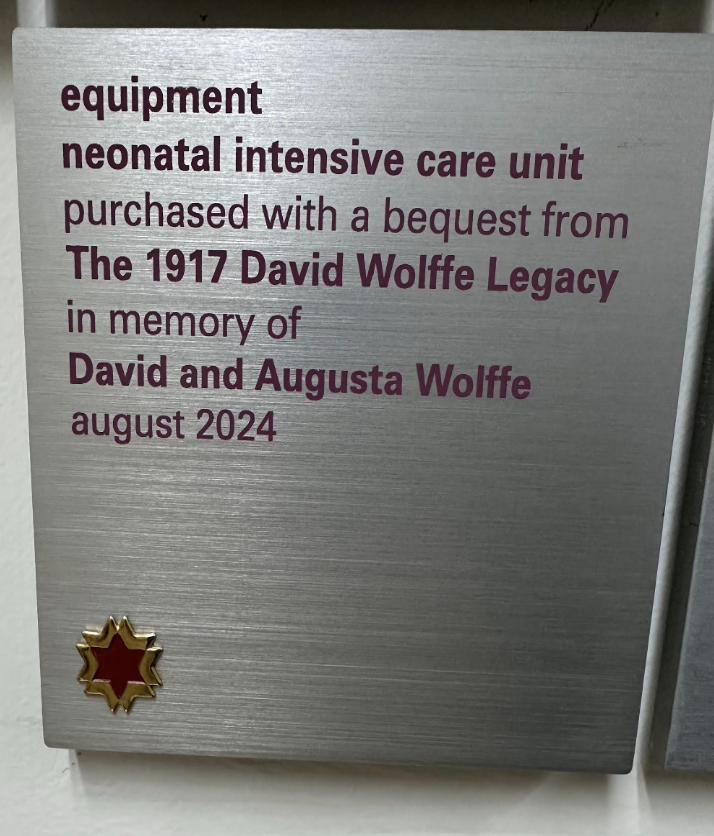
David didn’t say how he wanted the funds allocated. We decided that since only four of his and Augusta’s 13 children lived to adulthood, it would be meaningful to donate the funds to the hospital’s neonatal intensive care department. Shaarei Zedek delivers more than 22,000 babies a year, the most active maternity department in the Western world.

In December my husband and I visited the hospital and dedicated a small plaque to David and Augusta. More than a century after the fact, a promise has been kept.

Plaque image, courtesy of Marian Merritt

Marian Merritt is a Los Angeles native and amateur genealogist.

Fulfilling a Family Bequest – More than 100 Years Later Read More »

Lee Yaron’s Account of Oct. 7 Attacks Named Jewish Book of the Year

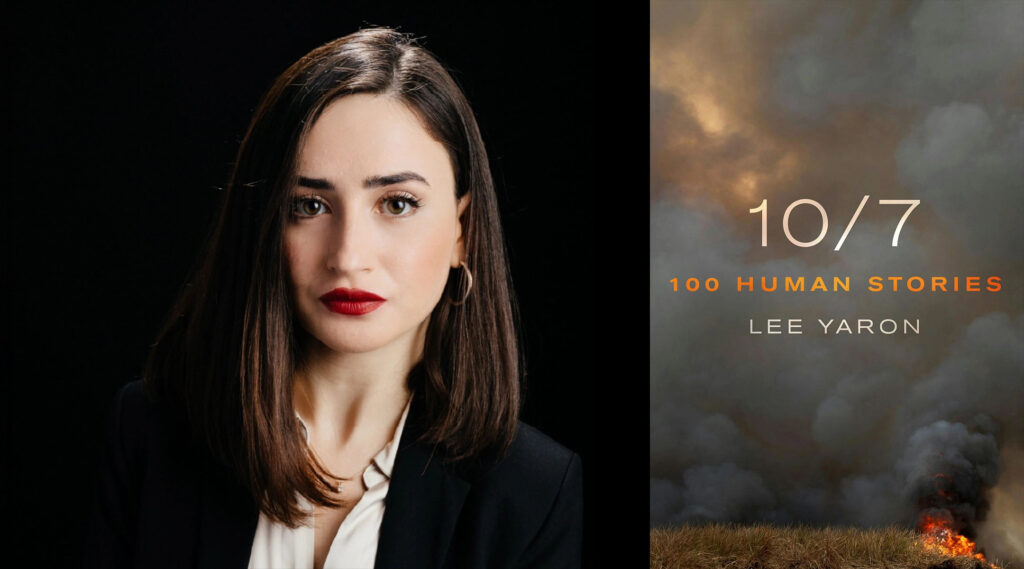
Israeli journalist Lee Yaron’s account of the Oct. 7 attacks in Israel and their aftermath was named the book of the year at the 74th National Jewish Book Awards, making her the youngest author ever to win the honor.

The Jewish Book Council, which sponsors the awards, said that “10/7: 100 Human Stories,” provides “a vital window into the history of the Israeli-Palestinian conflict and how internal political turmoil in Israel has affected it, offering the narratives not of politicians or the military but of the lives of everyday people who lived tenuously on the border with Gaza.”

Yaron, 30, speaking to the Jewish Telegraphic Agency last September, said that her impulse to interview survivors, first responders and eyewitnesses to the attacks grew out of her own grief and sense of shock over the Hamas attacks, which killed some 1,200 people and took hundreds hostage.

“I had a mission, I knew what I needed to do, and I was focused on this,” said Yaron, who divides her time between New York and Israel. “The book helped me to deal with my grief and my sense of hopelessness.”

Yaron is among a number of Israeli authors, as well as books about Israel, due to be honored by the JBC at the Marlene Meyerson JCC Manhattan Wednesday evening as part of the JCC’s Books That Changed My Life Festival.

Amir Tibon won the award for autobiography and memoir for “The Gates of Gaza: A Story of Betrayal, Survival, and Hope in Israel’s Borderlands,” which centers on his rescue by his father and mother as Hamas terrorists invaded his neighborhood at Kibbutz Nahal Oz.

Ayelet Tsabari won the JJ Greenberg Memorial Award for Fiction, her first, for her novel “Songs for the Brokenhearted,” a family drama that draws on her Yemeni Jewish background. The Hebrew Fiction in Translation award went to Maya Arad for her book “The Hebrew Teacher,” translated by Jessica Cohen. The collection of novellas largely focuses on Israelis living in the United States.

In the visual arts category, several authors shared the award for “101 Treasures from the National Library of Israel”; the Jerusalem-based library last year celebrated its move to a new state-of-the-art building.

“It’s especially meaningful that this year’s awards are going to a number of Israeli authors and books on Israel,” Elisa Spungen Bildner, the Jewish Book Council’s president, said in a statement. “These works offer critical opportunities for engagement, debate, and dialogue for our community–one of the most fundamental roles of literature. We are proud to uplift and support these books and bring them to new readers across the world.”

Rabbi Irving “Yitz” Greenberg’s “The Triumph of Life: A Narrative Theology of Judaism” represents what one admirer calls a “culmination of a lifetime of theological reflection.” (University of Nebraska Press/Jewish Publication Society)

The JBC also honored Rabbi Irving (Yitz) Greenberg, 91, with its Lifetime Achievement Award for his latest book, “The Triumph of Life: A Narrative Theology of Judaism.” Greenberg is a leading Modern Orthodox theologian, and the JBC said his book represents a “culmination of his many decades of thinking and teaching about Jewish philosophy and theology,” according to the statement.

Yael van der Wooden won the Goldberg Prize for Debut Fiction for her novel “The Safekeep.” The highly anticipated novel, by a writer who is originally from Tel Aviv and currently resides in the Netherlands, is a love story set in a 1960s Holland haunted by the legacy of World War II.

The JBC presented its Mentorship Award to Aaron Lansky, the founder of the Yiddish Book Center, a repository, museum and Yiddish learning center in Amherst, Massachusetts. Lansky, 69, who according to the judges “fundamentally reshaped the fate of one of the great Jewish languages’ histories,” is set to retire in June. The mentorship award is named in honor of Carolyn Starman Hessel, the former executive director of the Jewish Book Council.

Other winners include:

Family Book Club: “The Last Dekrepitzer,” by Howard Langer.

History: “Reading Herzl in Beirut: The PLO Effort to Know the Enemy,” by Jonathan MarcGribetz.

Holocaust: “Occupied Words: What the Holocaust Did to Yiddish,” by Hannah Pollin-Galay and “Warsaw Testament,” by Rokhl Auerbach, translated by Samuel Kassow.

Education and Jewish Identity: “Uncomfortable Conversations with a Jew,”  by Emmanuel Acho and Noa Tishby.

Contemporary Jewish Life & Practice: “The Madwoman in the Rabbi’s Attic: Rereading the Women of the Talmud,” by Gila Fine.

American Jewish Studies: “A Cold War Exodus: How American Activists Mobilized to Free Soviet Jews,” by Shaul Kelner.

Biography: “Leonard Cohen: The Man Who Saw the Angels Fall,” by Christophe Lebold.

Children’s Picture Book: “Sharing Shalom,” illustrated by Selina Alko.

Young Adult Literature: “Night Owls,” by A. R. Vishny.

Middle Grade Literature: “Finn and Ezra’s Bar Mitzvah Time Loop,” by Joshua S. Levy.

Food Writing and Cookbooks: “Forbidden: A 3,000-Year History of Jews and the Pig,” by Jordan D. Rosenblum.

Poetry: “The Story of Your Obstinate Survival,” by Daniel Khalastchi.

Modern Jewish Thought and Experience: “Tablets Shattered: The End of an American Jewish Century and the Future of Jewish Life,” by Joshua Leifer.

Scholarship: “Babylonian Jews and Sasanian Imperialism in Late Antiquity,” by SimchaGross.

Sephardic Culture: “Entwined Homelands, Empowered Diasporas: Hispanic Moroccan Jews and Their Globalizing Community,” by Aviad Moreno.

Women’s Studies: “Holy Rebellion: Religious Feminism and the Transformation of Judaism and Women’s Rights in Israel,” by Ronit Irshai and Tanya Zion-Waldoks.

Writing Based on Archival Material: “The Business of Transition: Jewish and Greek Merchants of Salonica from Ottoman to Greek Rule,” by Paris Papamichos Chronakis.

Lee Yaron’s Account of Oct. 7 Attacks Named Jewish Book of the Year Read More »

The 75 Million Americans Trump Never Mentioned in His Inaugural

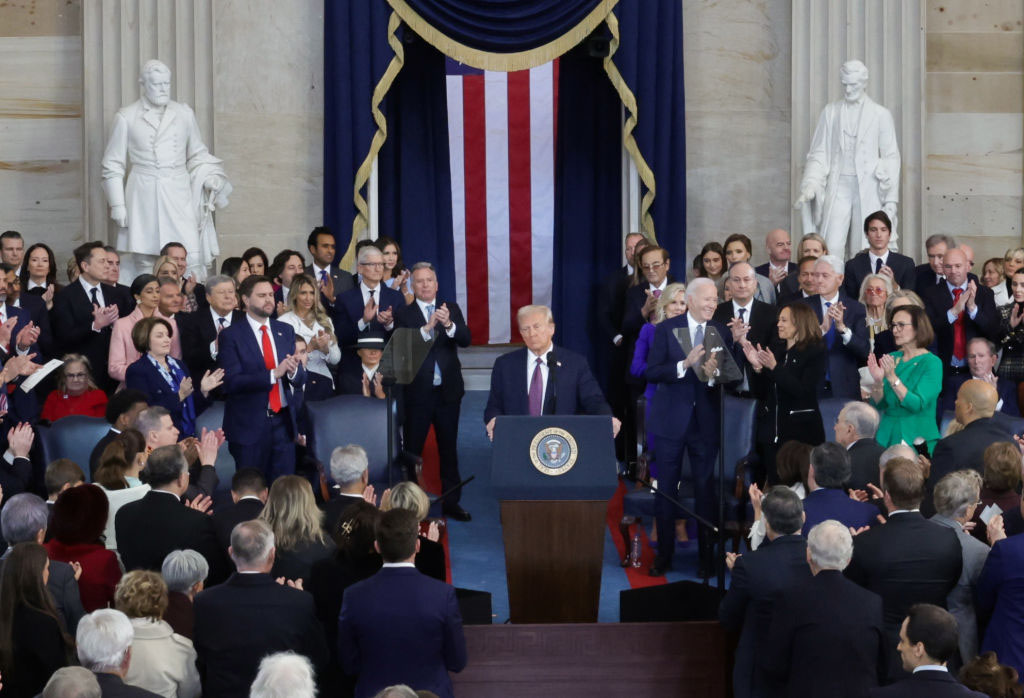
“We are one people, one family and one glorious nation under God,” President Donald Trump said near the end of his second inaugural address. “So to every parent who dreams for their child, and every child who dreams for their future, I am with you, I will fight for you and I will win for you.”

Those were inspirational words, I thought. But what about the 75 million Americans who didn’t vote for him? Are they also part of that “one family” and that “one glorious nation”? Are they included in those Americans he mentioned who “dream for their future”?

Given the divisive Executive Orders he was about to sign, it’s likely that even a blustery Trump couldn’t take that unity thing too far.

So why did he tease us with such an alluring message?

It’s as if his speechwriter panicked at the last minute and threw in an obligatory, Lincolnian “we are one nation” cliché. Never mind that Trump has no intention of doing much for the 75 million Americans who didn’t vote for him. He’s a dealmaker, after all. Why give back to those who didn’t give him a vote?

One reason, of course, is that he is also their president. That’s how our republic is supposed to work—we don’t believe in the tyranny of the majority.

But when you’re eager to enact your agenda with the power granted by voters, as is true for many presidents, unifying the nation is not your top priority. Indeed you can argue that it’s better to be honest and not even pretend you will do anything for those who didn’t vote for you (save riling them up).

This is why a second inaugural from long ago is so extraordinary. Our country was at its lowest point, torn apart by a civil war that had already claimed hundreds of thousands of lives.

As the war raged on with his Northern side at a clear advantage, a newly re-elected President Abraham Lincoln stood on March 4, 1865 to deliver his address.

A Trumpian speech might have declared victory and warned the South to surrender…or else.

Lincoln went in another direction. He didn’t rub it in. Despite the ravages of a war between brothers, he found a way to rally his nation.

People like to say that Lincoln was a magician with words. That is true, but words reflect those who speak them. Lincoln’s words that day, as brilliant as they were, reflected a deep, genuine desire to keep his country together and rid it of the scourge of slavery. The fact that a major part of his country did not agree with him hardly discouraged him.

If anything, as the leader of a nation that was unraveling, it was especially important for Lincoln to speak to those very Americans who hadn’t voted for him.

He did so without being evasive or patronizing, confronting the ugly reality of a terrifying, irreconcilable war:

“Neither party expected for the war the magnitude or the duration which it has already attained,” he said. “Neither anticipated that the cause of the conflict might cease with or even before the conflict itself should cease. Each looked for an easier triumph and a result less fundamental and astounding.”

He spoke with both sides in mind:

“Both parties deprecated war but one of them would make war rather than let the nation survive, and the other would accept war rather than let it perish. And the war came.”

He treaded gingerly but honestly on the divisive issue of slavery:

“One eighth of the whole population were colored slaves not distributed generally over the union but localized in the southern part of it. These slaves constituted a peculiar and powerful interest. All knew that this interest was somehow the cause of the war.”

He also found a way to introduce God, not to claim a divine mandate but to show what even sworn enemies can have in common:

“Both read the same Bible and pray to the same God and each invokes His aid against the other. It may seem strange that any men should dare to ask a just God’s assistance in wringing their bread from the sweat of other men’s faces but let us judge not that we be not judged. The prayers of both could not be answered ~ that of neither has been answered fully.”

It is his famous ending that people most remember, and why Lincoln’s remarkably succinct Second Inaugural is widely considered the greatest one in our country’s history:

“With malice toward none with charity for all with firmness in the right as God gives us to see the right let us strive on to finish the work we are in to bind up the nation’s wounds, to care for him who shall have borne the battle and for his widow and his orphan ~ to do all which may achieve and cherish a just and lasting peace among ourselves and with all nations.”

Had he added, “We are one people, one family and one glorious nation under God,” I have no doubt that both sides would have believed he meant it.

The 75 Million Americans Trump Never Mentioned in His Inaugural Read More »

Beyond the Ashes: Making Los Angeles Whole Again

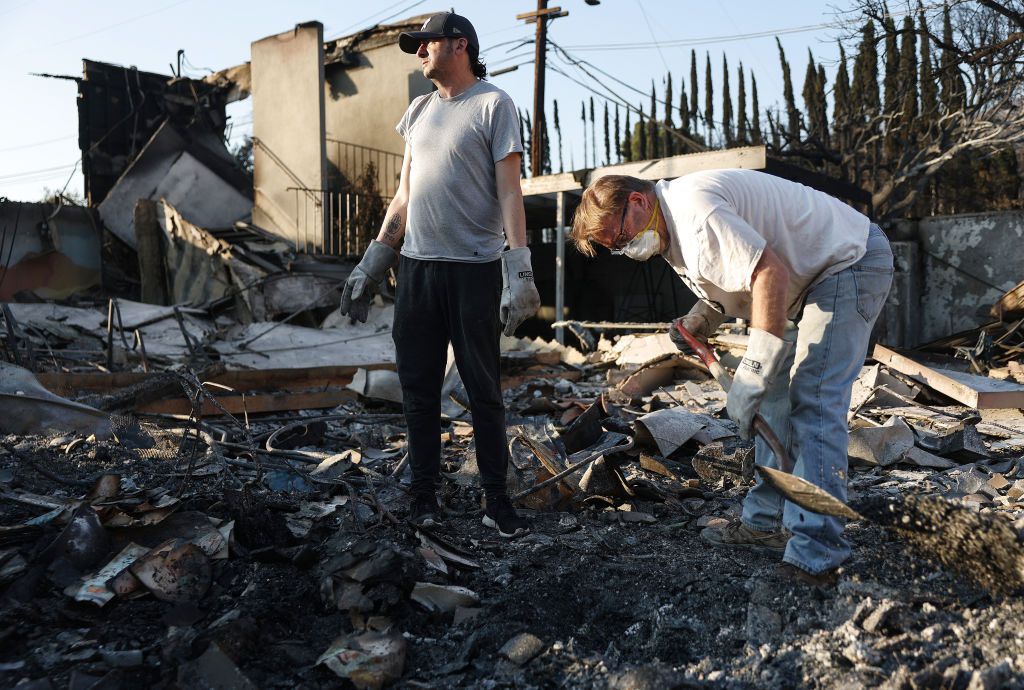
On Passover, Jews around the world are obligated to fulfill the commandment of remembering the devastation and life-upending disruption that was woven into the exodus from Egypt as if it happened to them personally. It is not enough to recall a tragedy and be a passive observer of suffering. Rather, one of the most fundamental aspects of living a Jewish life is loving your neighbor as yourself and with this, mourning their losses as your own. As our city continues to burn, we must commit, as a community, to not only rebuilding the neighborhoods that were uprooted so violently, but to creating space for those who were previously shut out of those neighborhoods, to finally establish roots beside them. With firefighters still battling the two largest fires which have tragically taken many lives and destroyed over 12,300 structures, we begin to look past the ash at the daunting task of rebuilding our homes, schools, houses of worship and businesses.  

As our city continues to burn, we must commit, as a community, to not only rebuilding the neighborhoods that were uprooted so violently, but to creating space for those who were previously shut out of those neighborhoods, to finally establish roots beside them.

However, no matter how uncertain the path forward may appear, the policy efforts to rebuild our communities decimated by the fires must not be defined according to the inherently broken systems of anachronistic zoning and layers of bureaucratic red tape that had previously rendered Los Angeles among the most unaffordable cities in the nation. Moreover, the road to recovery must be paved by policy that not only meets the moment of the acute needs of those displaced by the fires, but acknowledges, with deliberate policy reversal, the decades-old scars of segregation and exclusionary zoning that have prioritized chasm and poverty over community and brotherhood. It is indeed tragic that it took a horrific set of fires to force Los Angeles to come to terms with the long tail of some of her most egregious policy failures. Yet, if there is a silver lining at all at the end of this devastation it is that we have experienced how interconnected our lives really are and that we all have an integral part to play in the arc of our collective recovery and redemption. 

Here are several policy recommendations to begin to address the failed policy that has marred the potential of our greatness for so long:

Upzone Los Angeles Immediately and Expedite Adaptive Reuse Projects

Housing insecurity is the direct result of exclusionary zoning which has led to a staggering 63% of Los Angeles residents being shut out of homeownership in the city. Moreover, wildfires have a direct correlation to the destruction of available housing stock, further reducing the supply of available homes in our city which, according to Creditnews Research, is the most rent-burdened in the entire nation. Rebuilding efforts, which must include the strict use of fire-resistant materials, will raise the cost of construction which will in turn be passed along as rent increased by approximately 12%.  

Housing insecurity is the direct result of exclusionary zoning which has led to a staggering 63% of Los Angeles residents being shut out of homeownership in the city. 

There are over 10,000 people who have lost their homes and who are now subject to the most unforgiving housing market in the country. Even before the fires, housing production citywide has been less than a third of what is needed to meet the goal for the construction of 250,000 more homes allowed through existing zoning rules. In short, the decision made by the Los Angeles City Council’s Planning and Land Use Management Committee to exclude 72% of the city’s residentially zoned land from upzoning must be vacated immediately and a post-World War II Marshall Plan level commitment to helping our community rebuild and recover must replace it. In simplest terms, even before the fires, Los Angeles could not afford to cater to the wishes of the privileged few demanding to preserve the “character of the neighborhood” by excluding the construction of additional housing. However, for far too long, local politicians have given in to this wealthy vocal minority at the expense of the greater good for the greatest number.

In 2024, the income needed to afford the median home in Los Angeles was $247,500. However, the median salary of Los Angeles was only $80,000. For many people who were fortunate enough to buy homes decades ago, most of their retirement savings lay in their home value — especially for those who come from less affluent areas that were hit by these devastating fires. For many of these people, the insurance payouts and FEMA support they will receive will fall vastly short of what will be needed to rebuild, and they will consequently be forced into permanent rentership due to a lack of resources to rebuild. 

This will naturally hit hardest for communities of color and for the elderly. Politicians at the state-wide and local levels must recognize that single-family zoning, first enacted when the population was a mere fraction of what it is today, no longer represents the acute housing needs of the nearly four million residents of Los Angeles. 

In addition, the necessity to convert vacant office space to livable residential space, especially in high-density areas with access to transit and green spaces, is integral to the creation of much needed housing. Downtown Los Angeles has witnessed much successful adaptive reuse. The outdated strip malls and massive parking lots that span so much of our city have grown obsolete with the advent of online shopping and ridesharing and consequently represent anachronistic waste of usable urban space. Rebuilding efforts must include conversion of these spaces to vibrant dense spaces with shared infrastructure such as schools, parks and playgrounds.  Even before the fires, Newsweek reported that Los Angeles saw the largest outbound migration in the nation due to housing unaffordability. Now, we have an internal refugee crisis of displaced people who won’t be able to rebuild their lives around stable and affordable housing, absent a complete reversal of the deeply flawed decision to exempt the vast majority of the city from upzoning. 

Suspend CEQA review and California Coastal Act

On Jan. 12, California Governor Gavin Newsom signed an executive order (EO N-4-25) to suspend permitting requirements under the California Environmental Quality Act (CEQA) and the California Coastal Act, with the goal of facilitating faster rebuilding of homes and businesses affected by the recent wildfires in Southern California. The goals of this executive order are to suspend CEQA review and California Coastal Act allowing for projects to repair, restore, demolish or replace properties or facilities substantially damaged or destroyed in recent Southern California wildfires. 

In addition, this order seeks to direct state agencies to identify additional permitting requirements that may unduly impede efforts to rebuild and should be considered for suspension, including provisions of the Building Standards Code, Title 24 of the California Code of Regulation, direct the Department of Housing and Community Development to coordinate with local governments to identify and recommend procedures to establish rapid permitting and approval processes to expedite rebuilding and to collaborate with the state legislature to identify and propose statutory amendments to help expedite rebuilding while enhancing wildfire mitigation and response capacity within rebuilt areas.

However, the suspension of permitting requirements “applies only to properties and facilities that are in substantially the same location as, and do not exceed 110% of the footprint and height of, properties and facilities that were legally established and existed immediately before this emergency.” In its current form, it is unclear how significantly this order will impact rebuilding in practice. The waiver essentially mirrors an existing provision of the Coastal Act, which provides a permitting exemption for properties rebuilding after disasters provided the new buildings are sited in the same location and not more than 10% larger or taller than the destroyed structures. And CEQA, which requires public agencies to consider and mitigate the environmental impacts of proposed projects, already provides exemptions for single-family residences as well as the replacement or reconstruction of existing structures located on the same site and with “substantially the same” purpose and capacity as the prior structure.

A glaring omission in this executive order is that reconstruction projects must still comply with local zoning and permitting ordinances which can take months, if not years, to pass through the layers of bureaucratic red tape and various stages of approval. While well-intentioned in theory to mitigate the environmental impact of construction and density, in practice, CEQA has been a main contributor to the dearth of new housing that Los Angeles has seen since the 1970s. Even beyond the emergency executive order to address the acute needs of those displaced by the fires to rebuild in the fastest and most expedient way, CEQA must be revisited and significantly altered to address the acute housing shortage that it has created and to eliminate the lengthy process of environmental review. 

Punish Price Gouging with Suspensions and Fines

Unfortunately, with any crisis come those who seek to exploit and profiteer from it, and these fires have brought out the worst of characters in both the buying and renting spaces. Moreover, despite being illegal, rampant price gouging continues to cater to the highest and most fortunate bidders exacerbating the chasm between the recoveries of those from more affluent vs less affluent communities. California Attorney General Rob Bonta (D) stated that law enforcement has been working to tackle “this unlawful and unscrupulous conduct” by creating predatory pricing investigations into fraud and blatant price gouging beyond the 10% increase in rent allowed by law. However, just as Los Angeles has failed to crack down on the use of illegal short-term rentals which further reduce scarce housing stock, these investigations will not be enough to curb profiteering from this devastation. 

There needs to be a true disincentive to price gouging in the form of the loss of one’s right to list property in any open-source format within the state for a full year and in the case of a real estate agent engaging in price gouging, the loss of one’s license for an entire year with the record of the offence visible on their record. In addition, any realtor or landlord found guilty of price gouging must be fined per incident on a sliding scale. Meaning the more properties listed in violation of the law, the higher the fine. According to René Moya of the LA Tenants Union, “the fires unfortunately have greatly exacerbated our housing and homelessness crisis overnight. We lost so many housing units, people lost their homes.” There needs to be a collective zero tolerance policy for bad actors who use their access as agents or individual landlords who choose profiteering over community healing.

Ban Real Estate Speculators from Displacing Victims 

As the aftermath of the tragic fires of 2023 in Lahaina, Maui have painfully shown, efforts to rebuild Los Angeles must remain extremely vigilant in thwarting the corporations and real estate speculators that prey on disaster areas, swooping in to buy valuable land for pennies on the dollar and displacing longtime residents in their most vulnerable hour. This is further exacerbated in the more traditionally working-class neighborhoods, such as Altadena, that were decimated by the Eaton fire. It is these neighborhoods, which are home to significant Black generational wealth unique to both the Los Angeles landscape and abysmal national statistics, that are most at risk for displacement of longtime residents. Specifically, during the Civil Rights era, Altadena became a very rare place of economic opportunity for Black Americans to achieve the markings of a middle-class life — namely access to homeownership — without the discriminatory lending practices that prevented so many Black families from transitioning from rentership to homeownership. 

Many Black families of Altadena were subsequently able to keep homes within their families and thus pass down generational wealth resulting in a Black home ownership rate in Altadena of 81.5% which, according to the U.S. Census Bureau, is double the national average of 44%. This presents a unique opportunity, and arguably, an obligation, for the Los Angeles Jewish community to stand beside our Black neighbors and community members in solidarity to protect the wealth that they have been able to build despite the pernicious effects of segregation and discrimination in housing access. 

According to California State Assemblymember Tina McKinnor (D-Inglewood), these neighborhoods will be targeted by unscrupulous speculative land investors “trying to take advantage of this natural disaster and its associated trauma for their own financial gain.” The state must adopt an iron-clad ban on corporate investors whose business model is to buy distressed land from displaced residents and convert this land into build-to-rent communities which will lead to immediate gentrification and lock out long-term residents from regaining ownership in their communities. One can make a strong argument that corporations should be banned from owning single-family residences nationwide even in “normal” circumstances as corporations outbid first-time homebuyers with all cash offers far above listing price forcing millions of aspiring homeowners into permanent rentership. However, it is particularly vital that corporations and real estate speculators be barred by means of state-wide executive order, from making offers on distressed land during this acute recovery stage.

For so many people across all demographic and socioeconomic sectors of the Los Angeles community, it is not the structure of the house, but the memories and stability of the idea of the home, that has been ripped away. However, the speed and ultimate success of our collective recovery must begin with acknowledging the failure of decades-old discriminatory housing policy. These fires have peeled back the layers of our collective vulnerability in ways that we could have never prepared for. The uncertainty ahead will challenge all of us to offer our unique talents and perspectives into the restoration effort.  

For so many people across all demographic and socioeconomic sectors of the Los Angeles community, it is not the structure of the house, but the memories and stability of the idea of the home, that has been ripped away.

Yet, if we collectively commit – both morally and legally – to the immediate policy changes of expediting upzoning and adaptive reuse throughout the entire city with the utilization of the most sound fire-proof materials and engineering, the suspension of CEQA, a true moratorium on rent increases for an entire year that is both enforced legally and at the individual level, and an iron-clad refusal to sell off the land of displaced people to predatory corporations seeking to profiteer from our misfortune, we can begin to lay the foundations for a recovery for all Angelenos defined by our capacity for greatness that will prove to be far greater than the limits of our loss.


Lisa Ansell is the Associate Director of the USC Casden Institute and Lecturer of Hebrew Language at Hebrew Union College-Jewish Institute of Religion Los Angeles

Beyond the Ashes: Making Los Angeles Whole Again Read More »

All of Life Is Holy Ground

This morning I attended Shabbat services alongside the members of the Pasadena Jewish Temple & Center (PJTC) congregation.  

PJTC is a community in mourning.  Their historic synagogue was tragically destroyed by the Eaton fire, and a number of their congregants lost their homes. 

The temple was established a century ago, with its latest building constructed during World War II. While so much history was erased, they were able to save 13 Torah scrolls and, miraculously, when the embers were finally extinguished, they discovered a mural on one of the few remaining walls. It had been long hidden as a result of building updates, and it depicted the Israelites wandering through the desert. Alas, these congregants, like so many Jews throughout the diaspora, have been forced to wander again.

But not today. Rabbi Brian Schuldenfrei of Adat Ari El in Valley Village offered to turn over our sanctuary to PJTC, and their members showed up in large numbers, supplemented by many of us from Adat Ari El. An overflow crowd packed our prayer hall, and we enjoyed a service led by PJTC’s Rabbi Jill Gold Wright and Cantor Ruth Berman Harris. On top of it all, the service included a celebration of one of their young members becoming a bar mitzvah.

For Adat Ari El’s Shabbat regulars, it was an experience that was unlike what we are used to. There were several new tunes and a different prayer book. But the service reminded me once again of the fact that we Jews are a single people, with so much more in common than the minor differences that separate us might suggest.

Fittingly, the parsha was none other than the first chapter of Exodus, where the future of the Jewish people was forged out of fire. Moses stood before the burning bush, answering G-d’s call with the word hineni, “Here I am.” Moses was admonished by G-d not to approach until he removed his sandals since “the place on which you stand is holy ground.”

Between the charred ruins of Los Angeles and the stifling tunnels of Gaza, it is all too easy to despair, overlooking the holiness that surrounds us.

As the bar mitzvah boy explained, the PJTC community isn’t defined by a single building – it is an integral part of the greater Jewish world. Rabbi Gold Wright made the wonderful point that a Jew entering any synagogue is coming home. One of my all-time favorite lines is from Robert Frost who wrote that “Home is the place where, when you go there, / they have to take you in.”  In that regard, Jews have homes, and can find holy ground, all over the world.

Jewish songwriter Craig Taubman’s beautiful song, “Holy Ground,” puts the passage in Exodus to music, and his lyrics speak to us so profoundly during times such as these. “In the bitter, in the sweet. In the calm, in the storm”; “When you hurt, when you heal. When you laugh, when you pray”; and “All of life is holy ground.”

From the vistas of the Pasadena hills to the beaches of Malibu to the sacred light of Jerusalem, we are blessed with inspiration wherever we need it.

The Jewish people have made innumerable contributions to humanity over time. From monotheism, to Shabbat, to countless advances in the sciences and the arts. And yet, former Israeli Prime Minister Shimon Peres said that the greatest gift the Jews have given the world is “dissatisfaction.” For Peres, Jewish ideals mean that we are continuously seeking to improve ourselves and the world. There is no room in the Jewish faith for complacency. We exude resilience.   

I saw that this morning in the eyes of the PJTC members. There was optimism and gratitude rather than anger and misery. They will rebuild, as will the rest of Los Angeles. And those of us fortunate enough to be spared the pain of our latest trial, we will be standing beside them, reaching out our hands to help them rise again and reestablish their holy ground.


Morton Schapiro is the former president of Williams College and Northwestern University. His most recent book (with Gary Saul Morson) is “Minds Wide Shut: How the New Fundamentalisms Divide Us.”

All of Life Is Holy Ground Read More »

Home Is More than an Address

We were on vacation in Phoenix when we saw shocking videos of the raging infernos slicing through huge swaths of our home city of Los Angeles. In a fabled region of mansions, glorious beaches, and celebrity glamour, thousands of the wealthiest among us suddenly became just as homeless as the working-class people from other neighborhoods whose homes had also gone up in flames. Fires are a great and terrible equalizer. 

Riveted by the stunning losses of homes, schools, parks, town centers and historical landmarks, we couldn’t help but worry: would our neighborhood, our home, be next? Conditions were changing almost by the hour. We prayed and watched the news day and night.

I could not stop thinking about the Palisades Fire in particular. I had never lived in that upscale enclave, but I knew it well and loved it deeply. Not for its considerable charm and small-town, friendly feel, but because I spent some of the happiest, most emotionally nurturing days there during a difficult childhood.

My paternal grandparents lived on Marinette Road, a quiet, narrow, sloped street two miles from the center of town that dead ended into deep foliage and brush. Their modest two-bedroom home, built in 1960, sat atop a short but winding driveway overlooking the Santa Monica Mountains. Sliding glass doors opened from their airy living room onto a large, grassy yard, rimmed by bottlebrush trees on one side and a wall of ivy on the other, separating their property from their neighbors. 

On weekends, I often slept over at Cece and Papa’s home, enjoying a sense of peace. We played games, talked and watched TV, and Papa loved showing me his collection of practical joke items, including chattering teeth, a hand buzzer and a rubber chicken. Even I knew these were corny, but I needed the laughs. Our neighborhood in Van Nuys was changing, and at home, I often heard the whir of police helicopters overhead at night, fretting about unknown dangers lurking out in the streets. 

The serenity of Marinette Road gained added urgency when I was nine and my 17-year-old brother died in a car accident — ironically, driving to visit Cece and Papa on their shared birthdays. A heavy cloud of grief hung over my home, and staying with my mellow grandparents offered respite. On Saturdays, hanging out in Cece’s office on Sunset Boulevard cheered me. She was a trailblazing holistic physician whose practice included treatments considered radical at the time, including homeopathy, acupuncture, and moxibustion. I was so proud of her. She was also the first relative to predict I’d grow up to become a writer. This meant the world to me.

My grandparents were long gone and their home sold decades earlier, yet I still grieved what I was sure was the loss of their property in the Palisades Fire. Just a few years ago, I drove with my husband, our daughter and son-in-law to show it to them. Whenever we drove along Sunset Boulevard through the Palisades, I’d look around the village where I had gone to the movies, to lunch, and shopped with my grandparents. It didn’t matter to me that all those businesses were different establishments now; the memories of happy times ran deep. Watching the horrifying videos of the town burning made my heart hurt. Incredibly, when I summoned the courage to check the fire map, I saw that Marinette Road had been spared, while so many homes just a few blocks away were lost. 

These catastrophic fires have focused many of us on the meaning of home. Yes, home is physical, but even more so it is emotional, spiritual, a place that grounds us psychologically. While never my actual address, the house on Marinette Road was a home for me, filled with the intangibles of love, life lessons, emotional security and nourishment, the passing down of spiritual values, and shared laughter. 

My home in the city has been spared, thank God. I hope and pray that all who have lost their homes in the L.A. fires will find new homes, or rebuild what they have lost, on foundations that no fire can extinguish.


Judy Gruen is the author of “Bylines and Blessings,” “The Skeptic and the Rabbi,” and other books. She is also a book editor and writing coach.  

Home Is More than an Address Read More »