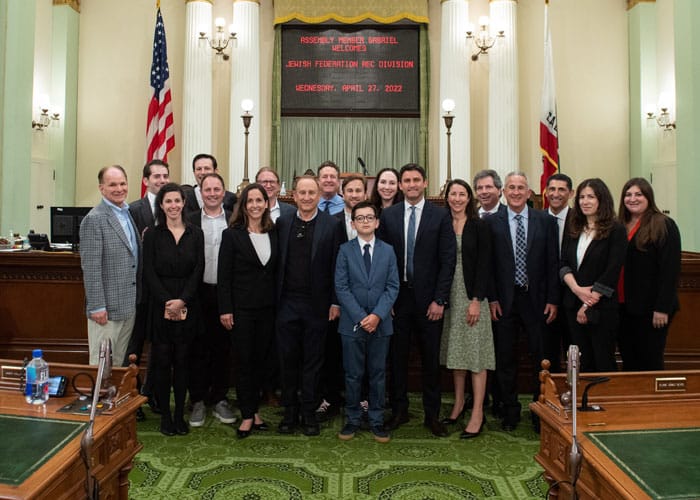
Due to the advocacy efforts of the Jewish Federation of Greater Los Angeles and L.A. Federation partners, California Gov. Gavin Newsom’s recently signed state budget for 2022-2023 allocates more than $132 million to help fund issues affecting California’s Jewish community.
“It is safe to say this $132 million will impact the entire Jewish community.”
– Rachel Zaiden
“It is safe to say this $132 million will impact the entire Jewish community,” L.A. Federation Civic Engagement Director Rachel Zaiden told the Journal in a recent phone interview.
The L.A. Federation worked with the California Legislative Jewish Caucus, a group of Jewish and Jewish-supporting elected officials in the California legislature, to secure $40 million for rebuilding six California summer camps affected by devastating wildfires in recent years. The camps are both Jewish and non-Jewish.
“The California Legislative Jewish Caucus was the main driver and force for this,” Zaiden said. “So we are really grateful for their partnership.”
The Jewish camps that will receive funds are Wilshire Boulevard Temple Camps in Malibu; the Shalom Institute in Malibu; and the Union of Reform Judaism’s Camp Newman in Santa Rosa.
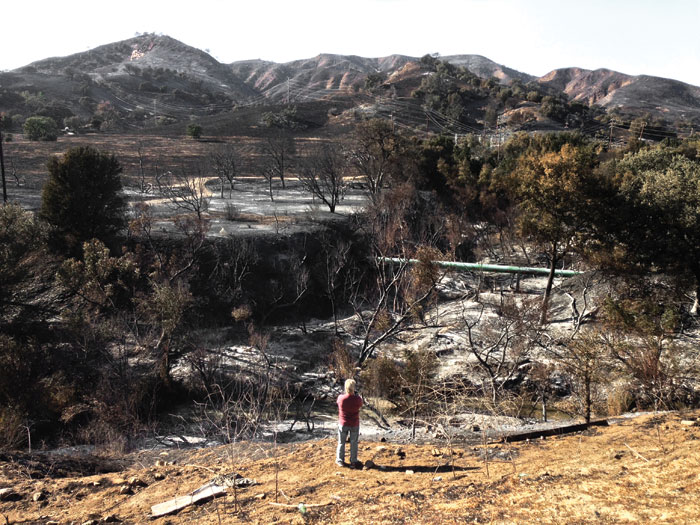
The Woolsey Fire in 2018 devastated Wilshire Boulevard Temple (WBT) Camps as well as the Shalom Institute. The massive wildfire destroyed nearly all of the structures at WBT’s Camp Hess Kramer and Gindling Hilltop Camp, and it wiped out 95% of the Shalom Institute’s JCA Shalom campus.
“Had our state not been ravaged by drought and wildfire we would not be in this position,” Zaiden said.
“Had our state not been ravaged by drought and wildfire we would not be in this position,” Zaiden said.
In a statement, Shalom Institute Executive Director Bill Kaplan said he was grateful for the state’s support and the Federation’s work on his camp’s behalf.
“This new funding from the State of California has put us one big step towards turning our ashes from the Woolsey Fire into blossoms,” he said. “With tremendous gratitude, the Shalom Institute community thanks the Jewish Federation of Greater Los Angeles and the Jewish Caucus for all their support and efforts to secure these funds not only for us, but for five other camps destroyed in wildfires over the last five years.”
The recent allocations from the state will help with rebuilding, Douglas Lynn, executive director at Wilshire Boulevard Temple Camps and Conference Center, said.
“The recognition from the State of California of the invaluable work camps do to help children, teens and even adults learn, grow and become better people is reflected in this financial support,” he said.
Signed by Newsom on June 30, the $308 billion state budget goes beyond supporting Jewish and non-Jewish camps. It allocates $50 million for the state’s nonprofit security grant program; $1.4 million to staff and fund the Governor’s Council on Holocaust and Genocide Education; $1.8 million to staff and fund the Commission on the State of Hate; $36 million for the California Holocaust Survivor Assistance Program, which is administered by Jewish Family Service agencies to support the aging survivor population; and $3 million for the renovation of the JFCS Holocaust Center in San Francisco.
The work of many partners made securing these funds possible, according to the Federation.
“From the Federation’s standpoint, the idea that we could convene this broader coalition says where we want to go in the community – that we make an impact not just in the Jewish community but among the broader, diverse citizens of the state,” Zaiden said. “This was the first time we have been able to do that in a meaningful way.”























 More news and opinions than at a Shabbat dinner, right in your inbox.