Was Wall Street Journal reporter Daniel Pearl killed because he was Jewish?.
Several veteran foreign correspondents say all American journalists, regardless of religion, face the same danger in overseas trouble spots — although they agree that religion is an issue, both for their editors and their subjects.
An American who also had Israeli citizenship through his parents, Pearl was abducted in Karachi, Pakistan, on Jan. 23 by Pakistani militants. They accused him first of working for the CIA and then of being a Mossad agent.
Videotapes of Pearl’s execution, obtained by government officials Feb. 21, reportedly show him declaring his Jewish heritage in his last words.
According to a CNN report, Pearl appears on the videotape and says, "My name is Daniel Pearl. I’m a Jewish American. My father is Jewish. My mother is Jewish. I am a Jew." He then spoke of many family visits to Israel and said that a street in a town in Israel was named after his great-grandfather, who was one of the founders of the town.
The video then shows Pearl being brutally murdered.
On Feb. 21, one of Pearl’s alleged captors said through his lawyer that Pearl was abducted and killed for being "anti-Islam and a Jew."
Leaders from around the world expressed their revulsion and condolences.
"His murder is an act of barbarism that makes a mockery of everything Danny’s kidnappers claimed to believe in," said Paul Steiger, the managing editor of The Wall Street Journal. "They claimed to be Pakistani nationalists, but their actions must surely bring shame to all true Pakistani patriots."
Pearl was the paper’s South Asian bureau chief, based in Bombay, India.
Pearl’s mother and father, a professor at the University of California at Los Angeles, came to the United States from Israel in the 1950s. They both have dual U.S.-Israeli citizenship.
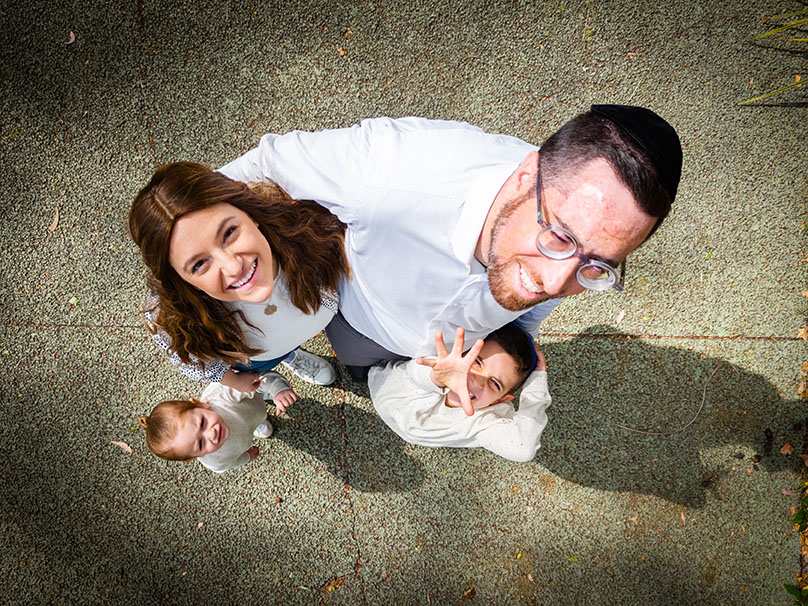
In addition to his parents, Pearl is survived by a wife, who is pregnant with their first child.
Pearl’s death raises questions about the safety of all journalists in violent parts of the world, but the fact that he may have been targeted because of his religion is of particular note.
Tim Weiner, a New York Times reporter based in Mexico City, has made many trips to Pakistan and Afghanistan as a journalist. He said he believes Pearl’s Jewishness was secondary for his captors.
"I think this is primarily an act of hatred against the United States and the West, rather than Muslim against Jew," said Weiner, who knew Pearl personally.
Weiner said that when the subject of religion came up during his interviews in the region, the reaction generally was positive. He cited an incident in 1994, when he was interviewing a provincial governor and Islamic militant, Abdullah Jan, who asked if Weiner was Muslim.
"He was the typical old-fashioned warlord type, with a 2-foot-long turban and a beard down to his short ribs," Weiner recalled.
When he responded that he was not Muslim, Jan asked whether Weiner was Christian. Again, Weiner said no.
"You must be Jewish," Jan then said.
"He raised up his right hand with his palm toward me, as if he was taking an oath in court," Weiner said. "And he said, ‘All men are brothers, all children of Ibrahim. As long as you are a brother of the book, you’re OK with me.’ "
Weiner says he does not believe that Pearl was targeted because he was Jewish.
"I think that this little group of demonstrative and crazy people found it useful for their own twisted propaganda purposes to make an issue or try and make headlines out of his religion," he said.
Glen Frankel, editor of The Washington Post Magazine, said assigning a Jewish journalist to an area like Pakistan is a Catch-22. Before sending someone to the region, editors would discuss the factor of religion — yet they also would be wary of preventing a reporter from working in a certain region just because of his faith.
"I would think about it, but I would also feel a responsibility to cover events," said Frankel, who has been stationed in the Middle East, southern Africa and Europe. "I would go to Pakistan, but I would also be as careful as possible" — as, he added, Pearl probably was.
American Jewish groups reacted harshly to Pearl’s murder, calling it an example of extreme Muslim fundamentalism.
"He was a reporter, merely doing his job, who fell victim to the insanity of Islamic fundamentalism that targeted him merely because he was an American and a Jew," said Rabbi Marvin Hier, dean and founder of the Simon Wiesenthal Center. "It was the same hate and fanaticism that brought down the World Trade Center."
Ironically, friends and colleagues describe Pearl as someone curious about Islam and eager to tell the stories of extremists.
Abraham Foxman, national director of the Anti-Defamation League, said he did not believe that Jewish journalists are more at risk than other American journalists.
"I don’t see any patterns that Jewish journalists are being targeted," Foxman said. Pearl "was targeted first and foremost because he was an American."
But, Foxman added, the level of hate is increasing in that region, and anti-Semitic dimensions are being seen in conflicts in the Middle East and South Asia.
President Bush, who was traveling in China when he learned of Pearl’s death, said: "Those who would threaten Americans, those who would engage in criminal, barbaric acts, need to know that these crimes only hurt their cause and only deepen the resolve of the United States of America to rid the world of these agents of terror.
"May God bless Daniel Pearl," he added.