Do you have free will?
That’s an easy question. Of course you do.
Here’s a harder question: What is free will?
That’s where most of us get into trouble. Common sense tells us that we have free will, but doesn’t tell us what it is. We have only a vague idea of what it means to act freely.
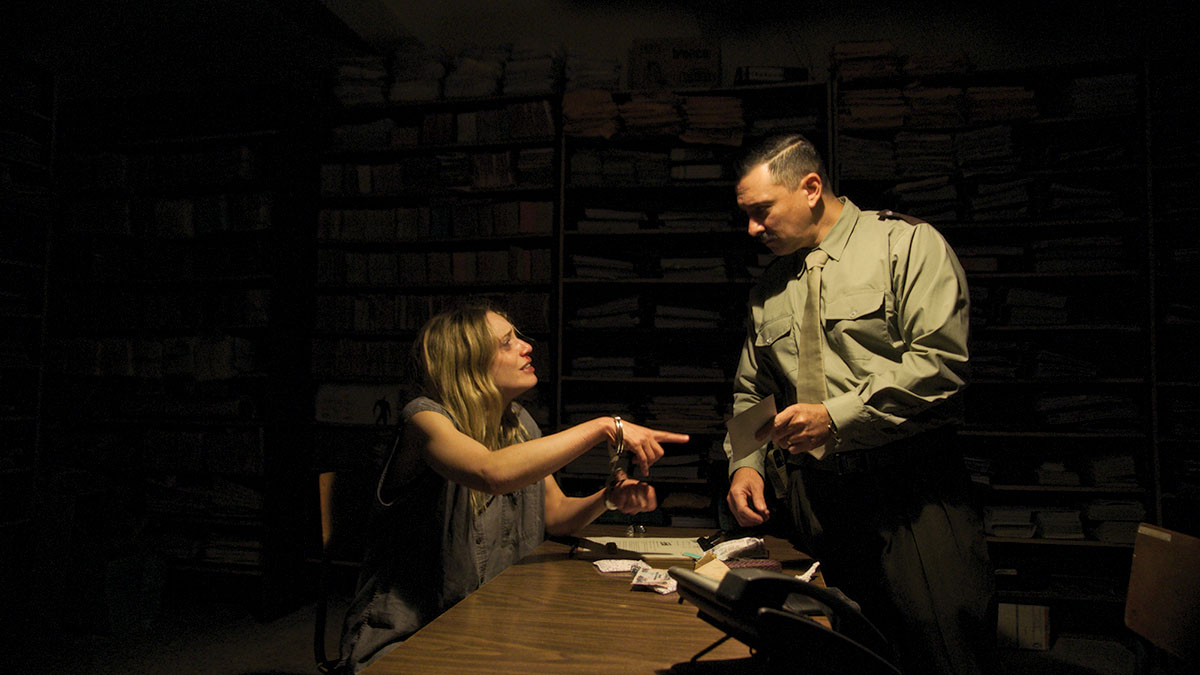
And it’s a pretty important concept. If people can’t freely choose what they do, then they aren’t morally responsible for their actions. If we hold them responsible anyway, then we had no choice about it. Just like Alex in A Clockwork Orange, we are helpless automatons, not morally rational beings.
The Torah doesn’t explicitly teach that we have free will, but it’s implied. In Deuteronomy 30:15-18, God, though Moses, gives the Israelites a choice:
“I command you this day, to love the Lord your God … But if your heart turns away and you give no heed, and are lured into the worship and service of other gods, I declare to you this day that you shall certainly perish …”
There's also a Midrash that addresses the issue:
“At the time when Moses was engaged in writing the Torah, he had to set down what happened on each of the six days of creation. When he got to the verse, 'And God said: 'Let us make Adam',' Moses dared ask, 'Master of the Universe, why do you give heretics their opportunity?' 'Write, O son of Amram,' God replied. 'Whoever wishes to err, let him err.'” (The Book of Legends, 13:48)
Free will has been a hot discussion topic this week at Hebrew College, where one of my classes is studying the Book of Exodus. There, the issue arises in two main ways:
– In Exodus, God “hardens Pharaoh’s heart” so that he refuses to free the Israelites. Does that mean God sometimes takes away people’s free will?
– In Exodus and elsewhere, God reveals what people will do in the future. Does that mean our actions are pre-determined, leaving us no free choice about what we do?
Those don’t seem like hard problems, but you wouldn’t know if from all the energy people have spent arguing about them through the centuries.
Our common-sense idea of free will is something like this: You go out for ice cream. You like chocolate and strawberry, but today you decide to get chocolate. You could have picked strawberry. Your will was free.
The problem is what we mean by “free.” Can a free choice be influenced by prior circumstances? You like chocolate and strawberry, so you choose one of them and ignore the vanilla. Could you have chosen the vanilla? Sure, but why would you? You felt like having chocolate ice cream.
That sheds some light on the story of God hardening Pharaoh’s heart. Jewish thinkers have proposed various solutions, but it might be very simple.
For example, suppose that when you go out for ice cream, your spouse teases you about always ordering chocolate. That “hardens your heart,” so you order strawberry unless you’re really annoyed, in which case you order Rocky Ripple. Your choice was still free, but both your taste preferences and your spouse caused you to make it a certain way.
What about Divine knowledge of the future? If God knows what we’re going to do, does it mean our actions are pre-determined, and therefore not free?
I’ll tell you a secret: It often occurs that months before I know what I’m going to do, my mother knows what I’m going to do. She doesn’t make me do it: I still choose freely. She just knows me very well, so she can predict what I’ll freely choose. However, even she doesn’t know me as well as God does.
God’s knowledge of the future doesn’t mean our choices aren’t free. It only means that God knows us infinitely well, is outside of time, and can (from our viewpoint) “predict” our actions.