Ever since a devastating pandemic made people afraid to enter enclosed spaces, Jewish buildings have been trembling. With time, this fear was accompanied by a sense of unusual comfort: Why get all dressed up and schlep to all these different places when I can do everything from the comfort of my own home, and feel safer in the process?
Those six words– the comfort of my own home– may haunt the Jewish world for years to come. Pandemic or no pandemic, the intoxicating convenience of online technology has devalued many sections of commercial real estate, and Jewish buildings are not immune. People still go to places that are hard to replicate online—a restaurant, a concert hall, a theater, and so on. But if you can work and learn and shop and even pray remotely with such amazing ease, why schlep?
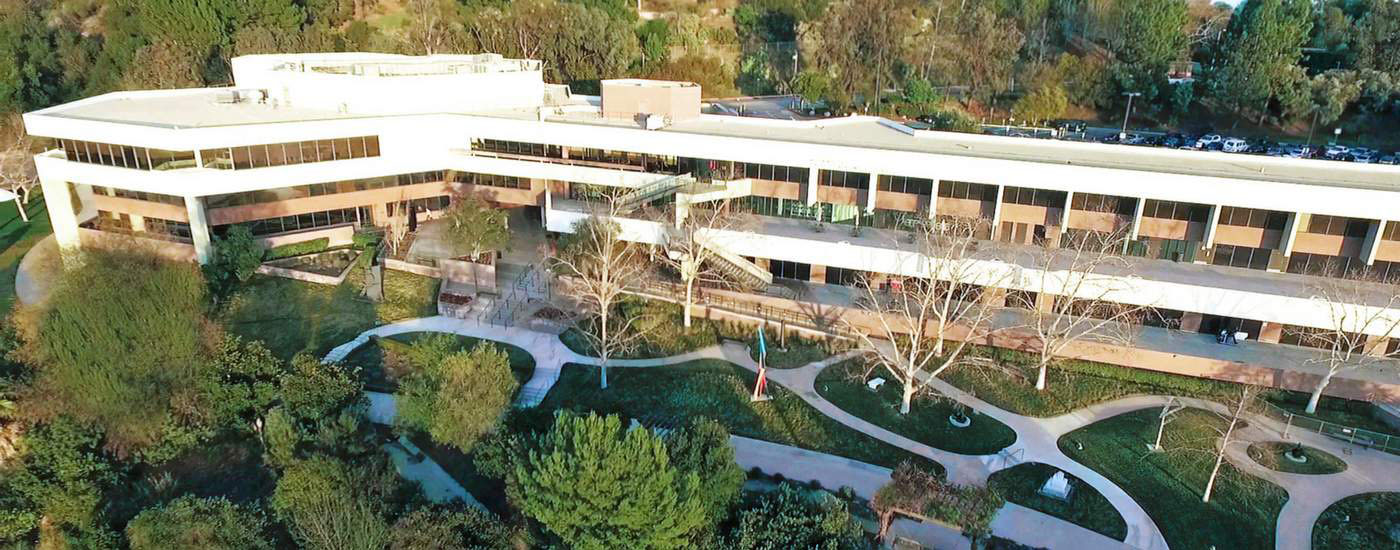
It is in that context that we must look at the announcement on Feb. 10 that American Jewish University will sell its valuable real estate on top of Mulholland Drive.
The news was stunning but not surprising.
It was stunning because we’re talking about a major community institution. The whole idea of a Jewish University on the West Coast was always extraordinarily ambitious. This was supposed to be California’s answer to venerable colleges on the East Coast, such as Brandeis University and Yeshiva University. But this California version never really found its footing, or its identity. Eventually, it became an amalgam of Jewish educational initiatives—a small and struggling undergraduate program, a place for community events, lectures and continuing education, and a well-regarded rabbinical school, among other things.
By the time the current president, Jeffrey Herbst, took over in 2018, there were only 80 students enrolled in its undergraduate program. Still, because of popular initiatives such as the Whizin Center for Continuing Education, the Miller Introduction to Judaism program, Camp Alonim and diverse programming at the Gindi Auditorium, the university made a mark on the community. It is this wide appeal that attracted Herbst in the first place, as he told the Journal in 2018:
“The appeal of AJU was of an institution that really educated across the entire life cycle, from children and camp to undergraduates, to advanced graduate training, including the training of rabbis. As an educator, the fact that the institution was devoted to all age groups and continuing education also was a tremendous attraction.”
After shedding its undergraduate program in the fall of 2018, AJU became less of a university and more of an educational center for the community. Nothing wrong with that, except that you don’t really need an expensive campus with dorms on top of a mountain that is annoyingly hard to get to because of that inconvenience called freeway traffic.
After shedding its undergraduate program in the fall of 2018, AJU became less of a university and more of an educational center for the community.
The pandemic only accelerated the necessity of reassessing AJU’s valuable real estate. The AJU pivoted during the pandemic to build a thriving online presence, and, in a world going remote, it was hardly a surprise that AJU finally decided to sell its L.A. real estate and redirect its resources.
As Herbst told me in an email last week: “At the end of the day, our mission statement asks that we promote Jewish Journeys; it says nothing about being a landowner in Bel Air.”
The million-dollar question now is: What will it do with all that money?
We know that AJU will invest heavily to build on the success of its online initiatives.
But beyond that, will it come down from the mountaintop and get more efficient space closer to the community it serves? And with what kind of programming? After all, there are still plenty of people who value “in person” learning and “in person” events, and those numbers will only increase post-pandemic.
This is the City of Angels, where dreaming is a cherished habit. So, what will be the new AJU dreams? As it promotes Jewish Journeys, what journey will it create for itself?
Speaking of in-person, how will AJU envision the future of the Brandeis Bardin Campus in Simi Valley, home of the Brandeis Collegiate Institute and Camp Alonim, which will remain under AJU ownership?
As part of its digital investment, will it aim to build an online university that could do virtually what it couldn’t do in person?
Will it create an endowment to support community initiatives that reinforce its mission? And who will they sell to? Will the property remain in Jewish hands? These and other questions will face Herbst, his team and the board as they reimagine the future.
Who will they sell to? And will the property remain in Jewish hands?
Yes, the sale of that glorious piece of Jewish real estate on top of fabled Mulholland Drive represents the end of an era, if not the end of a dream.
But this is the City of Angels, where dreaming is a cherished habit. So, what will be the new AJU dream? As it promotes Jewish Journeys, what journey will it create for itself? Reality and experience may have sobered the AJU journey so far, but I hope it won’t sober its capacity to dream big—including finding ways to get more people to leave the comfort of their homes.