fbpx

February 11, 2022

AJU’s Decision to Sell Its L.A. Real Estate: Stunning but not Surprising

Ever since a devastating pandemic made people afraid to enter enclosed spaces, Jewish buildings have been trembling. With time, this fear was accompanied by a sense of unusual comfort: Why get all dressed up and schlep to all these different places when I can do everything from the comfort of my own home, and feel safer in the process?

Those six words– the comfort of my own home– may haunt the Jewish world for years to come. Pandemic or no pandemic, the intoxicating convenience of online technology has devalued many sections of commercial real estate, and Jewish buildings are not immune. People still go to places that are hard to replicate online—a restaurant, a concert hall, a theater, and so on. But if you can work and learn and shop and even pray remotely with such amazing ease, why schlep?

It is in that context that we must look at the announcement on Feb. 10 that American Jewish University will sell its valuable real estate on top of Mulholland Drive.

The news was stunning but not surprising.

It was stunning because we’re talking about a major community institution. The whole idea of a Jewish University on the West Coast was always extraordinarily ambitious. This was supposed to be California’s answer to venerable colleges on the East Coast, such as Brandeis University and Yeshiva University. But this California version never really found its footing, or its identity. Eventually, it became an amalgam of Jewish educational initiatives—a small and struggling undergraduate program, a place for community events, lectures and continuing education, and a well-regarded rabbinical school, among other things.

By the time the current president, Jeffrey Herbst, took over in 2018, there were only 80 students enrolled in its undergraduate program. Still, because of popular initiatives such as the Whizin Center for Continuing Education, the Miller Introduction to Judaism program, Camp Alonim and diverse programming at the Gindi Auditorium, the university made a mark on the community. It is this wide appeal that attracted Herbst in the first place, as he told the Journal in 2018:

“The appeal of AJU was of an institution that really educated across the entire life cycle, from children and camp to undergraduates, to advanced graduate training, including the training of rabbis. As an educator, the fact that the institution was devoted to all age groups and continuing education also was a tremendous attraction.”

After shedding its undergraduate program in the fall of 2018, AJU became less of a university and more of an educational center for the community. Nothing wrong with that, except that you don’t really need an expensive campus with dorms on top of a mountain that is annoyingly hard to get to because of that inconvenience called freeway traffic.

After shedding its undergraduate program in the fall of 2018, AJU became less of a university and more of an educational center for the community.

The pandemic only accelerated the necessity of reassessing AJU’s valuable real estate. The AJU pivoted during the pandemic to build a thriving online presence, and, in a world going remote, it was hardly a surprise that AJU finally decided to sell its L.A. real estate and redirect its resources.

As Herbst told me in an email last week: “At the end of the day, our mission statement asks that we promote Jewish Journeys; it says nothing about being a landowner in Bel Air.”

The million-dollar question now is: What will it do with all that money?

We know that AJU will invest heavily to build on the success of its online initiatives.

But beyond that, will it come down from the mountaintop and get more efficient space closer to the community it serves? And with what kind of programming? After all, there are still plenty of people who value “in person” learning and “in person” events, and those numbers will only increase post-pandemic.

This is the City of Angels, where dreaming is a cherished habit. So, what will be the new AJU dreams? As it promotes Jewish Journeys, what journey will it create for itself?

Speaking of in-person, how will AJU envision the future of the Brandeis Bardin Campus in Simi Valley, home of the Brandeis Collegiate Institute and Camp Alonim, which will remain under AJU ownership?

As part of its digital investment, will it aim to build an online university that could do virtually what it couldn’t do in person?

Will it create an endowment to support community initiatives that reinforce its mission? And who will they sell to? Will the property remain in Jewish hands? These and other questions will face Herbst, his team and the board as they reimagine the future.  

Who will they sell to? And will the property remain in Jewish hands? 

Yes, the sale of that glorious piece of Jewish real estate on top of fabled Mulholland Drive represents the end of an era, if not the end of a dream.

But this is the City of Angels, where dreaming is a cherished habit. So, what will be the new AJU dream? As it promotes Jewish Journeys, what journey will it create for itself? Reality and experience may have sobered the AJU journey so far, but I hope it won’t sober its capacity to dream big—including finding ways to get more people to leave the comfort of their homes.

AJU’s Decision to Sell Its L.A. Real Estate: Stunning but not Surprising Read More »

The Kohen’s Dillema: Should Judaism Pander to the Crowd?

“We were greatly astonished, when we saw Eleazar engaged in the service of the Temple, at the mode of his dress, and the majesty of his appearance… (which) created such awe and confusion of mind as to make one feel that one had come into the presence of a man who belonged to a different world.” So writes the author of the Letter of Aristeas, about meeting the High Priest Eleazar, who lived 260–245 BCE. The multicolored garments of the Kohen Gadol (High Priest) were of such “conspicuous beauty”, that they left all observers “amazed” at the spectacle they had seen.

Making an impression was the very purpose of the uniform of all the kohanim. The Rambam says that for the kohanim, the clothes make the man. (A kohen without his uniform was prohibited from participating in the service). The Rambam writes in the Guide for the Perplexed that the average person who visited the Beit Hamikdash (Temple) would judge the kohanim by their clothes, “..because the multitude does not estimate man by his true form but by the perfection of his bodily limbs and the beauty of his garments..”. Image is critical for the kohanim; they must strike an aristocratic pose, be well groomed, (kohanim were required to take regular haircuts), and wear beautiful, well maintained garments. Kohanim must court public opinion, and inspire the multitude.

The regal bearing of the kohen stands in sharp contrast with another biblical leader, the navi (prophet). Amos describes himself “a cattle herder and a tender of sycamore figs.”  Eliyahu is described as “a hairy man,….with a leather belt tied around his waist.”; this great navi has long hair and wears a working man’s clothes. The neviim had a very different aesthetic than the kohanim, and their attire reflects a fundamental difference between them.

Ahad Ha’am wrote an influential essay contrasting the kohen and navi. He explains that they represent “two ways of doing service in the cause of an idea”, and that “the navi is a one-sided figure, who wants to make dramatic change. The kohen is essentially the follower of the navi, who attempts to preserve the navi’s vision within the realities of society.”

A navi focuses single mindedly on his idea. “A certain moral idea fills his whole being,…. He can only see the world through the mirror of his idea…His whole life is spent in fighting for this ideal with all his strength.” The navi is not interested in popularity contests, and many neviim had their lives threatened by the powers that be. Not so the Kohen; his job is to ensure that these ideals are broadly accepted. Ahad Ha’am explains that “instead of clinging to the narrowness of the navi, and demanding of reality what it cannot give, (the kohen) broadens his outlook, and takes a wider view ….Not what ought to be, but what can be, is what he seeks.” The navi is fixated on a divine vision, and little else matters to him; the kohen is a teacher, trying to coax everyone a bit closer to the ideal. The kohen must be a master of persuasion and public relations; and for that reason, he needs to tend carefully to his image, and ensure that his garments and grooming are presentable. 

The kohen has a complex mission. He is the middleman who connects man to God, the one who brings sacrifices to God and atonement to man. And like any intermediary, there is a question of where the kohen’s primary loyalties and responsibilities lie. The Talmud ponders this question and wants to know if the kohanim are “our emissaries, or the emissaries of God?” Being a middleman means that the kohen is pulled in two opposite directions.

In Rabbinic literature, the human centered mission of the kohen is emphasized. Aharon, the first kohen, is one who “loves peace and pursues peace, loves mankind and draws them close to the Torah.” The kohen offers the birkat kohanim (the priestly blessing) to the community, and must do so with love. For this reason, a kohen who has taken a life is disqualified from giving birkat kohanim.

Hillel, the great rabbi of the mishnah, saw the kohen as a role model for the rabbinic community. Hillel advocated that one ought to “be a student of Aharon”, and like Aharon and the kohanim, focus on personal connections. Hillel himself was a transformative leader because like Aharon, he was humble, open and embracing. Unlike the navi, Hillel did not rebuke and reject.

However, being a people-centered man of God can lead to serious failures. Being constantly focussed on public opinion can cause the kohen to lose sight of his ultimate responsibilities; love of the community can cross the line to pandering. Aharon may be a master of personal connections, but that personality trait causes his greatest failure. When the people ask for a Golden Calf, Aharon obliges them; he doesn’t challenge their request, and avoids confrontation and controversy. In this critical moment, Aharon is too responsive to the desires of the community.

This is the kohen’s dilemma: how to connect to the crowd without losing sight of your unique vision.  

This is the kohen’s dilemma: how to connect to the crowd without losing sight of your unique vision.

Contemporary rabbis are more or less made in the image of the kohen. Yes, there are some rabbis who stand high in the pulpit to issue fire and brimstone speeches that rebuke their wayward flocks. There are communities where words of mussar, of serious self criticism, are welcome. But for the most part, in order to succeed, contemporary rabbis must be diplomatic and discerning, and relate to the community they live in. As Solomon Schechter put it in the 1920’s, “You can’t be a rabbi in America without understanding baseball.” Today’s rabbi may not have the kohen’s wardrobe, but he shares the same mission: to make a positive impression, and in doing so, bring people closer to Torah.

Today, American rabbis are very much a part of their community. As American Jewry diminishes in commitment and observance, the question is how rabbis will respond. When the flock keeps wandering, will the rabbi follow them?

In 2018, Jack Wertheimer published The New American Judaism, a book about how contemporary Jews practice Judaism. Wertheimer conducted 160 in-depth interviews with rabbis of every denomination, and this forms the foundation of the book. In it, you can hear the frustrations of rabbis who don’t know what they should do next; one laments they cannot get children to attend synagogue programs because “the God of soccer is a jealous God”. When Wertheimer summarizes some of the assumptions that his interviewees held, you can see how their context shapes their thinking. There is an expectation that synagogues must model themselves after successful businesses; they must be innovative, and expert in marketing and customer service. Time honored traditions are modified to cater to a congregation that is increasingly strapped for time.

Marketing has significant religious value; the Talmud stresses making sure that ritual objects are pleasing to the eye, and make a “beautiful sukka, a beautiful lulav, a beautiful shofar, beautiful ritual fringes, beautiful…Torah scroll, and… wrap the scroll in beautiful silk fabric”. But when there is a lack of religious commitment, the kohen’s dilemma becomes a serious challenge. One can survey the congregation to find what is popular. But that can lead to an unchallenging Judaism, one that is innocuous and banal, an amalgam of nostalgia and good feelings. Wertheimer calls this “an ersatz form of Judaism”’, which re-brands popular tastes and popular political stances as a form of religious expression. It is imperative for a religious leader to meet people where they are; but the belief that “the customer is always right” is a poor fit for Judaism, which is about challenging man to achieve his best. In a market driven culture, the rabbi is pulled between public relations and pandering.

The kohen is a man of the people. But what happens when the people are no longer interested? This is the kohen’s dilemma, and one that every American Jew needs to ponder.


Rabbi Chaim Steinmetz is the Senior Rabbi of Congregation Kehilath Jeshurun in New York.

The Kohen’s Dillema: Should Judaism Pander to the Crowd? Read More »

Artificial Intelligence Can Identify Genetic Disorders in Embryo With Simple Blood Test

For more articles from The Media Line, click here.

(The Media Line) An Israeli startup is developing a non-invasive early detection method using artificial intelligence (AI) to identify genetic disorders in human embryos.

Via a simple blood test taken from the pregnant mother during the first trimester, IdentifAI Genetics can read the embryo’s entire DNA and provide in-depth analysis to detect genetic disorders.

Prof. Noam Shomron is the chief scientific officer and co-founder of IdentifAI, and he also heads the Functional Genomic Team at Tel Aviv University’s Faculty of Medicine.

Prof. Noam Shomron, chief scientific officer and co-founder of IdentifAI, and head of the Functional Genomic Team at Tel Aviv University’s Faculty of Medicine, Sept. 24, 2019. (Corinna Kern)

“In the pregnant mother there are tiny bits of DNA that come from the embryo, from the placenta,” Shomron told The Media Line. “If we look at a developing embryo, we can see tiny pieces of the placenta or embryonic DNA and if we could segregate it well enough and separate it then we’ll be able to read the entire DNA of the embryo.”

The AI could be used to identify any genetic disease that is caused by a minute number of changes in the DNA.

According to Shomron, there are several benefits to using this new tool over existing methods. Firstly, the procedure is non-invasive and therefore carries no risk for the pregnancy, unlike amniocentesis, in which a small amount of amniotic fluid is taken from the amniotic sac of a developing fetus. Secondly, while amniocentesis is usually carried out from weeks 15 to 20 of pregnancy, IdentifAI relies on a blood test taken already in the first trimester.

“You do it very early in the development of the embryo, in week 10 [of the pregnancy],” he said. “It’s comprehensive: it reads the DNA from beginning to end.”

IdentifAI relies on a new AI-based software tool known as Hoobari that was first developed by Tel Aviv University.

In addition to detecting genetic disorders in embryos, the technology might have important applications with regard to early cancer detection.

“If we’re talking about cancer, we’re probably a few years away but if we’re talking about embryonic development then we have already implicated it on real samples from genetic institutes,” Shomron said. “That means that we are now developing a product out of it and it should reach the market in one to two years.”

Shomron and researchers from Tel Aviv University also recently used the state-of-the-art technology to help study the electronic medical records of roughly 8,000 patients with blood infections at Tel Aviv’s Ichilov Hospital. In that study, researchers were able to determine with 82 percent accuracy which patients were at greater risk of serious illness as a result of blood infections.

The groundbreaking study was carried out by Yazeed Zoabi and Dan Lahav, students in Shomron’s lab, in collaboration with Dr. Ahuva Weiss Meilik, head of the I-Medata AI Center at Ichilov Hospital, Prof. Amos Adler, and Dr. Orli Kehat. The results were published in the journal Scientific Reports.

In the study, the AI was able to uncover patterns of information in the medical files to determine which ones were at greater risk of serious illness or death as a result of their blood infection. The system is now being assimilated into Ichilov Hospital and will be used to help doctors assess and rank patients according to risk.

Shomron spoke to The Media Line on the sidelines of AI Week 2022, a three-day conference from the Blavatnik Interdisciplinary Cyber Research Center at Tel Aviv University that began earlier this week.

AI and big data are playing a growing role when it comes to healthcare. Because the technologies can speed up the process with which healthcare professionals can process and analyze large amounts of data, they can help with everything from medical records and imaging, to diagnostics and developing more advanced medicines.

Prof. Meir Feder, head of the newly established Tel Aviv University Center for Artificial Intelligence & Data Science (TAD), told The Media Line that AI has already surpassed trained radiologists when it comes to medical imaging.

“When you have a better understanding of the images then you can detect disease and make good decisions about the treatment,” Feder said. “In general, personalized medicine can only be done with AI. AI systems can do it much more accurately and reliably.”

Though much of the technology is still relatively new, Feder believes that it will make things that once appeared to be medically impossible a reality in the near future.

“Anywhere you [look], AI can help in healthcare and biomed,” he related. “It’s already helping and its effect will be ten-fold in the coming years.”

Artificial Intelligence Can Identify Genetic Disorders in Embryo With Simple Blood Test Read More »

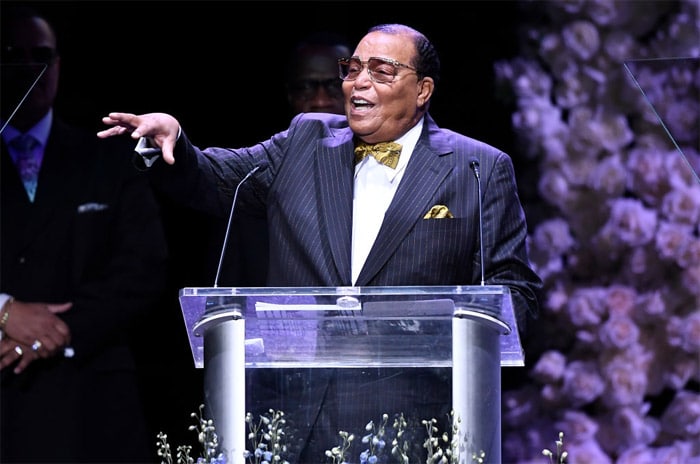
Louis Farrakhan Podcast, Speeches Can Be Found on Spotify

Nation of Islam leader Louis Farrakhan’s podcast as well as some his past lectures can be found on Spotify’s streaming platform.

Fox News reporter Timothy Nerozzi first reported on the matter in a February 9 Fox Business article, stating that while there have been calls for podcaster Joe Rogan to be deplatformed from Spotify, “artists accused of everything from sex trafficking to antisemitism continue to be hosted on the platform without incident.” One of the examples Nerozzi listed was Farrakhan’s podcast “Farrakhan Speaks” still being available for streaming, as well as Farrakhan’s classical violin pieces. As of this writing, the Journal can confirm that both are indeed available for streaming on Spotify; a total of eight episodes of “Farrakhan Speaks” can be streamed on Spotify, featuring excerpts from various Farrakhan speeches.

Additionally, the Journal found various archived speeches from Farrakhan on Spotify as well. For instance, Farrakhan’s “The Time and What Must Be Done” lecture series from 2013 can be found split into 58 parts on the streaming platform; Part 18 of the series states in the description “Why the Jews hated Jesus past and present” and Part 21’s description says it exposes “more of the Synagogue of Satan.” In their archive on Farrakhan, the Anti-Defamation League (ADL) cites some of the following quotes from Farrakhan’s “Time and What Must Be Done” series as examples of his antisemitism:

  • “You that think that those who refer to themselves as Jews are the real Children of Israel? No. You have made a real theological mistake and some of you have made a theological error because you know the truth, but yet you consider your wickedness in promoting a deceptive lie.”
  • “The Jewish media has normalized sexual degeneracy, profanity, and all kinds of sin.”
  • “Socialism or communism is a doctrine they have to fight cause it ends their wealth and their power, wherever socialism rises, capitalism begins to die…So the International Jew is affected by the rise of socialism, it is in their DNA to fight anything that will raise the common man. This is why they fight any voice that the little man will listen to.”

These quotes came from Parts 5, 20 and 17 from the series, respectively, and the Journal can confirm that each of these quotes can be heard on Spotify.

Another podcast called “The Birth of a Nation Podcast with the Minister Louis Farrakhan” provides audio clips of various Farrakhan speeches from the 1990s and Farrakhan’s virtual message to the Black community in December 2020. In the latter, Farrakhan can be heard advocating against the COVID-19 vaccines, saying they were part of a “death plan” against Black Americans. “Do you believe Satan is concerned with vaccinating you?” Farrakhan said. “After all that he has done to destroy us, you trust him? Your trust is sickening because you love your enemy, and you hate yourself and your friend. How could you allow him to stick a needle into you, saying he’s helping you?” Various artists, including Neil Young and Joni Mitchell, removed their music from Spotify in protest of Rogan’s podcasts, accusing Rogan of promulgating COVID-19 vaccine misinformation. Spotify has a $100 million contract with Rogan for exclusive rights to his podcasts.

Anti-Defamation League CEO Jonathan Greenblatt said in a statement to the Journal, “In light of the clear antisemitic and racist content that’s still readily available on Spotify, their content moderation team should be engaged in a top to bottom audit of the platform to remove any hateful content that violates their policies. The company also needs to move toward greater transparency around how it moderates hateful content. Serious questions remain as to how the company will fight misinformation and hate speech and what resources it devotes to content moderation, and these questions need immediate answers.”

Associate Dean and Director of Global Social Action Agenda at the Simon Wiesenthal Center Rabbi Abraham Cooper pointed out to the Journal in a phone interview that Spotify recently deleted at least 70 episodes of Joe Rogan’s podcast “The Joe Rogan Experience” after reviewing them. Spotify’s CEO Daniel Ek wrote in a memo to employees that Rogan chose to remove the episodes after Spotify talked to him about his use of “racially insensitive language”; Ek said he agreed with Rogan’s decision. 

“They should do to [Farrakhan’s] podcasts what they did to Joe Rogan’s podcasts, meaning: listen to them and anything that has antisemitic and other inappropriate material, they should be taken off of Spotify immediately,” Cooper said. “That’s the standard they have now set.” He added that “even a cursory look at the headlines of some of those speeches would demand by their [Spotify’s] own set of standards that they be removed” and called Farrakhan “the godfather of antisemitism for the last generation of the United States.”

Stop Antisemitism Executive Director Liora Rez similarly said in a statement to the Journal, “When it comes to Jews, there are always double standards. Why is Spotify allowing Farrakhan’s hateful rhetoric to remain on its platform? Why aren’t Joe Rogan’s features of known antisemite Abby Martin being removed? We’re horrified to see that once again, when it comes to the Jewish people, corporations turn a blind eye.”

Spotify did not respond to the Journal’s request for comment. 

Singer India Arie also removed her music from Spotify after a video compilation of Rogan repeatedly using a racial slur went viral. Rogan later apologized, saying that “for a long time, when I would bring that word up – like if it would come up in conversation, instead of saying ‘the N-word’ I would just say the word. I thought as long as it was in context, people would understand what I was doing.” He added that “it’s not my word to use” and that he “never used it to be racist.” As for COVID, Rogan vowed separately to bring on more guests with differing viewpoints.


Louis Farrakhan Podcast, Speeches Can Be Found on Spotify Read More »

FDR’s Jewish Problem — And Its Japanese Link

Next week marks the 80th anniversary of President Franklin D. Roosevelt’s fateful decision to round up more than 130,000 Japanese-Americans and hold them in detention camps, on the grounds that they might be spies for Japan.

What does FDR’s mass internment of the Japanese have to do with his response to the Holocaust? More than you might think.

President Roosevelt’s Executive Order 9066, issued on February 19, 1942, authorized the War Department to designate parts of the country “military areas,” from which “alien enemies” would be “excluded.” All individuals of Japanese ancestry were considered potential “enemies” simply because of their ethnic background.

Roosevelt explained his view of Asians in series of articles in the 1920s, shortly before he was elected governor of New York. Writing in Asia magazine in 1923, he sympathized with what he said was the widespread view “that the mingling of white with oriental blood on an extensive scale is harmful to our future citizenship.”

Two years later, in an article for the Macon Daily Telegraph (for which he was a regular columnist), FDR asserted:  “Anyone who has traveled in the Far East knows that the mingling of Asiatic blood with European or American blood produces, in nine cases out of ten, the most unfortunate results.” The future president warned that “Japanese immigrants are not capable of assimilation into the American population.”

Following the 1941 Japanese attack on Pearl Harbor, some of President Roosevelt’s military advisers began pushing for mass detention of Japanese Americans on the grounds that, as Secretary of War Stimson put it, “their racial characteristics are such that we cannot understand or trust [them].” FDR’s belief that “Japanese immigrants are not capable of assimilation” contributed to his willingness to take such a radical step.

Roosevelt’s perspective also helps explain why he authorized the roundup of Japanese Americans, yet never contemplated similar action against German Americans or Italian Americans, although they, too, had family ties to countries which America was fighting in the war.

“Orientals” were not the only ethnic group whom FDR viewed with automatic suspicion. He harbored similar sentiments concerning Jews. There are more than a dozen documented instances in which Roosevelt made unflattering statements about Jews in private conversations with friends or political allies in the 1930s and 1940s.

His remarks about Jews focused on several specific themes: that Jews possessed certain innate and distasteful characteristics; that it was undesirable to have too many Jews in any single profession, institution, or geographic locale; and that America should be an overwhelmingly white and Protestant country.

Thus President Roosevelt accused the publishers of the New York Times of using “a dirty Jewish trick” to resolve a tax problem. He told Rabbi Stephen S. Wise, America’s foremost Jewish leader, that Jews in Poland were to blame for provoking antisemitism because they dominated the Polish economy. In a conversation with Sen. Burton Wheeler (D-MT), Roosevelt expressed pride that “there is no Jewish blood in our veins.”

President Roosevelt told Rabbi Stephen S. Wise, America’s foremost Jewish leader, that Jews in Poland were to blame for provoking antisemitism because they dominated the Polish economy.

In one 1941 cabinet meeting, FDR remarked that there were too many Jews among federal employees in Oregon. He also boasted that when he was on Harvard University’s Board of Overseers in the 1920s, he had helped bring about a quota to limit the admission of Jewish students. In 1943, he privately asserted that German hostility toward Jews was “understandable” because (he erroneously claimed) “over fifty percent of the lawyers, doctors, school teachers, college professors, etc, in Germany, were Jews.”

Most relevant to the issue of the Japanese internment was what Roosevelt said about Jews to Winston Churchill during a White House luncheon on May 22, 1943. According to the diary of Vice President Henry Wallace, FDR approvingly described a plan drafted by one of his advisers, which “essentially [was] to spread the Jews thin all over the world. The president said he had tried this out in [Meriwether] County, Georgia and at Hyde Park on the basis of adding four or five Jewish families at each place. He claimed that the local population would have no objection if there were no more than that.”

FDR’s plan for the Jews was remarkably similar to what he envisioned for Japanese Americans. At a November 21, 1944, press conference, the president explained what would happen to the detainees after leaving the internment camps:

“A good deal of progress has been made in scattering them through the country…whether it’s in the Hudson River Valley or in western Georgia which we all know, in one of those countries, probably half a dozen or a dozen families could be scattered around on the farms and worked into the community….And they wouldn’t—what’s my favorite word?—discombobulate the existing population of those particular countries very much.”

This was the common theme that underlay Roosevelt’s perceptions of both Jews and Japanese Americans. Their “blood”—that is, their innate racial characteristics—made them suspect. If admitted to the the United States in large numbers, they would overcrowd certain professions, dominate aspects of society, or harm America’s character or culture in other ways. They needed to be “spread out thin” so as to keep them in check.  The entry of significant numbers of “non-assimilable” Jewish or Asian immigrants did not fit comfortably in that vision.

That explains why the Roosevelt administration suppressed Jewish refugee immigration far below the levels allowed by the existing quota system. Some 190,000 quota places from Germany and Axis-occupied countries went unused from 1933 to 1945. Yet the president turned away the refugee ship St. Louis with its 930 Jewish passengers, and refused to support a bill to admit 20,000 refugee children from Germany. Taking in any significant number of Jewish refugees—even though permitted by the existing quota laws—did not comport with Franklin Roosevelt’s conception of the ideal America.

For Japanese-Americans, that meant losing almost all their possessions and being shipped off to detention camps for years. For Jews trying to flee from Europe, it meant America slamming shut its doors just at the moment when they most desperately needed shelter.


Dr. Medoff is founding director of The David S. Wyman Institute for Holocaust Studies, and the author of more than 20 books about Jewish history and the Holocaust. His latest is America and the Holocaust: A Documentary History, forthcoming from the Jewish Publication Society / University of Nebraska Press.

FDR’s Jewish Problem — And Its Japanese Link Read More »