
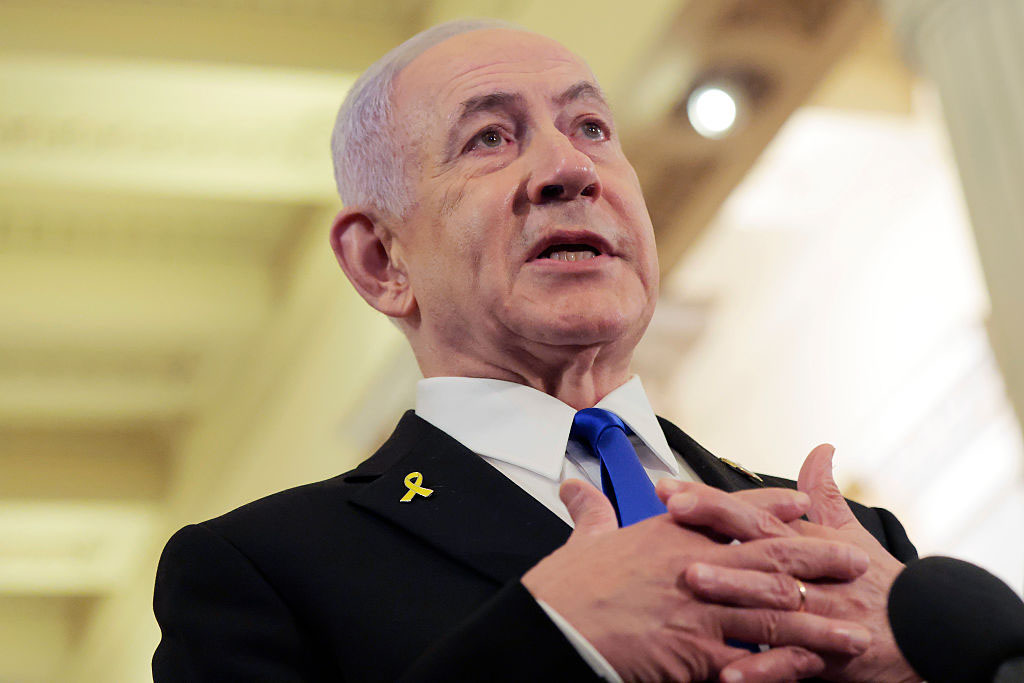
Benjamin Netanyahu is on the verge. At this moment, though, we don’t know what he is on the verge of.
On the one hand, Bibi is tantalizingly close to achieving his long-held goal of remaking the Middle East in a way that would allow Israel to be safe from foreign aggression for the first time in its history. On the other, he is still precariously close to his career ending in disappointment, rejected by the people he has led for most of the last 30 years. The events of the last few weeks appear to make the former of those two possibilities more likely than the latter, but Netanyahu has managed to snatch defeat from the jaws of victory in the past.
With the end of the Gaza war in sight, it is less likely that he overreaches and costs himself the broad popular mandate that is within his grasp. But it is still entirely possible, and it will be some time before we know whether or not Israel’s longest-serving prime minister finally achieves the legacy he has sought throughout his career. His defeat of not only Hamas, but of the once-formidable Iran-led coalition that has dominated the Middle East for almost half a century, has presented him with a gold-plated opportunity.
Since his return to the prime minister’s office at the end of 2022, Netanyahu has relied heavily on the support of the most conservative political figures in Israel. Initially, it was their votes that gave him a majority in the face of his ongoing legal challenges that had cost him the backing of his traditional allies. Then the Hamas terrorist attacks and the debate over the fate of the hostages has limited Netanyahu’s military and governing options to those that would keep the ultra-conservatives in his coalition.
But the success of Israel’s missile attacks on Iran has unified the Jewish state for the first time in years. Netanyahu’s poll numbers have skyrocketed since the initial strikes and have maintained at high levels through the American bombings and the current rickety ceasefire. This may allow him more leeway in his negotiations with Hamas over the remaining captives: opposition leader Yair Lapid has offered Netanyahu a safety net by providing votes to support a ceasefire and hostage agreement that the most conservative members of the Knesset would oppose.
As Hamas’ hold over Gaza continues to collapse and as Donald Trump turns up the pressure for a peace deal that he believes will bring him a Nobel Prize, Iran’s leaders may be unintentionally providing Netanyahu with a political lifeline. Bibi has already offered Lapid and his allies the prospect of early elections in exchange for their backing. But the boost in public support he has received from the Iran conflict could allow him to accelerate that timeline while his poll numbers are still high.
That requires an act of faith on Netanyahu’s part, however, that is by no means a sure thing. The backing of Finance Minister Bezalel Smotrich and his far-right allies has been a security blanket for the prime minister for some time: these habits may be hard to break. The Iranian challenge could flare up again at any moment with unpredictable results, and Netanyahu’s various court cases also continue to loom on the horizon. So the temptation for him to stick with his current coalition would be understandable.
But it would also be counterproductive – politically, militarily and societally. Netanyahu has made no secret that he wants his ultimate legacy to be the leader who finally made Israel safe. The necessary steps for that to happen — with Iran, Saudi Arabia and the rest of the Arab world — all depend on a resolution to the Gaza war. The current rally-around-the-flag effect of the airstrikes on Iran won’t last forever. The longer Netanyahu waits to capitalize on his regained popularity, the less of it will be left. Unless the remaining hostages can finally come home.
More broadly, Israel cannot survive indefinitely as such a deeply divided nation. Reunifying his people must be part of the Bibi Legacy too.
Dan Schnur is the U.S. Politics Editor for the Jewish Journal. He teaches courses in politics, communications, and leadership at UC Berkeley, USC and Pepperdine. He hosts the monthly webinar “The Dan Schnur Political Report” for the Los Angeles World Affairs Council & Town Hall. Follow Dan’s work at www.danschnurpolitics.com.