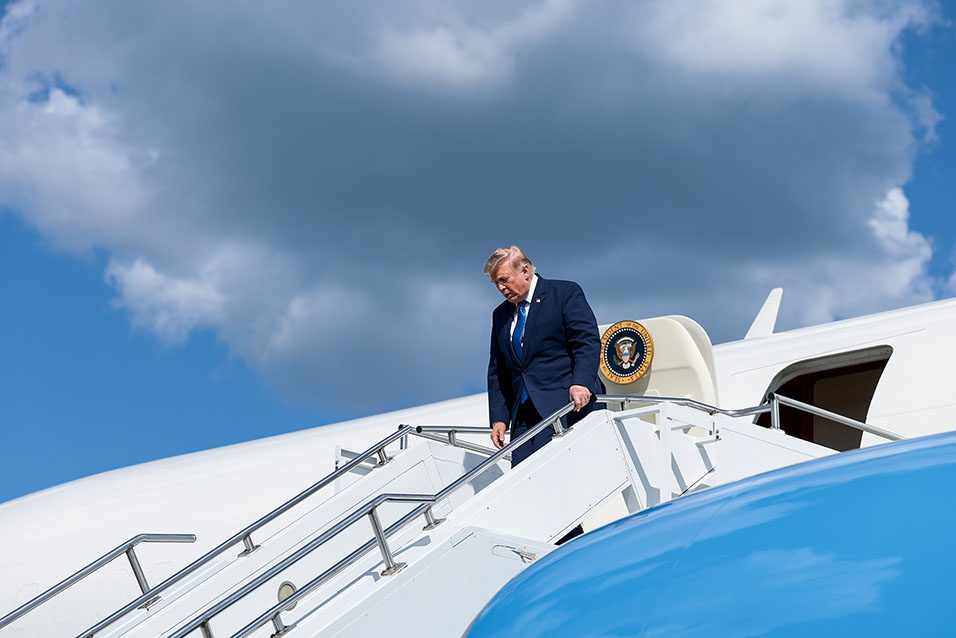
Most readers will find this to be a deceptively easy question to answer. The majority of American Jews will emphatically — and angrily – respond in the negative. A smaller but growing number will react just as vehemently in the opposite direction, with an equally emotional declaration of support for the new/old president.
In this respect, the Jewish community here is no different than the rest of a highly polarized and hyper-partisan electorate. But examining the deep divisions surrounding Trump through the fulcrum of our religious and cultural heritage may tell us more than the typical knee-jerk visceral reaction.
Examining the deep divisions surrounding Trump through the fulcrum of our religious and cultural heritage may tell us more than the typical knee-jerk visceral reaction.
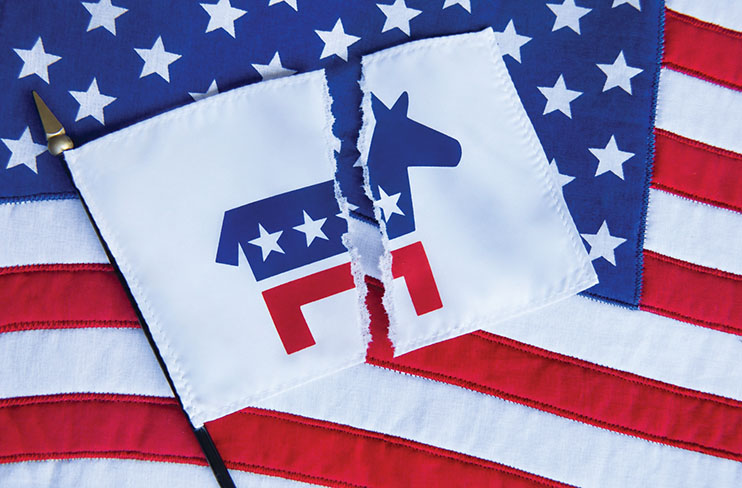
Exit polls taken after the 2024 election differ on the precise distribution of Jewish votes, but almost all agree that while Trump did close the gap to some degree compared to his performance in 2016 and 2020, the Democratic ticket still maintained a comfortable majority of support from American Jews.
Those who supported Kamala Harris – and Hillary Clinton and Joe Biden before – will reject the premise that Trump can be of any benefit to our community. They will cite the cherished principles of tikkun olam and tzedakah to support their argument of our obligation to support the oppressed and they will point to traditional progressive ideology on reproductive rights, environmental protection, marriage equality and other totems of the Democratic platform.
Trump’s habit of nominating officials for his Administration who have either minimized the impact of the Holocaust or trafficked with white nationalists (Robert F. Kennedy, Jr, Matt Gaetz, Kash Patel, etc) would certainly be an insurmountable barrier for them as well.
But Jewish backers of Trump will argue just as strongly that the president’s commitment to fighting antisemitism is an equally powerful motivator for their votes, and they can now refer to last week’s announcement that the administration will invoke severe penalties, up to and including incarceration and deportation, for those whose protests against the Gaza War included threats and/or violence against the Jewish people.
The war has forever changed the way American Jews regard those who we once considered to be our friends and allies, and the ancillary damage to those relationships has had a partisan effect as well.
For more than a generation, most Jewish voters in this country have prioritized domestic policy over Middle Eastern issues when they cast their ballots. But the Hamas attacks have impacted those calculations, although perhaps not to the degree that many conservative Zionists had anticipated.
The war between Hamas and Israel has unquestionably roiled the geopolitical landscape in that part of the world, and the distinctions between Biden and Trump’s conduct toward the Jewish state throughout the conflict lends further fuel to the debate over the most productive role that the U.S. and allies can play in bringing peace to that long-troubled region.
As I have written previously, it’s unlikely that the current ceasefire (as rickety and as temporary as it may be) could have occurred without the active participation and cooperation of both the outgoing and the incoming president. Trump’s meeting with Israeli prime minister Benjamin Netanyahu had not occurred when this column was submitted, but it will tell us an immense amount about how this president will attempt to move toward his version of a solution.
It’s clear that Trump’s top priority is a normalization of relationships between Israel and Saudi Arabia. It’s equally clear that the Saudis will insist on substantive movement toward a two-state solution as their price for such an agreement. Trump’s high regard for his own deal-making skills will be put to the test as he tries to reconcile Saudi Arabia’s bottom line with equally insistent opposition to a Palestinian state among Israeli and American conservatives. (Although his call for the deportation of Gaza’s entire population to allies Jordan and Egypt would undoubtedly complicate such a proposal.)
Trump probably could convince Netanyahu to go along with such a grand bargain, but only with a huge expenditure of his political capital in both countries. Whether he decides to take that path will answer this column’s opening question for many of us.
Dan Schnur is the U.S. Politics Editor for the Jewish Journal. He teaches courses in politics, communications, and leadership at UC Berkeley, USC and Pepperdine. He hosts the monthly webinar “The Dan Schnur Political Report” for the Los Angeles World Affairs Council & Town Hall. Follow Dan’s work at www.danschnurpolitics.com.