The question I have most frequently asked and been asked over the last 20 years consists of three words: “Is yoga kosher?” My answer has always been an enthusiastic “yes!”—but context is important. Many Jewish sources suggest that the practice of yoga is permissible, although as with all Talmudic thinking it can also be argued the other way. The last decade has seen a rise in yoga minyanim (prayer services), Jewishly-inspired yoga classes at synagogues and JCCs, and the publication of several books on the topic of yoga and Judaism. Nonetheless, many observant Jews are still concerned as to whether yoga can legitimately fit within authentic Jewish practice.
Jews wrestle with spirituality. It is in our DNA. The name Israel means “he who has wrestled with God and overcome” (Genesis 32:28), and we can find Jews experimenting with their relationship to God in many different settings. When we can’t find spiritual answers within our own tradition, some people will look elsewhere, and there are several ashrams (Hindu or Asian-influenced spiritual retreat centers) that have both Jewish students and Jewish teachers. Mindfulness teacher Sylvia Boorstein, a founding teacher of Spirit Rock Meditation Center in Northern California, wrote a book called “That’s Funny, You Don’t Look Buddhist: On being a Faithful Jew and a Passionate Buddhist.”Alas, the title implies that her Judaism is less than passionate.
Jews wrestle with spirituality. It is in our DNA.
Prior to becoming a Chabad Rebbetzin, Olivia Schwartz was a student at the Sri Aurobindo Ashram in Pondicherry, India, where she studied under the spiritual leader Mira Alfassa, who was known to her followers as “The Mother.” Alfassa was a Sephardic Jew, born in Paris to an Egyptian Jewish mother and Turkish Jewish father, and gained great respect as a yogic leader during the seventy years in India until her passing in 1973. One day Olivia was speaking with The Mother, who advised her to leave the ashram, go to Israel and study Judaism. Olivia became observant and has served as the Co-Director of the famed Chai Center in Los Angeles for over 40 years. She has taught Torah classes to hundreds of thousands of people, and still practices yoga every day.
The Kabbalah is full of yogic-friendly references, including the five levels of the soul, which can be interpreted as forms of breath—neshama, which has nearly all the same letters as neshima, meaning breath; ruach which is a form of belly-breathing; nefesh whose letters can be rearranged to spell nashaf, or exhale, and on it goes. A midrash (rabbinic commentary) explains how the four species used on the festival of Succot each represent a different part of the body. The lulav (palm branch) represents the spine, the hadas (myrtle) represents the eyes, the aravah (willow) is like our lips, and the etrog (citrus) symbolizes our heart (Vayikra Rabbah[1] , Chapter 30). This teaching provides a fertile ground for interpretation on the yoga mat.
A big challenge for many Jewish practitioners occurs when they enter a yoga studio and find statues of Hindu deities at the front of the room. I advise concerned students to make sure their yoga mat is not in front of one of the statues, which avoids the issue of bowing down to an idol when in a posture that involves prostrating oneself, like balasana(child’s pose). Another alternative is to avoid these studios and take an online class at home.
There are historical sources that suggest the roots of yoga are entirely secular, rather than being rooted in Hinduism. In his book “Yoga: Immortality and Freedom,” the Romanian historian Mercea Eliade describes the earliest known evidence of a yoga practice, the Mohenjo-daro seal, a figure carved into a stone block that depicted a person in a yoga pose. It was found in the Indus Valley and dates back to 2400 BCE. Eliade explains that yoga comes from the Samkhya tradition, one of the six schools of Indian philosophy, which is secular. And so to return to our question regarding whether yoga is kosher, according to this historical artifact anyway, the answer is “yes.”
And so to return to our question regarding whether yoga is kosher, according to this historical artifact anyway, the answer is “yes.”
With synagogue memberships declining and younger Jews taking their spiritual allegiances elsewhere, there is a need to provide compelling reasons for people to rejoin the community. So many people are drawn to yoga and meditation, and it is a meaningful way to enhance people’s experience when it can be offered within a synagogue in a way that maintains the integrity of the religious setting. There is an increasing call for “embodied spirituality” since many Jews have enjoyed positive spiritual encounters outside of a Jewish environment at yoga classes and retreats. Synagogues are potentially missing an opportunity to attract people if they don’t provide something along these lines.
At Pico Shul in Los Angeles, I used to begin every Yom Kippur by leading an in-shul meditation for the entire community, and we began our last all-night Shavuot learning marathon with a short yoga session for the 200 people present. This is a rare occurrence within a traditional synagogue setting, but provides congregants with a powerful opportunity to connect to Jewish spirituality in an alternative way that is both kosher and meaningful.
Judaism is full of possibilities for innovation. There are limits to authentic religious interpretation but there is also flexibility, just like in yoga.
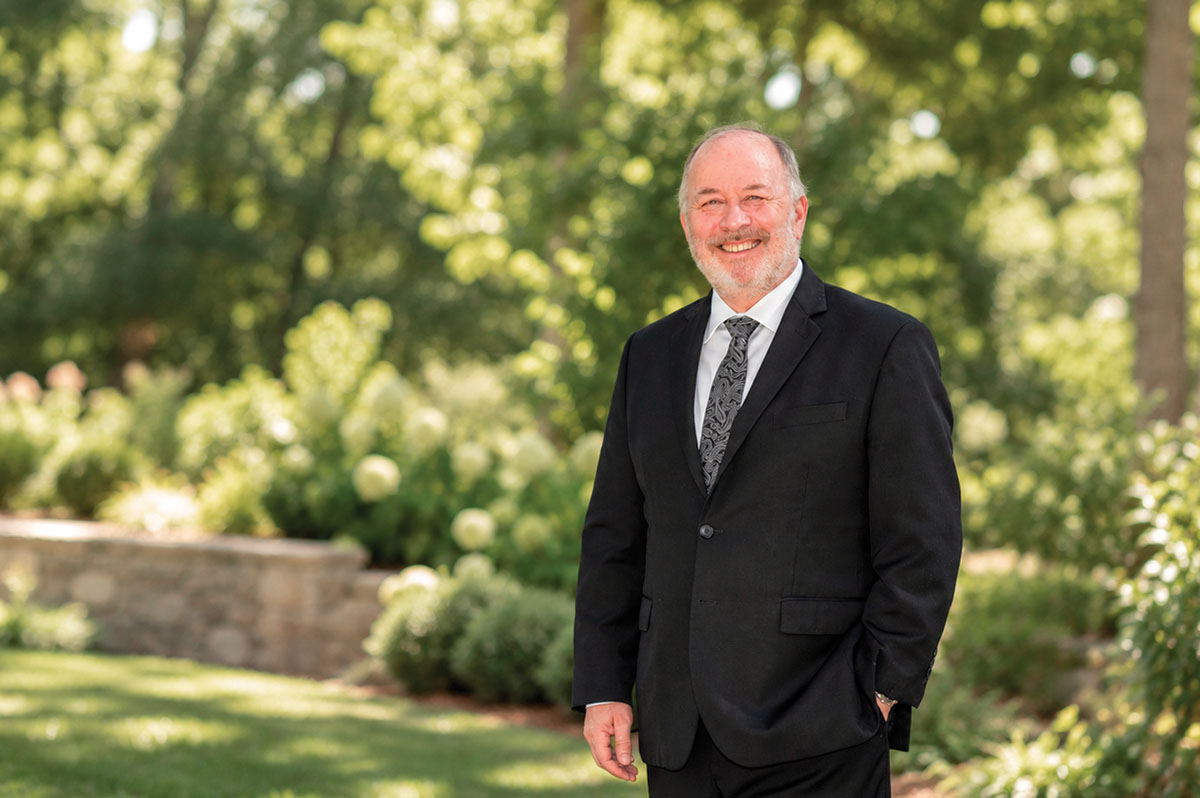
Marcus J Freed is co-founder of the Jewish Yoga Network (www.jewishyoganetwork.org), and author of the award-winning Amazon-bestselling books “The Kosher Sutras: A Yogi’s Guide to the Torah” and “The Kabbalah Sutras: A Yogi’s Guide to Counting the Omer.”