fbpx

June 7, 2021

The Great Debate: Is Yoga Kosher?

The question I have most frequently asked and been asked over the last 20 years consists of three words: “Is yoga kosher?” My answer has always been an enthusiastic “yes!”—but context is important. Many Jewish sources suggest that the practice of yoga is permissible, although as with all Talmudic thinking it can also be argued the other way. The last decade has seen a rise in yoga minyanim (prayer services), Jewishly-inspired yoga classes at synagogues and JCCs, and the publication of several books on the topic of yoga and Judaism. Nonetheless, many observant Jews are still concerned as to whether yoga can legitimately fit within authentic Jewish practice.

Jews wrestle with spirituality. It is in our DNA. The name Israel means “he who has wrestled with God and overcome” (Genesis 32:28), and we can find Jews experimenting with their relationship to God in many different settings. When we can’t find spiritual answers within our own tradition, some people will look elsewhere, and there are several ashrams (Hindu or Asian-influenced spiritual retreat centers) that have both Jewish students and Jewish teachers. Mindfulness teacher Sylvia Boorstein, a founding teacher of Spirit Rock Meditation Center in Northern California, wrote a book called “That’s Funny, You Don’t Look Buddhist: On being a Faithful Jew and a Passionate Buddhist.”Alas, the title implies that her Judaism is less than passionate.

Jews wrestle with spirituality. It is in our DNA.

Prior to becoming a Chabad Rebbetzin, Olivia Schwartz was a student at the Sri Aurobindo Ashram in Pondicherry, India, where she studied under the spiritual leader Mira Alfassa, who was known to her followers as “The Mother.” Alfassa was a Sephardic Jew, born in Paris to an Egyptian Jewish mother and Turkish Jewish father, and gained great respect as a yogic leader during the seventy years in India until her passing in 1973. One day Olivia was speaking with The Mother, who advised her to leave the ashram, go to Israel and study Judaism. Olivia became observant and has served as the Co-Director of the famed Chai Center in Los Angeles for over 40 years. She has taught Torah classes to hundreds of thousands of people, and still practices yoga every day.

The Kabbalah is full of yogic-friendly references, including the five levels of the soul, which can be interpreted as forms of breath—neshama, which has nearly all the same letters as neshima, meaning breath; ruach which is a form of belly-breathing; nefesh whose letters can be rearranged to spell nashaf, or exhale, and on it goes. A midrash (rabbinic commentary) explains how the four species used on the festival of Succot each represent a different part of the body. The lulav (palm branch) represents the spine, the hadas (myrtle) represents the eyes, the aravah (willow) is like our lips, and the etrog (citrus) symbolizes our heart (Vayikra Rabbah[1] , Chapter 30). This teaching provides a fertile ground for interpretation on the yoga mat.

A big challenge for many Jewish practitioners occurs when they enter a yoga studio and find statues of Hindu deities at the front of the room. I advise concerned students to make sure their yoga mat is not in front of one of the statues, which avoids the issue of bowing down to an idol when in a posture that involves prostrating oneself, like balasana(child’s pose). Another alternative is to avoid these studios and take an online class at home.

There are historical sources that suggest the roots of yoga are entirely secular, rather than being rooted in Hinduism. In his book “Yoga: Immortality and Freedom,” the Romanian historian Mercea Eliade describes the earliest known evidence of a yoga practice, the Mohenjo-daro seal, a figure carved into a stone block that depicted a person in a yoga pose. It was found in the Indus Valley and dates back to 2400 BCE. Eliade explains that yoga comes from the Samkhya tradition, one of the six schools of Indian philosophy, which is secular. And so to return to our question regarding whether yoga is kosher, according to this historical artifact anyway, the answer is “yes.”

And so to return to our question regarding whether yoga is kosher, according to this historical artifact anyway, the answer is “yes.”

With synagogue memberships declining and younger Jews taking their spiritual allegiances elsewhere, there is a need to provide compelling reasons for people to rejoin the community. So many people are drawn to yoga and meditation, and it is a meaningful way to enhance people’s experience when it can be offered within a synagogue in a way that maintains the integrity of the religious setting. There is an increasing call for “embodied spirituality” since many Jews have enjoyed positive spiritual encounters outside of a Jewish environment at yoga classes and retreats. Synagogues are potentially missing an opportunity to attract people if they don’t provide something along these lines.

At Pico Shul in Los Angeles, I used to begin every Yom Kippur by leading an in-shul meditation for the entire community, and we began our last all-night Shavuot learning marathon with a short yoga session for the 200 people present. This is a rare occurrence within a traditional synagogue setting, but provides congregants with a powerful opportunity to connect to Jewish spirituality in an alternative way that is both kosher and meaningful.

Judaism is full of possibilities for innovation. There are limits to authentic religious interpretation but there is also flexibility, just like in yoga.


Marcus J Freed is co-founder of the Jewish Yoga Network (www.jewishyoganetwork.org), and author of the award-winning Amazon-bestselling books “The Kosher Sutras: A Yogi’s Guide to the Torah” and “The Kabbalah Sutras: A Yogi’s Guide to Counting the Omer.”

The Great Debate: Is Yoga Kosher? Read More »

What Israel and Global Jewry Learned from this Latest War with Hamas

This most recent war between Israel and Hamas lasted just eleven days, but it provided a lifetime of lessons for Israelis and global Jewry. All sorts of information previously unknown was revealed, along with the occasional surprise.

For instance, the vaunted Iron Dome was excessively battle-tested. The result was both reassuring and troubling. No longer can Israelis eat outdoors in restaurants along Rothschild Boulevard and rejoice at a solitary rocket, nearly running out of gas, exploding harmlessly overhead.

Hamas may not have won Israel’s respect, but they surely got its attention. Palestinians can now fire 150 rockets at a time from Gaza, all of them reaching Tel Aviv. Iron Dome ensures that all but 15 will never reach ground. Still, that leaves enough risk for Israelis to skip the aerial show and scuttle for bomb shelters.

It is this scene that had Hamas declaring victory, despite the widely, and predictably, disproportionate death toll.

When the war began, Benjamin Netanyahu was Israel’s prime minister. Not long after the called ceasefire, he was a mere Member of the Knesset. Given that most Israelis wanted the fighting to continue until Hamas was sufficiently degraded, he may have made a costly political mistake.

Instead, Israel’s most seasoned wartime prime minister was treated like Great Britain’s Winston Churchill after World War II. Bibi, you have a corruption trial to defend against, and we have a new chapter to turn.

A coalition of eight disparate parties, featuring several former Netanyahu proteges, will now give Israelis a new face and direction. By all metrics that measure a nation’s standing in the world—booming economy, national defense, regional influence, Abraham Accords and, yes, gift-giving Trump alliance—Netanyahu’s stewardship should be remembered not only as the longest, but also singular in its accomplishment.

Despite his many triumphs, a new government, which now includes even an Islamist party—a first in Israel—has unseated him.

It is a fitting demonstration of Israel’s robust democracy. In what other Middle Eastern or Persian Gulf nation could such a political changeover take place—and with Jews in the government?

Maybe that’s where Bella Hadid should look for her mythical “apartheid state,” since neither Hamas nor Fatah have held democratic elections since 2006 and 2005, respectively—the only ones they ever allowed.

Meanwhile, the world held Jews responsible for this latest conflict no matter where they lived, given star billing in a faraway theater of war while being manhandled at home. Perhaps for the first time as American citizens, Jews were afraid to walk the streets. Colleagues and neighbors expected to hear an apology for the way Israel fights its wars.

The United Nations, a feckless, irrelevant body, smearing the Jewish state is one thing. But social media influencers, in our culture of a la carte truths, have the power to impart false information to millions of followers who have read even fewer books than they have—and know even less about the Middle East.

With everyone an expert, evil is assigned and prejudgments are made. Hollywood elites, rock stars and fashion models, aided by the silence of their colleagues, are making antisemitism fashionably acceptable—again. An old bigotry now, suddenly, may no longer represent a prejudice at all.

An old bigotry now, suddenly, may no longer represent a prejudice at all.

When it was discovered that Google’s head of diversity (irony, obviously, does not get picked up by algorithms) had written a social media post charging Jews with an “insatiable appetite for war and killing,” he wasn’t fired—nor was he cancelled by social justice overseers who always overlook bigotry against Jews.

Apparently, Jews are no longer considered a minority or a protected class. White privilege dispensed with those categories. Jews remain a magnet for hate crimes, but the world’s impulsive hatred of Israel has turned antisemitism into a rebound human right derived from Palestinian suffering.

The rights of citizenship, worldwide, are shattering for Jews.

In America, as some had feared, Israel, once the darling of the Democratic Party, now has more in common with the man who assassinated Robert F. Kennedy than with the former New York Senator himself. Kennedy visited Israel soon after graduating from college, coincidentally, right before it declared statehood.

In his dispatches for a Boston newspaper, Kennedy clearly signaled his favoritism for a Jewish state. It’s what ultimately cost him his life. At the time of his murder, a year after the Six-Day War, he was the standard bearer of the American progressive left. Today his plank of the party is headed by Senator Bernie Sanders, who as a young man also lived on a kibbutz, along with his anti-Zionist backup group, female congressional Representatives known as “The Squad.”

How surprised would Kennedy be to discover what progressive politics looks like today: hostile to the lone democracy in the Middle East, and openly supportive of a terrorist outfit that places its children in harm’s way, torches homosexuals, and treats its women as chattel. In a twisted bipartisan reordering of priorities, Israel is the wrong-skin-colored underdog, and the hard truths of the Middle East languish as spam.

Meanwhile, Jewish leadership is nowhere to be found. Elected officials jockey to take any bullet for Black Lives Matter while Israel contends with 4,500 rockets. Jews are beaten on the streets of Los Angeles, New York, Miami and Seattle. No outcry.

Useful idiots have never been this useless.

Jewish Democrats, whether they run for public office or simply vote, are being forced to choose between Israel, social standing and personal safety.

Before it was enough to simply support the “two-state solution.” Now the stakes are much higher, the catechisms more elaborate, and the rites of passage more daunting. Israel must be wholly rejected as a global menace. And whatever harm may come to the Jewish people, regardless of where they may live, need not be taken personally.

The apparent unwillingness, or cowardice, of many American Jews to identify with the existential dilemma of Israelis—and its spillover effect on Jews walking on American or European streets—is appalling. The cautionary, parallel tale of the cosmopolitan Jews of 1930s Berlin and Vienna, now long since murdered, is lost on everyone.

The right to exist, which Israel’s enemies always denied, now carries over to the Jewish people at large. Denying the existence of Israel—the lone nation in the world where such an opinion is shared—always had the ring of the Final Solution, localized on the Jewish state. Today, all Jews are stand-ins for that state.

The right to exist, which Israel’s enemies always denied, now carries over to the Jewish people at large.

Antisemitism is not just some idea, an ancient prejudice casually invoked. Wiping Israel from the map, soon may no longer be enough.


Thane Rosenbaum is a novelist, essayist, law professor and Distinguished University Professor at Touro College, where he directs the Forum on Life, Culture & Society. He is the legal analyst for CBS News Radio. His most recent book is titled “Saving Free Speech … From Itself.”

What Israel and Global Jewry Learned from this Latest War with Hamas Read More »

Potato Kubbah Days

There were days when she’d take my brother Rafi and I for a swim in the crystalline blue waves of Bondi Beach. Afterwards, she would buy us Heart ice creams, crispy chocolate coated vanilla ice cream popsicles in the shape of, you guessed it, a heart.

There were days when we would take the bus to Bondi Junction to shop at her favorite department store, Grace Brothers. Sometimes she would buy her signature red lipstick or pajamas for her brother Nuri or a gift for a friend. After making her purchases, we would sit in a vinyl booth in the cafeteria. She would order Earl Grey tea with lots of milk. Rafi would order a strawberry milkshake or a caramel milkshake or a vanilla milkshake. I always had a chocolate milkshake—light and fluffy, creamy and not too sweet.

Some days we would walk down the hill to the neighborhood shops on Old South Head Road and we’d pick up fruits and vegetables. She would buy us a packet of Arnott’s thin sliced potato chips or a Kit Kat chocolate bar.

Then there were the cooking days. Marathon cooking sessions in the kitchen spent preparing massive amounts of Iraqi delicacies for her family and friends. Some of the food would be frozen for later and some would be devoured immediately. Some days it would be “khibbez” (Arabic for baked goods). She would bake hundreds of “baba ta’mar” delicious date cookies; cardamom and cinnamon spiced walnut “sambusak”; and “j’radak” crispy thin crackers specked with shiny black nigella seeds.

Very often there would be Kubbah days. Kubbah is the crowning glory of Iraqi cuisine and there are many different kinds. Kubbah bur’al, a cracked wheat bulgur casing a meat filling and Kubbah b’ruz, a rice casing filled with meat or chicken breast or fish.

Kubbah solet, is a semolina casing filled with meat or chicken that is then served in a sweet beetroot soup or a sweet and sour tomato-based okra stew.

My happiest days were when my grandmother Nana Aziza would make Kubbah patata because they are my favorite.

In Iraq, three and four generations—grandparents, grandchildren, aunts and uncles and cousins—would all live under one roof. All the women of the household would gather in the kitchen to bake, cook, pickle and preserve together.

My grandmother and I would sit in her pale blue kitchen, alone together, with Lucille Ball reruns playing on the television. She would sit at the table with mounds of mashed potato and a huge bowl of meat filling in front of her, patiently forming balls of potato, stuffing them with meat, dunking them in egg wash, coating them with breadcrumbs. Like magic, the potato Kubbah would be lined up on trays ready to be fried to crispy perfection.

Recently, Esther Avrahamy, Jazmin Duek (caterer extraordinaire) and I gathered to make kubbah patata for the first time. We boiled and peeled and mashed the potatoes. We sautéed the onions, then lightly sautéed the meat with baharat spice. We added pine nuts, Italian parsley and golden raisins. The amazingly patient and very talented Jazmin shaped the mashed potato into uniform balls and lovingly stuffed them.

Our families couldn’t get enough of the finished product.

Rachel and I hope that you and a few friends have a Potato Kubbah cooking day soon!

Potato Kubbah Recipe

The Shell
2 pounds russet potatoes
1 tablespoon extra virgin olive oil
Salt and pepper, to taste
Breadcrumbs
1 egg, beaten with a little water
1/2 cup oil, for frying

The Filling
1 tablespoon extra virgin olive oil
1 onion, finely chopped
1 tablespoon baharat spice (equal parts cinnamon, clove, allspice, cumin and cardamom)
2 tablespoons golden raisins, finely chopped
1 pound ground beef
Salt and pepper, to taste
1/4 cup Italian parsley, finely chopped
1/4 cup pine nuts

Boil the potatoes until fork tender.
Mash while hot and leave to cool.
Add the olive oil and salt and pepper.
Knead well, until the mixture is a stiff consistency.

In a large frying pan, heat the oil and sauté the chopped onions until soft.
Stir in the baharat and the raisins.
Add the meat, salt and pepper and sauté until the meat is cooked.
Remove from heat and add parsley and pine nuts.
Mix well, then set aside.

Wet hands and take a tennis ball-sized portion of the mashed potato.
Roll it and flatten it into the palm of the hand.
Place a tablespoon of meat filling in the center, then bring the sides up over the stuffing and seal.
Roll into a ball, brush with egg and coat with breadcrumbs, then lightly flatten.
Arrange Kubbah on a tray, cover with plastic wrap and place in the refrigerator for at least 30 minutes.
In a large frying pan, heat a little oil and fry the Kubbah until golden on both sides.


Rachel Sheff and Sharon Gomperts have been friends since high school. They love cooking and sharing recipes. They have collaborated on Sephardic Educational Center projects and community cooking classes. Follow them on Instagram @sephardicspicegirls and on Facebook at Sephardic Spice SEC Food.

Potato Kubbah Days Read More »

Laborators

Seen as treaters of disease, not healers,
doctors now are basically collaborators
of laboratory-technicians who’re the dealers
of data that’s delivered by lab laborators.

The shots are called by these technicians, whose
reports lead to each new therapeutic move
that doctoral collaborators choose,
which makes some patients die, oh dear, though some improve.

“Give me liberty or death,” demand
that Patrick Henry once made now indeed might be,
thanks to lab-data experts understand,
“Save me from dismal death caused by a laboratory.”

Of course while writing this I am alluding
to a laboratory that well may have harmed masses
of people, though our leaders are colluding
to keep the fatal truth from us like poison gases.


Gershon Hepner is a poet who has written over 25,000 poems on subjects ranging from music to literature, politics to Torah. He grew up in England and moved to Los Angeles in 1976.  Using his varied interests and experiences, he has authored dozens of papers in medical and academic journals, and authored “Legal Friction: Law, Narrative, and Identity Politics in Biblical Israel.” He can be reached at gershonhepner@gmail.com.

Laborators Read More »

Ohio High School Football Coaches Fired After Allegedly Forcing Player to Eat Pork

Several football coaches at a high school in Canton, OH–including the head coach–were fired on June 3 after they allegedly forced a player to eat a pepperoni pizza.

The seven coaches at McKinley Senior High School had initially been suspended after the player, who is a Hebrew Israelite, reported the incident to the school district; the player was being disciplined on May 24 for missing a team weight-lifting session a few days earlier and part of the punishment involved eating the pizza. The player told the coaches that doing so would violate his religious beliefs; he was allowed to remove the pepperoni from the pizza but the pork residue on the pizza was still in violation of his beliefs.

During a June 3 meeting, the Canton City Board of Education unanimously voted in favor of not renewing the contracts for the coaches after investigating the matter. Superintendent Jeff Talbert said that surveillance video of the incident showed “an ill-mannered attempt to instill accountability and discipline in our students. The type of behavior was inappropriate, demeaning, and divisive.”

Peter Pattakos, the attorney for Marcus Wattley, the head coach of the team prior to the incident, defended his client in a statement to Fox News and 3News. “This young man is one of the most talented members of the team and he’s let the team down, not showing up to practices, not communicating with his team, not fulfilling the role of a team leader. The idea was, ‘Okay young man, you’re so special? You want special treatment? Are you hungry? I’ll buy you a pizza and we can all watch you eat. You’re the king, you’re the prince.’ It was along those lines, and the kid knew he was being disciplined. The coach was trying to teach a lesson.”

He added that Wattley offered chicken nuggets to the player instead of pizza but the player ate the pizza instead. The Repository, a local newspaper, reported that five players corroborated Pattakos’ account of the incident and that the player has since apologized to the students and to his other team members. Pattakos alleged to The Repository that an assistant coach shared “an exaggerated version to administrators and the player’s family” because the coach “wanted Wattley’s job.” He also accused the district of rushing the investigation.

Edward L. Gilbert, the attorney for the player’s family, denied that Wattley offered the player other food options as part of the punishment, according to The Repository. Talbert also pushed back against Pattakos’ claim that the investigation was rushed, arguing that the video they obtained provided sufficient evidence.

The player is currently seeking counseling and the player’s family reportedly plans to sue to the district over the matter.

Ohio High School Football Coaches Fired After Allegedly Forcing Player to Eat Pork Read More »

Ritchie Torres: “Hysterical Demonization of Israel Has Set Off A Global Wave of Antisemitic Violence”

Representative Ritchie Torres (D-NY) said in a June 4 appearance on HBO’s “Real Time with Bill Maher” that the “hysterical demonization of Israel” in the recent conflict with Hamas “has set off a global wave of antisemitic violence.”

Host Bill Maher praised Torres for being “incredibly gutsy” in defending Israel at a time when “the woke” on social media have analogized the recent conflict to “our racial problems here in America.” “What’s going on in Israel has nothing to do with George Floyd. It’s not about racism… less than half of Israelis are white. The reason why they are bombing buildings is not because they are racists, it’s because there are rocket launchers in those buildings.” Maher told Torres that he seems to be “the only Democrat who has been forthrightly standing with the country that seems to be more aligned with our liberal values.”

Torres said that the progressive view on the Israeli-Palestinian conflict is for two states to live side-by-side in peace. “There’s a difference between promoting peace and inciting hatred, and most of the words and ideas and memes that I’ve seen amplified on Twitter are aimed at inciting hatred for Israel rather than promoting peace between the Israelis and the Palestinians. And my concern is that the hysterical demonization of Israel has set off a global wave of antisemitic violence and vitriol, and you know hate is never going to bring us peace; it’s only going to bring us more violence.”

Torres also pointed out that 20% of the Israeli population are Arabs, and the majority of Israel’s Jewish population are Mizrahi Jews–who are from the Middle East and North Africa–as well as Sephardic Jews (who are Spanish) and Ethiopian Jews. “This is not a black and white conflict; this is a brown vs. brown conflict.” Maher then quipped, “Only about 44% of the Israelis look like your dentist.”

Maher went on to criticize progressives who sided with the Gaza Strip, arguing that Gaza is “so against liberal values.” “Gaza is a theocratic state. They have no political democracy, they haven’t had elections since 2006, they’re never going to give up power, they run it like a mafia, it’s kind of a thugocracy, I mean women are treated worse than in porn.” He also pointed out that honor killings occur in Gaza; honor killings are when a family murders one of its female members because the victim allegedly “brought dishonor upon the family name or prestige,” according to Britannica. Maher then asked Torres why some progressives have sided with Gaza despite the lack of liberal values in the area.

“Israel is held to a double-standard,” Torres replied. “I ask people, ‘Ask yourself a simple question: If you and your neighbors were the targets of 4,000 rockets, what would you expect your government to do? Would you expect them to do nothing?’” He added that “there is an undercurrent of antisemitism in the disproportionate scrutiny of Israel.”

Ritchie Torres: “Hysterical Demonization of Israel Has Set Off A Global Wave of Antisemitic Violence” Read More »

The New York Times Called Isaac Bashevis Singer a Polish writer. Here’s How Wikipedia Warriors Made Him Jewish Again.

(JTA) — Few things rile an online crowd like a mistake in The New York Times. One example is the Twitter account of a contemptuous troll dedicated to pointing out typos and grammar mistakes in the paper of record.

But there’s another category of error — the botching of a fraught historical detail — that elicits a special shock and insult.

In April, novelist Sigrid Nunez, writing an essay about unexpected bonds between strangers in the Times’ style magazine, was found to have committed such a violation. She described, in passing, Isaac Bashevis Singer as a “Polish-American author.”

The various reactions featured words like “yikes,” “obscene,” “disgusting,” aghast” and “shanda.” 

“Shame on @NYTIMES for erasing his identity and heritage,” one Twitter user wrote. 

It may be true that the Nobel laureate was born and raised in Poland, but Singer is, in fact, best described as a Jewish author, and any labeling that elevates the former while ignoring the latter will strike many Jews as tone-deaf at best. This sensitivity is understandable given that Singer’s hyphenated identities are the result of his immigration to the United States only a few years before the near annihilation of Polish Jewry. 

Since Nunez surely didn’t mean to bring about a crime against history, the question is where did she pick up the wording that appeared in The Times?

The likely answer is quite obvious: Wikipedia.

At the time, the introduction to the Wikipedia entry on Singer described him as a “Polish American writer in Yiddish.” The word “Jewish” appeared lower, in the body of the text. 

Check now and you’ll see a different first line: Singer is “a Polish-born Jewish-American writer.” But the process of editing these few words was long and complicated, offering lessons on the pitfalls and continued promise of decentralized knowledge in the era of disinformation, with some possible insights about Polish ultranationalism. 

The story of how a set of Wikipedia warriors made Isaac Bashevis Singer Jewish again starts a few years ago with a keyboard battle between two strong-willed strangers on the internet. 

On one side: Wikipedia novice David Stromberg, 40, an Israel-born, U.S.-raised literary scholar and writer who lives in Jerusalem and whose research on Singer appears in academic journals.

“I’ve been in this battle since 2019, have gotten really obsessed with it,” he told the Jewish Telegraphic Agency. “You ask yourself, ‘how could this be happening?’” 

On the other side: seasoned Wikipedian Oliver Szydlowski, 22, a Polish college student enrolled in a construction management program at the Queensland University of Technology in Brisbane, Australia.

“Wikipedia is a battleground, and you do tend to argue with a lot of people,” Szydlowski told JTA. “What I’m trying to do is to improve every single article as much as possible.”  

David Stromberg, a writer and scholar who studies the work of Isaac Bashevis Singer, sits at his computer in his Jerusalem home, May 2021. (Courtesy of Stromberg)

At first, Stromberg found himself consulting the Wikipedia page on Singer for work. He’s a serious Singer scholar, but the page provided a quick and easy reference for certain details, like the listing of Singer’s published works. 

There were little mistakes in dates and titles, and Stromberg fixed them as he went along. Then one day, he noticed Singer was identified as a “Polish American,” so he fixed that, too.  
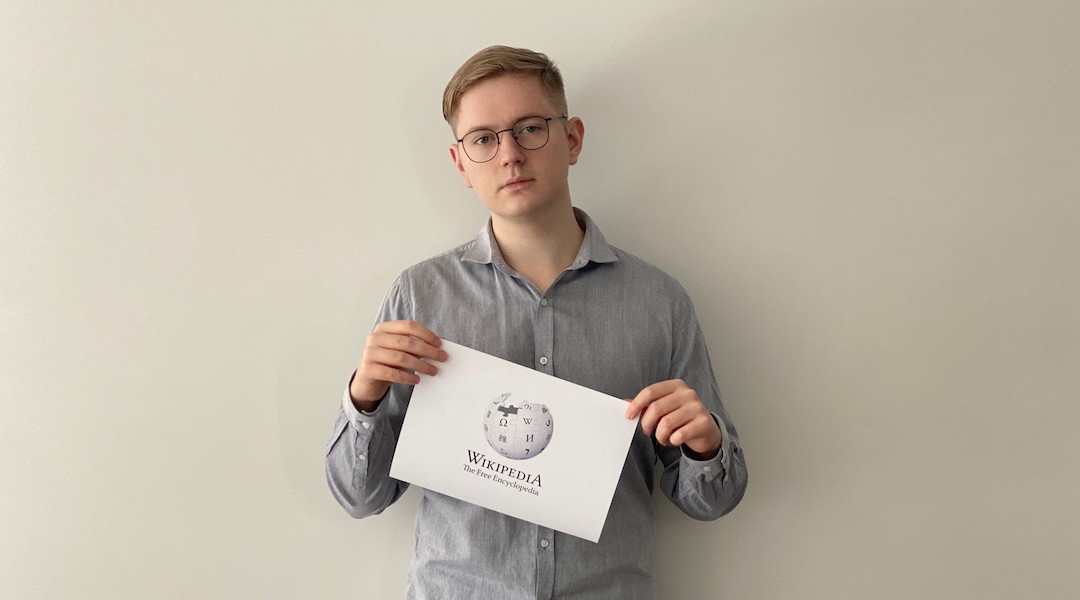
Oliver Szydlowski, a member of WikiProject Poland, is a college student from Poland who is attending an Australian university. (Courtesy of Oliver Szydlowski)

“And within like an hour it was back,” Stromberg recalled. “So I went and changed it again. And again it was back.”

Stromberg navigated to the backend of the page and searched for who was making the changes. It was a user that went by the Polish-sounding “Oliszydlowski.” A user page for Oliszydlowski seemed to hint at the motivation of Stromberg’s adversary. The page showed that Oliszydlowski was awarded the Polish Barnstar of National Merit, 1st Class by something called WikiProject Poland for having created an article on Polonophilia, which means fondness for Polish culture and history. 

To Stromberg, Szydlowski’s Wikipedia profile suggested that he might belong to the movement of Polish ultranationalists who have been fighting to improve the world’s perception of Poland’s 20th-century history. The sanitized narrative advanced by this movement is that the Polish people bear no responsibility for the Holocaust and were themselves victims of the Nazis.  
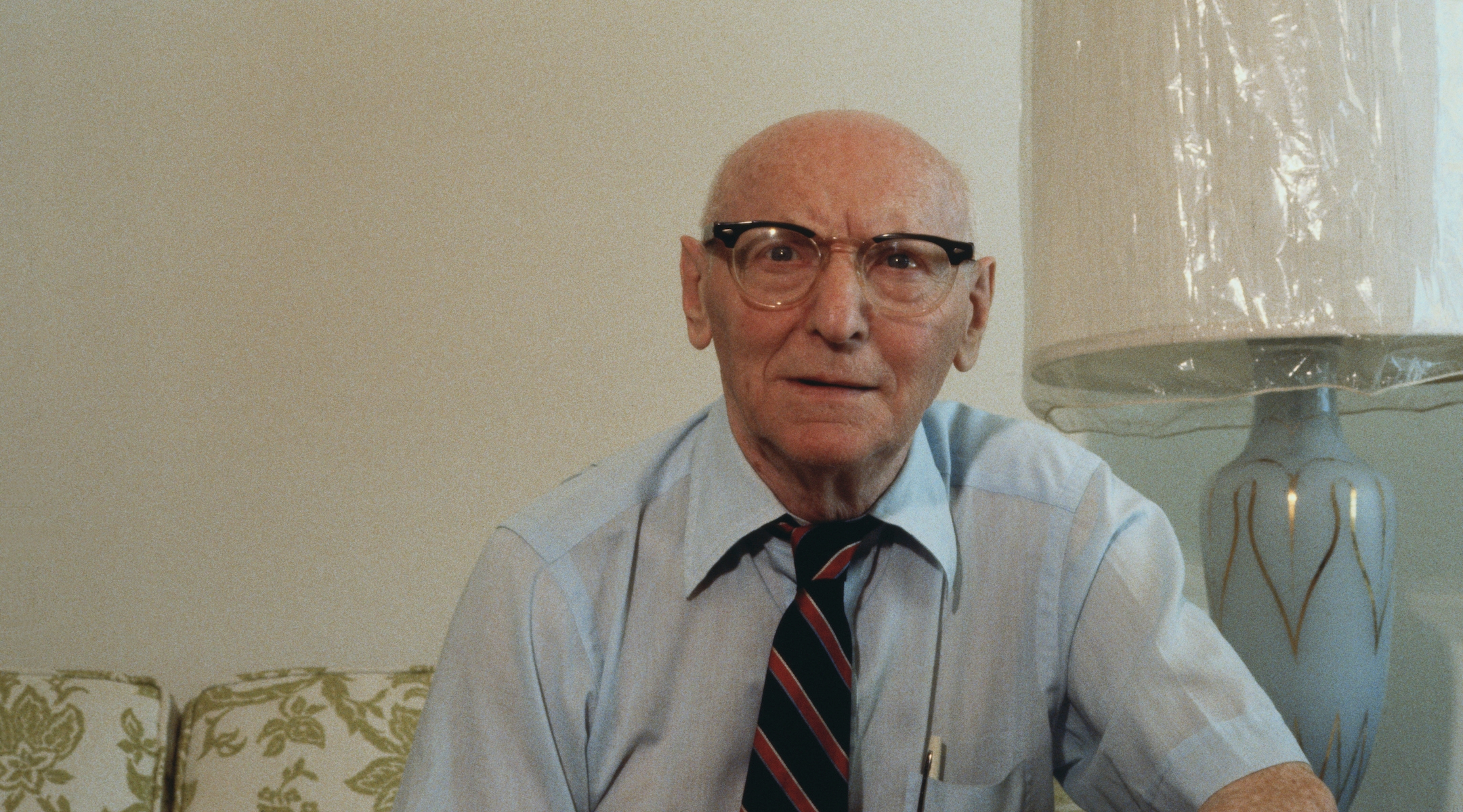
Singer won the Nobel Prize for Literature in 1978. (Getty Images)

As the back-and-forth over the Singer article continued, Szydlowski’s track record as an editor and knowledge of the Wikipedia rules allowed him to trump Stromberg’s corrections. The Wikipedia administrators who got involved sided with Szydlowski. 

Eventually Stromberg’s account was blocked. He had picked the username IBSLiteraryTrust, after the Isaac Bashevis Singer Literary Trust, where he serves as an editor. It was a bad choice — Wikipedia frowns on anything that looks like promotional activity by a business or organization. 

Stromberg occasionally felt silly about continuing to fight and thought of letting the error stand, hoping that internet users would know better than to trust Wikipedia. But he also knew that Wikipedia is widely read and worried that the idea of Singer being a Polish American could enter the wider culture — the kind of scenario that eventually happened with the phrase’s appearance in The Times.

So Stromberg fought on. He pleaded to have his account unblocked. 

“I have been put here in order to stop a clarification that is scholarly in nature and has nothing to do with promotion or sales,” Stromberg wrote as part of a Wikipedia grievance process in November. “User Oliszydlowski is constantly undermining these changes and using all kinds of Wikipedia tricks to block my access. Please help!!”

Oliszydlowski, meanwhile, chimed in to say he merely hoped to enforce Wikipedia’s rules. According to his understanding, the descriptor “Jewish” didn’t belong in the lead sentence. Only a person’s nationality — rather than religion or ethnicity — is allowed in the lead, and Jewish is not a nationality, he argued.

Stromberg countered by giving the example of articles on important figures whose lead sentence did say “Jewish,” like Walter BenjaminMartin Buber and Shalom ShabaziAnd he added that according to Wikipedia itself, Jewish can, in fact, be considered a nationality. 

“The Wikipedia entry on ‘Jewish’ clearly frames being Jewish as an ethnoreligious group and a nation, and states that ‘Jewish ethnicity, nationhood, and religion are strongly interrelated,’” Stromberg wrote. 

Oliszydlowski’s repeated rejections, Stromberg wrote, suggested “national belligerence.”

Nothing worked. Stromberg kept posting the wrong answers from the wrong accounts at the wrong moments and was rebuffed each time. He decided to give up. 

“The administrators on Wikipedia were not interested in upholding what might be factual information,” Stromberg said in a recent interview. “Their main concern was that people should play by their rules. To me, that kind of game is not a game worth playing.”

Then he reconsidered.

“It’s not a game worth playing alone,” he said. 

In the 20 years since it was launched, Wikipedia has proven remarkably resilient. Run by a nonprofit and edited by anyone with an internet connection who would like to volunteer, the site turned out to be reliable in defiance of its early critics while standing as the only noncommercial entity among the most popular websites on the internet. Wikipedia has become a part of the digital infrastructure. 

Corporate propaganda and political agendas always made the job of Wikipedia difficult, but with the rise of state-sponsored, social media-powered disinformation, the Wikipedia community has struggled to fend off rogue editors and bad-faith revisions. When fighting breaks out in Gaza, for example, mobs wage war over related Wikipedia pages and administrators are forced to freeze editing. Meanwhile, the entry for the Second Intifada, which ended more than 15 years ago, is still being litigated.  
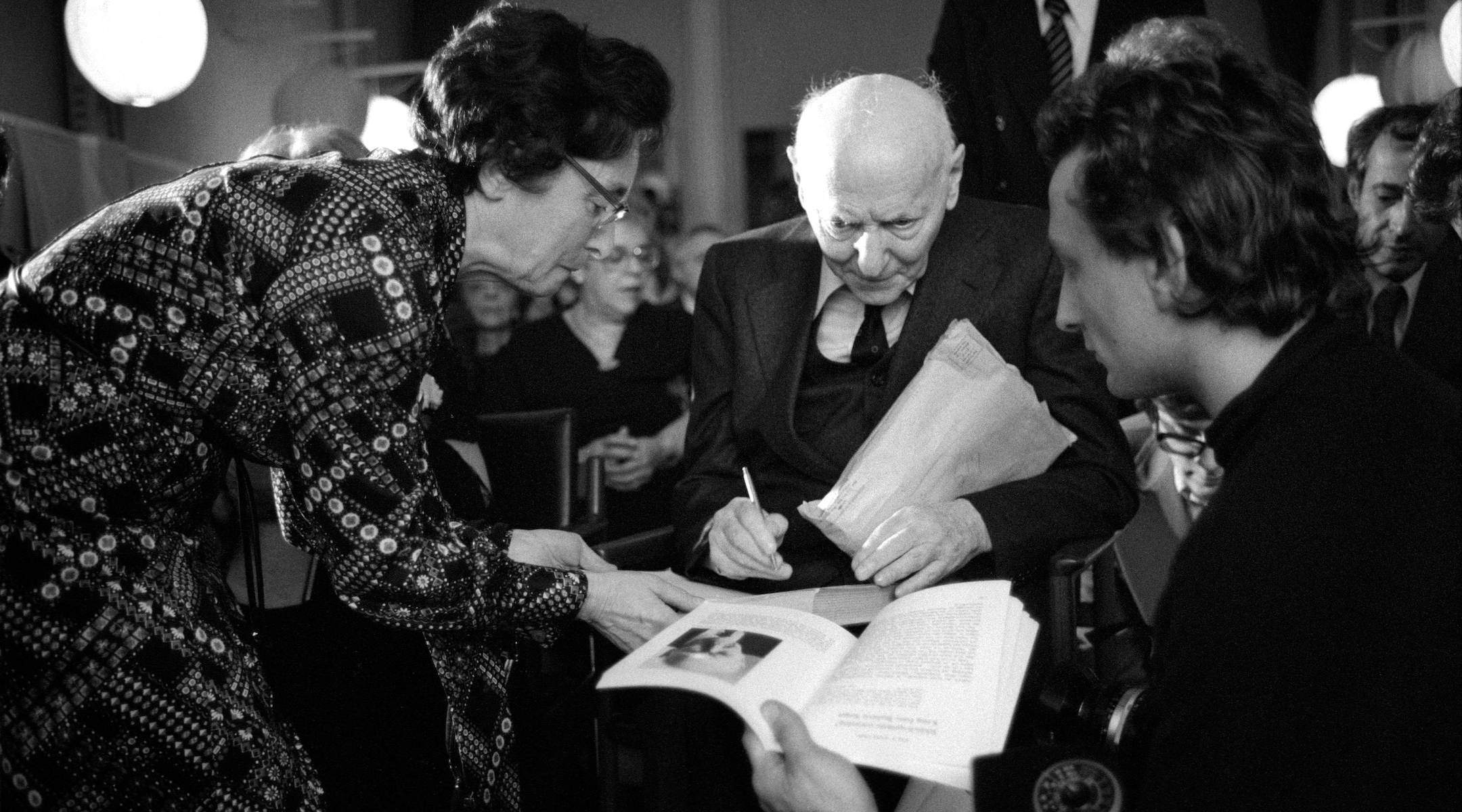
Singer signs autographs at a reception hosted by members of the local Jewish community in Stockholm, Dec. 9, 1978. Singer was in the Swedish capital to receive his Nobel Prize. (Chuck Fishman/Getty Images)

The battle over Singer’s identity didn’t erupt in quite that way, but a small crowd did coalesce after the article in The Times was published. Stromberg recruited help through Facebook; others came from Twitter. Someone would edit the first line to add the word Jewish, and Oliszydlowski would immediately undo it, adding comments that grew increasingly impatient and acerbic — for example: “Disruptive vandalism” and “No such nationality as Jewish. How hard is that to comprehend[?]”

An Israeli Wikipedia administrator named Amir Aharoni joined the challengers as the matter went into a dispute resolution process. 

Aharoni wanted the word “Jewish” added “somewhere, anywhere, in the first, all-important sentence” of the Singer article, but with his more than 15 years of experience editing Wikipedia — and sorting through countless such disputes as an administrator — Aharoni also felt a responsibility to keep the debate civil. 

“With sensitive things like the nationality of famous people, and especially Jews, of course, it’s better to be careful and not fight with other editors,” Aharoni told JTA.

(Aharoni, who is an employee of the site’s operator, the Wikimedia Foundation, said he edits Wikipedia as a volunteer, and that the two functions are independent of each other.)

Rather than argue against Singer’s Polishness, Aharoni emphasized his Jewishness by citing sources like newspaper accounts and the Nobel Committee’s summary of Singer’s accomplishment. 

To Oliszydlowski’s point that ethnicity and religion don’t belong in the first line, Aharoni noted the Wikipedia Manual of Style, which says that ethnicity and religion do belong if they are “relevant to the subject’s notability.”

The final decision, based on a consensus, excluding Oliszydlowski, was to identify Singer in his entry’s first sentence as Jewish, not Polish.

“There was a bit of an argument,” Aharoni said, “but it was small compared to many other arguments that happen in Wikipedia.” 

A few weeks later, Szydlowski agreed to an interview with JTA. He didn’t sound exactly like the Polish propagandist that Stromberg suspected him of being. 

Logging in from Australia, where he is finishing up a bachelor’s degree in construction management and urban development, Szydlowski said he still thinks it’s correct to refer to Singer as a Pole but has accepted the community’s decision.

“Me, personally, I don’t really have an opinion,” he said. “If they concluded that he should be described as this or that does not matter just as long as it’s correct within the Wikipedia guidelines. Really, I’m very neutral in this perspective in this dispute. I’m satisfied now that it has actually been discussed.”

His argument was that Singer was not only Polish by nationality but that the country played a significant role in his life and career. Singer left Poland when he was in his 30s, Szydlowski noted, having already begun his career as a writer. And the literature he produced examined not just any Jews but Jews in Poland. 

Szydlowski doesn’t deny Singer’s Jewishness and, in fact, is something of a Judeophile. He talked about the richness of prewar Ashkenazi culture in Europe and recited statistics on the historical size of the Jewish population of different cities. His user profile says he has Ashkenazi heritage. Asked about that, Szydlowski shared that his great-grandfather was Jewish and survived the war by concealing his identity. 

“I love researching Jewish topics, and I love comparing what Polish and Ashkenazi Jewish cultures were like because the mutual influence was unbelievable,” Szydlowski said. 

The Singer dispute is not the only time Szydlowski has insisted on striking “Jewish” from the first sentence of Wikipedia articles on notable Polish Jews. In 2019, for example, he became embroiled in an argument with other Wikipedians over Renia Spiegel, a Holocaust victim whose diary has been compared to that of Anne Frank. 

The nerdy-scholastic confidence of Szydlowski appears to have been shaped by years as a volunteer on Wikipedia. Starting as a young teenager, he admittedly had “no knowledge, no experience” and focused on fixing typos and grammatical errors or adding references. 

Szydlowski eventually became involved in a group known as WikiProject Poland, one of more than 2,000 such collaborations on English Wikipedia alone. Each country has its own WikiProject with the goal to create standard language, improve the quality of related articles and generate new content. The 170 or so members of the Poland team help maintain tens of thousands of articles. 

“It’s very difficult to say why I do it,” Szydlowski said. “I really enjoy it. I enjoy writing about history and reading about it.”

Asked about Stromberg’s suspicion that he’s a Polish nationalist harboring a certain agenda, Szydlowski denied the assertion. He said that as an editor his job is to enforce Wikipedia’s rule against personal points of view, which includes nationalism. 

“I understand where [Stromberg is] coming from because there is a lot of nationalism on Wikipedia,” Szydlowski said. “It is a battleground, but what he’s saying — no, it’s not true.”

Stromberg said that Szydlowski’s denial belies the record of his actions — his insistence and persistence up until the point that other Wikipedians got involved and an arbitration mechanism was imposed. 

“What’s a college student in Australia doing working overtime on the WikiProject Poland?” Stromberg asked. “Would a troll reveal that he’s a troll?” 

The New York Times Called Isaac Bashevis Singer a Polish writer. Here’s How Wikipedia Warriors Made Him Jewish Again. Read More »

I’m Disappointed That More People My Age Aren’t Religious

When I was 12 years old, I decided that I was an atheist. My friend said she didn’t believe in God, and since I hadn’t seen any miracles, I decided I didn’t believe in God, either. After all, I had prayed and prayed that my parents wouldn’t get divorced and they still did. The world was a miserable place. If there was really a God, why would He make things so horrible?

Then, in my early 20s, I had a revelation. When I met my now-husband Daniel and he started taking me to Shabbat dinners, I slowly began to believe in God. I felt like my life went from black and white to Technicolor. I loved Judaism. It made sense to me. I enjoyed going to synagogue, building my own community, and having a set of rules to follow. So much more about life suddenly made sense.

I soon discovered that not many people in my millennial age group are religious.    When I type “Millennials aren’t religious” into Google, a number of headlines pop up. Here’s one from FiveThirtyEight: “Millennials Are Leaving Religion And Not Coming Back.” And another on PBS: “Millennials Are Leaving Organized Religion. Here’s Where Some Are Finding Community.” Typically, these articles address the subject of how millennials reject organized religion and instead are drawn to crystals and other New Age movements.

Official Pew Research shows that people born between 1981 and 1996 are much less likely than older Americans to attend church regularly, pray, or consider religion to be an important aspect of their lives.

I certainly see this in my life. When I walk into the synagogue on Shabbat morning, the congregants are largely baby boomers, with a few gen Xers thrown in.

My fellow millennials don’t give religion a chance. Many of them say it’s antiquated and hateful. They don’t look past the negative headlines and care to explore what’s really going on behind the scenes.

My fellow millennials don’t give religion a chance. Many of them say it’s antiquated and hateful.

As someone who was once an atheist and critical of organized religion, I can relate. For instance, I thought that Orthodox Jews were strange. They kept to themselves, had a million kids, and always wore black, even in the blazing hot summer.

Then, when I joined the Orthodox community, I gained an entirely new and beautiful perspective. They dress that way because they are humble, modest, and do not need to show off their inner selves with flashy clothing. They have many children because it’s very fulfilling and one of the most important things one can do in life. They are a tight-knit community and do not want the outside world to ruin what they have created.

Aside from making great friends within the community and relying on it for anything I need—from car repair advice, to legal representation, to the scoop on the best place to get my hair done—there are two times when the community really came through for me: when I got married, and when I gave birth.

My husband and I were able to borrow a chuppah for our wedding, and all the owners asked for in return was a donation to keep their bridal charity going. A friend from our synagogue bartended for free. Another friend picked up extra tablecloths at the last minute—literally during the wedding.

When I gave birth, my husband and I got free, delicious, homemade dinners for a month from friends and strangers in the community. It’s a tradition to make meals for any new parents so they don’t have to worry. Every time someone dropped off food, I felt the love and warmth.

Along with giving me a community, Orthodox Judaism saved me from a life that I thought had little meaning. I am no longer depressed like I used to be in large part because I have faith and community. Instead of feeling like I have complete control over my life, I know that it’s in God’s hands and I don’t have to be anxious about it.

Along with giving me a community, Orthodox Judaism saved me from a life that I thought had little meaning.

When I see people my age struggling with loneliness and depression, I wonder if religion could help them, too. This doesn’t mean I think that they need to become as religious or more religious than I am. But I do think they need a community and faith to fall back on when things become difficult, which is especially relevant over these past few years.

Another Pew study shows that actively religious people are happier, less likely to smoke or drink alcohol, and are more civically engaged. This is true for me. I’m a very optimistic person, I quit smoking years ago, I don’t drink alcohol, and I love to join groups.

Here’s my pitch to millennials: If you can try all sorts of new and interesting experiences—like eating avocado toast, going to Burning Man, buying rose quartz crystals—why not give organized religion a try as well?

Millennials are known as the generation that strives for more. They spend money on experiences instead of things. They are entrepreneurial. They care very much about making the world a better place. So wouldn’t it make sense to engage in religion to try to add more meaning to their lives?

I hope my fellow millennials will welcome in new possibilities of faith and community in the same way they welcome other new experiences. I’m sure they will gain much more than they ever could have imagined in the process.

Sometimes, you don’t need to go far to find exactly what you’re looking for. As someone who had Jewish friends and boyfriends and loved Jewish culture growing up, it seemed so obvious when I decided to convert. I never thought I’d end up like this—a deeply spiritual person—but here I am.

It’s all because I dropped my preconceived notions about religion and opened myself up to a new experience. Eleven years after that first Shabbat dinner, I’m overjoyed that I did.


Kylie Ora Lobell is a writer for the Jewish Journal of Los Angeles, The Forward, Tablet Magazine, Aish, and Chabad.org and the author of the first children’s book for the children of Jewish converts, “Jewish Just Like You.”

I’m Disappointed That More People My Age Aren’t Religious Read More »