


As part of my bucket list experiences over the past couple of months, I learned how to braid and bake challah and the basics of kosher cooking. Intrigued by the idea of kashrut, I set out to learn more: specifically, how to kasher an eatery.
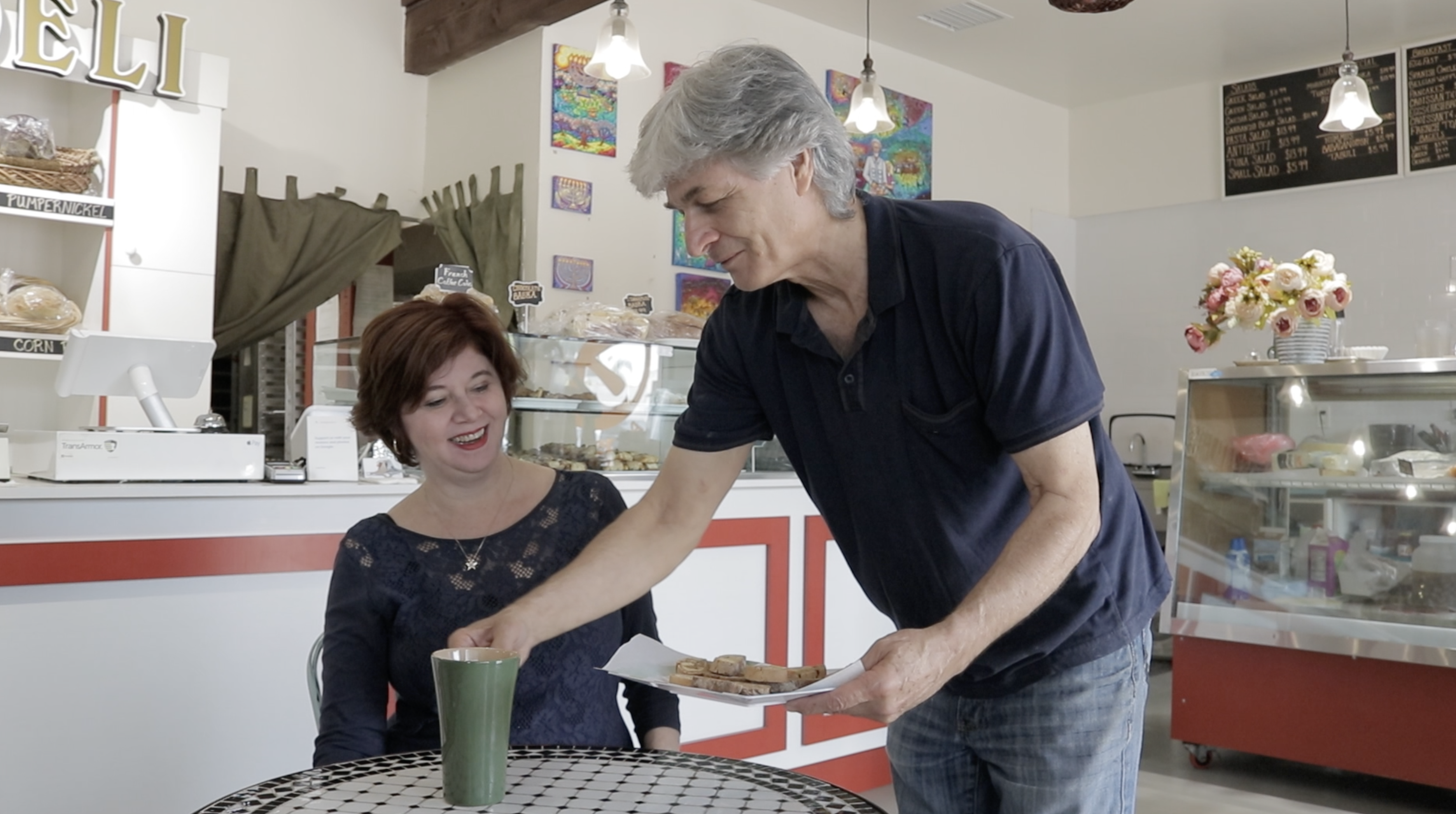
Fred’s Kosher Bakery and Deli in Beverlywood, which opened in 1949, was the perfect training ground. Owners Avi Kadmon and Yaffa Marcus, who bought the bakery in 2015, recently decided to make the dairy establishment kosher.
Entering Fred’s kitchen, I immediately was greeted by the aroma of freshly baked goodness. Coffee cakes, baklava, challah and more. When I asked Kadmon how he made Fred’s kosher, he said the rabbi told him the first step was to approach the task as if it was Pesach.
“In Israel,” Kadmon explained, “when I was a young boy, every Pesach we would paint the house and wash everything. I said, ‘OK, I’ll paint. We’ll wash everything that we can, according to halacha. Whatever is needed, I’ll buy new.’ ”
After the kitchen was cleaned, Kadmon said the rabbi then came with a blowtorch to kasher the rest of the restaurant. The whole processes took less than a month.
“We have a mashgiach (supervisor) who comes and checks everything,” Kadmon said. It’s an important part of the process to keep the kosher certification. The mashgiach oversees the strict separation of the dairy and pareve products.
I saw this in action when I had the opportunity to make cheesecake in anticipation of the Shavuot holiday in Fred’s newly kashered kitchen. Kadmon asked his cheesecake specialist to take me through the process. We could open the cream cheese and the other dairy ingredients only on the dairy surface, and had to use the appropriately marked utensils and industrial mixer.
When I asked Kadmon how he made Fred’s kosher, he said the rabbi told him the first step was to approach the task as if it was Pesach.
I was guided through the mixing of cream cheese, eggs, vanilla and sugar — a slow but important process. The whipped cream, which we added to the mixture at the end, was first mixed on yet another dairy surface. Then came the preparation of the cookie crumble crust. We pounded a pie crust — pre-baked on a cookie sheet — into fine pieces. We then mixed in a crumbled black and white cookie from the bakery. After coating the springform cheesecake pan, we pressed in the crumbs to form the crust, then poured in the smooth cake mixture.
By the end of the afternoon — and after being redirected to the appropriate surfaces a few times — I was keenly aware of how to navigate the separation of dairy and pareve surfaces, ingredients and utensils.
I asked how cheesecake became a Jewish dessert but Kadmon said it never was one. “Jewish people in Eastern Europe adopted the cheesecake from the locals,” he explained, “and made it much, much better. The American way of making cheesecake today is totally different than what it used to be in ancient Greece or in England in 1390.”
According to my research, the earliest mention of a cheesecake dates back to Greek physician Aegimus in the fifth century B.C.E.
The English claimed their version in the 1390 “Forme of Cury” cookbook. New Yorker William Lawrence developed commercial American cream cheese in 1872 when he was looking for a way to re-create the soft, French cheese Neufchâtel.
It’s easy to see why Jewish people adopted and adapted the cheesecake, using what Kadmon calls the best ingredients, and why they made it the queen of the Shavuot table.
“The holiday of Shavuot is known as the holiday of dairy, of milk, of something pure,” Kadmon said. “We dress in white, we eat white things — milk products, butter products and borekas. And cheesecake is the highlight of Shavuot.”
It was definitely the highlight of my afternoon.
I’m still seeking items for my 2019 Jewish bucket list. Please send your ideas to deckerling@gmail.com.
Debra Eckerling is a Journal contributing writer.

































