Eight Republican members of Congress sent a letter to the Department of Justice (DOJ) on June 18 urging for Al Jazeera to be designated as a foreign agent, the Washington Examiner reports.
Sens. Ted Cruz (R-Tex.), Marco Rubio (R-Fla.), Charles Grassley (R-Iowa), John Cornyn (R-Tex.), Tom Cotton (R-Ark.) and Todd Young (R-Ind.) as well as Reps. Lee Zeldin (R-N.Y.) and Mike Johnson (R-La.) argued to Attorney General William Barr that “Al Jazeera is not only a foreign principal but it is also owned by a foreign principal – the government of Qatar. Several members of the ruling family of Qatar have held senior positions at Al Jazeera: Sheikh Hamad bin Thamer Al-Thani, a member of the ruling family of Qatar, is the Chairman of Al Jazeera; Sheikh Abdulrahman bin Hamad bin Jassim bin Hamad Al-Thani is the CEO of Qatar Media Corporation and a Board Member of Al Jazeera; Sheikh Ahmed bin Jassim Al-Thani served as the Director General of Al Jazeera from 2011 until June 2013.”
The congressmen noted that Al Jazeera frequently promulgates viewpoints held by the Qatari government, such as the network putting the Muslim Brotherhood “in a moderate light” and hosting Hamas leaders; the Qatari government funds both organizations. Additionally, AJ+, Al Jazeera’s English channel, frequently appears “to support anti-Israeli and anti-American positions.”
Therefore, the congressmen argued, “It appears that Al Jazeera’s broadcasts, including AJ+, mirror the policies and preferences of the Qatari government, which, together with the state funding and other indicia of agency, demonstrate that Al Jazeera and its media subsidiaries act as alter egos of the Qatari government in ensuring dissemination of the government’s viewpoints.” Consequently, Al Jazeera should be required to register as a foreign agent under the Foreign Agents Registration Act (FARA), the congressmen wrote.
Al Jazeera disputed the congressmens’ assertions, telling The Washington Examiner that the Qatari government doesn’t influence its editorial content. Al Jazeera Media Network similarly said in a statement to the Journal that the fact it receives public funding makes it no different than outlets like the BBC and that “AJ+ English content, at times, runs counter to societal norms and policies of Qatar, or is critical of Qatar, precisely because the platform is independent and audience-driven.”
Security Studies Group Senior Vice President David Reaboi wrote in the May 24 cover story for the Journal that “Al-Jazeera is the world’s most successful and influential state-directed information operation,” pointing out how AJ+ brands itself as a progressive channel in English while Al Jazeera’s Arabic channel “pushes a stream of vile, anti-Semitic conspiracy theories.” Al Jazeera AT Arabic’s Twitter account tweeted out a Holocaust-denying video, which Reaboi wrote was an example of Al Jazeera’s mask slipping.
“The scandal did damage Qatar’s influence operation — but just how much damage is yet to be seen,” Reaboi wrote. “At the very least, more Americans know that the AJ+ social media content that’s targeted toward their children and young adults is actually Al-Jazeera, a foreign network owned and operated to advance the interests of the Qatari state. This kind of exposure is vital.”
Anti-Defamation League CEO Jonathan Greenblatt has also argued that Al Jazeera “routinely glorifies violence against Israeli Jews, regularly calling Palestinians killed in the act of trying to murder Israelis as ‘martyrs.’ The network also uses this term for any Palestinian operative of the armed wing of Hamas or Palestinian Islamic Jihad who is killed by Israeli forces, despite the fact that both of these groups avowedly seek to slaughter Israeli civilians.”
In August, President Donald Trump signed the National Defense Authorization Act, which compelled all foreign media outlets, including Al Jazeera, to register as a foreign agent.
“The Laws of Women” Upcoming Women’s Torah Study meeting “The Laws of Women” offers the Jewish perspective on love, marriage, sex, adultery, rape, abortion and women’s rights. Convening at midday, women are encouraged to bring their own lunches. Drinks and dessert provided. Open to all women. 12:30 p.m. Free. Wilshire Boulevard Temple Irmas Westside campus, 11661 W. Olympic Blvd., Los Angeles. Contact Hannah Gole at hgole@wbtla or call (424) 208-8932 for additional information.
Pride Shabbat IKAR’S Pride Shabbat is celebrated in the midst of Pride Month, with LGBTQ+ storytelling highlighting the community dinner that follows Kabbalat Shabbat prayers. “Pray and Stay” is the motto at IKAR, and after the high-energy musical services, the catered dinner features kosher pescatarian with vegetarian options. 6:30 p.m. Pray: scotch and services. 8 p.m. Stay: community dinner.$10 adult member, $12 general, $5 child. IKAR, 910 S. Fairfax Ave., Los Angeles. (323) 634-1870.
Greatest Hits Shabbat Familiar melodies reverberate across the Temple Akiba sanctuary during the Reform congregation’s “Greatest Hits Kabbalat Shabbat.” Hit songs from “Fiddler on the Roof,” “Pinocchio,” “The Lion King,” “Hamilton” and others enliven Friday night services. 7 p.m. Free. Temple Akiba, 5249 S. Sepulveda Blvd., Culver City. (310) 398-5783.
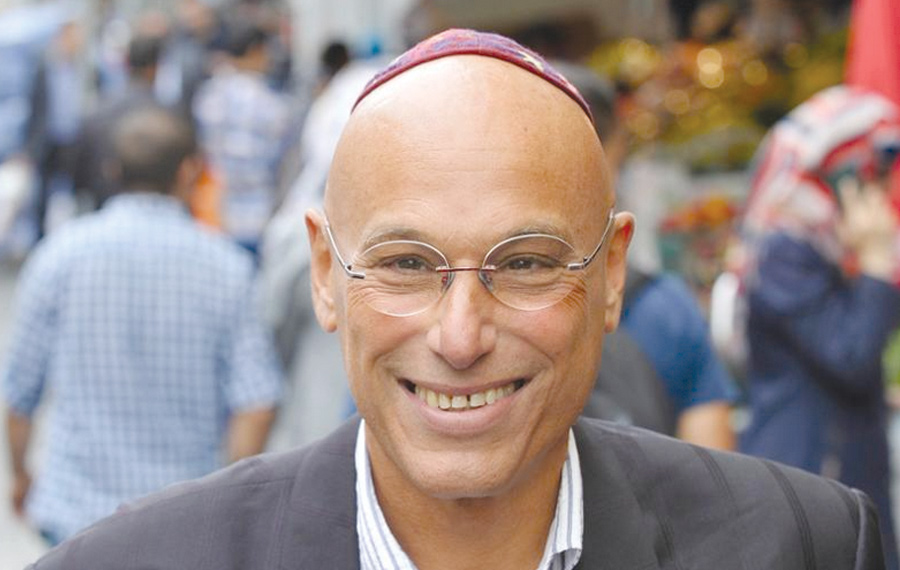
Terry Swartzberg
Terry Swartzberg Journalist and activist Terry Swartzberg, who was born and raised in New York and is a prominent member of Munich’s Reform Jewish community, speaks about Stolpersteine (German for “stumbling stones”), the world’s largest decentralized monument to the Holocaust. Swartzberg appears during a peaceful hour of prayer and music at Temple Emanuel of Beverly Hills dubbed “Simply Shabbat.” Swartzberg explains the uniqueness of the 70,000 small, brass memorial blocks that have been embedded in 1,200 communities across Europe and Russia. He also discusses his read on anti-Semitism in Germany. 6:15 p.m. Free. Temple Emanuel, Belle Chapel, 8844 Burton Way, Beverly Hills. (310) 288-3737.
Shabbat Under the Stars Young Jewish professionals, ages 21-39, kick off summer by celebrating “Shabbat Under the Stars” at a private home in Hancock Park. Mendel and Rachey Simons organize the poolside gathering, featuring an open bar, four-course dinner and 100 young guests from diverse backgrounds. Evening attire required. 7 p.m. $70-$80. Address given upon online registration at eventbrite.com. (310) 692-4190.
SAT JUNE 22
Shabbat in the Park Children 2 and younger and their families come out for Shabbat in the Park, co-organized by PJ Partners and Temple Emanuel of Beverly Hills. They are introduced to Judaism in a fun and meaningful way, with Shabbat singing, playing and schmoozing. 10-11 a.m. Free for all PJ Library families. Beverly Canon Gardens, 241 N. Canon Drive, Beverly Hills. (323) 761-8234.
Pico Union Project Gala The stars come out for interfaith center Pico Union Project’s (PUP) annual “Spirit” concert, an evening of story, song and spirit benefiting PUP in the coming year. The night includes performances by PUP Founder Craig Taubman, coloratura soprano Sara Hershkowitz, dancer Adrian Hoffman, English musician Laurence Juber, klezmer gypsy-rock band Mostly Kosher, actor Stuart Robinson, singer Shany Zamir, pianist-arranger H.B. Barnum, children’s book author Barney Saltzberg, Valley Beth Shalom Rabbi Ed Feinstein and City Controller Ron Galperin. 8 p.m. $50 unreserved balcony seats, $100 unreserved sanctuary seats. Pico Union Project, 1153 Valencia St., Los Angeles. (213) 915-0084.
SUN JUNE 23
Sharsheret Family Fun Day In support of women and families dealing with breast cancer, Jewish breast cancer organization Sharsheret holds a day of food and fun. Attractions include an art bus, moon bounce and game truck. Guests are asked to bring a new, small and unopened toy for Sharsheret’s toy drive, serving youngsters whose moms are fighting breast cancer. Noon-3 p.m. $36 adults, $25 children 1 and older. Beth Jacob Congregation, Jacob’s Garden, 9030 W. Olympic Blvd., Beverly Hills.(866) 474-2774.
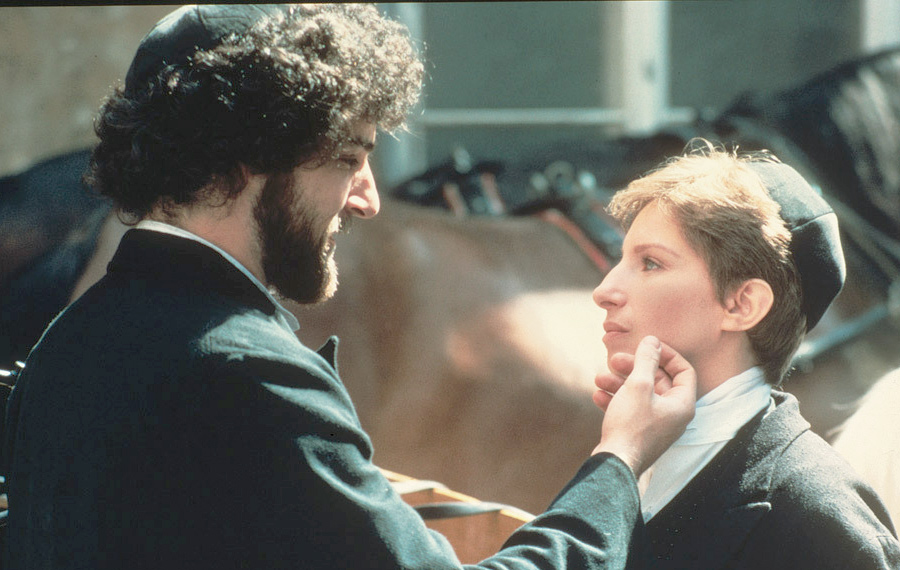
“Yentl” Singalong & Screening A singalong and screening of “Yentl” marks Beth Chayim Chadashim (BCC) community members’ and LGBTQ+ activists’ farewell to retiring Rabbi Lisa Edwards, following her 25 years at BCC. Edwards, whose decision to enter rabbinical school was inspired by the Barbra Streisand film, shares the moment of honor with her wife, Lezbtzn Tracy Moore. Guests are invited to dress up as their favorite film character. Before the private screening, Edwards discusses “The Intersection of Jewish and LGBTQ+ Cinema.” 9:15 a.m. doors open, continental breakfast served. 10 a.m. screening. $18 admission. Laemmle Music Hall, 9036 Wilshire Blvd., Beverly Hills. (323) 931-7023.
Inscape
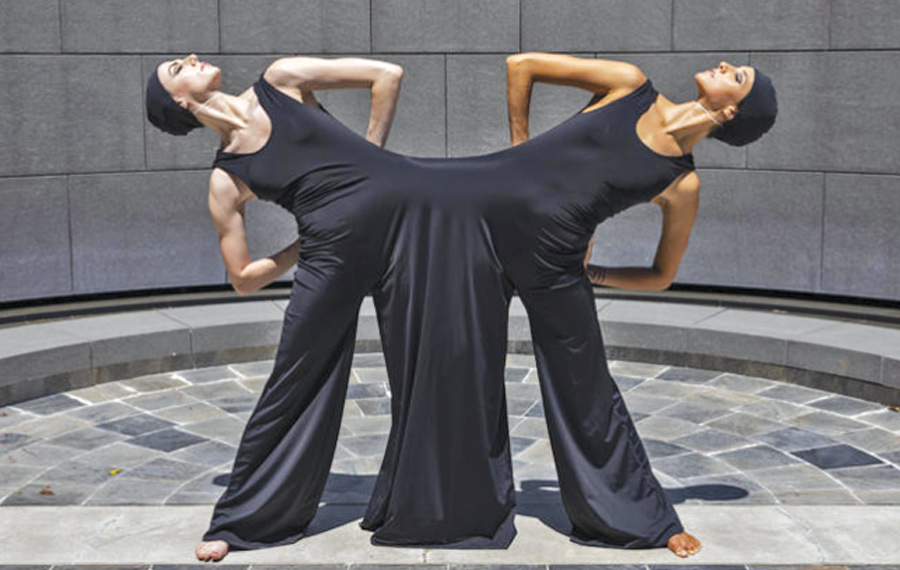
Selections from ‘Inscape’ Excerpts from Jewish choreographer Bella Lewitzky’s defining work, 1976’s “Inscape,” highlight this fashion-focused program at the Skirball. Dancers from Luminario Ballet have worked with John Pennington of the Pennington Dance Group to re-create this masterpiece of dance, and they wear costumes originally designed by Jewish fashion designer Rudi Gernreich, newly made by Diana MacNeil, for the performance. 6 p.m. Free, Skirball members. $15 general admission. Skirball Cultural Center, 2701 N. Sepulveda Blvd., Los Angeles. (310) 440-4500.
Yiddish Lives Again Live klezmer music provides the soundtrack to the meshuggenah beats of Yiddish poetry. Organized by the estate of the late Mishkon Tephilo congregant George Katz and by Marilyn Lewitt, the energetic program features a reading of love-themed works by the renowned Kadya Molodowski, Ruklh Fishman and Anna Margolin. Their writing is recited in Yiddish with English translation. Klezmer Juice, featuring clarinetist Gustavo Bulgach, performs. 2-4 p.m. $10 suggested donation. Mishkon Tephilo, 206 Main St., Venice. (310) 392-0420.
TUE JUNE 25
Aziza Hassan
“Reclaiming Sacred Space” In the wake of the recent shooting attacks at synagogues, Temple Beth Am and the Pacifica Institute hold an evening called “Reclaiming Sacred Space.” The themes of the program are holding on to who we are and being there for one another. Speakers are Aziza Hassan, executive director of NewGround: A Muslim-Jewish Partnership for Change; Atilla Kahveci, vice president of the Pacifica Institute, which is dedicated to interfaith dialogue and intercultural understanding; Rabbi Susan Goldberg of Wilshire Boulevard Temple; and Temple Beth Am Rabbi Adam Kligfeld. 7 p.m.Free. Temple Beth Am, 1039 S. La Cienega Blvd. (310) 652-7353. RSVP at lmandelbaum@tbala.org.
WED JUNE 26
Vintage Jewish Fashion Posters An exhibition of vintage Jewish fashion posters has been rotating among branches of the Los Angeles Public Library to coincide with Jewish Heritage Month in May. Today marks the opening of the exhibit’s two-week stop at the Woodland Hills branch of the L.A. Public Library. The collection showcases 22 color and black-and-white photographs depicting traditional costumes, embroidery and jewelry from North Africa, Europe and the Middle East. Don’t miss it. Through July 10 at Woodland Hills branch; July 17- 31 at Fairfax; Aug. 7-21 at Encino-Tarzana; Aug. 28-Sept. 11 at Westwood. For additional information, visit the link above.
Summer Soiree 2019 Join hundreds of young Jews enjoying music, drinks and community vibes under the stars at Le Jardin in Hollywood. Marking this first week of summer, the Jewish Federation of Greater Los Angeles Summer Soiree 2019 is the Federation’s largest event of the year for young adults in their 20s and 30s. All proceeds benefit the Federation’s annual campaign to support its work around the world. Ages 21-and-older. 7-10 p.m. $36. Le Jardin, 1430 N. Cahuenga Blvd., Hollywood, (323) 761-8000.
“Through A Jewish Lens” Relating the story of Jewish life in Bulgaria, Macedonia and northern Greece, Congregation Kol Ami member Sue Igdaloff leads the third and final free class of the series, “Through a Jewish Lens.” 7 p.m. Free. Congregation Kol Ami, 1200 N. La Brea Ave., West Hollywood. (323) 606-0996.
Have an event coming up? Send your information two weeks prior to the event to ryant@jewishjournal.com for consideration. For groups staging an event that requires an RSVP, please submit details about the event the week before the RSVP deadline.
Northridge-based Abraham Joshua Heschel Day School held a May 23 Tefilat HaDerech (“Traveler’s Prayer”) ceremony for the seven sixth-grade robotics students who headed to Montevideo, Uruguay, to participate in the First Lego League Open Invitational international robotics competition, which took place May 30-June 1.
During the gathering, the students wore pins in honor of Kendrick Castillo, a young man from Colorado who died on May 7 while rushing a gunman at his school, STEM School Highlands Ranch. Like Heschel’s boys, Castillo was passionate about robotics; a CBS story described Castillo as the “heart and soul” of his team.
The Heschel RoboHawks, the sixth-graders’ robotics team, were one of five teams from the United States that participated in the competition more than 6,000 miles from Los Angeles.
“We are extremely proud of this RoboHawks team of seven whose time, dedication and vision have brought them to this amazing opportunity,” the school said in a statement. “[We] look forward to hearing about their journey when they return.”
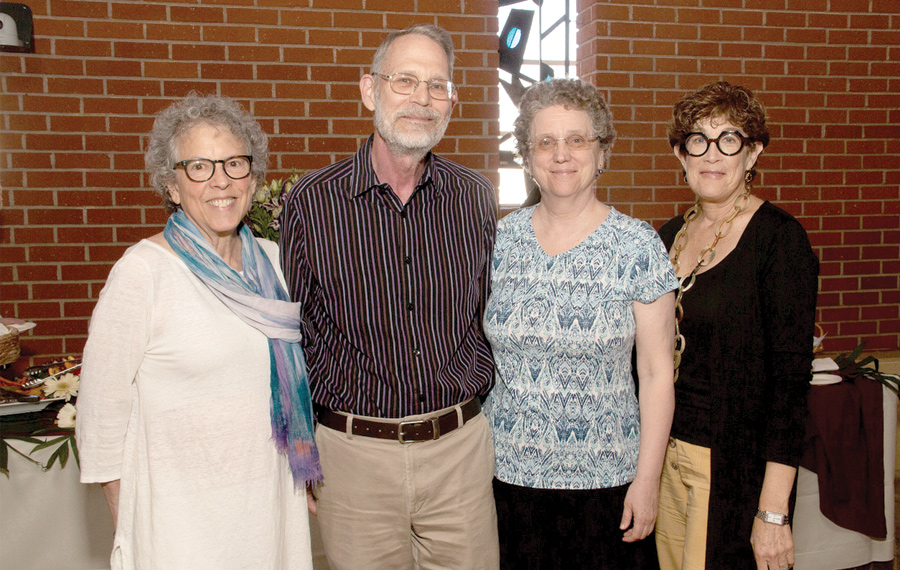
From left: Temple Emanuel of Beverly Hills Rabbi Emerita Laura Geller; ChaiVillageLA incoming chairman Pete Siegel; Hope Stevens; and Sheri Hirschfeld, chair of the Beverly Hills Architectural commission. Photo courtesy of ChaiVillageLA
Virtual elderly community ChaiVillageLA celebrated its third anniversary and held a Shavuot celebration on June 9 at Temple Emanuel of Beverly Hills (TEBH).
Attendees included TEBH Rabbi Emerita Laura Geller and Beverly Hills residents Pete Siegel, who is the incoming chairman of the ChaiVillageLA board, Hope Stevens and Sheri Hirschfeld,chair of theBeverly Hills Architectural Commission. Those gathered enjoyed refreshments, live music and one another’s company. Also turning out were those interested in learning more about ChaiVillageLA.
A collaboration of Reform congregations TEBH and Temple Isaiah, ChaiVillageLA describes itself as part of the growing village movement, a community led by older adults who share their optimism, skills, support and expertise with one another to navigate the challenges and opportunities of aging.
Last month, Valley Outreach Synagogue Rabbi Ron Li-Paz met with Pope Francis at the Vatican. Photo courtesy of Valley Outreach Synagogue
Rabbi Ron Li-Paz of the Valley Outreach Synagogue and Center for Jewish Life met with Pope Francis in Rome last month. They spoke at the Vatican about a world in need of unity, according to Ross Goldberg, a congregant of the Valley Outreach Synagogue.
Li-Paz reportedly thanked the pope for his leadership and solidarity in combating rising global anti-Semitism and offered him a Hebrew blessing from the Torah: “May God bless you and protect you. May God illuminate God’s face to you and be gracious unto you. May God lift up God’s face to you and grant you peace.”
According to the Valley Outreach Synagogue website, Li-Paz’s visit to Italy was part of a three-country trip, during which he met Jewish leaders of Istanbul and attended the fifth annual World Forum on Intercultural Dialogue, held May 2-3 in Baku, Azerbaijan, before wrapping up his travels in Rome. He returned to the U.S. on May 9.
Li-Paz is the spiritual leader of Valley Outreach Synagogue and Center for Jewish Life, a nondenominational congregation in Calabasas serving more than 2,000 Jews from approximately 600 families in the San Fernando Valley, Conejo Valley and Malibu-area communities.
From left: AMIT Los Angeles Council Chair Evan Green, Layla Green, Rav Yoni Berlin, Joy Volk and AMIT LA Council member Sandra Roklen. From left: AMIT Los Angeles Council Chair Evan Green, Layla Green, Rav Yoni Berlin, Joy Volk and AMIT LA Council member Sandra Roklen. Courtesy of AMIT Los Angeles
Israel education network AMIT Los Angeles celebrated a night of passion and philanthropy on May 13 at the Beverly Hills home of Phil and Shelley Zalis Fleshner in Beverly Hills.
The program, which was emceed by Joy Volk, included a presentation by celebrity nutritionist and entrepreneur Rachel Beller, who shared tips on how to lead a healthy lifestyle and how proper nutrition can help prevent or manage existing health conditions including cancer.
AMIT School Principal Rav Yoni Berlin spoke about the impact the AMIT educational network’s work has on children from diverse and low socioeconomic backgrounds, and how AMIT schools continue to lead in innovation and academic excellence across Israel.
The evening drew approximately 60 guests and was supported by AMIT LA Advisory and Engagement Committee members.
Founded in 1925, AMIT, according to its website, “educates 35,000 kids in 110 schools, youth villages, surrogate family residences and other programs in 33 cities” in Israel.
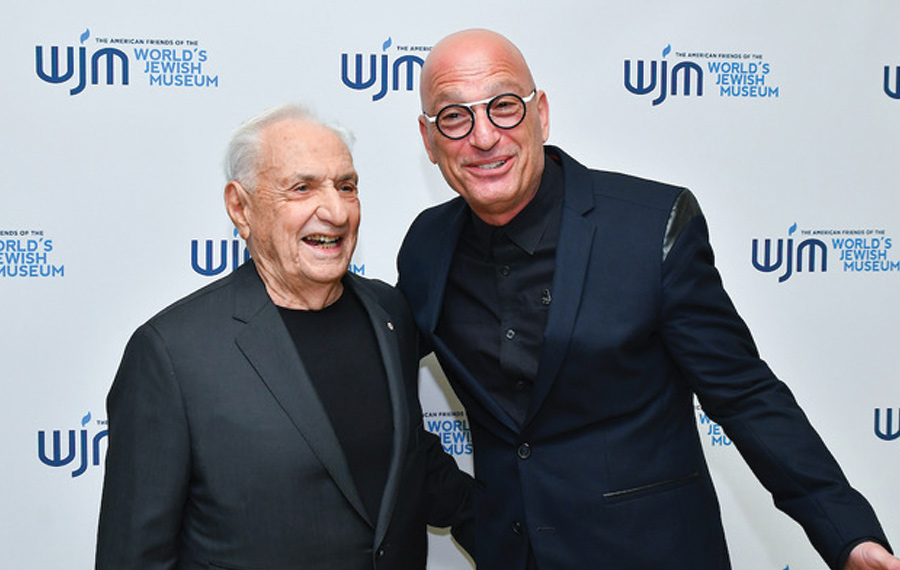
Frank Gehry laughs with emcee Howie Mandel at the World’s Jewish Museum 2019 Gala at the Montage in Beverly Hills. Photo by Vince Bucci Photography
Renowned architect Frank Gehry and philanthropists David and Sheryl Wiener were honored at the American Friends of the World’s Jewish Museum (AFWJM) inaugural gala at the Montage Beverly Hills on June 6. Comic and television host Howie Mandel emceed the event.
The $300 million museum designed by Gehry is slated to open in Tel Aviv in 2023. Attendees pledged over $6.7 million at the gala, with $5 million coming from philanthropist Stanley Black.
Gehry received a lifetime achievement award, while the Wieners were honored for their leadership and generous contributions to many causes.
Gail Asper, the visionary behind the museum, said, “With the World’s Jewish Museum, we aim to create a world-class experience that celebrates our contributions and the impact that we have had on the world throughout the ages. We hope that this museum will inspire the next generation to embrace their Jewish identity.”
Patty Glaser, founding partner at Glaser Weil Fink Howard Avchen & Shapiro LLP, invited Gehry to the stage and introduced him as a humanist, an activist and a thinker. “Of all the arts, the one that moves most slowly and touches most deeply is architecture,” she said.
Accepting the award, Gehry said, “When I was a kid, my grandfather read the Talmud to me, and the word ‘Why’ stuck with me. I have been guided by that. … Take chances, take risks, be curious.” Of the museum, he added, “I have a pretty good track record. I’ve wanted to do a project in Israel. I will put my heart and soul into it.” — Kelly Hartog
In 2017, Sarah Idan was crowned Miss Iraq, becoming the first woman in 45 years to represent her country in the Miss Universe pageant. While rehearsing for the televised event in Las Vegas, she posted a selfie with Adar Gandelsman, Miss Israel, with the caption, “Peace and love from Miss Iraq and Miss Israel.”
The seemingly innocuous photo caused a scandal. Idan received death threats and pressure from the Iraqi government to renounce the photo. The media storm took the Baghdad-born model/musician by surprise, forced her family to leave the country and put her on a path to becoming aMiddle East peace activist.
Idan, 29, who now lives in Los Angeles, spoke with Jewish Journal Publisher and Editor-in-Chief David Suissa on his podcast. This excerpt has been condensed. You can hear the entire interview on JewishJournal.com.
Jewish Journal: How did you meet Miss Israel?
Sarah Idan: We were at a photoshoot. She was standing across from me and she smiled and she waved and said, “Hi,” but then she didn’t come over. She looked kind of shy or scared, so I walked up to her and started talking and I asked which country she was from and she said, “Well, this is why I didn’t come and talk to you. I was scared you might not respond, or walk away.” She didn’t wear her sash at the time, so I didn’t know she was Miss Israel. She pulled the sash [out] and said, “Because of this.” When she showed me that I felt really embarrassed. Because we’re there for Miss Universe, we’re supposed to be peace ambassadors. So I said, “Why would you be scared?” and she said, “Because our countries are at war.” And I said, “They’re at war, we’re not. If anything, we need to show the people we don’t have any problem.” Then we took the photo.
JJ: Then what happened?
SI: They kept us really busy, to the point we didn’t even have time to check our phones. So I took the photo, posted it and went and did other things. I went to sleep and didn’t check my phone. When I woke up, my phone had like 40 messages and 50 missed calls. When I talked to the Miss Iraq organization, they said, “You need to take the photo down.” I said, “I’m not going to take it down, I didn’t do anything wrong.” They said, “You realize what you’re doing? We have a minister, he just called us. You can’t have a representative of Iraq doing that. They’re going to take away your title and you cannot compete.”
I said, “Listen, the photo’s been posted. My intentions were good. If they have any problems …” and they said, “You’re supporting the Israeli government.” I said, “If that’s the case, I’ll just make a post and say this is not political. I’m not supporting the Israeli government policies in the Middle East, I’m just trying to show the people that we want peace.” I posted it in Arabic.
JJ: It became international news. How did that change your life?
SI: It was crazy. I was so anxious at that time, but I knew what I was doing was right. I felt like I was on trial. I did not know there was anti-Semitism in the Middle East. I did not realize it was this strong in Arab countries. I began to hear all these stories about how the Jews were persecutedin Iraq and Iran and Egypt.
JJ: How were you learning all this?
SI: From my Jewish friends here in America. I started reading a lot about the subject because if you want to make any statement — whether it’s on TV or an interview, a conference or something — I did not want to look like an idiot. The first act I took trying to make peace, I went to Israel with the American Jewish Committee.
JJ: What was that like?
SI: It was a shock. The people who came to get my bags and the manager of the hotel, they were Arabs. They were Muslims. And I thought, What’s going on? I thought it was just going to be Jewish people. When I was in Haifa, it was during (the end of Ramadan) Eid [al-Fitr, breaking of the fast]. I noticed everyone greeted each other in both Arabic and Hebrew, and I thought that was wonderful. I see all these families — women wearing hijabs with their kids — walk[ing] together with Jews on the street. That’s something we never saw or heard about.
JJ: Tell us about the new organization you’re trying to start.
SI: It’s called Humanity Forward. We’re trying to rebuild relations between the Muslims and the Jews, Arabs and Israelis. First thing, we’re starting channels on YouTube and talking about politics and religion and history in Arabic. I want the people to hear what they don’t hear on TV. They need to see what I saw.
JJ: So, what happens if you meet people like that who may be anti-Israel?
SI: It happens. Some friends had no problem and they like what I’m doing and they support it. I’m talking about Arab/Muslim friends, and some of them …
JJ: They cut off the relationship.
SI: Yes. I think that’s their problem.
JJ: How are you meeting Arabs in L.A.?
SI: It’s a huge population. In Glendale there are many Iraqis, and when I go somewhere, to the mall, they recognize me. In Sherman Oaks, in the Valley, there are many Arabs.
JJ: Do you plan to take them to Israel one day?
SI: Maybe. My plan is to first bring people from Iraq to Israel. Probably journalists — open-minded writers who can see and influence the people.
JJ: Who else are you dealing with?
SI: We’re working with an organization called Save A Child’s Heart. I thought it would bring people closer to have an Israeli organization help Muslims and Iraqis. We’re bringing children who need heart surgeries that cannot be performed in Iraq to be treated in Israel. n
This week marks the beginning of summer, and one of the delicious highlights of the season has to be watermelon. I like watermelon in everything — salads, salsa, lemonade — but I really love it in home and crafts projects. Well, not the actual fruit, but the graphic motif. As you can see with these hand-painted clay pots, the cheery colors will add some sunshine to your decor all summer long.
What you’ll need: Clay pot
Dark green, red and light greenacrylic paint
Paintbrushes
Black paint marker
1. To mimic a watermelon rind, paint the brim of the clay pot a dark green color. I use DecoArt Patio Paint, which is an acrylic paint specially designed for outdoor applications. At my Michaels crafts store, it is on display right next to the clay pots.
2. Paint the rest of the pot red. I find that red is one of those colors that needs a lot of paint for complete coverage, so plan on applying a few coats.
3. As you know, the green rind of the watermelon frequently has lighter green stripes. To approximate this look, apply some streaks of light green paint over the dark green on the brim.
4. Using a black paint marker, draw some teardrop-shaped seeds evenly scattered on the red portion of the pot. I know that most watermelons are seedless nowadays, but seeds do add a nice visual punch.
Jonathan Fong is the author of “Flowers That Wow” and “Parties That Wow,” and host of “Style With a Smile” on YouTube. You can see more of his do-it-yourself projects at jonathanfongstyle.com.
Lawrence “Larry” F. Arnold died April 29 at 84. Survived by daughters Jessica Mayerson, Stephanie, Alissa Block; 7 grandchildren.
James Bachner died May 21 at 96. Survived by wife Marilyn; sons Evan (Lisa), Robert; 6 grandchildren. Mount Sinai
Sue Bernstein died May 15 at 87. Survived by husband Joseph; son Bill. Hillside
Gloria Birnberg died May 14 at 89. Survived by husband Elliot; sons Scott (Rossana), Cory (Val); 5 grandchildren; 2 great-grandchildren; brother Rick. Hillside
Susan Caplan died May 7 at 79. Survived by husband Jay; daughter Denise Lynn; son Lawrence; 3 grandchildren. Hillside
Alexander Chorny died May 20 at 79. Survived by wife Ida; sons Marat (Angela), Arthur; 1 grandchild; brother Leon (Mina). Mount Sinai
Bernard Chud died May 17 at 92. Survived by daughters Vicki, Jacki; 3 grandchildren; sister Edith Siegal. Mount Sinai
Morton Cohon died May 22 at 91. Survived by wife Natalie; daughters Carol (Daniel) Bovill, Debra Gruen; 4 grandchildren; 5 great-grandchildren. Mount Sinai
John David died May 8 at 72. Survived by sister Sharon. Hillside
Bernice S. Don died May 18 at 91. Survived by daughter Marcia; son David (Patty). Mount Sinai
Thelma Edberg died May 3 at 100. Survived by son Ronald; son-in-law Charles; 2 grandchildren; 2 great-grandchildren. Hillside
Sheila Ellman died May 13 at 70. Survived by husband Bruce; daughter Heather (Adam); son Josh; 2 grandchildren; sisters Naomi, Pamela, Francyne. Hillside
Zelda Epstein died May 17 at 92. Survived by daughter Marlene Palmer; son Bruce. Mount Sinai
Harold “Hal” Fonstein died May 16 at 91. Survived by wife Susan; daughters Andrea (Gary) Silver, Cindy (Rob) Krier; sons Cliff (Nadia), Eric (Sally); 7 grandchildren; sister Diane Isaacs. Mount Sinai
Sol Gindoff died May 15 at 98. Survived by wife Lydia; daughters Vicki (Gary), Dana; 4 grandchildren. Hillside
Rita Hersh died May 10 at 81. Survived by husband Alan; daughter Paula; sons Michael (Renita), Jeffrey; 4 grandchildren; 1 great-grandchild. Hillside
Tomas Kovar died May 20 at 83. Survived by wife Rita; daughter Jacquline; sons Bernardo (Caryn), Desiderio (Libby) Louie-Kovar; 6 grandchildren. Mount Sinai
Liza Mamzhi died May 6 at 83. Survived by son Gennady (Susie); 1 grandchild; brother Moritz. Hillside
Elaine S. Pehr died May 17 at 85. Survived by son Howard (Lenor Ramirez); 1 grandchild; brother Myron (Lynn) Schuster. Mount Sinai
Florence Penso died May 16 at 99. Survived by daughter Donna (Paul) Rosenzweig; son Jeffrey (Rebecca); 5 grandchildren; 1 great-grandchild. Malinow and Silverman
Yvette Pollack died May 17 at 85. Survived by husband Jordan; daughters Maria, Sheryl; 1 grandchild. Malinow and Silverman
John Pokras died May 6 at 75. Survived by wife Toby; sisters-in-law Tracy, Toni. Hillside
Allen Prosk died May 4 at 56. Survived by mother Linda Kamenir-Prosk; sister Sheli (Jay) Friedman. Mount Sinai
Felicia Richards died May 24 at 83. Survived by husband Jay; sons Bret (Liz Campanile), Douglas (Susan); 1 granddaughter; 2 great-grandchildren; brother Benjamin (Barbara) Kushel. Mount Sinai
Mariana Rosman died May 16 at 87. Survived by daughter Cynthia (James); son Daniel; 3 grandchildren. Hillside
Charles Rowitz died May 11 at 90. Survived by wife Francine; daughters Mona, Deborah Rosen, Susan Dixon; son Craig (Terry); 7 grandchildren; 1 great-grandchild. Mount Sinai
Elaine Sandberg died April 4 at 86. Survived by daughters Licia Wolf, Sima (Bruce Williamson) Wolf; 1 grandchild; sister Carol (Benjamin) Levin. Mount Sinai
Irving Sautman died May 6 at 96. Survived by daughter Susan; sons Michael, Steven, Barry; 6 grandchildren; 7 great-grandchildren. Hillside
Marcey Schoenkerman died May 22 at 72. Survived by husband Bert; daughter Renie; son Aaron. Mount Sinai
Joseph “Joey” Schrage died May 10 at 55. Survived by daughters Alexis, Lily, Pilar. Mount Sinai
Michael Schwartz died April 19 at 47. Survived by mother Kathi Starr; father Marshall; brother Eric (Elana); stepbrother Daryl; half-sister Lauryn Powers. Mount Sinai
Don Shore died May 12 at 81. Survived by husband James; cousin Faith. Hillside
Inge Spiegl died May 10 at 97. Survived by daughter Ronette Kaplan; son Steven (Wendy); 2 grandchildren; 1 great-grandchild. Mount Sinai
Emilie Stern died May 15 at 86. Survived by daughter Michelle (Robert) King; 1 grandchild.
Paul Taubman died May 16 at 89. Survived by daughter Cynthia (Leo) Rotberger; son Drew; 3 grandchildren; 2 great-grandchildren; brothers Charles (Barbara), David (Joy). Mount Sinai
Irene Tyson died May 15 at 77. Survived by husband Barry; sons Robin Bronner, Saul Bronner; step-daughters Marni (Brian) Gallagher, Patti (Jack) Hartungl; 5 grandchildren. Malinow and Silverman
Reavis Weinberg died May 8 at 38. Survived by sisters Elizabeth, Valia, Geja; grandmother Lillian; uncle David (Susan); aunt Molly. Hillside
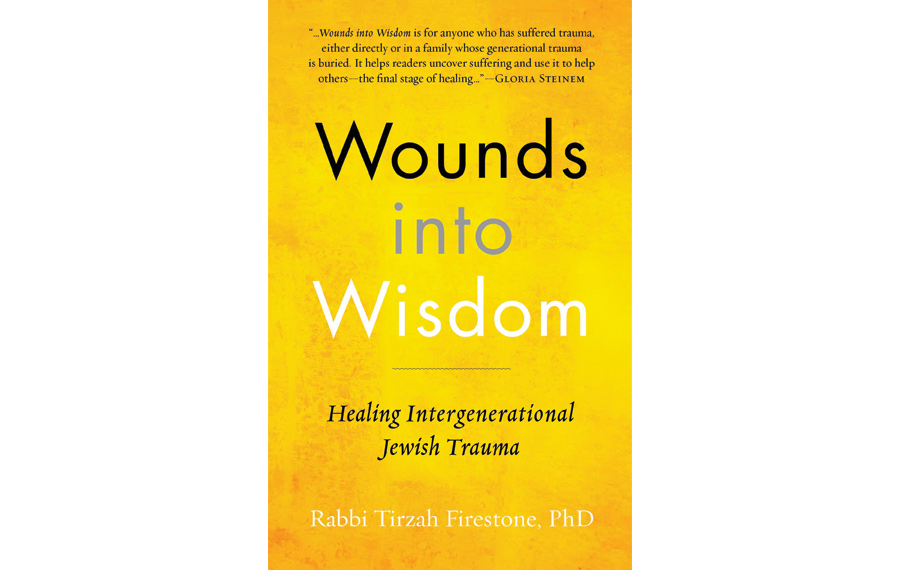
One measure of Rabbi Tirzah Firestone’s elevated stature in the Jewish world is the fact that her new book has been heartily endorsed by such a long and diverse list of Jewish writers, healers and teachers, including Gloria Steinem, Susannah Heschel, Rodger Kamenetz, Rabbi Arthur Waskow, Rabbi Naomi Levy, Sarah Davidson and Rabbi Joseph Telushkin, among many others.
“Wounds into Wisdom: Healing Intergenerational Jewish Trauma,” a joint publication of Adam Kadmon Books and Monkfish Book Publishing Company, is the story of her self-appointed mission to retrieve and untangle the secrets in her own family, which includes both victims and survivors of the Holocaust, and to do the same for fellow Jews who have endured the Shoah, religious persecution in Russia and Iran, and the violence of combat and terrorism in Israel.
“Like many post-Holocaust families, my parents did not speak directly of these matters,” she explains at the outset. “Yet, there is an inner compulsion to know. ‘One has to know one’s buried truth in order to be able to live one’s life,’ writes the late Professor Dori Laub, himself a survivor.”
Firestone is renowned both as a spiritual leader and a practicing therapist. Raised in an Orthodox family, she is the founder and rabbi of a Jewish Renewal congregation, Congregation Nevei Kodesh in Boulder, Colo., and she fuses the traditions of Kabbalah, the principles of depth psychology, and the feminine wisdom tradition into her teachings.
“Wounds into Wisdom” is based on Firestone’s conviction that the unspoken experiences and memories of one’s parents and other caregivers can be unconsciously transmitted into the minds of young children: Her father, for example, never spoke of his experiences as a liberator of Bergen-Belsen during World War II; only after his death did Firestone and her siblings find the photographs of the camp that he had hidden away in his files. Yet she insists that what he saw was somehow transmitted to his own children. “Trauma is embedded in the nervous system through all of our senses,” she writes.
She credits the “psychological health of the Jewish religion, where memory is sanctified and trauma is memorialized,” for allowing us to bear what might otherwise be an insupportable burden and to extract meaning from suffering that seems beyond understanding. Yet she recognizes and rises to the challenge of “go[ing] beyond an identity of victimhood.” Her goal is to guide her readers, both as individuals and as members of the Jewish community, to reclaim their dignity and agency without forgetting what they have survived.
Not surprisingly, Firestone offers psychotherapy as a model for coping with trauma, both the intimate kind that can affect an individual — molestation, criminal violence, combat experience — and the collective kind that can befall a whole people. She urges us to disclose our secret suffering to “a safe witness” in a “safe place,” and she holds out the promise of redemption.
“Rabbi Tirzah Firestone’s goal is to guide her readers, both as individuals and as members of the Jewish community, to reclaim their dignity and agency without forgetting what they have survived.”
“With a compassionate listener, we enter a circle of safety where we can slowly begin to trust again,” Firestone writes. “In this relationship, where we are truly seen and heard, we may begin to find meaning in our experience, and our humanity can begin to be restored after it has been stolen from us.”
The second half of her book is devoted to a kind of seven-step program for the treatment of trauma, ranging from “Facing the Loss” to “Taking Action.” Along the way, she identifies the obstacles that may arise, some of which operate at the molecular level and others that operate in history and politics.
Firestone warns, for example, that medication for dealing with anxiety and depression only masks the underlying causes. She writes, “[T]he residual images and sensations remain embedded in the nervous system, reminding people that they are still susceptible at any time to further triggering and that their inner state is still volatile.”
Even more pointed is her caution against what she calls “hyperarousal,” that is, the tendency to overreact to a perceived threat. As an example, she points out how a prayer vigil over the 2006 war in Lebanon turned chaotic when one participant expressed the hope “that all sides, including Israel, ‘would act with self-restraint.’ ” The audience, which had been “stiffly prayerful,” turned suddenly noisy and bellicose. “This was a hair-trigger: Jews had been passive in the Holocaust. Never again would they be sheep led to slaughter!” Yet she insists that such a reflexive response can be dangerous, even fatal.
“Self-defense is an unquestionable right, for Israel and for any person or group that is under life-threatening attack,” she concedes. But when a threat triggers “the limbic response of an entire group, that segment of the human nervous system that is responsible for survival at all costs,” our ability to accurately perceive and appropriately respond to a threat can be gravely impaired. To show us an alternative, she quotes an Israeli man named Rami, whose daughter was killed by a suicide bomber on Ben Yehuda Street in Jerusalem.
“This is not our destiny to keep on killing people in this Holy Land of ours forever!” Rami cried out to a group of fellow bereaved parents. “It’s not written anywhere, and we can change it. We can break once and for all the endless cycle of violence and revenge and retaliation. And there is only one way to do it. This is simply by talking to each other. Because it will not stop unless we talk.”
To her credit, Firestone does not promise a quick cure to the ill effects of trauma in life and trauma in history. “Healing from trauma can take years, sometimes decades,” she insists. But the long ordeal does not condemn us to a lifetime of suffering. That’s why she uses Israel, an embattled country where trauma is a common experience and a continuing one, as an example.
“[E]veryone who lives in this tiny land has lost loved ones: sons and daughters, teachers and students, comrades in arms, relatives, and friends,” she explains. “Yet Israeli culture is far from morose. It throbs with life and vitality.” And she quotes an Israeli woman named Daniela on the survivor’s credo: “I will either live or I will die, but I will not agree to a living death.”
“Wounds into Wisdom” fairly glows with the light that sometimes emerges from a charismatic teacher, but Rabbi Tirzah Firestone is also hard-headed, plainspoken and, above all, deeply courageous. This is not a touchy-feeling self-help book; rather, it is a stirring call to action.
Jonathan Kirsch, author and publishing attorney, is the book editor of the Jewish Journal.
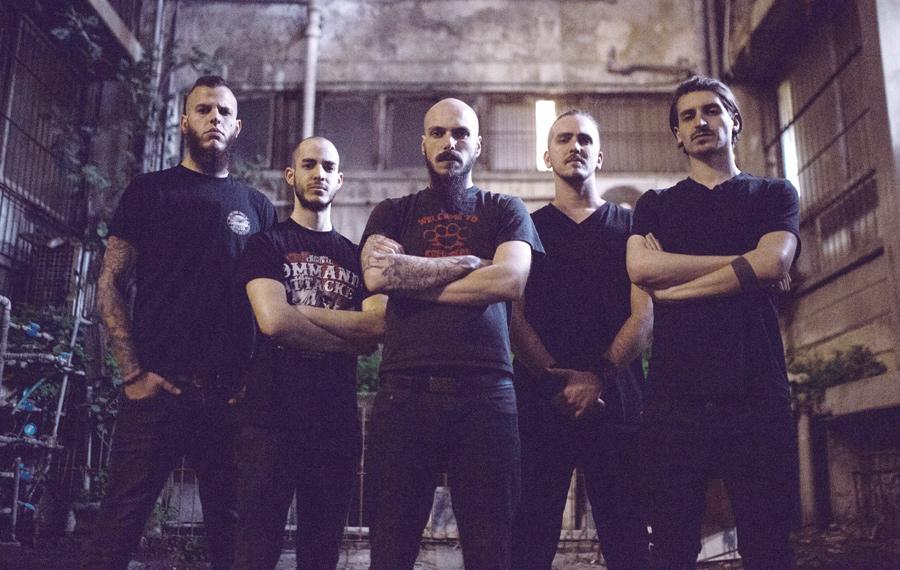
When you think of Israeli music, the explosive, extreme form of heavy rock known as speed or thrash metal isn’t the first thing that comes to mind. But there are close to 100 of these bands active on the scene in Israel, and Shredhead is one of the most popular.
Based in Modi’in in central Israel, the band just released its third album, “Live Unholy,” featuring 11 rage-filled tracks played aggressively and at lightning speed with raw, razor-sharp vocals. The lyrics, though not always discernable, are sung in English. The Journal spoke with guitarists Yotam Nagor and Razi Elbaz via Skype.
“This album is the first time we managed to sound like Shredhead, not a band influenced by other bands like Lamb of God, Slayer, Metallica or Pantera,” founding member Nagor said. “It’s nice being compared to huge bands that you grew up on, but being able to create something of your own is much more amazing.”
He added, “Metal in Hebrew seems a bit awkward, in my opinion. There are no Israeli metal bands that sing in Hebrew.” The songs are angry and brutal, reflecting themes of death, destruction and despair. “Our lyrics are just trying to reflect the truest and deepest concerns and hassles that we each have and people have in general,” Elbaz said.
“All of us have been dealing with a lot of struggles in the last five or six years: addictions, betrayals by girlfriends,” said Nagor, whose father died two years ago. “It affected the writing a lot.”
Surprisingly, Israel’s sociopolitical situation has no influence on Shredhead’s songs. “We don’t take any political stance,” Nagor said. Elbaz added, “The main message we wanted to convey is, ‘Do your own thing and make your own decisions no matter where that may take you.’”
“There are no Israeli metal bands that sing in Hebrew. … Our lyrics are just trying to reflect the truest and deepest concerns and hassles that we each have and people have in general.” — Razi Elbaz
But going against the typical path Israelis follow of school, army, university, job and family wasn’t in the cards for either of them. “Some of our families are more supportive than others,” Nagor said. “My grandma is very upset that I’m doing this. Every time I see her, she’s like, ‘What about going to the university?’ ”
“My dad is skeptical and I can’t blame him,” Elbaz said. “Being in a niche band in a small country, it’s hard to make a living. It’s hard to explain to the people close to you why you do it or where you see it going. [My parents] are supportive, but it comes with a lot of skepticism and question marks.”
Playing heavy metal has been cathartic for Nagor. “As a child, I had a lot of aggression problems. I broke my hand one time because I punched the refrigerator,” he said. “Music helped a lot with that. I found a place to put all my anger and depression. It definitely helps with all the negative emotions in my life.”
When he first discovered Slayer as a boy, Nagor was blown away by the speed and “evil vibe” of the band’s music. “From that day on, metal was all I wanted,” he said. He formed the progenitor of Shredhead in high school, originally playing Slayer, Megadeth and Metallica covers before going original and eventually arriving at the current lineup that also includes bassist Lee Lavy, vocalist Aharon Ragoza and drummer Roee Kahana.
Elbaz, a Green Day fan and a latecomer to heavy metal, got into the genre after meeting Nagor, and he seized the opportunity to join Shredhead after a guitarist left the band. “He came from a very religious Orthodox family and going into this lifestyle put a lot of tension between him and his family,” Nagor said of Elbaz’s predecessor. Nagor, who is of Eastern European heritage, and Elbaz, a Moroccan Jew, are not religious, “but I respect Jewish traditions and I really love Jewish music and the melodies in it,” Nagor said.
Both he and Elbaz served in separate intelligence units in the Israeli army. “I come from a military family,” Nagor said. “My mom was in the army for 27 years and my dad fought in a tank unit in Lebanon.”
Like the other members of Shredhead, they work side gigs to make ends meet. Nagor is a production manager for a hip-hop artist and Elbaz does programming and digital marketing. But they’re encouraged by the increasing popularity of the band and hope to record more songs, make videos, play more and bigger shows in Israel, and tour Europe and America in 2020.
“We feel like with this album, we started on the right foot and now we have some really nice momentum, and we want to leverage that in the best way we can,” Elbaz said, noting that social media is a big part of that, as is meeting fans in person as much as possible. “Our live shows set us apart from most metal acts. We put a lot of work into the way we look and play and move onstage. I think we’re at least doing an OK job at it, and on the local scene that puts us in our own special spot.”
Delivering “a show that leaves people with the feeling that they want to see us again” is the band’s priority, Nagor said. He believes that Shredhead’s commitment gives it a leg up. “We fight with our last breath for everything we do. Nothing in our life comes before the band. I love my family and my girlfriend, but the band comes first,” he said. “If you want to
make a living at it, you can’t look at it as a hobby.”
The documentary “Back to the Fatherland” examines the odd (and to many, the embarrassing) phenomenon of young Israelis leaving the dreamland of generations of Zionists to settle, work and frequently marry in Germany and Austria — the lands whose people persecuted and murdered their ancestors.
What makes this film particularly surprising is that its co-producers, directors and stars are the granddaughters, respectively, of a Holocaust survivor and a Nazi officer. Austrian Katherina (Kat) Rohrer and Israeli Gil Levanon, both in their 40s, met and became friends while students at New York’s School of Visual Arts. Today, they are joint heads of GreenKat Productions.
The film opens with the pair visiting Levanon’s grandfather Yochanan in his Tel Aviv apartment to break the news that she is considering moving to Berlin. The first reaction of the patriarch and Holocaust survivor is predictable: “No, never,” he exclaims, asserting that the Germans are bad and will always be bad.
Like most grandchildren, Levanon understands but ignores the old man’s advice and heads for the German capital. Teaming up with Rohrer, the two discover that some 20,000 identifiable Israelis now live and work in Germany and Austria. Most are relatively young, secular and artistic. Politically, they tend to be liberal or progressive and are opposed to what they see as a rightward drift in Israel’s government and people.
The filmmakers interviewed Israeli expatriates focusing on their new lives and then filmed their Holocaust survivor grandparents’ reactions to their descendants’ “reverse aliyah.”
One expat in Berlin is Dan Peled, a young sculptor. His beloved grandmother Lea can neither understand nor condone his decision. To change her mind, Dan invites the 91-year-old to join him on a trip to Vienna, the city of her childhood.
Another Israeli, Guy Shahar, settled in the historic Austrian city of Salzburg, married a local woman and has a young son.
Asked about Israelis’ exodus to Germany and Austria, Levanon said many leave because they say that life in Israel is too hard or expensive, while others dislike the country’s steady political move to the right.
“We are very privileged to be able to leave home and experience something else, knowing that we can come back home.”
— Gil Levanon
There is also the desire among young people to explore other countries and people without rejecting their native land. “We are very privileged to be able to leave home and experience something else, knowing that we can come back home because of the amazing things the older generations have done,” Levanon said, adding, with a touch of resentment, “If you are a Jew from Israel, people immediately say that you are abandoning ship and you’ll never go back [to Israel]. I’m not sure that this is true for this generation.”
The 77-minute film is just beginning to circulate in the United States, and reviews have ranged from lukewarm to negative, including that the film jumps too quickly from one character and language to another, so there is some difficulty in following the sequences.
Other criticism, Rohrer and Levanon say, is based on the reviewers’ inability
to deal with a Holocaust- or post-Holocaust-themed films without the mandatory depictions of sadistic Nazis or emaciated Jews.
The filmmakers see themselves as the “third post-Holocaust generation,” Levanon said, “and we are making this film for the fourth and fifth generations, who will live in a world with no actual survivors left.”
“Back to the Fatherland” opens June 28 at Laemmle’s Music Hall in Beverly Hills.
In “Madam Yankelova’s Fine Literature Club,” the women who gather for weekly dinner parties have something far more sinister in mind than simply discussing books: The men they invite to the table wind up on the menu. This deliciously macabre Israeli fantasy is surprising, darkly funny and has a lot to say about gender politics, women’s roles, aging and class divide.
The titular female cabal of misandrists takes revenge on men by killing them and turning them into hotdog meat, earning them trophies and “Lordess” status. Aging club member Sophie (Keren Mor) must step up the quality of her male candidates or risk banishment to the lowly Sanitation Department. But she finds herself falling for a handsome target (Yiftach Klein) with his own secret agenda. The cast also includes Leah Koenig, Razia Israeli, Ania Bukstein and Hana Laszlo.
“It’s the first fantasy film ever made in Israel,” writer-director Emilio Schenker said of his debut feature, which won two Ophir (Israeli Oscar) Awards, worldwide film festival raves, and was No. 3 at the Israeli box office last year. Taking inspiration from Nobel Prize winner S.Y. Agnon’s novella “The Mistress and the Peddler,” which the movie’s literature club discusses, Schenker wrote the script eight years ago, but couldn’t secure funding.
After applying to the Israel Film Fund a dozen times without success, he appealed once more. “You’re giving money to the same films all the time, about the Gaza occupation and the Israeli-Palestinian conflict and the army,” he protested. “Why can’t you support a young Israeli director who wants to do something different?” He received $100,000, only a fraction of what he needed. Fortunately, his stars, some of the biggest in Israel, “came to work for free because they loved the script and they believed in me,” Schenker said.
Schenker enlisted his father and friends to build sets, his mother as caterer and family and friends as extras. His mother appears on screen, as do his aunts, his 97-year-old grandmother and some friends from her nursing home. “It was fun for everybody because it was a very passionate set,” Schenker said. “And to have such success, it’s like a Cinderella story.”
The cannibalistic element makes it darker than your average fairy tale, but the film’s more gruesome aspects are kept off screen. “I made a successful short film before called ‘Lavan,’ an extremely graphic and scary horror film,” Schenker said. “It won prizes at film festivals around the world. But my mother told me she hated the film because it was too graphic and scary. I wanted to make a film that my mother could enjoy: a film about women, for women.”
“It’s the first fantasy film ever made in Israel. … I wanted to make a film that my mother could enjoy: a film about women, for women.”
— Emilio Schenker
Growing up with his mother, grandmother and two sisters, Schenker became aware of issues affecting them and worked some of them into the movie. “When you’re an immigrant you suffer from social disadvantage. Each generation of immigrants is lower on the scale. My mother has no pension and no economic security,” he said, “The film deals with that class divide and also aging and being worth less as we grow old.”
Schenker took additional inspiration from three directors whose films, he said, walk “the thin line between irony and comedy and drama and horror.” He cited Tim Burton’s “Edward Scissorhands” and Roman Polanski’s “Rosemary’s Baby” as “examples of how to mix genres and still find your own tone in it.” He calls Spanish filmmaker Pedro Almodovar “my biggest muse. He tells beautiful stories about women.”
Schenker set his sights on filmmaking in early childhood, when he’d watch TV for hours and use a video rental pass to view as many movies as possible. Born in Caracas, Venezuela, to Argentine parents whose parents fled Poland and Germany and lost family in the Holocaust, Schenker and his family relocated to Israel when he was 10 years old. Adjusting to the move was difficult for Schenker, since he didn’t know a word of Hebrew when he arrived, and it didn’t get any easier when he realized a few years later that he was gay.
“Even though we lived in a Jewish community in Caracas, my parents were scared that my sisters would marry non-Jewish guys,” he said. “But more importantly, my parents are huge Zionists, even with all the changes in Israel in the last 30 years. We’re not a religious family. The religion in my family is Zionism. But we are very connected to Judaism in our hearts.”
In Los Angeles in advance of “Madam Yankelova’s” release, Schenker is aiming to remake the film in English, and his casting wish list includes Winona Ryder, Glenn Close, Julianne Moore, Bette Midler and Zendaya. He also hopes to make his next film, “Mother Must Die,” which he describes as a dark fantasy and tragedy-melodrama, in English.
“Madam Yankelova” will be available in mid-July on Amazon, iTunes, DirecTV, Dish, and On Demand, and will begin streaming on Amazon Prime in August.
“I’m very curious how the audience will react,” Schenker said. “It’s a dream come true for me to have a film released in the States. I hope people will enjoy it. I want to make films that people will love, remember and think about.”
“Madam Yankelova’s Fine Literature Club” opens June 21 at the Laemmle Music Hall and Town Center. Director Emilio Schenker will participate in the opening-night Q&A.