fbpx

June 19, 2019

Music of Two Jewish Émigrés Performed at Colburn School

In his book about 20th-century symphonic music, “The Rest Is Noise,” Alex Ross writes that in the early 1900s, young European artists were determined to create a “rupture from the world of the present. … This offensive moved on all fronts: music, painting, literature, architecture. … Many of these young people spoke up for the outcasts, and many were Jews who were beginning to comprehend that [they] could never assimilate themselves into an antisemitic society.” 

Maybe it was this feeling of outsider-ness that led a young Arnold Schoenberg, in Vienna, to compose music that broke with the conventions that had existed for hundreds of years. 

According to contemporary accounts, when Schoenberg’s First Chamber Symphony premiered in 1907, some in the audience whistled, others walked out. During the performance, one critic rose and shouted, “Enough!” Schoenberg did not let that deter him. In the decades that followed, his experiments with tone and counterpoint became an enormous influence on symphonic composers. 

Schoenberg’s Chamber Symphony No. 1 was one of the two early 20th-century pieces performed on June 15, at Colburn School’s Zipper Hall in downtown Los Angeles, when a classical ensemble called Pittance Chamber Music presented “A Tale of Two Émigrés With James Conlon.” The other émigré featured was Erich Korngold, a prominent movie composer during the 1930s and 1940s. Conlon, music director of the LA Opera, conducted the program and also provided context and commentary. 

Pittance Chamber Music is a play on words: Normally, those in the group perform unseen in the pit of the LA Opera but the Pittance concerts, staged at various venues, give these talented musicians a chance to come out of the pit and be seen. 

Pittance was founded in 2013 by Lisa Sutton, who serves as the company’s artistic director as well as the assistant concertmaster of the LA Opera. She told the Journal that playing in the pit for an opera “is a vital role, but a secondary one, always playing underneath the singer, but [at the Pittance concert], the musicians have an opportunity to be on stage and just play and play and enjoy every moment.” 

Sutton said Conlon was responsible for picking the Korngold String Sextet, Opus 10, partly because he has been very active in encouraging interest in composers whose music was suppressed in the years just before and during the Holocaust. The Nazis labeled the music of Korngold and Schoenberg “degenerate” and banned it from public performance. 

Because of racial laws put in place after the Nazis took power in Germany in 1933, Korngold and Schoenberg sensed what was coming. Even though they had been integrated into Austrian life, both left Europe and became émigrés, finding refuge in Southern California —  Schoenberg arriving here in 1933, Korngold in 1934. Though both found success in Los Angeles, they were refugees, struggling with English and adapting to American ways. In spite of being what one writer has called “strangers in paradise,” many exiles missed their old life, especially the culture. 

“[Erich Korngold and Arnold Schoenberg] are the most prominent popular composer and the most prominent concert music composer. What’s amusing is that it takes
two completely different sets of ears to absorb that music.”

— Russell Steinberg

But only up to a point. Conlon pointed out that Schoenberg wrote: “The lesson has at last been forced on me … and I shall not ever forget it. It is that I am not German and not European. Indeed, perhaps, scarcely a human being. … But I am a Jew.” Conlon also quoted Korngold’s wife, Luzi, who wrote: “We were Viennese. Hitler made us Jews.”

Conlon said that Southern California welcomed these émigrés. “At that time, L.A. was very open to immigrants and immigration. We are a country of immigrants and no story, no period, shows the power of that more than the story of these composers who came to Southern California.” 

Korngold, a child prodigy born in 1897, was only 16 when he composed his String Sextet, Opus 10. According to Conlon, in 1914, at a private premiere, when Korngold brought together six string players from the philharmonic, the small audience included Korngold’s parents as well as the cream of Viennese musicians: conductor Bruno Walter, the sister of late conductor/composer Gustav Mahler, composer/teacher Alexander Zemlinsky. 

At the end of the piece, the musicians asked the listeners if they thought the young Korngold’s tempo markings were correct. After Korngold’s father gave his opinion, the teenage composer said he felt the tempo markings were just right. “Korngold’s mother,” Conlon said, “turned to her son and said, ‘Quiet, the adults are talking.’ ”

Russell Steinberg, artistic director and conductor of the Los Angeles Youth Orchestra, told the Journal pairing Korngold and Schoenberg in the same concert was “interesting. Erich Korngold was rooted in the older world of Richard Strauss, the world that came out of Wagner’s operas, so when Hollywood was looking for music for films, Korngold was the natural source. Korngold took the Wagner idea of leitmotifs and converted that to film music, and that was the way film music was written for a very long time. [It] directly influenced John Williams,” Steinberg said.

“Schoenberg, on the other hand, was the person who put the final knife through the tonal system,” Steinberg continued. “His influence in the 20th century is just unrivaled. He broke through to a completely modernist world, so it’s interesting to have [Korngold and Schoenberg] together. They’re the most prominent popular composer and the most prominent concert music composer. What’s amusing is that it takes two completely different sets of ears to absorb that music.”

When introducing Schoenberg’s Chamber Symphony, Conlon said that although Schoenberg “revolutionized” music, “he had a tremendous respect for the traditions into which he was born.”

Conlon pointed out that the German-Austrian musical traditions of the late 19th century had two opposing camps: that of Richard Wagner and that of Johannes Brahms. Wagner was about “extreme expression, passion, exuberance, intensity, almost theatrical at moments.” Brahms, on the other hand, was about “a very strict sense of form and structure.”

At the time, Conlon said, you could not be a member of both schools. Either you liked Brahms and hated Wagner, or you liked Wagner and hated Brahms. “But Schoenberg’s generation,” he said, “understood that this was nonsense. They understood that you could make a synthesis of Brahms and Wagner.” 

As played beautifully by the Pittance Chamber Music, that thorny synthesis of structure and passion, of order and emotion, is in Korngold’s String Sextet and it’s also in Schoenberg’s Chamber Symphony, which, more than a hundred years after its premiere, can still stir the sensibilities of an audience used to the comforting tonalities of Mozart and Beethoven.

Music of Two Jewish Émigrés Performed at Colburn School Read More »
Yiddish Theater Rises from the Ashes in ‘Indecent’

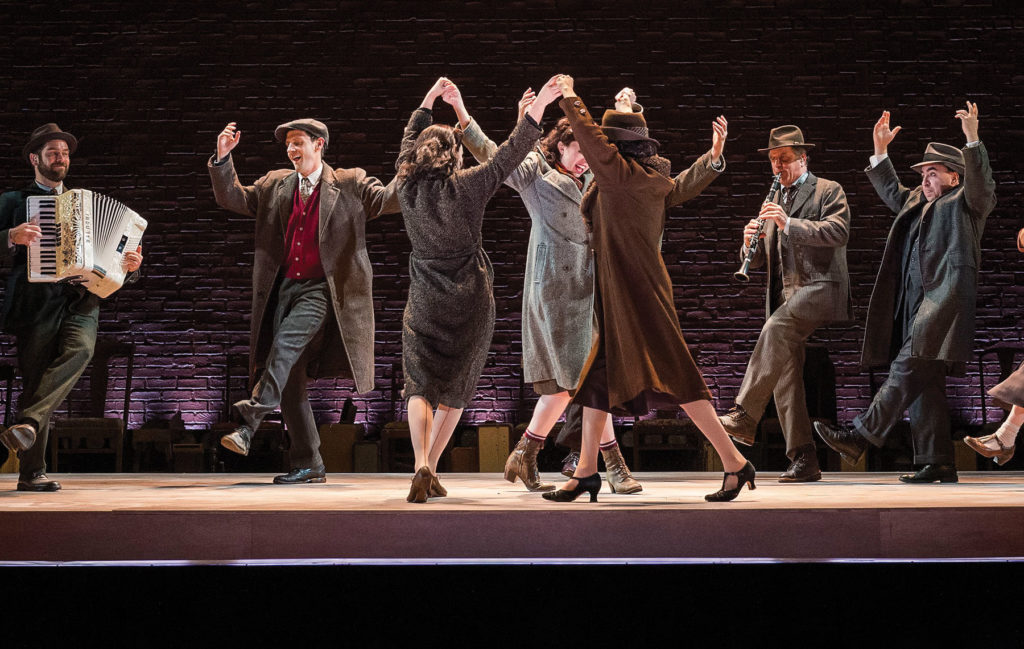
The production of Pulitzer Prize-winning playwright Paula Vogel’s “Indecent” is, at its core, an homage to Yiddish theater. You’d be forgiven, however, if at first glance it appears anything but. 

Currently playing at the Ahmanson Theatre in downtown Los Angeles, “Indecent” is based on Sholem Asch’s 1906 Yiddish play “God of Vengeance,” which tells the story of a Jewish man who runs a brothel out of his home. He buys a Torah scroll for his daughter’s upcoming wedding to a “nice Jewish boy,” only to discover she has fallen in love with one of his prostitutes who lives downstairs. There’s no reconciliation here, as the father casts his daughter (together with the Torah scroll) below stairs with the prostitutes. 

Asch wrote his daring, controversial play, which showed two women kissing onstage, in his home in Warsaw, Poland. It became a huge hit in Europe, transferring to off-Broadway, where it also ran in English, before moving to Broadway in 1923. To appease Broadway audiences, Asch was forced to agree to significant cuts, including deleting the entire romantic scene between the two women. Following the show’s first Broadway performance, cast and crew were arrested, tried and ultimately convicted of “an indecent, immoral and impure theatrical performance.”

“Indecent,” directed by Rebecca Taichman (who won a Tony Award for the show in 2017), is a reminiscence and charts the history of “God of Vengeance,” alongside excerpts from the play itself, as told by the show’s stage manager, Lemml (Richard Topol, reprising his Broadway performance).

It’s an achingly poignant look at a slice of Jewish life, when Yiddish theater was at its zenith. By turns funny and heartrending, “Indecent” literally resurrects from the ashes a Yiddish theater troupe and provides a glimpse into a world destroyed by the Nazis.

Vogel was in Los Angeles for the opening of the production and spoke several days later with the Journal by phone from her home in Rhode Island. 

“What I wanted to do from the very beginning,” Vogel, 67, said, “was for us as an American audience to feel at the end of the evening that we can speak Yiddish. If you want to destroy a people, you have to destroy the arts and literature and the language, and that’s why [doing this play] was important to me — that we recognize what was lost but we can also recognize that the culture remains and continues.”

First produced in 2015, this is now the sixth “Indecent” production with the core cast. It has been “a labor of love,” said Vogel, who was raised by a Jewish father and a Catholic mother in Maryland and grew up eating “gefilte fish, chopped liver and Creole food.”

Noting that she was raised with “guilt from both sides,” Vogel’s journey to  “Indecent” was aided by her late brother, Carl, who died from AIDS in 1988. 

Said Vogel, “[Carl] started reading Holocaust literature in his last year of life and he said to me, ‘Do you realize that one half of our family has been killing the other half for as far back as we can go?’ And that stayed with me.”

“What I wanted was for us as an American audience to feel at the end of the evening that we can speak Yiddish. If you want to destroy a people, you have to destroy the arts and literature and the language, and that’s why [doing this play] was important to me.” — Paula Vogel

Vogel had already developed an interest in Yiddish theater as a graduate student at Cornell University in 1974, when her professor suggested she read “God of Vengeance.” As both a Jew and a lesbian, Vogel said she felt the professor gave her the play to say, “It’s safe to be who you are here.” “I think it was a very lovely act that he gave me this script,” she said. 

After grad school, Vogel lived in New York for seven years “and that Yiddish legacy is very much alive,” she said. “You can still feel the whispers and ghosts  [of Yiddish theater] on the Lower East Side.”

When Taichman reached out to Vogel in 2010 to help her put together a production of “Indecent”(Taichman read “God of Vengeance in 1997 at Yale Drama School and wrote her thesis on the obscenity trial), Vogel said, “I don’t think I want to write a play about the censorship trial alone. I think there’s a bigger story that I want to tell.”

That bigger story is told in powerful, visual vignettes that stay with you long after the play is over. And that, Vogel said, is exactly what she wanted. “I wrote this play more on visuals that I saw in my head. The first picture I saw was a dusty Yiddish theater troupe in an attic in the ghetto in 1943. That’s where the play began in my mind.”

Asked why she thinks “Indecent” has been so successful, racking up a slew of awards, Vogel said, “If you want to say something that speaks to as many people in the audience as you can, you have to be specific. So by illuminating what happened in the 1920s to Jewish immigrants, hopefully we are also illuminating what is happening to immigrants all over America today. Our need to support and open our community to the immigrants in our midst is critical right now. Everybody is hungry to feel the power of community.”

This sense of community is what counterbalances some of the shocking, powerful images that take place onstage in “Indecent,” including the repetition of a scene where the enraged brothel owner raises a Torah scroll above his head and prepares to hurl it.  

“That was my idea,” Vogel said. “One of the things I think that the play shows is the lesbianism was a pretext to close [the play].”

Indeed, one of the most beautiful, memorable scenes is of the two women, played by Elizabeth A. Davis and Adina Verson, coming together in the rain. Said Vogel, “To this day, I still feel that the second act [of the play] is the greatest love scene between two women I have ever read.” 

In addition, Vogel said the journey she has been on with “Indecent” has helped her to connect more with her Jewish roots. “I listened to over 600 klezmer songs and delved into the history of klezmer music. I stalked Lisa Gutkin of the Klezmatics, who had never written for theater before.” (Gutkin wrote the score and the original music for “Indecent” and plays the violin, mandolin and percussion during the show).  

Then, last summer, Vogel went to the mikveh and became a member of Temple Beth El in Providence, R.I. “I had an incredible conversation for two years with my rabbis and I’ve loved every moment of the education classes and discussions,” she said. “Even though [writing] the play is over for me, the gifts that it has given me will continue for the rest of my life.”

“Indecent” runs through July 7 at the Ahmanson Theatre. For tickets and information, visit the website.  

Yiddish Theater Rises from the Ashes in ‘Indecent’ Read More »

JNF Highlights Chef and Israeli Culinary Institute

On June 13, the Jewish National Fund (JNF) hosted a fundraising culinary event at the Luxe Sunset Boulevard Hotel to honor Israeli spice master Chef Lior Lev Sercarz, and launch the upcoming establishment of JNF’s International Culinary Institute in northern Israel’s Kiryat Shmona, in partnership with Sercarz. 

Upon entering the hotel at the sold-out event, the 260 attendees, who paid up to $360 for a ticket, were greeted with an Israeli-style shuk (market). Large Mason jars were filled with green olives and baskets were stuffed with fresh hay and eggs. Guests were able to sample authentic shawarma and falafel, pita, Israeli salad, eggplant and hummus. 

In a phone interview with the Journal before the event, JNF National Campaign Director Sharon Freedman said of the Institute, “My goal is to develop recognition and awareness of this incredible project that I believe is going to be absolutely life-changing for the people in the north [of Israel].”

Freedman said the institute will “be like a real center for culinary arts. It’ll be a central hub offering researchers and companies opportunities to develop food security, healthy products and agricultural technology. We believe this will motivate entrepreneurs to also invest in incubators for new products.”  

“[The International Culinary Institute] will be a central hub offering researchers and companies opportunities to develop food security, healthy products and agricultural technology.” — Sharon Freedman

Shari and Mike Weiner, who attended the event and who have been involved with the JNF for over 12 years, concurred. “The Culinary Institute will bring a lot of new jobs into the region, more tourism up north and really help to rejuvenate the area and bring communities together,” Shari said, adding, “Our daughter, Samantha, is a psychotherapist [and] will be combining food therapy with psychology and yoga, [so] she was very interested in hearing Lior.” 

Sercarz told the Journal in a phone interview after the event, “What we’re mainly trying to achieve [is] to really allow the students of all ages to explore what [it is] within the culinary world that they’re good at … because culinary doesn’t only mean cooking.”

Born on a kibbutz in upper eastern Galilee, Sercarz later moved to France to attend a culinary institute and has been living in New York since 2002. He told the Journal the necessary skills required to become a successful chef include having “a love for not only food but giving to others and pleasing other people. … When people are having fun, this is when you’re working. You [need] to be really organized and be able to execute under pressure. If you really don’t love it, chances are that you’re going to get burnt out very quickly.”

Sercarz’s love for his work was on full display at the JNF event. For the first course, he served a salad of peaches, tomatoes, roasted beets and fennel over whipped tahini, followed by a main course of short ribs with carrot purée, roasted turnips and chickpeas.

“For dessert, we made you another vegan preparation,” he told attendees. “It’s called Malabi. It’s a very traditional Middle Eastern dessert made with orange blossom and rose water topped with some dates with some fresh cherries, pistachios and halva floss.”

“Lior’s custom blends are a thing of dreams from big-deal chefs and at-home cooks and anyone in between who loves to eat and drink,” Gina Raphael, JNF board member and event co-chair, said in a speech at the event. 

“All of our projects that we have at JNF [contribute to] building our homeland,” Freedman said. “We’re building the frontiers of [Israel].”

The Jewish National Fund International Culinary Institute is slated to open to the public in October 2020.


Melissa Simon is a senior studying journalism at University of Wisconsin-Madison and a Jewish Journal summer intern. 

JNF Highlights Chef and Israeli Culinary Institute Read More »

State Set to Allocate Funds for Decimated Jewish Summer Camps

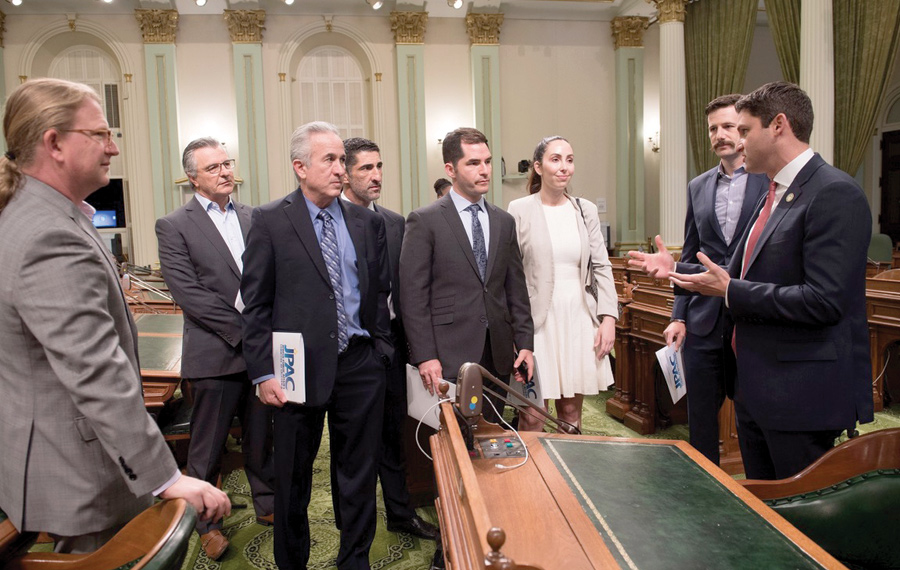
Following advocacy efforts by The Jewish Federation of Greater Los Angeles and the California Legislative Jewish Caucus, Gov. Gavin Newsom is expected to sign a budget deal allocating $23.5 million in state funding to three California Jewish summer camps destroyed in the 2018 Woolsey and the 2017 Tubbs fires.

The funds are part of a larger $214.8 billion budget passed by the California State Legislature on June 13. The $23.5 million is earmarked for the Wilshire Boulevard Temple (WBT) camps Hess Kramer and Gindling Hilltop; the Shalom Institute Camp and Conference Center’s JCA Shalom; and Union for Reform Judaism’s Camp Newman in Santa Rosa in Northern California.

During a June 14 interview at Federation’s offices, CEO and President Jay Sanderson said his organization coordinated the efforts to secure state funding for the camps, working with Jewish California lawmakers including State Sens. Ben Allen, chairman of the California Legislative Jewish Caucus, Henry Stern and Bob Hertzberg, and Assembly members Richard Bloom and Jesse Gabriel, vice chairman of the California Legislative Jewish Caucus.

“From the very beginning, we created this multipronged strategy of how to get these camps [funding] going forward, using all of our assets and all of our resources and all of our relationships for [bringing] all of this together for hopefully the successful conclusion when the governor signs this budget for this piece of the rebuilding process,” Sanderson said.

Gabriel told the Journal the aim was to have the money distributed equitably among the camps. “We felt these are such important institutions for the community, both in Southern California and Northern California, and so we went to bat … [and] made it clear to our colleagues and to the legislature that this is important to the Jewish community and broader community, as well.” 

“The allocation of state money for the camps is a jumping-off point for greater fundraising efforts needed for the camps to eventually reopen at their former homes.”

Prior to the November 2018 Woolsey fire, WBT’s Hess Kramer and Gindling Hilltop camps shared a Malibu property and Shalom Institute’s Camp JCA Shalom also was based in Malibu. The camps are still working with the California Coastal Commission and other agencies to clean up the debris left by the fire.

The rebuilding effort will require major fundraising, Federation Senior Vice President of Community Engagement Alisa Finsten said, adding that the allocation of state money for the camps is a jumping-off point for greater fundraising efforts needed for the camps to eventually reopen at their former homes.

This summer, Hess Kramer and Gindling Hilltop will hold its programs at Cal State Channel Islands in Camarillo, and the JCA Shalom camp will take place at Gold Creek Center in the Angeles National Forest.

Sanderson, whose daughter attended camp at Gindling Hilltop, said the state funding was about more than gaining financial assistance for rebuilding. Camp, he said, is the single most impactful way to ensure a young person stays engaged in Jewish life as an adult.

“We believe one of the most essential building blocks to a strong Jewish community is having strong, vibrant Jewish summer camps, and we have been supporting the camps and families going to camp for a very long time,” Sanderson said. “And if camps go down, that doesn’t help this. So our job is to help the camps get back up. 

“We don’t want to rebuild these camps as they were,” he added. “We want to rebuild them as they should be.”

Federation also has provided office space in the San Fernando Valley for the Shalom Institute in the wake of the Woolsey fire and has helped bring in a dining hall for JCA Shalom to use at its temporary site this summer. It also has provided resources for the WBT camps’ supplies for archery, baseball, football and other activities.

Barri Worth Girvan, deputy chief of staff for Hertzberg, began attending Camp JCA Shalom when she was 9 years old and remained involved with the camp for 13 years. She said the state allocation of funds was the rare example of many different elements of the Jewish community coming together. She said the community initially requested $35 million from the state and that it was unusual for such a large portion of that initial amount to
be granted.

“We’re pretty ecstatic the way numbers have shaken out,” Girvan said regarding the potential allocation of $23.5 million, “and I’m excited to see the rebuilding start.”

As of the Journal’s press time, Gov. Newsom had not yet signed off on the funding, nor was their any indication on how the money would be divided among the camps.

State Set to Allocate Funds for Decimated Jewish Summer Camps Read More »

Trump Admin Tells Congress of Iran, Al-Qaeda Ties

The Trump administration is briefing members of Congress of the ties between Iran and al-Qaeda, The New York Times reports.

According to the Times, Secretary of State Mike Pompeo and members of the Department of Defense are making the claims, arguing that the relationship between Iran and al-Qaeda goes back as far right after the 9/11 terror attacks.

“There is no doubt there is a connection,” Pompeo said in an April congressional hearing. “Period. Full stop.”

Pompeo also alleged in a June 13 press conference that Iran was behind a suicide bombing earlier in the month in Afghanistan that killed four Americans; the Taliban has claimed responsibility for the attack, according to the Times.

The Times report cites various government officials and lawmakers who are skeptical of the Trump administration’s claim and believe that they are laying the foundation for war with Iran under the 2001 authorization use for military force against al-Qaeda in light of escalating tensions between the United States and Iran.

“They are looking to bootstrap an argument to allow the president to do what he likes without coming to Congress, and they feel the 2001 authorization will allow them to go to war with Iran,” Sen. Tim Kaine (D-Va.) told the Times.

In September, the State Department’s annual Country Reports on Terrorism stated that Iran continues to harbor al-Qaeda terrorists and provides “a core facilitation pipeline” for al-Qaeda to utilize. In 2017, CIA documents stated that Iran and al-Qaeda have had a working relationship since 1991, with Iran providing the Sunni terror group with resources to conduct its terrorism, even allowing al-Qaeda to utilize Hezbollah training camps. The documents also stated that Iran allowed the al-Qaeda members behind the 9/11 terror attacks to have safe passage through Iran and into the United States.

Trump Admin Tells Congress of Iran, Al-Qaeda Ties Read More »

Donating Hair to Jewish Kids With Cancer

Watch out, Los Angeles, there are young Jewish women taking the streets by storm with their fabulous short haircuts — and they feel great about it. 

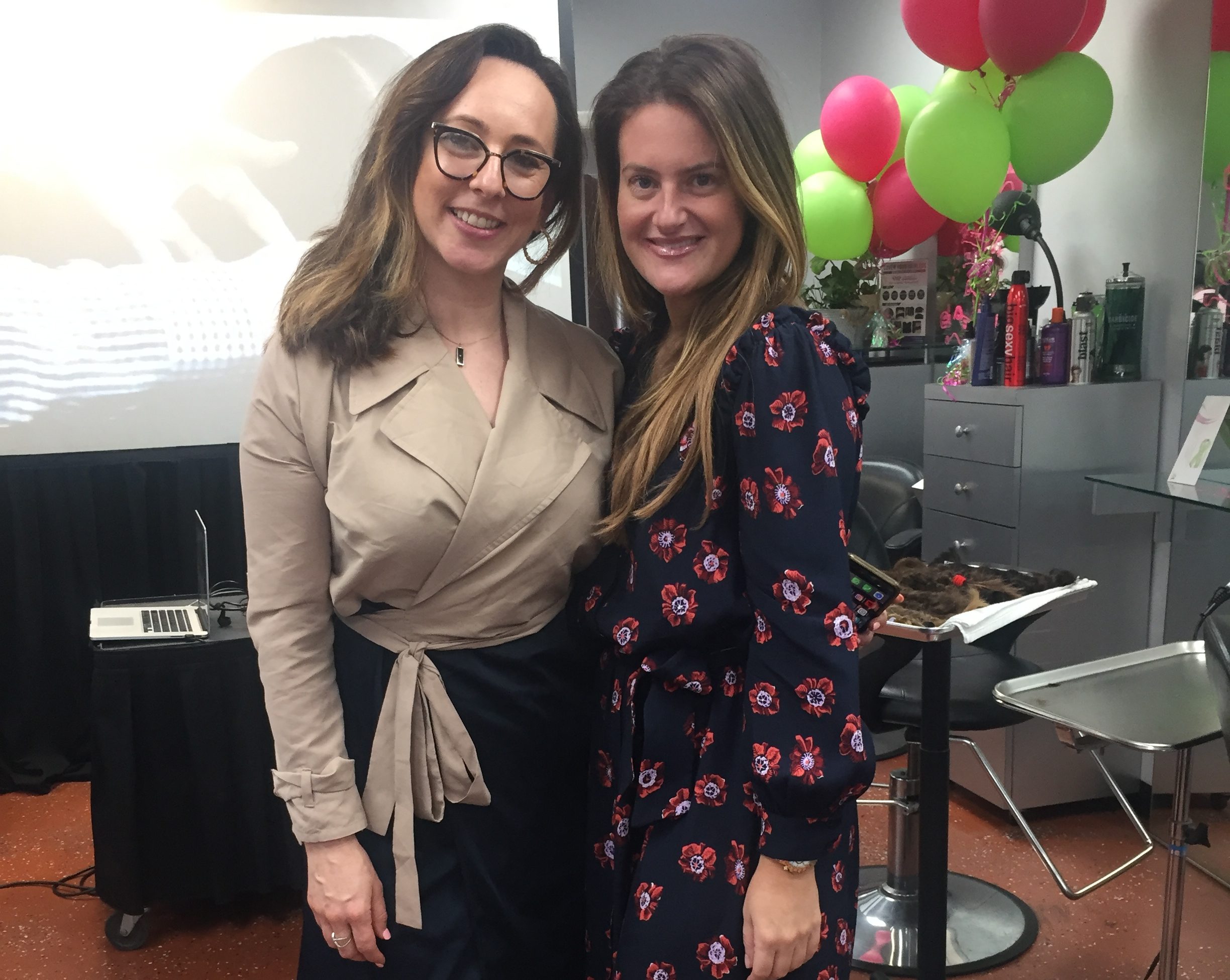
On June 12 at Larchmont Hair & Nails, 30 women with hair 12 inches or longer received a free haircut at an event hosted by Yeshiva Aharon Yaakov/Ohr Eliyahu and Zichron Menachem, to which the hair from the event was donated. Zichron Menachem is a Jerusalem-based organization that makes wigs for children and young people with cancer and has offices around the world that accept hair donations. 

When Jenny Gurvitz-Mandelbaum moved to Los Angeles from London in 2013, her 8-year-old daughter was in the middle of growing out her hair to donate at Zichron Menachem’s U.K. event. “She was devastated,” Gurvitz-Mandelbaum told the Journal. So, as PTA president at Yeshiva Ohr Eliyahu day school in the Fairfax district, Gurvitz-Mandelbaum sought to bring the haircutting party to L.A. This is the third time she has coordinated the event, bringing in daughters and mothers from all over the local community. 

Rifka Meyer, a hair salon owner in London who is heavily involved with Zichron Menachem, plans to move to Los Angeles in the future, so she flew in to participate in the Larchmont event. “Hair is such an important part of us as people,” she said. “When they say it’s your crowning glory, it really is.” 

Meyer shared the story of a “beautiful, beautiful” and very sick young woman who walked into her salon in London with three wigs in poor condition and a request to make them good as new.  Meyer began washing and styling the wigs but knowing that they were all in various stages of disrepair, she asked the young woman if she had ever heard about Zichron Menachem and its work. After hearing about it, the woman said, “[This is] such a good idea; let me give one of these wigs to someone else who needs it. I don’t need three.” 

Meyer explained to her that Zichron Menachem would pay for a new wig to be made especially for her. She took the woman’s measurements and asked her about the length and style of the wig she wanted. A week later, with the client’s mother sitting next to her, Meyer put the wig on her head. “There was not a dry eye in the salon,” she said. 

The next day, the young woman’s sister came into her salon “with hair down to her bottom — ginger, wavy hair, the most drop-dead gorgeous hair you’ve ever seen,” Meyer said, and told Meyer she wanted to donate it. A week later, Meyer recalled, “A woman comes into the salon who’s recently been diagnosed [with cancer. She had] ginger, wavy long hair [and said], ‘I’m going to lose all my hair and I need to make a wig.’ ” 

At the Larchmont event, there were five hairstylists and four nail technicians who donated their time to cut hair and give manicures and pedicures to anyone donating their hair. Owner Ellen Bishai booked out the entire salon for the party. 

Rifka Meyer and Jenny Gurvitz- Mandelbaum. Photos by Michelle Naim

Iliana Duenas has been working at Larchmont Hair & Nails for only two months. She said she’s been doing hair for the Jewish community for years and this was her chance to give back to it. “The difference is that when I’m working behind a chair with a client, it’s just [for] that person,” she said. “Doing this kind of event … it’s just totally different. It’s [like] giving to another second or third person.” 

Kayla Rubenstein, a 10th-grader at Bais Yaakov High School, was excited to donate her hair. Even though it was the night before her final exams, she said she had been waiting a long time for this day. “I feel like if you’re in a position to give to somebody, why shouldn’t you, and if you’re going to contribute to someone else’s happiness and make them feel more like themselves if they’re going through a hard time, then why not?” 

It was her second time donating hair to Zichron Menachem. The last time she cut her hair was when she was in eighth grade. “I don’t have to know or feel connected to somebody [to give them] a part of myself,” she said. 

For future haircutting events, contact rivkawigsla@gmail.com.


Michelle Naim is a senior studying English with a concentration in journalism at Stern College for Women in Manhattan and a Jewish Journal summer intern. 

Donating Hair to Jewish Kids With Cancer Read More »

CBS Accepts Ruderman Foundation’s Disabilities Pledge

CBS, a major television network, agreed to sign a Jewish foundation’s pledge calling on them to audition an increased number of actors and actresses with disabilities. The Ruderman foundation called on many large TV networks to sign the pledge June 19, but CBS was the first one to agree. The Foundation’s Seal of Authentic Representation was granted to CBS when it hired Darryl “Chill” Mitchell, a disabled actor, in “NCIS New Orleans” to play the role of agent Patton Plame.

Foundation President Jay Ruderman commended the major network for becoming the first to sign the pledge. “It is our hope that other major media companies will follow their lead and foster opportunities that will lead to more authentic representation of people with disabilities in popular entertainment. Enhanced visibility of disability on screen will help reduce stigmas people with disabilities face in everyday life,” he said.

The pledge recognizes that the disabled community lacks numbers in the entertainment industry. The pledge also acknowledges that increasing the number of auditions for disabled people will hopefully bring the disabled community to be a more included group in the industry.

Although there are numerous disabled people roles on-camera, 95% of them are played by peoples with no physical disabilities.

We take pride in our commitment to cast and hire people with disabilities in our productions,” CBS Entertainment EVP, Diversity, Inclusion & Communications Tiffany Smith-Anoa’i said in a statement. “We salute the Ruderman Family Foundation for advocating for this very achievable and important goal.”

CBS Accepts Ruderman Foundation’s Disabilities Pledge Read More »

Ed Levine and the Passions of a Serious Eater

It was pouring rain last week when I attended a live taping of Ed Levine’s weekly “Special Sauce” podcast at the splendid Rizzoli bookstore in Manhattan. I suspect the room was packed to the rafters despite the weather because people wanted to see famed restaurateur and celebrated Shake Shack founder Danny Meyer interview Levine about his new book, “Serious Eater: A Food Lover’s Perilous Quest for Pizza and Redemption.” 

Levine achieved notoriety in 1997 when Ruth Reichl, Gourmet magazine’s food editor at the time, called him “A missionary of the delicious.” He was a freelance food writer for high-end publications but it’s the story of how he founded the popular food blog Serious Eats and the subsequent nine-year roller-coaster ride running the foodie tech startup that is captivating. 

“Serious Eater” features scrumptious anecdotes, a cache of illustrious food legends and recipes penned by legendary pie-maker Stella Parks of “BraveTart” fame. At the beginning of the book there are suggested listening for each chapter, the other passion Levine highlights. But this soulful tome will stay with you long after you’ve turned the last page and listened to Bob Marley’s “Redemption Song.” 

It’s not hard to understand how Levine managed to turn what started as a $100 blog called Ed Levine Eats (known as ELE) into one of the most influential websites about food culture, eventually selling the Serious Eats brand and scoring a James Beard Award in 2010 for being a top influencer in the process. 

His parents, like many Jews from poor backgrounds in 1930s New York, were avowed do-gooders and save-the-world types who met at a Communist Party meeting at City College. Their family dinners required the four Levine brothers to participate in discussions about politics, culture and life that reached staggering decibel levels. The house was full of passionate conversation, but the food took a back seat. His mother, a community activist and columnist for their local paper, the South Shore Record, was writing  columns about a wide variety of progressive issues but felt cooking was “counterrevolutionary.” 

Respite from his mother’s food came every Sunday, when their grandmother Ida came to cook Eastern European Jewish specialties for her grandsons. Levine’s grandmother’s blintzes, latkes, matzo brei and apple cake cemented his connection between food and love but, left to his own devices, the rest of the week he regularly overspent his allowance at his neighborhood candy store. Already a food snob and critic in grade school, Levine went out of his way to get just the right ingredients from different neighborhood purveyors: lunch meat from one place for his sandwich, and the best roll from the corner grocer. His family noted the young foodie’s fixation on ingredients early on and recognized that he was focused on eating the best of everything his allowance money could buy, and sometimes more when he managed to convince the local ice cream shop to sell to him on credit. 

But Levine’s childhood was punctuated by tragic losses. His father died prematurely, as did his mother three years later. By his senior year of high school, Levine had relocated to California with his much older brother and sister-in-law, who functioned as surrogate parents to the angry adolescent. Once he was firmly ensconced in L.A.’s food and music culture, Levine’s two life passions took root, as did his tumultuous but loving relationship with his oldest brother, who eventually became the first investor in his food blog.

At the center of the drama is the pull of Levine’s desire to be a crusader for the underdog.

Levine then blossomed at the small liberal arts college in Grinnell, Iowa, where he became the concerts chairman, bringing the who’s who of American music to perform at the school. He earned a bachelor’s degree in American music and set out to “make a difference in the jazz world.” 

New York City was the natural habitat of the budding music artist manager but, more importantly, it was where Levine met his future wife, Vicky, an Oxford University Press editor. Instantly smitten, Levine courted his future wife in some of the city’s best fine dining establishments as well as in local dives that inspired his first book, published in 1992. “New York Eats” and its follow-up, “New York Eats (More),” which was published in 1997, were guided to the city’s iconic dishes. 

Then, after eating 1,000 slices of pizza all over the country, burgers by the barrel and more hot dogs that a human should probably consume in a lifetime, Levine found himself at the center of the burgeoning obsession with food that was slowly unfurling not only in the city but in all five boroughs. By the time his third book, “Pizza: A Slice of Heaven,” was published in 2005, Levine had established himself as a  fixture and authority on the subject, pulling in essays, poems and stories about pizza from famous chefs and writers including writer Nora Ephron, cartoonist Garry Trudeau, chef Mario Batali and eminent food writer Calvin “Bud” Trillin. 

In 2006, already sporting a reputation as a connoisseur of American food culture, with more than a few disappointments in the corporate world of advertising under his belt, the then-54-year-old founded the food website Serious Eats. 

Serious Eats developed into a community featuring restaurant news, cultural food trends and interactive dialogue among users, restaurateurs and purveyors. It featured articles about chefs and had regular contributors who were experts in food-related content. It also launched the careers of several celebrity chefs, including Kenji Lopez-Alt, who was by Levine’s side from day one, eventually becoming the Serious Eats recipe czar and head scientist in its food lab. 

Although the principle story behind Serious Eats is Levine’s effort to monetize the site and make his dream job a reality without too many “suits” involved, the real story lies in his desire to chart his own course, sometimes at the expense of his most precious relationships. At the center of the drama is the pull of Levine’s desire to be a crusader for the underdog — the makers, craftsmen and even the dilettantes that sew together the fabric of the city’s food culture, juxtaposed against the harsh realities of having to “grow up” and make a living. This gap between creativity and honor, the hunger passed down from his parents to “do good” and to work with integrity, often clashed with the pressures of the cutthroat real world, where the primary driving passion is for money. 

When I asked Levine what his most unexpected discovery was after finishing the memoir, he told me a story about a fan who stood up in a Q&A session at a promotional event for the book. “Do you understand how many people’s lives you’ve changed with Serious Eats?” the fan asked. It was at that moment, struck almost speechless, that Levine said he realized that his passion for food was a metaphor for other things. His real passion, the one that kept him up at night worrying, aside from the looming sense of failure that’s part of every entrepreneur’s life, was for nurturing and mentoring young writers and then watching them take flight. “The greatest and most unexpected pleasure,” he said, “and a big part of the Serious Eats legacy is the people … knowing that I had some small role in providing a launchpad for their success.” 

Readers likely will keep mulling over this work because it is, in essence, a love story between Levine and his parents, his brother, his wife and his talented team of food writers set against a backdrop of his lifelong love affair with New York City. And what a deliciously wild ride it is.


Yamit Behar Wood, an Israeli American food and travel writer, is the executive
chef at the U.S. Embassy in Kampala, Uganda, and founder of the New York Kitchen Catering Co.

Ed Levine and the Passions of a Serious Eater Read More »

Weekly Parsha: Beha’alotecha

One verse, five voices. Edited by Salvador Litvak, Accidental Talmudist

And whenever the cloud lifted from the Tent, the Israelites would set out accordingly; and at the spot where the cloud settled, there the Israelites would make camp.-Numbers 9:17


Nina Litvak
accidentaltalmudist.org

Every time the Children of Israel stopped and made camp in the desert, it was a massive undertaking. Thousands of Levites built the Sanctuary by assembling an array of planks, walls, pillars, carpets and furniture. In every location, they worked hard to create a holy meeting place for God — even if the Divine cloud only settled there for one day before it was time to move on. They had to be ready to pack up at a moment’s notice. 

The Lubavitcher Rebbe taught that like the places in which the Israelites made camp in the desert, every one of our stations in life is significant. No place is simply “on the way” to someplace else. We have the ability to create something holy wherever we go, and at every stage of life. Driving on the freeway to an important event, training for the job we want, shopping for groceries to cook dinner — what if we can sanctify these moments, the journey as well as the destination? 

Creating beauty in a desert can be difficult, but the practice of looking for beauty everywhere we go builds a place to connect with God: a Tent of Meeting between heaven and earth. We sanctify life by treating its different stages and locations with attention and respect. It means putting away our phone and looking for sanctity in our surroundings, wherever they may be and however long we may be there. It means working to manifest the presence of the Holy One in our world.

Rabbi Aaron Lerner
Executive Director, UCLA Hillel

This verse violates the norm. Manifest instruction from the Divine via the physical world is rare. And the rabbis reject it entirely (see Tanur Shel Achnai, in which God’s manipulation of the natural world is disallowed). Rather, we’re taught that God can be found in a “still, small voice” that can be found through quiet focus. So why is God so involved in this instance? Two possibilities arise. 

One reflects the Rambam’s belief that we are growing in our relationship with God over time. Former Egyptian slaves and ancient Israelites may have needed animal sacrifices and a “taskmaster” version of God to move Jewish history forward. We do not. We have achieved a mature partnership with God beyond what previous generations had. 

We rely on science and doctors to heal us. We suffer the consequences of human inaction and neglect. Whether God remains involved in human history can no longer be proven with pillars of fire. That has become a matter of faith. But we can see the consequences of our individual and collective choices. This can feel defeating because God won’t fix it for us. But it’s also empowering. 

We have been entrusted with the power to move ourselves. All of this informs how I pray. The weekday sections of the Amidah contain many requests of God. I say them as written but embrace personal responsibility: “God, please show me how I can make peace, heal others, earn a living, etc.”

Rabbi Chaim Meyer Tureff
Pressman Academy and director of STARS

What is the connection between settle and encampment? The Hebrew word shochain means to dwell or settle. It is only when we are truly settled that we can encamp. One name of God, Shekhinah, is thus directly connected to the word for settle in Hebrew. This sense of permanence can only happen when we are connected to the true source of life, God. 

As our tradition teaches us, we are in a temporary setting in this world. When we connect to our higher power and allow God into our lives, then we can truly settle down because in reality there is no such thing as permanency without God. As recovering addicts know, allowing that settling of God into one’s life can help bring context, relevance and meaning where there was once darkness, confusion and hopelessness. 

One does not need to be in recovery to apply the principles of 12 steps into their everyday life. The idea that there is a higher power who actually plays an important role in one’s life, steps 2 and 3, is relevant to every human being. When we allow the cloud of God to dwell or settle on us, we are finally allowed to encamp. It is only then that we understand we don’t have to go about it alone, but rather with a Partner that truly loves each and every one of us.

Rabbi Daniel Bouskila
Sephardic Educational Center, Westwood Village Synagogue

For most people, the sight of clouds in the morning marks the beginning of a dark and gloomy day. Cloudy days tend to adversely affect our moods, triggering negative thoughts and even a depressed state of mind. When the weather forecast says “cloudy,” it conjures up dark images in our minds. We even feel threatened by clouds, knowing that they potentially bring about frightening sounds, images and inclement weather. It’s therefore fascinating that throughout the Israelites’ 40-year sojourn in the wilderness, the guiding light that illuminated their travels and protected their encampment came in the form of a cloud. 

The Midrash HaGadol refers to this cloud as the Shekhinah, which in its plain, non-kabbalistic definition means “the presence of God.” This cloud that led them through the day and protected their camp at night was a manifestation of God’s divine presence among the Israelites. Why would an otherwise invisible God choose to appear in the form of a cloud? 

I believe that through the metaphor of a cloud that once represented guidance and protection, God is teaching a powerful lesson that extends far beyond those classic “40 years in the wilderness.” When we wake up in the morning to a cloudy day, rather than allow gloom, darkness and fear to overtake us, we should gaze upon the seemingly dark clouds and see God’s light and presence within them, offering to continue to guide, protect and illuminate our own journeys and encampments through the challenging wilderness of life. 

Nili Isenberg
Pressman Academy, Judaic Studies Faculty

God described this period of the relationship with the people of Israel as one of youthful love: “I remember the lovingkindness of your youth, the love of the bride, when you followed me into the desert in a land that was not sown” (Jeremiah 2:2). What a beautiful image of loyalty and faith! 

After our verse Bamidbar, the Book of Numbers, continues on to explain that whether the people of Israel remained encamped for days, months or even a year, they always took their cue to rest or move on from God. 

How can our disillusioned generation ever understand this spirit of devotion? 

In my own life, I look to my grandparents (z”l) and their Greatest Generation. As a young man, with great loyalty to the freedom the United States promised, my grandfather enlisted in the U.S. Navy and risked his life in the Pacific theater to save the world from fascism. Years after the war, my grandparents continued to live their lives in service of yet another ideal: In their 60s, they realized their long-time dream of making aliyah to the miraculous State of Israel. For the next 30 years, my grandparents were known as the adorably loving, joyous and outspoken elderly couple who professed their Zionism at every opportunity. 

To bring that kind of meaning and joy to our lives, we each must find a value to which we can say wholeheartedly, like the Israelites in the desert and like the biblical Ruth, “Where you go, I will go” (Ruth 1:16).

Weekly Parsha: Beha’alotecha Read More »

The Foundling

At some point every child 

fantasizes herself a foundling,

left on a doorstep by a princess

to be raised by a simple shoemaker and his wife. 

The princess-mother would not have made      

her daughter take the test she didn’t study for

to teach that actions have consequences,

but she was banished from the kingdom, 

leaving her poor infant in the care of imposters 

who crushed the child with their ordinariness. 

My parents were such as these —  

my father not a cobbler, 

but a hard-working salesman

in the sheet metal business,  

my mother, beautiful but critical

as Snow White’s stepmother,

too involved with her own problems

to be bothered by a child’s petty dramas.

Who was this princess mother 

that had left me with dullards?  

An artist surely, whose talent 

and willingness to speak truth to power

had brought vengeance upon her, 

leaving her no choice but to protect me 

the only way she knew — swaddled and abandoned

on the flagstone walkway of a suburban ranch house,  

disappeared without a trace — 

no perfumed handkerchief, no sapphire ring

whose star could point me to her — 

only a voice that whispered, 

“You are more than this. Go inside

and find the self you’re meant to be.  

The one I never would have left, 

if I weren’t certain you would

get there on your own.”


Paula Rudnick is a former television writer and producer who has spent the past 30 years as a volunteer for nonprofit organizations.

The Foundling Read More »