fbpx

June 19, 2019

Letters From My Palestinian Neighbors

“Dear Future Neighbor: I call you ‘future neighbor’ because we aren’t yet neighbors. Neighbors live in equality. Neighbors have shared rights and duties. Neighbors share moments of joy and check on each other in times of distress. As long as Israel continues to occupy me and my people, we can’t be neighbors. But I want to be your neighbor, and I hope that one day we will be. And so I write to you now, my future neighbor.”

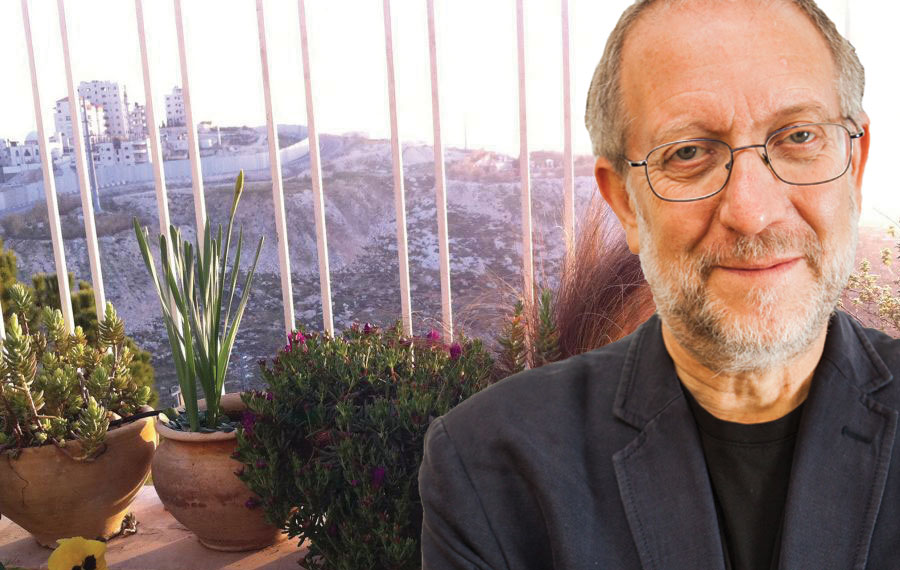
So begins a letter I received from a young Palestinian man who grew up in a refugee camp in the West Bank. The letter was written in response to my book “Letters to My Palestinian Neighbor.” The book is a series of 10 letters about Israel, Zionism and Jewish identity, written to any Palestinian living in the village across from my home in the French Hill neighborhood at the edge of Jerusalem, separated by the security wall dividing our two hills.

My letters were attempts to tell something of the Jewish story to our neighbors. I often wrote during sleepless nights, looking out at the lights of Palestinian homes, listening to the muezzin mark the stages of my insomnia. I had no idea if anyone on the other side would read my letters or bother responding — let alone what someone might say.

To my knowledge, in all the years of conflict, no Israeli writer had turned to our neighbors to try to explain who we are and why we are here; why the Jewish people returned home; why we consider the land we share with Palestinians to be home. The letters are meant to counter the widespread perception in Palestinian society and throughout the Arab and Muslim worlds that Jews are thieves without any history in this land, being Jewish is a religion only, and we are not a people entitled to national sovereignty. Media, school curricula and sermons in mosques reinforce this virtually uncontested narrative.

In “Letters to My Palestinian Neighbor,” I explain to my neighbors the meaning, as I understand it, of Judaism and Jewish identity. I want them to understand why Jews aren’t just a religion, but a people — a people with a religious identity and an attachment to a specific land. In my experience, many Muslims tend to misunderstand the centrality of peoplehood in Jewish identity, which only reinforces their denial of Israel’s legitimacy. “We have nothing against the Jews as a religion,” I’ve heard Muslims repeatedly say, “but Israel is political, not religious.” In “Letters,” I try to explain why Israel is not merely a political but also an identity issue. It is the heart of my identity as a religious Jew.

I wrote the book with one more intention: to elicit responses from my neighbors. I invited them to tell me their collective narrative and personal stories. My hope was that I would hear from Palestinians prepared to engage with me on the basic premise of the book: This was a conflict between two indigenous peoples — in our case, a re-indigenized people — each of whom could make a compelling case based on its own narrative for why this land belongs, by right, to them.

I had no delusions of convincing Palestinians to replace their conflict narrative with mine, just as Palestinians will not convince me to replace my narrative with theirs. For me, 1948 is the greatest moment of Jewish redemption since the biblical Exodus; for Palestinians, it is the shattering of their collective and personal existence. I blame the Arab and Palestinian leadership for initiating a war of destruction against our return home; they blame Zionism for supposedly intending since its founding to usurp their home.

I consider Israel’s preemptive strike in the 1967 Six-Day War the ultimate expression of a nation’s right to self-defense; Palestinians consider it an act of aggression, a premeditated land grab. We disagree about almost every facet of this conflict, from Zionism’s origins to last Friday’s recent Gaza border riots.

We can reduce our war of narratives to this question: Is the “original sin” of this conflict the decision of the Jews to return after 2,000 years, or is it the Arab world’s attempt to thwart our return?

Both sides felt they had no choice but to act the way they did. Given the overwhelming centrality of the land of Israel in Jewish faith, identity and memory, sooner or later, we had to try to return home — and not only because of persecution. For its part, the Arab world, with its memories of foreign subjugation and humiliation, saw Zionism not as the return of a native people but as one more colonialist invasion.

My goal in reaching out to my neighbors was to find Palestinian partners — even a handful who, like me, represented no one but themselves. Those partners would be willing to model a new kind of conversation, in which both sides accept the legitimacy of each other’s presence in the land. In the conversation I envisioned, neither narrative would attempt to displace the other but would, instead, maintain a painful coexistence.

For me, the key word was “model.” I was keenly aware of my limited reach. I am a writer, not a politician. All I could hope to do was tell my people’s story, invite Palestinian response and see what happened next.

My decision to focus on the narratives came from the belief that this conflict is, above all, a struggle between competing histories. It’s not so much a war over tangibles, but intangibles: memory, identity, trauma, the right to define oneself as a people, the right to exist. Not that the tangible issues of borders, settlements, refugees and holy places aren’t crucial, but those dilemmas are results rather than causes of the deeper conflict. Diplomats and politicians will continue to fail at peace as long as they focus on consequences rather than root causes.

“I wrote the book with one more intention: to elicit responses from my neighbors. I invited them to tell me their collective narrative and personal stories.” 

It is self-evident that there will be no chance for reconciliation between Palestinians and Israelis if the Arab world continues to dismiss our legitimacy. Many right-wing Jews often do the same to Palestinians, telling them, You aren’t a real people. You’ve invented your national identity. This is true — but it’s true for all people. By definition, “a people” is an invented construct. When Israelis and Palestinians deny each other’s right to self-definition, they are in effect saying, We know who you are better than you know yourself. That mindset leads to the stalemate and despair that define our relationship today.

The initial responses I received from Palestinians, sent to my Facebook page, were hardly encouraging, but also hardly surprising to any Israeli who lives within this conflict. Most responses were one- or two-line messages of dismissal and contempt. Some expressed outright hatred: You have no history, no future; the army of Mohammed is coming to get you.

But there were other responses, too. “I am reading your book,” wrote a young woman from Gaza, “because I hope it will give me hope.” Correspondents invited me for coffee around the West Bank. Some respondents wrote long letters, arguing with my version of historical events; for example, who was responsible for the collapse of the Oslo peace process. Those letters were written with anger, pain and bitterness — but also respect. Some people expressed gratitude to me for reaching out. They were willing to engage with me and, more importantly, with my people’s story. Here were Palestinians who accepted my book’s premise of two indigenous peoples, each of whom was entitled to its sovereign place in the land we are fated to share.

It didn’t matter that they were a self-selecting group, with many of them writing in English, willing to engage with an Israeli and even a Zionist narrative. I had set out to find someone — anyone — on the other side with whom to model a new kind of conversation. I found partners — or rather, they found me.

One afternoon, a young Palestinian man I didn’t know showed up at my Jerusalem office in the Shalom Hartman Institute. “I read your book in English and then in Arabic,” he said to me in excellent English. “The Arabic is terrible.”

He retrieved a few pages of Arabic text from his bag. “This is my translation,” he said. “If you like it, I’ll translate your book.”

I showed the translation to a few Arabic speakers whose judgment I trust, and they were unanimous: Whoever did this is a gifted translator. I hired him to re-translate the book. Out of fear for his safety, he insisted on anonymity — and that, too, is part of this story.

Afterward, he wrote to tell me about his experience: “Translating this book has taught me about the Jewish fears that are based on deep traumas. For us Palestinians, understanding those fears is crucial. … I say ‘crucial’ because I witness the negative consequences of these fears and how they affect my day-to-day life and my reality as a resident of the West Bank — consequences that are also crucial for the Israeli side to acknowledge.
“I will be lying to you, neighbor, if I hid the difficulties that I faced while translating this book. Becoming your translator required me to focus on delivering your message objectively and to educate about your history and your pain — in my language. If you put yourself in my shoes, I am sure you will understand how emotionally challenging that has been.”

Professor Mohammed S. Dajani Daoudi wrote a long response to my book on his Facebook page. Dajani Daoudi created a scandal in Palestinian society after leading a 2014 trip to Auschwitz for a group of 27 students from Al-Quds University, where he headed the American Studies graduate program and was general director of libraries. Dajani Daoudi left the university after the administration made it impossible for him to continue working there. His car was torched and he received death threats.

In his letter to me, Dajani Daoudi agreed Palestinian society needs to come to terms with Jewish indigenousness. However, he challenged me to stop excusing my side for its share of responsibility in the current impasse. He deeply disagreed with my version of why the Oslo peace process collapsed — faulting both sides for the failure. Like most Israelis, I unequivocally blame the Palestinian leadership. He wrote, “You argue that the occupation did not create violence but that violence prolonged the occupation. Since the premise is false, the conclusion cannot be valid. The occupation tarnished by subjugation boosted extremism.”

Then there is Subhi Awad. When I first posted an announcement on Facebook about my forthcoming book, he wrote, “So will you explain to your neighbor why occupation is a good thing?” 

“I’m hoping to create a different kind of conversation,” I responded. 

I assumed that was the end of our communication, but he disarmed me, immediately writing back, “I apologize for my tone.”

“Let’s get together,” I wrote. “Where do you live?”

“Australia,” he replied.

So we Skyped — and developed an instant connection, despite the fact that Awad was a boycott Israel activist. He had Googled me before our talk and knew exactly where I stood.

We began corresponding with long letters posing hard questions to each other, exploring possibilities of convergence. Are you prepared to accept a right of return only to a Palestinian state rather than to Israel? I pressed. Given that Awad had grown up in a refugee camp in Beirut, this was a particularly sensitive question. Yes, he replied.

Are you prepared to accept a Palestinian state with territorial contiguity and not a pretend state broken up by settlements? he asked.

Yes, I replied.

When my book came out, I sent him a copy. He wrote back: “I have read your book three times. One with my Palestinian hat on, one with my attempting empathy hat on, and just now as a rookie book critic. And I find my reaction to it full of duality, too.”

“Duality” aptly describes the extraordinary experience of another letter writer who responded to my book, Yousef Bashir. As a teenager growing up in Gaza during the Second Intifada, Bashir was shot in the back by an Israeli soldier. Bashir was paralyzed — then healed in an Israeli hospital. The prolonged encounter with Israelis transformed him. Similarly, Dajani Daoudi’s encounters with the humanity of Israelis at Hadassah Medical Center in Jerusalem transformed him from radical to peacemaker. Israeli hospitals may be the most potent sources of coexistence in this conflict.

Bashir, who served as congressional liaison for the PLO Embassy in Washington, D.C., recently published an excellent memoir called “The Words of My Father,” which includes a letter to the unknown soldier who shot him. In his letter to me, Bashir challenged my right to live in my East Jerusalem neighborhood, French Hill, which was built over the green line after the Six-Day War. Israelis across the political spectrum regard French Hill, like other post-’67 neighborhoods in East Jerusalem, as part of the state of Israel; in fact, half the families in my building are Arab Israelis.

Despite our deep disagreement, Bashir ended his letter to me with these simple but stunning words: “Welcome home, Yossi.” Those are words Jews still wait to hear from a Palestinian leader. Hearing them from Bashir, a proud Palestinian nationalist, reminded me that transformation is possible.

Bashir also validated one of the key premises of my book: In trying to explain Zionism to Palestinians and Muslims, only a religious language seems to have a chance of resonating. “It is a wonderful thing to be reminded by you that we both proclaim God’s oneness,” Bashir wrote, “because above all else, that is what’s important. I appreciate your connection to God. It brought me closer to your narrative in some profound ways.”

One of the ironies of the Israeli-Arab conflict is that the secular left-wing camp, which is keen on dialogue with our neighbors, culturally and spiritually is the least able to do so among Israeli Jews; while that part of Israeli society — religious and traditional Jews, especially Mizrahim — that is best qualified to find common ground with the Arab world tends to be the least interested. The reasons for that include the traumatic memories among Mizrahim of uprooting and expulsion from the Muslim world.

“Letters to My Palestinian Neighbor” is an attempt to break that deadlock by nurturing a religious language for peacemaking.

Huda Abuarquob, regional director of the Alliance for Middle East Peace (an umbrella organization of coexistence groups), reinforced the religious point in her letter to me. “Your letters confirmed my feeling that religious narratives shape the Palestinian-Israeli conflict,” Abuarquob wrote. “Religion is meant to unite us; why do we, the descendants of Abraham, fight among ourselves? And for what? Is it because these religious narratives put us in two different categories: the chosen and the non-chosen? Is it because Abraham did not resolve his issues in his relationship with his sons and wives? Is it because we both think we are victims of ongoing forms of oppression? Should we rethink these narratives and try to offer the next generation of Jews and Palestinians a new narrative of shared destiny and shared values of humanity and justice?”

While preparing this new edition of “Letters,” I reached a self-evident decision. Rather than include my responses to their letters, I would let their words stand alone. That meant giving the Palestinian narrative the last word in the book. I did so to honor the courage and goodwill of those who wrote to me. In seeking a new kind of conversation between Palestinians and Israelis, I felt the need to discard the old pattern of scoring points. In my decision was an implicit critique to the generally brutal culture of current discourse. Showing generosity to a political opponent isn’t weakness, but it is strength.

“My decision to focus on the narratives came from the belief that this conflict is, above all, a struggle between competing histories. It’s not so much a war over tangibles, but intangibles: memory, identity, trauma, the right to define oneself as a people, the right to exist. Not that the tangible issues of borders, settlements, refugees and holy places aren’t crucial, but those dilemmas are results rather than causes of the deeper conflict.” 

The new epilogue contains several letters from non-Palestinian Arabs, including a Jordanian referring to himself as “your somewhat distant neighbor.” He wrote: “Why the hell did it take your people so long to reach out to us, the people you will be living in the midst of?” I was tempted to adopt that line as the book’s epigraph.

Several Arab publications have taken notice. The first Arab-language newspaper to write about “Letters” was one of Morocco’s leading dailies, Al Ahdath Al Maghribia, which published a front-page review. “Perhaps Yossi’s book constitutes an opening for Palestinians and Israelis to embark on constructive and honest dialogue,” wrote the reviewer, “one based on greater familiarity with each other’s identity and making full peace with it. As for the region as a whole, this dialogue is a great step toward peace.”

Most intriguing was the review published on June 18 in Majalla, Saudi Arabia’s most popular news weekly. The review, which appeared in both the magazine’s Arabic and English editions, offered a letter-by-letter synopsis of the book. It concluded: “Yossi Klein Halevi has honored his commitment to objectivity. He has aired the manifestations of intolerance and extremism on both sides. … He pins his hope on spiritual aspects of the commonality between the descendants of Ishmael and Isaac. ‘Letters to My Palestinian Neighbor’ is a source of reference on the history of Palestinian-Israeli conflict. At a time of turbulence across the Arab region, it paves the way for a future of greater understanding.”

For all the success of “Letters,” it took me two years to find a publisher. Nearly every editor to whom the manuscript was submitted offered variations of the same response: Find a Palestinian interlocutor with whom to exchange letters and we’ll publish it. Otherwise, this just sounds like one-way preaching.

I understood the point. The greatest challenge I faced with “Letters” was finding the right tone. How do I write in a credible and empathic way to an adversarial neighbor? How can I be sensitive to Palestinian suffering, cognizant of the vast disparity in power between my hill and my neighbor’s, yet be unapologetic about my people’s story?

Still, I rejected the editors’ recommendations and insisted on my original format. I explained that addressing an unknown neighbor was the most honest reflection of our dismal reality. To find a Palestinian willing to engage with me might be comforting to a New York editor, but that hardly reflected my daily reality, or the reality of most Israelis and Palestinians. We are increasingly cut off from one another, lacking even the most casual human interaction.

So I began the book this way: “Dear Neighbor, I call you ‘neighbor’ because I don’t know anything personal about you. Given our circumstances, ‘neighbor’ may be too casual a word to describe our relationship. We are intruders in each other’s dreams, violators of each other’s sense of home. We are living incarnations of each other’s worst historical nightmares. Neighbors?”

However, there was a deeper reason why I insisted on a one-way series of letters. The Israeli narrative, I told editors, was being erased, not only in the Arab world but increasingly in progressive circles in the West. I felt an urgent need for a book that would tell the Israeli story without the distraction of another Israeli-Palestinian debate. But that, I explained, would be the first phase of the book. The second phase would be going public with Palestinian responses.

Just when I had given up finding a publisher, Sofia Groopman, an editor I didn’t know at HarperCollins, wrote to say she wanted to publish it. I don’t mean to minimize the significance of your outreach to your neighbor, wrote 27-year-old Groopman, but as a young American Jew who has been alienated from Israel, you have my attention. 

Groopman confirmed another hope I’d nurtured: This book also would speak to young American Jews who might be tempted to “eavesdrop” on my conversation with my neighbor.

“Diplomats and politicians will continue to fail at peace as long as they focus on consequences rather than root causes.”

To my surprise, the mainstream American Jewish spectrum embraced “Letters.” AIPAC Policy Conference and the J Street National Conference invited me to speak about the book. Both left-wing Forward and right-wing Commentary endorsed the book: the Forward for the empathy with Palestinian suffering, and Commentary for the rigorous defense of Zionism. For a highly opinionated book about Israel to be endorsed by both the Forward and Commentary seemed to be potential good news for American Jewry; the possibilities for common ground over Israel may be broader than we realized.

Those combined endorsements embodied the book’s intention: to acknowledge the Palestinian tragedy while affirming the integrity of our people’s story. In holding both those positions, “Letters” seeks to transcend the sterile left-right debate and offer a different approach with which to speak about the conflict.

That approach comes from my long-time affiliation with the Israeli political center. Many American Jews have yet to internalize the profound changes that have happened in Israel since the Second Intifada, beginning in 2000 — especially the collapse of the left and the emergence of the center.

During the Second Intifada, most Israelis concluded that for the Palestinian national movement, the conflict wasn’t about ending the consequences of 1967, but of 1948 — undoing Israel’s existence. As a result, the Israeli left — which had assured us that if we made a credible offer, the other side would respond — lost all credibility and never recovered. 

Regardless of whether you agree or disagree with the Israeli narrative of the Second Intifada, what ultimately matters is most Israeli Jews deeply believe it. Any discussion of Israeli society’s rightward drift in recent years must begin there. The events of 2000 transformed Israeli politics for a generation, much like the Arab world’s violent rejection of U.N. partition in 1947 did for the founders’ generation.

During the recent Israeli elections, the contest wasn’t between right and left, but right and center — with the centrist Blue and White party tying the Likud at 35 Knesset seats (although the right wing generally emerged as the larger bloc). The four left-wing parties combined barely won a sixth of the Knesset’s seats. Labor, the party that founded the State of Israel and governed virtually uncontested for its first three decades, emerged with all of six seats — smaller than either of the two ultra-Orthodox parties.

Yet American Jewry remains in a kind of time warp, still fighting the old battles of left versus right. It is only when I visit liberal American Jewish communities that I encounter far-left groups such as Breaking the Silence, which have virtually no presence in Israeli discourse but fill great space in many American Jews’ imagination.

In effect, the Israeli center has internalized the left-right argument over the Palestinians, absorbing both camps’ crucial insights. A centrist agrees with the left that ending the occupation is an existential necessity for Israel, saving us from the demographic and moral disasters of a binational state. Yet a centrist also agrees with the right that ending the occupation could be an existential threat to Israel, creating a Hamas-led state on the border with Tel Aviv and inside East Jerusalem. A centrist, then, has two nightmares: There won’t be a Palestinian state, and the status quo will continue indefinitely; and there will be a Palestinian state, and Israel may not be able to adequately defend itself. 

A centrist opposes the twin delusions of the left’s “peace now” and the right’s “annexation now.” A centrist insists on holding open the possibility of a two-state solution and resists the current slide toward a one-state disaster — a dissolution of the Jewish state. A centrist is committed to exploring — however warily — any opening on the other side for partners in an eventual agreement.

A centrist shares the two sources of anguish about Israel that divide the Jewish people. Like Jews on the left, a centrist agonizes about the consequences of keeping Palestinians in permanent limbo. How is it possible, asks the centrist, that the Jewish people, which for thousands of years have told themselves a foundational story about slavery in Egypt and the need to treat the stranger fairly, that defined itself as a people of rachmanim bnei rachmanim, merciful children of merciful parents, now make their peace with ruling over another people? Why does there appear to be so little anguish about the moral consequences of occupation among right-wing Jews? How is it possible that after the Holocaust, some Jews seem to have lost their commitments to remaining a people grounded in morality?

But a centrist also has a right-wing side. Like Jews on the right, a centrist never forgets the conflict between Israel and the Palestinians is part of a wider context. We live on a volcano erupting around us, with one Arab country after another imploding, and with enemies on our borders digging tunnels, firing rockets and organizing mass riots to tear down the fences. Centrists view the conflict through a kind of split screen in their heads: On one side, it’s Israel versus the Palestinians, and we are Goliath and they are David; on the other side, it’s Israel versus the region, and we are acutely vulnerable.

Centrists share the rage of the right: How is it possible that 70 years after the Holocaust, the Jewish people must still fight for their legitimacy, their right to exist? How is it possible the Jewish state is the most hated country in the world? How are we the only country targeted by an international boycott movement, and against whom the U.N. passes more resolutions than against all other countries combined?

“In telling only the story of Zionism as refuge, we have forgotten how to tell the story of Zionism as longing — the extraordinary story of an exiled people who maintained a kind of vicarious indigenousness with the land they lost but never forfeited.”

How is it, wonder centrists, that many Jewish leftists have seemingly lost their capacity for outrage against our enemies, against the attempts to boycott, isolate, demonize and ultimately erase the Jewish state? That many left-wing Jews seem to be stirred by threats to Israel’s soul yet show so little concern for its physical well-being? How is it possible that some Jews after the Holocaust seem to have lost their most basic instincts for self-preservation?

Along with a centrist perspective, “Letters” is an attempt to convey a 21st-century narrative of Israel. The American Jewish community still largely tells a 20th-century Zionist story, which begins with the pogroms in czarist Russia and culminates with the Holocaust and Israel’s founding.

This Euro-centric narrative has several problems. First, it erases half of Israel’s population, who come from families that left one part of the Middle East and came to another, and who didn’t experience the Holocaust. Second, it leaves us vulnerable to the anti-Zionist retort: Why should the Palestinians pay the price for what Europe did to the Jews? In telling only the story of Zionism as refuge, we have forgotten how to tell the story of Zionism as longing — the extraordinary story of an exiled people who maintained a kind of vicarious indigenousness with the land they lost but never forfeited. This is the story I have tried to tell in “Letters” — both to my Palestinians neighbors and to my American sisters and brothers.

The first phase of this book, telling my version of the Jewish story, came naturally to me. In one way or another, I’ve been defending our story for most of my life — as an activist in the Soviet Jewry movement, as an Israeli citizen, as a journalist and a writer. But the second phase of the book, the attempt to model a different kind of conversation with our adversaries, is uncharted territory for me. It is far more intuitive than structured — which is another way of saying I don’t know where I’m going with this or what to expect or even hope for.

It is deeply unsettling — even subversive — to lower one’s defenses and admit your adversary’s voice into your being. It is far easier to cope in a seemingly endless life-and-death conflict when you are armored with the certainty that absolute justice is on your side. Even if you reject basic elements of the other side’s narrative, giving place to its trauma risks weakening your resolve.

And for what? A fantasy of peace? Almost everyone in Israel knows there is no chance for peace anytime soon. The Israeli public — justifiably — will not risk creating one more dysfunctional Middle Eastern state on our most sensitive border. Not with the very real chance Hamas would take over the West Bank, even as Iran encircles our borders, with its Hezbollah proxy in southern Lebanon, its Hamas ally in Gaza, and its own Revolutionary Guard on the Syrian side of the Golan Heights. If anything, whatever momentum is in the region is leading us closer toward war, not peace.

How do we balance the need for sobriety and self-protection while insisting on hope? How do I tell my Israeli neighbor that despite everything we’ve experienced over the past two decades — suicide bombings, rockets, missiles and now explosive-filled balloons aimed at civilian Israel — we still need to affirm the possibility of peace? How do we support the principle of a two-state solution while opposing the immediate creation of a Palestinian state? How do I tell my Palestinian neighbor who, after 52 years of occupation, is demanding statehood: Not now?

In other words, why should we even try to be peacemakers when peace is impossible for the foreseeable future? The answer is: Because one day it may become possible, and we will need new approaches from which to draw.

The region is changing rapidly, and no one can foresee where these changes will lead. Consider that review of “Letters” in Saudi Arabia’s leading news weekly. If someone had told me even a year ago that Majalla would publish a positive review of a book celebrating the Jewish connection to the land of Israel, I wouldn’t have believed it. The reason for the unprecedented willingness to respectfully treat a Zionist perspective is, of course, the growing strategic relationship between Israel and parts of the Sunni world against Iranian expansionism. My hope is this security alliance can evolve into a political alliance and Arab countries become involved in a regional effort — initiated not by Washington, but by the region itself — to solve the Palestinian problem.

Meanwhile, the most immediate threat toward an eventual solution comes from the Israeli right. For years, I’ve written that I support a two-state solution in principle, even if the time isn’t right. Now, with Prime Minister Benjamin Netanyahu vowing to annex parts of Judea and Samaria in exchange for right-wing support in his legal battles, this is the time for those of us in the center who believe in a “yes, but” approach to a Palestinian state to say a vigorous “no” to any move likely to bury a two-state option.

“It is deeply unsettling — even subversive — to lower one’s defenses and admit your adversary’s voice into your being. It is far easier to cope in a seemingly endless life-and-death conflict when you are armored with the certainty that absolute justice is on your side. Even if you reject basic elements of the other side’s narrative, giving place to its trauma risks weakening your resolve.”

We need to nurture not only the hope that peace is possible, but the very aspiration for peace. This is not at the expense of self-protection, of keen awareness of the threats we face, but to keep us from cynicism and despair, which pose their own dangers to Israel’s long-term well-being.

One of Yasser Arafat’s most unforgivable crimes was to poison, with his duplicity and double-speak, the mere word “peace” for a generation of Israelis. Peace became conflated with threat. During the Second Intifada, I would cringe when I heard American Jews speak about “peace” — which became synonymous with the wishful thinking that had turned Israel’s public spaces into atrocity zones.

Despite our traumas, I now am trying to salvage — if only for myself — the very idea of peace as a primary Jewish value. “Seek peace and pursue it,” instructs the Torah. Why is there a need to mention the pursuit of peace? Isn’t seeking peace enough? Perhaps it is to tell us: Seek peace — when it is possible. Pursue peace — when it is not.

What the Torah seems to be telling us is that we are not responsible for making peace, only for pursuing it. Even I can’t bring peace, I need to act as if I can. With humility, common sense and caution, and with an open heart. As a person of faith, I must remember we are not alone. God can magnify any act of goodwill, no matter how forlorn.

Still, I sometimes ask myself, “Nu, really, what’s the point?” At those times, I think of Rawan Odeh and Bar Galin. Here is the joint letter they wrote me:

“Dear Yossi,

We are a ‘Palestinian girl’ from Nablus and an ‘Israeli boy’ from Jerusalem who met in Washington, D.C., during a program at American University. We are writing to tell you about the work we’ve begun together.

Rawan lived half her life in NYC and the other half in what she describes as the absolute opposite of the Big Apple, a conservative Muslim village outside Nablus, in the West Bank. That is where she experienced the implications of the Israeli occupation, where IDF (Israel Defense Forces) soldiers invaded her home and traumatized her and her younger siblings, where her mother was shot by an Israeli settler, where she first interacted with the other side holding rifles and pointing a gun at her on the Hawara checkpoint. … 

Bar was born in the Negev Desert in Kibbutz Beit Kama, next to the Bedouin city of Rahat. … The most important factor that made it hard for Bar to believe that the other side wanted to end the conflict was the fact that the Israeli disengagement from Gaza did not lead to peace, but rather to rockets falling around his neighborhood. From that moment on, including during his three-year army service, every interaction with Palestinians was centered around violence. … 

As a result of your book, we decided to travel to campuses across the U.S. and tell our very different stories alongside one another to students. This book brought us together to create a serious dialogue between Palestinians and Israelis in their twenties. We are the next generation that will be responsible for handling the consequences of the failures of the generation of Oslo, who today cannot let go of their preconceived notions of the other — especially the notion that the other is the only obstacle for moving forward. We have no other option except to create a new story.

In our program, we bring our narrative to all sides and meet with Christians, Muslims and Jews, Palestinians and Israelis. We’ve noticed that the audiences come with the same preconceived notions as the Oslo generation, denying either the notion of Palestinian nationality or Israel’s right to exist. We stand together to talk about the issue of Palestinian refugees, to discuss freedom of movement, and to address security requirements of both peoples. Although these hard subjects are almost impossible to negotiate today, the fact that we stand on a stage together shows that change is possible. We believe that a book can inspire people to respond, but a dialogue like ours can break barriers.

Your book showed us how to develop this method of encounter. We want these encounters to spread not only between Israelis and Palestinians living in the U.S. and other Western countries, but also to bring our approach to Israel and Palestine. We appeal to Israelis and Palestinians: If you see yourselves as responsible for helping create a new story, if you believe that the narrative of the other side doesn’t undermine your narrative, then say it out loud. Join the movement.”


Yossi Klein Halevi is a senior fellow of the Shalom Hartman Institute in Jerusalem. With Imam Abdullah Antepli of Duke University, he co-directs the Hartman Institute’s Muslim Leadership Initiative, which brings emerging Muslim American leaders to Jerusalem to study Judaism and Israel. He is author of the 2013 book “Like Dreamers: The Story of the Israeli Paratroopers Who Reunited Jerusalem and Divided a Nation,” which won the Jewish Book Council’s Everett Book of the Year Award.

The new edition of “Letters to My Palestinian Neighbor” is available at Amazon. “Letters to My Palestinian Neighbor” is available in Arabic for free here.

Letters From My Palestinian Neighbors Read More »

Are You More Liberal or More Jewish?

Here is a question that might sound strange: Do you want Jewish American liberals to have views identical to those of non-Jewish American liberals, or is it better if Jewish liberals are somewhat different than other American liberals? I wonder how Jewish liberals would answer such question. I wonder if they aspire to see all liberal views converge. 

I have no reliable answer to my odd question, but I have answers to other questions about the way Jewish liberals think. A new study by Irwin Mansdorf of the Jerusalem Center for Public Affairs, a right-leaning think tank, polled three groups of American liberals: non-Jews, Jews unaware that the study is about Jews, and Jews aware that the study is about Jews. The first thing Mansdorf learned was that awareness about the survey’s nature doesn’t change the results much. Jews in both groups gave almost identical answers to most questions.

But some issues clearly separate the liberal Jew and the liberal non-Jew. Example: The Jew is much more worried about anti-Semitism. Mansdorf focused on hardcore liberals, who make about 40% of the U.S. Jewish population. Presenting them with a question about priorities, more than 60% of the liberal Jews prioritized fighting anti-Semitism over all other options. Liberal non-Jews tended to prioritize “supporting Black Lives Matter” (about 50%, with about 20% prioritizing anti-Semitism). So there is a clear difference.

Jewish liberals also differ on Israel. Here is one example: When asked if the most important component of a resolution to the Israeli-Palestinian conflict is to have Israel recognized as the nation-state of the Jewish people, more than 50% of the Jewish liberals said yes, while the level of agreement among non-Jewish liberals was about half (24%) of that. When asked if Zionism was a “legitimate national liberation movement for the Jewish people,” about half of all liberal Jews said yes, while merely 16% of non-Jewish liberals said yes. A quarter of all non-Jewish liberals described Zionism as “racist and apartheid ideology.” Among liberal Jews, thankfully, the number was lower — about 1 in 10. 

But here’s where things get complicated. Here’s where Mansdorf must caution that “as attitudes of liberal Jews begin to mirror attitudes of the general liberal population, Jews, as a distinct ‘bloc,’ may become indistinguishable and less significant.” In which areas do Jewish liberals resemble non-Jewish liberals? It begins with their “ethnic identity.” For Jews and non-Jews, it is important to openly identify as members of their ethnic group (for Jews it is still more important). For Jews and non-Jews, it is not very important to have a life partner of the same ethnic group, and even less so to have their offspring “choose a life partner” from their ethnic group. In other words: The ability to say, “I’m Jewish” is a priority, but Jewish continuity is less a priority.

Where else do we see convergence in the views of non-Jewish and Jewish liberals? In the younger age groups. Younger liberal Jews are more like liberal non-Jews. Let’s look at one example: All respondents were asked to agree or disagree with the statement “Zionism reflects the need for a safe refuge for Jews.” A clear majority of Jews older than 60, agreed with the statement. Only a one-third of non-Jewish liberals (33%) agreed with it. And what about under-60 liberal Jews — the younger cohorts? They are somewhere in between. A little more than half of them (56%) agree with the statement, which signals a departure from the previous generation of liberal Jews, and resembles more liberal non-Jews.

There are more such examples in the study, but we can stop here to repeat the question at the start of this column:
Should we strive to retain a difference between liberal Jews and liberal non-Jews?
The tribal Jewish perspective on this matter — admittedly, my perspective — is clear: I want Jews to be different on some issues. I want them to be more supportive of Israel. I want
them to care about having another generation of Jews. Having said that, I understand that a non-tribal liberal perspective might be different. Thus, I cannot say with certainty if the Mansdorf study is good or bad news. 


Shmuel Rosner is senior political editor. For more analysis of Israeli and international politics, visit Rosner’s Domain at jewishjournal.com/rosnersdomain.

Are You More Liberal or More Jewish? Read More »

Yad Vashem Calls Out AOC Over Concentration Camp Remarks

The Israeli Holocaust museum Yad Vashem called out Rep. Alexandria Ocasio-Cortez (D-N.Y.) on Wednesday over her calling the migrant detention facilities at the United States-Mexico border “concentration camps.”

Ocasio-Cortez made the comparison in a June 17 Instagram Live session, stating that “‘Never Again’ means something.” She later argued on Twitter that concentration camps and death camps were different, defining concentration camps as “the mass detention of civilians without trial.” Ocasio-Cortez continues to stand by her remarks:

Yad Vashem tweeted at Ocasio-Cortez on Wednesday, writing, “Concentration camps assured a slave labor supply to help in the Nazi war effort, even as the brutality of life inside the camps helped assure the ultimate goal of ‘extermination through labor.’”

The tweet linked to a page on Yad Vashem’s website describing the history of Nazi concentration camps, explaining that the first concentration camp, Dachau, opened in 1933 as “a place of internment for German Jews, Communists, Socialists, and liberals – anyone whom the Reich considered its enemy.”  The Yad Vashem page later states the Nazis used the camps for “extermination by labor” to further their goal of massacring the Jewish people while exploiting forced labor for their war efforts.

Anti-Defamation League CEO Jonathan Greenblatt also weighed in on Ocasio-Cortez’s remarks on Twitter, writing that nearly a “year ago, we urged caution when drawing comparisons to the Holocaust and reiterated our opposition to the horrible conditions separating families at the border. This resonates just as strongly today.”

The nonpartisan Jewish Community Relations of Council (JCRC) of New York write in a June 18 letter to Ocasio-Cortez that they were “deeply disturbed” by her remarks.

“The terms ‘Concentration Camp’ and ‘Never Again’ are synonymous with and evocative of the atrocities committed by Adolf Hitler’s Nazi Germany, in which 6 million European Jews were systemically denied civil and human rights due to their race and ultimately murdered in a state-sponsored genocide,” the letter stated. “As concerned as we are about the conditions experienced by migrants seeking asylum in the United States, including family separation, unusable facilities, and lack of food, water, and medical resources, the regrettable use of Holocaust terminology to describe these contemporary concerns diminishes the evil intent of the Nazis to eradicate the Jewish people.”

Former ADL CEO and current Director of the Center for the Study of Antisemitism Abe Foxman told Jewish Insider that Ocasio-Cortez’s remarks were “sad” and “ignorant of recent history.” He suggested that Ocasio-Cortez “visit a concentration camp in Europe or at least the Auschwitz exhibit at the Museum of Jewish History in New York City. Such ignorant comparisons trivialize the Holocaust and thereby undermine the lessons of history we must learn.”

Sen. Bernie Sanders (I-Vt.), who is running for president as a Democrat and lost members of his father’s family in the Holocaust, told CNN on June 18 that while he likes Ocasio-Cortez, he would not have used the term “concentration camps” to describe the migrant detention facilities.

Holocaust scholar Deborah Lipstadt tweeted, “Debating if separation of children is akin to the Holocaust, allows those who are forcibly separating parents & children off the hook. Be horrified by the policy. Don’t be engaged in a useless debate about inaccurate, false, & deceptive comparisons.”

Among those defending Ocasio-Cortez include Bend the Arc: Jewish Action. The progressive group told Jewish News Syndicate that the detention facilities are “a moral abomination,” rendering the terminology surrounding them irrelevant.

“Our government is scapegoating, demonizing and terrorizing immigrants. These policies echo the worst of Jewish history and the worst of American history,” Bend the Arc argued. “Anyone distracting from these clear facts with manufactured outrage is subverting Jewish history and trauma, and that is shameful. Jewish Americans overwhelmingly reject the hateful, anti-immigrant policies being perpetrated by the very people pretending to be offended on our behalf.”

J Street also defended Ocasio-Cortez:

Ocasio-Cortez told CNN on Wednesday that she wasn’t comparing the detention facilities to the Holocaust.

“During that time concentration camps were also utilized all over the world, including in the United States with Japanese internment,” Ocasio-Cortez said.

https://twitter.com/mollyfprince/status/1141398079603716098

H/T: Haaretz

Yad Vashem Calls Out AOC Over Concentration Camp Remarks Read More »

Ashley Rindsberg is the American Novelist

There are no chartered Nefesh B’Nefesh flights or air-conditioned Birthright buses in Israel-based American novelist Ashley Rindsberg’s world. Rather, Rindsberg’s tale involves a lot of unexpected twists and turns, and a bit of romance. 

His story began in 2004, when Rindsberg balked at what he called the “offer of a lifetime” from a prestigious San Francisco nongovernmental organization. Instead, he answered a message on a sailing job board. Without even meeting the owner, Rindsberg jetted to Sardinia to take the job as a deckhand, transporting the boat to Greece, a leisurely paced voyage of two months across the Ionian Sea and into the Aegean. 

The story could have ended there. But after tasting the Mediterranean life, Rindsberg couldn’t go back to the California career track, so he made his way to Israel. That’s when things got interesting. 

“Israel makes you dig. You’ve got to shvitz to find the good stuff,” he said. In his adopted city of Tel Aviv, Rindsberg would wander the streets at night, connecting with the beggars, madmen and musicians who eventually formed the characters in his first book, “Tel Aviv Stories.” Moving 13 times in as many years, he felt at some point as if the city were pointing a mocking finger at him, saying, “Nu, you still here?” 

“Israel makes you dig. You’ve got to shvitz to find the good stuff.” — Ashley Rindsberg

In deference, Rindsberg would don his backpack and leave. Sometimes his “phantom home” of New York (“the place you’d live if things were just slightly different”) would beckon. Other times he went farther afield or for longer periods of time. After his best friend died in an accident in Nicaragua, he spent a few months there, and then a year in Bordeaux, France, starting the novel he’s finishing now.

Titled “In The Heart of the Jungle,” it tells the story of a young man from a privileged background on the rise in New York’s art world whose life falls apart when he finds himself the subject of a painfully humiliating #MeToo moment. In Nicaragua, the super-secular young New Yorker meets an ultra-Orthodox Jewish woman from Toronto and together they venture into the heart of the jungle, where they face the demons that have been haunting their lives. 

Part of the process of learning to write a novel, Rindsberg said, is unlearning what you thought you knew about novel writing. “You have to change as a person. You have to permit yourself to grow, which means giving up on the former self you’d nurtured for so long, which is the version of yourself you naturally want to cling to. So maybe it took eight years to make that change and just a year to write the book,” he said. 

“Or maybe writing novels is just insanely difficult,” he added, laughing. 

Since he married a Londoner, the English capital has become his new phantom home and an antidote to Israel’s brusqueness. “London totally agrees with my nature, which is exactly the reason I could never live there permanently.”

Fourteen years later, Rindsberg said he’s still settling into Israel and grappling with what it means to be an Israeli. 

“I’m still falling in love with the people, who are stubborn and generous and gracious and infuriating — just like me,” he said. “All the years I’ve been here, I’ve wondered when I’d ever become truly Israeli. It took me 14 years to realize I always was.”

Ashley Rindsberg is the American Novelist Read More »

Equality Has Pros and Cons for Jews

A well-known joke describes a boy excitedly announcing Babe Ruth’s 60th home run to his grandfather, who responds: “Nu, is it good for the Jews?” Events continue to prompt that question in this century, among the most recent being the Supreme Court’s decision in the case involving Masterpiece Cakeshop. Jewish groups filed briefs for both sides, with progressive organizations favoring the same-sex couple, and traditional groups favoring the baker who declined to help them celebrate their wedding. 

Some of that contrast derives from the groups’ disparate opinions about same-sex relationships. But the debate goes deeper. It concerns which value — equality or liberty — best guarantees a future that is good for Jews in 21st-century America. 

Egalitarians point to history. They recall when employers and social clubs routinely excluded Jews from opportunities available to the Christian majority, and they fear the denial of equal access to public life. From this perspective, a victory for the couple helps everyone who might suffer exclusion from full participation in economic and social activity. 

Libertarians also point to history — a more remote one. They recall when Jewish practices such as Torah study or circumcision were criminal, even capital,  offenses, and they fear state prosecution of a religious minority’s nonconformity. From this perspective, a victory for the baker helps everyone whose different beliefs and conduct the political majority might otherwise outlaw. 

Anti-discrimination laws can protect religious groups — or suppress them. Great Britain’s House of Lords found that a Jewish school’s favoring the children of Jewish mothers in admissions violated the law against “racial discrimination.” The U.S. Supreme Court likewise upheld a University of California policy that forbade a student Christian Legal Society from requiring its officers to embrace Christian principles. Ensuring equal access for outsiders can erode the autonomy and integrity of religious organizations. 

Jewish schools, camps and for-profit businesses must face the question: When is it legitimate to consider the religious status of an applicant or customer? 

Judaism often requires consideration of religious status. So while Christian vendors tend to object most to same-sex ceremonies, Jews express more concern over interfaith weddings. Of course, the law protects clergy from having to perform weddings conflicting with their religious perspectives — but that is narrow protection. 

For example, Jewish law requires scribes sell Torah scrolls only to Jews, and prepare ketubot only for Jewish weddings. Should anti-discrimination law force a sofer to provide such writings to all customers without regard to religious status? 

“Anti-discrimination laws can protect religious groups — or suppress them.” 

The question resounds beyond ritual items. Must a calligrapher design an invitation for an intermarriage? Must a Jewish matchmaker or dating site facilitate interfaith relationships? In many ways, Jack Phillips, the baker who would sell plain cakes to same-sex couples but not ones “celebrating” their wedding, resembled a wedding singer who performs pop tunes at interfaith weddings but not the liturgical “Od Yishama.” 

The debate over the legal significance of religious status dates to the aftermath of the French Revolution. Comte de Clermont Tonnerre famously offered Jews everything “as individuals” but nothing “as a nation”; Jews could expect full equality in public institutions, but could not maintain private ones such as a Jewish court system to resolve disputes among Jews. Algerian Jews declined the offer of emancipation, seeking neither its “sting nor … honey.” Most other Sephardim as well as Eastern European Jews didn’t even get this choice. 

The United States has not enforced the bargain as rigidly as Western Europe. Unlike the French Revolution, a quest to reduce inequality, the American Revolution sought to foster self-determination. Egalitarian Europe has focused more on protecting citizens from indignities, whereas libertarian America seeks to protect private decision-making. 

“Ensuring equal access for outsiders can erode the autonomy, and integrity, of religious organizations.” 

These competing priorities produce stark differences. It is more difficult to criticize Judaism (or Islam) in Europe, which vigorously prosecutes “hate speech,” which often is defined to encompass criticism of religious practices. By contrast, the First Amendment permits denying the Holocaust and describing Judaism as a “gutter religion.” 

But Europe also makes it harder to practice disfavored customs. Several European nations have prohibited kosher and halal animal slaughter, forms of Islamic dress, and are considering bans on circumcision. These European prohibitions create more problems for Jewish survival than America’s laissez-faire model. 

Should a caterer be allowed to refuse to serve a b’rit milah because of ideological opposition to circumcision? It is tempting to oppose such refusals as discriminatory, and insist governments compel participation. But governments powerful enough to compel participation in such religious events also are powerful enough to forbid them. 

Judaism has long survived — even thrived — in environments where vendors refused to serve Jews. Surviving where the state bans and punishes basic religious practices may well prove more difficult.


Mitchell Keiter, a former law professor, is a certified appellate specialist at Keiter Appellate Law in Beverly Hills. He filed a successful amicus brief with the U.S. Supreme Court last year in NIFLA v. Beccera. 

Equality Has Pros and Cons for Jews Read More »

When the Chicken Votes for Colonel Sanders

There is no question anti-Semitism is on the rise internationally at a level not seen in decades. Sometimes couched as anti-Israel, we find supporters of discrimination in their spheres of influence, including Rep. Rashida Tlaib (D-Mich.) and Ilhan Omar (D-Minn.), spouting prejudices with hubris while their party’s leadership, Speaker Nancy Pelosi and Senate Minority Leader Chuck Schumer, remain mostly silent.

German Jews recognize they safely exist only through police protection, who park outside German synagogues to prevent anti-Semitic violence. In Poland, the home of Auschwitz, anti-Semitism has become so accepted it blatantly is part of the platform of the National Democratic Party, known as “Endeks.” A recent Polish weekly national newspaper ran the headline “How to Spot a Jew.” At a political debate in Poland, one of the candidates held a yarmulke over the head of his opponent and said, “She bows to the Jews.”

Anti-Semitism is not new. One can trace its roots to a mistranslation in the Vulgate bible of the fourth century; through the blood libel of the Middle Ages; the persecutions and pogroms of the last 500 years; to the culmination of the Holocaust in the last century. It is not surprising Omar and Tlaib quote Al-Jazeera — which is trying to rebrand itself as AJ+ to avoid its jihadist perception in the West — which publishes articles denying the Holocaust, blames Jews for the problems in the world and supports the destruction of Israel, the only democracy in the Middle East.

What is surprising is how some American Jews support individuals and organizations promoting this hatred. Did 21st-century Jews learn nothing from the horrors of Nazi Germany?

Yet, this is not the first time Jews have been like chickens that vote for Colonel Sanders. From 1921 to 1935, there was a group named the Association of German National Jews (Verband national Deutsche Juden), whose goal was the total assimilation of Jews into German culture; the self-eradication of Jewish identity; the expulsion of all Eastern European Jews from Germany; and a radical hatred of Zionism. Sadly, these seem like the same goals of many Jews in America choosing to deny the faith and practices of their ancestors in favor of secularizing themselves. On some level — often unconscious — they believe if they deny their Judaism and go along with the anti-Semitic rhetoric, non-Jewish Americans will better accept them. Unfortunately, they are avoiding looking at history.

“Let us not make the mistake again of allying ourselves with people who hate us because we think there is a shared common goal such as a desire for different political leaders.”

Although the German Association advocated loyalty to the Nazis, the Nazis never accepted the group, declaring the organization illegal; it disbanded in 1935. The association thought that if it tied itself to many other groups that were coming together in support of the Nazis, it would be accepted. Ultimately, this was not only untrue, but in retrospect, shows the members to be leaders in their own self-destruction.

Today, many Jews have tied themselves to the world of academia and the intelligentsia, believing that by identifying with these intellectual leaders, their “Jewishness” will no longer be an issue. Again, history shows the exact opposite.

In Max Weinrich’s classic study, “Hitler’s Professors,” he relates that “people of long and high standing, university professors and academy members” colluded with the Nazi regime. “German scholarship provided the ideas and techniques which led to and justified this unparalleled slaughter.” Even German Nobel Prize-winners including Johannes Stark and Philipp Lenard created “research” to justify Nazi atrocities. In the United States today, just as in pre-World War II Germany, there have been instances of professors in disciplines unrelated to Judaism or Israel (such as mathematics, science, etc.) condemning Israel and Jews, and espousing their views from an “academic” perspective, even questioning the Holocaust itself.

In Germany, there was an alliance of “outsiders” that opposed the pre-Nazi government, but as soon as Hitler fully came to power, it quickly condemned the Jews as well, ultimately to their deaths. We must make certain history does not repeat itself — that Jews, academics with intellectual honesty and all people with good ethics not accept the words and actions of Tlaib, Omar, the Endeks and the like.

To avoid another Holocaust, God forbid, we all are obligated to take a stand against these anti-Semitic hate mongers. Let us not make the mistake again of allying ourselves with people who hate us because we think there is a shared common goal such as a desire for different political leaders. Those temporary allies will quickly abandon us and demonstrate their discrimination as soon as they have any control of their own.

Two thousand years ago, the great Rabbi Hillel said, “If I am not for myself, who will be for me? If I am only for myself, what am I? And if not now, when?” For 70 years, there has been the chant “Never Forget!” We need to remember not just the atrocities of the Nazis, but how they rose to power and who helped put them there. May we all have the courage and strength to stand up and act against all forms of hatred when they are expressed, especially when political leaders and parties espouse them. And may all people of all faiths honestly express and live out the teachings of their traditions to create a world of true peace.


Rabbi Michael Barclay is the spiritual leader of Temple Ner Simcha (NerSimcha.org) and the author of “Sacred Relationships: Biblical Wisdom for Deepening Our Lives Together.” He can be reached at RabbiBarclay@aol.com.

When the Chicken Votes for Colonel Sanders Read More »

Kellogg Executive MBA Grads Try T-Shirt Diplomacy to Create Missing Trust

While the Middle East anxiously waits for details of the Trump “Deal of the Century” — a reference to the Israeli-Palestinian peace plan shepherded by Jared Kushner — Middle Eastern alumni of the prestigious Kellogg Executive MBA program have formed an independent coalition of graduates from other quality institutions. They have taken it upon themselves to apply pragmatic business theory, their vast business experience and their broad network of connections to privatize the role of conciliator in the Arab-Israeli-Palestinian conflict. They also want to create an innovative type of conduit of communication and conflict resolution to open new opportunities for leadership.

On May 11, alumni from the Kellogg School of Management; Adam Mickiewicz University (Poland); and Tapas MBA at Microsoft Venture Academy — most of them currently in senior business and academic positions — launched the project under the umbrella International Peace Accelerator (IPA). They scheduled events in four international cities, beginning with Tel Aviv and Ramallah.

According to the group’s founders, as a result of research and extensive meetings with influential Israeli, Palestinian and Arab leaders, IPA has identified the need for an international conduit to facilitate communication and information to leadership figures in an innovative method referred to as “the Silicon Valley way.”

Arab-American entrepreneur Huda El Jack, co-founder of the project, explained to The Media Line the importance of the International Peace Accelerator as the anchor for the process. As evidenced by the challenges of the U.S. initiative to introduce the “Deal of the Century,” trust is a key factor in this conflict and one that cannot be overlooked.

“We would like to bring the methods that enable companies to grow from an idea to the iPhone, from the Yellow Pages to Google,” El Jack said. “We need these people who know how the regional young generation thinks, who know how to address opinion leaders, and to feel the social media. We want to enable smart younger people with T-shirts to have an influence. We call it T-shirt diplomacy.”

“There are elephants in the corridor leading to the negotiation room that prevent parties from even starting to negotiate … .” — Itai Kohavi

Indeed, while few specifics are known about the Trump-Kushner proposal, Palestinian rejection of U.S. involvement clearly is based on lack of trust in the American team to serve as honest brokers. This has been and continues to be a major obstacle to progress. The IPA concept addresses this roadblock.

When even one party perceives that a suggested conciliator and process is biased, even simple communication becomes an impassable challenge. According to El Jack, “There has rarely been a mediator in this conflict that was perceived to be unbiased and balanced by the parties. Nations have interests, by definition, but the International Peace Accelerator is designed to be unbiased and fair. We are the people of the conflicting parties, not the civil servants of third-party countries.”

According to American Israeli Itai Kohavi, whose “Treadmill Negotiation: The Israeli-Palestinian Peace Process” is one of the cornerstones of the project, “The International Peace Accelerator will enable the Palestinian and Israeli leadership as well as those of Arab countries and the international community to enjoy the creativity of the most talented individuals in the region − the same individuals who work for Google and Microsoft, for PayPal and Facebook.”

Speaking with The Media Line, El Jack and Kohavi shared their belief that as an unbiased conduit, the IPA will enable leaders to consider innovative approaches that may lead to the resolution of the Arab-Israeli-Palestinian conflict as a whole, not only the Israeli-Palestinian track of the larger conflict.

“There are elephants in the corridor leading to the negotiation room that prevent parties from even starting to negotiate, and these elephants are not the core issues of the conflict, but the profound disbelief of each side in the real intentions and capabilities of the other side,” Kohavi said.

“Without tackling these elephants first, it’s almost impossible to hope to reach an agreement on the core issues,” El Jack added.

According to Kohavi and El Jack, the launch events give the International Peace Accelerator the opportunity to present the initiative’s progress and its unique “case study” methodology to the alumni. It also speaks to an impressive gathering of diplomats, academics, private sector leaders, think tanks and other select individuals from the United States, Japan, Poland, Finland, Arab countries, Palestine, Israel and other nations. This array of attendees demonstrates the widespread interest in a much-needed new approach to bringing the conflict resolution train back on track. It also enables participating individuals to engage and contribute in various ways following the events.

El Jack and Kohavi presented three future case studies, the first involving the Palestinian leadership announcing a plan to transparently create a peaceful Palestinian state that will be able to thrive in the region.
The second case study looks to the Israeli government to appropriate enough money to fund a permanent entity that solely focuses on resolving the conflict. “The official conflict resolution or peace budget in Israel is zero,” Kohavi said.
The first two cases allow Palestinians and Israelis to take a step toward peace that is independent of each other’s actions. Kohavi explained that achieving the aforementioned goals shows the other side and the world that the particular party is serious about solving the conflict.
The third case study examines a “game changing event,” pointing to the late Egyptian President Anwar Sadat’s 1977 visit to Israel.
El Jack and Kohavi offered proposals similar to the Palestinian president visiting Auschwitz with his Israeli counterpart, and the Israeli president and his Palestinian equivalent visiting a refugee camp or the Palestinian National Museum.
“It sounds like fantasy, but so does the Sadat visit,” Kohavi said.

All three case studies do not require either side to acquiesce anything, such as land.

Tara Kavaler contributed to this story. 

Kellogg Executive MBA Grads Try T-Shirt Diplomacy to Create Missing Trust Read More »

Inclusion Meets Discrimination for Zionists at LGBTQ Pride

This is a message for those heroes in the LGBTQ community, not just for my friends and my family members and my students, but for those brave souls who I’ve never met but who I admire and applaud and do my best to support. I am a cisgender straight white man who wants to help however I can. But some of you are making it a lot harder than it needs to be.

As near as I can tell, the problem is that I’m also a Zionist. I believe in the safety and security of the state of Israel, and I’ve now learned that those convictions make me unwelcome in some circles within the Rainbow community. Earlier this month, a major Pride Weekend event in Washington, D.C., attempted to ban marchers who carried rainbow flags that included a Star of David. Thanks to the efforts of the leaders of Jewish organizations such as Zioness and A Wider Bridge, a compromise was reached that allowed a small number of participants to carry Jewish Pride flags, but only after days of acrimony and anti-Semitic ugliness.

The organizers of the Washington march argued that their problem was not with Jews but with Israel, a familiar refrain for those who promote the boycott, divestment and sanctions movement on college campuses and state party conventions in recent years. They refused to allow flags from countries with “specific oppressive tendencies,” explicitly calling out Israel and the United States but not those of Iran, Saudi Arabia, Yemen, Nigeria, Sudan and Somalia, all of which impose the death penalty for consensual same-sex acts. 

“Concepts like inclusion, respect and solidarity are most useful on two-way streets.”

The ban was then broadened to exclude flags of all nations. However, the Palestinian flag was allowed, under the tortured logic that Palestine is not yet a nation. But others involved in the event’s planning made it clear that their march was a “pro-Palestinian space” and that the inclusion of a flag with a symbol so closely associated with the state of Israel could be discomforting to Palestinian participants. There did not appear to be any similar consideration for the sensitivity of Jewish marchers, who weren’t asked their thoughts on whether a march for human rights should include the flag of a movement that celebrates the death of innocent Israeli children at the hands of terrorists. 

In addition to broad support among Jewish Americans for equal rights and legal protections for LGBTQ individuals, Israel banned discrimination on the grounds of sexual orientation almost 30 years ago, and permits open military service, legal sex change and same-sex couples’ adoption. By contrast, homosexuality is still illegal in Gaza and there are still no laws in the Palestinian territories that offer protections of any kind against discrimination or harassment of gays. 

The conclusion is that the stated purpose of this Pride event was less important to its organizers than the demonization of Israel. The challenges that pro-Israel voices face in progressive circles have been well-chronicled in this space and elsewhere (as have the equally pernicious threats that Jews face from the far right). So it appears that the effort to achieve LGBTQ equality has become just one more front in the fight against Israel in leftist circles. 

It’s important to recognize that the organizers of the Washington event don’t represent the mainstream of the LGBTQ community, and at least one national organization disassociated itself from the Washington march because of the controversy. The Jewish activists who fought for the inclusion of themselves and their flag in the march deserve tremendous credit as well. But forcing those who want to demonstrate gay pride and their Jewish homeland to choose between them is going to lead to a lot of undesirable and unnecessary outcomes.

Those who would vilify me for wanting to support their goals while carrying a Star of David will ultimately have to learn that concepts like inclusion, respect and solidarity are most useful on two-way streets. You don’t have to agree with me on every issue in order to accept my support on those matters that are most important to you. But you don’t get to hate me for my identity and my allegiances and still expect me to stand with you for yours.


Dan Schnur is a professor at USC’s Annenberg School for Communication and Journalism and Pepperdine University. 

Inclusion Meets Discrimination for Zionists at LGBTQ Pride Read More »

Jewish Bucket List No. 5: Kashering a Kitchen

As part of my bucket list experiences over the past couple of months, I learned how to braid and bake challah and the basics of kosher cooking. Intrigued by the idea of kashrut, I set out to learn more: specifically, how to kasher an eatery. 

Fred’s Kosher Bakery and Deli in Beverlywood, which opened in 1949, was the perfect training ground. Owners Avi Kadmon and Yaffa Marcus, who bought the bakery in 2015, recently decided to make the dairy establishment kosher. 

Entering Fred’s kitchen, I immediately was greeted by the aroma of freshly baked goodness. Coffee cakes, baklava, challah and more. When I asked Kadmon how he made Fred’s kosher, he said the rabbi told him the first step was to approach the task as if it was Pesach.

“In Israel,” Kadmon explained, “when I was a young boy, every Pesach we would paint the house and wash everything. I said, ‘OK, I’ll paint. We’ll wash everything that we can, according to halacha. Whatever is needed, I’ll buy new.’ ”

After the kitchen was cleaned, Kadmon said the rabbi then came with a blowtorch to kasher the rest of the restaurant. The whole processes took less than a month.

“We have a mashgiach (supervisor) who comes and checks everything,” Kadmon said. It’s an important part of the process to keep the kosher certification. The mashgiach oversees the strict separation of the dairy and pareve products. 

I saw this in action when I had the opportunity to make cheesecake in anticipation of the Shavuot holiday in Fred’s newly kashered kitchen. Kadmon asked his cheesecake specialist to take me through the process. We could open the cream cheese and the other dairy ingredients only on the dairy surface, and had to use the appropriately marked utensils and industrial mixer. 

When I asked Kadmon how he made Fred’s kosher, he said the rabbi told him the first step was to approach the task as if it was Pesach.

I was guided through the mixing of cream cheese, eggs, vanilla and sugar — a slow but important process. The whipped cream, which we added to the mixture at the end, was first mixed on yet another dairy surface. Then came the preparation of the cookie crumble crust. We pounded a pie crust — pre-baked on a cookie sheet — into fine pieces. We then mixed in a crumbled black and white cookie from the bakery. After coating the springform cheesecake pan, we pressed in the crumbs to form the crust, then poured in the smooth cake mixture. 

Avi Kadmon and Debra Eckerling

By the end of the afternoon — and after being redirected to the appropriate surfaces a few times — I was keenly aware of how to navigate the separation of dairy and pareve surfaces, ingredients and utensils. 

I asked how cheesecake became a Jewish dessert but Kadmon said it never was one. “Jewish people in Eastern Europe adopted the cheesecake from the locals,” he explained, “and made it much, much better. The American way of making cheesecake today is totally different than what it used to be in ancient Greece or in England in 1390.”

According to my research, the earliest mention of a cheesecake dates back to Greek physician Aegimus in the fifth century B.C.E.  

The English claimed their version in the 1390 “Forme of Cury” cookbook. New Yorker William Lawrence developed commercial American cream cheese in 1872 when he was looking for a way to re-create the soft, French cheese Neufchâtel.

It’s easy to see why Jewish people adopted and adapted the cheesecake, using what Kadmon calls the best ingredients, and why they made it the queen of the Shavuot table. 

“The holiday of Shavuot is known as the holiday of dairy, of milk, of something pure,” Kadmon said. “We dress in white, we eat white things — milk products, butter products and borekas. And cheesecake is the highlight of Shavuot.”

It was definitely the highlight of my afternoon. 

I’m still seeking items for my 2019 Jewish bucket list. Please send your ideas to deckerling@gmail.com.


Debra Eckerling is a Journal contributing writer.

Jewish Bucket List No. 5: Kashering a Kitchen Read More »

Reactions to Being Kicked Out of an Uber

Los Angeles’ KCBS channel 2 news contacted me three times last week for an on-camera interview.

The station’s reporters had read a story in the Journal about a Palestinian Uber driver who kicked two (unnamed) Jewish women out of his car after they left the annual Celebrate Israel Festival.

I am one of those women. I realize that, with this admission, I am forfeiting my anonymity.

First was a call from CBS 2’s Dave Lopez, who told me I had an “interesting story” to tell. On camera, he would ask me some questions, such as did I know the driver was Palestinian when I got into his car? (Not sure how I would besides, of course, by using my Arab-Detecting Spidey Sense.)

Then CBS’ Rachel Kim called, and offered me a little more time to explain several concerns. To my surprise and to my relief, I got the empathy of someone who clearly understood the vast complexities of conflict that exist among cultures that are as ancient as the Abrahamic religions.

I declined both invitations to share my Uber plight on TV and its implications for Middle East peace.

In regard to the Israeli-Palestinian conflict, I doubted that my 1-star Uber experience would be of any consequence. Recounting my case of ride-sharing discrimination on TV, I thought, pales in comparison to the tales of young soldiers risking their lives at the Israeli border.

“I got kicked out of an Uber. I got a new Uber,” I told both reporters, noting that if my driver, whose Uber profile said his name was Mustafa, masterminded to delay my dinner plans by 10 minutes, then he did so with skillful success.

“I declined both invitations to share my Uber plight on TV and its implications for Middle East peace.”

Uber didn’t respond to my incident report until the Journal reached out for comment, which I relayed was the real issue at hand. And anti-Semitic incidents in California have increased 27% from 2017 to 2018, according to the Anti-Defamation League, which is certainly worthy of some mainstream coverage.

But because my incident was resolved — Uber did eventually fire the offending driver — there is really nothing more to report. Except for my opinion — not about the incident, but about the aftermath.

While these reporters saw me as “the victim” of an Uber atrocity, I explained that many of their viewers might not, which became clear to me via several conversations.

As the Celebrate Israel Festival ended, young families with small Israeli flags made their way past security and back to their cars. I called an Uber to take me and my friend to a nearby restaurant.

Like second-nature, we hopped into the back seat and didn’t even notice the young driver until he asked us for a third time, “Which event are you coming from?” In that moment, I knew this wouldn’t end well.

 “Get out of my car. I’m Palestinian,” he said while staring me down. I slowly slid back out to the public sidewalk and, in retrospect, to my safety.

Once out of harm’s way, my fumes as an American began to flare, so I offered Mustafa a few choice words of road rage that are indigenous to my hometown of Chicago.

My replacement Uber driver said, “I understand where he’s was coming from, you see, because you stole his land.” Hailing from Mississippi, he conveyed this sentiment with genuine gentility.

My colleague at work said, “Yeah, that’s tough. I can see both sides. Wait, we’re still talking about an Uber ride, right?”

My longtime friend of Mexican descent said, “Israel is corrupt; Jews control America; and the Palestinians have a right to defend themselves.” Hand-to-forehead. Repeat. Repeat again.

I felt confused, dispirited and like the butt of a weird joke. I thought it a relatively simple case of right and wrong, but I sorely underestimated how controversial even simple matters are when Israel is involved albeit, indirectly.

In the end, I was left bewildered at how, even among my friends, my bizarre Uber story left me in the astonishingly unpopular position of defending Israel’s right to exist — and my right to an Uber, even if the driver doesn’t like Israel.


Dayna Fields is a financial journalist in Los Angeles and winner of the Best Humorous Column award from the National Newspaper Association in 2014. 

Reactions to Being Kicked Out of an Uber Read More »