fbpx

June 19, 2019

Cultivating Sisterhood in a Safe Space for Those With Autism

Next time you complain that your weekend is filled with kids’ birthday parties, spare a thought for friends I’ll call Isla and Jess. Every time Isla, 3, is invited to a birthday party, her mom, Jess, takes her, hoping that her daughter will stay long enough to let her grab a bite, take a breath, maybe even enter into a conversation with the other parents. But each time, Isla looks around, notices something that unsettles her — a Disney character who’s “scary”; an entertainer who’s too loud; just too many kids — and starts to drag her mom toward the door, crying that she wants to go home. Jess gives the host her gift and an apologetic hug, and submits to being pulled by her daughter back to the state of isolation Jess believes her daughter will never leave. 

A few weeks ago, Isla was diagnosed with autism. A common misconception about people with autism is that they don’t want, much less need, friends. What better proof than a girl who runs away from birthday parties? The truth is that people with autism do want friendship, but overwhelmed by the excess input they absorb, and lacking the mechanisms to produce the output we deem appropriate, they give the opposite impression. 

In fact, they don’t just want friendship; they need it. The term “special needs” is problematic. People who have been assigned an alphabet soup of diagnoses don’t have needs that are “special.” They have the same needs as everyone else — to sleep, eat, love, explore and to form friendships.

In her book “Friendfluence: The Surprising Ways Friends Make Us Who We Are,” Carlin Flora cites study after study whose central finding is that friendship alters our physiological, as well as our psychological, makeup. Social interactions can be stressful, but a Canadian study found a reduced level of the stress hormone cortisol in the saliva of fifth and sixth graders who were supported through such interactions by their best friends. The damaging effects of high cortisol levels are well documented: aggression, depression, cognitive delays, increased blood pressure, fatigue and more. 

The dramatic impact of friendship on my daughter was the inspiration for my decision 18 months ago to launch a nonprofit called Builder Bees. My focus was on bringing together girls whose non-special need for friendship was not being met in conventional settings. For a host of reasons, largely centering on the consistent misdiagnosis of symptoms in girls, boys are the majority in “special needs” programs. Girls like Isla and my daughter need to cultivate their own sisterhood. 

For a host of reasons, boys are the majority in “special needs” programs.

In its pilot stage, Builder Bees has hosted monthly events incuding a mermaid party, a nature hike, pony riding, and informal play dates, at the last of which I met Jess and Isla. Jess hugged me tearfully as she watched her daughter enter without difficulty, take off her shoes and run to mingle with the other girls. 

Our largest event this year was a talent and fashion show, generously co-sponsored by Rabbi Nolan Lebovitz and Adat Shalom Synagogue. It featured noteworthy examples of “reverse inclusion,” a term coined by Elaine Hall, founder of The Miracle Project, a theater, film and expressive arts project for autistic children. The term refers to the benefits that “neurotypicals” (people who aren’t on the autism spectrum) gain from elements of a “special needs” event — in this case, the girls experienced the freedom of self-expression so often lacking in their standardized, competitive lives. The Builder Bees network has a positive effect on the cortisol levels of all girls, regardless of diagnostic profile. 

The pilot stage has ended; more consistent programming must be created. Our girls need time to develop meaningful friendships in a supportive environment, since, in the words of one teenage girl, “[When] you have these big meltdowns and it’s hard to think of anything else, it’s hard to make friends and keep friendships.”

For more information or to donate, visit builderbeesla.com.


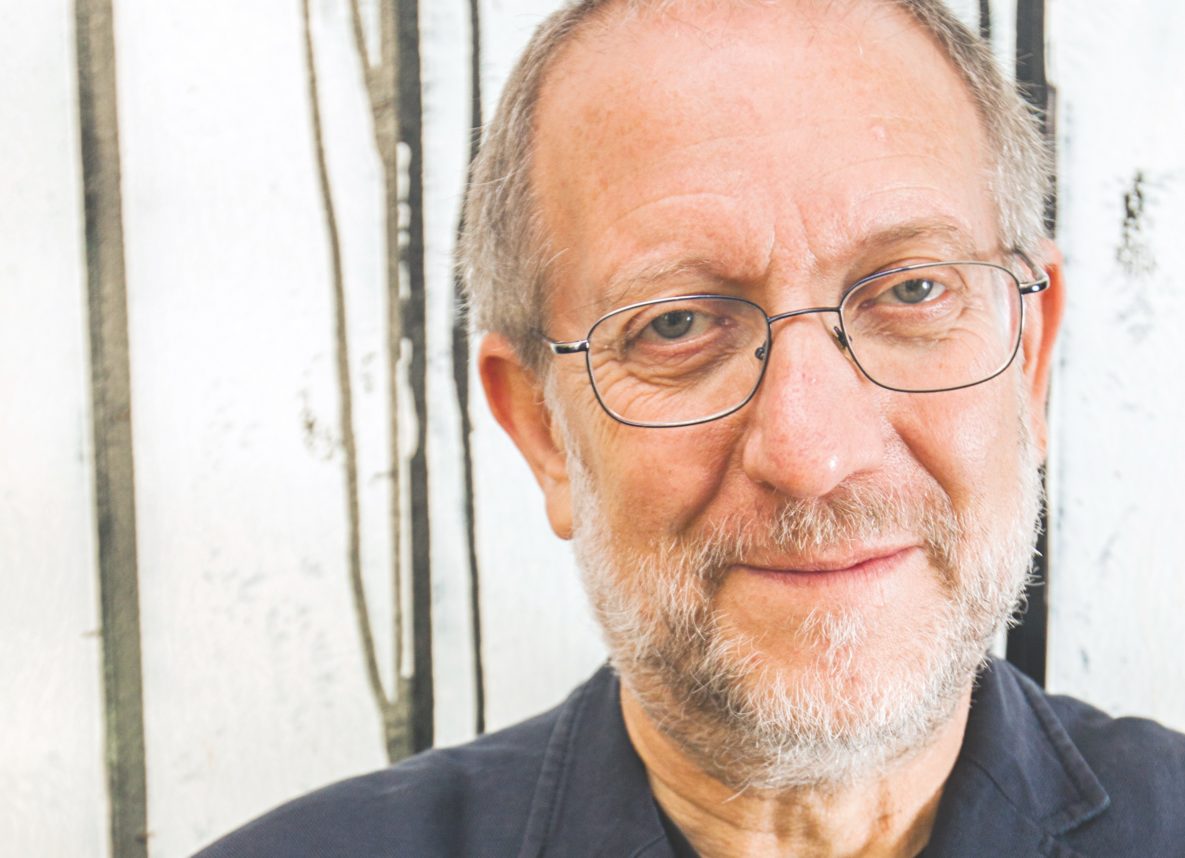
Orley Garber is the founder of Builder Bees.

Cultivating Sisterhood in a Safe Space for Those With Autism Read More »

Israeli Series ‘On the Spectrum’ Wins Big, U.S. Remake in the Works

“On the Spectrum,” the hit Israeli series about a trio of roommates with autism, swept the top categories at the 59th annual Monte Carlo TV Festival Awards, winning best comedy series, outstanding actor (Niv Majar) and outstanding actress (Naomi Levov). The honors follow the nine awards the series collected at the Israeli Television Academy Awards In March.

Originally produced for yesTV in Israel, “On the Spectrum” is being adapted for Amazon by “Friday Night Lights” and “Parenthood” creator Jason Katims. The cast includes MOTs Rick Glassman “(Undateable”) and Sosie Bacon (“13 Reasons Why’), who is Jewish on her mother Kyra Sedgwick’s side.

Autism is personal for Katims, whose son has Asperger’s syndrome. Several of the actors are on the spectrum as well.

Israeli Series ‘On the Spectrum’ Wins Big, U.S. Remake in the Works Read More »

Yossi Klein Halevi’s New Conversation

One of the most celebrated books in the Jewish world last year was my friend Yossi Klein Halevi’s “Letters to My Palestinian Neighbor,” described by Halevi as “a series of ten letters about Israel, Zionism and Jewish identity, written to an anonymous Palestinian who lives in the village across from my home in the French Hill neighborhood at the edge of Jerusalem, separated by the security wall that divides our two hills.”

The book achieved the rare feat of appealing to all sides of the ideological spectrum. The left-leaning Forward called it “Refreshingly honest. … In explaining Israel to the Palestinians, [Halevi] appeals to a certain ideal, a higher ambition, a sense of wonder and beauty.” The right-leaning Commentary called it “Powerful and eloquent. … Capturing the enduring Jewish love of the land of Israel and the magic as well as the dilemmas of Zionism, the letters are highly compelling. There is no one better suited to tell the story of Israel and the Jewish people than Halevi.”

“Halevi gives us an exclusive firsthand account of how these Palestinian responses found their way to him, and how they ended up in the new edition of the book.”

The magic of the book, however, was not simply in Halevi’s ability to recount his Jewish narrative. It was in how he simultaneously recognized a narrative that runs totally counter to his.

As Halevi writes in his cover story this week:

“For me, 1948 is the greatest moment of Jewish redemption since the biblical Exodus; for Palestinians, it is the shattering of their collective and personal existence. I blame the Arab and Palestinian leadership for initiating a war of destruction against our return home; they blame Zionism for supposedly intending, since its founding, to usurp their home.

“I consider Israel’s preemptive strike in the 1967 Six-Day War the ultimate expression of a nation’s right to self-defense; Palestinians consider it an act of aggression, a premeditated land grab. We disagree about almost every facet of this conflict, from Zionism’s origins to the most recent Gaza border riots.”

When I read words like “1948 is the greatest moment of Jewish redemption since the biblical Exodus,” I get Zionist goosebumps. When I read words like “for Palestinians, it is the shattering of their collective and personal existence,” it sobers me up.

This dance between the passionate assertion of one’s truth and the compassionate recognition of an opposite truth is virtually unheard of in the same book, let alone the same person. It is that dance, so artfully rendered by Halevi, that made “Letters” break through the polarized talking points of our stale communal conversation.

And yet, for all of its magic, the book was just a beginning. Halevi’s wish was to ignite responses from real Palestinian neighbors and begin a deeper and more complex conversation.

He got his wish.

In his cover story, Halevi gives us an exclusive firsthand account of how these Palestinian responses found their way to him, and how they ended up in the new edition of the book, which is being released this month.

In reaching out to his Palestinian neighbors, Halevi wanted to find “partners [who] would be willing to model a new kind of conversation, in which both sides accept the legitimacy of each other’s presence in the land. In the conversation I envisioned, neither narrative would attempt to displace the other but would, instead, maintain a painful coexistence.”

“The net effect of this new edition is a sense of humility. It reminds us that there are no easy answers. It honors uncertainty.” 

The Palestinian letters, he writes in the new edition, “express, in turn, deep anger, and passionate but respectful disagreement.” You will see examples of those sentiments and a few others in Halevi’s story.

Some of the responses are difficult to stomach for an Israel lover who hears them for the first time. Others are pleasantly surprising. They are all, in their own way, heart-wrenching. These are sincere voices, and it is to Halevi’s credit that he publishes them in full, even if he disagrees with plenty of it.

The net effect of this new edition is a sense of humility. It reminds us that there are no easy answers. It honors uncertainty. After reading this book, you realize the emptiness of easy answers like “End the Occupation,” which are utterly devoid of any humility or complexity. 

Halevi wants answers, too. He just knows that answers are not possible until both sides honestly confront the painful questions. His new edition is a conversation guide for how to get there.

Yossi Klein Halevi’s New Conversation Read More »

June 21, 2019


To see older versions of the paper click here. 

June 21, 2019 Read More »

Ocasio Cortez and Cheney Should Stop Abusing Holocaust for Political Gain

When it was revealed that undocumented immigrants at the southern United States border were being mass detained without trials, I, like many others, was absolutely horrified. The Trump administration’s tactics of intimidating, traumatizing and punishing migrants have been some of the most characteristically cruel policies of its reign.

Many people, Jewish and non-Jewish alike, began to point out how the United States, once again, was running concentration camps. My grandmother survived Auschwitz, where most of her family was murdered, so this is a sensitive subject for me. It’s charged enough when prominent people like Rep. Alexandria Ocasio Cortez bring up “concentration camp,” a term that refers uniquely to one of humanity’s greatest atrocities. 

Even worse, though, is when the conversation quickly descends into a despicable feud, where members of both the right and the left used actual crimes committed against my family to swipe at one another. 

To all the people with no direct ties to the Holocaust throwing political punches: Stop using my family’s murders as a talking point, claiming their graves as a platform to stand on in your Twitter arguments.

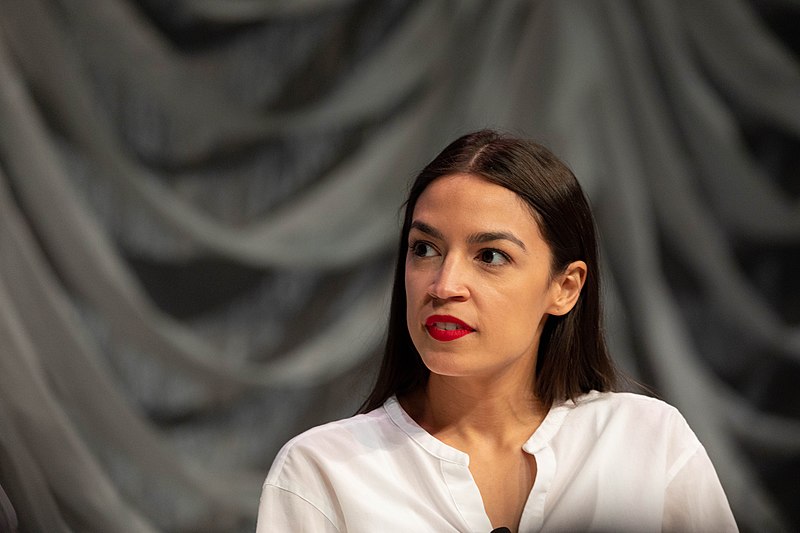
This week, both Ocasio Cortez and Liz Cheney are guilty of exploiting the Holocaust for political points. After declaring the detention centers were concentration camps, AOC told her live-stream watchers to “talk to the people that are concerned enough with humanity to say that ‘Never Again’ means something.”

But “never again” means nothing to Alexandria Ocasio Cortez, who consistently has taken a weak stance on anti-Semitism. Every time it’s brought up, she treats hatred of Jews as a distraction from “more important” problems. This March, the congresswoman implied that Jewish complaints about Ilhan Omar’s comments were distracting from other social issues.

“If we’re so concerned about implied tropes, why aren’t we concerned about this one?” she tweeted. “Where was the concern last week when 26 Dems voted for a GOP amendment to expand ICE powers rooted in the racist + false trope that Latino immigrants are more dangerous than US born citizens?”

When it comes to using the Holocaust as a talking point to promote her political goals, she’s all game. Actually defending Jews from another genocide? AOC’s got somewhere else to be. When asked point blank to condemn anti-Semitism from the Women’s March, she refused. While she talks about the cruelties on the Southern border, Cortez has been absolutely silent on the horrific 82 percent spike in anti-Semitic hate crimes in the city she represents. If she cares so much about learning from the Holocaust and protecting its lessons, why hasn’t she done anything about the one-third of its survivors living in poverty in America – many of whom reside in New York City?

While AOC only defiles the Holocaust as a springboard for other issues, Liz Cheney exploits it to silence her opponents.

“Please @AOC do us all a favor and spend just a few minutes learning some actual history. 6 million Jews were exterminated in the Holocaust,” Cheney tweeted. “You demean their memory and disgrace yourself with comments like this.” Here, Cheney uses the Holocaust to hush Ocasio Cortez about policies that indeed resemble the early days of the genocide. Concentration camps, where prisoners were not murdered, existed before the death camps that took six million Jewish lives. Cheney herself demonstrates a poor understanding of Holocaust history, and is only looking for ammo against her opponents, which is exactly what she sees anti-Semitism charges as.

“To all the people with no direct ties to the Holocaust throwing political punches: Stop using my family’s murders as a talking point.”

In the past few months, Cheney has nonstop attacked Rashida Tlaib, Ilhan Omar and the Democrats at large by accusing them of anti-Semitism. But when Neo-Nazis marched in the streets looking to complete the mission of the Holocaust, Cheney did not adequately stand up for Jews.

In fact, she stood by Donald Trump as he equated counter-protesters with white supremacists and said there were “good people on both sides.”

“I welcome President Trump’s comments at the White House this morning, and his determination to ensure the perpetrators are brought to justice,” she said in response. When the White House didn’t even acknowledge the murder of Jews in its Holocaust Remembrance Day statement, the Republican congresswoman didn’t bring up that six million of us were slaughtered. Why would she? It wouldn’t benefit her politically.

Science writer Erin Biba best describes the common depravity between Ocasio Cortez and Cheney.

“The only time I ever hear any of our politicians speak about Jews is when they’re using us as a tool and an example to prove a point unrelated to us. It’s disgusting,” Biba tweeted. “This goes for Jewish ‘allies’ too. If you have only expressed support for us after the mass shootings in our places of worship (remember those?) and then forgotten to include us when you made your cute Twitter list of oppressed people to protect then you’re disgusting too.”

As the mob debated over the semantics of whether it’s appropriate to use the term “concentration camps,” one thing became clear: This fight is not about Jews or the Holocaust. It’s about who gets to exploit them.

Ocasio Cortez and Cheney Should Stop Abusing Holocaust for Political Gain Read More »

6 Israeli Universities Ranked Among the World’s Top 1,000

JERUSALEM (JTA) — Six Israeli universities appeared on the list of the top 1,000 higher education institutions in the world.

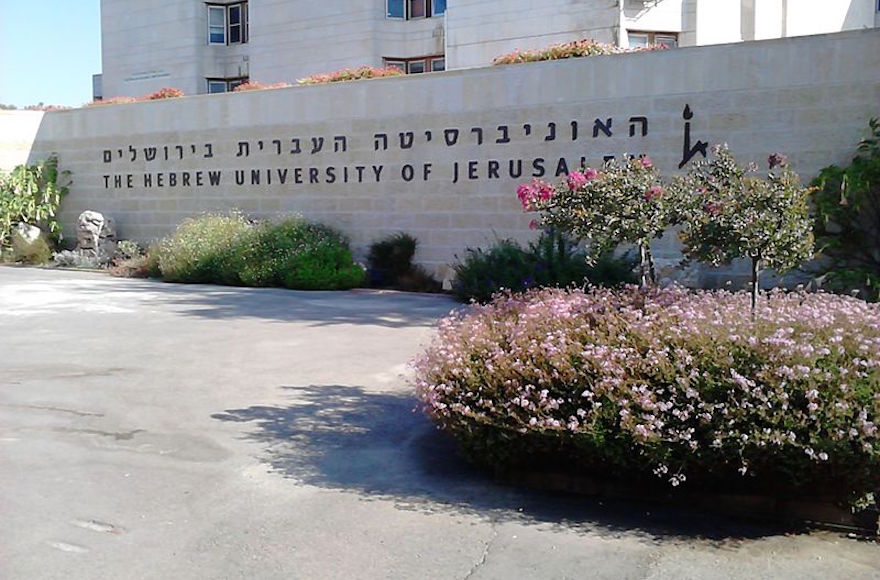
The Hebrew University of Jerusalem was ranked Israel’s best university in the QS World University Rankings for 2020, coming in at 162nd, eight spots lower than last year.

Tel Aviv University finished at 219th, rising 11 spots from last year, and The Technion-Israel Institute of Technology was 257th, falling 10 places. Ben-Gurion University finished at 419, falling from 407.

Others recognized were Bar-Ilan University in the 551-560 range, up from 601-650 last year, and the University of Haifa, repeating its 651-700 ranking from a year ago.

The top three universities on the list are the Massachusetts Institute of Technology, Stanford and Harvard.

The universities are evaluated based on academic reputation, employer reputation, faculty/student ratio, citations per faculty, international faculty ratio and international student ratio, according to the website.

6 Israeli Universities Ranked Among the World’s Top 1,000 Read More »

Jewish Woman, 79, Hit in Head with Metal Ball Outside of Paris Synagogue

(JTA) — A 79-year-old Jewish woman was wounded outside a Paris synagogue when she was hit by a metal ball hurled at her head.

The victim was taken to the hospital with cranial damage and loss of blood. Her condition is stable, France Bleu reported Wednesday, a day after the attack in the French capital’s 11th District.

Witnesses outside the synagogue said they did not see from where the ball was hurled or by whom.

On Monday, a bowl full of water was hurled, possibly from an elevated residential apartment, at worshippers leaving the same synagogue.

Jewish Woman, 79, Hit in Head with Metal Ball Outside of Paris Synagogue Read More »

Armed Guards Should Protect Every Synagogue, Jewish School and JCC, US Anti-Semitism Envoy Says

JERUSALEM (JTA) — Armed guards should be posted at every synagogue, Jewish school and Jewish community center across the United States, the country’s anti-Semitism envoy said.

“We live in a time of danger,” Elan Carr said during an interview Wednesday at the Global Coalition 4 Israel Conference. “Any synagogue, every JCC, should have guards. God willing, may they never be needed, but they should be there.”

Carr was interviewed live on stage by The Jerusalem Post’s editor-in-chief, Yaakov Katz.

Carr, 50, a Hebrew-speaking former Los Angeles prosecutor and a U.S. Army veteran who served in Iraq, was appointed in February to be the State Department’s envoy for anti-Semitism, filling a post that sat empty for two years despite protests from lawmakers and Jewish groups. The position, most recently held by Ira Forman under President Barack Obama, has existed since 2004.

Carr told the audience that President Donald Trump is fully committed to fighting anti-Semitism in the U.S. and around the world, according to The Jerusalem Post.

“The rhetoric of the president couldn’t be clearer. Every time the president speaks on this issue, he calls it [anti-Semitism] a vile poison that must be rooted out,” Carr said. He added that Trump has explicitly stated that “if you go after the Jews, we’re coming after you.”

He said the battle against anti-Semitism must be “a joint bipartisan fight.”

“All decent people — Jewish and not Jewish — need to do it together,” Carr said. “I don’t care what ideological clothing it wears, Jew hatred is Jew hatred, we need to fight it and oppose it and that’s got to be the message.”

Armed Guards Should Protect Every Synagogue, Jewish School and JCC, US Anti-Semitism Envoy Says Read More »

The Stray Cats’ Lee Rocker on His Music Career, leaving New York

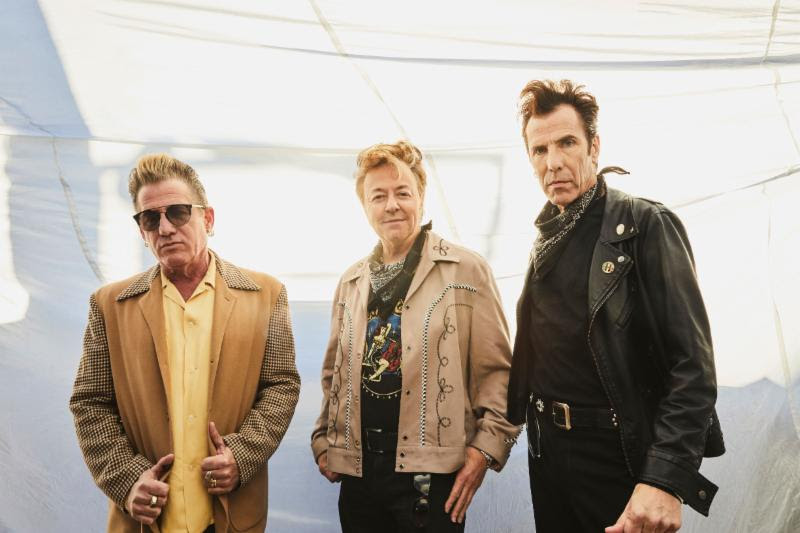
The Stray Cats is single-handedly the band that put rockabilly music back on the record charts in the early 1980s. Formed by guitarist/vocalist Brian Setzer, upright bass player Lee Rocker and drummer Slim Jim Phantom in the Long Island town of Massapequa, New York, the trio first found fame after moving to England. 40 years after starting up in 1979, the music of The Stray Cats – the massive hits, of course, include “Runaway Boys,” “Rock This Town,” “Stray Cat Strut” “(She’s) Sexy + 17,” and “I Won’t Stand In Your Way” – still sound fantastic and remain on classic rock radio playlists worldwide.

Last year, The Stray Cats regrouped to record a full-length album titled “40.” Made with producer Peter Collins (Rush, Bon Jovi, The Brian Setzer Orchestra) and engineer Vance Powell (Jack White, Chris Stapleton, Arctic Monkeys), “40” was recorded in Nashville and features a dozen original songs. The Stray Cats will be embarking on a world tour this summer in support of “40,” including an August 28th show at the Greek Theatre in Los Angeles.

An awesome factoid that not everyone realizes about The Stray Cats is the background of the earlier-mentioned bassist Lee Rocker. Rocker — born “Leon Drucker” — is the son of classical clarinetists Stanley Drucker (the retired principal clarinetist of the New York Philharmonic Orchestra) and Naomi Drucker (a famed music professor at this writer’s undergraduate alma mater, Hofstra University). Rocker’s touring and/or recording credits otherwise include George Harrison, Ringo Starr, Willie Nelson, Keith Richards and Creedence Clearwater Revival’s John Fogerty. Rocker also had the distinction of being nominated for a Grammy Award in 1982, the same year his father was, making the Druckers/Rockers the second father-son duo to be nominated for a Grammy in the same year.

I had the pleasure of speaking with Lee Rocker by phone about the past, present and future of his career. Transcribed below is a few minutes from our May 2019 chat, while my full interview with Rocker will air later this summer via the “Paltrocast With Darren Paltrowitz” podcast.

Jewish Journal: You first had your fame in the U.K. then it happened again in the States. At what point did you say, “I’m done with New York” and you moved west?


LR: There were a lot of years really of living like a rock and roll gypsy, you know? I mean, we were on tour most of the time for those early years, but probably summer of 1980 I moved to London and was there for a couple of years. I moved back to New York City then around ‘83 or ‘85 or so. I moved to the West Coast and actually now these last number of years, I’m so happy, I really split my time between New York and California.

JJ: Was the Long Island music scene supportive of you in the early days? Or was that leaving in response to it not being supportive?

LR: Well I didn’t know much about the scene out of Long Island. We would play a lot of different bars really and it definitely went well. That was the proving ground for the band. We’d be every Thursday at one club, every Friday at another, and it really gave me the confidence and the understanding of what was going on. That first Thursday somewhere, we would have 20 people. A week later there was 50. The following week there was a hundred and the week after that there’s a line down the block. That happened on Long Island at a couple of different clubs and at the same time we were doing it, we were playing Max’s Kansas City and CBGB, going into the city. That was a little bit more of a scene…

So I don’t know if that scene on Long Island was supportive or not but people absolutely were. And that really gave us the confidence to go, “You know what? This is happening, let’s try London.” That was a function of being in New York City mainly and people going to record shops. Back in those days, there was two or three rock and roll newspapers that came out weekly, the “Melody Maker,” the “New Musical Express”… They were all based out of London so it covered what was going on there… We wanted to be part of it and that’s where everything was really happening at that moment.

JJ: Did you start off as your first instrument on the upright bass?

LR: No, I’m from a family of musicians. My dad was the solo clarinetist with the New York Philharmonic and my mom was a clarinetist also and a teacher at Hofstra University. The only rule that we ever had growing up, and it wasn’t a house of a lot of discipline in a real house of artists, really was that you had to play an instrument, that you had to take lessons. So I started at about 7 years old playing cello and took lessons to read, write music and I did that from about 7 to around 12 or so, then switched to electric bass… A lot of the music that I loved was blues music and rockabilly. I was discovering it had an upright bass so I had to get myself one, and that’s really how that came together.

JJ: One of the amazing things to me about your career is that The Stray Cats is only one part of it. For example, the band that you and Jim had with Earl Slick, you had a couple of major label albums there. You played with two Beatles, etc. At the same time, people go, “Oh yeah that’s the guy from The Stray Cats.” I’m curious if there’s an accomplishment that you’re most proud of in your career.

LR: I’m overall really proud of what I’ve done. I always try to improve and learn more… What you say is true, I mean, The Stray Cats are a huge part of what I am and it’s the foundation was that’s where it started. I think for all three of us… That will be in the first sentence, the three words, separate obituaries, will be the words “Stray Cats.” But certainly I did two records with Earl Slick, Keith Richards was on it, Nicky Hopkins from the Stones. I played a lot with Carl Perkins, Scotty Moore — Elvis Presley’s original guitar player joined my band and toured with me and I recorded with him… I’ve got so much to be happy about.

Actually one of the things that I do now, we’re embarking on a lot of Stray Cats concerts and the new album, but in addition to that even throughout this year, I’m probably doing 40 performing arts centers with my other band… We have screens and video and stills and it’s a concert. But I also tell stories and talk about the reasons why I’m doing some songs… That’s a really cool thing that I’ve been enjoying and that’s what I’ve been mainly doing this last 2 or 3 years up until this monumental 40th anniversary.

JJ: Were you bar mitzvahed? Is there a memory that you can share related to that?

LR: Well I wasn’t, but I have to say culturally I’m pretty steeped in the culture and food and music and art.

JJ: So finally, any last words for the kids?

LR: Figure out what you love and just go for it and don’t compromise.


More on Lee Rocker and The Stray Cats can be found online.

The Stray Cats’ Lee Rocker on His Music Career, leaving New York Read More »

Why Are Progressives Using an Anti-Semitic Slur Coined by the KKK?

After a video of New York University student Leen Dweik confronting Chelsea Clinton at the Christchurch, New Zealand, massacre vigil went viral in February, thousands of people dug through Dweik’s Twitter feed. What did they find? A bunch of slurs. Dweik quickly apologized for dropping the racist “N” word and homophobic “F” word. However, no apology came for publicly calling someone the white supremacist phrase “Zio.”

While it might seem like an innocent abbreviation of Zionist, “Zio” is a derogatory code word for Jews invented by white supremacists. Despite its right-wing extremist roots, the term has been re-popularized by anti-Israel activists, normalizing violent anti-Semitic vernacular among self-identified progressives.

In 2017, the Chicago Dyke March tweeted, “Zio tears replenish my electrolytes!” after it was criticized for removing participants who waved rainbow flags adorned with a Star of David. In 2016, a chairman of the Oxford University Labour Club resigned over the constant use of the term among his peers. Just type the word into Twitter advanced search and you’ll find it casually used by pro-Palestinian advocates and white supremacists alike.

A history of hate taints the term “Zio.”

“The primary user of the term tends to be someone on the far right, typically a white supremacist,” Aryeh Tuchman, associate director of the Anti-Defamation League’s Center on Extremism, said. “David Duke is probably the best example. For him, it’s ‘Zio’ this and ‘Zio’ that.” Tuchman explained the term rose to prominence as a cover for right-wing anti-Semitism on social media.

“Zio” has been a way for even someone as openly hateful as Duke to avoid being de-platformed from social media. According to the Israeli newspaper Haaretz, by July 2017, the former KKK Grand Wizard had used “Zio” 359 times since January 2012 in episode radio descriptions. If you searched for the term on his website, you’d get 264 pages of results. He even said “Zios” caused the Sandy Hook shooting. Today, a Google search for the term yields approximately 20,100 results.

“‘Zio’ has been used by people who are hardened and overt anti-Semites as a way of attacking Jews while maintaining what they think is plausible deniability, and as a result, it has become a slur in some communities.” — Aryeh Tuchman, associate director of the Anti-Defamation League’s Center on Extremism

“For the people on the extreme right and to racists, ‘Zio’ is a way of making clear to the readers or listeners that they are talking about Jews, without having to go out and say they are talking about Jews,” Tuchman said.  “That can be particularly helpful when they are speaking in a forum such as Twitter or Facebook where overt anti-Jewish comments might get taken down.” 

But what does it mean when “Zio” is used by left-wing thinkers such as Dweik, who criticize Israel and paint the Jewish state or its supporters as white supremacists themselves?

“It doesn’t necessarily have the anti-Semitic connotation that it might have from someone on the extreme right who is using it, unless they are using it as a way of accomplishing what the extreme right also tries to do, which is to mask their anti-Semitism,” Tuchman explained, noting how if something is seen as objectively anti-Semitic on social media, the platform may ban it.

However, the term serves as a useful code word for tweeting attacks on Jews (that won’t get you suspended from Twitter) for any anti-Semite, regardless of the side of the aisle from which they hurl their hate. Nothing encapsulates the portion of the anti-Israel movement that is virulently anti-Jewish more than their use of the term “Zio,” which offers “plausible deniability” for anti-Zionists to say they are criticizing pro-Israel thinkers — even if they, like Duke, truly mean to demonize Jews.

No one can detect a person’s true intent, which has left many who see covert anti-Semitism in activist spaces unsure whether they need to combat the bigotry or educate well-meaning voices on it. Whether they are faced with the United Kingdom’s Labour Party or the Chicago Dyke March, Jews find themselves repeatedly asking: Are advocates using anti-Semitic tropes because they are malevolent or ignorant?

When an activist group uses the term “Zio,” it could demonstrate its leaders are not familiar with anti-Semitism enough to avoid borrowing the language of the KKK, highlighting a blind spot. This is what the Chicago Dyke March claimed when it took down its tweet and posted, “Sorry y’all! Definitely didn’t know the violent history of the term. We meant Zionist/white tears replenish our electrolytes.”

Even worse, the offender could know but not care. There is a possibility that progressives have adopted the extremist anti-Semitism of proud racists.

The rise of “Zio” among left-wing discussions could be a symptom of another ignorance: the Zionist movement itself.

According to Tuchman, “Zio” is “increasingly used by people on the left in the progressive world where Zionist is a pejorative and Zionism is being viewed as an evil, racist, genocidal ideology. So to call someone a ‘Zionist’ is becoming one of the worst things you can call someone if you’re a member of one of those movements.”

This is symptomatic of a movement to falsely malign Zionism as an “evil, racist and genocidal ideology.” Rather than having a one size fits all idea of what the state of Israel should look and act like, Zionists simply support the self-determination of the Jewish people in their indigenous homeland. They have a wide spectrum of ideas regarding Palestinian self-determination, Israeli politics and the Israeli-Palestinian conflict. However, many anti-Semites find the concept of Jews having any power inherently sinister and threatening. It is this paranoia that drives conspiracy theories that Jews control the weather, banks, government and media, and the belief that we have supernatural abilities to hypnotize our victims. There is no bigger expression of Jewish power than Jews having their own state.

Those who hurl “Zio” around in conversations reduce a complex movement into a monolithic caricature.

“No one can detect a person’s true intent, which has left many who see covert anti-Semitism in activist spaces unsure whether they need to combat the bigotry or educate well-meaning voices on it.”

“You can talk about Zionism with more nuance or less nuance. Not even finishing the word is about as little nuance as you can possibly get,” Tuchman said.

Nuance aside, at the end of the day, intent doesn’t matter — consequences do. Even if someone typed out “Zio” rather than the full term “Zionist” out of pure laziness, that person is normalizing extremism.

“ ‘Zio’ has been used by people who are hardened and overt anti-Semites as a way of attacking Jews while maintaining what they think is plausible deniability, and as a result, it has become a slur in some communities,” Tuchman said. “The use of the term … may make the ground fertile for the dissemination of ideas from the extreme right into other populations and movements,” he added, noting that the popularity of the term in left-wing circles is creating shared nomenclature with the alt-right. “If I’m a progressive, and I become accustomed to using the term ‘Zio’ as prefix, perhaps I will be more inclined to read a tweet from David Duke with more sympathy, because he is speaking my language,” he said.

Just as we shamed Dweik for using the “N” word and “F” word — even in jest — the public must make “Zio” socially unacceptable. If we do not, progressives will be normalizing not just anti-Semitism, but white supremacy.


Ariel Sobel is a screenwriter, filmmaker and activist, and won the 2019 Bluecat Screenplay Competition. Find more of her work on her website.

Why Are Progressives Using an Anti-Semitic Slur Coined by the KKK? Read More »