The 21st century is a time when man should be at his greatest level of stability and security.
We have conquered most of the world’s diseases — polio, measles, mumps, leprosy, bubonic plague and most bacterial infections. And yet many diseases in the world still haven’t been cured, such as cancer and AIDS, and antibiotics are now starting to lose their effectiveness. We also have the latest challenge of paying for all the pharmaceuticals available to us.
Technologies provide us with so many amenities and comforts — yet we are running out of affordable energy, and our environment might be suffering through changing climates.
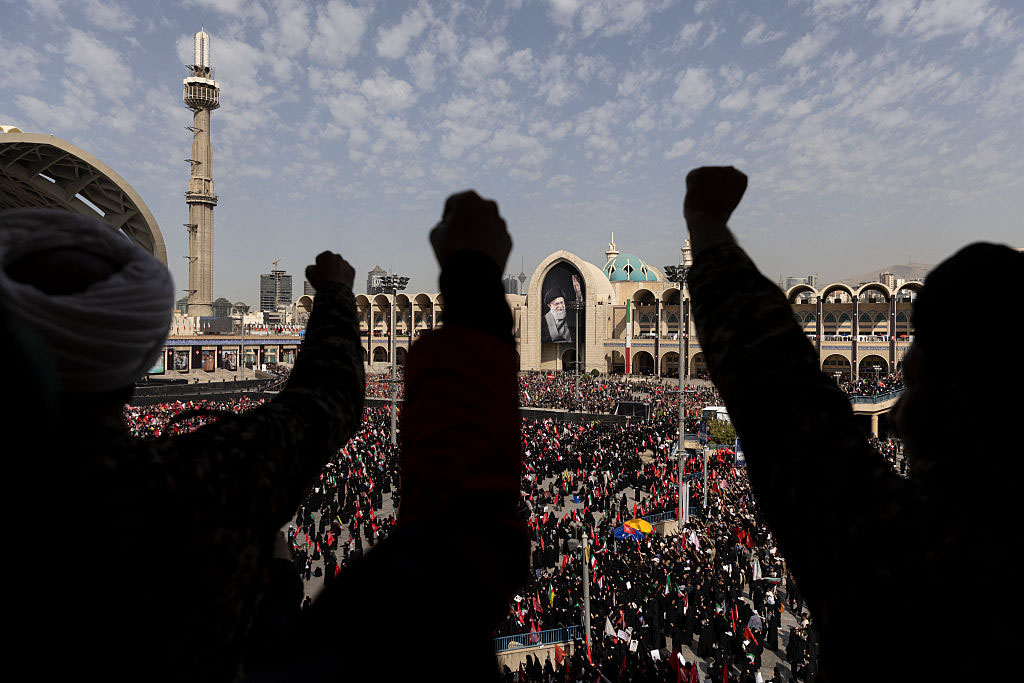
We have advanced in geopolitics and the development of societies in all parts of the world. And yet whole regions are politically unstable and terrorism is a constant looming threat, especially after 9/11. There is no greater uncertainty than in the Middle East, where Iran’s prospects of acquiring nuclear weapons increase daily.
There is more luxury offered to modern man than ever before. And yet everyone has to work harder to acquire and maintain those luxuries, and fewer and fewer people have the kind of job security that used to come with working for an American company a generation ago.
The great paradox of human civilization is that the more mankind works on ensuring for itself stability and security, the more new causes of instability and insecurity emerge.
It would seem this is the way God wants it: When man succeeds in building the Tower of Babel and living in it securely, he forgets about God in heaven and becomes his own god. There must always be uncertainty and insecurity in order for the human being to place his faith in God.
Insecurity reminds me that I haven’t yet arrived at my destination. If all illness is cured, all wars are eradicated, all financial dilemmas are solved, there’s nothing more for man to do or to aspire toward. God’s mandate for mankind in a pre-Messianic world is this: Remember that you haven’t arrived yet, and that you must keep on working to perfect your world.
This is the message of Sukkot. God told us to re-create the experience not of exodus, not of liberation, not of revelation, but of traveling through the desert, of being on a journey:
“So that your future generations will know that I placed you in booths (sukkot) when I took you out of Egypt …” (Leviticus 23:43). We lived in these temporary dwellings precisely because we weren’t settled and hadn’t yet arrived at the Promised Land.
Particularly during this time of year, in the fall, it’s agricultural man — not modern man — who has the greatest sense of security: He has all his grain, his food is stocked, and he is ready to spend the winter in his home under warm shelter. He has also just emerged with judgment from the High Holy Days season and is confident all will be well in the coming year. That is why the message for this holiday is: Sit in the sukkah and re-enact the process of journeying to a destination. Realize that there’s a lot more that we must do to reach the Promised Land.
At the same time, rest assured that during this time of flux and uncertainty, God is there to protect you, to be your safety net. You haven’t made it yet, but God will prevent you from failing.
In this time of great uncertainty, I can sit in the sukkah and get mechaya (relief) out of realizing that we are in a very unstable time because we are still traveling; there may even be more bumps on the road. But I also have confidence that “God will not forsake His nation” (Psalms 94:14).
Our job now is to enjoy the journey and all the uncertainty that comes along with it.
When the Israelites embarked on their exodus journey, they knew the future was uncertain. They had no way of foreseeing the multiple problems along their journey, or that only their children would ever see the Promised Land. But they were confident that as long as God’s protection was above them, all would be all right in the end. That is the story of our people for centuries — things may be unstable, but they will all work out in the end, either for ourselves or our children.
As the saying goes: It’s not the destination, it’s the journey. That’s enough of a reason to rejoice on Sukkot. May we merit seeing the end of our journey, speedily in our days!
Rabbi N. Daniel Korobkin is rosh kehillah of Yavneh Hebrew Academy, provides synagogue services for the Orthodox Union and is a community mohel.