In 2007, Tisha B’Av fell on the evening of July 23, which happens to be Alan’s birthday.
My extended family, including my grandparents, uncles, aunts and cousins were in Israel for the upcoming wedding of my brother Danny and sister-in-law Lemor. My uncle graciously hosted all of us for a very delicious pre-fast meal at his home in Yemin Moshe.
Following my family’s Babylonian tradition, my mother made kitchri, a fabulously aromatic cumin and garlic infused rice and lentil dish topped with crispy, caramelized onions. (Recipe can be found in our article: https://jewishjournal.com/culture/food/319193/the-kingly-roots-of-kitchri-lentils-with-love/.)
Along with the kitchri, there was fish and pasta and a big bowl of fresh, bright Israeli salad. But there was no birthday cake for Alan!
After dinner, Alan and I went to the Kotel (Western Wall). We descended the steps onto the plaza of the Kotel into a scene we had never seen before. The area was filled with young “Carlebach” types, dressed in a bohemian hippie style, sitting on the ground in large circles. Young men strummed on guitars, accompanied by the quiet singing of their companions. As the sultry summer sky slowly darkened, crowds of Jews prayed at the Kotel, dwarfed by the immense gleaming white boulders of the Wall. The palpable spirituality in the air left a deep, lasting impression on Alan and me.
It’s hard to believe that 18 years have passed since that day and that we are about to commemorate another Tisha b’Av. Every Tisha b’Av, we remember the destruction of the Holy Temple in Jerusalem. First, Solomon’s Temple at the hands of Nebuchadnezzar and the Babylonians, then the Second Temple (rebuilt by Zerubbabel and enhanced by Herod the Great) at the hands of the Romans. We remember our long exile from our biblical homeland and the many tragic events, expulsions and suffering experienced on this day throughout Jewish history. We remember and we mourn.
During the nine days leading up to the fast of Tisha b’Av, it is traditional to eat lentils. Lentils are a mourning food because they are flat and perfectly round, symbolizing the cyclical nature of life and death. But lentils also symbolize fertility and rebirth. Amid the utter sadness of Tisha B’Av, the Jewish people have a glimmer of hope, praying for redemption from Exile with the arrival of Moshiach.
By the way, this year Alan’s birthday came at a more auspicious time on the Jewish calendar, so we celebrated merrily with a festive dinner at Lenny’s Casita and homemade chocolate birthday cake!
—Sharon
Lentils originated thousands of years ago in India. From there the plant was domesticated in the Fertile Crescent of the Near East. Along with barley, lentils were a significant ingredient of the Biblical diet.
Nowadays, lentils play an important role in Indian, Ethiopian, Middle Eastern and Mediterranean cuisines. They are an incredible (inexpensive) source of protein, vitamins and minerals.
My mother always served a delicately seasoned brown lentil soup before the fast of Tisha b’Av. It’s such a family favorite that I serve it whenever we feel like a hearty, nutritious soup.
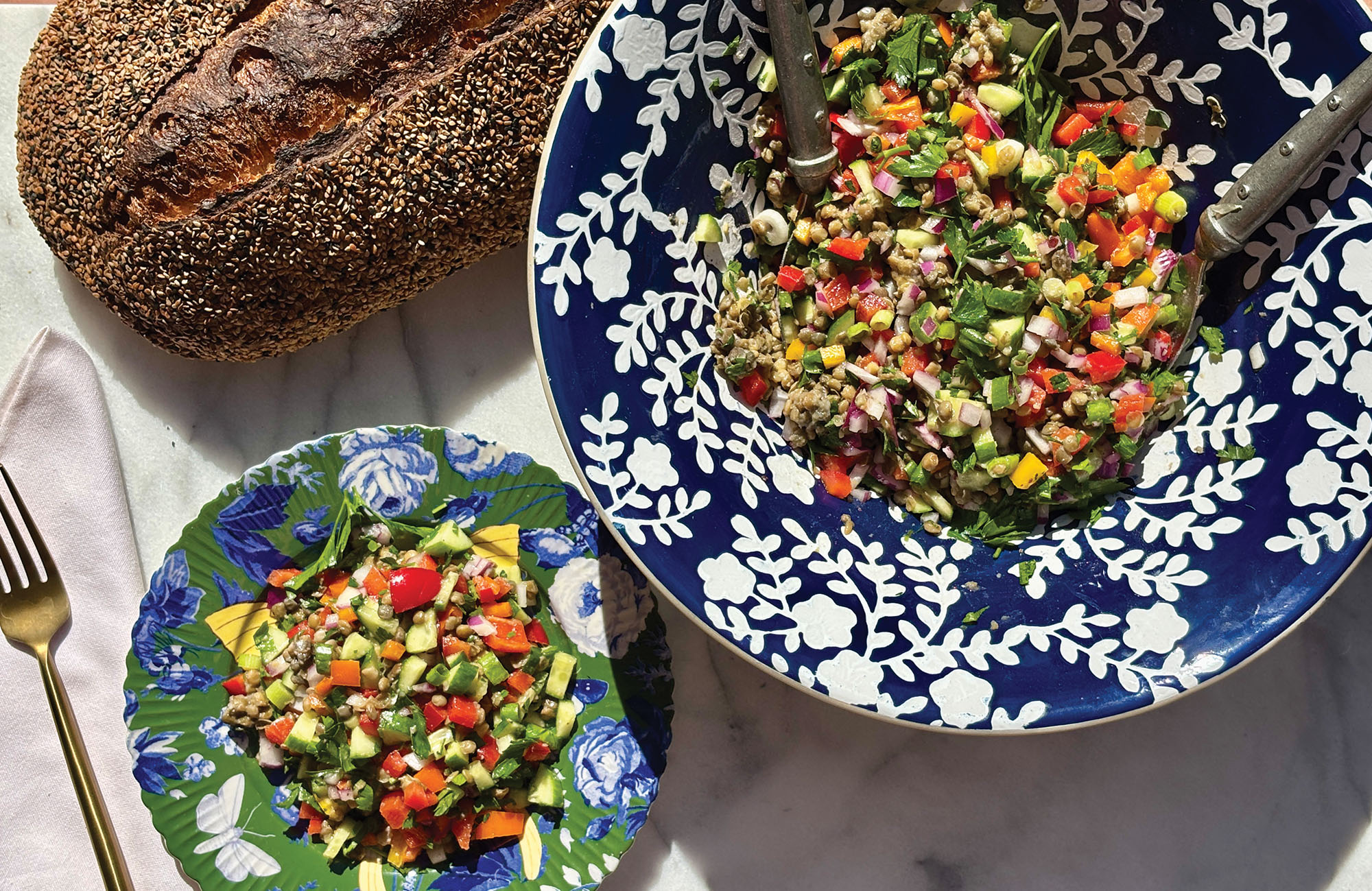
For this week’s recipe, Sharon and I wanted to inspire you with a salad that you will want to serve all summer long. This Israeli lentil salad is hearty, healthy and full of refreshing flavor. The ingredients include soft, nutty, earthy brown lentils. Fresh, mild green onion and bold and zesty sweet purple onion, along with sweet crunchy pops of red and orange peppers, crispy Persian cucumber and light, herbaceous Italian parsley.
The lemon vinaigrette is made with honey, Dijon mustard and olive oil, which adds a bright, tangy, creamy element to the salad.
You’re going to want this salad on repeat.
—Rachel
Israeli Lentil Salad
Dressing
Juice of two lemons
1 tsp Dijon mustard
1 tsp honey
1 tsp sumac
Salt and pepper, to taste
1/4 cup extra virgin olive oil
In a small bowl or jar, whisk together all the ingredients.
2 cups cooked brown lentils.
1 small purple onion, finely chopped
Four stalks of green onion, finely chopped
1/2 bunch Italian parsley, finely chopped
1 red pepper, diced
1 orange pepper, diced
3 Persian cucumbers, diced
Place all the ingredients in a serving bowl.
Toss with dressing just before serving.
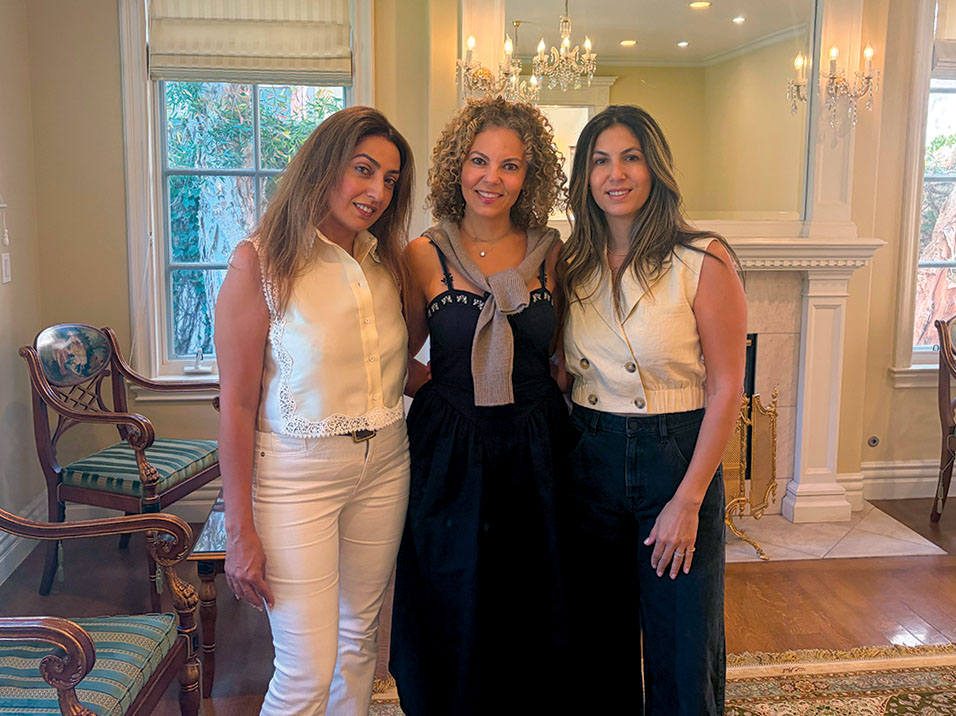
Sharon Gomperts and Rachel Emquies Sheff have been friends since high school. The Sephardic Spice Girls project has grown from their collaboration on events for the Sephardic Educational Center in Jerusalem. Follow them
on Instagram @sephardicspicegirls and on Facebook at Sephardic Spice SEC Food. Website sephardicspicegirls.com/full-recipes.