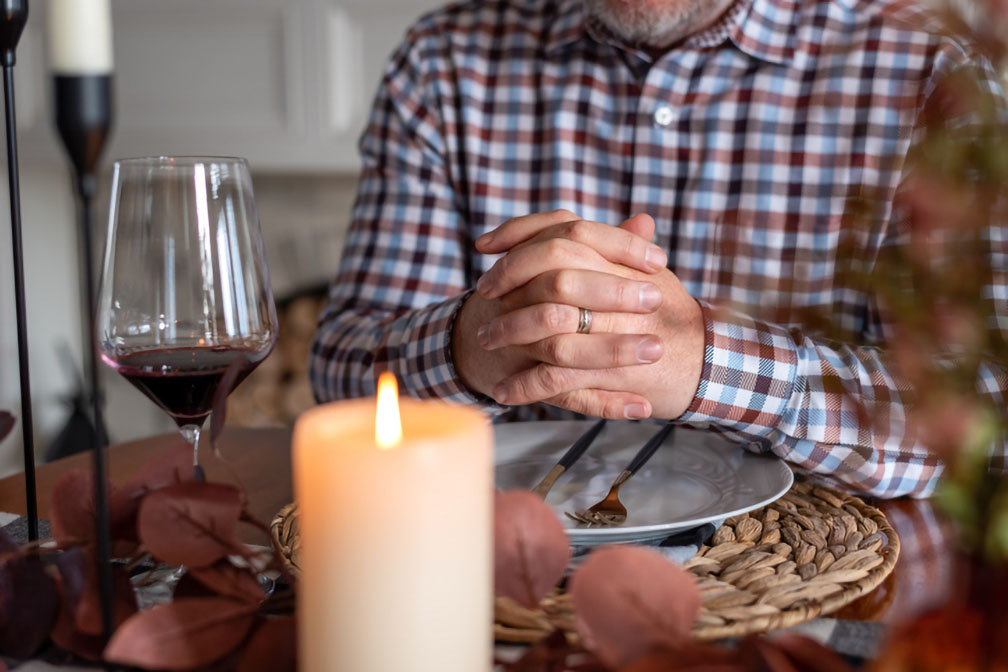
Many of us will go around our Thanksgiving tables tomorrow with expressions of gratitude. It’s the American day of thanks. It’s what we’re expected to do.
Gratitude itself is one of life’s great virtues, one that social research has found connects directly to happiness and well-being.
Indeed, we all have something to be grateful for. No matter how bad things get, no matter how much we’re struggling, we know things can always be worse.
We can always find something—something—to be grateful for.
It’s the silver lining theory of life. The glass half full. Looking at the bright side. The cliches are endless.
But what if you’re not in a thankful mood this year? Should you feel obligated to show gratitude just because it’s an American tradition?
And should you feel guilty if you don’t?
It’s a little like going to a New Year’s Eve party and feeling obligated to show you’re having a great time, even if you’re not.
If everyone at your Thanksgiving table expresses gratitude for one thing or another, will you rain on their parade by abstaining and pleading the fifth?
Gratitude has become so ingrained as a virtue that the lack of gratitude— what some may call ingratitude— is seen as an unsavory character trait. How ungrateful of you! How entitled!
And yet, we live in a society where individual choice is enshrined as a sacred right. Should we not allow for that individuality, even if it may intrude with a beautiful annual tradition?
What if someone has lost a close friend or family member recently and can’t bring themselves to express any feeling of gratitude?
Or what if someone is so dismayed by the state of the world they don’t want to “fake” feeling grateful?
Or what if someone can’t stop thinking about the many in our nation who go hungry and can’t afford a table of plenty?
Sure, they may all have things to be grateful for, but maybe they’re just not in the mood to express them.
“Trying to force gratitude often creates negative emotions,” psychologist Jennifer Gerlach writes in Psychology Today. “Sometimes, we don’t feel thankful. Individuals experiencing depression, grief or trauma may find it particularly hard to access this.”
Instead of a binary choice of yes or no to gratitude on a day like Thanksgiving, Gerlach offers a mid-point around the idea of appreciation.
“I’ve found appreciation to be a more helpful construct,” she writes. “I think of appreciation as opening ourselves up to enjoy all the good there is to be enjoyed. A gratitude list could certainly be part of that.
“But appreciation is more. It’s facing reality, noting both the pleasant and the unpleasant. It also encompasses mindfulness, as we have to be in the present moment to appreciate it.”
It’s true that adding some “bad” to the good doesn’t really fit the unabashed cheerfulness we like to bring to Thanksgiving. After all, we do enough noting of bad stuff during the year—why not devote one day to only the good stuff we’re grateful for?
Well, because of human nature. Because a mood is a hard thing to fake. Because some people are just not inclined to suppress their sentiments.
Showing appreciation for the pleasant and the unpleasant, and being mindful of both, may break with the pure Thanksgiving tradition. But it may also encourage those who don’t feel grateful to engage honestly with the spirit of Thanksgiving– without pleading the fifth.
And that’s something to be thankful for.
Happy Thanksgiving appreciation.