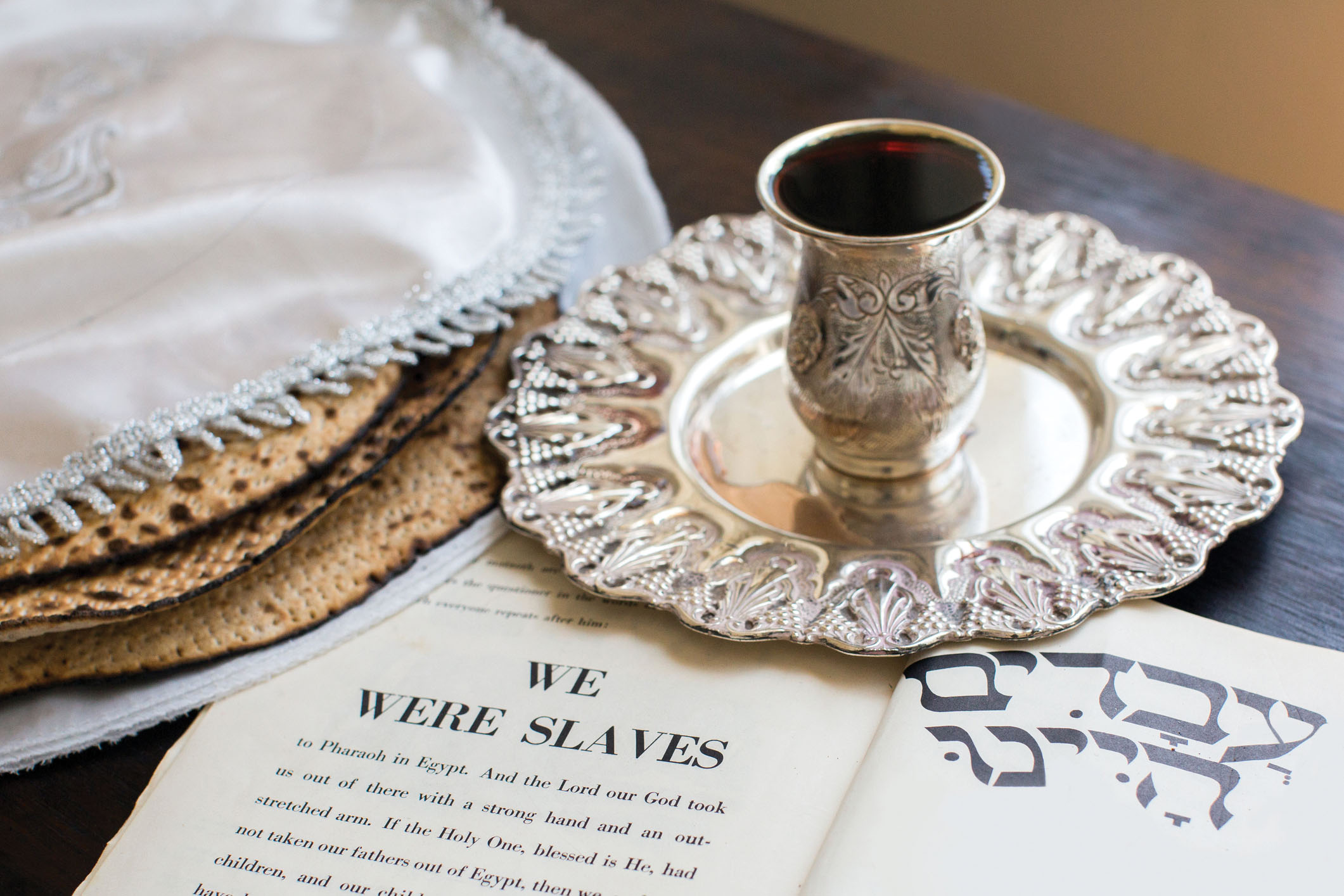
The Passover seder is the oldest of Jewish traditions. The core, including the Four Questions, was recited in Israel more than 2000 years ago, with numerous references that go back centuries before. Reclining around the table as free men and women, we recall and reenact the events, including the plagues that forced Pharaoh to release the Israelites, and the triumphal march from slavery to freedom, clenched fists and carrying the unleavened dough. As Ben-Gurion once remarked, the Jewish people know the menu of the original Passover meal in Egypt some 4000 years ago.
The Haggadah makes clear that the Exodus was not an end in itself, but rather the first step in the return to the Land of Israel, where the Israelites would live as a free people. All journeys require both a departure and an arrival, and the territorial and political end-point was and continues to be essential to the story. Forty years after leaving Egypt, the next generation, led by Joshua, crossed the Jordan River to resettle the land that their ancestors had left. In the decades and centuries that followed, the Hebrews, as they were sometimes called, developed a rich language and the accompanying cultural treasures anchored in the Land and centered in Jerusalem (known as Zion in the Bible) that remain the basis for Jewish identity today.
In the beginning of the seder, while holding up and pointing to the matzah, we declare: “This is the bread of oppression our fathers ate in the land of Egypt. … Now we are here; next year in the land of Israel. Now we are slaves; next year we shall be free.” This paragraph also references the exile — a form of slavery — following the Roman conquest, and the determination to return to the homeland as free people “next year.” This is the essence of Zionism, and the enormous privilege we have — after 2000 years — of being able to fulfill this pledge as a sovereign nation in directing our own destiny, despite the immense pain that we have endured.
This theme returns throughout the Haggadah. In the response to the “Four Sons,” the text summarizes the history recorded in the Torah (also known as the Hebrew Bible), based on God’s promise to Abraham that after his descendants are forced to leave the land and into slavery, they will be freed and return. And in “dayenu” (it would have been enough for us), we sing: “Had He given us the Torah without bringing us to the land of Israel, that would have been enough for us.” Shortly after, we recite: “Generation by generation, each person must see himself as if he himself had come out of Egypt. … He took us out of there, to bring us to the land.”
The Haggadah is a retelling of the Book of Exodus. In the first encounter with Moses at the Burning Bush, God declares: “I have come down to rescue them from the Egyptians and to bring them out of that land to a good and spacious land, a land flowing with milk and honey … I will bring you into the land which I swore to give to Abraham, Isaac, and Jacob and I will give it to you for a possession.” As the plot unfolds, step by step, this promise is transformed from words to deeds.
Four millennia separate today’s Jews from these events, and throughout this time and despite 2000 years of powerless exile, Jews everywhere continued to see the Land of Israel – the “Promised Land” – as our home. At times, a large number of Jews were able to return, although without sovereignty and subject to foreign and often hostile powers. Thus, Zionism has always been an essential component of Jewish identity. Theodor Herzl’s political Zionist movement was not an entirely new invention, but the modern expression of the ancient connection between the Jewish people and Land. Millions of Jews throughout the world agreed, seeing the restoration of national sovereignty as a modern exodus.
As the seder and the Haggadah make clear, no amount of propaganda, disinformation and brainwashing can change or erase the fundamental connection between the Jewish people and the Land of Israel. The departure from slavery and the arrival in the Land of Israel are inseparable aspects of the same journey. When we conclude our seders by singing “Next year in rebuilt Jerusalem,” we are declaring to all the determination to maintain and nourish this hard-won freedom.
Gerald M. Steinberg is emeritus professor of political studies at Bar Ilan University, founder and president of NGO Monitor and author of “Menachem Begin and the Israel-Egypt Peace Process: Between Ideology and Political Realism.” Translations from the Hebrew text courtesy of Sepharia.org