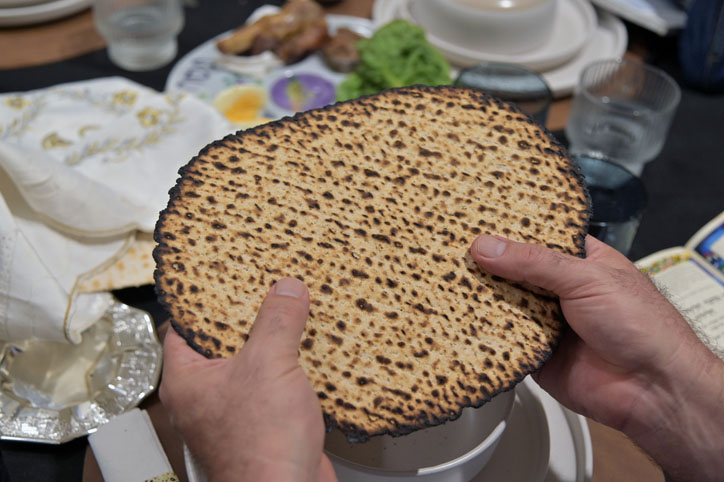
The word Seder means ‘Order.’ Funny, you wouldn’t think so if you’ve been to one.
This dinner is so all over the place, you need a manual just to know what to do next. We pretend to invite guests after everyone’s already sitting at the table. We nibble on celery. Then we pick up the bread, break it, cover it, hide it, talk about it—basically everything but eat it. We ask questions highlighting the strangeness of it all, then deliberately avoid straightforward answers. The main course? Two hours after the appetizer. Then, once the meal’s over, we eat some more bread and invite some more imaginary guests.
None of this is by accident. The Seder is a ritual of induced dissonance. It trains us to sit inside the discomfort of anticipation and contradiction. This is the bread of affliction; this is the bread of redemption. This year we are slaves; tonight we are free.
In truth, this nature of the Seder reflects one of Passover’s key themes. The Exodus from Egypt was not a predictable event. It was a breakdown of the natural, historical, and political order; a jailbreak from the normal progression of cause and effect. The Hebrew word for “Pass-over,” Pesach—“to skip”—suggests this explicitly.
Today, we can all feel that same breakdown of predictability just by checking the news. But some, curiously, are not losing faith amidst the disorder of our times. They’re finding it.
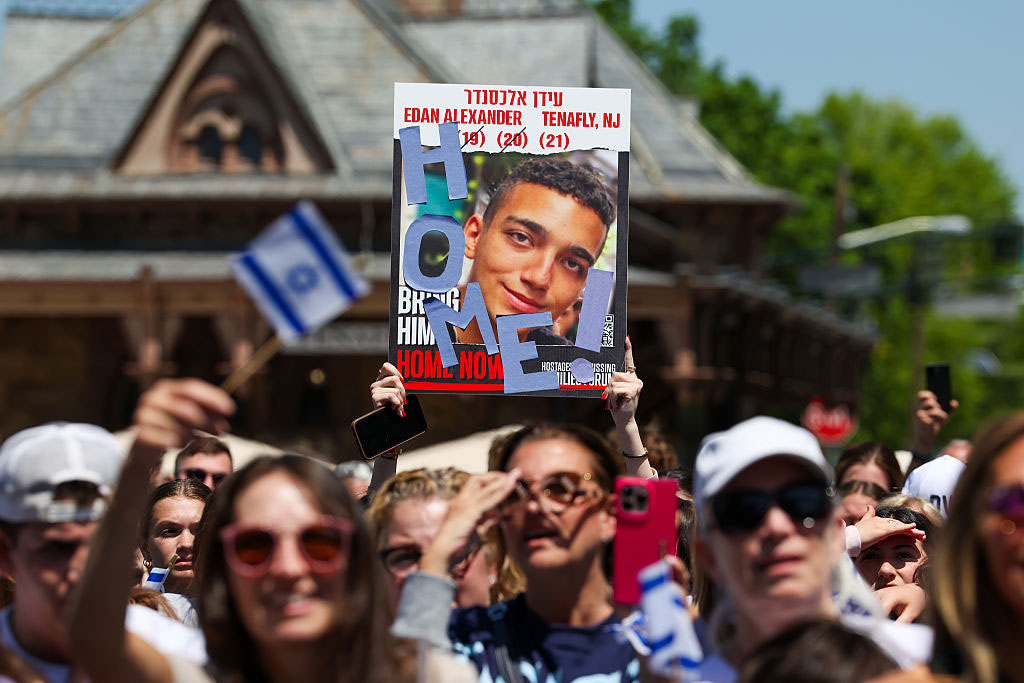
Since October 7, I’ve had nonstop conversations with the grad students on campus I work with who are blindsided by the breakdown of moral logic around the world. They see clarity dissolving around them: How can my classmates view innocent babies as the villains and terrorists as the heroes?
And yet, the very experience of that dissonance has resulted in a well-documented “surge” of Jewish engagement, bringing countless individuals to explore and grapple with their heritage and faith—often for the first time.
A renowned tech legend recently told me he was a staunch atheist for 30 years—until the past year. He witnessed numerous events in a row that he felt were, in his words, “of Biblical magnitude,” breaking all the rules of probability, logic, and history. (Why didn’t those missiles hit? How did they pull off those pagers? Why didn’t those buses explode?) He too started to rethink everything, including those old stories he used to dismiss.
Passover has been reiterating this message to us for millennia. In the shadow of unbearable suffering, God performs a series of miracles that we can’t possibly explain—anchoring the Jewish story in those moments that reason alone could never carry.
And perhaps that’s precisely why it’s called the Seder. There is an order, particularly when it doesn’t appear so. God doesn’t walk the line, but leaps over it. And so we, too, jump through the Matrix, out of the predictable rhythm of slavery; following God into the desert, the great Unknown.
What comes next is anyone’s guess. Like the Seder, the Jewish story has never followed a straight path—it leaps, stumbles, endures. Somehow, we follow: through questions, through fire and water, always anticipating redemption. And always ending with the same words: Next year in Jerusalem.
Matthew Rosenberg is Senior Rabbi and Chief Operating Officer at JGO: The Jewish Grad Organization, which provides Jewish programming at 150 graduate school campuses across North America. He previously practiced corporate law and taught at Georgetown University Law Center. He lives in Los Angeles with his family.