fbpx

Hagar and the Hegira: A Historical View

[additional-authors]
November 6, 2025
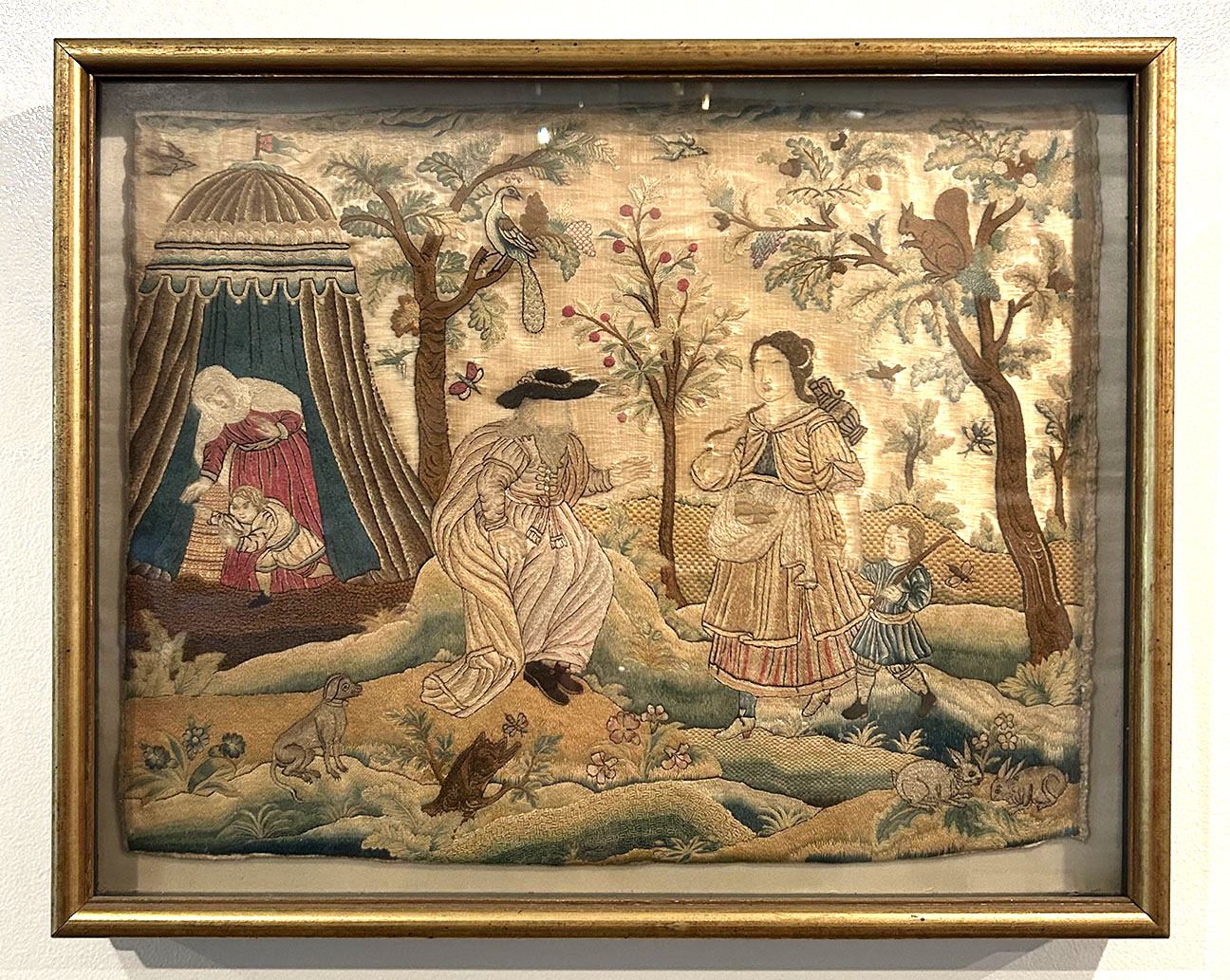
A mid-17th-century example of English biblical stumpwork. The image depicts Abraham dismissing Hagar and Ishmael while Sarah and Isaac look out from their tent. Artwork from collection of Linda Hepner.

Linking Jews to Muslims like the pork forbidden
to both, is the strange fact that calendars of both begin
with an exodus, to be of an oppression ridden,
the rationale of starting dates connecting Abraham’s contrasting  kin.

Israel’s first month recalls an exodus that was Israelite,
just as the Muslim calendar starts with the hegira,
when Muhammad escaped from the might
of Mecca, of which he first was less an admirer.

He fled to Medina; in Mecca, so we’re told, not treated right,
as Hagar was not, by her aged mistress abused.
Abuse by Sarah forced Hagar to escape
from Abram’s house in Canaan, which cannot now be excused
by lack of evidence such as a videotape.

The Torah’s language links Israel in Egypt to Hagar’s oppression,
Hagar oppressed, like Israelite slaves when Sarah oppressed her…
not only slavery Hagar’s profession,
but sexual servitude, like for King Ahasuerus in his harem… Esther.

Perhaps with some originality this poem states
that calendars of both Jews and Muslims are both based
on the release from oppression by the founders of their fates
which founders of their nations historically faced.


Gershon Hepner is a poet who has written over 25,000 poems on subjects ranging from music to literature, politics to Torah. He grew up in England and moved to Los Angeles in 1976. Using his varied interests and experiences, he has authored dozens of papers in medical and academic journals, and authored “Legal Friction: Law, Narrative, and Identity Politics in Biblical Israel.” He can be reached at gershonhepner@gmail.com.


Did you enjoy this article?
You'll love our roundtable.

What Does Faith Have to Do with Ethics?

One by one, the Ten Commandments teach us how we bring God into our daily lives. Each additional commandment encourages us to climb further up the ladder of faith.

Craving Kitsch

Everywhere I turned was another kiosk selling either sticky sweet things or tourist trinkets. I was in tacky heaven and, somehow, it felt great.

Print Issue: Here He Is | February 6, 2026

Former Columbia Professor Shai Davidai became an unlikely Israel activist after Oct. 7, 2023. Now he has started “Here I Am” for Zionist activists who “choose action over outrage and substance over performance.”

The Charm of Shabbat Chamin

Ever since I was a small child, Dafina has been a favorite food. This Moroccan hamim (Shabbat stew) is the ultimate comfort food.

National Bagel and Lox Day

Of course, you don’t need a special holiday to enjoy this classic breakfast, brunch or post-fast holiday dish.

Shai Davidai: Here He Is

Former Columbia Professor Shai Davidai became an unlikely Israel activist after Oct. 7, 2023. Now he has started “Here I Am” for Zionist activists who “choose action over outrage and substance over performance.”

The Jewish Community Lags Behind on Disability Inclusion

As we honor Jewish Disability Awareness, Acceptance and Inclusion Month, the Jewish community must step up to support its members by making proactive, genuine commitments to inclusion – not because external pressure demands it, but because our values do.

Rosner’s Domain | The West, from Israel

Debates about the West’s collapse will remain muddled until we admit what we are really debating: not the fate of a civilization, but the meaning of its name.

More news and opinions than at a Shabbat dinner, right in your inbox.